Iwakiyama Kōgoishi (Yamaguchi Prefecture) Complete Guide: A Thorough Explanation of the Mysteries and Highlights of this Ancient Mountain Castle
What is Iwakiyama Kōgoishi?
Iwakiyama Kōgoishi is an ancient mountain castle located on Mt. Iwakiyama in Hikari City, Yamaguchi Prefecture. A network of stone rows and earthen ramparts surrounds the summit of Mt. Iwakiyama, which is 362 meters above sea level, stretching approximately 2.6 kilometers in length. Designated a national historic site on June 7, 1935, it is considered an extremely important archaeological site in the study of ancient Japanese defense facilities.
Iwakiyama Kōgoishi is classified as a “Kōgoishi-type mountain castle,” which is not mentioned in historical records such as the Nihon Shoki (Chronicles of Japan). While the builder and exact construction date are unknown, it is believed to have been built in the late 7th century by the Yamato court or a local powerful family after the devastating defeat at the Battle of Baekgang in 663 against the combined forces of Tang China and Silla.
About Ishijōyama Mountain
Ishijōyama Mountain is a 362-meter-high mountain located on the border of Hikari City and Tabuse Town in Yamaguchi Prefecture. While not a high peak, it offers excellent views, overlooking the Seto Inland Sea and Suō Nada Sea, making it an ideal location for military strategy in ancient times. Today, it’s a popular hiking spot, brimming with historical romance, enjoyed by many history enthusiasts and climbers.
Near the summit stands Ishijō Shrine, a place of great importance as an object of worship since ancient times. The existence of this shrine contributed to the “sacred area theory” surrounding the Kōgoishi (ancient stone fortifications), and has been the stage for long-running academic debates.
Ishijōyama Mountain boasts a rich natural environment, with seasonal flowers delighting hikers. It’s particularly beautiful during the spring lush greenery and autumn foliage seasons, making it a valuable spot where you can enjoy both historical exploration and nature walks simultaneously.
The Mystery of Kōgoishi and Ancient Mountain Castles
What are Kōgoishi?
Kōgoishi are a general term for rows of stones arranged in a band-like pattern on the mountainsides throughout western Japan. Initially, the prevailing theory was that they were boundary stones indicating sacred areas (the sacred area theory), but currently, the established theory is that they are the foundations of ancient mountain castle walls (the mountain castle theory).
Kōgoishi-type mountain castles are classified as “unrecorded ancient mountain castles” because they are not mentioned in historical texts such as the Nihon Shoki. In contrast, ancient mountain castles mentioned in historical texts, such as Ōno Castle and Kii Castle, are called “Korean-style mountain castles” and are distinguished from them.
Construction Period and Purpose
Many Kōgoishi-type mountain castles, including Ishijōyama Kōgoishi, are thought to have been built in the latter half of the 7th century. This period corresponds to the time when Japan suffered a major defeat at the Battle of Baekgang (663) and feared an invasion by the combined forces of Tang China and Silla. The Yamato court rapidly constructed defensive facilities throughout western Japan, and it is highly probable that Ishijōyama was developed as part of this effort.
On the other hand, some researchers suggest that it may have been built independently by local powerful families. Based on Ishijōyama’s location and structure, there is also a theory that it was built by a powerful family in Suō Province to monitor and defend maritime traffic in the Seto Inland Sea, making it an important point of contention in the study of ancient mountain castles.
Overview of the Ishijōyama Jinryōishi Historic Site
History of Discovery
The Ishijōyama Jinryōishi was discovered in 1909 (Meiji 42) by Tamekichi Nishihara, a school inspector in Kumage County. Until then, Jinryōishi were thought to exist only in the Kyushu region, so its discovery on Honshu caused a great shock to the archaeological community. This discovery significantly advanced our understanding of the distribution range and defensive systems of ancient mountain castles.
On June 7, 1935 (Showa 10), it was designated a national historic site as “Ishijōyama Jinryōishi.” In 1963 (Showa 38) and 1964 (Showa 39), full-scale archaeological excavations were conducted by the Cultural Properties Protection Committee (now the Agency for Cultural Affairs), the Yamaguchi Prefectural Board of Education, and the Yamato Village Board of Education (now the Hikari City Board of Education).
Scale and Structure of the Remains
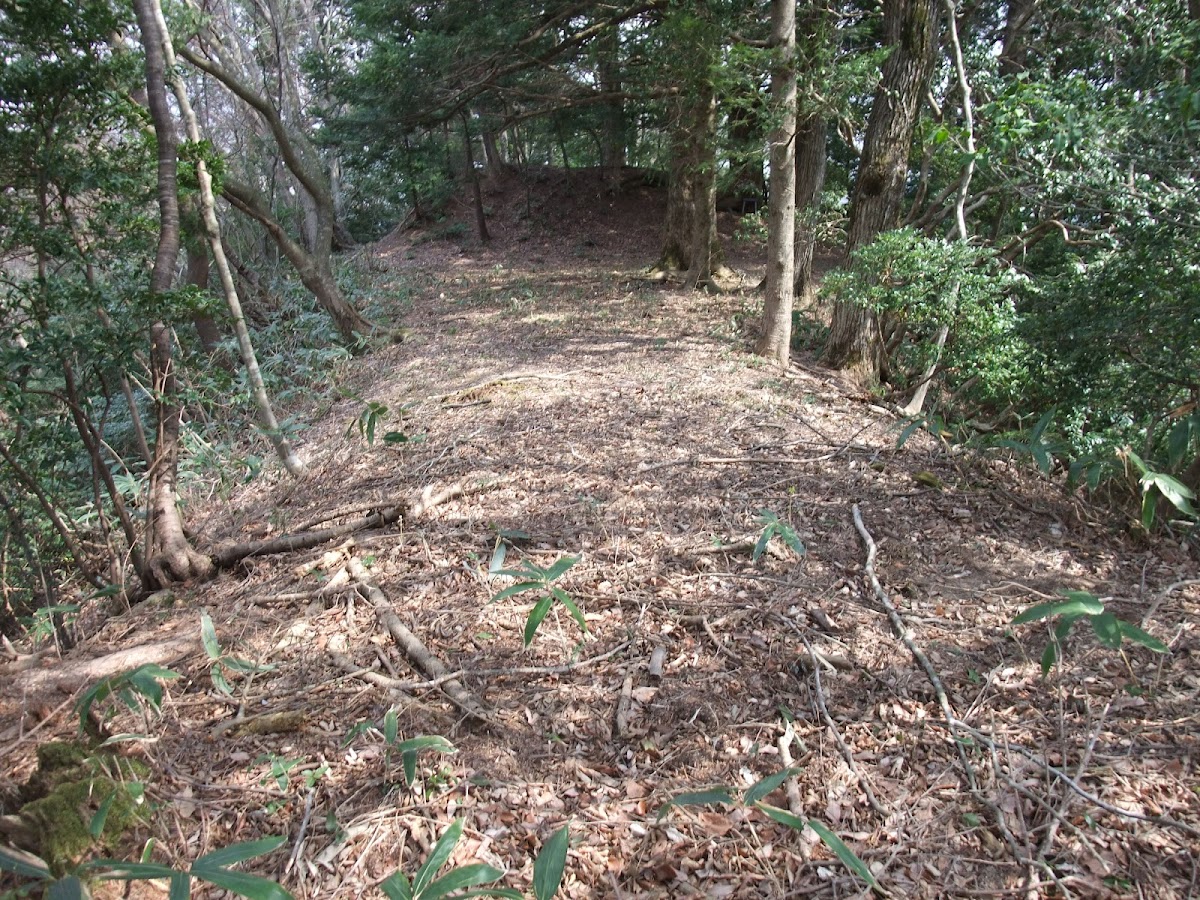
The castle walls of Ishijōyama Jinryōishi consist of rows of stones and earthen ramparts. The rows of stones form a belt around the 8th station of the mountain, with a total length of approximately 2,600 meters. Earthen ramparts are built on top of the rows of stones, estimated to be up to 3 meters high.
The area inside the castle walls covers approximately 30 hectares, classifying it as a medium-sized ancient mountain castle. It is believed that this vast space contained facilities for evacuating surrounding residents in times of emergency or for stationing soldiers, but no clear remains such as building foundations have been confirmed to date.
About the Water Gates: The Greatest Highlight of Ishijōyama Jinryōishi
The most striking feature of Ishijōyama Jinryōishi is the well-preserved four water gates (suimon). Water gates are drainage facilities built into the castle walls spanning valleys, serving to drain rainwater from the mountain to the outside.
West Water Gate
The West Water Gate is the largest and best-preserved of the water gates at Ishijōyama Jinryōishi. The stone walls reach a maximum height of approximately 5 meters, and its structure is so impressive that it could be mistaken for the stone walls of a modern castle. The high level of skill in precisely stacking the cut stones is valuable evidence of the level of ancient civil engineering.
The water inlet is approximately 1 meter wide, with stones arranged in an arch shape. This structure was designed to prevent the stone walls from collapsing even when large amounts of rainwater flowed through them.
North Water Gate
The North Water Gate is the second largest after the West Water Gate, with a stone wall height of approximately 4 meters. The layout cleverly utilizes the valley’s topography, featuring a structure that integrates natural drainage channels with artificial sluice gates. The surrounding area also retains well-preserved stone rows, making it an important site for understanding the structure of the ancient mountain castle.
East Sluice Gate
The East Sluice Gate is relatively small, but the structure of the water inlet is clearly observable. The way the stones are stacked and the ingenuity used to control the water flow are clearly visible, allowing visitors to learn about ancient water management technology. It is easily accessible from the hiking trail and is a popular spot for visitors.
South Sluice Gate
The South Sluice Gate was the last of the four to be discovered, and its details were revealed through recent investigations. Although small in scale, it has a similar structure to the other sluice gates, indicating that it functioned as part of the overall defense system of Ishijōyama.
The existence of these four sluice gates proves that the Ishijōyama Jinryōishi was not merely an arrangement of stone rows, but a full-fledged defensive facility constructed based on a sophisticated design philosophy.
About the Castle Gate
In addition to the water gate, the existence of a castle gate (jōmon) has also been confirmed at Ishijōyama Jinryōishi. Castle gates were facilities for the entry and exit of people and goods, and were strategically placed at key defensive locations.
North Gate
The North Gate is the most clearly identified castle gate site at Ishijōyama Jinryōishi. Excavations have uncovered the gate’s foundation stones and post holes, revealing the existence of a wooden gate. The gate is estimated to be approximately 4 meters wide and is thought to have functioned as a supply route during peacetime and as a defensive stronghold during wartime.
The stone rows around the North Gate are particularly sturdily constructed, and various defensive measures are evident. Even today, the arrangement of the stones allows for the estimation of the gate’s location, providing an important clue to understanding the layout of the ancient mountain castle.
Possibility of Other Gates
Excavations and topographical analysis suggest the possibility of multiple gates existing besides the North Gate. In particular, the south and east sides have topographically suitable locations for gate construction, and further investigations are expected to yield new discoveries.
About the Earthworks
The earthworks are embankments of earth built on top of rows of stones, and constitute the main part of the defensive facilities of Ishijōyama Jinkyoishi.
Structure of the Earthworks
The earthworks of Ishijōyama are constructed by piling up earth on top of rows of stones as a foundation. The height of the earthworks varies depending on the location, but the highest point is approximately 3 meters, and the width at the base reaches approximately 5-6 meters.
It is believed that surrounding mountain soil was used to construct the earthworks. It is possible that a technique called rammed earth construction, a method of increasing strength by compacting soil in layers, was used, which explains why the shape of the earthworks has been relatively well preserved even after more than 1300 years.
Relationship with the Rows of Stones
The rows of stones served as the foundation for the earthworks, and also acted as retaining walls to prevent the earthworks from collapsing. The stone rows utilize both natural and processed cut stones, with particularly precise stonework in important areas.
The combination of stone rows and earthworks is a common structure in the Kamigoseki-style mountain castles, and is thought to have been influenced by ancient mountain castles on the Korean Peninsula. This trace of technological exchange holds historical significance as it reflects the situation in East Asia during the 7th century.
Plants and Seasonal Flowers of Ishijōyama Mountain
Ishijōyama Mountain is both a historical heritage site and a mountain with a rich natural environment. The plants of each season delight visitors.
Spring Flowers
In spring, mountain cherry blossoms bloom, and the fresh greenery creates a beautiful season. Wildflowers such as violets and dandelions bloom along the hiking trails, and mountain wildflowers such as Cymbidium goeringii and Epimedium can be seen in the forest. From April to May, azaleas also bloom, enveloping Ishijōyama Mountain in a vibrant atmosphere.
Summer Plants
In summer, the mountain is covered in deep green, allowing visitors to enjoy a cool forest bath. Summer flowers such as lilies and bellflowers bloom, and insects are active. Although it gets hot in midsummer due to its relatively low elevation, the shade of the trees provides coolness, making for a comfortable hike.
Autumn Foliage
In autumn, the foliage is beautiful, especially from mid- to late November. Maple and other trees change color, creating a unique landscape with the contrast between the ancient ruins and the autumn leaves. This is the busiest time of year for Ishijōyama, attracting many tourists.
Winter Appearance
In winter, deciduous trees shed their leaves, allowing for clearer observation of the stone rows and earthworks. The clear air provides the best views from the summit. While there is little snowfall, frost can form on cold days, creating a fantastical landscape.
Historical Significance of Ishijōyama Jinryōishi
Position in Ancient Defense Systems
Ishijōyama Jinryōishi is an extremely important archaeological site for understanding Japan’s defense systems in the late 7th century. Due to its location facing the Seto Inland Sea, it is believed to have been a facility designed to prepare for invasions from the sea. Its position overlooking the Suo Sea made it an excellent surveillance base for early detection of enemy ship movements.
It has also been suggested that it may have played a part in the defense network of western Japan centered around Dazaifu, and some theories suggest it was part of a wider defense system coordinating with castles such as Ono Castle and Kii Castle in Kyushu.
Archaeological Value
Ishijoyama Jinryoseki is one of the benchmark sites in the study of Jinryoseki-type mountain castles. The well-preserved four sluice gates and the clearly observable structure of the stone rows and earthworks provide valuable data for studying the structure and construction techniques of ancient mountain castles.
Since its discovery in the Meiji era, many researchers have conducted investigations, and numerous papers and research books have been published. New investigations and research continue today, making it an important field for the study of ancient history.
As a Local Historical Heritage Site
For Hikari City, the Ishijōyama Jinryōishi (stone fortifications) are an important heritage site symbolizing the region’s history and culture. Local residents are dedicated to the preservation and utilization of the historical site, with regular grass cutting, maintenance of walking paths, and installation of information boards.
Furthermore, efforts are being made to promote historical tourism centered around the Ishijōyama Jinryōishi, with various initiatives such as holding events and implementing educational programs. It is carefully protected as a source of pride for local residents and as a cultural asset to be passed on to future generations.
Access and Visiting Information
Access by Public Transportation
The nearest station is Iwata Station on the JR Sanyo Main Line. It’s approximately a 30-minute walk from Iwata Station to the Ishijōyama trailhead. Taxis are often available in front of the station, and using one will get you to the trailhead in about 10 minutes.
Bus services are limited, so it is recommended to check the timetable in advance if using public transportation. Hikari City Community Buses may also be operating, so it’s a good idea to inquire with Hikari City Hall or the Tourism Association. ### Access by Car
It’s about 15 minutes from the Kumage Interchange on the Sanyo Expressway, and about 20 minutes from the Hikari Interchange. From National Route 188, take the prefectural road towards Ishijōyama. There is a parking lot near the trailhead, which is free to use. It can accommodate about 20 cars.
If using a car navigation system, you can set your destination by searching for “Ishijō Shrine” or “Ishijōyama Trailhead.” The roads are relatively well-maintained, but some mountain roads are narrow, so caution is required when driving.
Hiking and Sightseeing Points
It takes about 40 minutes from the trailhead to Ishijō Shrine at the summit, and about 2 hours for the course visiting the main ruins. The hiking trails are well-maintained, but wearing athletic shoes or trekking shoes is recommended.
Information boards are installed at viewing points such as the water gates and stone rows, allowing you to view the ruins while reading explanations. The West Water Gate is a must-see, allowing you to appreciate the high level of ancient stonework techniques.
During the summer, it is hot and there are many insects, so bringing a hat and insect repellent is recommended. Be sure to carry drinking water as well. During the winter, the sun sets early, so it is safer to avoid hiking in the late afternoon.
Precautions for Visiting
Ishijōyama Jinryōishi is a nationally designated historical site, and the protection of the remains is important. Please do not touch or climb on the stone rows or stone walls. Collecting plants or removing stones is also prohibited.
Please take all your trash with you and cooperate in the preservation of the natural environment. Entering areas other than the hiking trails may damage the remains, so please follow the designated routes.
Photography is permitted, but it is recommended to check with the Hikari City Board of Education beforehand regarding the use of drones.
Nearby Tourist Attractions
When visiting Ishijōyama Jinryōishi, visiting nearby tourist attractions will make your trip more fulfilling.
Ishijō Shrine
This ancient shrine, located near the summit of Ishijōyama, is a place of local worship. The view from the temple grounds is magnificent, offering a panoramic view of the islands of the Seto Inland Sea. Various events are held throughout the year, including the spring festival and the autumn harvest festival.
Murozumi District, Hikari City
Located about 20 minutes by car from Ishijōyama, the Murozumi district is a port town with well-preserved old streets. Murozumi Beach is known for its beautiful sandy shores and is bustling with swimmers in the summer. It also contains the site of the birthplace of Ito Hirobumi, a prominent figure of the late Edo period, making it a great place for historical walks.
Suō Kokubunji Temple Ruins
These are the ruins of the Suō Kokubunji Temple, built during the Nara period, and are now maintained as a historical park. Like the Ishijōyama Jinryōishi, it is an ancient site where you can learn about the history of Suō Province.
Summary
The Ishijōyama Jinryōishi are valuable historical sites that convey the defense system of ancient Japan in the late 7th century. Located on Mt. Ishijōyama, at an elevation of 362 meters, the site boasts approximately 2.6 kilometers of stone rows, earthworks, and four sluice gates, all remarkably well-preserved. It is one of the few remaining sites that allows for a concrete understanding of the structure of an ancient mountain castle.
Since its discovery in 1909 (Meiji 42), it has been extensively researched by numerous scholars and is now protected as a nationally designated historical site. While the builder and exact construction date remain shrouded in mystery, this only adds to its historical allure, continuing to fascinate many history enthusiasts.
Mt. Ishijōyama is not merely a historical site; it also possesses a rich natural environment. Seasonal flowers bloom throughout the year, making it a popular hiking spot. The view from the summit is magnificent, offering a panoramic vista of the beautiful Seto Inland Sea.
When visiting Hikari City, be sure to visit the Ishijōyama Jinkōishi site and experience the remnants of a magnificent defensive structure built by ancient people. Walking along the stone rows, observing the intricate stonework of the sluice gates, and reflecting on history from over 1300 years ago will surely be an unforgettable experience. The Ishijoyama Jinryoseki, where history and nature harmonize, is an irreplaceable place that teaches us, who live in the modern age, the wisdom and technology of our ancestors, and the value of cultural heritage that should be passed down through generations.