Toishi Castle (Okayama Prefecture) Complete Guide | Birthplace of Ukita Naoie and Highlights of a Medieval Mountain Castle
What is Toishi Castle?
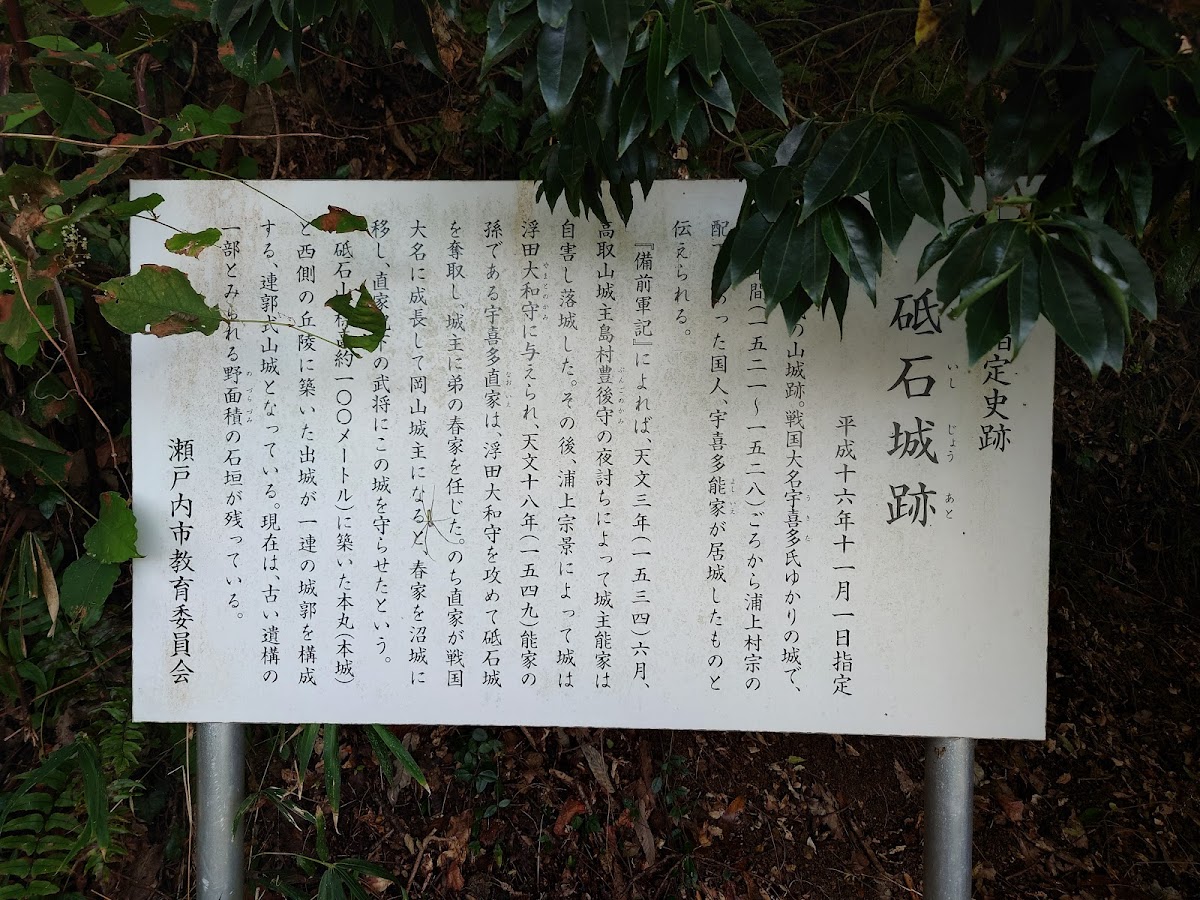
Toishi Castle is a medieval mountain castle located in Toyohara, Oku-cho, Setouchi City, Okayama Prefecture. Built on the summit of Mt. Toishi, approximately 100 meters above sea level, overlooking the Sencho Plain, it functioned as a strategic stronghold overlooking Fukuoka, the political and economic center of Bizen Province.
It is also known as the birthplace of the Sengoku period warlord Ukita Naoie, and was the stage for the history of three generations of the Ukita clan. It has a unique layout consisting of a main castle with five interconnected baileys and four outposts with moats, preserving the typical structure of a medieval mountain castle.
Location and Strategic Importance of Toishi Castle
Mt. Toishi, where Toishi Castle was built, is located at the northern edge of the Sencho Plain, offering an excellent vantage point overlooking the townscape of Bizen Fukuoka. Fukuoka, located on the northern side of the Sencho Plain, was a crucial political and economic center of Bizen Province, home to the Bizen Provincial Governor’s Office and a market depicted in the “Illustrated Biography of Ippen Shonin.” It was also known as a production center for Bizen swords, with sword forging flourishing there.
Toishi Castle, built in a strategic location to monitor and defend this important area, functioned as one of the key castles for controlling Bizen Province.
History of Toishi Castle
Construction and Early History
Toishi Castle is believed to have been built around the Bunmei era (1469-1487) by the Urakami clan, the deputy governor of Bizen Province. The Urakami clan was a powerful family in Bizen Province from the Muromachi period to the Sengoku period, effectively controlling the province as deputy governors.
The Urakami clan expanded their power from their base in Fukuoka, and to solidify their control, they established branch castles in strategic locations around the area. Toishi Castle is one such example, believed to have been built in a strategic location overlooking the Sencho Plain and Fukuoka.
The Ukita Clan and Toishi Castle
The most important aspect of Toishi Castle’s history is its connection to the Ukita clan. Ukita Yoshiie, a vassal of the Urakami clan, became the lord of Toishi Castle and used it as his base of operations.
Ukita Yoshiie was the grandfather of Ukita Naoie and a warrior who distinguished himself while serving the Urakami clan. Yoshiie made Toishi Castle his residence and was responsible for the defense and governance of the Bizen Fukuoka region.
Yoshiie’s son, Ukita Haruie, also used Toishi Castle as his base, and during this period, Toishi Castle played an important role as the Ukita clan’s headquarters. It is believed that Ukita Naoie was born at Toishi Castle.
The Tragedy of the Fall of Toishi Castle
In 1523 (Daiei 3), Ukita Yoshiie handed over the family headship to his son, Haruie, and was living in retirement at Toishi Castle. However, in 1534 (Tenbun 3), tragedy struck Toishi Castle.
Shimamura Bungo-no-kami, lord of Takatori-yama Castle, launched a night attack on Toishi Castle. At this time, Yoshiie was ill and unable to adequately defend the castle. The castle fell, and Yoshiie committed suicide. According to one account, Ukita Haruie also died in this battle.
During this night attack, it is said that the young Ukita Naoie escaped the castle in the arms of his wet nurse, narrowly escaping with his life. His grandfather Yoshiie’s regret and the memory of the fall of Toishi Castle are believed to have greatly influenced Naoie’s later life.
Rule by the Shimamura Clan
Shimamura Bungo-no-kami, who captured Toishi Castle, subsequently brought it under his control. However, there are few historical records detailing the Shimamura clan’s rule, leaving many points unclear.
Ukita Naoie’s Revenge and Toishi Castle
As an adult, Ukita Naoie sought revenge against the Shimamura clan, who were responsible for his grandfather Yoshiie’s death. Naoie expanded his power through stratagem and military force, eventually rising to prominence as a key retainer of the Urakami clan.
Naoie spent his life establishing his rule over Bizen Province, and it is believed that the tragedy at Toishi Castle was the starting point of his success. Toishi Castle, Naoie’s birthplace, held special significance in his life.
Date of Abandonment
While there are no clear records of the exact date of Toishi Castle’s abandonment, it is thought to have been abandoned sometime between the end of the Sengoku period and the beginning of the Edo period, after Ukita Naoie established his base at Okayama Castle.
Layout and Structure of Toishi Castle
The Five-Enclosure Main Castle
The most distinctive feature of Toishi Castle is its main castle structure, known as the “Five-Enclosure,” consisting of five interconnected enclosures (kuruma). The enclosures are arranged along the ridge from the mountaintop, each separated by moats and earthworks.
The main enclosure (honmaru), located at the highest point, is a relatively large, flat area, presumably where the lord’s residence was located. From the main enclosure, one can see the Sencho Plain and the townscape of Bizen Fukuoka, making it an ideal location for surveillance.
The second, third, fourth, and fifth enclosures, which extend from the main enclosure, are cleverly positioned to utilize the ridge’s topography, each functioning as a defensive line.
Placement of Moats
Important defensive features of Toishi Castle are the multiple moats. These moats are dry trenches dug to cut across the ridge, preventing enemy intrusion and separating the enclosures. In particular, the moats between the main enclosure and the second enclosure, and between each enclosure, are still clearly visible today, making them valuable remains for understanding the defensive techniques of medieval mountain castles.
Outpost of the Four Enclosures
A short distance from the main castle lies an outpost consisting of four enclosures. This outpost is also demarcated by moats, and its structure is designed to work in conjunction with the main castle for defense.
It is believed that the outpost served to divert attacks on the main castle from the flanks and to secure retreat routes.
Earthworks and Stone Walls
Remnants of earthworks also remain at Toishi Castle. These earthworks surrounding the enclosures enhanced defensive capabilities and also served to secure flat areas within the enclosures.
While some traces of stone walls can be seen, it has been suggested that these may have been altered in later periods. It is believed that medieval mountain castles primarily relied on earthworks and moats for defense.
Current Status of Toishi Castle
Designation as a Cultural Property
The Toishi Castle ruins are protected as a designated cultural property (historic site) of Setouchi City. It is recognized for its historical value as a valuable archaeological site that well preserves the structure of a medieval mountain castle, and as the birthplace of Ukita Naoie.
Access Route and Time Required
There are two routes to the Toishi Castle ruins: one from the north and one from the east. The eastern entrance has parking space for about one car, and from there, it takes about 15 minutes on foot to reach the main enclosure.
As it is a low mountain with an elevation of about 100 meters, it is relatively easy to climb for those in good physical condition. However, since it is a mountain path, comfortable shoes and clothing are recommended.
Monument to the Birthplace of Ukita Naoie
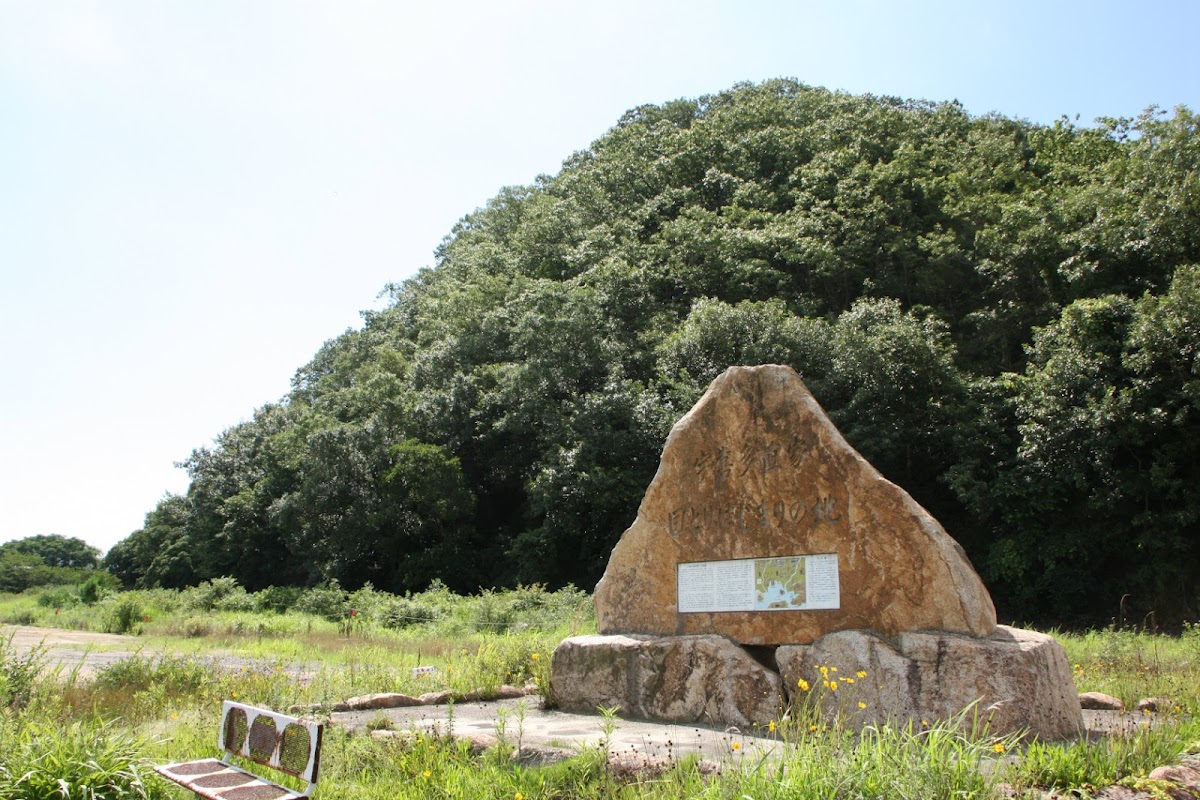
A stone monument inscribed with “Birthplace of Ukita Naoie” stands at the entrance to the castle. This monument is an important monument indicating that Toishi Castle is the birthplace of Ukita Naoie. ### Existing Remains
At the current Toishi Castle site, the following remains can be observed:
- Main Enclosure: A flat area at the mountaintop. Traces of earthworks remain around it.
- Moat: Multiple clear moats remain in good condition.
- Enclosure Remains: Flat areas of the five consecutive enclosures and the outworks.
- Earthwork: Parts of the earthworks surrounding each enclosure.
- Stone Wall Traces: Traces of stonework in some areas (possibly altered in later periods).
View
The view from the main enclosure is magnificent, offering a panoramic view of the Sencho Plain. You can see in the direction of the former town of Bizen Fukuoka and even towards the Seto Inland Sea, demonstrating the castle’s excellent location as a surveillance base.
Access to Toishi Castle
Basic Information
- Location: Toyohara, Oku-cho, Setouchi City, Okayama Prefecture
- Designation: Setouchi City Designated Cultural Property (Historic Site)
- Castle Structure: Mountain Castle (Five Enclosures + Four Outpost Enclosures)
- Elevation: Approximately 100 meters
Access by Car
- Approximately 2 minutes from Okayama Blue Line “Setouchi IC”
- Parking space for about one car at the east entrance to the castle
Access by Public Transportation
- Approximately 10 minutes by bus bound for Kotegari from JR Ako Line “Oku Station”
- Get off at “Enbari” bus stop, and walk for approximately 20 minutes to reach the castle entrance
Notes for Visitors
- Comfortable shoes and clothing are necessary as you will be walking on mountain paths
- Insect repellent is recommended in summer
- It is recommended to prepare drinking water in advance
- Be careful as the ground can be slippery during and after rain.
- In winter, the sun sets early, so allow ample time for your visit.
Ukita Naoie and Toishi Castle
The Life of Ukita Naoie
Ukita Naoie (1529-1582) was a samurai of Bizen Province during the Sengoku period, later becoming a daimyo who controlled Bizen, Mimasaka, and parts of Harima. He excelled at stratagem and political maneuvering, and was known as the “Ruthless Hero of Bizen.”
Naoie was born at Toishi Castle, but experienced the tragedy of his grandfather, Yoshiie, committing suicide at the castle during his childhood. After a period of hardship, he served the Urakami clan and gradually rose to prominence.
The Impact of the Fall of Toishi Castle on Naoie
The tragedy of the fall of Toishi Castle is said to have had a significant impact on the formation of Ukita Naoie’s character. Some believe that Naoyoshi’s desire to avenge his grandfather’s death shaped his obsession with power and his character as a schemer.
Naoyoshi later seized real power in Bizen Province, ultimately destroying his former lord, the Urakami clan, and becoming an independent Sengoku daimyo. The ruthless schemes he employed during this process may have originated from his childhood experiences at Toishi Castle.
Naoyoshi’s Descendants and the Okayama Domain
Ukita Hideie, the son of Ukita Naoyoshi, married an adopted daughter of Toyotomi Hideyoshi and became a daimyo with a domain of 570,000 koku, serving as one of the Five Great Elders. However, he was dispossessed of his domain for siding with the Western Army in the Battle of Sekigahara and exiled to Hachijojima Island.
After the Ukita clan’s downfall, the Kobayakawa clan, and then the Ikeda clan, ruled Okayama, and the Okayama Domain continued until the Meiji Restoration.
Toishi Castle and Surrounding Historical Sites
The Townscape of Bizen Fukuoka
The Sencho Plain, overlooked from Toishi Castle, was once home to the town of Bizen Fukuoka. Its center was around present-day Fukuoka, Osafune-cho, Setouchi City, and it flourished as the political and economic center of Bizen Province during the Middle Ages.
The city of Fukuoka is depicted in the “Illustrated Biography of Ippen Shonin,” conveying its former vibrancy. It was also known as a production center for Bizen swords, and many swordsmiths worked in this area.
Bizen Osafune Sword Museum
Near Toishi Castle is the Bizen Osafune Sword Museum, where you can learn about the history and techniques of Bizen swords. It’s worth a visit to understand the tradition of swordsmithing that flourished in Fukuoka, the area overlooked by Toishi Castle.
Takatoriyama Castle Ruins
Takatoriyama Castle, the residence of Shimamura Bungo-no-kami, who launched a night attack on Toishi Castle, is also located nearby. Visiting Toishi Castle in conjunction with Toishi Castle allows for a deeper understanding of the relationship between the two castles and the nature of the battles fought there.
The Charms and Highlights of Toishi Castle
Typical Structure of a Medieval Mountain Castle
Toishi Castle retains a well-preserved typical structure of a medieval mountain castle. Its unique five-enclosure layout, clearly visible moats, and traces of earthworks are all valuable remains for understanding the castle-building techniques of the time.
Although relatively small for a mountain castle, its overall structure is easy to grasp, making it an ideal site for understanding the structure of medieval mountain castles.
Historical Value as the Birthplace of Ukita Naoie
Toishi Castle’s historical value as the birthplace of Ukita Naoie, a representative warlord of Bizen Province during the Sengoku period, is another major attraction. It is deeply moving to consider that the origins of Naoie’s turbulent life were in this place.
Easy Access and Climbing
One of the attractions of Toishi Castle is that it is relatively easy to climb, as it is built on a low mountain at an altitude of approximately 100 meters. You can reach the main enclosure in about 15 minutes, allowing you to easily experience the atmosphere of a medieval mountain castle.
It is close to the Okayama Blue Line interchange and easily accessible, making it a convenient castle site to visit as part of a castle tour in Okayama Prefecture.
Superb Views
The view from the main enclosure is magnificent, offering a panoramic view of the Sencho Plain. The view overlooking Fukuoka, which once flourished as the center of Bizen Province, gives a real sense of the castle’s strategic importance.
Summary
Toishi Castle is a medieval mountain castle located in Setouchi City, Okayama Prefecture, and is known as the birthplace of Ukita Naoie. Built at a strategic point in Bizen Province, this castle has a unique structure of five interconnected enclosures, preserving the typical appearance of a medieval mountain castle.
The tragedy of Toishi Castle’s fall in 1534 had a profound impact on the young Ukita Naoie’s life and shaped his later path. His grandfather Ukita Yoshiie’s regret and his memories of Toishi Castle became the driving force behind Naoie’s rise to become the ruler of Bizen Province.
The current Toishi Castle site is protected as a cultural property of Setouchi City, with well-preserved remains such as moats, baileys, and earthworks. Located on a low mountain of approximately 100 meters above sea level, it is easily accessible, and the main bailey offers a magnificent panoramic view of the Sencho Plain.
When visiting Okayama Prefecture, why not visit Toishi Castle, a place deeply connected to Ukita Naoie, and reflect on the history of the Sengoku period? It is a valuable historical site where you can experience the atmosphere of a medieval mountain castle and the historical drama that unfolded there.