Complete Guide to the History and Highlights of Numajo Castle (Okayama Prefecture) | The Key Castle of Bizen Province Where Ukita Naoie Roamed
What is Numajo Castle? | Overview of its Alternate Name, Kameyama Castle
Numajo Castle was a flatland castle located in Numa, Higashi-ku, Okayama City, Okayama Prefecture. Also known as Kameyama Castle, it functioned as an important base in Bizen Province during the Sengoku period. Currently, the site is maintained as a castle ruin, with the small hill where the Benzaiten Shrine now stands considered the site of the main keep.
Numajo Castle is particularly famous as the residence of Ukita Naoie, a renowned warlord of the Sengoku period, for approximately 15 years during his prime. From this base, Naoie expanded his power into Bizen, Mimasaka, and Bitchu provinces, laying the foundation for the later construction of Okayama Castle.
Built on a hill approximately 40 meters above sea level, Numajo Castle was strategically located overlooking the surrounding plains. While of medium size for a castle of its time, it served as an important military base supporting Naohisa’s ambitions.
History of Numajo Castle | From Construction to Abandonment
Construction during the Tenbun Era and the Nakayama Clan
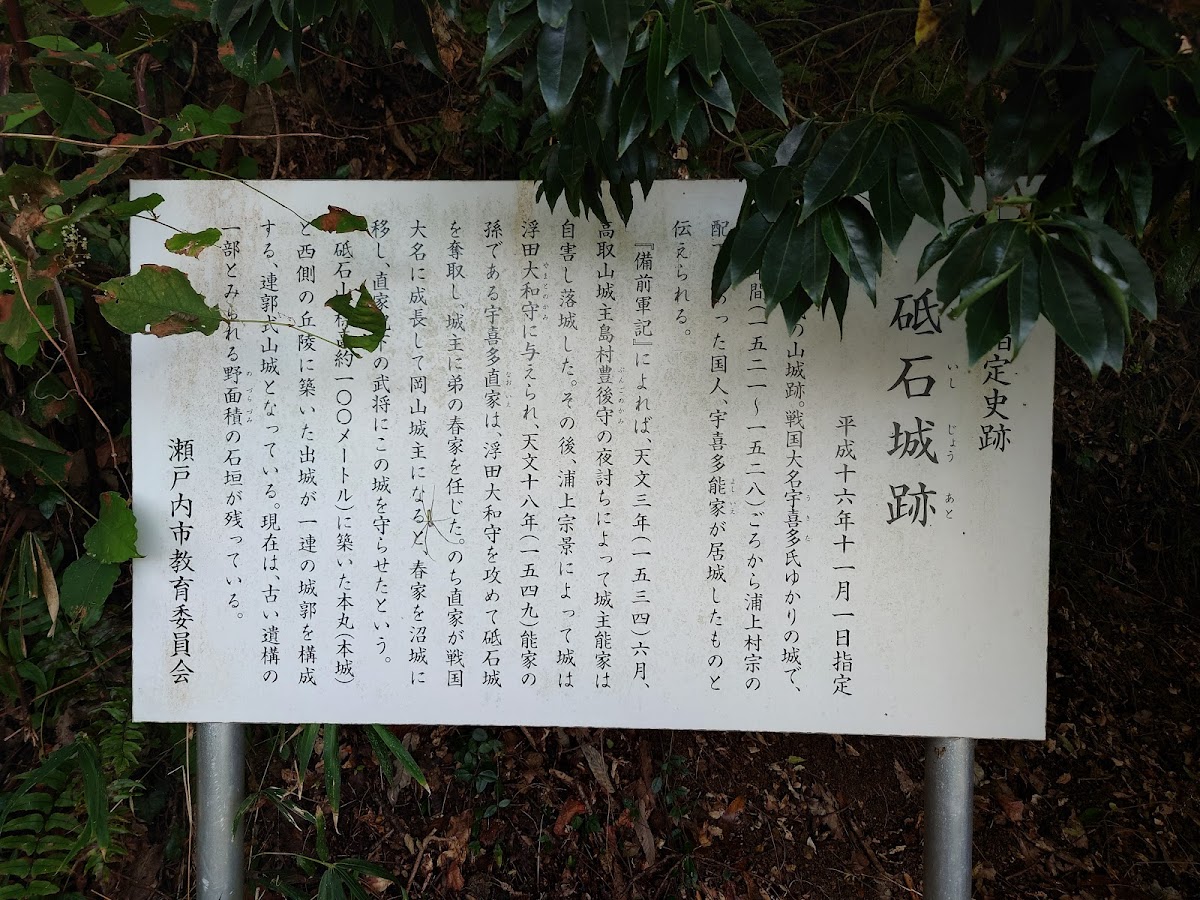
Numajo Castle is believed to have been built around the beginning of the Tenbun era (around 1532), by Nakayama Nobumasa. Nakayama Nobumasa initially served the Matsuda clan of Kanagawa Castle, and later worked under Uragami Munekage of Tenjin-yama Castle.
The Nakayama clan was one of the powerful local lords in Bizen Province. As the Uragami clan’s power expanded, they built this castle to solidify their base. Numajo Castle was located along the Sunagawa River, a tributary of the Yoshii River, giving it a strategic location controlling both water and land routes. ### Seizure by Ukita Naoie in 1559
The most important turning point in the history of Numajo Castle occurred in 1559. In that year, Ukita Naoie murdered his father-in-law, Nakayama Nobumasa, and became the lord of Numajo Castle.
Naoie was married to Nakayama Nobumasa’s daughter, making Naoie Nobumasa’s son-in-law. However, Naoie, known for his ambition, seized the castle under the pretext of receiving it from his lord, Urakami Munekage, thus eliminating his father-in-law. This incident is recounted to posterity as a symbol of Naoie’s ruthless and heartless character.
Ukita Naoie’s Reign as Lord of Numajo Castle (1559–1573)
After acquiring Numajo Castle, Naoie moved his base of operations from his previous residence, Shinjoyama Castle, to Numajo Castle. For approximately 15 years, Naohisa expanded his power from Numajo Castle.
This period was a time of great progress for Naohisa. Centered around Numajo Castle, he engaged in the following activities:
- Unification of Bizen Province: As a senior retainer of the Urakami clan and as an independent force, he successively conquered various forces within Bizen Province.
- Expansion into Mimasaka and Bitchu Provinces: He sought to expand his influence in neighboring provinces and encroach on his territory.
- Utilization of Stratagem and Politics: He eliminated enemy forces not only through direct combat but also through various means such as assassination and political maneuvering.
- Strengthening the Economic Base: He secured key commercial and logistics hubs, accumulating economic power.
Naohisa achieved many military successes during his time at Numajo Castle, eventually building a power that surpassed even that of his lord, Urakami Munekage. Naohisa’s activities during this period laid the foundation for the later prosperity of the Ukita clan.
Relocation to Okayama Castle and Changes in the Role of Numajo Castle
In 1573 (Tensho 1), Naohisa began construction of a new castle at Ishiyama (the current location of Okayama Castle) and moved his residence to Okayama Castle. This was because, as Naohisa’s power expanded, a larger and more defensible castle was needed.
Even after the relocation to Okayama Castle, Numajo Castle was not completely abandoned and is believed to have continued to play a certain role as a branch castle of the Ukita clan. Retainers such as Kanemitsu Munetaka were appointed as castle lords.
Abandonment during the Keicho Era
After the Battle of Sekigahara in 1600 (Keicho 5), Ukita Hideie sided with the Western Army and was dispossessed of his domain. Kobayakawa Hideaki was appointed to Okayama in his place. It is believed that Numajo Castle was abandoned sometime during the Keicho era (1596-1615).
While historical records are scarce and many details remain unclear regarding the exact timing and circumstances of the castle’s abandonment, it is presumed that with the arrival of the peaceful Edo period, the need to maintain the small mountain castles of the Sengoku period disappeared, and they naturally fell into disrepair.
Structure and Layout of Numajo Castle
Topography and Location
Numajo Castle is a flatland castle built on a hill approximately 40 meters above sea level. The castle’s location had the following characteristics:
- Strategic Point in the Yoshii River System: Located along the Sunagawa River, it offered advantages in water transport.
- View of the Plains: Offered a panoramic view of the surrounding plains, allowing for early detection of enemy movements.
- Key Transportation Point: Located near the intersection of major land routes, it was important both militarily and economically.
These locational conditions were the reason why Nakayama Nobumasa chose it as the site for his castle, and also why Ukita Naoie used it as his base for a long period of 15 years.
Castle Structure
Based on current surveys and topography of the Numajo Castle ruins, the following structure is estimated:
Main Enclosure: The top of the small hill where the current Benzaiten Shrine stands is believed to be the site of the main enclosure. It is thought that the lord’s residence and major defensive facilities were located here.
Enclosure Layout: It is presumed that multiple enclosures (kuruwa) were arranged around the main enclosure, but many details are unclear due to later topographical alterations.
Defensive Facilities: Defensive facilities such as earthworks and moats are thought to have been constructed, but currently, only a limited number of clearly identifiable remains can be confirmed.
It is presumed to have been a standard size and structure for a medieval flatland castle, and is thought to have possessed sufficient functionality as the residence of a local lord during the Sengoku period.
Highlights of Numajo Castle | Current Castle Ruins
Benzaiten Shrine and Main Enclosure Site
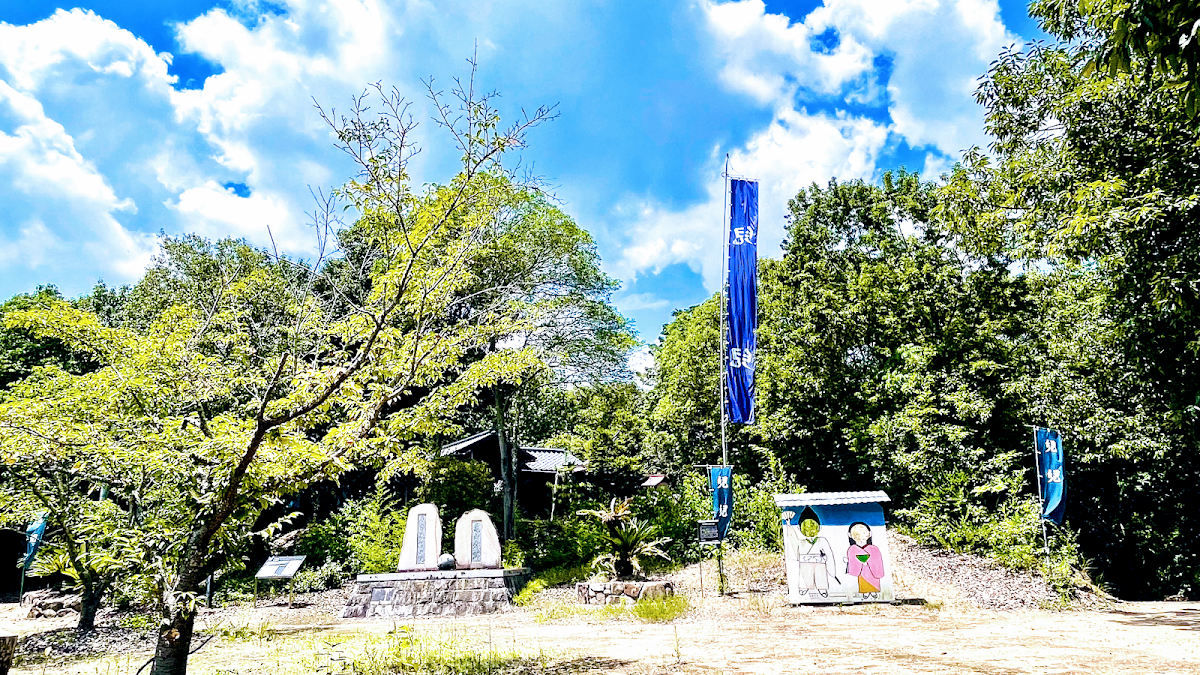
The most important highlight of the current Numajo Castle ruins is the small hill where the Benzaiten Shrine is located. This hill is believed to be the site of the main keep of Numajo Castle, and it is a central spot when visiting the castle ruins.
Climbing the stone steps leading to the shrine, you can overlook the surrounding terrain and imagine the view from the castle in its heyday. From the main keep site, the urban area of Higashi Ward in Okayama City and the surrounding rural landscape spread out, giving you a real sense of the strategic importance of this location at the time.
Traces of the Castle as Seen from the Topography
While there are no clear remains of stone walls or moats at the Numajo Castle site, careful observation of the terrain reveals traces of artificial topographical alterations:
- Steps and Flat Surfaces: Flat surfaces and steps thought to be the remains of baileys
- Eaves: Traces of steep slopes artificially carved
- Unnatural Topographical Undulations: Undulations presumed to be the remains of moats or earthworks
These topographical features are points that visitors familiar with castles will find even more interesting to observe.
An Environment Evokes a Historic Atmosphere
Numajo Castle Ruins are not a large-scale tourist destination, but stand quietly amidst a peaceful residential area and rural landscape. This unpretentious atmosphere, in fact, allows one to imagine the appearance of a regional castle from the Sengoku period.
In spring, cherry blossoms bloom, and in autumn, the leaves turn beautifully, allowing you to enjoy a historical stroll amidst the changing seasons. It’s rarely crowded with tourists, making it a valuable spot to slowly reflect on history.
The Figure of Ukita Naoie | 15 Years with Numajo Castle
Naoie’s Life and the Position of the Numajo Castle Period
Ukita Naoie (1529-1582) was a warlord known as one of the most notorious figures of the Sengoku period. The approximately 15 years (1559-1573) when he resided at Numajo Castle were a period of significant growth for him.
Naoie lost his father at a young age and grew up amidst hardship. Serving under Urakami Munekage, he rose to prominence, and after assassinating his father-in-law, Nakayama Nobumasa, and seizing Numajo Castle, he rapidly expanded his power.
Major Military Achievements During the Numajo Castle Period
Naohide, based at Numajo Castle, achieved the following military accomplishments:
- Conquest of Castles in Bizen Province: He successively captured surrounding castles, expanding his power within Bizen Province.
- Conflict with the Matsuda Clan: A long-term conflict with the Matsuda clan of Kanagawa Castle, his former lord’s family.
- Expansion into Mimasaka and Bitchu Provinces: He strengthened his influence in neighboring provinces and expanded his territory.
- Independence from the Urakami Clan: He surpassed the power of his lord, Urakami Munekage, and effectively achieved independence.
These military achievements were only possible because he had Numajo Castle as his base.
Master of Strategic Planning and Negotiation
Naohide was a warrior skilled in strategic planning and negotiation, so much so that he was called a “God of Strategic Planning.” In addition to direct combat, he employed the following tactics:
- Assassination: Secretly eliminating enemy warlords
- Stratagem: Turning enemy vassals to his side
- Deception: Various strategies to deceive the enemy
- Marriage Policy: Building alliances through political marriages
These tactics were sometimes considered ruthless even at the time, but they were also realistic choices for surviving the turbulent Sengoku period.
Relocation to Okayama Castle and Later Years
Having amassed considerable power during his 15 years at Numajo Castle, Naohisa moved his residence to Okayama Castle in 1573. He continued to expand his power, growing into a daimyo who controlled the three provinces of Bizen, Mimasaka, and Bitchu.
Naohisa died of illness in 1582, but his son, Ukita Hideie, who succeeded him, married Toyotomi Hideyoshi’s adopted daughter and rose to become one of the Five Great Elders. Hideie’s success was only possible because of the foundation his father, Naoie, had built during the Numajo Castle era.
Access and Visiting Guide to Numajo Castle
Location
Address: Numajo, Higashi-ku, Okayama City, Okayama Prefecture
Numajo Castle ruins are located in a residential and rural area of Higashi-ku, Okayama City. While there is no clearly marked address for this historical site, you can visit it using Benzaiten Shrine as a landmark.
Access by Public Transportation
By JR:
- Get off at Kamimichi Station on the JR Sanyo Main Line
- Approximately 25 minutes on foot from the station (approximately 2km)
The route from Kamimichi Station to Numajo Castle ruins passes through residential and rural areas. Since there are few signs along the way, it is recommended to check the route in advance using a map app.
By Bus:
It is possible to use local buses from Okayama City, but the number of buses is limited, so please check the timetable in advance.
Access by Car
If using the expressway:
- Approximately 10 minutes from the Sanyo Interchange on the Sanyo Expressway
- Approximately 20 minutes from the Okayama Interchange on the same expressway
Parking:
There is no dedicated parking lot at Numajo Castle Ruins. While there may be some street parking available near Benzaiten Shrine, please be careful not to disturb local residents. If possible, we recommend parking a short distance away and accessing the site on foot.
Points to Note When Visiting
- Free to Visit: The castle ruins are open to visitors at all times, but please observe proper etiquette when visiting the Benzaiten Shrine, as it is a place of local worship.
- Maintenance: As it is not a large-scale tourist destination, explanatory signs for the remains are limited.
- Attire: Since you will be climbing a hill, we recommend wearing comfortable shoes.
- Estimated Time Required: Even with thorough sightseeing, it will take approximately 30 minutes to 1 hour.
Best Season
Numajo Castle Ruins can be visited throughout the year, but the best seasons are:
- Spring (Late March to April): Cherry blossom season, and the scenery around the castle ruins is beautiful.
- Autumn (October to November): Enjoy the autumn foliage, and the weather is suitable for strolling.
- Winter (December to February): The air is clear, allowing for expansive views.
Summer (July to August) is hot and there are many insects, so please take thorough insect repellent measures if you plan to visit.
Castles to Visit Alongside Nearby Tourist Attractions
Okayama Castle (Ujo Castle)
Located about 20 minutes by car from Numajo Castle, Okayama Castle is a famous castle extensively renovated by Hideie, the son of Ukita Naoie. It was Naoie’s residence after moving from Numajo Castle, and is now designated a national historic site, with a restored keep.
Visiting Okayama Castle after visiting Numajo Castle will allow you to appreciate the changes in castle architecture between Naoie and his son, Hideie. Okayama Castle is also known as “Ujo Castle” (Crow Castle) and is characterized by its black exterior.
Korakuen Garden
Adjacent to Okayama Castle, Korakuen Garden is a beautiful daimyo garden, considered one of Japan’s three most famous gardens. It can be visited together with Okayama Castle, allowing you to enjoy both castle sightseeing and garden appreciation simultaneously.
Shinjoyama Castle Ruins
The ruins of Shinjoyama Castle, which Ukita Naoie used as his residence before Numajo Castle, also remain within Okayama City. As a historical walk tracing Naohisa’s footsteps, we recommend visiting Shinjoyama Castle → Numajo Castle → Okayama Castle in that order.
Tenjin-yama Castle Ruins
The ruins of Tenjin-yama Castle, the residence of Urakami Munekage, are also located relatively close to Numajo Castle. Visiting the base of the Urakami clan, Naohisa’s lord, will provide a deeper understanding of the power dynamics of the time.
Reference Materials for Learning About Numajo Castle
Books and Documents
For those who want to learn more about Numajo Castle and Ukita Naoie, the following books are helpful:
- “Ukita Naoie and Hideie” (Various publishers): Biographies detailing the lives of Naoie and Hideie
- “History of Okayama Prefecture” (Yamakawa Publishing): The position of Numajo Castle within the history of Okayama Prefecture as a whole
- “Comprehensive Survey of Japanese Castles”: A collection of materials covering castles throughout Japan, including Numajo Castle
- Regional History Research Journals: Research journals published by local history research societies in Okayama City and Okayama Prefecture sometimes contain detailed research reports on Numajo Castle.
Internet Resources
In recent years, information on Numajo Castle has become abundant on castle enthusiast community sites and history information sites. Many visitor reports and photographs are also available, which are useful for preliminary research before visiting.
Summary | Numajo Castle Tells the Story of Bizen Province in the Sengoku Period
While Numajo Castle doesn’t have many prominent remains today, it’s an essential historical site for understanding Bizen Province during the Sengoku period. Its historical value is particularly high as the place where Ukita Naoie, a rare Sengoku warlord, spent 15 years of his prime, laying the foundation for his later rise to power.
From its construction by Nakayama Nobumasa to Naoie’s seizure and establishment as his residence, and finally to his relocation to Okayama Castle and subsequent abandonment, the history of Numajo Castle vividly illustrates the power struggles and shifts in regional control during the Sengoku period.
The current Numajo Castle site is situated in a quiet environment, possessing a simple charm unlike large-scale tourist destinations. Standing on the small hill where the Benzaiten Shrine is located, and gazing at the surrounding scenery, why not imagine Naoie, who once harbored ambitions in this very place?
When visiting Okayama Prefecture, we recommend visiting not only the famous Okayama Castle, but also Numajo Castle, which can be considered its predecessor. It is in the small, provincial castles that never appear on the main stage of history that the raw realities of the Sengoku period are etched.