Complete Guide to Nadegawa Castle (Okayama Prefecture) | A Thorough Explanation of the History and Highlights of the Seven Border Castles
Nadegawa Castle, located in Nadegawa, Kita-ku, Okayama City, is a valuable historical site that conveys the turbulent history of the late Sengoku period. Registered as the first prefectural designated historical site, this flatland castle played a crucial role as one of the “Seven Border Castles,” the frontline castles in the power struggle between the Mori and Oda clans. This article provides a detailed explanation of Nadegawa Castle, from its historical background to its current highlights.
Basic Information on Natsukawa Castle
Name and Location
Official Name: Natsukawa Castle Ruins
Alternate Name: Shibaba Castle
Location: Natsukawa, Kita-ku, Okayama City, Okayama Prefecture
Classification: Flatland Castle
Designation Category: Okayama Prefecture Designated Historic Site (No. 1)
Date of Designation: May 13, 1957
Natsukawa Castle is located in the Natsukawa area of Kita-ku, Okayama City, approximately a 9-minute walk from Niwase Station on the JR Sanyo Main Line. It is currently maintained as Natsukawa Castle Ruins Park and is a popular recreational area for local residents.
Scale and Structure of the Castle
Natsukawa Castle is a flatland castle with a rectangular plan measuring approximately 85 meters east-west and 55 meters north-south. The castle was surrounded by a moat approximately 15 meters wide, with water drawn from the Ashimori River at its northwestern end. This scale was among the largest for a flatland castle in Okayama Prefecture, attesting to its importance at the time.
Even today, the castle ruins, covering approximately 30 ares, retain well-preserved high stone walls built in the nozura-zumi style, mainly on the north and west sides, conveying the characteristics of a marsh castle from the late Sengoku period. Earthen ramparts also remain on the eastern half, offering a glimpse into the defensive structures of the time.
History of Nadegawa Castle
Construction History and Early Period
There are various theories regarding the construction date of Nadegawa Castle, but a tradition remains that it was built by Fujii Hisatō during the Kanji era (1087-1094). However, reliable records only begin from the Sengoku period.
During the Sengoku period, it is said that Mimura Iechika, a powerful daimyo of Bitchū Province, had Nadegawa Castle built to prepare for attacks from Ukita Naoie to the east. The Mimura clan had expanded its power based in Bitchu Province, but when Iechika was assassinated in 1566 through a plot by Ukita Naoie, the Mimura clan’s power began to waver significantly.
The Bitchu Rebellion and the Mori Clan Era
After the death of Mimura Iechika, his son, Mimura Motochika, inherited the family headship. However, in the Bitchu Rebellion of 1575, the Mimura clan was defeated by a combined force of the Mori and Ukita clans, and the Mimura clan was destroyed. After this, Nadegawa Castle came to be used as an outpost by the Mori clan.
During the Tensho era (1573-1592), figures such as Kamiyama Hyogo and Sōminbu Daisuke served as castle lords for the Mori clan, and Nadegawa Castle was positioned as an important defensive base against the Oda clan. In particular, it functioned in conjunction with the adjacent Niwase Castle, contributing to the Mori clan’s maintenance of power in eastern Bitchu Province.
Role as one of the Seven Border Castles
In 1582, when Hashiba Hideyoshi (later Toyotomi Hideyoshi) began his full-scale campaign against the Mori clan in the Chugoku region, Nadegawa Castle became one of the “Seven Border Castles,” playing a vital role in the Mori clan’s frontline defense.
The Seven Border Castles refer to a group of seven castles positioned in eastern Bitchu Province by the Mori clan to counter the Oda (later Hashiba) forces. Specifically, these included the following castles:
- Miyajiyama Castle
- Kanmuriyama Castle
- Takamatsu Castle
- Kamo Castle
- Hibata Castle
- Matsushima Castle
- Nadegawa Castle
These castles were positioned on the border between the Mori clan’s sphere of influence and the Oda/Hashiba forces’ spheres of influence, forming a coordinated defensive network. Inoue Arikage was appointed as the lord of Nadegawa Castle and was responsible for its defense.
The Water Siege of Takamatsu Castle and the Fall of Nadegawa Castle
In April 1582 (Tensho 10), Hashiba Hideyoshi invaded Bitchu Province with a large army of approximately 30,000 men. Hideyoshi’s main target was Takamatsu Castle, the center of the seven border castles, but surrounding castles were also captured one after another.
Nadegawa Castle also came under attack from Hashiba’s army and fell after a fierce battle. During this period, Hideyoshi implemented the famous “water siege” of Takamatsu Castle, and the Battle of Nadegawa Castle was part of this series of operations.
After the castle’s fall, following the death of Oda Nobunaga in the Honnoji Incident, Hideyoshi made peace with the Mori clan, and Bitchu Province came under the control of the Ukita clan. Nadegawa Castle was renovated as a branch castle of Ukita Hideie, and a general of the Ukita clan was stationed there as a castle guard. The remaining rough-hewn stone walls are believed to have been constructed during the time of Ukita Hideie.
Edo Period: The Era of the Nadegawa Jinya
After the defeat of Ukita Hideie, who sided with the Western Army in the Battle of Sekigahara (1600), the system of governance in Bitchu Province changed dramatically. After the war, Togawa Tatsuya, who had distinguished himself on the Eastern Army’s side, was granted Niwase and established a jinya (fortified residence) on the site of Niwase Castle. At this time, Nadegawa Castle was temporarily abandoned.
In Enpō 7 (1679), Togawa Yasukaze, the fourth lord of the Niwase Domain, died prematurely at the young age of nine. The Togawa family had no heir and was dispossessed of their domain. However, the Togawa family name was inherited by Yasukaze’s younger brother, Togawa Tatsutomi, who had previously been granted 1,000 koku, with his stipend increased to 5,000 koku.
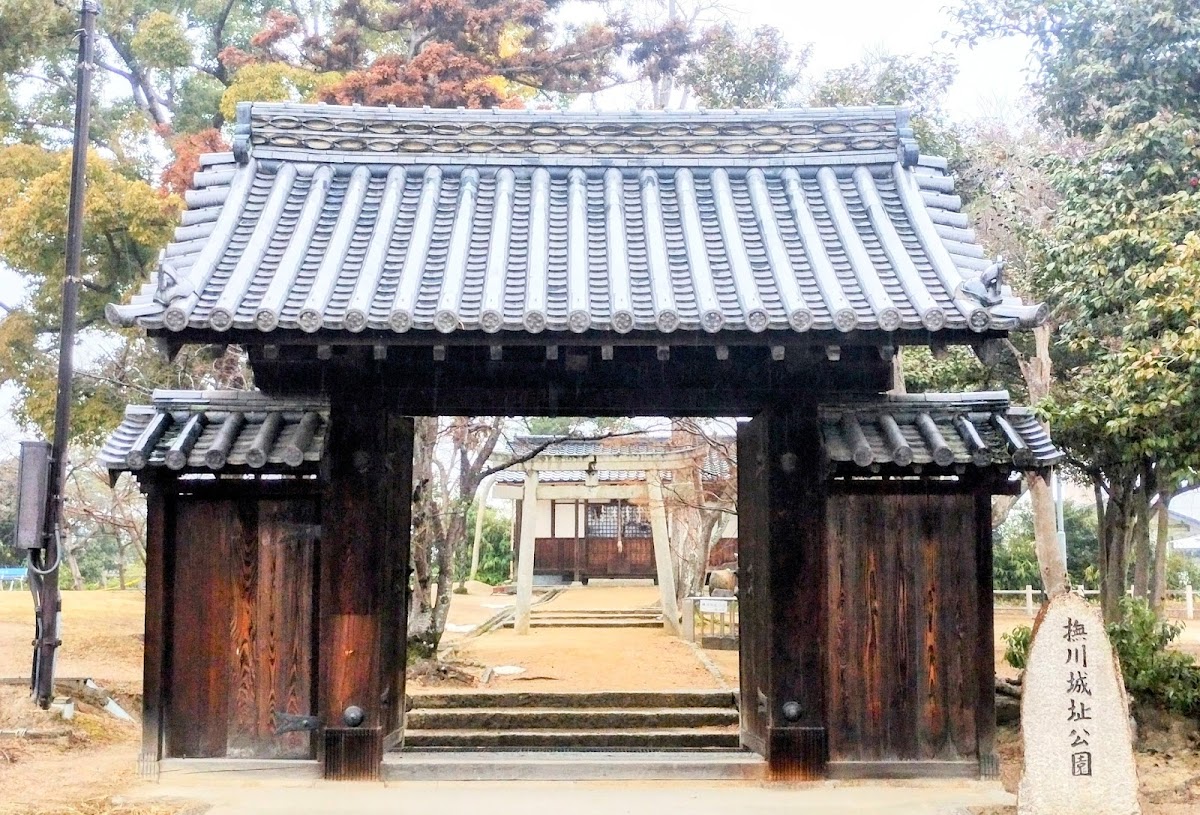
During the time of Togawa Tatsutomi, the Nadegawa Jinya was built on the site of Nadegawa Castle. The Togawa family, as alternating hatamoto (direct retainers of the shogun), held a fief of 5,000 koku in Nadegawa and continued for eight generations until the Meiji Restoration. The gate currently at the entrance to the Nadegawa Castle Ruins Park is the main gate of the Nadegawa Jinya (fortified residence), which was relocated to its current location during the Meiji era.
Structure and Remains of Nadegawa Castle
Layout and Defensive Facilities
Nadegawa Castle is a typical flatland castle that skillfully utilizes marshland. It has a rectangular layout of approximately 85 meters east-west and 55 meters north-south, with the main gate located on the south side. This arrangement is thought to have been intended to provide the strongest possible defense against attacks from the south.
A moat approximately 15 meters wide surrounded the castle, and a water supply system was constructed at the northwest end, drawing water from the Ashimori River. This moat served not only a defensive function but also a practical role in supplying water to the castle.
Existing Stone Walls
The greatest highlight of Nadegawa Castle is the high stone walls, built using the nozurazumi (rough-stone masonry) method, which remain in excellent condition today. In particular, the stone walls remain intact on the north, west, and part of the south, allowing for direct observation of stonework techniques from the late Sengoku period.
The “Nozura-zumi” method, which involves stacking natural stones with minimal processing, was the dominant technique from the Sengoku period to the early Edo period. The stone walls of Nadegawa Castle are believed to have been constructed during the time of Ukita Hideie, making them valuable historical documents demonstrating the level of stonework technology at that time.
At the northwestern end, a protruding stone wall, believed to be a watchtower base, can be seen, suggesting that a watchtower once stood there. This base offered a wide vantage point for monitoring enemy movements, making it a crucial location for surveillance.
Earthworks and Moats
Along with the stone walls, earthworks remain on the eastern half of the castle site. These earthworks were important defensive structures, alongside the stone walls, preventing enemy intrusion and also serving to divide the castle’s interior.
The moat surrounding the castle still holds water, conveying the atmosphere of the former marsh castle. The moat is approximately 15 meters wide, suggesting that maintaining such a large water moat required considerable effort.
Remains of the Nadegawa Jinya
As a remnant of the Nadegawa Jinya (fortified residence) established during the Edo period, the main gate of the residence remains. This gate was relocated to the current entrance of Nadegawa Castle Ruins Park during the Meiji era and is a valuable structure that conveys the architectural style of an Edo-period jinya.
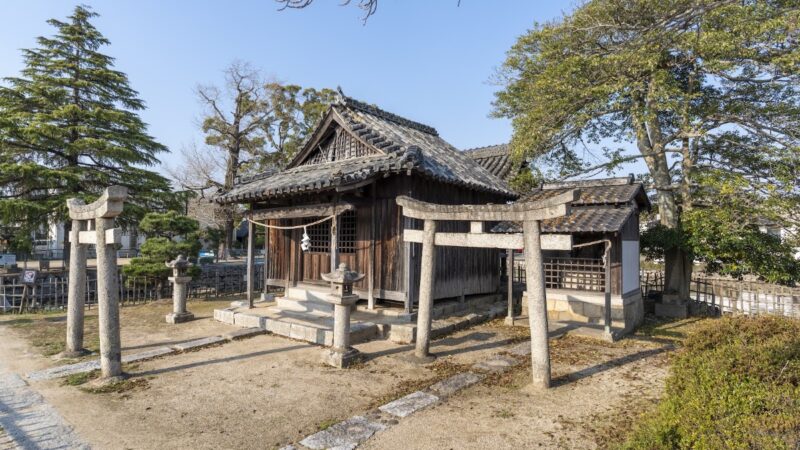
To the north of the castle ruins stand the Sanjinja Shrine, which is also believed to have a history dating back to the Nadegawa Jinya era.
Highlights of Nadegawa Castle
Wild-Wooded Stone Walls
When visiting Nadegawa Castle, the first thing to note is the high, wild-woodened stone walls. Mainly on the north and west sides, the nearly complete stone walls are impressive in their height, making them a magnificent sight for a flatland castle.
Observing the construction of the stone walls reveals the skillful combination of natural stones of various sizes. The technique, which minimizes processing while achieving a stable structure, speaks to the high skill of the stonemasons of the time.
The stone wall at the northwestern end of the turret base is particularly distinctive due to its protruding shape, making it a recommended spot for photography.
The Moat’s Landscape
The surrounding moat is another major attraction of Nadegawa Castle. Even today, the water-filled moat strongly retains the atmosphere of a swamp castle from the Sengoku period, allowing visitors to enjoy the scenery throughout the seasons.
In spring, cherry blossoms bloom, and the combination of the stone walls and cherry blossoms reflected in the moat’s surface is a breathtaking sight. In summer, the greenery deepens, and in autumn, the autumn leaves color the moat. The quiet moat in winter also has its own charm.
Development as Nadegawa Castle Ruins Park
Currently, the Nadegawa Castle ruins have been developed into Nadegawa Castle Ruins Park, serving as a place of relaxation for local residents. The park is well-maintained, creating an environment conducive to strolling through the castle ruins.
The relocated Jinya main gate at the park entrance is a valuable structure that preserves the style of Edo period gates and serves as a landmark for visitors to the castle ruins.
The three shrines located on the north side of the castle ruins also exude a historical atmosphere, making a visit for worship worthwhile.
Value as Okayama Prefecture’s First Designated Historic Site
The Nadegawa Castle ruins were designated as Okayama Prefecture’s first designated historic site on May 13, 1957. This indicates that Nadegawa Castle is an extremely important historical site in telling the history of Okayama Prefecture.
It boasts one of the largest scales among flatland castles in the prefecture, and its well-preserved remains, such as stone walls and moats, are highly valued. This is an extremely valuable historical site for understanding the castle structure of the late Sengoku period.
Access Information
Access by Public Transportation
Nearest Station: JR Sanyo Main Line, Niwase Station
Travel Time: Approximately 9 minutes on foot from the Niwase Station exit
Niwase Station is about 10 minutes from Okayama Station on the Sanyo Main Line, making it easily accessible. From the station to the castle ruins, you can easily reach it by following the signs.
Access by Car
Nearest Interchange: Sanyo Expressway, Okayama IC
Travel Time: Approximately 15 minutes from Okayama IC
It is also accessible from Okayama city center in about 20 minutes by car. There is parking space around the Nadegawa Castle Ruins Park, but the number of spaces is limited, so we recommend using public transportation.
Visiting Hours and Notes
Nadegawa Castle Ruins Park is always open and free to visit. Admission is free. However, to protect the historical site, please note the following:
- Do not climb the stone walls
- Do not damage the remains
- Take your trash with you
- Observe proper etiquette when visiting the three shrines
Recommended nearby spots
Niwase Castle Ruins
Located about a 15-minute walk from Nadegawa Castle, Niwase Castle Ruins is another historical site worth visiting. Niwase Castle had a close relationship with Nadegawa Castle and functioned as a single entity during the Sengoku period. During the Edo period, it served as the administrative center of the Niwase Domain, and parts of the stone walls and moat still remain today.
Bitchu Takamatsu Castle Ruins
Located about a 10-minute drive away, Bitchu Takamatsu Castle Ruins is the site of the famous “water siege” by Hashiba Hideyoshi. Like Nadegawa Castle, it was one of the seven border castles and played an important role in the battle of 1582. It is now maintained as Takamatsu Castle Ruins Park, and a museum is also located there.
The Townscape of Ashimori
Located about 15 minutes by car, the Ashimori district is a beautiful area that retains the townscape of the Edo period. It has a history of flourishing as the castle town of the Ashimori Domain, and you can enjoy the charming scenery of white-walled townhouses and samurai residences lining the streets.
Tourist Attractions in Okayama City
Okayama city center is accessible in about 20 minutes by car or 15 minutes by train. There are many tourist attractions, such as Okayama Castle, Korakuen Garden, and the Okayama Prefectural Museum, making it ideal to visit in conjunction with a visit to Nadegawa Castle.
Points to Note When Visiting Nadegawa Castle
Best Season for Visiting
Nadegawa Castle can be visited throughout the year, but the following seasons are particularly recommended:
Spring (late March to early April): Cherry blossom season. The combination of cherry blossoms blooming around the moat and the stone walls is beautiful.
Autumn (mid to late November): Autumn foliage season. You can stroll around the castle ruins in a tranquil atmosphere.
Early Summer (May-June): Beautiful fresh greenery and mild weather, perfect for a stroll.
Photo Spots
- Northwesternmost Watchtower Base Remains: Characterized by the protruding stone wall, offering a clear view of the castle’s structure.
- Stone Wall Across the Moat: The stone wall reflected in the water is beautiful.
- Jinya Main Gate: A valuable structure that preserves the architectural style of Edo period gates.
- Panoramic View of the Moat and Stone Wall: Photographing from the outer perimeter of the park conveys the scale of the castle.
Estimated Time Required
To visit Nadegawa Castle Ruins Park, 30 minutes to an hour is sufficient, even if you take your time to look around. Even including photography and a visit to the three shrines, allow about an hour and a half.
To Deepen Your Understanding of History
To gain a deeper understanding of the history of Nadegawa Castle, we recommend researching the following information beforehand:
- The overall picture and interrelationships of the seven border castles
- The circumstances of the siege of Bitchu Takamatsu Castle
- The power dynamics of the Mimura, Mori, and Ukita clans
- The history of the Togawa clan and the role of the Nadegawa encampment
The Okayama City Library and the Okayama Prefectural Library hold local historical materials related to Nadegawa Castle, allowing you to obtain more detailed information.
The Cultural Value of Nadegawa Castle
Significance of Okayama Prefecture’s First Designated Historic Site
The fact that the Nadegawa Castle ruins were designated as Okayama Prefecture’s first designated historic site in 1957 demonstrates the high historical and academic value of this castle site. While there are numerous castle ruins in Okayama Prefecture, being the first to receive this designation is particularly noteworthy.
The reasons for its designation are as follows:
- Excellent Preservation of Remains: Stone walls, moats, and earthworks are well-preserved.
- Historical Significance: As one of the seven border castles, it conveys the history of the late Sengoku period.
- Large Scale: It boasts one of the largest scales among flatland castles in the prefecture.
- Academic Value: A valuable historical site showing the transition from the Sengoku period to the Edo period.
Efforts for Preservation and Utilization
The Nadegawa Castle ruins are appropriately preserved and managed through the cooperation of Okayama City and local residents. By developing it as a castle park, both the protection of the historical site and its use as a place of recreation for the community are achieved.
In recent years, interest in Nadegawa Castle has been growing among castle enthusiasts and history lovers, and it has received high praise on castle information websites such as “Kojodan” and “Nippon Shiro Meguri.” This increased interest is also leading to a greater awareness of the preservation of historical sites.
Future Challenges and Prospects
The following are future challenges for the Nadegawa Castle ruins:
- Continued preservation of remains: Continuous effort is needed to maintain the stone walls and moats.
- Strengthening information dissemination: Efforts to let more people know about the value of Nadegawa Castle.
- Collaboration with surrounding historical sites: Development of tourist routes through collaboration with sites such as Niwase Castle ruins and Bitchu Takamatsu Castle ruins.
- Educational use: Utilization as a place for local history education.
By addressing these challenges, the Nadegawa Castle ruins will continue to be passed down to future generations as a valuable cultural asset.
Summary
Nadegawa Castle is a valuable historical site that conveys the turbulent history of the late Sengoku period. It played an important role as one of the seven border castles of the Mori clan and was the stage for the historical event of Hashiba Hideyoshi’s invasion of the Chugoku region.
The well-preserved stone walls and moats still evoke the appearance of the castle at that time, and it boasts one of the largest scales among flatland castles in the prefecture. The fact that it is designated as Okayama Prefecture’s No. 1 Historic Site demonstrates its high historical and academic value.
Nadegawa Castle, located in Nadegawa, Kita Ward, Okayama City, is easily accessible from downtown Okayama, yet offers a quiet and peaceful atmosphere for enjoying historical walks. Visiting it along with the nearby Niwase Castle Ruins and Bitchu Takamatsu Castle Ruins will allow you to gain a deeper understanding of the history of Bitchu Province at the end of the Sengoku period.
This is a recommended spot not only for castle enthusiasts, but also for those interested in history and those who enjoy strolling. When you visit Okayama, be sure to stop by Nadegawa Castle Ruins Park.