Daisenyama Castle (Akaiwa City, Okayama Prefecture) Complete Guide: Remains, History, and Access Information
What is Daisenyama Castle?
Daisenyama Castle is a Sengoku period mountain castle located in Kusao, Akaiwa City, Okayama Prefecture. Built on the tip of a mountain ridge overlooking the Yoshii River, at an altitude of approximately 160 meters and a relative height of approximately 110 meters, it is noteworthy as a typical example of a medieval mountain castle in Bizen Province.
Because the castle ruins have been largely untouched and left neglected for many years, the remains such as earthworks and dry moats are preserved in extremely good condition. Due to this excellent state of preservation, it is a valuable historical site for understanding the structure and construction techniques of Sengoku period mountain castles.
Historical Background of Daisenyama Castle
Construction Period and Lord
Unfortunately, there is a lack of clear historical records regarding the detailed construction period and lord of Daisenyama Castle, and many aspects remain unknown. However, based on the structure of the castle and the style of the remains, it is considered certain that it was a mountain castle built during the Sengoku period. Bizen Province was a region where powerful warlords such as the Ukita and Urakami clans vied for supremacy during the Sengoku period, and Daisenzan Castle is believed to have played an important role in these turbulent times.
Relationship with Chausuyama Castle
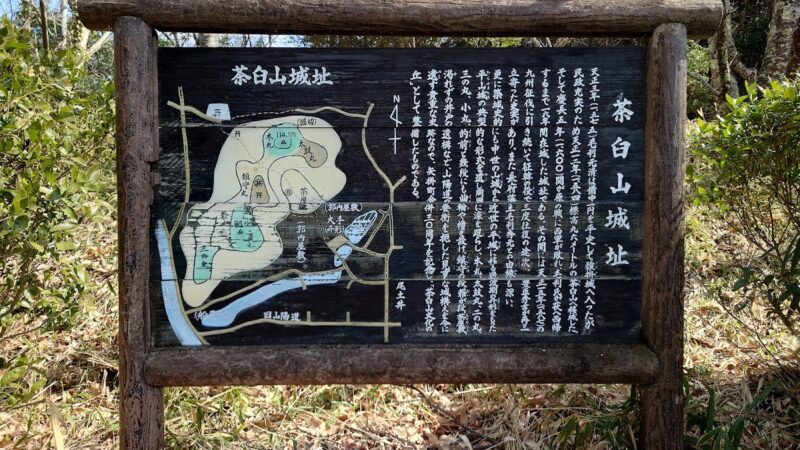
The most distinctive feature of Daisenzan Castle is its close relationship with Suai Chausuyama Castle, located approximately 300 meters to the northwest. Traditionally, Daisenzan Castle was thought to function as an outpost (branch castle) of Chausuyama Castle.
However, recent research suggests the possibility that Daisenzan Castle was the main castle. Comparing the remains of both castles, while Chausuyama Castle is larger in scale, some argue that Daisenzan Castle possesses a more sophisticated layout and superior castle-building techniques.
The most plausible theory is that the two castles functioned as a pair of fortresses. It is believed that each castle maintained its independence while complementing the others, playing a crucial role as a defensive stronghold in the Yoshii River basin.
Connection to Sasabe Kanjirō
In connection with Chausuyama Castle, the name of a person named Sasabe Kanjirō is mentioned. While details are unclear, he is believed to have been a warlord with some connection to the castles of this region. Understanding the activities of such local warlords is an important clue in understanding the group of castles around Daisenzan Castle.
Structure and Remains of Daisenzan Castle
Characteristics of the Layout
Daisenzan Castle is characterized by its layout that skillfully utilizes the tip of the mountain ridge. While maximizing the use of the natural terrain, ingenuity to enhance defensiveness can be seen throughout.
The castle is composed of multiple enclosures (kuruma), each demarcated by earthworks and moats. The structure, with defensive lines established in stages around the main enclosure, is typical of mountain castle construction techniques during the Sengoku period.
Earthworks
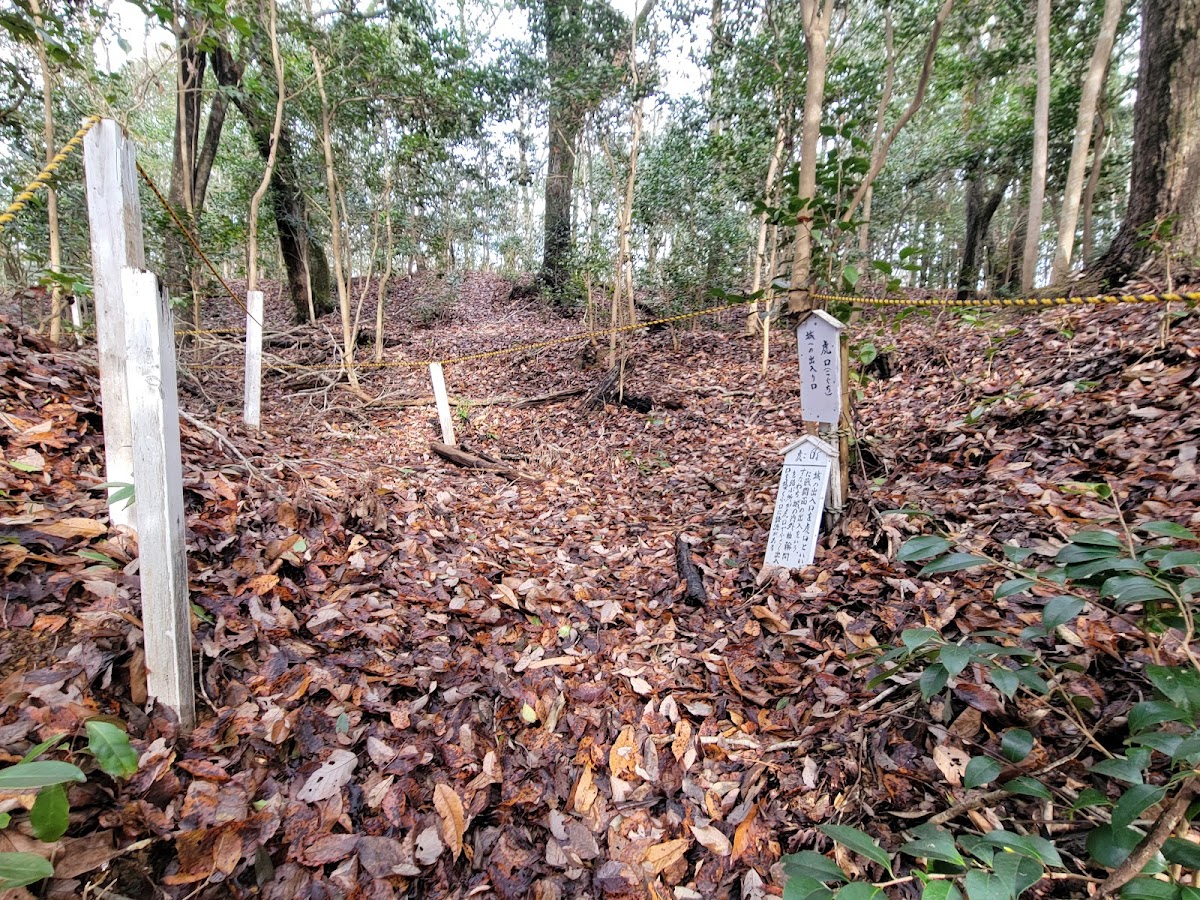
One of the greatest highlights of Daisenzan Castle is its well-preserved earthworks. The earthworks surrounding the enclosures retain much of their original height and shape, offering a glimpse into the civil engineering techniques of the Sengoku period.
The earthworks served to prevent enemy intrusion and also acted as a screen, obscuring the view of the enclosures from the outside. Due to their functionality and excellent state of preservation, the earthworks of Daisenzan Castle are highly regarded among castle researchers.
Dry Moats and Trenches
Several dry moats can be found within the castle grounds. Dry moats are important defensive structures designed to hinder enemy advances, and at Daisenzan Castle, they are effectively positioned according to the terrain.
In particular, the trenches cut across the ridges are noteworthy as defensive structures unique to mountain castles. These moats remain clearly visible despite years of weathering, making them valuable remains for understanding the castle’s structure at the time.
Enclosures (Kuruwa)
Daisenzan Castle has multiple enclosures. The castle features a hierarchical structure centered around the main enclosure, with the second and third enclosures appearing to have functioned as independent defensive strongholds.
The flat areas of the enclosures are relatively well-preserved, allowing us to imagine the original building layout. However, no clear remains such as building foundations have been confirmed.
Well Remains
Well remains are also found within the castle grounds. Securing water was a matter of life and death for mountain castles, and the presence of a well indicates that the castle was designed to withstand a long siege.
Further investigation is needed to determine the exact location and structure of the well, but it is an important remains for understanding the lifestyle aspects of mountain castle life.
Preservation Status and Value of Daisenzan Castle
Reasons for Good Preservation
The main reason for the good preservation of Daisenzan Castle’s remains is that it was largely untouched after its abandonment. While many castle sites have been altered by development and conversion to agricultural land, Daisenzan Castle was left as a forest, thus retaining much of its original appearance.
It’s ironic, but fortunate for castle research, that this “neglect” ultimately resulted in the preservation of a valuable cultural property.
Value in Sengoku Mountain Castle Research
Daisenzan Castle is an extremely important historical site for understanding the state of mountain castles during the Sengoku period. Because it has undergone minimal alterations, it allows for direct observation of construction techniques, defensive philosophies, and layout ingenuity.
In particular, as a typical example of a small to medium-sized mountain castle in Bizen Province, it is highly valued in regional history research. While Okayama Prefecture boasts numerous famous castles such as Okayama Castle, Tsuyama Castle, and Bitchu Matsuyama Castle, Sengoku period mountain castles like Daisenzan Castle are indispensable for understanding the lives and battles of the samurai of that time.
Access to Daisenzan Castle
Location
Address: Kusao, Akaiwa City, Okayama Prefecture
Daisenzan Castle is located in the mountainous area of Akaiwa City, making public transportation somewhat inconvenient.
Access by Car
Access by car is the most convenient. From the Sanyo Expressway’s Sanyo Interchange or Wake Interchange, take National Route 374 towards Kusao in Akaiwa City. The journey takes approximately 20-30 minutes.
Parking is limited near the castle entrance, so please be careful not to park on the street. Please be considerate of local residents.
Access by Public Transportation
The nearest station is Kumayama Station on the JR Sanyo Main Line, but the distance from the station to the castle ruins is considerable, making walking impractical. We recommend considering a taxi or rental car.
Castle Ascent Route
From the castle entrance to the main enclosure, you will be climbing a mountain path. The elevation difference is approximately 110 meters, so a certain level of physical fitness is required. Allow approximately 30-40 minutes for the ascent one way.
Many parts of the mountain path are not well-maintained, so appropriate clothing and shoes for hiking are essential. Particular caution is needed after rain, as the ground can become slippery.
Important Notes for Visitors
Equipment and Clothing
Daisenzan Castle is a full-fledged mountain castle, so the following equipment is recommended:
- Hiking boots or trekking shoes: Choose shoes with non-slip soles.
- Long-sleeved shirt and long pants: To protect yourself from vegetation and insects.
- Hat: To protect your head from the sun and branches.
- Gloves: There are times when you will need to use your hands to climb.
- Drinking water: Carry plenty of water, especially in summer.
- Insect repellent spray: Essential from spring to autumn.
Estimated Visiting Time
We recommend allowing 2-3 hours for visiting the castle ruins, including climbing, sightseeing, and descending. Those who wish to carefully observe the remains should allow even more time.
Safety Precautions
- Avoid Solo Visits: Visit in groups whenever possible.
- Check Weather: It’s wise to avoid visiting during or immediately after rain.
- Cell Phone Signal: Signal reception may be poor in mountainous areas.
- Check Sunset Time: Plan your visit with ample time.
- Wildlife: Be aware of wild boars, venomous snakes, and other animals.
Manners and Rules
- Protection of Historical Structures: Be careful not to damage earthworks or moats.
- Take Your Trash Home: Always take your trash with you.
- Respect for Private Property: Refrain from entering areas other than the designated castle route.
- No Open Fires: Absolutely avoid using open fires to prevent forest fires.
Nearby Castles and Tourist Spots
Shūzō Chausuyama Castle
As mentioned above, Chausuyama Castle, located approximately 300 meters northwest of Daisenzan Castle, is a castle you should visit together. Comparing the two castles will allow you to understand their respective characteristics and relationships more deeply.
Since Chausuyama Castle is also a mountain castle, it would be a good idea to visit both if you have the stamina. However, it will require a considerable amount of physical exertion, so be sure to allocate sufficient time and energy.
Major Castles in Okayama Prefecture
Okayama Prefecture has many fascinating castles:
- Okayama Castle: A castle with a distinctive black exterior located in Okayama City, the prefectural capital. It is also known as “Ujo” (Crow Castle).
- Bitchu Matsuyama Castle: Famous as a mountain castle with an existing keep. One of Japan’s three great mountain castles.
- Tsuyama Castle: A castle that once boasted a magnificent scale. Currently, the stone walls remain remarkably well.
- Kinojo Castle: A unique existence as an ancient mountain castle. Remains from the Asuka period still exist.
- Bitchu Takamatsu Castle: A castle famous for Toyotomi Hideyoshi’s water siege.
Although it differs in era and scale from Daisenzan Castle, comparing these castles allows for a more comprehensive understanding of the castle history of Okayama Prefecture.
Tourism in Akaiwa City
Akaiwa City has attractions other than castles:
- Kumayama Ruins: A historical site known for its mysterious stone masonry remains
- Ryoguyama Tumulus: A keyhole-shaped burial mound approximately 200 meters long
- Akaiwa City Peaches: Akaiwa City is famous for its peaches, and peach picking is available in season
Photography Tips for Daisenzan Castle
Tips for Photographing Ruins
When photographing the earthworks and dry moats of Daisenzan Castle, keep the following points in mind to take good photos:
- Direction of Light: The soft light of the morning makes it easier to express the three-dimensionality of the ruins
- Angle: Shooting from a low position looking up emphasizes the height of the earthworks
- Comparison Object: Including people conveys the scale of the ruins
- Season: The seasons of fresh greenery and autumn leaves offer a beautiful contrast between the ruins and nature
Viewpoint Photography
From the main enclosure, you can enjoy a panoramic view of the Yoshii River basin. On clear days, you can see the surrounding mountains and plains, giving you a real sense of the castle’s strategic importance.
Current Status and Challenges of Daisenzan Castle Research
Research Progress
While research on Daisenzan Castle is progressing through the work of castle researchers and local history researchers, many aspects remain unclear due to a lack of historical materials.
In recent years, the creation of layout maps and detailed surveys of the remains have gradually revealed the castle’s structure. Furthermore, research into its relationship with Chausuyama Castle is progressing from new perspectives.
Future Challenges
Future challenges in the study of Daisenzan Castle include:
- Identifying the Construction Period: Determining a more accurate date
- Identifying the Castle Lord: Who built and used this castle, and when?
- Relationship with Chausuyama Castle: Understanding the division of functions and chronological relationship between the two castles
- Preservation of the Remains: Measures to maintain their good condition
- Utilization Methods: Potential for use as a regional resource
By addressing these challenges, it is expected that the historical value of Daisenzan Castle will become even clearer.
Recommended Points for Castle Enthusiasts
Attractions for Enthusiasts
Daisenzan Castle is classified as a “minor castle,” but that’s precisely why it’s packed with appealing elements for castle enthusiasts:
- Unaltered Remains: Experience a raw, untouched Sengoku period mountain castle.
- Tranquil Environment: Unspoiled by tourism, allowing for a thorough exploration of the remains.
- The Joy of Exploration: Few signposts provide the satisfaction of discovering the remains yourself.
- Photography: With fewer people, you can concentrate on photographing the remains.
Beginner-Friendly Points
On the other hand, Daisenzan Castle also has appeal for those new to mountain castles:
- Easy-to-Understand Remains: Clearly preserved earthworks and moats make the castle’s structure easy to understand.
- Moderate Size: Not too massive, easily explored in half a day.
- Sense of Accomplishment: A sense of accomplishment after visiting the castle.
Summary
Daisenzan Castle, located in Akaiwa City, Okayama Prefecture, is a valuable historical site with well-preserved remains and an intriguing historical background, representing a mountain castle from the Sengoku period. Its relationship with Chausuyama Castle, the clearly visible earthworks and dry moats, and the experience of reflecting on the Sengoku period in a quiet mountain setting will be unforgettable for castle enthusiasts.
Access is somewhat inconvenient and requires a proper mountain climb, but this only increases the special charm that only visitors can experience. When touring castles in Okayama Prefecture, we recommend visiting not only the famous Okayama Castle and Tsuyama Castle, but also these Sengoku period mountain castles.
Daisenzan Castle may not be flashy, but it is a valuable cultural heritage that conveys the spirit of the samurai of the Sengoku period. With appropriate equipment and preparation, please do visit this hidden gem of a castle.