Shojigatake Castle (Fukuoka Prefecture, Miyako District) Complete Guide | History, Remains, and Access Information
What is Shojigatake Castle?
Shojigatake Castle is a medieval mountain castle built on the summit of Mt. Shojigatake, at an altitude of 427.3 meters, located in Katsuyama Matsuda, Miyako-cho, Miyako District, Fukuoka Prefecture. It is also known as “Kibajo” (meaning “fortress castle”), a name it has long been familiar to locals.
As a strategic point in Buzen Province, it was located at a key transportation hub where important roads such as the Tagawa Road and Akizuki Road passed through, and strategically situated with a view of Kawara-dake Castle across the Kanebe River. From its construction in 1336 (Kenmu 3) until its abandonment during the Tensho era, it functioned as the political and military center of the Buzen region for approximately 250 years.
Even today, the remains of the castle, including the baileys, earthworks, and moats, are well-preserved, making it one of the best-preserved mountain castles in Fukuoka Prefecture and highly regarded by castle enthusiasts and history buffs.
History of Shojigatake Castle
Construction and the Ashikaga Clan Era
Shojigatake Castle is said to have been built in 1336 (Kenmu 3rd year/Engen 1st year) by Ashikaga Suruga-no-kami Muneuji at the command of Ashikaga Takauji. This period marked the beginning of the Nanboku-cho period (Northern and Southern Courts period), a time of turmoil immediately preceding Ashikaga Takauji’s establishment of the Muromachi Shogunate.
Ashikaga Muneuji built the castle in this strategically important location in Buzen Province to establish the Ashikaga clan’s power in Kyushu, making it a base for the Northern Court against the Southern Court forces. The origin of the name Shojigatake is unclear, but theories related to the mountain’s shape and topography are considered the most likely.
Changes in Castle Lords During the Sengoku Period
From the Muromachi period to the Sengoku period, Shojigatake Castle was an important stronghold in Buzen Province and the stage for numerous battles. The castle lords changed over time, with powerful local warlords such as the Chiba, Sugi, Moji, and Senju clans succeeding the Ashikaga clan.
Especially during the Sengoku period, its location on the front lines of the power struggle between the Otomo and Mori clans led to fierce battles between the two sides. The castle was repeatedly captured, and its lord changed each time, experiencing a turbulent history.
Toyotomi Hideyoshi’s Kyushu Campaign and Kuroda Yoshitaka
The most important event in the history of Shojigatake Castle was Toyotomi Hideyoshi’s Kyushu Campaign, which took place from 1586 to 1587.
In 1586 (Tensho 14), Hideyoshi mobilized a large army to conquer Kyushu. Shōjigatake Castle was then in the hands of forces loyal to the Shimazu clan, making it a crucial target for the Kyushu campaign. Kuroda Yoshitaka (Kuroda Kanbei), known as Hideyoshi’s strategist, commanded the attack on Shōjigatake Castle alongside Kobayakawa Takakage.
This battle marked Kuroda Yoshitaka’s first major display of military strategy in Kyushu and is often referred to as his “debut battle in Kyushu.” The Kuroda army, using skillful tactics, captured the castle, and Shōjigatake Castle fell into the hands of the Toyotomi forces.
Hideyoshi’s Entry into the Castle and Use as Lodging
Records indicate that Toyotomi Hideyoshi himself entered Shōjigatake Castle during the Kyushu campaign. The castle served as lodging for Hideyoshi’s army and functioned as one of the bases for the Kyushu campaign.
After its fall, Shōjigatake Castle came under the control of Kuroda Yoshitaka and became a castle of the Kuroda clan. However, after the completion of the Kyushu campaign, the military importance of the castle gradually declined due to territorial relocations and reorganizations under the Toyotomi regime.
The Road to Abandonment
After the Battle of Sekigahara (1600), the Kuroda clan was transferred to Chikuzen Province, and Buzen Province became the territory of the Hosokawa clan, and later the Ogasawara clan. Due to the Edo Shogunate’s “One Castle Per Province” decree, Shojigatake Castle was officially abandoned in 1615.
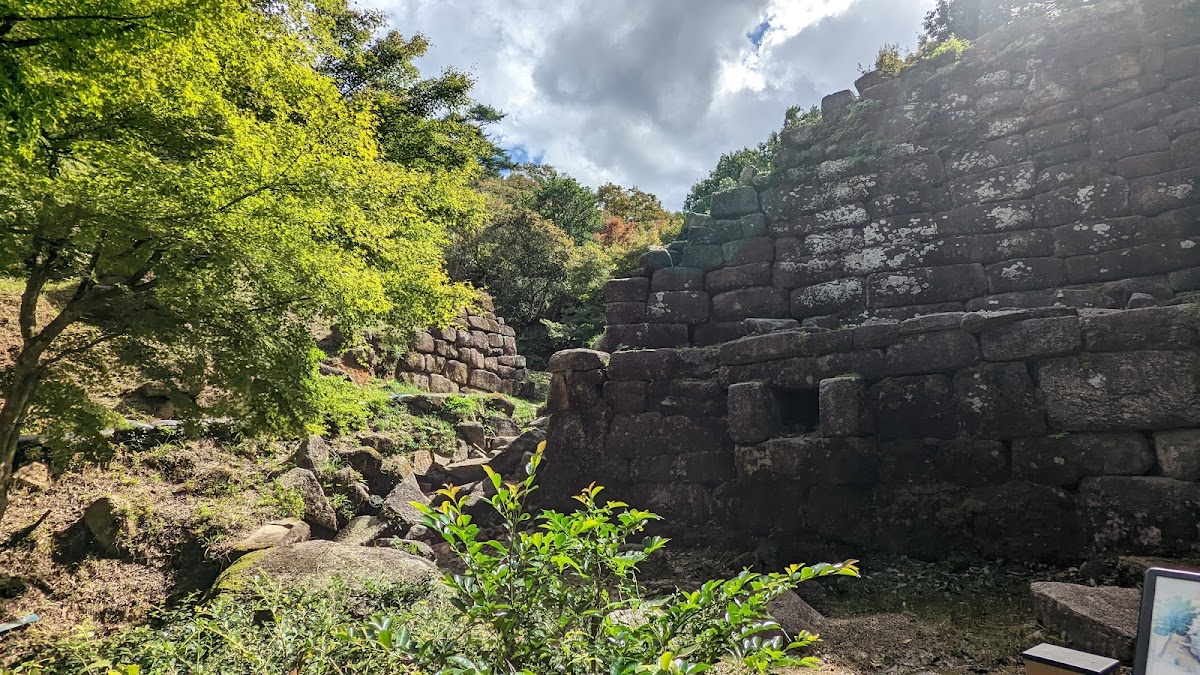
After its abandonment, the castle’s facilities gradually disappeared, but because it was an earthen castle without stone walls, basic remains such as earthworks and moats were preserved in relatively good condition.
Structure and Remains of Shojigatake Castle
Layout and Overall Composition
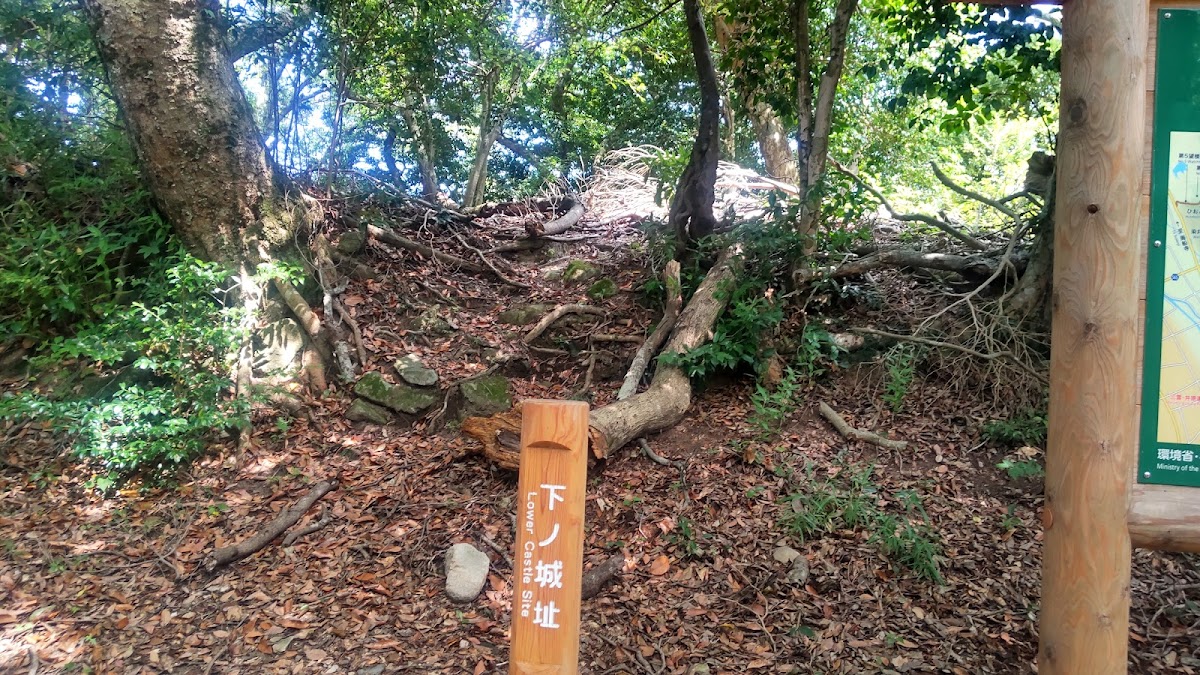
Shojigatake Castle is a typical mountain castle built around the summit of a mountain at an altitude of 427.3 meters. It has a linear layout with multiple baileys arranged around the main bailey at the summit.
The castle grounds extend approximately 200 meters east-west and 300 meters north-south, with the main features concentrated on the eastern peak of the mountaintop. Remains believed to be watchtowers and outworks exist on the western peak, indicating a defensive system utilizing both the eastern and western peaks.
Honmaru (Main Enclosure)
The Honmaru is located at the highest point, 427 meters above sea level, and is a flat area approximately 21 meters east-west and 36 meters north-south. A clearly visible earthen embankment, over 1 meter high, surrounds almost the entire perimeter of the enclosure, showcasing a typical defensive structure of a medieval mountain castle.
From the Honmaru, a 360-degree panoramic view unfolds, encompassing the Kanebe River basin, Mount Kawara, Mount Hikosan, and the Suo Sea. This excellent view indicates its important role as a military surveillance function.
Enclosures
Several enclosures are arranged in a stepped pattern around the Honmaru. These enclosures served as troop garrisons, storage facilities for supplies, and battlefield positions.
In particular, relatively large enclosures were constructed on the east and south sides of the main keep, forming an important defensive line. Each enclosure is clearly separated by elevation changes, demonstrating a skillful design that takes advantage of the terrain unique to medieval mountain castles.
Moats and Defensive Structures
Moats were constructed throughout the castle, serving as important defensive structures to prevent enemy incursions from the ridges. Several distinct moats can be seen, especially on the eastern ridge, blocking the approach to the castle.
Most of the moats are about 2-3 meters deep and remain clearly visible as part of the terrain. These moats demonstrate ingenuity in utilizing the natural terrain while also being artificially excavated to enhance their defensive capabilities.
Earthworks
Earthworks were constructed around the main keep and other enclosures. These earthworks protected against enemy arrows and firearms, and also clearly defined the boundaries of the enclosures.
The earthworks of Shojigatake Castle were constructed purely by piling up earth, without the use of stone walls, demonstrating a typical construction method for medieval mountain castles. Even today, earthworks approximately 1 to 1.5 meters high remain in excellent condition, providing valuable resources for learning about the castle-building techniques of the time.
Remains on the Western Peak
On the western peak, slightly away from the eastern peak where the main keep is located, flat areas and small enclosures, thought to be watchtowers, have been identified. Although slightly lower in elevation than the main keep, this western peak is presumed to have played an important role as a monitoring and communication base for the western area.
A saddle exists between the two peaks, which is thought to have been used as a movement route within the castle.
Highlights of Shojigatake Castle
Well-Preserved Remains
The greatest highlight of Shojigatake Castle is the group of remains that remain in remarkably good condition, even after more than 400 years. The earthworks of the main keep, the layout of each enclosure, and the moats are clearly visible, making this a valuable historical site where you can experience the structure of a medieval mountain castle.
In recent years, local preservation societies and the government have been maintaining the site by improving walking paths and mowing the grass, creating a safe and comfortable environment for visiting the castle ruins. Such an easily accessible and enjoyable castle site is rare nationwide, making it a place that can be enjoyed by a wide range of people, from beginners to advanced visitors.
Magnificent Views
The 360-degree panoramic view from the main keep is one of the major attractions of Shojigatake Castle. On a clear day, you can see the Hikosan mountain range, Kawara-dake, and even the Suo Sea, offering a panoramic view of the geographical landscape of Buzen Province.
In particular, the relative positions of the castles across the Kanabe River basin from Kawara-dake Castle provide an excellent point to appreciate the strategic placement of the two castles facing each other. It’s easy to imagine how the castle lords of the time used this view to govern and defend their territories.
A Site Associated with Kuroda Kanbei
Shojigatake Castle holds special significance for fans of Kuroda Kanbei, as it is the place where the renowned military strategist Kuroda Yoshitaka (Kanbei) first commanded a full-scale battle in Kyushu.
In the siege of the castle in 1586 (Tensho 14), Kanbei’s military strategy was fully demonstrated, and this victory led to Toyotomi Hideyoshi’s later success in conquering Kyushu. By visiting the castle ruins, you can trace Kanbei’s footsteps and reflect on his military talent.
Enjoyment as a Hiker
Shojigatake Castle is not only a place to see the castle ruins, but also a mountain that can be enjoyed as a hike. The climb from Ajimi Sakura Park to the summit is moderately strenuous, and the hiking trail is relatively well-maintained.
A major attraction is the opportunity to enjoy the changing seasons—cherry blossoms in spring, refreshing forest bathing in the season of fresh greenery, and autumn foliage—while exploring history. Even those without much physical stamina can reach the summit without difficulty by taking breaks along the way.
Access Information
Access by Car
To Ajimi Sakura Park (Castle Entrance)
- Approximately 20 minutes from the Higashi-Kyushu Expressway “Yukuhashi IC” via National Route 201
- Approximately 15 minutes from the Higashi-Kyushu Expressway “Miyako Toyotsu IC” via Prefectural Road 28 and National Route 201
- Approximately 1 hour 30 minutes from Fukuoka City
Ajimi Sakura Park has a free parking lot with space for about 10 cars. This is the main entrance to Shojigatake Castle.
Using the Forest Road
While the forest road goes almost to the summit, it is narrow and has rough sections. Therefore, unless you have a four-wheel drive vehicle or a vehicle with high ground clearance, we recommend walking from Ajimi Sakura Park.
Access by Public Transportation
- Approximately 30 minutes by taxi from JR Nippo Main Line “Yukuhashi Station”
- Approximately 20 minutes by taxi from Heisei Chikuhō Railway “Imagawa Kappa Station”
Public transportation access is somewhat inconvenient, so we recommend using a rental car or arranging a taxi.
Ascent Route
Route from Ajimi Sakura Park (Recommended)
- Estimated Time: Approximately 40-50 minutes one way
- Elevation Difference: Approximately 200 meters
- Difficulty: Beginner to Intermediate
A walking trail is maintained from Ajimi Sakura Park, and you can ascend by following the signs. While there are some steep climbs along the way, the path is generally easy to walk. With appropriate breaks, even beginner hikers can reach the summit without difficulty.
Precautions for Climbing the Castle
- Wear athletic shoes or trekking shoes.
- Always carry drinking water (there is no water source at the summit).
- Insect repellent is recommended during summer.
- Carry rain gear in case of sudden weather changes.
- If climbing alone, it is recommended to submit a climbing plan.
Nearby Tourist Attractions
Kawara-dake Castle Ruins
Located on the opposite bank of the Kanebe River, Kawara-dake Castle was an important mountain castle that formed a pair with Shojigatake Castle. Visiting both castles will give you a deeper understanding of the castle network of Buzen Province.
Miyako Town Historical and Folk Museum
This museum allows you to learn about the history and culture of Miyako Town and houses exhibits and materials related to Shojigatake Castle. Visiting before or after visiting the castle ruins will give you a deeper understanding.
Buzen Kokubunji Temple Ruins
The ruins of Buzen Kokubunji Temple, built during the Nara period, are designated as a national historic site. This is an important historical site where you can feel the history of Buzen Province from ancient to medieval times.
Ayazuka Tumulus
This is a keyhole-shaped tumulus built in the late 6th century and is one of the representative tumuli of the Buzen region. It is known as a valuable archaeological site that tells the story of the power of ancient clans.
Best Season to Visit
Spring (March-May)
Late March to early April, when the cherry blossoms at Ajimi Sakura Park are in full bloom, is especially recommended. You can enjoy the cherry blossoms while climbing to the castle, and the temperature is suitable for hiking. The season of fresh greenery is also refreshing and comfortable.
Autumn (October-November)
During the autumn foliage season, the entire mountain is colored, and you can enjoy a beautiful landscape. The temperature is cool, making it the perfect season for hiking. The air is clear, so the view from the mountaintop is even more magnificent.
Times to Avoid
- Summer (July-August): High temperatures and an abundance of insects such as mosquitoes and horseflies require adequate precautions.
- Rainy Season (June): Hiking trails become muddy and slippery, so caution is necessary.
- Winter (December-February): Snow and ice are possible, so warm clothing is essential.
Points to Note When Visiting Shojigatake Castle
Estimated Time Required
- Castle Ascent Only: Approximately 2 hours round trip
- Including Visiting the Ruins: Approximately 2 hours 30 minutes to 3 hours round trip
- Including Surrounding Area Sightseeing: Half a Day to a Full Day
We recommend planning your trip with ample time.
Useful Items to Bring
- Camera (for photographing views and ruins)
- Binoculars (for observing distant scenery)
- Castle layout maps and related books (for deeper understanding)
- Snacks (for energy replenishment)
- Towel (for wiping sweat)
Visitor Etiquette
- Do not damage the ruins
- Always take your trash with you
- Do not unnecessarily walk on earthworks or baileys
- Do not collect plants
- Use of fire is strictly prohibited
Summary
Shojigatake Castle is a masterpiece of medieval mountain castles remaining in Miyako-cho, Kyoto-gun, Fukuoka Prefecture. From its construction in 1336 (Kenmu 3) to its abandonment in 1615 (Genna 1), it played an important role as a strategic point in Buzen Province for approximately 280 years.
This castle holds historical significance, particularly during Toyotomi Hideyoshi’s Kyushu campaign in 1586, when it was the site of a siege battle between Kuroda Yoshitaka (Kanbei) and Kobayakawa Takakage. Hideyoshi himself even stayed inside, using it as lodging.
Even today, the remains of the main keep’s earthworks, multiple baileys, and moats are well-preserved, making it a highly valuable historical site for learning about the structure of medieval mountain castles. The 360-degree panoramic view from the summit is breathtaking, offering a sweeping view of the geographical landscape of Buzen Province.
It’s easily accessible with a 40-50 minute hike from Ajimi Sakura Park, making it an attractive spot where you can enjoy both moderate exercise and historical exploration. With cherry blossoms in spring and autumn foliage to enjoy throughout the seasons, it’s a magnificent castle recommended not only for castle enthusiasts but also for hiking lovers and anyone interested in history.
When visiting Fukuoka Prefecture, be sure to visit Shojigatake Castle and experience the history of Buzen Province and the footsteps of Kuroda Kanbei.