Sasao Castle (Hatsukaichi City, Hiroshima Prefecture) Complete Guide: History, Highlights, and Access Information
What is Sasao Castle?
Sasao Castle was a medieval mountain castle that once existed in Hatsukaichi City, Hiroshima Prefecture. Currently, it is the grounds of Hatsukaichi Tenmangu Shrine and Shogakuin Temple, and although few castle remains exist, it was a historically important base with deep ties to Itsukushima Shrine.
Located on a small hill approximately 50 meters above sea level, it held a strategic position controlling a key transportation hub facing the Seto Inland Sea. It functioned as a subsidiary castle of Sakurao Castle and played a crucial role as an important military and political base in western Aki Province during the turbulent Sengoku period.
History of Sasao Castle
Construction History and Early Period
The origins of Sasao Castle can be traced back to its relationship with the Fujiwara clan, the priestly family of Itsukushima Shrine. It is said that the Hatsukaichi Tenmangu Shrine originated in 1233 (Tenpuku 1) when Fujiwara no Chikazane, who was appointed chief priest of Itsukushima Shrine in 1220 (Jōkyū 2), arrived at Sakurao Castle and invited the deity of Egara Tenjin Shrine in Kamakura to construct a shrine building. This is the origin of the present-day Hatsukaichi Tenmangu Shrine.
From the beginning, the Shinoo area had a close relationship with Sakurao Castle, which was the base of the Itsukushima Shrine chief priest family, and held religious and political importance. The Itsukushima Shrine chief priest family was not merely a religious leader, but also a powerful local lord in western Aki Province, and it is thought that Shinoo was chosen as their base of operations.
Shinoo Castle in the Sengoku Period
Shinoo Castle first appeared on the historical stage in 1524 (Daiei 4) during the Sengoku period. In this year, Tomoda Okifuji, a powerful local lord of Aki Province, was based at Sakurao Castle, but the Ouchi clan, a powerful daimyo of Suo Province, attacked it.
During this battle, it is believed that Yoshimi Mikawa-no-kami Yorikoshi, the Sugi clan, and the Naito clan, all on the Ouchi side, were stationed at Shinoo Castle. This record indicates that Shinoo Castle functioned as a forward base for attacking Sakurao Castle. The distance between the two castles was approximately 1 kilometer, making Shinoo Castle an ideal location for monitoring and attacking Sakurao Castle.
The Era of the Ouchi and Mori Clans
After the battle of 1524, Sakurao Castle came under the control of the Ouchi clan. It is also believed that Shinoo Castle came under the influence of the Ouchi clan. The Ouchi clan was a powerful force in western Japan, based in Suo and Nagato provinces, and considered the region from western Aki Province to Itsukushima to be of great importance.
In 1551 (Tenbun 20), when Ouchi Yoshitaka was killed by his vassal Sue Harukata (the Dainei-ji Incident), the situation in Aki Province changed dramatically. It was during this period of turmoil that Mori Motonari rose to power. The Mori clan defeated Sue Harukata in the Battle of Itsukushima in 1555 (Koji 1), establishing their hegemony over Aki Province.
While detailed records of how Shinoo Castle was used during this period are scarce, it is presumed that, along with Sakurao Castle, it was incorporated into the Mori clan’s system of rule.
Changes from the Early Modern Period Onward
After the Battle of Sekigahara, when the Mori clan was transferred to Suo and Nagato provinces, Fukushima Masanori took up residence in Hiroshima. Later, in 1619 (Genna 5), Asano Nagaakira became the lord of Hiroshima Domain. During this period, medieval mountain castles lost their military value, and many castles were abandoned.
Shinoo Castle had already lost its function as a fortress by the early Edo period and is thought to have been developed as the grounds of Hatsukaichi Tenmangu Shrine. The shrine developed as a center of local faith, and traces of the castle gradually disappeared.
Structure and Layout of Shinoo Castle
Location and Topography
Shinooo Castle was built on a hill approximately 50 meters above sea level, facing the Seto Inland Sea. This hill is long and narrow from north to south, with mountains to the north and a coastal plain to the south. The Mitarai River flows to the east, and the hill where Sakurao Castle is located is to the west.
This location was strategic, controlling a key point for both land and sea transportation and enabling coordination with Sakurao Castle. It was positioned to monitor maritime traffic in the Seto Inland Sea and controlled an important point along the Sanyo Road.
Estimated Castle Structure
Currently, no clear remains of Shinoo Castle can be confirmed. However, by comparing it with other mountain castles in Aki Province from the same period, its structure can be inferred.
As a medieval mountain castle, it is thought to have had a main enclosure (honmaru) surrounded by several smaller enclosures (kuruwa). It is presumed to have been a typical multi-enclosure layout, with the main enclosure at the top of the hill and the second and third enclosures surrounding it.
As for defensive structures, it is possible that earthworks and trenches were constructed around the enclosures. However, given its nature as a subsidiary castle, it is thought not to have had the same large-scale defensive structures as the main castle, Sakurao Castle.
Current Topography and Remains
The current grounds of Hatsukaichi Tenmangu Shrine show several elevation changes (flat areas), which may be remnants of the former enclosures. However, due to years of development as a shrine, it is difficult to identify clear remains of the castle.
While no prominent remains such as stone walls or earthworks can be found, careful observation of the temple grounds reveals traces of a medieval castle. In particular, the arrangement of elevation changes and flat areas within the grounds may hold remnants of the castle’s layout.
Highlights of Shinoo Castle
Hatsukaichi Tenmangu Shrine
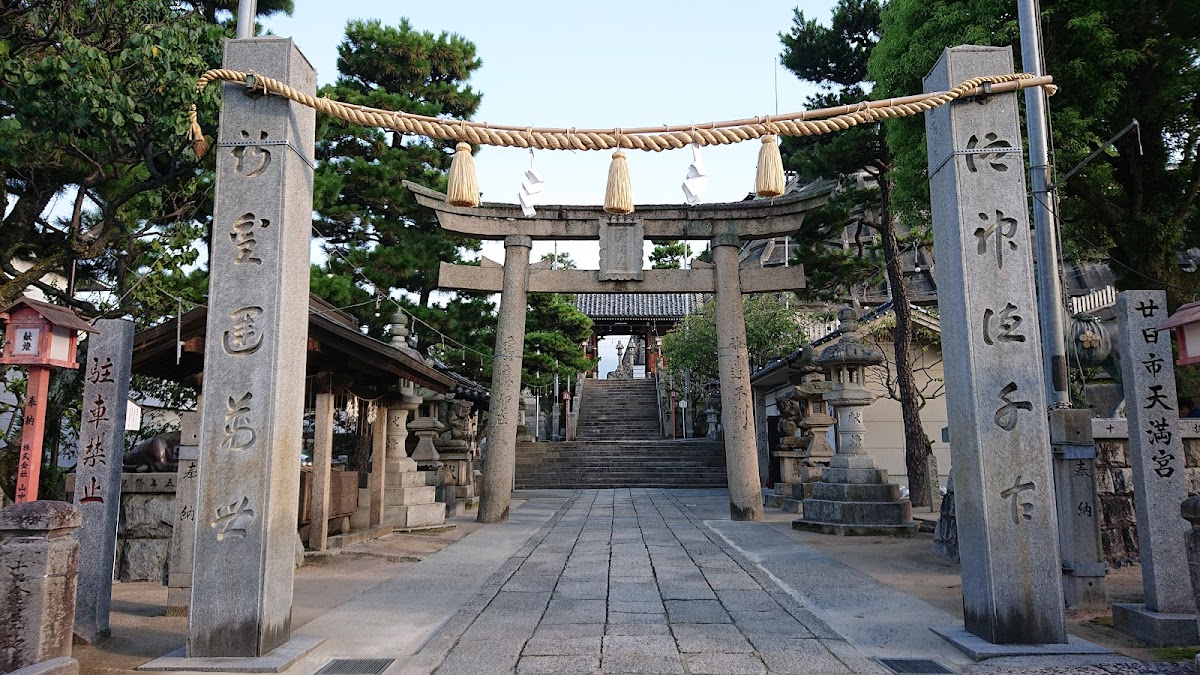
The current center of the Shinoo Castle site is Hatsukaichi Tenmangu Shrine. Since its founding in 1233 (Tenpuku 1), it has developed as a center of local faith. It enshrines Sugawara no Michizane, the god of learning, and is beloved by the local people.
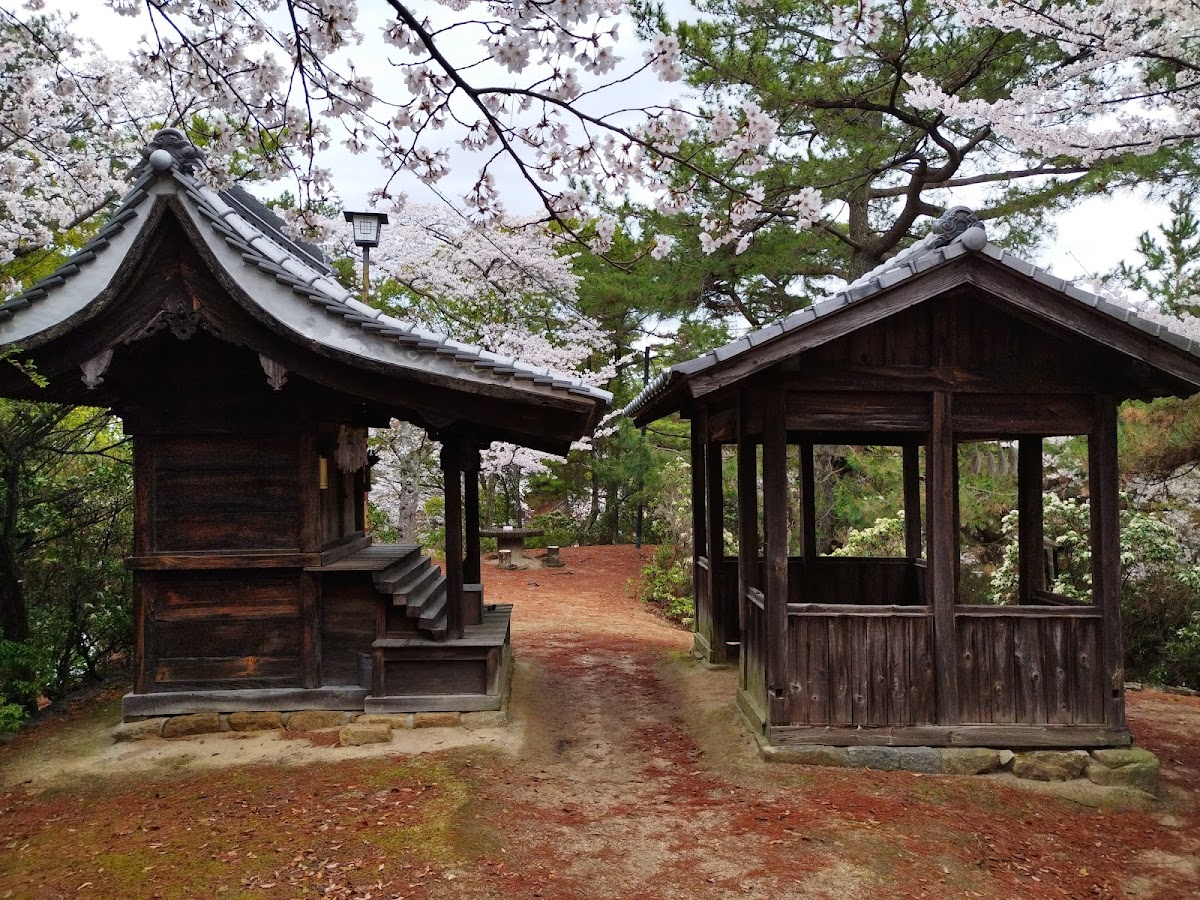
The grounds include the main hall, the worship hall, and several smaller shrines. The grounds are well-maintained and easily accessible. Many worshippers visit, especially during exam season.
From the Tenmangu Shrine grounds, one can overlook the city of Hatsukaichi, experiencing the excellent views that the former castle once offered. The view towards the Seto Inland Sea is excellent, highlighting the importance of its location as a base for monitoring maritime traffic.
Shōgakuin Temple
Shōgakuin Temple is located adjacent to Hatsukaichi Tenmangu Shrine. This temple is also situated within the ruins of Shinoo Castle, indicating that this area held religious significance since the castle era.
Shōgakuin Temple is a Shingon Buddhist temple, and its tranquil grounds are ideal for worship and strolling. Traces of the former castle can be found in the temple’s layout and the topography of its grounds.
Surrounding Landscape
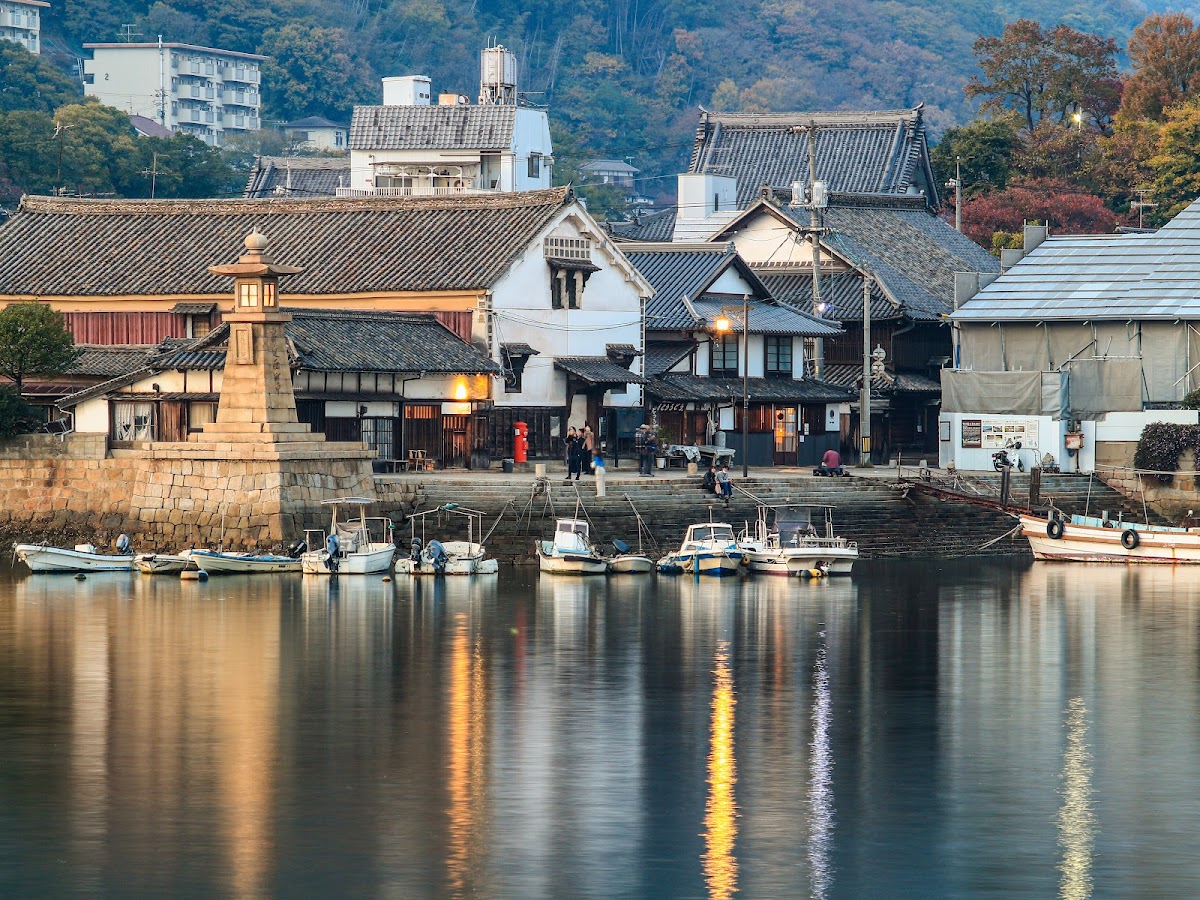
The area around Shinoo Castle ruins, while located within the city of Hatsukaichi, retains a historical atmosphere. The approach to Tenmangu Shrine and the surrounding alleys retain traces of the old townscape, giving a sense of a castle town.
The view from Tenmangu Shrine towards Sakurao Castle ruins is particularly important for understanding the relative positions of the two castles. It allows one to imagine how the two castles, located approximately 1 kilometer apart, were interconnected.
Historical Value
Although Shinoo Castle does not have many significant remains, it is an important historical site for understanding the military history of Aki Province during the Sengoku period. It is a valuable historical site that tells the story of Aki Province’s history, including the conflicts between the Ouchi clan and local lords, the activities of the priestly family of Itsukushima Shrine, and the rise of the Mori clan.
Access Information
Access by Public Transportation
Using the JR Sanyo Main Line
- Approximately 20 minutes on foot from the South Exit of JR Hatsukaichi Station
- Head south from the station, passing through the city center towards Tenmangu Shrine
- There are signs along the way, making it a relatively easy route to follow.
Using the Hiroshima Electric Railway
- Approximately 17 minutes on foot from Hiroden Hatsukaichi Station
- This route is convenient if using Hiroden from Hiroshima city center
- Head northeast from the station, passing through the city center towards Tenmangu Shrine
Access by Car
Using the Sanyo Expressway
- Approximately 10 minutes from Hatsukaichi IC
- Head towards National Route 2 after exiting the IC, passing through the city center to Tenmangu Shrine
Using National Route 2
- Approximately 30 minutes from Hiroshima city center
- Head west on National Route 2, then turn north into Hatsukaichi city center.
Parking Information
Hatsukaichi Tenmangu Shrine has a parking lot for visitors. However, space is limited, and it may be full during peak seasons such as New Year’s Day. There are also coin-operated parking lots nearby, which you can use.
When visiting, we recommend considering using public transportation. Walking routes from JR Hatsukaichi Station or Hiroden Hatsukaichi Station allow you to stroll through Hatsukaichi city center and enjoy the local atmosphere.
Parking Information
Hatsukaichi Tenmangu Shrine has a parking lot for visitors. However, space is limited, and it may be full during peak seasons such as New Year’s Day. There are also coin-operated parking lots nearby, which you can use.
When visiting, we recommend considering using public transportation. Walking routes from JR Hatsukaichi Station or Hiroden Hatsukaichi Station allow you to enjoy a stroll through Hatsukaichi city center and experience the local atmosphere.
Parking Information
Hatsukaichi Tenmangu Shrine has a parking lot for visitors. However, space is limited, and it may be full during peak seasons such as New Year’s Day. ### Points to Note When Visiting
- Hatsukaichi Tenmangu Shrine is an active shrine, so please observe proper etiquette when visiting.
- You can freely explore the grounds, but please be considerate if a Shinto ritual is being performed.
- When searching for castle ruins, please be careful not to disturb the grounds.
- Photography is permitted, but please be considerate of other visitors.
Nearby Tourist Attractions
Sakurao Castle Ruins
If you visit Shinoo Castle, you should definitely visit Sakurao Castle Ruins. Located about 1 kilometer west of Shinoo Castle, it is accessible on foot. Sakurao Castle was the main castle of Shinoo Castle and an important fortress that served as the base of the priestly family of Itsukushima Shrine.
Currently, it is the grounds of Sumiyoshi Shrine, and like Shinoo Castle, there are few clearly identifiable remains, but it is a historically significant site. Visiting both castles will help you understand the medieval castle network.
Itsukushima Shrine
Located about 10 minutes by boat from Hatsukaichi City, Itsukushima Shrine is a representative Japanese shrine registered as a World Heritage Site. The history of Shinoo Castle and Sakurao Castle is deeply intertwined with the priestly family of Itsukushima Shrine, and visiting them together will give you a deeper understanding of the history of western Aki Province.
The magnificent torii gate and shrine buildings floating on the sea are breathtakingly beautiful, attracting many tourists from both Japan and abroad. Visiting Itsukushima Shrine after learning about the history of Shinoo Castle will give you a real sense of the power and influence of the priestly family.
Hatsukaichi City Center
The city center of Hatsukaichi City retains the atmosphere of an old town. It has a history as a former post town and flourished as an important transit point on the Sanyo Road. Strolling through the city center allows you to enjoy the atmosphere of a castle town.
The local shopping streets have traditional Japanese confectionery shops and craft shops, allowing you to experience the local culture. Furthermore, there are many restaurants serving dishes made with fresh seafood from the Seto Inland Sea, making it a great place for gourmet food lovers.
Tourist Spots in Hiroshima City
Hatsukaichi City is adjacent to Hiroshima City, offering excellent access to Hiroshima’s tourist attractions. You can easily visit Hiroshima’s representative tourist spots, such as Hiroshima Castle, the Atomic Bomb Dome, and Peace Memorial Park.
Hiroshima Castle, in particular, is a typical example of a modern castle, contrasting sharply with Shinoo Castle, making it an interesting point of comparison for learning about the history of castle development.
Castles Related to Shinoo Castle
Major Castles of Aki Province
Understanding Shinoo Castle requires knowing its relationship to other castles in Aki Province.
Yoshida-Koriyama Castle
This was the base of the Mori clan and the largest mountain castle in Aki Province. Mori Motonari extensively developed it, making it a base for becoming the ruler of the Chugoku region. After Shinoo Castle came under the control of the Mori clan, it became part of a castle network centered around Yoshida-Koriyama Castle.
Hiroshima Castle
A modern castle built by Mori Terumoto, located in the heart of present-day Hiroshima City. It is evidence of the Mori clan’s rise to power as a major daimyo in the Chugoku region and an important example of the development from medieval mountain castles like Shinoo Castle to modern flatland castles.
Niitakayama Castle
The base of the Kobayakawa clan, it controlled the Numata River basin. Allied with the Mori clan, it was an important castle in eastern Aki Province.
Surrounding Branch Castles
Sakurao Castle and Shinoo Castle were part of a castle network around Itsukushima Shrine. It is believed that other small forts and watchtowers were also located in this area, forming a comprehensive defense system for monitoring and defending maritime traffic.
Resources for Learning about Shinoo Castle
References
The following resources are helpful for learning about Shinoo Castle.
“Comprehensive Guide to Japanese Castles, Volume 13: Hiroshima and Okayama” (Shin Jinbutsu Oraisha)
This is a fundamental reference book that comprehensively introduces castles in Hiroshima Prefecture. It also includes information on Shinoo Castle, allowing you to learn about its historical background and structure.
“Walking Through Hiroshima’s Medieval Castles” (Keisui-sha)
This book provides commentary based on actual visits to medieval castles in Hiroshima Prefecture. It offers detailed explanations of the site conditions and how to interpret the remains.
“Castles of Aki: 50 Selected Castles and the True Image of Aki Castles” (Harvest Publishing)
This book selects representative castles of Aki Province and explains their history and actual conditions. It allows you to deepen your understanding of the regional castle network, including Shinoo Castle.
Local Museums
There are facilities in Hatsukaichi City where you can learn about local history. Hatsukaichi City’s local history museum, for example, has exhibits on local history and culture, and may also house materials related to Shinoo Castle. It is recommended to inquire before visiting. ## Model Course for Visiting Shinoo Castle
Half-Day Course (Mainly Walking)
- Start from JR Hatsukaichi Station or Hiroden Hatsukaichi Station (9:00)
- Stroll through the city (9:00-9:30)
- Enjoy the old townscape as you head towards Tenmangu Shrine
- Visit Hatsukaichi Tenmangu Shrine and Shinoo Castle Ruins (9:30-10:30)
- Stroll through the grounds and look for traces of the castle
- Enjoy the view and observe the surrounding terrain
- Visit Shogakuin Temple (10:30-11:00)
- Move to Sakurao Castle Ruins (11:00-11:20)
- Approximately 20 minutes on foot
- Visit Sakurao Castle Ruins (11:20-12:00)
- Stroll through the grounds of Sumiyoshi Shrine
One-Day Tour (Including Itsukushima Shrine)
This tour includes visits to the ruins of Shinoo Castle and Sakurao Castle in the morning, followed by a trip to Itsukushima Shrine in the afternoon. Visiting Itsukushima Shrine, which provides historical context for both castles, will deepen your understanding.
- Morning: Visit to Shinoo Castle Ruins and Sakurao Castle Ruins (See the half-day course above)
- Lunch: Hatsukaichi city center or Miyajimaguchi (12:00-13:00)
- Ferry from Miyajimaguchi to Itsukushima (13:00-13:10)
- Visit Itsukushima Shrine (13:10-15:00)
- Stroll around Miyajima (15:00-16:30)
- Return trip (16:30-)
Summary
Although Shinoo Castle is a castle site with no clear remains, it is an important historical site connected to many historical events, including the military history of Aki Province during the Sengoku period, the activities of the priestly family of Itsukushima Shrine, and the conflict between the Ouchi and Mori clans.
While the site is now Hatsukaichi Tenmangu Shrine, a center of local faith, and its remnants as a castle have faded, observing its location and topography allows us to understand its former strategic importance.
Visiting it along with Sakurao Castle and Itsukushima Shrine allows us to learn about the complex relationships between politics, military affairs, and religion in western Aki Province during the Middle Ages. Shinoo Castle is an unmissable spot for anyone touring castles in Hiroshima Prefecture or exploring the history along the Seto Inland Sea.
Access is relatively easy, within walking distance of JR and Hiroshima Electric Railway stations. Combining a visit to Shinoo Castle with a stroll through Hatsukaichi city or a visit to the World Heritage site, Itsukushima Shrine, makes for a fulfilling historical sightseeing experience.
For castle enthusiasts, those interested in Japanese history and culture, and tourists visiting Hiroshima Prefecture, Shinoo Castle ruins are a historical site well worth seeing. Why not reflect on the turbulent history of the Sengoku period in the tranquil grounds of the Tenmangu shrine?