跡.png)
Miyoshi Castle (Fukushima Prefecture) Complete Guide: The 500-Year Residence of the Ishikawa Clan and the Rise and Fall of the Sengoku Period
Located in Ishikawa Town, Ishikawa District, Fukushima Prefecture, Miyoshi Castle is known as the residence of the Ishikawa clan, who ruled Ishikawa District in Mutsu Province from the late Heian period to the Sengoku period. Also known as “Ishikawa Castle,” this mountain castle is an important historical site that conveys the history of the Ishikawa clan over approximately 500 years. This article will provide a detailed explanation of the history of Miyoshi Castle, from its construction to its abandonment, the characteristics of its castle structure, and access information.
History of Miyoshi Castle: The Rise and Fall of the Ishikawa Clan
Construction and the Roots of the Ishikawa Clan
There are various theories regarding the construction date of Miyoshi Castle, but it is believed to have been built around the Kohei era (1058-1065) by Ishikawa Arimitsu. Ishikawa Arimitsu was a descendant of the Seiwa Genji clan and the grandson of Minamoto no Yorichika, the younger brother of Minamoto no Yorimitsu.
The Ishikawa clan’s expansion into eastern Japan dates back to the Former Nine Years’ War (1051-1062). Minamoto no Yorito and his son Arimitsu, who served under Minamoto no Yoriyoshi, participated in the battle against the Abe clan. While Yorito was killed in action, Arimitsu was granted the Ishikawa estate in Mutsu Province for his service. Initially, Arimitsu built Fujita Castle in Fujita-go, Shirakawa District, as his residence. However, seeking a location with better water resources, he built a new castle in what is now Shimoizumi, Ishikawa Town. This marked the beginning of Mitsuashi Castle.
Ishikawa Arimitsu, who moved from Settsu Province to Mutsu Province, established the foundation of the Ishikawa clan in this area. From then on, Mitsuashi Castle served as the residence of successive generations of the Ishikawa clan, becoming the center of Ishikawa District’s rule for approximately 500 years.
The Ishikawa Clan’s Relationship with Surrounding Forces During the Sengoku Period
With the arrival of the Sengoku period, the Ishikawa clan struggled with their relationships with powerful surrounding forces. The Ishikawa clan’s geographical location, sandwiched between two major powers—the Satake clan from the south and the Date clan from the north—created an extremely difficult situation for them.
In 1563, the 24th head of the Ishikawa clan, Ishikawa Harumitsu, made a crucial decision. Under pressure from the Satake clan and other forces, and seeking the protection of the Date clan, he adopted Date Harumune’s fourth son, Chikamune (later Ishikawa Akimitsu), and handed over the family headship to him. This politically motivated adoption was a desperate measure to ensure the Ishikawa clan’s survival while maintaining its independence.
However, this strategy did not last long. In 1567, Satake Yoshishige, a powerful daimyo of Hitachi Province, led a large army to attack Mitsuashi Castle. After a fierce battle, Mitsuashi Castle fell to the Satake forces. This battle was a major blow to the Ishikawa clan, but they continued to maintain their power afterward.
Dispossession and Abandonment of the Castle under the Toyotomi Regime
The Ishikawa clan’s final demise was brought about by Toyotomi Hideyoshi’s pacification of Oshu. In 1590, Hideyoshi ordered all daimyo throughout Japan to participate in his attack on the Hojo clan of Odawara. However, Ishikawa Akimitsu (24th head of the clan) did not participate in this Odawara campaign.
After the Odawara campaign, Hideyoshi implemented a large-scale reorganization of the daimyo’s positions in the Tohoku region, known as the Oshu pacification. At this time, the Ishikawa clan was dispossessed of their domain for their non-participation in the Odawara campaign. The Ishikawa clan’s rule over Ishikawa County, which had continued for approximately 500 years, ended here, and Mitsuashi Castle was abandoned.
After its abandonment, the site of Mitsuashi Castle became the grounds of Iwatsutsukowake Shrine, which remains so to this day.
Structure and Features of Mitsuashi Castle
Location and Utilization of Topography
Mitsuashi Castle is a mountain castle built on Mount Atago in the Imadegawa River basin, a tributary of the Abukuma River. The main keep is located on the mountaintop at an altitude of approximately 300 meters, and its defensive layout is characterized by its skillful use of the surrounding steep terrain.
The central part of the castle is surrounded on three sides by steep cliffs, with the natural terrain forming a strong defensive line. Only the northwest direction has a relatively gentle slope, so a dry moat was dug in this direction to strengthen the defenses. This dry moat was artificially excavated and was an important defensive structure to prevent enemy intrusion.
Connected Enclosure Layout
Mitsuashi Castle is designed as a connected enclosure mountain castle. A connected enclosure is a castle structure in which multiple enclosures are arranged in a straight line, and is a common form in mountain castles.
The castle grounds were centered around the main keep (Honmaru), with surrounding enclosures such as the East and West Enclosures (Horikiri). A large dry moat (horikiri), approximately 50 meters long, stretched between the Honmaru and the West Enclosure. This moat served as the final line of defense, preventing enemy advances to the Honmaru even if they managed to penetrate the West Enclosure.
Remains of Earthworks and Moats
Even today, the remains of earthworks and moats, which demonstrate the castle’s structure at the time, are well-preserved at the site of Mitsuashi Castle. Earthworks are earthen walls built by piling up earth around enclosures, preventing enemy intrusion and serving as a foundation for fences and walls.
Moats are dry moats dug to cut across ridges, serving as important defensive structures to block enemy advance routes. The moats at Mitsuashi Castle are considerably deep and wide, demonstrating the advanced mountain castle construction techniques of the Sengoku period.
These remains are protected as part of the grounds of the Ishitsutsukowake Shrine, and are therefore preserved in relatively good condition, making them a valuable viewing spot for castle enthusiasts and history buffs.
Historical Events Related to the Ishikawa Clan
The Former Nine Years’ War and the Ishikawa Clan’s Expansion into Eastern Japan
The Former Nine Years’ War is indispensable when discussing the history of the Ishikawa clan. In the mid-Heian period, the Abe clan, the predecessor of the Oshu Fujiwara clan, was expanding its power in Mutsu Province. The imperial court dispatched Minamoto no Yoriyoshi as the governor of Mutsu to suppress them.
Minamoto no Yorito and his son Arimitsu participated in this war, and Arimitsu achieved meritorious service despite the sacrifice of his father’s death. After the war, Arimitsu was rewarded with Ishikawa Manor in Mutsu Province, and he established this area as his base and adopted the name Ishikawa.
This sequence of events follows a similar pattern to many branches of the Minamoto clan that expanded their power in eastern Japan from the Kamakura period onward, and illustrates the Ishikawa clan’s transformation from a central samurai group to a local powerful family.
Relationship with the Date Clan: Political Adoption and Succession
For the Ishikawa clan during the Sengoku period, their relationship with the Date clan was a crucial factor in their survival. The adoption in 1563 created a deep bond that went beyond mere alliance.
By adopting Chikamune (later renamed Ishikawa Akimitsu), the fourth son of Date Harumune, the Ishikawa clan gained a status equivalent to that of a member of the Date family. This provided them with the powerful backing of the Date clan to the north, countering pressure from the Satake clan to the south.
However, this relationship also had aspects that undermined the Ishikawa clan’s independence. By effectively falling under the influence of the Date clan, the Ishikawa clan’s independent diplomacy narrowed, and they came to be perceived as allied with the Date clan by forces opposed to them.
The Attack by Satake Yoshishige
The attack on Mitsuashi Castle by Satake Yoshishige in 1567 was a significant turning point in the history of the Ishikawa clan. Satake Yoshishige, a powerful daimyo of Hitachi Province during the Sengoku period, was expanding his influence in southern Oshu and attempting to encroach upon the sphere of influence of the Date clan.
Mitsuashi Castle fell after a fierce battle, but historical records detailing this battle are limited. However, it is clear that the Satake clan’s military pressure posed a serious threat to the Ishikawa clan.
Even after this capture, the Ishikawa clan was not completely annihilated and is believed to have maintained a certain level of power. However, caught between the two major powers, the Date and Satake clans, the Ishikawa clan’s position became extremely unstable.
Highlights and Castle Remains of Mitsuashi Castle
Integration of Ishitsutsukowake Shrine and Castle Ruins
Currently, the site of Mitsuashi Castle is the grounds of Ishitsutsukowake Shrine. This shrine has long been revered as the guardian shrine of Ishikawa Town and has deep ties to the history of Mitsuashi Castle.
While strolling through the shrine grounds, you can see castle remains in various places. Around the main shrine, traces of earthworks remain, and in some places along the approach to the shrine, the remains of a moat can be seen. The integrated landscape of the shrine and castle ruins is a major characteristic of Mitsuashi Castle, creating a valuable space where one can feel the historical atmosphere.
Main Enclosure and West Enclosure Moat
The greatest highlight of Mitsuashi Castle is the approximately 50-meter-long moat located between the main enclosure and the west enclosure. This moat remains clearly visible even today, and its depth is considerable. Visiting the site in person is truly astonishing in its sheer size.
The main enclosure is currently a flat space, suggesting that the lord’s residence and other important facilities once stood here. Looking around, one can see the terrain with steep cliffs on three sides, highlighting its excellent location as a natural stronghold.
Earthworks and Enclosure Arrangement
The earthworks remaining throughout the castle grounds are important remains for understanding the defensive system of a mountain castle from the Sengoku period. The height and width of the earthworks reveal insights into the castle-building techniques and defensive strategies of the time.
The layout of the castle, a series of interconnected enclosures, is also evident. Each enclosure is separated by elevation changes, reflecting a multi-layered defensive system where, even if the enemy breaches one enclosure, the next provides a defensive position.
Views and Surrounding Landscape
From the ruins of Mitsuashi Castle, you can enjoy a panoramic view of Ishikawa town. The view overlooking the Abukuma River and the surrounding mountains evokes a sense of historical romance, suggesting that the castle’s former lords also gazed upon this same scenery.
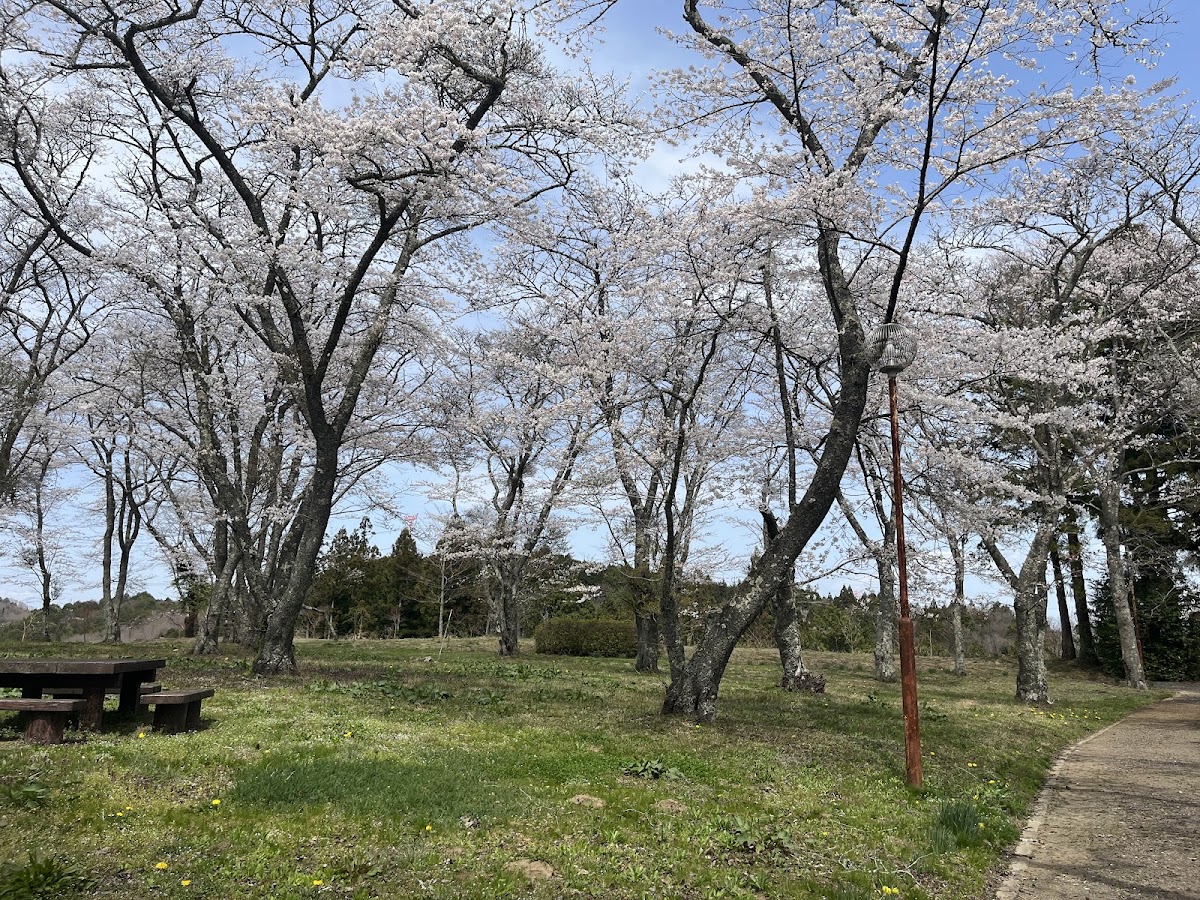
Especially during the cherry blossom season in spring and the autumn foliage season, the surrounding nature is beautifully colored, allowing visitors to enjoy both historical exploration and nature appreciation simultaneously.
Access and Visiting Information for Mitsuashi Castle
Access by Public Transportation
The nearest station to the Mitsuashi Castle ruins is Iwaki-Ishikawa Station on the JR Suigun Line. The castle ruins are approximately a 20-minute walk from the station. The easiest route to get there is to head towards the town center from the station and then towards Ishitsutsukowake Shrine.
If you are traveling on foot, there are signs along the way, so you should be able to arrive relatively easily. However, since the castle ruins are on a mountain, you will have to climb a certain amount of slope. We recommend wearing comfortable shoes.
Access by Car
If you are traveling by car, the most convenient route is to take the Tohoku Expressway to either the Sukagawa IC or Shirakawa IC and then take National Route 118. Once you enter the center of Ishikawa town, you will see signs for Ishitsutsukowake Shrine.
The shrine has a parking lot for visitors, from which you can explore the castle ruins on foot. It’s about a 10-minute uphill walk from the parking lot to the main keep.
Precautions During Your Visit
Since the Mitsuashi Castle ruins are within the grounds of Ishitsutsukowake Shrine, it is important to show respect to the shrine when visiting. Also, some parts of the castle ruins are wooded, and the ground may be uneven in places.
The ground becomes particularly slippery after rain and during winter, so caution is necessary. Also, don’t forget to bring insect repellent during the summer. When visiting the castle ruins, it’s important to be considerate and avoid damaging the remains.
Nearby Tourist Attractions
Besides Mitsuashi Castle, Ishikawa Town has many other historical sites. Fujita Castle ruins were the residence of the Ishikawa clan before Mitsuashi Castle, and are also worth a visit.
Ishikawa Town is also known as a “town of stone,” and the stone industry is thriving there. There are facilities within the town that convey the culture of stone, and visiting them in conjunction with a castle tour will allow you to gain a deeper understanding of the region’s history and culture.
Other castle ruins in Fukushima Prefecture, such as Shirakawa Komine Castle (different from Shiraishi Castle) in Shirakawa City and Aizuwakamatsu Castle (Tsuruga Castle) in Aizuwakamatsu City, are relatively close and can be included in a castle-visiting itinerary.
Points to Note When Visiting Mitsuashi Castle
How to Enjoy as a Castle Enthusiast
Mitsuashi Castle is a valuable historical site that retains many characteristics of a mountain castle from the Sengoku period. For castle enthusiasts, paying attention to the following points during your visit will allow you to understand the castle’s structure more deeply.
- Scale and Placement of the Moat: The large moat separating the main keep and the west enclosure is a must-see. Its depth and width reveal a strong awareness of defense.
- Status of Earthworks: By observing the shape of the earthworks remaining around each enclosure, you can understand the castle construction techniques of the time.
- Utilization of Topography: You can appreciate how the location, protected on three sides by steep cliffs, is an excellent natural fortress.
- Consecutive Enclosure Layout: Observe the arrangement of multiple enclosures in a connected fashion to understand the concept of multi-layered defense.
Enjoying the Site as a Historical Walk
Beyond simply viewing the castle ruins, one way to enjoy Mitsuashi Castle is to reflect on the history of the Ishikawa clan while strolling through the grounds. The rise and fall of the Ishikawa clan, who ruled this land for approximately 500 years from the Heian period to the Sengoku period, can be considered a microcosm of Japanese medieval history.
As descendants of the Minamoto clan who settled in eastern Japan after their achievements in the Former Nine Years’ War, how did the Ishikawa clan take root in this land, develop, and then ultimately be swept away by the tides of history? Walking through the castle ruins while feeling the weight of this history will provide a deeper emotional experience than simply viewing ruins.
Photography Tips
Mitsuashi Castle ruins are also a suitable spot for photography. The following compositions are particularly recommended:
- A landscape where the Ishitsutsukowake Shrine buildings and the castle ruins are integrated.
- A panoramic view of the large moat separating the main keep and the west enclosure.
- Details of the earthworks and remains of the baileys.
- Views from the castle ruins (Ishikawa town and surrounding mountains).
- Combinations of seasonal nature (cherry blossoms, fresh greenery, autumn leaves, snowscapes) and the castle ruins.
Especially the morning light and the slanted light of the evening highlight the unevenness of the remains, allowing for photographs with a sense of depth.
Mitsuashi Castle and the Culture of Ishikawa Town
Mitsuashi Castle as a Symbol of Ishikawa Town
The Mitsuashi Castle ruins are a symbolic presence in Ishikawa Town and are at the core of the region’s identity. The town’s history is inseparable from the history of the Ishikawa clan, and the strength of this connection is evident from the fact that the name “Ishikawa” remains in the town’s name even today.
In Ishikawa Town, efforts are being made to protect and utilize the Mitsuashi Castle ruins as an important cultural property of the region. Local history enthusiasts and cultural heritage preservation groups conduct cleaning and guided tours, and the site is cherished as a source of pride for the local residents.
Tracing the Footsteps of the Ishikawa Clan
Besides Mitsuashi Castle, several other historical sites associated with the Ishikawa clan remain in Ishikawa Town. Fujita Castle ruins were the first base of the Ishikawa clan, and visiting both Mitsuashi Castle and Fujita Castle provides a deeper understanding of the Ishikawa clan’s history.
Furthermore, Ishitsutsukowake Shrine has a history of being revered as the tutelary deity of the Ishikawa clan, and learning about the shrine’s history also contributes to a deeper understanding of the Ishikawa clan.
Local History Education and Mitsuashi Castle
Mitsuashi Castle ruins are also used as a site for local history education. Local elementary and junior high schools provide opportunities for students to visit Mitsuashi Castle as part of their local history studies.
Through these efforts, the region’s history and culture are being passed down to the next generation, and awareness of the preservation of Mitsuashi Castle ruins is also increasing. This is a good example of how historical heritage can be protected and utilized within a community.
Summary: The Historical Value of Mitsuashi Castle
Mitsuashi Castle is a mountain castle that served as the residence of the Ishikawa clan for approximately 500 years, from the late Heian period to the end of the Sengoku period. The Ishikawa clan, descendants of the Minamoto clan who settled in Mutsu Province after their achievements in the Former Nine Years’ War, established their roots in this land and solidified their regional control. Mitsuashi Castle was the stage for this history.
During the Sengoku period, the Ishikawa clan, caught between the two major powers of the Date and Satake clans, struggled to survive through strategic adoptions and other means. This history is also etched into the castle. Ultimately, they were dispossessed of their domain during Toyotomi Hideyoshi’s pacification of Oshu, and Mitsuashi Castle was abandoned, but its remains are still well-preserved.
The castle ruins, protected as part of the grounds of the Ishitsutsukowake Shrine, contain numerous remains characteristic of Sengoku period mountain castles, including the main keep, the west wing, a large moat, and earthworks. These remains are invaluable historical materials that convey the castle-building techniques and defensive philosophies of the time.
While Fukushima Prefecture also boasts more famous castles such as Aizu-Wakamatsu Castle and Shirakawa-Komine Castle, Mitsuashi Castle possesses unique historical value as the residence of a local powerful family and as a historical site embodying the regional history from the medieval to the Sengoku period.
Its convenient location, accessible on foot from Iwaki-Ishikawa Station, is another attractive feature. Mitsuashi Castle is a historical site well worth visiting for castle enthusiasts, those interested in Japanese history or regional history, or anyone who enjoys historical walks.
When visiting Ishikawa Town, be sure to visit the Mitsuashi Castle ruins and experience the history of the Ishikawa clan spanning approximately 500 years and the appearance of a Sengoku period mountain castle. Standing on the site will allow you to truly appreciate the ingenuity of the terrain and the impressive scale of the remains.