Shirakawa Castle (Fukushima Prefecture) Complete Guide | Thorough Explanation of History, Remains, and Access
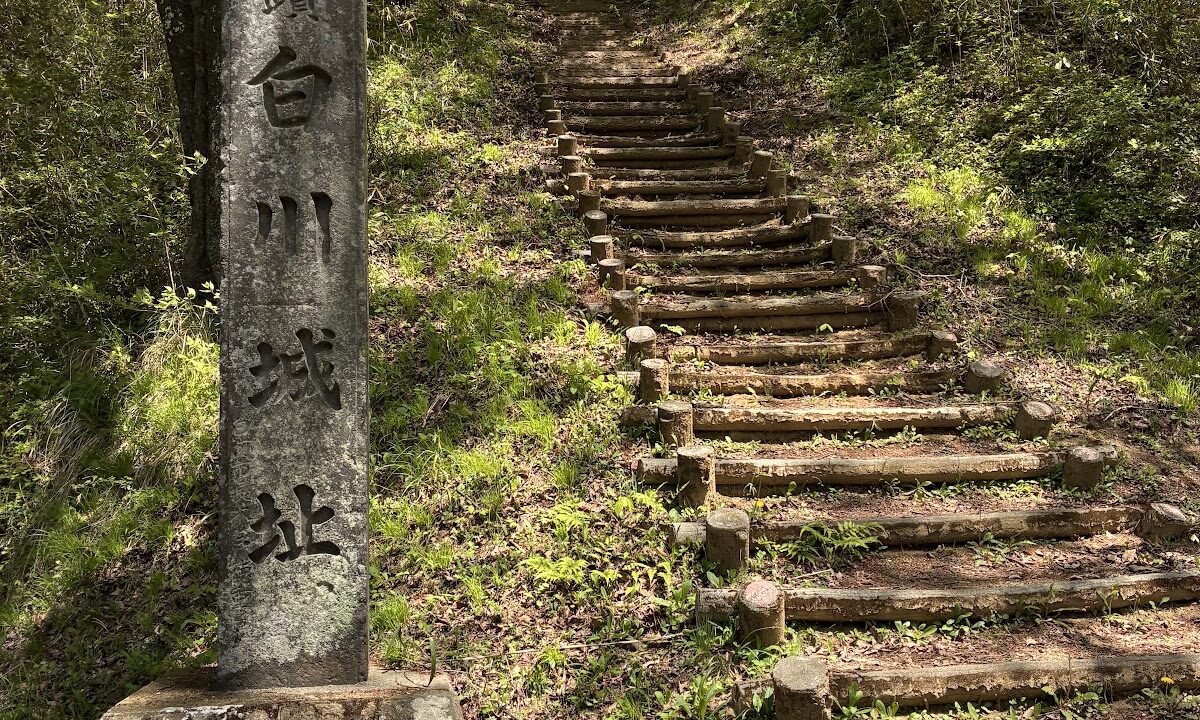
Shirakawa Castle is a medieval mountain castle built on Mt. Fujisawa in Shirakawa City, Fukushima Prefecture. Also known as Karame Castle and Yuki Shirakawa Castle, it functioned as the residence of the Shirakawa Yuki clan for approximately 350 years, from the Kamakura period to the end of the Sengoku period. In 2016, it was designated a national historic site and officially registered as a cultural property as “Shirakawa Castle Ruins.”
This article comprehensively explains the detailed history of Shirakawa Castle, the characteristics of its existing remains, points of interest, and access methods, providing useful information for castle enthusiasts and history lovers.
Basic Information on Shirakawa Castle
Location and Geography
Shirakawa Castle is located on Mt. Fujisawa in Shirakawa City, Fukushima Prefecture, built on a hillside overlooking the Abukuma River. The castle is located at an elevation of approximately 403 meters, with a relative height of approximately 60 meters, in a strategically important location overlooking the surrounding plains. The total area of the castle ruins covers 345,885.41 square meters, making it a considerably large-scale medieval castle.
Common Names/Alternate Names
- Shirakawa Castle (Shirakawa-jo): Official Name
- Karame Castle (Karame-jo): Alternate Name. Name meaning “rear gate” (the back gate side of the castle)
- Yuki Shirakawa Castle: Derived from the fact that it was the residence of the Shirakawa Yuki clan.
Classification and Structure
- Castle Classification: Mountain Castle
- Construction Style: Medieval Mountain Castle
- Main Structure: Earthworks, dry moats, baileys (belt baileys), trenches
- Keep Structure: None (As it is a medieval castle, there is no keep)
- Former Province Name: Shirakawa District, Mutsu Province
Builder and Construction Date
The builder is said to be Yuki Sukehiro, and the construction date is said to be Kencho 2 (1250). Sukehiro was the grandson of Yuki Tomomitsu, who distinguished himself in Minamoto no Yoritomo’s conquest of Oshu, and he moved to Shirakawa District and adopted the name Shirakawa.
History of Shirakawa Castle
Minamoto no Yoritomo’s Conquest of Oshu and Yuki Tomomitsu
The history of Shirakawa Castle dates back to Minamoto no Yoritomo’s conquest of Oshu in 1189. Yuki Tomomitsu, who distinguished himself in this battle, was rewarded with the position of jitō (land steward) of Shirakawa Manor. Tomomitsu was a powerful samurai based in Yuki, Shimotsuke Province, and at this point, he did not directly descend to Shirakawa.
Construction of the Castle by Yuki Sukehira and the Establishment of the Shirakawa Yuki Clan
In 1250, Yuki Sukehira, Tomomitsu’s grandson, descended to Shirakawa County and built Shirakawa Castle on Mount Fujisawa. Sukehira adopted the name Shirakawa in this area, marking the beginning of the history of the Shirakawa Yuki clan. Sukehira developed Shirakawa Castle as a base for governing the Shirakawa region, and thereafter, this castle became the residence of successive generations of the Shirakawa Yuki clan.
Prosperity during the Reign of Munehiro and Chikatomo
Yuki Munehiro, the son of Sukehiro, was an outstanding figure of exceptional military prowess, greatly expanding the Shirakawa clan’s territory. Munehiro and his son Chikatomo were appointed to the Mutsu Provincial Government Council during the Shoo era (1288-1293), solidifying the Shirakawa Yuki clan’s position in the Tohoku region.
During this period, the Shirakawa Yuki clan expanded their influence in the surrounding areas from their base at Shirakawa Castle, reaching the height of their prosperity as a powerful samurai family in southern Mutsu Province. It is believed that the castle’s fortifications were gradually expanded and improved, strengthening its defensive capabilities.
Turmoil during the Nanboku-cho Period
With the onset of the Nanboku-cho period, the Shirakawa Yuki clan also became embroiled in turmoil. While the Shirakawa Yuki clan generally sided with the Northern Court, they sometimes participated in battles against the Southern Court amidst the complex political situation in the Tohoku region. During this period, Shirakawa Castle’s importance as a military base increased, and it is presumed that practical defensive facilities were constructed.
From the Muromachi Period to the Sengoku Period
Throughout the Muromachi period, the Shirakawa Yuki clan maintained their power with Shirakawa Castle as their base. However, with the advent of the Sengoku period, the rise of powerful surrounding daimyo gradually worsened the Shirakawa Yuki clan’s position.
Especially in the 16th century, caught between powerful daimyo such as the Satake clan invading from the south and the Date clan from the north, the Shirakawa Yuki clan’s power steadily declined.
The Decline of the Shirakawa Yuki Clan and the Abandonment of the Castle
At the end of the Sengoku period, the Shirakawa Yuki clan lost power in conflicts with surrounding daimyo and ultimately perished. Along with the decline of the Shirakawa Yuki clan, Shirakawa Castle also ceased to serve its purpose and became an abandoned castle. While there are various theories regarding the exact date of its abandonment, it is generally believed to have occurred sometime between the late 16th and end of the 16th century.
Afterward, the Shirakawa area was ruled by various clans, including the Satake and Gamo clans. During the Edo period, Shirakawa Komine Castle (Shirakawa Castle) was developed as a new base, and Shirakawa Castle disappeared from the historical stage.
Remains and Highlights of Shirakawa Castle
Details of Existing Remains
At the Shirakawa Castle site, valuable remains exhibiting the characteristics of a medieval mountain castle have been confirmed in good condition.
Enclosures (Kuruwa)
The central part of the castle consists of multiple enclosures centered around the main enclosure. In particular, several layers of enclosures called obi-kuruwa (belt-shaped enclosures), created by leveling the slope in a belt-like fashion, have been confirmed, demonstrating a typical layout of a medieval mountain castle. These enclosures are thought to have served both defensive and residential functions.
Earthworks (Dorui)
Earthworks surround the enclosures as defensive structures. The earthen ramparts, built by piling up earth, served to prevent enemy intrusion and also to shield the interior of the enclosure from outside view. The clearly visible ramparts today are important remains for understanding the castle construction techniques of the time.
Dry Moats
To strengthen the castle’s defenses, multiple dry moats were excavated. Dry moats, which do not hold water, are a typical defensive structure in mountain castles and served to hinder enemy advances. The dry moats at Shirakawa Castle are cleverly positioned, utilizing the terrain, demonstrating the high level of castle construction technology in the medieval period.
Moats
Moats dug to divide the ridge have also been identified. Moats are important defensive structures in mountain castles to prevent enemy intrusion along the ridge, and they are strategically placed at Shirakawa Castle.
Preservation of Remains
Since the Shirakawa Castle site was preserved as a forest without undergoing large-scale development after its abandonment, the remains are relatively well-preserved. Earthworks, dry moats, and the elevation differences of the baileys remain clearly visible, making this a valuable historical site where the layout of a medieval mountain castle can be confirmed firsthand.
Characteristics as a Castle
Shirakawa Castle is a typical medieval mountain castle built on a hill overlooking the Abukuma River. Its layout, which skillfully utilizes the natural terrain, is an important example showing the evolution of castle construction techniques from the Kamakura period to the Sengoku period.
In particular, the structure with multiple terraced baileys demonstrates the wisdom of medieval mountain castles in efficiently utilizing the limited mountaintop area, making it a group of remains of high value for castle research.
Investigation and Research
History of Excavation
At the Shirakawa Castle site, detailed investigations were conducted by the Shirakawa City Board of Education in preparation for designation as a national historical site. These investigations have revealed the castle’s layout, the arrangement of remains, and the construction techniques, and the actual nature of its role as the residence of the Shirakawa Yuki clan is gradually being clarified.
Academic Value
Shirakawa Castle Ruins possess high academic value in the following respects:
- An example illustrating the evolution of medieval castles from the Kamakura period to the Sengoku period.
- Historical value as the base of the powerful samurai clan, the Shirakawa Yuki clan.
- A typical example of a medieval castle in the Tohoku region.
- The remains are well-preserved, making them valuable research materials.
These values were recognized, leading to its designation as a National Historic Site in 2016.
Recent Research Trends
Recent castle research has focused on creating layout maps and conducting detailed surveys of the remains. Furthermore, research is progressing to link the activities of the Shirakawa Yuki clan with the evolution of the castle through comparison with historical documents. It is expected that continued investigations and research will further shed light on the true nature of Shirakawa Castle.
Cultural Property Designation
National Historic Site Designation
Shirakawa Castle Ruins were designated a National Historic Site in 2016 (Heisei 28). The designated name is “Shirakawa Castle Ruins“. This designation officially recognizes Shirakawa Castle Ruins as a nationally important cultural property, and efforts will be made to preserve and utilize it.
Significance of Historic Site Designation
National Historic Site designation has the following significance:
- Official recognition of its value as a cultural property
- Strengthening of the preservation and management system
- Promotion of academic research
- Improvement of potential for use as a tourism resource
- Establishment of the region’s historical identity
In Shirakawa City, the designation as a historic site has prompted efforts to promote the appropriate preservation, management, and utilization of Shirakawa Castle Ruins.
Relationship between Shirakawa Castle and Shirakawa Komine Castle
Shirakawa Castle is often confused with Shirakawa Komine Castle (Shirakawa Castle). These are completely different castles, so we will clarify this here.
Shirakawa Castle (The subject of this article)
- Year of Construction: Kenchō 2 (1250)
- Builder: Yuki Sukehira
- Lord: Shirakawa Yuki clan
- Period: Kamakura period to Sengoku period
- Current Status: Mountain castle ruins, National Historic Site
Shirakawa Komine Castle (Shirakawa Castle)
- Year of Construction: Around Kōkoku 1/Ryakuō 3 (1340) (Early period), Kan’ei 9 (1632) (Renovated as a modern castle)
- Builder: Yuki Chikatomo (Early period), Niwa Nagashige (Modern period)
- Lord: Successive lords of the Shirakawa Domain
- Period: Nanboku-chō period to Edo period
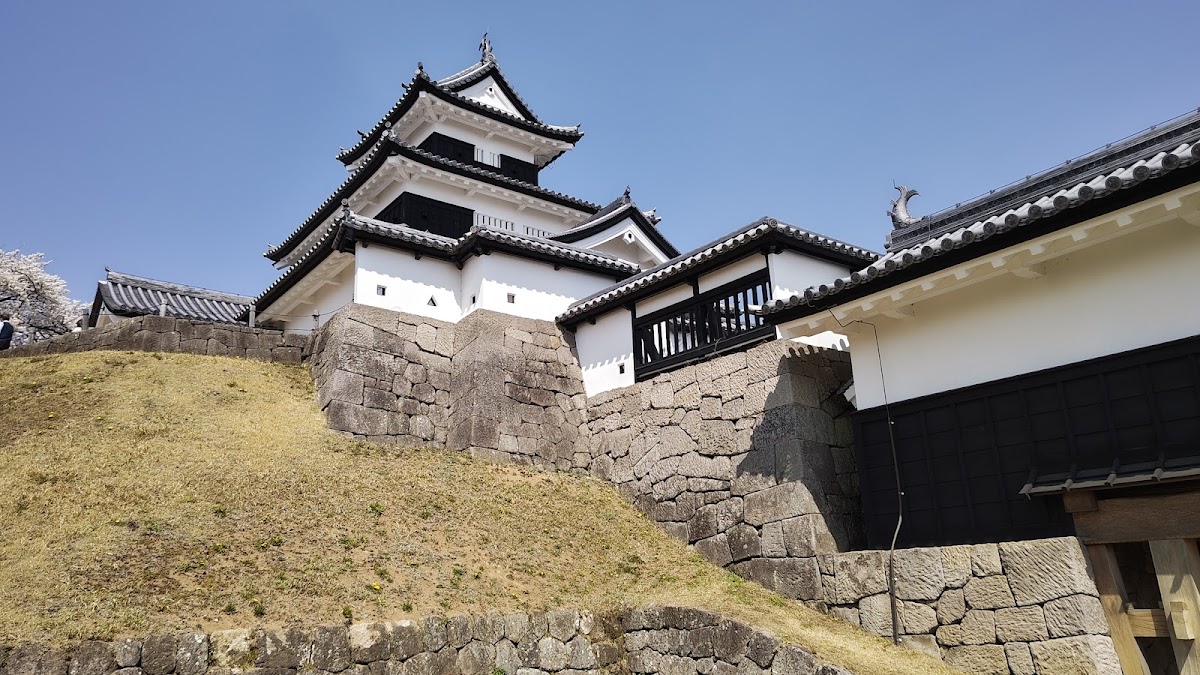
- Current Status: Hilltop castle, one of Japan’s Top 100 Castles, three-story turret restored
Shirakawa Komine Castle was newly built after the abandonment of Shirakawa Castle and functioned as the administrative center of the Shirakawa Domain during the Edo period. Currently, it serves as a symbol of Shirakawa City, with its three-story turret and front gate restored.
Access and Visiting Information
Location
Fujisawa-cho, Shirakawa City, Fukushima Prefecture 961-0000
Access Methods
Access by Car
- Approximately 15 minutes from Shirakawa IC on the Tohoku Expressway
- Parking: There may not be dedicated parking around the castle ruins, so it is recommended to check with the Shirakawa City Tourism Association in advance.
Access by Public Transportation
- Approximately 20 minutes by car from JR Tohoku Main Line Shirakawa Station
- Taking a taxi from Shirakawa Station is convenient.
- Please inquire with the Shirakawa City Tourism Association regarding bus routes.
Precautions During Visits
- Appropriate clothing and shoes for mountain climbing are necessary as it is a mountain castle.
- In summer, don’t forget insect repellent.
- Be careful of snow and ice in winter.
- Please walk on the designated viewing paths to avoid damaging the ruins.
- Using fire and littering within the historical site are strictly prohibited.
Estimated Visiting Time
If you plan to thoroughly explore the entire castle ruins, please allow 1-2 hours. If you only wish to see the main remains, 30 minutes to 1 hour is sufficient.
Tourist Attractions Around Shirakawa Castle
When visiting Shirakawa Castle, we recommend also visiting the surrounding historical sites.
Shirakawa Komine Castle (Shirakawa Castle)
As mentioned above, Shirakawa Komine Castle, a symbol of Shirakawa City, is a must-see. The reconstructed three-story turret is open for interior tours, allowing you to learn about Shirakawa’s history. It’s approximately a 15-minute drive from Shirakawa Castle.
Shirakawa Barrier Site
The site of the Shirakawa Barrier, one of the three ancient barriers of Oshu. From ancient to medieval times, it was an important barrier separating the capital from Tohoku. Approximately a 20-minute drive from Shirakawa Castle.
Nanko Park
The oldest park in Japan, built by Matsudaira Sadanobu, the lord of the Shirakawa domain. Enjoy the beautiful scenery of each season. Approximately a 20-minute drive from Shirakawa Castle.
Recommended Season for Visiting Shirakawa Castle
Spring (April-May)
This season of fresh greenery is ideal for exploring the mountain castle. The mild temperatures make it easy to view the ruins.
Autumn (October-November)
The autumn foliage is beautiful, making this the season to best appreciate the atmosphere of the mountain castle. The weather is stable and suitable for visiting.
Summer/Winter Precautions
In summer, precautions against heat and insects are necessary. In winter, snow and ice may make visiting difficult, so please check the conditions in advance.
Summary
Shirakawa Castle (Shirakawa City, Fukushima Prefecture) is a medieval mountain castle that functioned as the residence of the Shirakawa Yuki clan for approximately 350 years, from the Kamakura period to the Sengoku period. Since its construction by Yuki Sukehira, it played an important role in the history of the Tohoku region as the base of the Shirakawa Yuki clan.
The well-preserved remains of the castle, including earthworks, dry moats, and baileys, are valuable cultural assets that convey the construction techniques of medieval castles, and were designated a national historic site in 2016. It’s important to note that this is a separate castle from Shirakawa Komine Castle, but visiting both will provide a comprehensive understanding of Shirakawa’s history from the medieval to the early modern period.
For castle enthusiasts and history buffs, Shirakawa Castle ruins are a must-visit historical site, a quintessential example of a medieval mountain castle in the Tohoku region. Standing on the hill overlooking the Abukuma River, why not reflect on the former glory of the Shirakawa Yuki clan?