Complete Guide to Sasagawa Castle (Fukushima Prefecture): A Thorough Explanation of the Former Residence of Ashikaga Mitsunao, Also Known as Sasagawa Palace
What is Sasagawa Castle?
Sasagawa Castle (Sasagawa-jo) was a Japanese castle located in Sasagawa, Asaka-machi, Koriyama City, Fukushima Prefecture. Also written as Sasagawa Castle, it is known as a medieval castle built on a river terrace on the west bank of the Abukuma River.
It was a large-scale, multi-castle castle complex spanning a vast area including present-day Sasagawa, Asaka-machi, Koriyama City, encompassing Takase, Higashidate, and Sasagawa. It measured approximately 300 meters east-west and 2 kilometers north-south. Especially during the Muromachi period, it was known as “Sasagawa Palace” or “Sasagawa Kubo,” and played a crucial role as a base for the Ashikaga clan, making it a historically valuable castle site.
History of Sasagawa Castle
From the Nanboku-cho Period to the Early Muromachi Period
The exact construction date of Sasagawa Castle is unclear, but it appears in historical documents as “Sasagawa Castle” from the Nanboku-cho period onward. Records from this period show that the castle was already functioning as a military base, as evidenced by the Battle of Sasagawa, which took place during the conflict over Utsumine Castle.
The Era of Ashikaga Mitsunao and the Shinokawa Palace
Shinokawa Castle played its most significant role in history during the time when Ashikaga Mitsunao resided there. Mitsunao was the grandson of Ashikaga Takauji, the founder of the Muromachi Shogunate, and around 1399 (Oei 6), he descended to Mutsu Province to govern it, following orders from his older brother, Ashikaga Mitsukane, who became the third Kamakura Shogun.
Mitsunao, based at Shinokawa Castle, became known as the “Shinokawa Shogun” or “Shinokawa Palace,” representing the authority of the Ashikaga clan in Oshu. However, political conflicts intensified, ultimately leading to a confrontation with Yuki Ujitomo and his son Mochitomo of Shimosa Province. This conflict unfolded unfavorably for Mitsunao, and around 1440 (Eikyo 12), he met a tragic end, being driven to suicide. During the approximately 40 years that Mitsunao resided at Shinokawa Castle (1399-1440), it can be said that Shinokawa Castle was not merely a military facility, but also a political and cultural center of Oshu.
Shinokawa Castle in the Sengoku Period
From the late Muromachi period to the Sengoku period, Shinokawa Castle came under the control of the Nikaido clan, lords of Sukagawa Castle. Records show that during the Tenbun era (1532-1555), Suda Sado-no-kami Yoriyuki, a retainer of Nikaido Teruyuki, served as the castle lord.
In 1580 (Tensho 8), the Battle of Miyota took place between the allied forces of Satake Yoshishige and others and Tamura Kiyoaki over Miyota Castle on the opposite bank of the Abukuma River. The Suda clan, retainers of the Nikaido clan who sided with the Satake, deployed their forces at Shinokawa Castle. This battle was an important event as part of the power struggles in the Nakadori region of Fukushima Prefecture during the Sengoku period.
The Fall of Shinokawa Castle by Date Masamune
The history of Shinokawa Castle came to an end in 1589 (Tensho 17) with an attack by Date Masamune. That year, Masamune launched a military campaign to conquer the territory of the Nikaido clan, including Sukagawa Castle, and Shinokawa Castle became one of his targets.
Shinokawa Castle, defended by the Suda clan, was subjected to a fierce attack by the Date army and ultimately fell. With this fall, Shinokawa Castle lost its function as a military base.
After the Edo Period
In 1603 (Keicho 8), Shinokawa Castle was officially abandoned by order of the Edo Shogunate. Subsequently, a settlement was formed on the castle site, and the Oshu Kaido road was constructed to pass through the castle grounds. This road construction resulted in the loss of many of the castle’s remains.
Currently, only a few earthworks and traces of the terrain remain around Higashidate Inari Shrine.
Structure and Layout of Shinokawa Castle
Location and Topographical Characteristics
Shinokawa Castle was built on a river terrace on the west bank of the Abukuma River, with a natural stronghold of a sheer cliff facing the Abukuma River to the east. The Sasahara River (Shinokawa River) flowed to the south, and these rivers acted as natural moats.
This location as a castle on the water’s edge offered excellent defensive advantages, providing a tactical advantage by limiting enemy attacks to specific directions.
Group-Type Castle Layout
Shinokawa Castle is believed to have had a group-type castle structure. Multiple baileys (enclosures) were arranged over a vast area of approximately 300 meters east-west and 2 kilometers north-south.
The current place names such as “Higashidate,” “Takase,” and “Shinokawa” are thought to indicate the locations of the castle’s former baileys. The location of Higashidate Inari Shrine is believed to be the site of the castle’s eastern bailey, as its name suggests.
Existing Remains
Currently, only a limited number of remains of Shinokawa Castle can be clearly identified. The most prominent remains are the earthen ramparts behind Higashidate Inari Shrine. These ramparts are thought to be part of the castle’s defensive structure and are valuable traces that evoke the scale of the castle in its heyday.
Furthermore, the surrounding terrain retains some features that appear to be traces of artificial construction, such as terraces and slight elevations. However, due to development since the Edo period and the construction of the Oshu Kaido road, many remains have been lost.
Highlights of Shinokawa Castle
Higashidate Inari Shrine
The central point of interest when visiting the Shinokawa Castle ruins is Higashidate Inari Shrine. Located at 4-1 Higashidate, Sasagawa, Asaka-machi, Koriyama City, Fukushima Prefecture, this shrine is built on the site where the East Wing of Shinokawa Castle once stood.
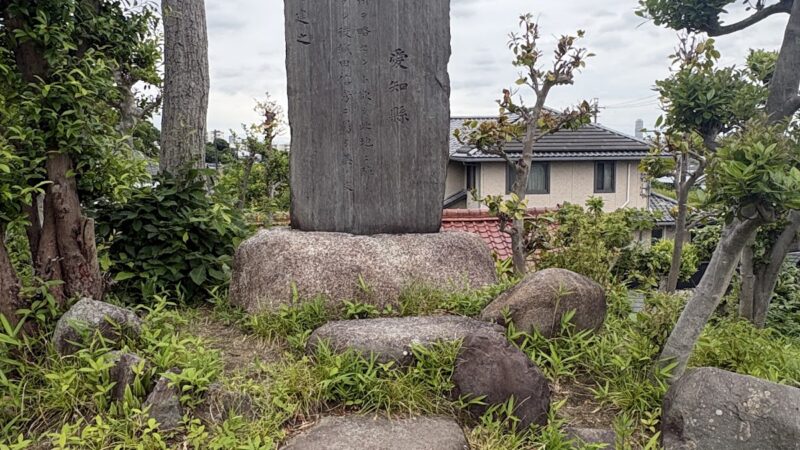
A stone monument marking the “Shinokawa Castle Ruins” stands at the entrance to the shrine’s approach, indicating that this is a historical castle site. From the shrine grounds, one can enjoy views towards the Abukuma River, appreciating the strategic advantages of the castle’s location.
Earthworks
The earthworks remaining behind Higashidate Inari Shrine are the most important surviving structures of Shinokawa Castle. While their height and size are thought to have decreased compared to their original form, they remain a valuable historical site as an example of medieval castle defenses.
Observing the structure of the earthworks provides clues to understanding the castle-building techniques and defensive concepts of the time.
View of the Abukuma River
From the Shinokawa Castle ruins, one can enjoy a panoramic view of the Abukuma River and the surrounding plains. This view suggests that the castle was built in an ideal location for monitoring a strategic transportation hub and governing the surrounding region.
The view from around Higashidate Inari Shrine is particularly important for understanding why Ashikaga Mitsunao established Shinokawa as his base for governing Oshu.
Surrounding Historical Landscape
Around the Shinokawa Castle ruins, remnants of the old Oshu Kaido road and the atmosphere of a medieval settlement remain in some areas. When visiting the castle ruins, exploring these surrounding historical landscapes will provide a deeper understanding.
Access and Visiting Guide
Location
Shinokawa Castle Ruins (Higashidate Inari Shrine)
4-1 Higashidate, Sasagawa, Asaka-machi, Koriyama City, Fukushima Prefecture
Access by Public Transportation
The most common way to get there is by taking a local bus from JR Tohoku Main Line “Koriyama Station”. It’s about a 15-20 minute walk from the station. However, since bus services may be limited, it’s recommended to check the timetable in advance.
By taxi, it takes about 15 minutes from Koriyama Station.
Access by Car
It’s about a 20-minute drive from the Tohoku Expressway “Koriyama IC”. There is some parking space around Higashidate Inari Shrine, but it is limited to visitors, so please be considerate when visiting.
Points to Note When Visiting
The remains of Shinokawa Castle are currently mainly located within the grounds of Higashidate Inari Shrine and its surroundings. Since the shrine is a place of worship for the local community, please observe proper etiquette when visiting.
Remains such as earthworks may be at risk of weathering and collapse, so please be careful not to get too close. It is also important to avoid entering private property.
Photography is permitted, but please be considerate of the privacy of local residents and avoid including houses or other private buildings in your photos.
Best Time to Visit
Shinokawa Castle Ruins are open year-round, but the best time to visit is from spring to autumn. The cherry blossom season in spring and the autumn foliage season are particularly beautiful, making them ideal for strolling.
In winter, there may be snow, making the ground slippery, so please pay attention to the weather and appropriate equipment when visiting.
Related Historical Sites in the Surrounding Area
Sukagawa Castle Ruins
The ruins of Sukagawa Castle, the residence of the Nikaido clan and the main castle of Shinokawa Castle, are also an important historical site for understanding Shinokawa Castle. It is located in Sukagawa City, approximately 20 kilometers south of Koriyama City.
Utsumine Castle Ruins
The ruins of Utsumine Castle, related to the Battle of Sasagawa during the Nanboku-cho period, are also a historical site worth visiting for understanding the history of Shinokawa Castle. It is a mountain castle located on the summit of Mt. Utsumine, 677 meters above sea level, in the southeastern part of Koriyama City.
Miyota Castle Ruins
The ruins of Miyota Castle, the site of the Battle of Miyota in 1580 (Tensho 8), were located on the opposite bank of the Abukuma River from Shinokawa Castle. It is believed to be near present-day Hiwada-cho, Koriyama City.
Historical Significance of Shinokawa Castle
Governance of Oshu during the Muromachi Period
Shinokawa Castle was an important base for the Muromachi Shogunate’s governance of Oshu. The period when Ashikaga Mitsunao resided at Shinokawa Castle as the “Shinokawa Shogun” is important historical evidence demonstrating the extension of the central government’s authority into Oshu (northern Japan).
Mitsunao’s presence indicates that the area of present-day Fukushima Prefecture was not merely a frontier, but an important region directly governed by the Ashikaga clan.
Regional Conflicts in the Sengoku Period
During the Sengoku period, Shinokawa Castle became one of the battlegrounds for powerful daimyo in Tohoku, such as the Satake, Nikaido, Tamura, and Date clans, vying for supremacy. The existence of Shinokawa Castle indicates that the Abukuma River basin was a strategically important region.
A Key Transportation Hub
The location of Shinokawa Castle was a key transportation hub from ancient times, through which the Oshu Kaido (later the Oshu Dochu) road passed. This location suggests that it played a role not only militarily but also as a center of economic and cultural exchange.
Materials and Research on Shinokawa Castle
Historical materials concerning Shinokawa Castle are limited, but fragmentary records remain in the *Mutsu no Kuni Fudoki* (a regional gazetteer), various military chronicles, and Edo period geographical records.
In recent years, investigations by the Koriyama City Board of Education and on-site surveys by castle researchers have gradually revealed the castle’s true nature. However, since many remains have been lost, new discoveries through archaeological excavations are anticipated.
Summary
Shinokawa Castle (Koriyama City, Fukushima Prefecture) was a castle that played an important role in the governance of Oshu during the Muromachi period, serving as the Shinokawa Palace where Ashikaga Mitsunao resided. Currently, only a few remains remain around Higashidate Inari Shrine, but its historical value is extremely high.
Its location, utilizing a natural stronghold on a river terrace on the west bank of the Abukuma River, its vast, multi-bailey castle structure, and its history of transforming from a base for the Ashikaga clan to a fierce battleground during the Sengoku period are essential elements for understanding medieval Fukushima Prefecture.
Visiting the castle ruins will allow you to reflect on the political and military landscape of Oshu in its heyday. Standing in the tranquil grounds of Higashidate Inari Shrine and gazing at the flow of the Abukuma River, why not imagine the figures of Ashikaga Mitsunao, who ruled this land about 600 years ago, and the warlords who lived during the Sengoku period?