Ei Castle (Kagoshima Prefecture) Complete Guide: History and Highlights of the First Japanese Castle Introduced to Europe
What is Ei Castle?
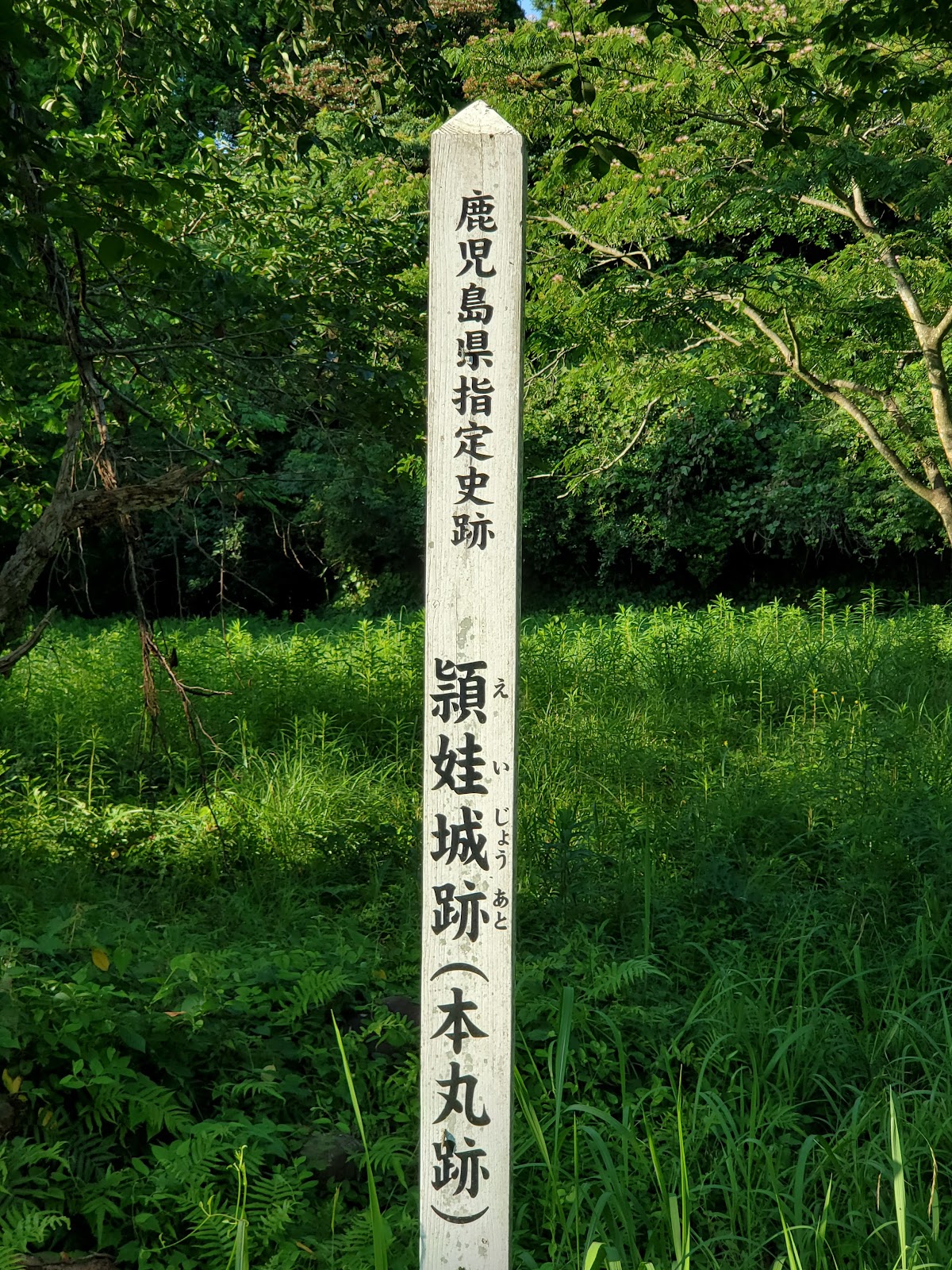
Ei Castle is a mountain castle located in Jōnai, Ei-chō, Minamikyushu City, Kagoshima Prefecture. Built on a Shirasu plateau at an altitude of approximately 230 meters, this castle is protected as a Kagoshima Prefecture designated historical site and occupies a noteworthy and important position in the history of Japanese castles.
Also known as Shishi Castle and Nokubi Castle, it is one of the largest mountain castles in the prefecture, covering an area of approximately 35 hectares. Even today, place names such as Sonai, Kamisōyama, Shimosōyama, and Takajō remain, evoking the castle’s former glory.
Its most notable feature is that it was the first Japanese castle introduced to Europe by the Portuguese merchant Jorge Álvarez. This historical fact has led to Ei Castle being recognized as an internationally important cultural heritage site.
History and Background of Ei Castle
Construction of the Castle and the Ei Clan of the Taira Lineage
The Ei region was ruled by the Taira lineage of the Ei clan during the medieval period. However, during the Meitoku era (1390-1394), Shimazu Motohisa defeated them and brought the Ei region under his control as part of the Shimazu clan’s expansion of power in Satsuma Province.
In 1410 (Oei 17), Shimazu Hisatoyo, the younger brother of Shimazu Motohisa, entered Ei and took charge of governing the region. Subsequently, Kimotsuki Kanemasa (Tadashige), the second son of Kimotsuki Kanemoto, was entrusted with Ei and adopted the name Ban-surname Ei.
Construction of the Castle by the Ban-surname Ei Clan
It is said that Ei Castle was built in 1420 (Oei 27) by Ei Kanemasa. This is the beginning of the Ei Castle as we know it today, and it would subsequently function as the residence of the Ban-surname Ei clan for eight generations, for approximately 170 years.
Ei Castle developed as an important military base in southern Satsuma Province and as a symbol of the Ei clan’s authority. Its layout, skillfully utilizing the topography of the Shirasu plateau, represented the pinnacle of castle-building technology at the time.
Introduction to Europe
Ei Castle became a historically significant site in the mid-16th century. When Portuguese merchant Jorge Álvares visited Japan, he learned of the existence of Ei Castle and brought this information back to Europe.
Álvares is later known for providing information about Japan to the Jesuit missionary Francis Xavier, and Ei Castle became recorded in Western literature as the first Japanese castle introduced to Europe. This fact demonstrates that Ei Castle was not merely a local mountain castle, but occupies an important position in the history of international cultural exchange.
The Era and Golden Age of Ei Hisatora
During the time of Ei Hisatora, the seventh head of the Ban-surname Ei clan, Ei Castle reached its peak. According to the “Ei Family Records,” in 1587 (Tensho 15), Hisatora constructed a five-story (or possibly three-story, five-tiered) building within the castle grounds.
This building is considered the first five-story castle tower in Satsuma, and its third floor, known as the “Golden Room,” is said to have been adorned with paintings depicting a tiger hunt. This magnificent structure demonstrated the power and economic strength of the Ei clan.
However, Hisatora died in the same year that he completed this building, at the young age of 25. This premature death marked the beginning of the Ei clan’s decline.
The End of the Ei Clan and the Abandonment of the Castle
After Hisatora’s death, the Ei clan rapidly lost power. Amidst the Shimazu clan’s centralization policies, the Ei clan, like many local powerful families, lost its status as an independent force.
From the end of the Tensho era to the Keicho era, Ei Castle gradually lost its military function and is believed to have eventually been abandoned. The history of the Ban-surname Ei clan, who ruled the Ei area for approximately 170 years, comes to an end here.
Structure and Layout of Ei Castle
Overall Structure
Ei Castle is a mountain castle built on a Shirasu plateau at an altitude of approximately 230 meters and a relative height of approximately 150 meters. It boasts a vast area of approximately 35 hectares, making it one of the largest castles in Kagoshima Prefecture.
The castle is constructed to project northward, with the rear gate (karatete) on the south side. This arrangement is thought to be a defensive design anticipating enemy invasion from the north.
Main Enclosures (Kuruwa)
Ei Castle’s layout consists of multiple enclosures: the First Enclosure (Honmaru), the Second Enclosure, the Third Enclosure, and the Fourth Enclosure.
The First Enclosure (Honmaru) is the core of the castle, and it contains a rare stone-built earthen rampart, unusual for Kagoshima Prefecture. Foundation stones, believed to be the remains of a building, have also been discovered, confirming the existence of a five-story structure. A stone monument inscribed with “Shishijo-shi” (Lion Castle Ruins) stands in the Honmaru, indicating the origin of its alternative name.
Each enclosure is arranged in stages, a structure designed to gradually prevent enemy incursions. Deep dry moats are dug between the enclosures, creating a complex and intricate defensive system characteristic of Satsuma castles.
Defensive Structures
Ei Castle also features a masugata koguchi (square-shaped gate), demonstrating the use of advanced castle construction techniques. The masugata is an important defensive structure that delays enemy incursions and creates space for the defenders to fight advantageously.
The dry moats have a deep, intricate structure characteristic of Satsuma castles, showcasing excavation techniques that take advantage of the Shirasu plateau’s geology. These dry moats remain clearly visible today, making them valuable historical remains for understanding the defensive system of the time.
Stone walls and earthworks are also important defensive structures. In particular, the stone-built earthworks remaining in the first enclosure are rare among mountain castles in Kagoshima Prefecture, demonstrating the technological advancement of Ei Castle. These remains indicate that the Ei clan possessed considerable wealth and technical skill.
Utilization of the Shirasu Plateau
One of the most distinctive features of Ei Castle is its skillful use of the Shirasu plateau, unique to southern Kyushu. Shirasu is a geological layer formed from accumulated volcanic ash, which is easy to process while also having the characteristic of being able to form nearly vertical cliffs.
The castle builders made the most of these geological characteristics, combining natural terrain with artificial leveling to construct a robust defensive system. This technique is characteristic of castle architecture in Satsuma, and Ei Castle is one of its representative examples.
Highlights of Ei Castle
Main Enclosure Ruins and Stone Monument
The main enclosure ruins are the heart of Ei Castle and its most important highlight. A stone monument inscribed with “Shishijo-shi” (Lion Castle Ruins) stands here, preserving the castle’s alternative name. From the main enclosure, you can enjoy a panoramic view of the surrounding area, experiencing the scenery seen by the castle’s lords of yesteryear.
The spaciousness and flat terrain of the main enclosure make it tangible to imagine the five-story structure that once stood here. The arrangement of the foundation stones allows us to imagine the scale of the building, making it a place that evokes a sense of historical romance.
Stone-Walled Earthworks and Foundation Stones
The stone-walled earthworks remaining in the first enclosure are a rare feature among mountain castles in Kagoshima Prefecture. By observing the way the stones are stacked and the structure of the earthworks, you can learn about the castle-building techniques of the time.
The foundation stones of the building sites are also important remains. The arrangement of these foundation stones allows us to infer the size and structure of the buildings, making them valuable archaeological resources. ### Dry Moats and Enclosures
The deeply intricate dry moats are the most characteristic feature of Satsuma castles. Walking along the bottom of the moats, one is overwhelmed by their depth and complex structure. The excavation techniques, which utilized the geological features of the Shirasu plateau, are fascinating even from the perspective of modern civil engineers.
By visiting each enclosure, one can understand the overall layout and defensive system of the castle. The differences in elevation and arrangement between the enclosures reflect the castle-building philosophy of the Sengoku period, making them a must-see for castle enthusiasts.
Memories of the Castle in Place Names
Place names such as Sonai, Kamisoyama, Shimosoyama, and Takajo still remain around Ei Castle. Tracing these place names allows one to appreciate the former extent of the castle grounds.
Understanding the origins of these place names provides clues to a deeper understanding of the castle’s history. One of the joys of visiting Ei Castle is hearing legends and stories from the locals through conversations.
Visitor Guide
Access
Access by car is the most convenient. From Kagoshima City, head south on National Route 226; you will arrive in Ei Town in about an hour. It’s about 30 minutes from Ibusuki City. While the road to the castle ruins is narrow, it’s possible to drive close to the main keep. However, caution is needed when driving as some sections of the road are narrow.
If using public transportation, the nearest station is Ei-Okawa Station on the JR Ibusuki-Makurazaki Line. However, the castle ruins are a considerable distance from the station, so taking a taxi is recommended.
Precautions for Visiting
Ei Castle is a mountain castle, so comfortable clothing and shoes are essential. Especially after rain, the ground can become slippery, so trekking shoes are recommended.
In summer, please bring insect repellent, a hat, and drinking water. Even in winter, there can be sunny days, so don’t forget sun protection.
While there are information boards at the castle ruins, obtaining a map of the castle layout beforehand will deepen your understanding. Bringing a camera to photograph the remains is also recommended.
Nearby Tourist Attractions
Near Ei Castle are the Daitsuji Temple Ruins, where you can see the remains of a temple closely associated with the Ei clan. The samurai residences at Ei-fumoto are also a highlight.
A short trip will take you to other tourist spots in Ei town, such as Banshohana Nature Park and Seahorse House. Towards Ibusuki, you can find Chiran Samurai Residences and Chiran Peace Museum for Kamikaze Pilots, offering a comprehensive look at the history and culture of southern Satsuma.
Cultural Value of Ei Castle
Importance as a Prefectural Designated Historic Site
Ei Castle is protected as a Kagoshima Prefecture designated historic site, and its historical and academic value is officially recognized. As one of the largest mountain castles in the prefecture, and as a representative example of the characteristics of Satsuma castle architecture, it is an important cultural heritage site.
The remains are well-preserved, with dry moats, baileys, and stone-built earthworks clearly visible. These remains are valuable resources for studying castle construction techniques from the Sengoku period to the Azuchi-Momoyama period.
Significance in the History of International Cultural Exchange
The fact that Ei Castle was the first Japanese castle introduced to Europe positions it not merely as a local mountain castle, but as an important presence in the history of international cultural exchange.
During the Age of Discovery in the 16th century, Portuguese merchants brought various information to Europe through trade with East Asia. The introduction of Japanese castle architecture is a valuable example that illustrates a part of East-West cultural exchange. It may have influenced Francis Xavier’s missionary activities in Japan, making it a noteworthy site from the perspective of the history of Christianity’s arrival in Japan.
Position in the History of Satsuma Castles
Ei Castle is an important example for understanding the history of castle development in Satsuma Province. It possesses many characteristics of Satsuma castles, including construction techniques utilizing the Shirasu plateau, a complex dry moat system, and the existence of a five-story structure.
In particular, the five-story structure is considered to be the first of its kind in Satsuma, demonstrating the power and economic strength of the Ei clan, and providing important information about the level of architectural technology at the time. This is a noteworthy fact in the history of castles in Kagoshima Prefecture.
Relationship between the Ei Clan and Ei Castle
Genealogy of the Ban-surname Ei Clan
The Ban-surname Ei clan is a family descended from Kimotsuki Kanemasa. Kanemasa was born the second son of Kimotsuki Kanemoto, but after being entrusted with the Ei region, he adopted the name Ei.
The Ei clan, who ruled the Ei region for approximately 170 years over eight generations, were one of the important vassal groups of the Shimazu clan and were responsible for governing southern Satsuma Province. Ei Castle was not merely a military base, but also functioned as the political and economic center of the Ei clan.
Ei Hisatora and the Castle’s Golden Age
Ei Hisatora, the seventh head of the clan, is the most important figure in the history of the Ei clan. In 1587, he constructed a five-story building, developing Ei Castle into one of Satsuma’s most famous castles.
The third floor, known as the “Golden Room,” is said to have featured paintings of tiger hunting, demonstrating Hisatora’s cultural refinement and economic power. However, his death at the age of 25 in the same year the building was completed drastically altered the fate of the Ei clan.
Hisatora’s premature death marked the beginning of the Ei clan’s decline and had a significant impact on the subsequent history of Ei Castle.
History of Ei Castle and the Surrounding Area
A Strategic Point in Southern Satsuma Province
Ei Castle was an important military base in southern Satsuma Province. It had deep ties with surrounding areas such as Yamakawa and Ibusuki, and played a crucial role in the political and military network of southern Satsuma.
Its location near the sea suggests it also functioned as a key point for maritime traffic. The fact that Portuguese merchants knew of Ei Castle may be due to the region’s location on overseas trade routes.
Relationship with Daitsuji Temple
Near Ei Castle was a temple called Daitsuji. Daitsuji Temple is believed to have functioned as the Ei clan’s ancestral temple and had a close relationship with the castle. Although the temple buildings no longer exist, the remains of Daitsuji Temple are preserved, and visiting it along with Ei Castle allows for a deeper understanding of the Ei area at that time.
Summary
Ei Castle is a historically significant mountain castle located in Minamikyushu City, Kagoshima Prefecture. Built in 1420 by Ei Kanemasa, it served as the residence of the Ban-surname Ei clan for approximately 170 years, spanning eight generations.
Its most notable feature is that it was the first Japanese castle introduced to Europe by the Portuguese merchant Jorge Álvarez. This fact elevates Ei Castle beyond the realm of a regional mountain castle, placing it in a significant position in the history of international cultural exchange.
In 1587, Ei Hisatora constructed the first five-story building in Satsuma, marking the castle’s golden age. However, with Hisatora’s untimely death, the Ei clan began to decline.
The remaining structures, such as the dry moats, baileys, and stone-built earthworks, demonstrate the high level of castle-building technology of the time. In particular, the use of the Shirasu plateau in castle construction is a characteristic of Satsuma castles, and Ei Castle is a prime example.
Protected as a Kagoshima Prefecture designated historical site, Ei Castle is an important cultural heritage site indispensable for learning about the history of Satsuma. It is a historical spot that you should definitely visit when you come to southern Kyushu.