Ichiki Tsurumaru Castle (Kagoshima Prefecture) Complete Guide: History, Highlights, and Access Explained in Detail
Ichiki Tsurumaru Castle is a mountain castle located in Higashiichiki-cho, Hioki City, Kagoshima Prefecture, that played an important role from the medieval to early modern periods. Built on a hill approximately 100 meters above sea level, this castle was a crucial stage in the expansion of the Shimazu clan’s power in Satsuma Province and in the history of the introduction of Christianity. This article comprehensively covers essential information for castle enthusiasts, including the detailed history of Ichiki Tsurumaru Castle, existing remains, highlights, and access methods.
Basic Information on Ichiki Tsurumaru Castle
Ichiki Tsurumaru Castle, also simply known locally as “Tsurumaru Castle,” is a mountain castle located in Nagasato, Higashiichiki-cho, Hioki City, Kagoshima Prefecture. Situated on the hill behind the current Tsurumaru Elementary School, it boasts a circumference of approximately 3 kilometers and an area of approximately 4,000 square meters on the mountaintop.
Basic Castle Data
- Location: Nagasato, Higashiichiki-cho, Hioki City, Kagoshima Prefecture
- Elevation: Approximately 100 meters
- Castle Structure: Mountain castle (consisting of a main castle and 5-7 subsidiary castles)
- Construction Date: Said to be 1244
- Builder: Ichiki clan
- Main Lords: Ichiki clan, Shimazu clan, Niina Yasuhisa, etc.
- Year of Abandonment: Late Edo period
- Remains: Enclosures, stone walls, earthworks, moats
- Designated Cultural Property: Hioki City Designated Historic Site
History of Ichiki Tsurumaru Castle
Construction by the Ichiki Clan and Early History
The history of Ichiki Tsurumaru Castle begins in 1244, when it was built by the Ichiki clan, who ruled Ichikiin. The Ichiki clan held power as local lords ruling the area from Ichiki town to Higashi-Ichiki, and they constructed a formidable mountain castle in this region.
The Ichiki clan is believed to have descended from the Ichiki-gunji Okura clan, and they maintained their own independent power in this region from the Kamakura period to the Muromachi period. The castle consisted of a complex defensive system with the main castle at its center, surrounded by 5 to 7 subsidiary castles, making it a considerably large fortress for its time.
Conflicts during the Nanboku-cho Period
In 1337 (Kenmu 4th year/Engen 2nd year), during the turbulent Nanboku-cho period, Shimazu Sadahisa instructed Kawakami Yorihisa to attack Tsurumaru Castle. During this period, power struggles between the Southern and Northern Courts in Satsuma Province intensified, and Ichiki Tsurumaru Castle was caught in the crossfire.
This battle served as a turning point, weakening the Ichiki clan’s power, and thereafter, the Shimazu clan’s influence gradually grew stronger.
Establishment of Shimazu Rule
During the mid-Muromachi period, under the tenth head of the Shimazu clan, Shimazu Tatehisa, the Ichiki clan was ultimately conquered and destroyed by the Shimazu clan. This tragedy occurred during the time of Ichiki Iechika, and Ichiki Tsurumaru Castle became a direct territory of the Shimazu clan. Around the Kansho era (1460-1466), the main Shimazu family controlled Ichiki, but it later underwent a complex history of being occupied by Shimazu Sanehisa (of the Satsuma branch) of Izumi.
Internal Conflicts within the Shimazu Family and Tsurumaru Castle during the Sengoku Period
With the arrival of the Sengoku period, serious internal conflicts arose within the Shimazu family. In the conflict between the main Shimazu family and the Satsuma branch, Ichiki Tsurumaru Castle became a crucial strategic point. Shimazu Sanehisa of the Satsuma branch occupied the castle, but in 1539, Shimazu Tadayoshi and his son Takahisa, having captured Hirajo Castle (Ijuin), advanced on Tsurumaru Castle.
This siege turned into a war of attrition, but ultimately Shimazu Tadayoshi and Takahisa emerged victorious, capturing Tsurumaru Castle. This victory paved the way for Shimazu Takahisa’s unification of Satsuma.
Ijuin Tadaaki was appointed lord of the castle, and later Niina Yasuhisa was appointed as the local administrator (jitō). Yamada Aritoku and others are also listed as successive local administrators.
The Visit of Francis Xavier
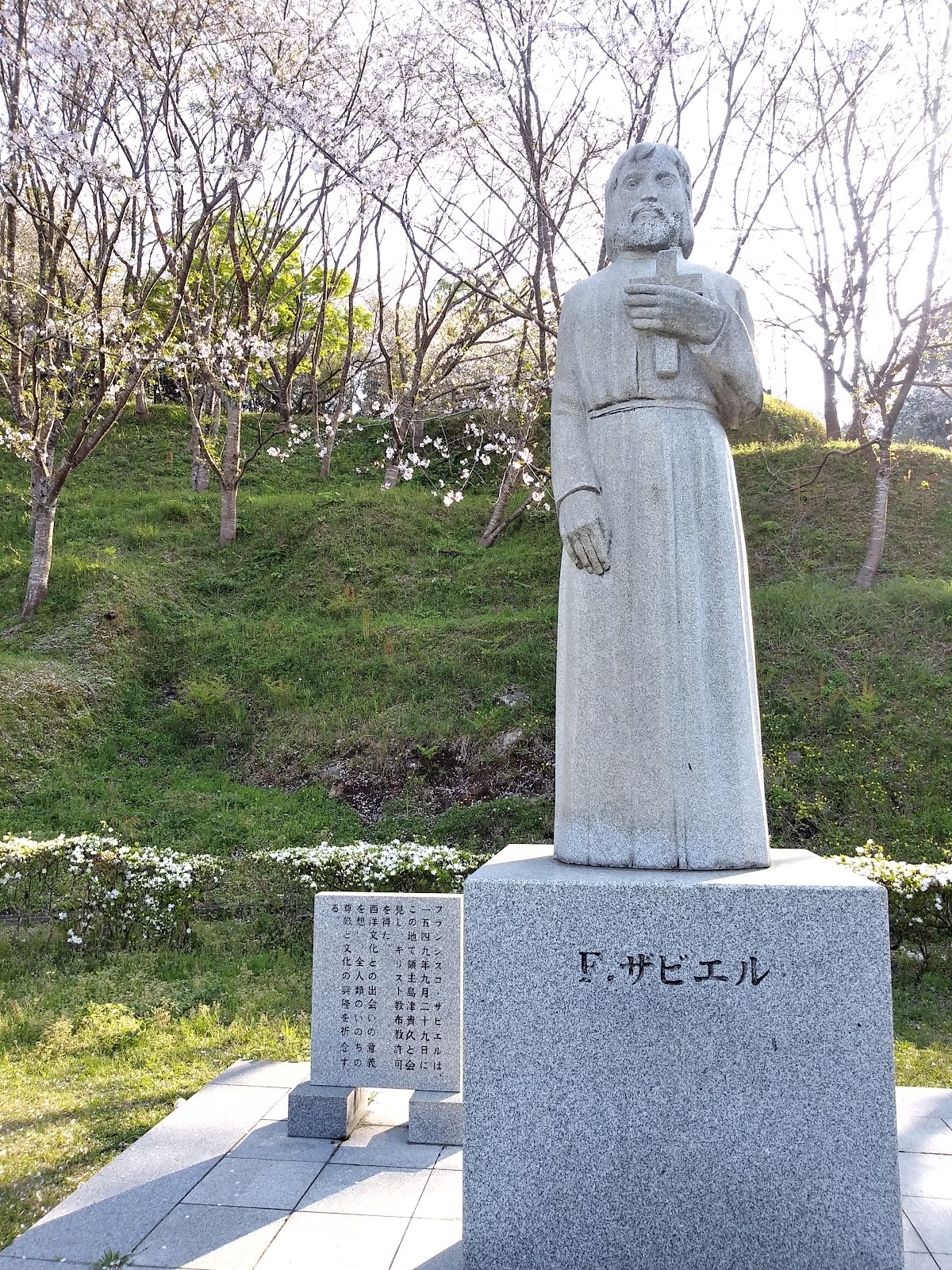
A noteworthy event in the history of Ichiki Tsurumaru Castle is the visit of Francis Xavier in 1550. Xavier, the missionary who introduced Christianity to Japan, stopped at Ichiki Tsurumaru Castle on his way to Hirado after his missionary work in Satsuma.
Under the rule of the then-lord, Niina Yasuhisa, Xavier conducted missionary work at Tsurumaru Castle. This visit is a significant event in the history of Christianity’s arrival in Japan and illustrates how important Ichiki was as a transportation hub.
Later, missionary Almeida also visited this area, and Ichiki Tsurumaru Castle served as one of the centers of Christian missionary work in Satsuma for a time.
The Edo Period Outer Castle System and Tsurumaru Castle
During the Edo period, Ichiki Tsurumaru Castle functioned as one of the outer castles (tojo) of the Satsuma Domain. The outer castle system was a unique governing system of the Satsuma Domain, where local administrators (jito) were stationed throughout the territory, dispersing samurai to rural areas.
At the foot of Tsurumaru Castle, where Tsurumaru Elementary School now stands, there was a flatland residence, which served as a temporary jito’s office during the feudal period. The jito governed this region both militarily and administratively, and it continued to function as an important defensive base for the Satsuma Domain.
Until the Meiji Restoration, Ichiki Tsurumaru Castle remained one of the outer castles of the Satsuma Domain, and was abandoned after the abolition of the feudal domains and establishment of prefectures.
Layout and Structure of Ichiki Tsurumaru Castle
Structure of the Main Castle
The main castle of Ichiki Tsurumaru Castle is located on the top of a hill approximately 100 meters above sea level. The mountaintop consists of stepped plains (kuruma). The total area is approximately 4,000 square meters, making it a medium-sized castle for a medieval mountain castle.
Across the main enclosure, multiple kuruwa (enclosures) are arranged in a stepped fashion, each possessing strong defensive capabilities. Earthworks and moats were constructed between the kuruwa, demonstrating ingenuity in preventing enemy intrusion.
Arrangement of Subsidiary Castles
A distinctive feature of Ichiki Tsurumaru Castle is its complex castle system, with 5 to 7 subsidiary castles arranged around the main castle. These subsidiary castles were positioned to surround the main castle, coordinating with each other to strengthen their defenses.
While research is still ongoing regarding the exact locations and sizes of the subsidiary castles, it is believed they were dispersed within a radius of approximately 3 kilometers.
Stone Walls and Earthworks
Ichiki Tsurumaru Castle retains stone walls dating from the medieval to early modern periods. The characteristic rough-hewn stonework of Satsuma castles can be seen along the edges of the baileys and around the entrances (koguchi).
The earthworks are also well-preserved, with some sections around the main bailey reaching 2-3 meters in height, demonstrating the castle’s high defensive capabilities at the time.
Moats and Vertical Moats
Multiple moats blocking the ridgeline were constructed, demonstrating a strategy to limit enemy incursions. Vertical moats were also found on the slopes, functioning as defensive structures to hinder lateral movement.
Highlights of Ichiki Tsurumaru Castle
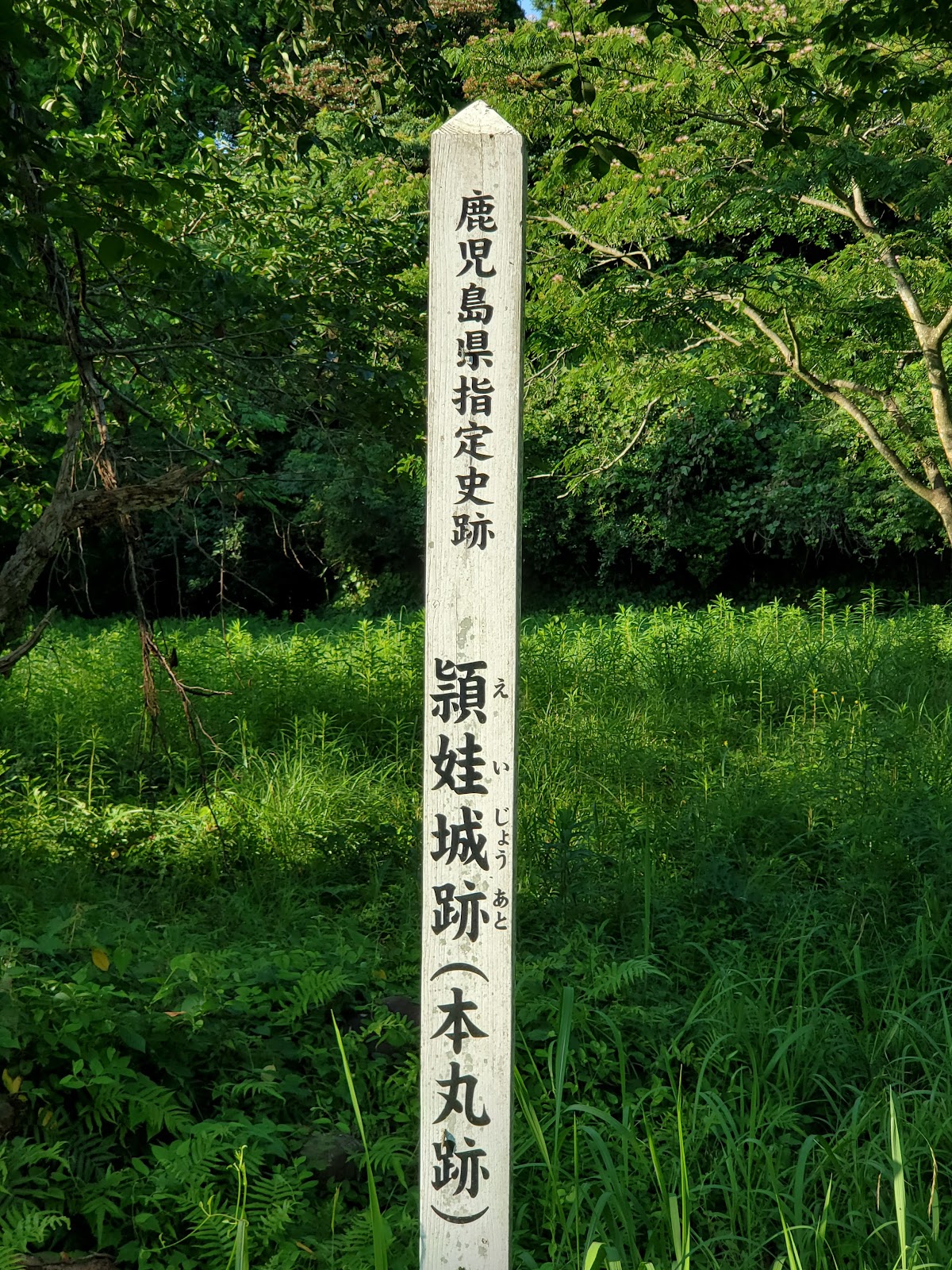
Main Bailey (Honmaru)
The main bailey, located at the highest point of the castle, is the central area of Ichiki Tsurumaru Castle. From here, one can enjoy a panoramic view of the East China Sea and the townscape of Ichiki. It is believed to have functioned as a lookout post during the Sengoku period.
The main enclosure has a relatively large flat area, and traces of foundation stones, presumably from buildings, can be seen. The surrounding earthen ramparts are well-preserved, allowing us to imagine its appearance at the time.
Stone Wall Remains
The stone walls remaining throughout the castle grounds are one of the highlights of Ichiki Tsurumaru Castle. In particular, the stone walls around the main gate are valuable remains that allow us to observe the changes in construction methods from the Sengoku period to the early Edo period.
Satsuma stone walls employ unique techniques adapted to the geological conditions specific to the Shirasu plateau, making them interesting historical materials from the perspective of castle architecture history.
Enclosures
The stepped arrangement of enclosures exhibits a typical structure of a medieval mountain castle. Each enclosure is clearly separated by a sheer cliff face, demonstrating its high level of defense.
As you descend to the second and third enclosures, you can observe the differences in the role and scale of each enclosure, providing a valuable learning opportunity for understanding the castle’s structure in three dimensions.
Moat
The moat cutting across the ridge is a crucial element of Ichiki Tsurumaru Castle’s defense system. The moat, several meters deep, remains clearly visible today, demonstrating the high level of defensive technology used in medieval mountain castles.
In particular, the large moat behind the main enclosure is thought to have functioned as the most important defensive line and is a remarkable historical site.
Ascent Route and Entrance
The current ascent route is believed to utilize part of the former main approach road. Traces of entrances remain along the way, including complex structures such as masugata entrances.
Walking the ascent route allows one to experience the difficulties faced by attackers and the ingenuity of the defenders.
Tsurumaru Elementary School and Site of the Jito’s Residence
The current Tsurumaru Elementary School is built on the flat land portion of Ichiki Tsurumaru Castle, where the residence stood during peacetime. During the Edo period, the Jito’s residence was located here, functioning as the administrative and military center of the Satsuma Domain’s outer castle system.
The school grounds and surrounding area are highly likely to contain buried remains from that time, making it a place where archaeological excavations are eagerly awaited. An explanatory sign indicating that it is a castle site has been installed on the school grounds, and it is also used as a place for local history education.
Relationship between Kasuga Shrine and the Castle
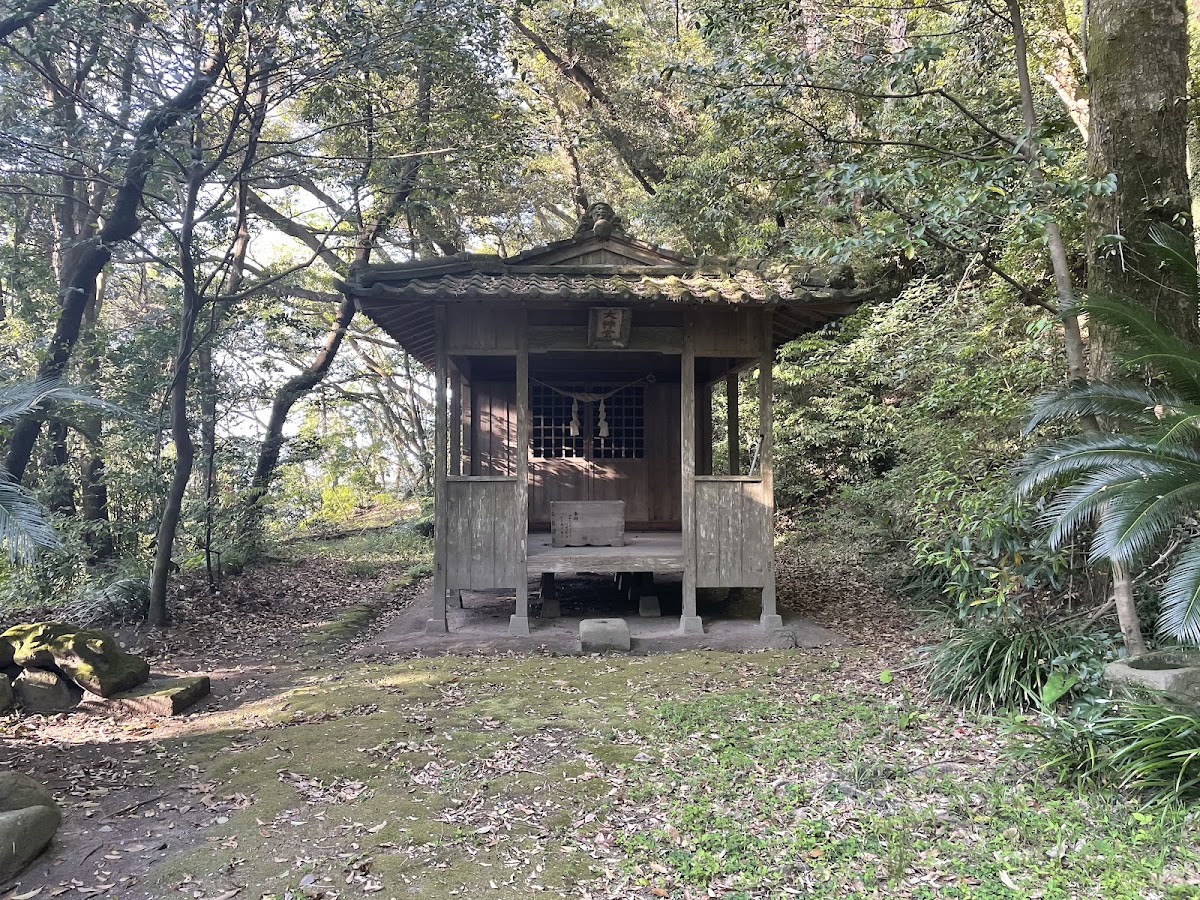
Near the entrance to Ichiki Tsurumaru Castle is Kasuga Shrine. This shrine is thought to have functioned as the guardian shrine of the castle and attracted the faith of the castle lord and samurai.
A path leading from Kasuga Shrine to the castle has been maintained and is currently the main access route. From the shrine grounds, one can get a sense of the castle’s overall layout, making it an ideal starting point for a visit.
Access to Ichiki Tsurumaru Castle
Access by Car
From Kagoshima City
- Head north on National Route 3 for approximately 40 minutes.
- Use the former Higashiichiki Town Hall as a landmark and turn onto Prefectural Road 305.
- Head towards Tsurumaru Elementary School (use parking near Kasuga Shrine).
From the Kyushu Expressway
- Approximately 15 minutes from Ijuin IC via National Route 3.
Access by Public Transportation
By JR
- Get off at JR Kagoshima Main Line “Higashiichiki Station” and walk for approximately 15 minutes.
- From the station, walk along Prefectural Road 305 towards Tsurumaru Elementary School.
By Bus
- Get off at Kagoshima Kotsu Bus “Higashiichiki” bus stop and walk for approximately 10 minutes.
Castle Entrance and Required Time
The main entrance to the castle is the route from Kasuga Shrine. The path to the castle is relatively well-maintained, but as it is a mountain castle, comfortable clothing and shoes are recommended.
- Climbing Time: Approximately 20-30 minutes from Kasuga Shrine to the main enclosure
- Visiting Time: Approximately 1-2 hours to see the entire castle
- Difficulty Level: Intermediate (some steep slopes)
Points to Note When Visiting
- Due to overgrown vegetation in summer, visits in spring, autumn, and winter are recommended.
- Be careful as the ground can be slippery in rainy weather.
- Bringing insect repellent is recommended.
- Bring drinking water.
- Check cell phone signal strength beforehand.
Nearby Attractions
Historical Buildings in Higashiichiki Town
Around Ichiki Tsurumaru Castle, there are numerous historical buildings dating from the Edo to Meiji periods. Strolling through the remnants of samurai residences and the townscape that retains the atmosphere of an old highway allows you to experience the remnants of a castle town.
Shochu Distilleries in the Miyama Area
Hioki City is known as a famous production area for Satsuma shochu (a type of distilled spirit). The Miyama area, in particular, has several shochu distilleries, some of which offer tours and tastings. Experiencing Satsuma’s traditional culture after visiting the castle is a delightful experience.
Fukiagehama Beach
Located about 15 minutes by car from Ichiki Tsurumaru Castle, Fukiagehama Beach is a beautiful coastline considered one of Japan’s three largest sand dunes. The landscape of white sand and pine trees stretching for approximately 47 kilometers is well worth a visit.
Preservation and Utilization of Ichiki Tsurumaru Castle
The Ichiki Tsurumaru Castle ruins are protected as a designated historical site of Hioki City. Investigations and research by local history enthusiasts and castle researchers continue, and new discoveries are expected.
In recent years, there have been efforts to develop it as a tourist resource as a regional historical heritage site, with the installation of information boards and maintenance of the castle’s access road. Local elementary schools incorporate the study of Tsurumaru Castle as part of their local history education, promoting the transmission of history to future generations.
Differences between Ichiki Tsurumaru Castle and Kagoshima Castle (Tsurumaru Castle)
The name “Tsurumaru Castle” is also used as an alternative name for Kagoshima Castle in Kagoshima City, which can lead to confusion. Let’s clarify the differences between the two here.
Ichiki Tsurumaru Castle (Hioki City)
- Medieval mountain castle, built in 1244
- Ruled by the Ichiki clan, later the Shimazu clan
- Mountain castle at an altitude of approximately 100 meters
- The stage for battles during the Sengoku period
Kagoshima Castle (Kagoshima City)
- Early modern flatland castle, built around 1601
- Built by Shimazu Iehisa, the residence of the Shimazu clan
- Flatland castle with Shiroyama (Castle Mountain) behind it
- Political center of the Satsuma Domain throughout the Edo period
Both castles are called “Tsurumaru Castle,” but their location, era, scale, and role differ significantly. It’s important to understand the difference between Ichiki Tsurumaru Castle and Kagoshima Castle: Ichiki Tsurumaru Castle is a mountain castle from the Sengoku period, while Kagoshima Castle is a residence from the Edo period.
The Charm and Significance of Visiting Ichiki Tsurumaru Castle
Ichiki Tsurumaru Castle is a castle that symbolizes the transition period from the medieval to the early modern period in Satsuma. With a multi-layered history from its construction by the Ichiki clan to the Shimazu clan’s unification wars, the visit of Francis Xavier, and the Edo period’s outer castle system, this castle is an indispensable historical site for understanding the history of Kagoshima Prefecture.
Visiting the site allows you to experience the ingenuity of the terrain, which cannot be understood from documents alone, and the technology of the time from the remains such as stone walls and earthworks. Furthermore, the view from the main enclosure makes you realize the strategic importance of why the castle was built in this location.
For castle enthusiasts, those interested in the history of Satsuma during the Sengoku period, and those interested in the history of the arrival of Christianity, Ichiki Tsurumaru Castle is a must-see historical site.
Summary: Visiting Ichiki Tsurumaru Castle
Ichiki Tsurumaru Castle is a valuable medieval mountain castle remaining in Hioki City, Kagoshima Prefecture. Beginning with its construction by the Ichiki clan, it became an important stage in the Shimazu clan’s unification of Satsuma and is also a historical site visited by Francis Xavier.
The well-preserved remains, such as the baileys, stone walls, earthworks, and moats, convey the castle construction techniques of the Sengoku period. Despite being located in a familiar place—the hill behind Tsurumaru Elementary School—it is a hidden gem of a historical site, quietly visited by few.
Its easy accessibility, within walking distance of JR Higashi-Ichiki Station, is another attractive feature. When sightseeing in Kagoshima, be sure to visit Ichiki Tsurumaru Castle and experience the history and culture of Satsuma. Climbing the path from Kasuga Shrine and standing on the main bailey, you’ll surely feel the spirit of the samurai of the Sengoku period as you survey your surroundings.