Complete Guide to Okuchi Castle (Isa City, Kagoshima Prefecture): History, Highlights, and Access
Okuchi Castle is a medieval mountain castle located in Kaminobaba, Okuchi-sato, Isa City, Kagoshima Prefecture. Also known as Ushiyama Castle, Mutaguchi Castle, and Higiri Castle, it was an important base controlling a strategic transportation hub spanning the three provinces of Satsuma, Osumi, and Hyuga. This article provides detailed information useful for visitors, including the history, structure, highlights, and access methods of Okuchi Castle.
History of Okuchi Castle
Construction and Early History (Heian Period to Sengoku Period)
Okuchi Castle has a long history, believed to have been built during the Hogen era (1156-1159) by Taira no Motohira. This area, historically known as Ushikusoin, was the center of Isa District in Satsuma Province. Its geographical features—a basin surrounded by mountains—made it a strategically important military and economic base.
In the Middle Ages, the local powerful Hishikari clan controlled the castle. The Hishikari clan was in conflict with the Shimazu clan, and fierce battles ensued over control of the region. In 1530, the Hishikari clan captured Oguchi Castle and temporarily brought it under their control.
Unification by the Shimazu Clan and the Era of Niiro Tadamoto
In 1567, Shimazu Yoshihisa attacked the Hishikari clan, and in 1569, the Hishikari clan surrendered. Niiro Tadamoto distinguished himself greatly in this battle. Known as a senior retainer of the Shimazu family, he was renowned for his bravery and loyalty. After the surrender of the Hishikari clan, Niina Tadamoto entered Ōguchi Castle as its lord and governed the area. Tadamoto was not only a skilled warrior but also demonstrated exceptional abilities in land management, developing the Ōguchi region. Even today, there is a Tadamoto Shrine in Isa City, where he continues to be revered by the local people.
Toyotomi Hideyoshi’s Conquest of Kyushu and Ōguchi Castle
In 1587 (Tenshō 15), Toyotomi Hideyoshi’s conquest of Kyushu was completed. The Shimazu clan surrendered to Hideyoshi, and subsequently, Hideyoshi conducted a land survey. Interestingly, records indicate that this land survey in Satsuma Province began at the foot of Ōguchi Castle. This can be seen as evidence of the important position Ōguchi Castle and its surrounding area held within Satsuma Province.
Even under the Toyotomi regime, Niina Tadamoto was entrusted with the governance of Ōguchi Castle and continued to play an important role as a vassal of the Shimazu clan.
The Edo Period and the Transformation of the Castle
During the Edo period, Oguchi Castle was positioned as one of the Shimazu clan’s outer castles (tojo). The outer castle system was a unique governing system of the Satsuma domain, where samurai were stationed throughout the territory, engaged in agriculture during peacetime, and functioned as a military force in times of conflict.
However, in the peaceful Edo period, Oguchi Castle, as a mountain castle, gradually lost its military function. During the Edo period, the castle facilities were dismantled, and the temporary office (a local administrative center) at the foot of the mountain became the center of governance. The area around the current Oguchi Elementary School is considered to be the site of the temporary office.
The Structure and Layout of Oguchi Castle
Location and Topography
Oguchi Castle is built on a long, north-south oriented hill located east of the current Oguchi Elementary School. Although relatively low in elevation, it is a strategically important location overlooking the surrounding area and possesses the classic form of a mountain castle.
The hill on which the castle was built features a defensive system that skillfully utilizes the natural terrain, with numerous features designed to make enemy intrusion difficult. Located near the border of Satsuma, Osumi, and Hyuga provinces, the castle’s layout was designed to withstand attacks from multiple directions.
Components of the Castle
Oguchi Castle possesses a typical structure for a medieval mountain castle and consisted of the following elements:
Main Enclosure (Honmaru) This was the central area of the castle, believed to have housed the lord’s residence and command post. Currently, only traces remain as a flat area.
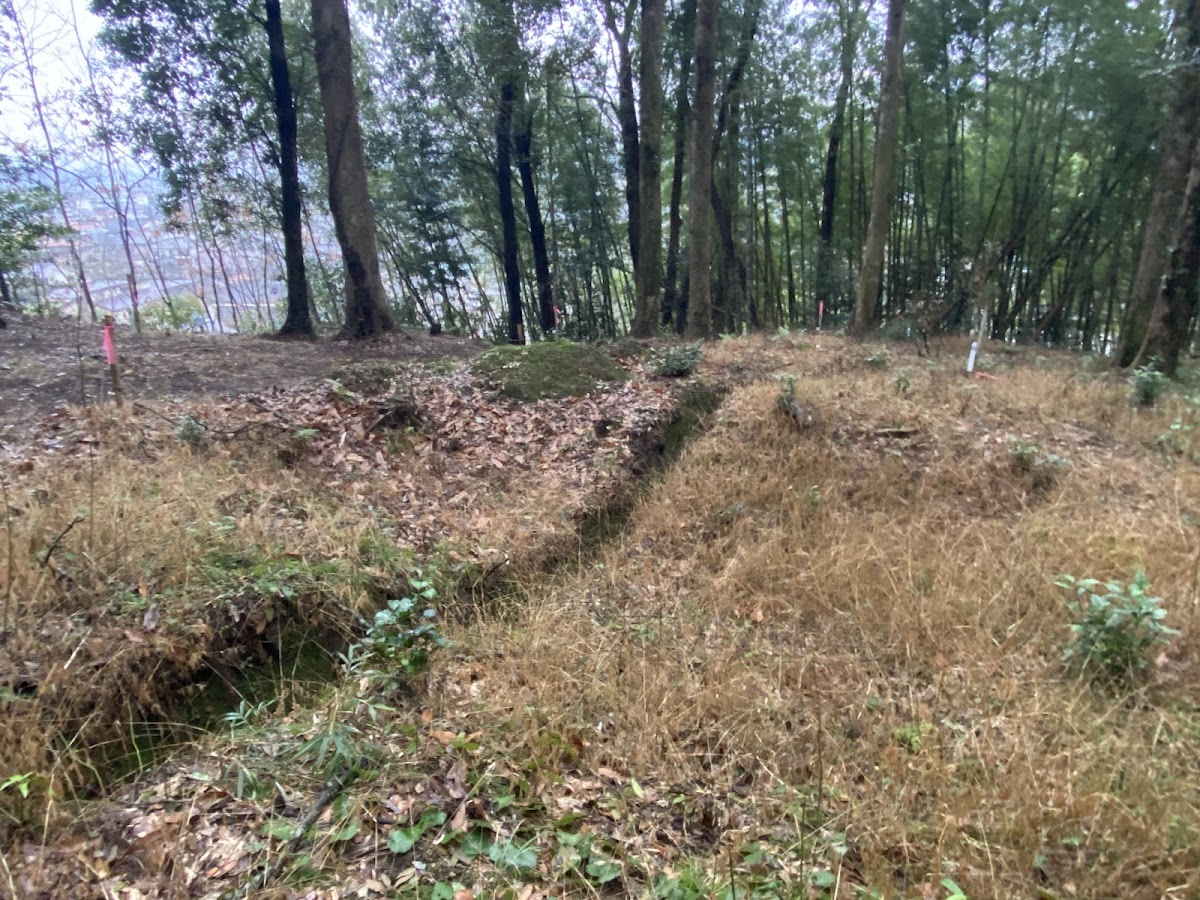
Dry Moat One of the most distinctive remains of Oguchi Castle is the dry moat. Even as of the 2016 survey, a clearly visible dry moat remained, indicating its importance as a defensive structure preventing enemy intrusion. Unlike water moats, dry moats in mountain castles function purely as physical barriers.
Earthworks Along with the dry moat, earthworks are also important remains of Oguchi Castle. Earthen ramparts, built by piling up earth, served as defensive walls, and their defensive capabilities were further enhanced by the construction of fences and walls on top of them. Some of these ramparts remain in good condition today.
Kuruwa (Enclosures)
It is believed that multiple enclosures were arranged around the main enclosure. Each enclosure formed a tiered defensive structure, making it difficult for the enemy to reach the main enclosure.
Highlights and Remains of Oguchi Castle
Existing Remains
Although the castle facilities were demolished during the Edo period, and therefore no stone walls or buildings remain, the following remains can be observed:
Remains of Dry Moats
Traces of dry moats remain in several locations within the castle. The dry moats around the main enclosure are particularly clear, allowing us to imagine the defensive system of the time. Their depth and width indicate that they were quite substantial defensive structures.
Earthen Ramparts
Partially remaining earthen ramparts built around the enclosures. Despite the effects of weathering and vegetation, they retain their shape and are valuable remains for understanding the structure of medieval mountain castles. Flat Areas (Former Enclosure Sites) Several artificially created flat areas can be seen on the hillside. These are thought to be the remains of enclosures, where buildings and facilities were located.
Ascent Route and Points of Interest
To reach Oguchi Castle, you can start climbing from behind Oguchi Elementary School. Since you will need to pass through the school grounds, please be considerate when visiting. Some parts of the ascent path are not well-maintained, so it is recommended to wear appropriate clothing and shoes.
Points of Interest During the Ascent:
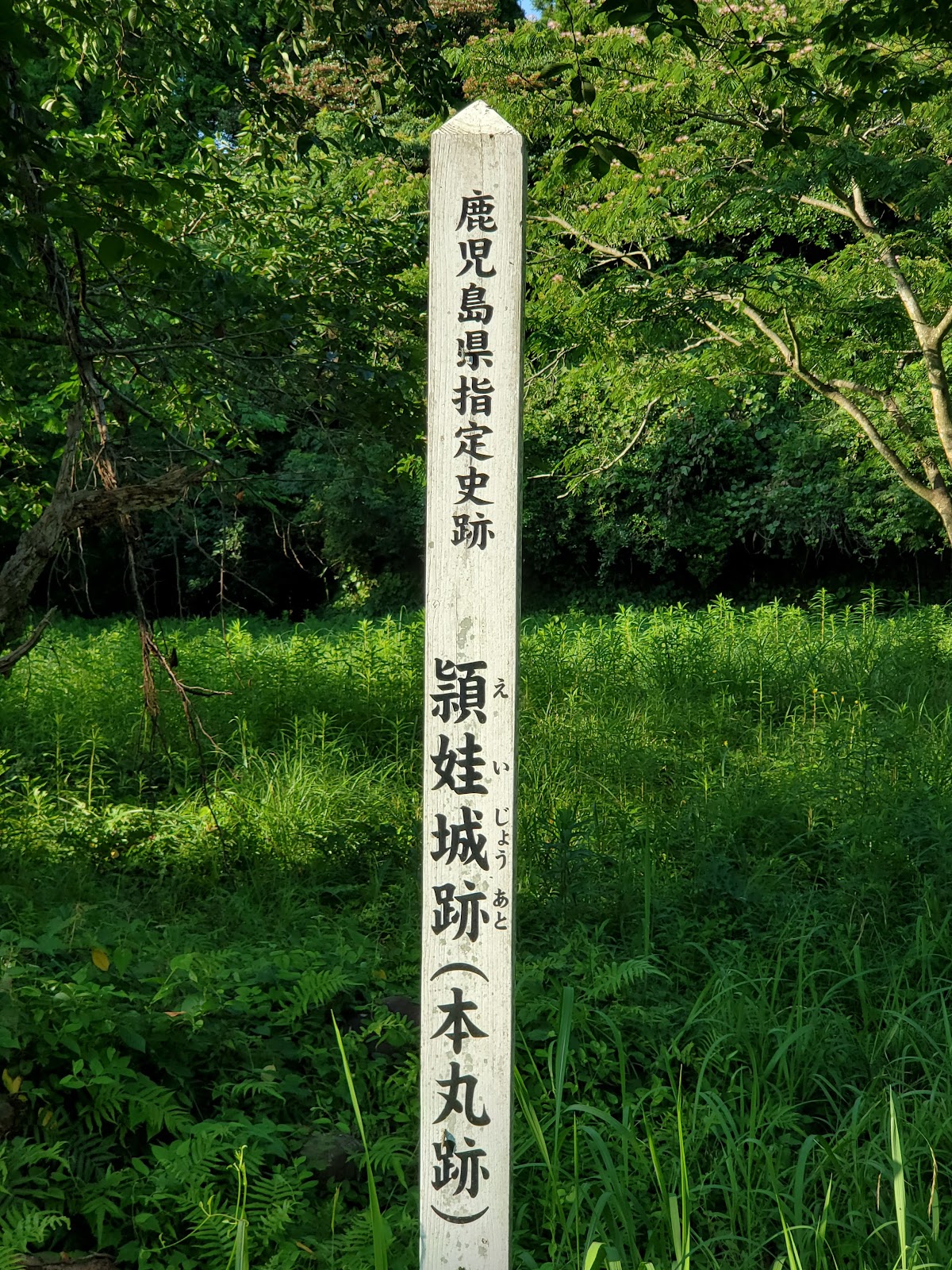
- Signpost for the Temporary Residence Site: A signpost for “Oguchi Castle Site” and “Temporary Residence Site” stands beside the gate of Oguchi Elementary School, indicating that this was a historical site.
- Topographical Observation of the Ascent Path: As you ascend the path, you can observe how the natural terrain was utilized to construct the defensive system.
- View from the Main Enclosure: From near the main enclosure, you can overlook the Oguchi Basin, giving you a real sense of the castle’s strategic location controlling a key transportation hub.
- Observation of the Dry Moats and Earthworks: By actually seeing the dry moats and earthworks up close, you can experience medieval castle construction techniques.
Estimated Visit Time
For a thorough visit to Oguchi Castle, allow approximately 1 to 1.5 hours. This includes the round trip to the castle, observation of the remains, and photography.
Niina Tadamoto and Tadamoto Shrine
About Niina Tadamoto
Niina Tadamoto (1526-1611) was a samurai who achieved numerous military successes as a senior retainer of the Shimazu clan. He was counted as one of the Four Heavenly Kings of the Shimazu, and his bravery and loyalty were particularly highly regarded within the Shimazu family.
What is particularly noteworthy about Tadamoto is not only his achievements as a military commander, but also his skill as a land administrator. After becoming the lord of Oguchi Castle, he dedicated himself to the development of the region and achieved outstanding results in civil administration.
About Tadamoto Shrine
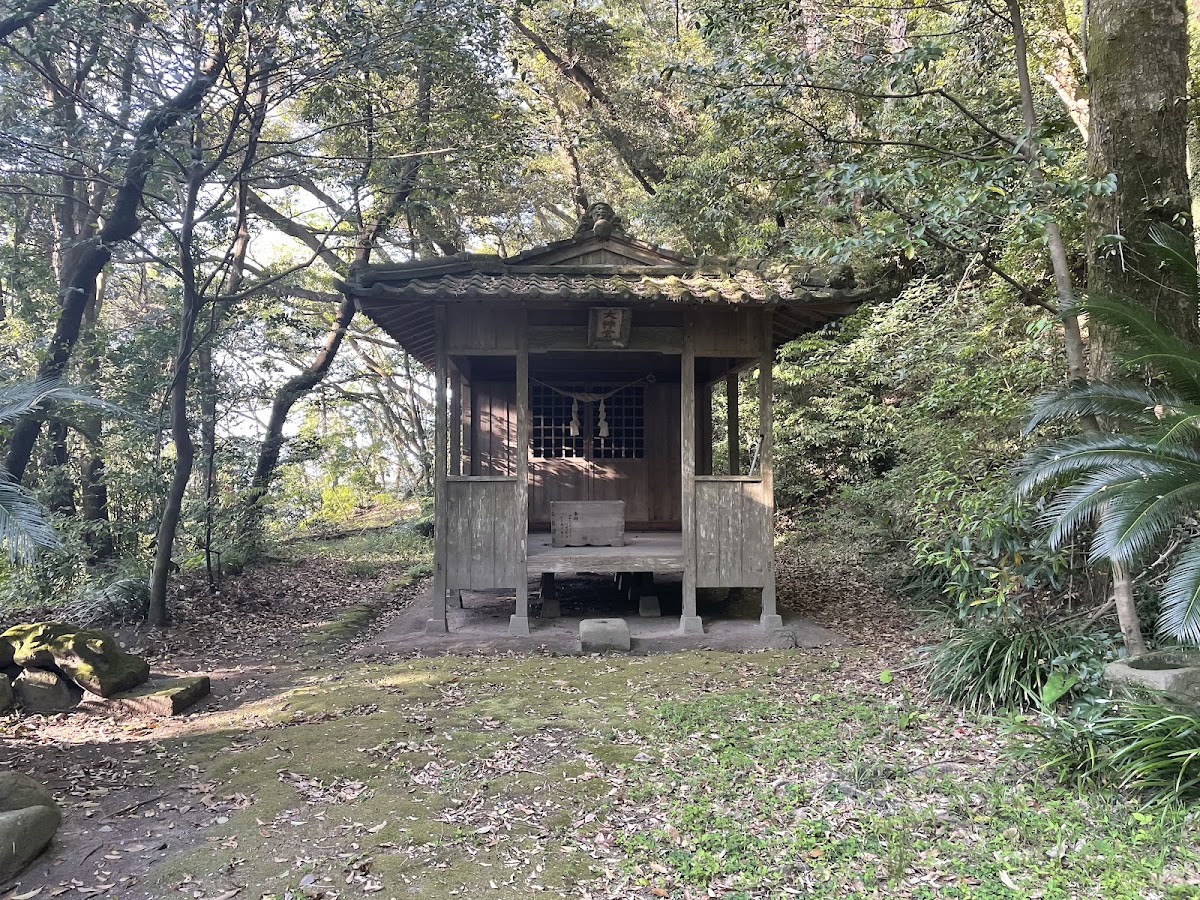
In Isa City, there is Tadamoto Shrine, dedicated to Niino Tadamoto. This shrine is carefully preserved by the local people and serves as a place to remember Tadamoto’s virtues. When visiting Oguchi Castle, visiting Tadamoto Shrine at the same time will allow you to feel the history more deeply.
Tadamoto Shrine is close to the ruins of Oguchi Castle, making it a convenient distance to visit both together. The shrine also has materials and explanatory signs about Tadamoto, allowing you to learn about the history of the region.
Access Information
Location
〒895-2511
Kami-no-baba, Oguchi-sato, Isa City, Kagoshima Prefecture (near Oguchi Elementary School)
Access by Car
From Kagoshima City
- Approximately 30 minutes from Kurino IC on the Kyushu Expressway via National Route 268
- Also accessible via National Route 328 and National Route 267
From Kumamoto
- Approximately 50 minutes from Hitoyoshi IC on the Kyushu Expressway via National Route 267
Parking
There is no dedicated parking lot near Oguchi Elementary School. Please use public parking facilities or nearby paid parking lots. Please be considerate of local residents when visiting.
Access by Public Transportation
Train
The nearest station was Oguchi Station on the Hisatsu Line (now closed), but access by train is currently difficult.
Bus
- There are bus services from Kagoshima Airport to Isa City.
- Access to Isa City is possible via express bus from Kagoshima Chuo Station.
- Use local buses and community buses within Isa City.
Public transportation is limited, so it is recommended to check the timetable in advance.
Notes for Visitors
- Consideration for School Grounds: The entrance to the castle is located on the grounds of Oguchi Elementary School. It is advisable to avoid visiting during school hours or to contact the school in advance.
- Clothing and Equipment: As it is a mountain castle, comfortable shoes and clothing are necessary. In summer, bring insect repellent, a hat, and drinking water.
- Check the Weather: The ground can be slippery during and after rain, so check the weather before visiting.
- Protection of Remains: Please be careful not to damage the remains such as earthworks and dry moats.
Nearby Tourist Attractions
Tadamoto Shrine
As mentioned above, this shrine is dedicated to Niina Tadamoto and is a must-visit spot in conjunction with Oguchi Castle. It’s an important place for gaining a deep understanding of the region’s history.
Sogi Falls
A magnificent waterfall, 210 meters wide and 12 meters high, sometimes called the “Niagara of the East.” Located about 20 minutes by car from Oguchi Castle, it’s a tourist attraction where you can feel the grandeur of nature.
Sogi Power Plant Ruins
These are the remains of a Meiji-era power plant located upstream of Sogi Falls. Known as an “underwater ruin” that appears when the water level of the dam lake drops (mainly from May to September), it has high value as an industrial heritage site and offers a unique landscape to enjoy.
Isa City Historical Museum
This facility allows you to learn about the history of the Isa region, including Oguchi Castle. It exhibits materials related to the Hishikari clan and Niina Tadamoto, as well as local cultural artifacts. Visiting before or after your trip will deepen your understanding.
Yunoo Onsen
Located within Isa City, this hot spring resort is perfect for relaxing after a day of exploring castle ruins. It boasts excellent water quality and is a beloved hot spring among locals.
Recommended Itinerary for Visiting Oguchi Castle
Half-Day Course (3-4 hours)
- Pre-visit learning at Isa City Historical Museum (30 minutes)
- Visit to Oguchi Castle Ruins (1 hour 30 minutes)
- Visit to Chugen Shrine (30 minutes)
- Lunch at a local restaurant (1 hour)
Full-Day Course (6-8 hours)
- Morning: Visit to Oguchi Castle Ruins and Chugen Shrine (2 hours 30 minutes)
- Lunch: Local cuisine in Isa City (1 hour)
- Afternoon: Sightseeing at Sogi Falls (1 hour)
- Visit to the Sogi Power Plant Ruins (depending on the season, 1 hour)
- Bathing at Yunoo Onsen (1 hour 30 minutes)
Historical Value and Future Preservation of Oguchi Castle
Oguchi Castle possesses high historical value as a typical example of a medieval mountain castle in Satsuma Province, and as a site that tells the history of the Shimazu clan’s rule over the territory. The following points are particularly important:
Importance in Local History
Oguchi Castle was located at a strategic transportation hub near the border of Satsuma, Osumi, and Hyuga provinces, and functioned as the political, military, and economic center of the region. It was a stage for important events in Japanese history, such as the conflict between the Hishikari and Shimazu clans and Toyotomi Hideyoshi’s conquest of Kyushu.
Research Materials for Castle Construction Techniques
The remaining dry moats and earthworks are valuable resources for studying medieval castle construction techniques. As remains that convey the structure of an earthen castle without stone walls, their academic value is recognized.
Efforts Towards Preservation
Currently, the Oguchi Castle ruins are recognized as a local historical heritage site, and efforts are being made to preserve them. However, because there are no stone walls or buildings, it can be difficult for general tourists to understand, and finding a balance between effective preservation and utilization remains a challenge.
Future efforts are expected to allow visitors to experience history more effectively, such as the installation of signs and explanatory panels, the improvement of the approaching paths, and the provision of restored images using digital technology.
Tips for Enjoying Oguchi Castle
Preparations
- Historical Study: Having basic knowledge about the Hishikari, Shimazu, and Niina Tadamoto will greatly enhance your experience at the site.
- Obtaining Maps: Obtaining detailed maps of the castle grounds and surrounding area beforehand will allow for a more efficient visit.
- Preparing Photography Equipment: A wide-angle lens is useful for photographing the remains. Also, some ingenuity is required to accurately represent the depth of the dry moats.
How to Enjoy the Site
- Observing the Topography: Imagine the strategies of the time by observing the terrain and considering why the castle was built in this location.
- Careful Observation of the Remains: Even places that appear to be simple depressions or mounds of earth are artificially constructed defensive structures. Careful observation will impress you with the technology of the time.
- Enjoying the View: The view from near the main enclosure is key to understanding the importance of the castle’s location. Enjoy the scenery while considering which direction was being monitored and defended.
- Interacting with Locals: If possible, listening to local legends and anecdotes will lead to a deeper understanding.
Summary
Oguchi Castle (Ushiyama Castle) is a valuable medieval mountain castle located in Isa City, Kagoshima Prefecture. It was the site of conflicts between the Hishikari and Shimazu clans, and was a historically significant castle where the renowned general Niina Tadamoto served as lord. It was an important base in Satsuma Province.
Although no buildings remain today, the remains such as dry moats and earthworks allow us to imagine its former appearance. Despite being located in a familiar place behind Oguchi Elementary School, it is relatively uncrowded, making it a hidden gem where you can quietly reflect on history.
When visiting Isa City, you can enjoy the rich history and nature of the region by visiting nearby tourist spots such as Tadamoto Shrine and Sogi Falls along with the Oguchi Castle ruins. For those interested in medieval mountain castles, those who want to learn more about the history of the Shimazu clan, and those looking to visit hidden gems in Kagoshima Prefecture, Oguchi Castle is a place I highly recommend.
It is our responsibility as visitors to visit with proper preparation and consideration, and to pass on this valuable historical heritage to future generations. Why not experience the historical romance of medieval Satsuma at Oguchi Castle?