Kaseda Castle (Beppu Castle): A Complete Guide to its History and Highlights | A Key Castle in Satsuma, the Stage for the Restoration of the Shimazu Clan
Located in Minamisatsuma City, Kagoshima Prefecture, Kaseda Castle, also known as Beppu Castle, is a historically significant fortress. From the late Heian period to the Sengoku period, it functioned as the political and military center of the Satsuma region, and is particularly known as the retirement castle of Shimazu Tadayoshi (Nisshinsai), the restorer of the Shimazu clan. This article thoroughly explains the charm of Kaseda Castle, from its detailed history and castle structure to its current remains and a visitor’s guide.
History of Kaseda Castle
Late Heian Period: Construction by the Beppu Clan
The history of Kaseda Castle dates back to the late Heian period, around 1100. Beppu Goro Tadaaki, a member of the Taira clan who ruled this land, built the castle as a base for the development of Kaseda. The Beppu clan was a family descended from the Taira clan, and they established their control over the Kaseda region from this castle.
Beppu Castle was a complex fortress composed of three castles: Fukuju Castle, Amaga Castle, and Nakano Castle. This three-castle structure enhanced its defensive capabilities and functioned as a base for governing the territory. The Beppu clan used this castle as their base and ruled the Kaseda region for several centuries.
Muromachi Period: Under the Rule of the Shimazu Clan
In 1420 (Oei 27), Shimazu Hisatoyo of the Satsuma Shimazu family captured Beppu Castle and forced the Beppu clan to surrender. As a result, Kaseda Castle became Shimazu territory and thereafter became an important fortress for the Shimazu clan.
The Shimazu clan’s rule further increased the strategic importance of Kaseda Castle. As a key point in the southern part of the Satsuma Peninsula, it played a crucial role in the expansion of the Shimazu clan’s power.
Sengoku Period: Shimazu Tadayoshi and Kaseda Castle
Kaseda Castle played its most prominent role in history during the Sengoku period (Warring States period). In 1538, Shimazu Tadayoshi (Nisshinsai), known as the restorer of the Shimazu clan, launched a fierce attack on Kaseda Castle, which was defended by Oyama Kuranosuke, a general on the side of Shimazu Sanehisa. After a fierce battle, Tadayoshi finally succeeded in capturing the castle.
This battle marked a crucial turning point in the “Shimazu clan’s internal conflict,” a dispute over the succession of the Shimazu family. Having acquired Kaseda Castle, Tadayoshi later chose it as his retirement home and spent much of his time there. Shimazu Tadayoshi was also a cultured man known for the “Iroha poem,” and it is believed that Kaseda Castle functioned not only as a military base but also as a cultural center.
Edo Period: Formation of Kaseda Fumoto
In the Edo period, a group of samurai residences known as Kaseda Fumoto formed at the foot of Kaseda Castle. As part of the Satsuma Domain’s unique “outer castle system,” many samurai resided in this area, taking on the responsibility of regional defense and governance.
The Kaseda foothills still retain a townscape of samurai residences and have been designated a Japan Heritage site. This area embodied Satsuma’s unique system of integrated castle and foothill defense, where the castle and the surrounding area worked together to protect the region.
After the Meiji Era: Disappearance of the Castle
In 1903 (Meiji 36), Kaseda Elementary School relocated to this site. At that time, the land around the three castles—Fukuju Castle, Amagajo Castle, and Nakanojo Castle—was leveled to create the school grounds, resulting in the removal of a large portion of the castle fortifications. Currently, only a portion of Amagajo Castle remains, and the magnificent appearance of the former castle complex has been lost.
The Structure of Kaseda Castle
Characteristics of the Three-Castle Structure
The most distinctive feature of Kaseda Castle (Beppu Castle) is that it was a complex castle composed of three castles: Fukuju Castle, Amagajo Castle, and Nakanojo Castle.
Fukuju Castle is believed to have played a central role among the three castles. It is highly probable that the lord’s residence and major defensive facilities were located here.
Amaga Castle still has some remains and is maintained as Amaga Castle Park. Because this castle has a name related to women, it is presumed to have functioned as a living space for the lord’s family and a refuge.
Nakano Castle is located between Fukuju Castle and Amaga Castle and is thought to have served as a link between the two. The three castles worked together organically to form a strong defensive network.
Utilization of Location and Topography
Kaseda Castle was built on a hilly area, situated on a high ground overlooking the surrounding area. The layout, which utilized this terrain, allowed for early detection of approaching enemies and effective defense.
It is presumed that the three castles, each positioned at a different elevation, created a three-dimensional defensive system. Such a complex castle structure is an important example of the characteristics of medieval Satsuma castle architecture.
Current Remains and Highlights
Amagajo Park
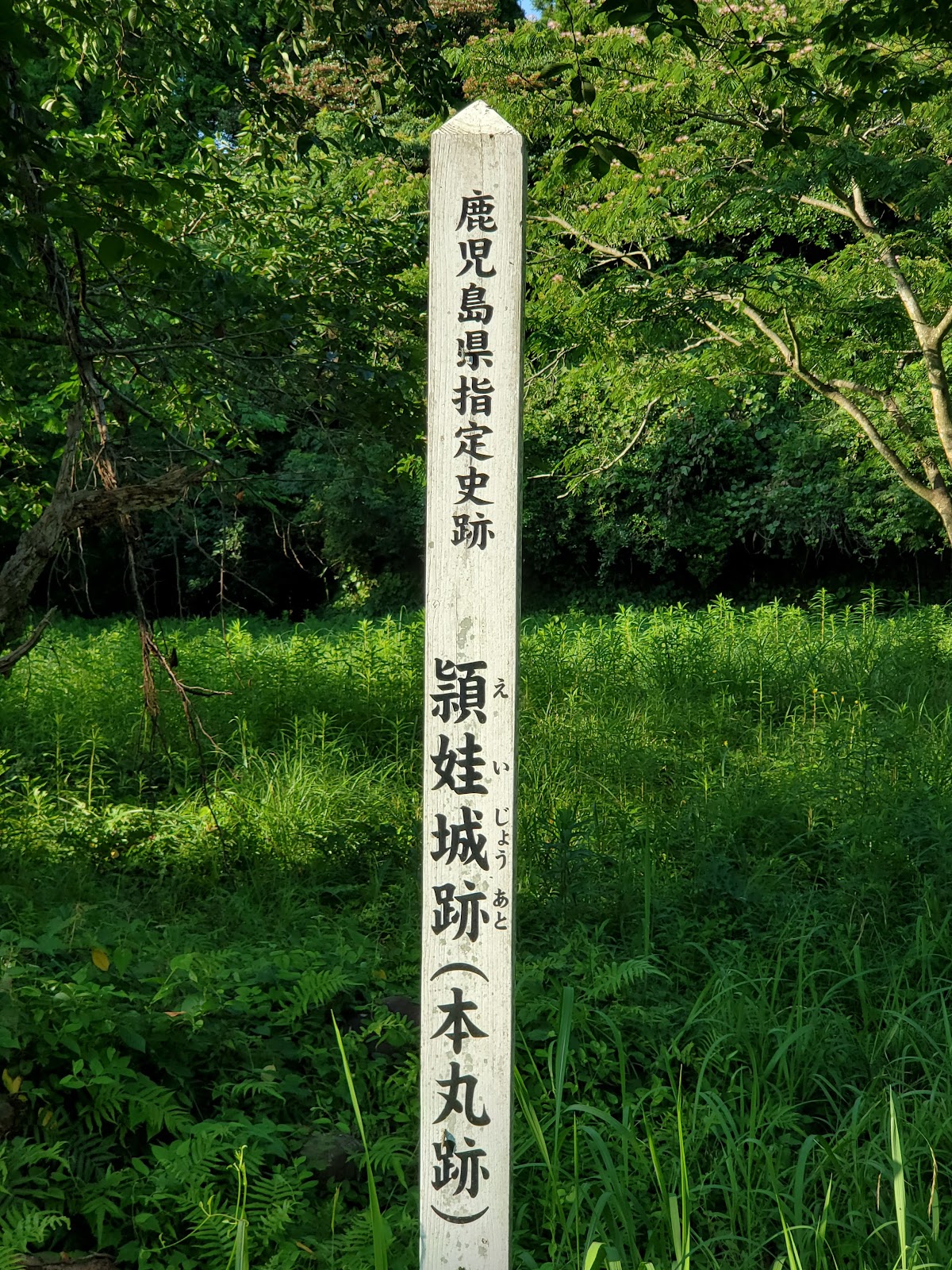
Currently, the remains of Kaseda Castle are mainly located around Amagajo Park. A portion of Amagajo Castle, which escaped land leveling during the Meiji era, has been developed into a park.
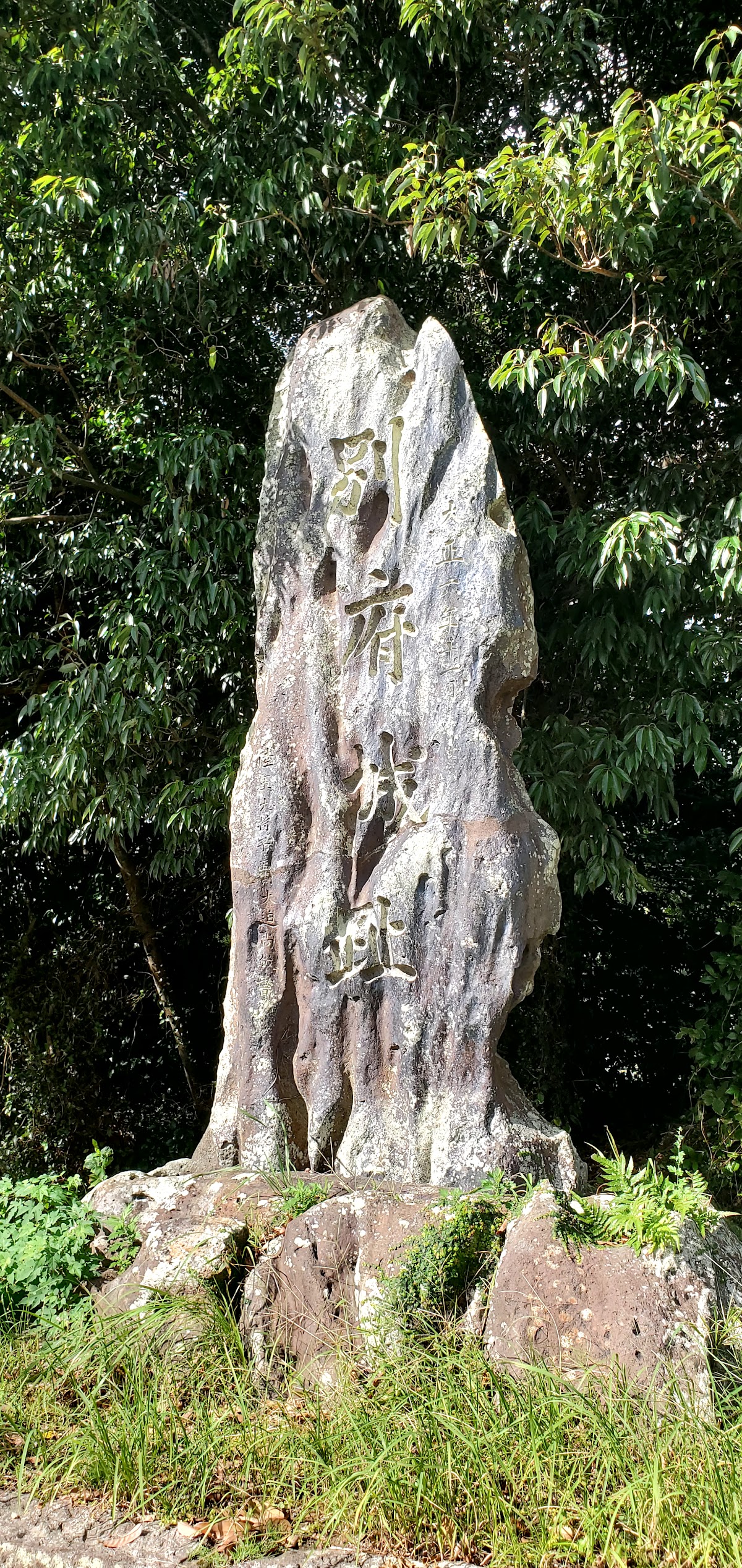
Within the park, there is a stone monument related to Kaseda Castle (Beppu Castle), indicating that this area was once an important castle. The monument records the history of the castle and its connections to the Beppu and Shimazu clans, conveying the historical background to visitors.
Beppu Shrine
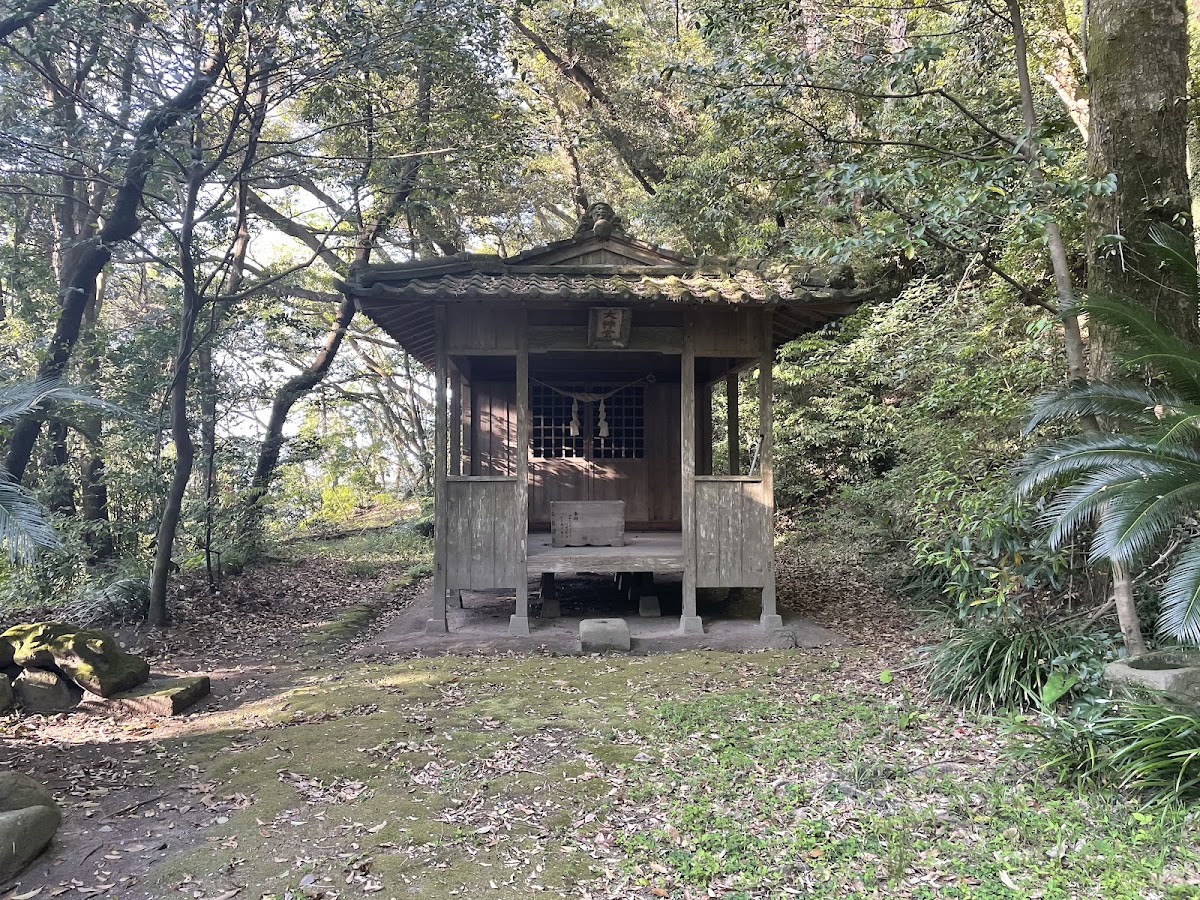
To the east of Amagajo Park is Beppu Shrine, dedicated to Beppu Goro Tadaaki, who built Beppu Castle. This shrine is carefully preserved by the local people and is an important historical site that conveys the achievements of the Beppu clan to the present day.
A monument honoring Beppu Goro Tadaaki has also been erected, celebrating his achievements as the founder of Kaseda’s development. From the shrine grounds, one can see the former castle area, allowing one to imagine the scale of the castle in its heyday. ### Takeda Shrine and Shimazu Hisatoyo
At the foot of Kaseda, there is Takeda Shrine, dedicated to Shimazu Hisatoyo, who captured Beppu Castle in 1420. This shrine symbolizes the beginning of the Shimazu clan’s rule over Kaseda and is an important spot for understanding the region’s history.
Samurai Residences at Kaseda Foothills
When visiting Kaseda Castle, be sure to also stroll through the samurai residences at Kaseda Foothills. These samurai residences, formed during the Edo period, are recognized as a component of the Japan Heritage site “The Town Where Satsuma Samurai Lived ~Walking Through the Samurai Residences of ‘Foothills’~”.
The stone walls, hedges, and gate structures characteristic of samurai residences still remain, allowing you to experience the life of a samurai during the Edo period. The area around the Kaseda District Community Center has a particularly high concentration of well-preserved samurai residences, making it an ideal base for sightseeing.
Access and Visiting Guide to Kaseda Castle
Location
Address: Takeda, Kaseda, Minamisatsuma City, Kagoshima Prefecture
Kaseda Castle Ruins (Amagajo Park) are located in the urban area of Minamisatsuma City, making access relatively easy.
Transportation Access
Access by Car:
- Approximately 50km (about 1 hour by car) south from central Kagoshima City via National Route 270
- Approximately 30 minutes from the Ei IC on the Ibusuki Skyline
- Approximately 10 minutes from the Kaseda IC on the Minami-Kyushu Expressway
Parking: Parking spaces are available around Amagajo Park. Parking at the Kaseda District Community Center is also available.
Access by Public Transportation:
- From JR Kagoshima-Chuo Station, take the local bus bound for “Kaseda” (approximately 1 hour 30 minutes).
- Get off at the “Kaseda” bus stop and walk for approximately 10 minutes to Amagajo Park.
Points to Note During Your Visit
Estimated Time Required: A visit to Amagajo Park alone takes about 30 minutes. A stroll including the samurai residences at the foot of Kaseda takes approximately 2-3 hours.
Admission Fee: Free (As it is an outdoor historical site, you can visit freely).
Visiting Hours: There are no specific restrictions, but visiting during daylight hours is recommended.
Recommended Visiting Order:
- Visit the stone monument at Amagajo Park and learn about the castle’s history.
- Visit Beppu Shrine and see the monument honoring Beppu Goro Tadaaki.
- Visit Takeda Shrine.
- Stroll through the samurai residences at the foot of Kaseda Castle.
- Check local historical materials at the Kaseda District Community Center (please note opening hours).
Nearby Tourist Attractions
When visiting Kaseda Castle, we recommend also visiting other tourist attractions in Minamisatsuma City.
- Bansei Special Attack Peace Memorial Museum: A museum built on the site of a special attack base from World War II.
- Bozu: A port town that flourished as an international trading port from ancient to medieval times.
- Fukiagehama: One of Japan’s three largest sand dunes, with a beautiful coastline.
The Connection Between Kaseda Castle and the Shimazu Clan
Shimazu Tadayoshi (Nisshinsai) and Kaseda Castle
Shimazu Tadayoshi is considered the restorer of the Shimazu clan and greatly contributed to their development during the Sengoku period. His choice of Kaseda Castle as his retirement castle demonstrates the strategic and cultural importance of this castle.
Tadayoshi is also known as the author of the “Iroha Song,” which summarizes the principles of a samurai in 47 poems. It is believed that these lessons were refined and passed down to future generations during his time at Kaseda Castle.
The Shimazu Clan’s Outer Castle System and Kaseda
During the Edo period, the Satsuma Domain adopted a unique “outer castle system.” This system involved strategically placing samurai settlements called “fumoto” (foothills) at key locations within the domain to provide regional defense and governance.
Kaseda Fumoto was one of the important bases of this outer castle system. The samurai residences formed at the foot of Kaseda Castle served as homes for local samurai who engaged in agriculture during peacetime and became combatants during times of war. This unique system supported the strong military power of the Satsuma Domain.
Historical Significance of Kaseda Castle
As a Strategic Point in Southern Satsuma
Kaseda Castle was located in the southern part of the Satsuma Peninsula and had good access to the coast. This location was important for monitoring maritime traffic and as a trading base.
From the medieval to the early modern period, Kaseda functioned as one of the political, economic, and cultural centers of southern Satsuma. Kaseda Castle was its symbolic presence and a key point for regional control.
Its Place in the History of the Shimazu Clan
Kaseda Castle appears in several important aspects of the history of the Shimazu clan. Kaseda Castle played a crucial role in the development of the Shimazu clan, from its capture from the Beppu clan by Shimazu Hisatoyo to its recapture and subsequent use as a retirement castle by Shimazu Tadayoshi.
Especially during Shimazu Tadayoshi’s time, the castle functioned as a southern base for the Shimazu clan’s expansion, forming the foundation for their later unification of Kyushu.
Cultural Aspects
Kaseda Castle was not merely a military facility, but also a cultural center. The presence of cultural figures like Shimazu Tadayoshi likely fostered not only martial arts but also scholarship and the arts.
Education in the samurai spirit, exemplified by the “Iroha” poem, was conducted there, forming the spiritual foundation of the Satsuma samurai. Kaseda Castle was an important place that nurtured Satsuma samurai culture.
Preservation and Utilization in Modern Times
Status of Remains Preservation
Due to land leveling during the Meiji era, much of Kaseda Castle’s remains were lost. This is a problem faced by many castles throughout Japan and is a typical example of historical heritage being lost during the modernization process.
Although the remaining ruins are limited, the area has been developed into Amagajo Park, serving as a place of relaxation for citizens while also fulfilling its role in conveying history. The installation of stone monuments and explanatory signs provides visitors with an environment where they can learn about the castle’s history.
Kaseda Fumoto as a Japan Heritage Site
The designation of Kaseda Fumoto as a Japan Heritage Site signifies the official recognition of the historical value of this region. Even though the castle ruins themselves are gone, the samurai residences that formed below the castle still convey the atmosphere of that time.
Minamisatsuma City is focusing on the preservation and utilization of these samurai residences, and is also working on developing them as a tourist resource. Understanding the history of Kaseda Castle and the samurai residences of Kaseda Fumoto as a whole allows for a deeper historical experience.
Local History Education
The history of Kaseda Castle is also covered in local school education. By learning about the history of their land, local children are fostering a love for their hometown and an interest in history.
The Kaseda District Community Center and other locations regularly hold lectures and exhibitions on local history, providing citizens with opportunities to learn about history.
Summary
Kaseda Castle (Beppu Castle) is an important castle that played a significant role in the history of southern Satsuma from the late Heian period to the Sengoku period. Its history spans several centuries, beginning with its construction by Beppu Goro Tadaaki, its conquest by Shimazu Hisatoyo, and its role as a retirement castle for Shimazu Tadayoshi.
Although most of the castle was lost during the Meiji era, its history can still be felt through the remains preserved in Amagajo Park, the nearby Beppu Shrine and Takeda Shrine, and the samurai residences at the foot of Kaseda.
When visiting Minamisatsuma City, Kagoshima Prefecture, be sure to visit the Kaseda Castle ruins and trace the history of Satsuma and the footsteps of the Shimazu clan. While only a monument and a park remain today, understanding the rich history behind it will allow you to deeply appreciate the significance of this place.
The history of Kaseda Castle is a valuable example that illustrates regional development, the formation of samurai culture, and a part of local history during Japan’s transition from the medieval to the early modern period. As each visitor reflects on its history, the memory of this castle will be passed on to future generations.