Tatsuoka Castle Complete Guide: History and Highlights of Japan’s Only Two Star-Shaped Castles
Tatsuoka Castle, located in Taguchi, Saku City, Nagano Prefecture, is an extremely rare Western-style star-shaped castle built during the late Edo period. Along with Hakodate Goryokaku in Hokkaido, it is one of only two existing five-pointed star-shaped bastion castles in Japan and is designated a national historic site. Also known as “Tatsuoka Goryokaku” and “Kikyo Castle,” it continues to fascinate many history enthusiasts and tourists as a historical symbol of Shinshu Saku.
History of Tatsuoka Castle: An Advanced Castle Construction Project of the Late Edo Period
Background of the Domain Office Relocation and Matsudaira Norimasa
The history of Tatsuoka Castle begins in 1863 (Bunkyu 3). The project began when Matsudaira Norikata (later known as Ogyu Tsune), the lord of the Okudono Domain in Mikawa Province (present-day Okudono-cho, Okazaki City, Aichi Prefecture), obtained permission from the Edo Shogunate to relocate the domain’s administrative office to its subsidiary territory in Saku District, Shinano Province, and to construct a new fortified residence.
Although the Okudono Domain was a small domain with a rice yield of 16,000 koku, Matsudaira Norikata was known as an enlightened lord and had a deep interest in Western military technology and fortification techniques. Having been involved in the Shogunate’s military reforms and being well-versed in Western military systems, he decided to adopt a Western-style bastion-type fortress for the new domain’s administrative office.
Construction History and Completion
In 1864 (Genji 1), construction of Tatsuoka Castle began. Western fortification theories were incorporated into the design, resulting in a unique pentagram shape. This star-shaped design is a modern defensive system intended for artillery battles, with each bastion providing a mutual line of fire.
Construction of the castle was completed in 1867 (Keio 3), but the following year saw the Meiji Restoration. Ryūoka Castle only functioned as the domain’s administrative center for a short period of a few years. Just one year after its completion, in 1868 (Meiji 1), Matsudaira Norimasa was appointed a judge in the Meiji government’s military affairs department and left the domain.
Changes after the Meiji Restoration
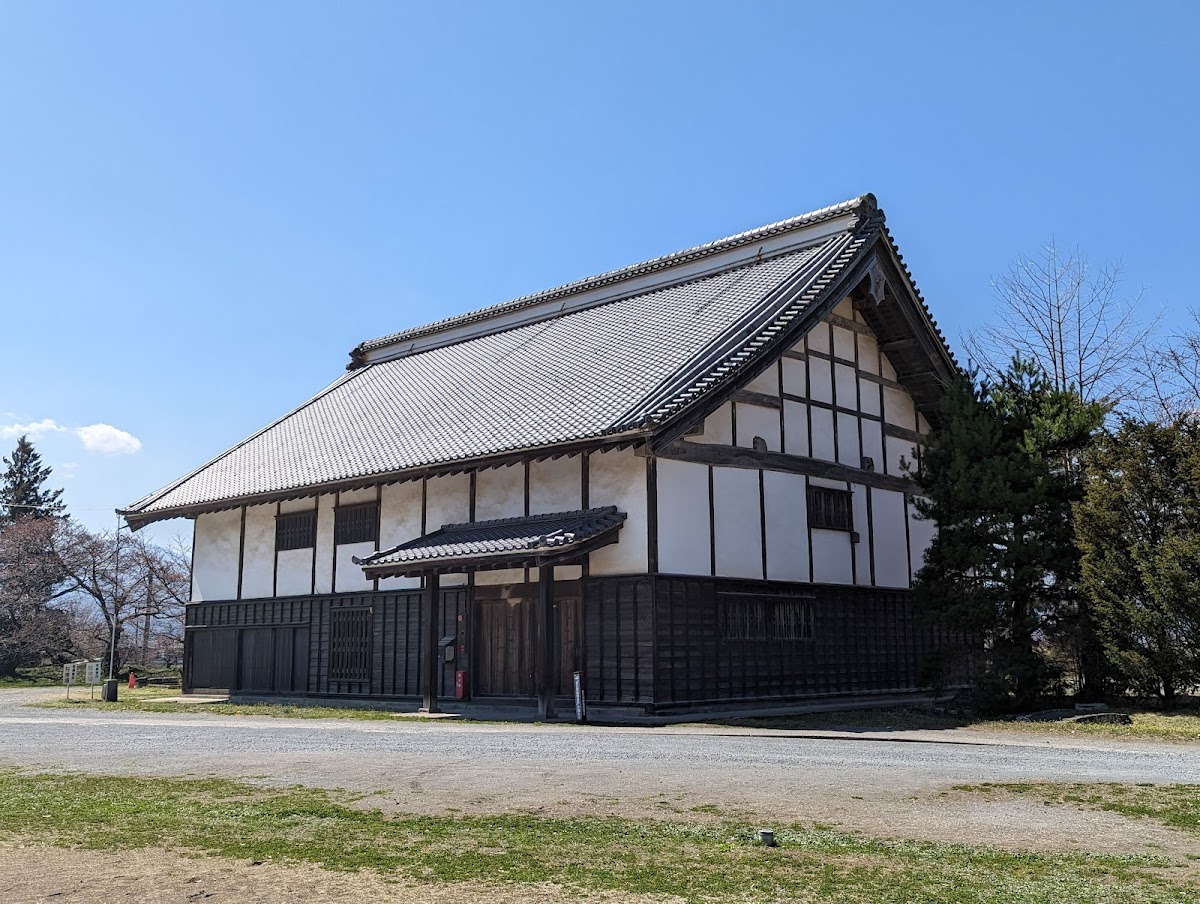
With the abolition of the feudal domains in 1871 (Meiji 4), the Ryūoka domain was dissolved, and Ryūoka Castle ceased to function as a fortress. In 1872 (Meiji 5), most of the castle buildings were demolished, and the land was sold to private individuals. The kitchen tower (Odaidokoro Yagura) was relocated and still exists, but the other structures were lost.
Later, the castle ruins were used for farmland and residential areas, but the star-shaped moat and earthworks remained relatively well-preserved. In 1934, it was designated a national historic site and protected as a valuable relic of modern castle construction history. Since the Heisei era, preservation and maintenance projects have been carried out by Saku City, and it is now a popular historical park that citizens and tourists can freely visit.
Structure of Tatsuoka Castle: Characteristics of Western-style Bastions
The Design Philosophy of the Pentagram
The most distinctive feature of Tatsuoka Castle is its pentagram-shaped plan. This design is based on the theory of bastion fortresses that developed in Europe. Each protruding part of the star shape is called a bastion, and a defensive system was constructed that minimized blind spots by firing from these bastions along the adjacent castle walls.
Compared to Hakodate Goryokaku, Tatsuoka Castle is smaller in scale, with each side measuring approximately 60 meters. However, the basic design philosophy remains the same, resulting in a rational structure designed to withstand modern artillery battles.
Structure of the Moat and Earthworks
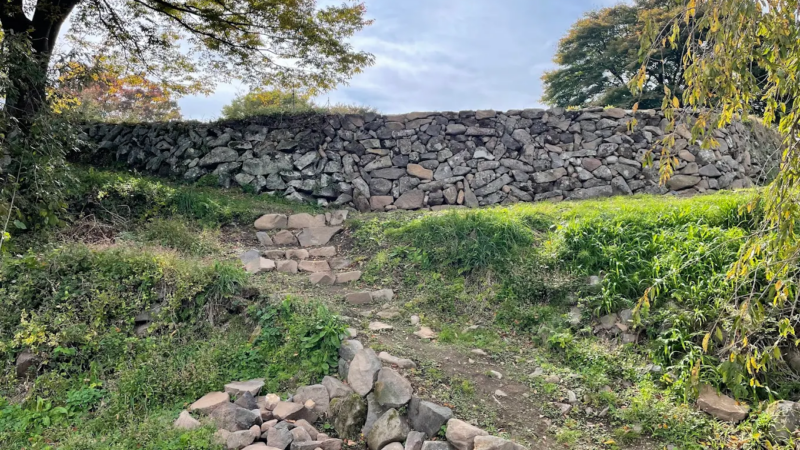
The moat surrounding Tatsuoka Castle is approximately 10 meters wide and 3 meters deep, dug along a star-shaped outline. An earthwork approximately 3-4 meters high was built inside the moat, and buildings were positioned on this embankment. The embankment remains well-preserved today, and its structure can be appreciated by walking around the castle ruins.
The water in the moat is believed to have been drawn from the nearby Yukawa River, but it is now a dry moat. Nevertheless, the star-shaped outline remains clearly visible, and its beautiful geometric form is clearly discernible from above.
Layout of Buildings within the Castle
Within Tatsuoka Castle, the lord’s residence, administrative offices, armory, and barracks were located. It is believed that the main palace was built in the center, with various other buildings arranged around it.
The only remaining building is the relocated kitchen tower, a two-story tower that originally stood on the southeastern bastion of the castle grounds. It is now preserved in a private residence in Saku City. This tower is a valuable structure as the only remaining building of Tatsuoka Castle.
Structure of the Main Gate and Koguchi (gateway entrance)
The main gate, the entrance to the castle, was located at one of the vertices of the star-shaped fortifications. The gate’s structure, known as a koguchi, is believed to have been complex in order to prevent enemy intrusion. While the main gate building no longer exists, its location and structure have been revealed through archaeological excavations.
Highlights of Tatsuoka Castle: Experiencing History on-site
Walking the Star-Shaped Castle Grounds
When visiting Tatsuoka Castle, start by walking around the star-shaped moat and earthworks. The entire circumference is approximately 500 meters, and even walking slowly, it takes about 15-20 minutes. As you walk along, observing the protruding sections of each bastion and the shape of the moats, you can truly appreciate the ingenuity of Western-style fortification techniques.
You can also walk along the top of the earthen ramparts, offering views of the castle grounds and surrounding area. Cherry blossoms bloom in spring, and the autumn leaves are beautiful, allowing you to enjoy the scenery of each season.
Views from Observation Decks
To grasp the overall layout of Tatsuoka Castle, the views from nearby observation decks are recommended. From the rooftop observation deck of “Deai no Yakata” (Meeting Hall) and the school building of “Taguchi Elementary School” on the south side of the castle, you can get a panoramic view of the star-shaped castle. “Deai no Yakata” in particular is a well-maintained base for Tatsuoka Castle visitors, where you can obtain exhibits and tourist information.
Looking down from the observation decks, the beautiful geometric shape of the pentagram is clearly visible, and you’ll be amazed by the sophistication of its design. It’s also a great spot for photography, so don’t forget to bring your camera.
Saku City Cultural Promotion Division Cultural Properties Office (Deai-no-Yakata)
Before visiting Tatsuoka Castle, we recommend stopping by “Deai-no-Yakata.” This facility, managed by the Saku City Cultural Promotion Division Cultural Properties Office, boasts a wealth of exhibits, models, and panels related to Tatsuoka Castle.
The stamp for the Continued Top 100 Japanese Castles is also located here, making it a must-visit spot for castle enthusiasts. Castle stamps can also be purchased here, and many visitors acquire them as souvenirs. The staff are very helpful and provide detailed explanations, making it an ideal place to deepen your understanding of Tatsuoka Castle.
Relocated Kitchen Tower
The kitchen tower, the only remaining structure of Tatsuoka Castle, has been relocated to a location slightly away from the castle ruins. While interior viewing is not possible due to its location on private property, the exterior can be viewed from the road. This two-story tower is a valuable building that preserves the architectural style of the late Edo period.
When visiting, please be mindful of private property and observe proper etiquette. ### Taguchi Elementary School within the Castle Grounds
Currently, Saku City Taguchi Elementary School stands within the grounds of Tatsuoka Castle. This school, established in 1873 (Meiji 6) using the Tatsuoka Castle site, is known as a rare “elementary school located within a castle” in Japan.
While the school building is not open to the public, you can catch a glimpse of the castle grounds from near the school gate. There are also explanatory signs about Tatsuoka Castle on the school grounds. Please be mindful of quiet during class hours.
Nearby Tourist Attractions
Shinkai Sansha Shrine
Located about 10 minutes by car from Tatsuoka Castle, Shinkai Sansha Shrine is one of Shinshu’s representative ancient shrines. It boasts a three-story pagoda and main hall designated as important national cultural properties, making it a shrine of high historical value. The shrine grounds are enveloped in a tranquil atmosphere, making it well worth visiting in conjunction with a tour of Tatsuoka Castle.
Kawamura Gozo Memorial Museum
The Kawamura Gozo Memorial Museum, showcasing the works of Kawamura Gozo, a master of modern Japanese sculpture, is another highlight near Tatsuoka Castle. Kawamura Gozo, a native of Saku City, was a sculptor active from the Meiji to Showa periods, and many of his works, including his representative work “Miner,” are on display.
Saku City Tourist Areas
Besides Tatsuoka Castle, Saku City boasts a variety of tourist resources, including historical buildings, natural landscapes, and hot springs. You can experience the unique charm of Shinshu Saku, such as the former Nakagomi School (a nationally important cultural property), the weeping cherry trees of Teisho-ji Temple, and Saku carp cuisine.
Access and Visiting Information
Access by Public Transportation
By Train:
- Get off at JR Koumi Line “Ryūoka-jō Station,” approximately 15 minutes on foot.
- Ryūoka-jō Station is an unmanned station, but it is within walking distance of the castle ruins.
- Taxis are also available from JR Sakudaira Station (approximately 20 minutes).
By Bus:
- Take a bus from Sakudaira Station and get off at “Taguchi,” approximately 5 minutes on foot.
- However, since the number of buses is limited, it is recommended to check the timetable in advance.
Access by Car
By Expressway:
- Approximately 15 minutes from Chubu Odan Expressway “Saku Minami IC.”
- Approximately 20 minutes from Joshinetsu Expressway “Saku IC.”
Parking Information:
- Free parking available at “Deai no Yakata” (approximately 20 regular cars).
- Some parking spaces are also available around the castle ruins.
- It can get crowded during peak tourist season and on weekends, so early arrival is recommended.
Visiting Hours and Fees
Visiting Hours:
- The castle ruins themselves are open 24 hours a day (however, there is no lighting at night, so daytime visits are recommended)
- “Deai no Yakata” (Meeting Hall) Opening Hours: 9:00 AM – 4:00 PM (Closed on Mondays, or the following day if Monday is a public holiday)
Admission Fee:
- Visiting the castle ruins is free
- Entry to “Deai no Yakata” is also free
Estimated Time Required:
- Visiting the castle ruins only: 30 minutes to 1 hour
- Visiting including “Deai no Yakata”: 1 hour to 1 hour 30 minutes
- Including sightseeing in the surrounding area: Approximately half a day
Notes for Visitors
- Part of the castle ruins is part of the Taguchi Elementary School grounds, so please be quiet during school hours.
- Some areas around the earthworks and moats have uneven ground, so comfortable walking shoes are recommended.
- Remember to bring insect repellent in summer and warm clothing in winter.
- When taking photos from the observation deck, please be considerate of the privacy of local residents.
Comparison of Tatsuoka Castle and Hakodate Goryokaku
Tatsuoka Castle and Hakodate Goryokaku are two of the only five-pointed star-shaped bastion fortresses in Japan. They have both similarities and differences.
Similarities
- A bastion-style fortress with a five-pointed star-shaped plan.
- Constructed during the late Edo period using Western fortification techniques.
- Designated with modern artillery warfare in mind.
- Designated as a national historic site.
Differences
Scale:
- Hakodate Goryokaku: Approximately 125 meters per side, area approximately 25,000 square meters.
- Tatsuoka Castle: Approximately 60 meters per side, area approximately 6,000 square meters.
- Tatsuoka Castle is about one-quarter the size of Hakodate Goryokaku.
Purpose of Construction:
- Hakodate Goryokaku: Constructed by the shogunate as a defensive base following the opening of Hakodate port.
- Tatsuoka Castle: Constructed by the feudal lord as the administrative center (jinya) of a small domain.
Current Status:
- Hakodate Goryokaku: Developed as a park, with a panoramic view visible from Goryokaku Tower.
- Tatsuoka Castle: A primary school is located within the castle grounds, blending seamlessly into the everyday landscape.
Current Status of Structures:
- Hakodate Goryokaku: The Hakodate Magistrate’s Office has been restored.
- Tatsuoka Castle: Only the relocated kitchen tower remains.
Cultural Value of Tatsuoka Castle
Significance of National Historic Site Designation
Tatsuoka Castle was designated a National Historic Site in 1934. This designation signifies the recognition of its historical and academic value as a valuable relic demonstrating the acceptance and practice of Western-style fortification techniques in Japan.
During the late Edo period, Japan was compelled to rapidly adopt Western military technology after the arrival of the Black Ships. Tatsuoka Castle, despite being a small domain, is a testament to this historical context and represents an advanced attempt to introduce cutting-edge fortification technology.
Selection as one of the Continued Top 100 Japanese Castles
In 2017, Tatsuoka Castle was selected as one of the “Continued Top 100 Japanese Castles.” This designation by the Japan Castle Association, a public interest incorporated foundation, as an important castle following the existing “100 Famous Castles of Japan,” demonstrates a renewed appreciation for the historical value of Tatsuoka Castle.
It’s also popular among castle enthusiasts as a target for “stamp rallies,” attracting many visitors from all over Japan.
Efforts for Preservation and Utilization
Saku City is continuously working on the preservation and utilization of the Tatsuoka Castle ruins. Efforts to pass on the historical site to future generations continue, including the maintenance of the earthworks and moats, the installation of explanatory signs, and information dissemination at the “Deai no Yakata” (Meeting Hall).
Furthermore, the presence of a local elementary school within the castle grounds provides children with an environment where they can regularly interact with historical heritage, contributing to local history education.
Tatsuoka Castle in Every Season
Spring: The Season of Cherry Blossoms and Fresh Greenery
Spring is a beautiful season for Tatsuoka Castle, with cherry blossoms in full bloom. When the cherry trees planted around the earthworks and moats reach full bloom, the star-shaped castle is adorned in cherry blossom pink. The best time to see the blossoms is from early to mid-April, when locals and tourists alike can be seen enjoying the flowers.
Summer: Lush Green Castle Ruins
In summer, Tatsuoka Castle is enveloped in lush greenery. The trees around the earthworks and moats grow thick, creating a cool and refreshing atmosphere. However, there are many insects in the summer, so it is recommended to take thorough insect repellent measures.
Autumn: The Beauty of Autumn Leaves
Autumn is the season when Tatsuoka Castle is beautiful with its autumn foliage. From late October to early November, the trees around the moats turn red and yellow, vividly coloring the star-shaped castle. It is the perfect season to enjoy a historical stroll under the clear autumn sky.
Winter: Silent Castle Ruins
In winter, Tatsuoka Castle becomes a world of silence covered in snow. Saku City has a continental climate, and winters are harsh, sometimes with heavy snowfall. The snow-covered, star-shaped castle is breathtakingly beautiful, but be aware that the ground can be slippery, so exercise caution when visiting.
Model Itinerary for Visiting Tatsuoka Castle
Half-Day Course (Approx. 3-4 Hours)
- Arrive at JR Tatsuoka Castle Station (9:00)
- Visit the Deai-no-Yakata (Meeting Hall) (9:15-10:00)
- View the historical exhibits
- Get your stamp for the Continued 100 Famous Castles
- Purchase a castle stamp
- Visit the Tatsuoka Castle Ruins (10:00-11:30)
- Walk around the moat and earthworks
- Take a panoramic photo from the observation deck
- Observe the castle grounds
- Stroll around the surrounding area (11:30-12:00)
- View the relocated kitchen tower from the outside
- Lunch (12:00-13:00)
- Enjoy Shinshu soba noodles or Saku carp dishes in Saku City
Full-day course (approximately 7-8 hours)
The morning session will be similar to the half-day course, visiting Ryūoka Castle. The afternoon session will cover nearby tourist attractions.
- Morning: Visit to Tatsuoka Castle (Same as the half-day course)
- Lunch (12:00-13:00)
- Visit to Shinkai Sansha Shrine (13:30-14:30)
- Visit the three-story pagoda, a nationally important cultural property
- Kawamura Gozo Memorial Museum (15:00-16:00)
- View modern sculptures
- Former Nakagomi School (16:30-17:00)
- Visit early Meiji-era pseudo-Western style architecture
- Dinner and souvenir shopping around Sakudaira Station (17:30-)
Trivia about Tatsuoka Castle
Why is it called a “Jinya” (fortified residence) and not a “castle”?
Tatsuoka Castle is generally called a “castle,” but its official name was “Tanoguchi Jinya.” During the Edo period, only daimyo with a certain level of rice production (kokudaka) were permitted to build castles. The Ryūoka Domain (Tanoguchi Domain), a small domain with a rice production of 16,000 koku, was not granted the status of a castle lord.
Therefore, although formally built as a “jinya” (a residence and administrative center for the domain lord), its structure is clearly that of a modern castle, and it is now commonly known as “Ryūoka Castle.”
Origin of the Alternate Name “Kikyō Castle”
Ryūoka Castle is also known by the beautiful alternative name “Kikyō Castle.” This name originates from the fact that its five-pointed star shape resembles a bellflower (kikyō). The bellflower has five petals, and its star-shaped opening mirrors the shape of Ryūoka Castle, hence this elegant name.
The Later Life of Matsudaira Norimasa (Ogyu Yuzuru)
Matsudaira Norimasa, who built Tatsuoka Castle, changed his name to Ogyu Yuzuru after the Meiji Restoration and played an active role in the Meiji government. He held positions such as judge in the military affairs department, vice-minister of the Ministry of War, and member of the Senate, contributing to the development of modern Japan’s military system. He spent his later years as a member of the nobility and died in 1910 at the age of 73.
To Enhance Your Visit to Tatsuoka Castle
Recommended Prior Study
Before visiting Tatsuoka Castle, learning a little about the history of the late Edo period and bastion-style fortresses will make your visit more fulfilling. In particular, knowing about comparisons with Goryokaku in Hakodate and Western star-shaped fortresses (such as Vauban fortresses) will allow you to more deeply understand the design philosophy of Tatsuoka Castle.
Photography Tips
To capture the charm of Tatsuoka Castle in photographs, the following points are recommended:
- Overhead shots from the observation deck: The best spot to capture the entire star shape.
- Close-ups of the moat and earthworks: Expressing the structural beauty of the castle.
- Seasonal scenery: Photographs that capture the seasonal feel by combining the castle with cherry blossoms or autumn leaves.
- Evening scenery: A picturesque view of the castle ruins illuminated by the setting sun.
Interacting with Locals
The area around Tatsuoka Castle is a residential area, and locals regularly stroll around the castle ruins. If you observe proper etiquette, you may be able to hear stories about the castle’s history and past from locals. Such interactions will also be a valuable experience and a memorable part of your trip.
Summary: The Charm and Value of Visiting Tatsuoka Castle
Tatsuoka Castle is an extremely valuable historical heritage site, being one of only two five-pointed star-shaped bastion castles in Japan. While not as famous as Hakodate Goryokaku, it offers a quiet and tranquil atmosphere where you can truly feel the history.
In the turbulent Bakumatsu period, Matsudaira Norimasa’s foresight and passion, which led him to adopt cutting-edge Western-style fortification techniques despite his small domain, culminated in this star-shaped castle. Its fleeting existence, having functioned as the domain’s administrative center for only a few years, adds to its historical romance.
Nearby the beautiful nature of Shinshu Saku, Ryūoka Castle displays its ever-changing beauty throughout the seasons: cherry blossoms in spring, lush greenery in summer, vibrant autumn leaves, and snowy winter landscapes. It’s a recommended spot not only for castle enthusiasts but also for history buffs, those seeking beautiful scenery, and anyone looking for a leisurely stroll.
Visit this star-shaped castle and walk the remnants of a Bakumatsu-era dream. The beautiful pentagram shape viewed from the observation deck will surely leave a lasting impression.