Complete Guide to the History and Highlights of Yoshiwarayama Castle | A Thorough Explanation of Tango’s Mountain Castle Ruins
What is Yoshiwarayama Castle?
Yoshiwarayama Castle is a Sengoku period mountain castle located in Yoshiwara, Mineyama-cho, Kyotango City, Kyoto Prefecture. Built on the summit of Gongen-yama (Yoshiwara-yama), approximately 180.8 meters above sea level, it functioned as an important military base in the Tango region.
Also known as “Gongen-yama Castle,” this castle is known as the residence of the Yoshiwara clan, who served the Isshiki clan, the shugo (military governor) of Tango. Even today, a Gongen shrine is enshrined on the site of the main keep, and the remains of defensive structures such as moats and cliffs are well-preserved. It is one of the representative mountain castle ruins of the Tango region, highly regarded by mountain castle enthusiasts and history researchers.
History of Yoshiharayama Castle
Construction and the Yoshihara Clan
There are several theories regarding the construction date of Yoshiharayama Castle, but the most widely accepted tradition is that it was built in 1388 (Kakei 2) during the Nanboku-cho period by Isshiki Akinori, the governor of Tango Province. The Isshiki clan was a powerful daimyo family, a branch of the Ashikaga shogunate, who ruled Tango and Wakasa provinces. Yoshiharayama Castle was positioned as an important base supporting their rule.
After its construction, the Yoshihara clan, vassals of the Isshiki clan, became the castle lords. The Yoshihara clan held considerable power as a prominent local lord in the region, and the “Tango Province Temple Register” lists Lord Yoshihara as the “great castle lord.” Early modern geographical records confirm the names of Yoshihara Echizen-no-kami and Kondo Genba-no-kami, indicating that they ruled this area for generations.
Akechi Mitsuhide’s Invasion of Tango and the Fall of Yoshiharayama Castle
The most important turning point in the history of Yoshiharayama Castle was the invasion of Tango Province by Akechi Mitsuhide and Hosokawa Fujitaka (Yūsai) in 1579. Acting on orders from Oda Nobunaga, Mitsuhide and Fujitaka aimed to pacify Tango, first forcing the Tango governor, Isshiki Yoshimichi, to commit suicide at Nakayama Castle.
Subsequently, Yoshiharayama Castle, where Yoshihara Seiun was holed up, became a target of attack. The name “Yoshihara Seiun” is recorded in the “Oda Nobunaga Black Seal Document” dated August 22, 1580 (Hosokawa Family Documents), suggesting that this was the castle’s lord at the time. After fierce fighting, Yoshiharayama Castle fell, marking the end of the Isshiki clan’s rule over Tango.
Renovations and Abandonment by the Hosokawa Clan
After the fall of Yoshiharayama Castle, Hosokawa Genban-no-kami Okimoto, the second son of Hosokawa Fujitaka, took up residence there. Okimoto carried out renovations to strengthen the castle’s defenses, transforming its layout to reflect the castle-building techniques of the late Sengoku period.
The “Shimizu Soka Komei Kakusho” (a memorandum of Shimizu Soka’s name) from 1626 mentions “Tango Mineyama Castle,” confirming its continued existence as a castle until the early Edo period. However, after the Battle of Sekigahara in 1600, when Hosokawa Tadaoki (Okimoto’s older brother) was transferred to Buzen Kokura, Okimoto followed him and left Tango. Consequently, Yoshiharayama Castle was abandoned, ending its role as a military base.
In 1622 (Genna 8), the Mineyama Kyogoku clan built the Mineyama Jinya (fortified residence) on the eastern foot of the mountain, shifting the political center of the region from the mountain castle to the flatland fortified residence.
Structure and Layout of Yoshiharayama Castle
Overall Structure
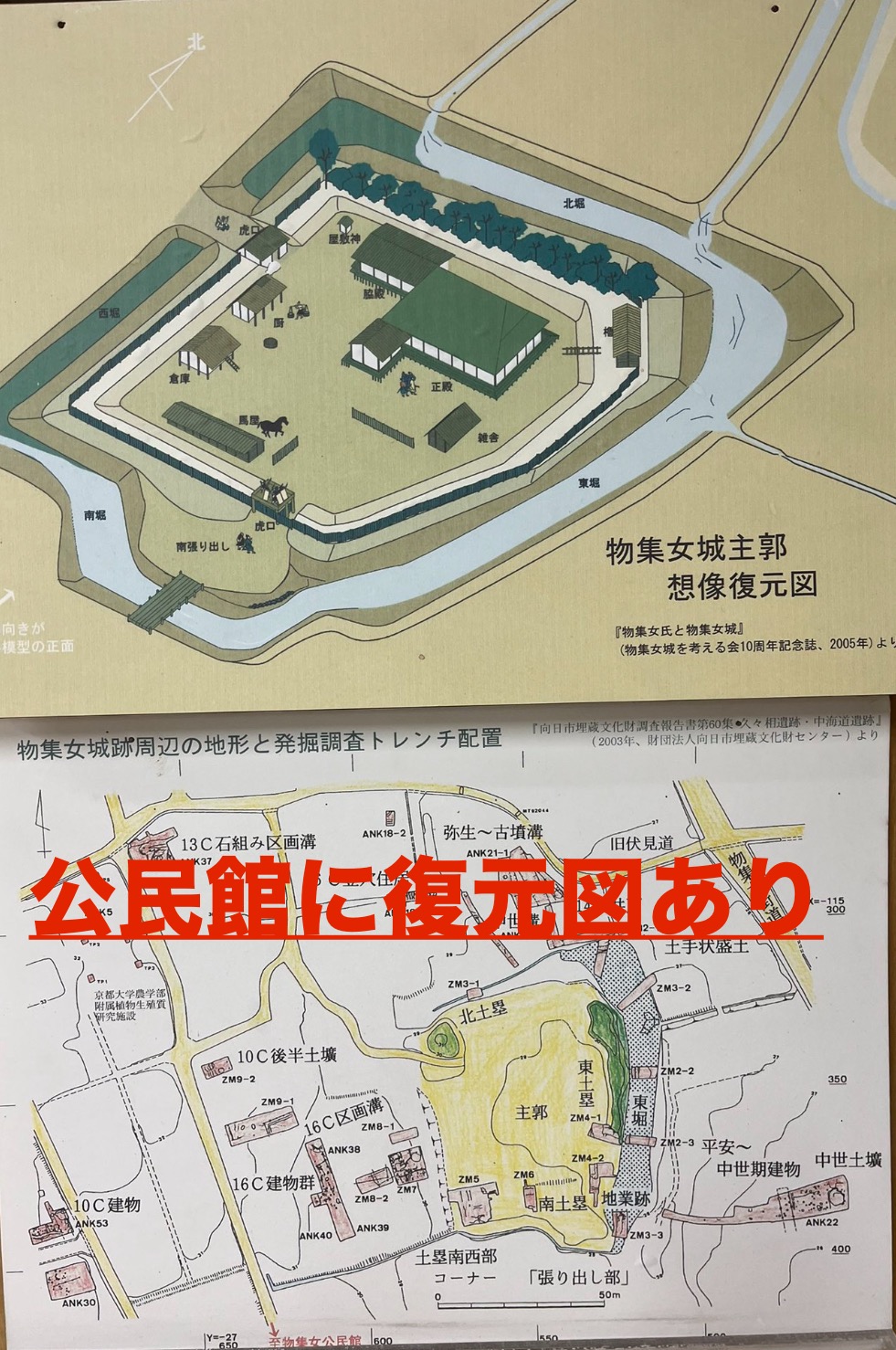
Yoshiharayama Castle is a typical mountain castle with a cluster of baileys arranged along multiple ridges, centered around the mountaintop at an altitude of approximately 180 meters. The relative height is about 100 meters, requiring considerable physical strength to climb from the foot of the mountain. The entire castle is demarcated by high cliffs and large moats, resulting in a highly defensible structure.
Currently, walking paths have been developed, allowing for safe viewing of the castle’s remains. With the main bailey at its center, the second bailey is located to the west, and clusters of baileys are arranged along the north, east, and south ridges, creating a layout designed to withstand attacks from multiple directions.
Main Enclosure (Honmaru)
Located at the mountaintop, the main enclosure is the core of Yoshiharayama Castle and currently houses the Kinpu Shrine (Gongen Shrine). The main enclosure is protected by high cliffs, and clear moats remain, particularly on the northwest and west sides. From the main enclosure, one can see a panoramic view of the Tango plain, indicating that it served as a space for both military surveillance and command.
While the main enclosure is of standard size for a mountain castle, no permanent structures such as stone walls have been confirmed, suggesting from the remains that it was an earthen castle.
Second Enclosure and Surrounding Enclosures
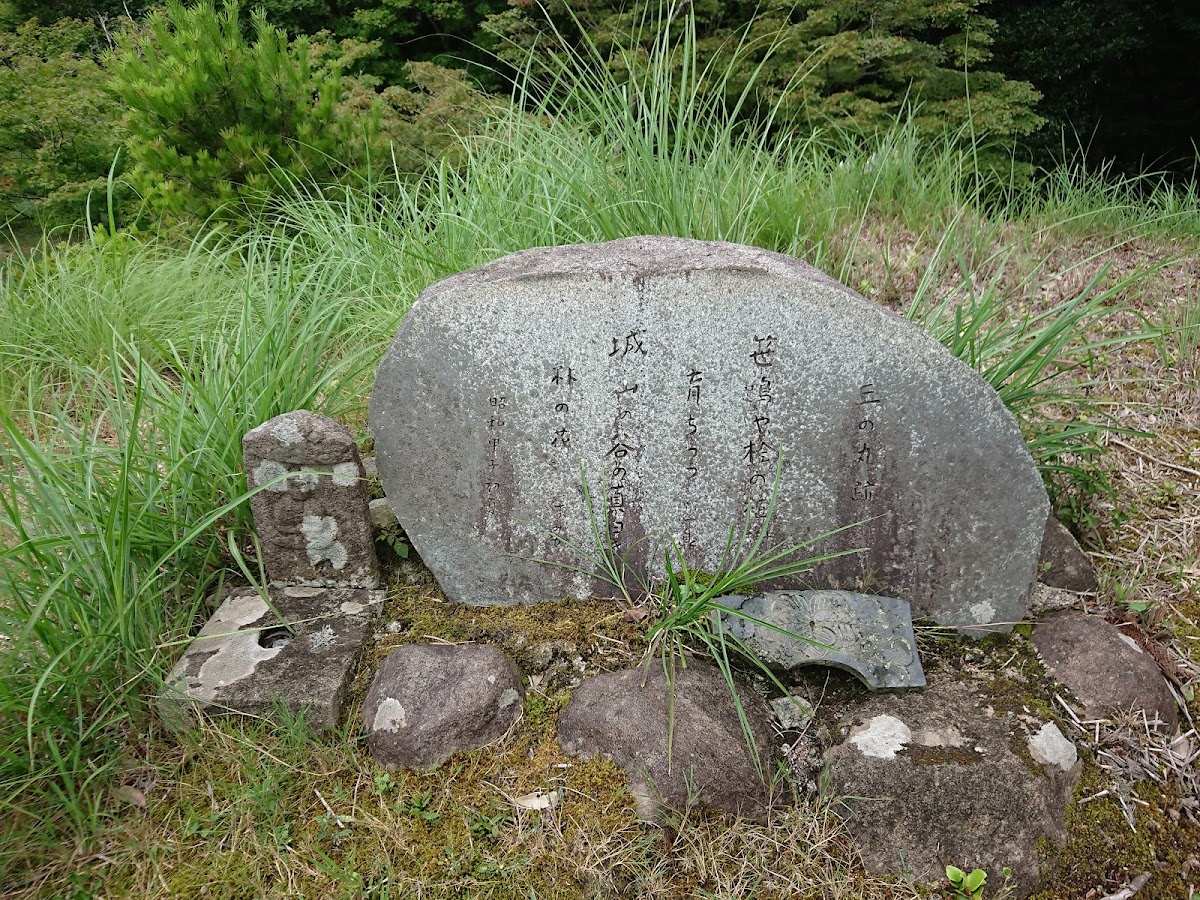
Located west of the main enclosure, the second enclosure has a distinctive structure with a raised northern side. A stone monument marking the “Yoshiharayama Castle Second Enclosure Site” stands at the site, providing a clear landmark for visitors.
The second enclosure played a crucial role in defending the main enclosure and functioned as the front line against attacks from the west. The interior of the enclosure is relatively flat, providing ample space to station a certain number of soldiers.
Moats and Vertical Moats
One of the greatest highlights of Yoshiharayama Castle is the large moats remaining in various locations. The large moat along the main approach is particularly impressive in both depth and width, demonstrating the high level of castle construction technology of the time. Moats are defensive structures designed to block the ridgeline and hinder enemy advances, and clear remains can be seen on the northwest and west sides of the main enclosure at Yoshiharayama Castle.
Furthermore, vertical moats have been constructed on the slopes, showing ingenuity in preventing enemy soldiers from moving laterally. These moats and vertical moats were likely reinforced during renovations by Hosokawa Okimoto, and are valuable as remains reflecting the castle construction technology of the late Sengoku period.
Enclosures on Each Ridge
Yoshiharayama Castle has its main enclosure at the center, with enclosures spread out on the ridges in four directions.
The northern ridge enclosures are a crucial defensive line protecting the rear of the main enclosure, consisting of a series of smaller enclosures.
The eastern ridge enclosures are built on a relatively gentle slope and served to monitor and defend the approach to the castle.
The southern ridge contains a group of enclosures called Zenmyo Fort, which is thought to have functioned as an outpost to guard against approaches from the south. Zenmyo Fort was highly independent and positioned to function as a last line of defense in the event of the main enclosure’s fall.
These enclosures are clearly demarcated by steep cliffs, and each enclosure is designed to function as an independent defensive unit.
Highlights of Yoshiharayama Castle
Well-Preserved Remains
The greatest appeal of Yoshiharayama Castle is the excellent preservation of its original remains. Because no large-scale development took place after the castle’s abandonment, the depth of the moats, the height of the cliffs, and the shape of the enclosures remain as they were in the past.
The moats around the main enclosure, in particular, reach several meters in depth, giving a real sense of the formidable defensive capabilities of the time. The steep cliffs maintain an angle that makes climbing difficult, making it an excellent example for learning about the defensive structure of mountain castles.
Gongen Shrine (Kinpu Shrine)
The Gongen Shrine (Kinpu Shrine), enshrined in the main enclosure, is the spiritual center of the castle ruins. Many mountain castles have shrines or temples built after their abandonment; this was a custom to appease the spirits of the castle and establish them as guardian deities of the region.
Visiting the Gongen Shrine is one of the pleasures of visiting the castle ruins, creating a unique atmosphere where history and faith intertwine.
View
From the mountaintop, approximately 180 meters above sea level, you can enjoy a panoramic view of the Tango plains. On a clear day, you can experience the vast expanse of territory that the castle lords must have gazed upon. This view is one of the reasons why Yoshiharayama Castle was chosen as a military base, and it is an important element in understanding the strategic perspective of the Sengoku period. ### Well-maintained walking trails
The current Yoshiharayama Castle ruins have well-maintained walking trails, making it easy to climb. Signposts are also installed, so even first-time visitors can easily see the main remains without getting lost. However, as it is a mountain castle, comfortable shoes and clothing are recommended.
Entrance to the castle and the Mineyama Jinya ruins
The entrance to Yoshiharayama Castle is located at the site of the Mineyama Jinya, built in 1622 by the Mineyama Kyogoku clan at the eastern foot of the mountain. The Mineyama Jinya functioned as a political center during the Edo period, symbolizing the transition from mountain castles to flatland fortifications.
From the Mineyama Jinya ruins to the main enclosure at the summit, it takes about 20-30 minutes using the well-maintained hiking trail. The elevation gain is about 100 meters, but it’s a distance that can be enjoyed as moderate exercise.
Access Information
Location
Yoshihara, Mineyama-cho, Kyotango City, Kyoto Prefecture
Access by Public Transportation
- Approximately 15 minutes on foot from Mineyama Station on the Kyoto Tango Railway Miyazu Line to the castle entrance (Mineyama Jinya Ruins)
- Approximately 5 minutes by taxi from the station
Access by Car
- Approximately 15 minutes from Kyotango Omiya IC on the Kyoto Jukan Expressway
- Parking available near the Mineyama Jinya Ruins (limited number of spaces)
Estimated Time to Visit
- Approximately 20-30 minutes on foot from the castle entrance to the main enclosure
- Approximately 1-2 hours to view the entire castle ruins
Precautions When Visiting
- Comfortable clothing and shoes are essential as it is a mountain castle
- Insect repellent is recommended in summer
- Bring drinking water in advance
- Be careful as the ground can be slippery in rainy weather and winter
Nearby Historical Spots
Mineyama Jinya Ruins
Located at the entrance to the castle, the Mineyama Jinya Ruins were the political center during the Edo period. Currently, some remains are preserved, allowing visitors to experience the historical progression from a mountain castle to a jinya (fortified residence).
Nakayama Castle Ruins
Nakayama Castle, where Isshiki Yoshimichi committed suicide, is an important mountain castle in Tango, similar to Yoshiharayama Castle. It’s a must-visit spot when tracing the history of Akechi Mitsuhide’s invasion of Tango.
Tango Local History Museum
Located in Kyotango City, this museum offers detailed information about the history and culture of the Tango region. It also displays materials related to Yoshiharayama Castle, making it ideal for pre-visit preparation or post-visit review.
Historical Value of Yoshiharayama Castle
Yoshiharayama Castle is an important historical site that illustrates the power structure of the Tango region during the Sengoku period and the process of regional unification by the Oda regime. The series of events, from the change of rulers from the Isshiki clan to the Hosokawa clan, and the subsequent abandonment of the castle, symbolizes the changing role of castles during the transition from the Sengoku period to the Edo period.
Due to the excellent state of preservation of its remains, Yoshiharayama Castle is considered a valuable example in the study of Sengoku period mountain castles and is attracting attention as a cultural property of Kyoto Prefecture. It also has high educational value in conveying local history, and preservation activities are being carried out by local history enthusiasts.
Recommendation for Visiting
Yoshiharayama Castle is a mountain castle ruin recommended for a wide range of visitors, from beginners to advanced, as it boasts well-preserved remains and is relatively easy to access. While the well-maintained walking paths allow for safe exploration, visitors can still fully experience the atmosphere of an authentic mountain castle.
Observing defensive structures such as moats and cliffs up close is a valuable experience that cannot be obtained from textbooks or photographs. When visiting the Tango region, be sure to visit Yoshiharayama Castle ruins and feel the spirit of the Sengoku period.
Yoshiharayama Castle shows different faces in each season, from the fresh greenery of spring to the autumn foliage, making it a fascinating spot where you can discover something new with each visit. Enjoy a time travel to the Sengoku period in a space where historical romance and the beauty of nature merge.