A Complete Guide to the History and Highlights of Habu Castle | From the Nonoguchi Clan’s Residence to the Conquest by Akechi Mitsuhide
Habu Castle is a medieval mountain castle located in Habu, Sonobe-cho, Nantan City, Kyoto Prefecture. It functioned as an important branch castle in the Tanba region during the Sengoku period, working in conjunction with Kamioyama Castle (Honme Castle). This article comprehensively introduces information useful for castle enthusiasts and history fans, from the historical background of Habu Castle to existing remains and a visitor’s guide.
History and Construction Background of Habu Castle
Construction in the Muromachi Period and the Nonoguchi Clan
Habu Castle is said to have been built in the mid-Muromachi period by Nonoguchi Chikanaga. The Nonoguchi clan, a powerful local lord in the Tanba region, built the castle in Habu to solidify their control over the area.
There are various theories regarding the construction date of the castle, but it is estimated to have been built sometime between the mid and late 15th century. At that time, the Tanba region, being a strategic point close to Kyoto, was a complex area with many powerful clans vying for power. Hanyu Castle functioned as the residence of the Nonoguchi clan.
Relationship with Kamioyama Castle
During the Sengoku period (Warring States period), Hanyu Castle came to serve as a subsidiary castle of Kamioyama Castle (Honme Castle). Kamioyama Castle was located in present-day Kameoka City and was one of the major strongholds in the Tanba region. Historical records confirm that this subsidiary castle system was established during the time of Nonoguchi Kiyochika (Nishikurabo).
As a subsidiary castle, Hanyu Castle was located west of Kamioyama Castle and played an important role as a frontline for monitoring and defending the highway. The Hanyu area was located along a highway connecting Kyoto, Tanba Sasayama, and the San’in and Harima regions, making it a crucial transportation hub.
Akechi Mitsuhide’s Invasion of Tanba and the Surrender of Hanyu Castle
The most important event in the history of Hanyu Castle is Akechi Mitsuhide’s invasion of Tanba in 1579 (Tensho 7). Acting on orders from Oda Nobunaga, Akechi Mitsuhide conquered castles throughout Tanba in an effort to pacify the region.
The castle’s lord at the time, Nonoguchi Kiyochika (Nishizobo), chose to surrender without resistance against Akechi Mitsuhide’s large army. This decision saved Hanyu Castle from the ravages of war. After the surrender, Nishizobo, along with the Kobata clan of Shishido Castle, began acting on Akechi’s side and was incorporated into Akechi Mitsuhide’s system of control in the Tanba region.
This surrender was a pragmatic decision made by the Nonoguchi clan, and many Tanba’s powerful families made similar choices in the face of the overwhelming military power of Oda Nobunaga and Akechi Mitsuhide.
Hanyu Castle After the Honnoji Incident
Following the Honnoji Incident of 1582 (Tensho 10), in which Akechi Mitsuhide was killed, the balance of power in the Tanba region shifted dramatically once again. Detailed historical records regarding Hanyu Castle after this point are scarce, and many aspects remain unclear.
During Toyotomi Hideyoshi’s unification of Japan, many medieval mountain castles were abandoned, and it is believed that Hanyu Castle also completed its role. In the Edo period, with the establishment of the Sonobe Domain, this region came under a new system of governance.
Layout and Structure of Hanyu Castle
Location and Topographical Characteristics
Hanyu Castle is built on the tip of a ridge extending north from a mountain range located southeast of Saifuku-ji Temple. This location, with its relatively low elevation from the plains and its position overlooking the road, is considered an excellent location for both surveillance and defense.
The castle’s layout, taking advantage of its ridge-top location, is a typical example of a medieval mountain castle. The mountain range behind it served as a natural defensive wall, and it’s believed that the residence was located on the flat area in front.
Structure of the Main Enclosure
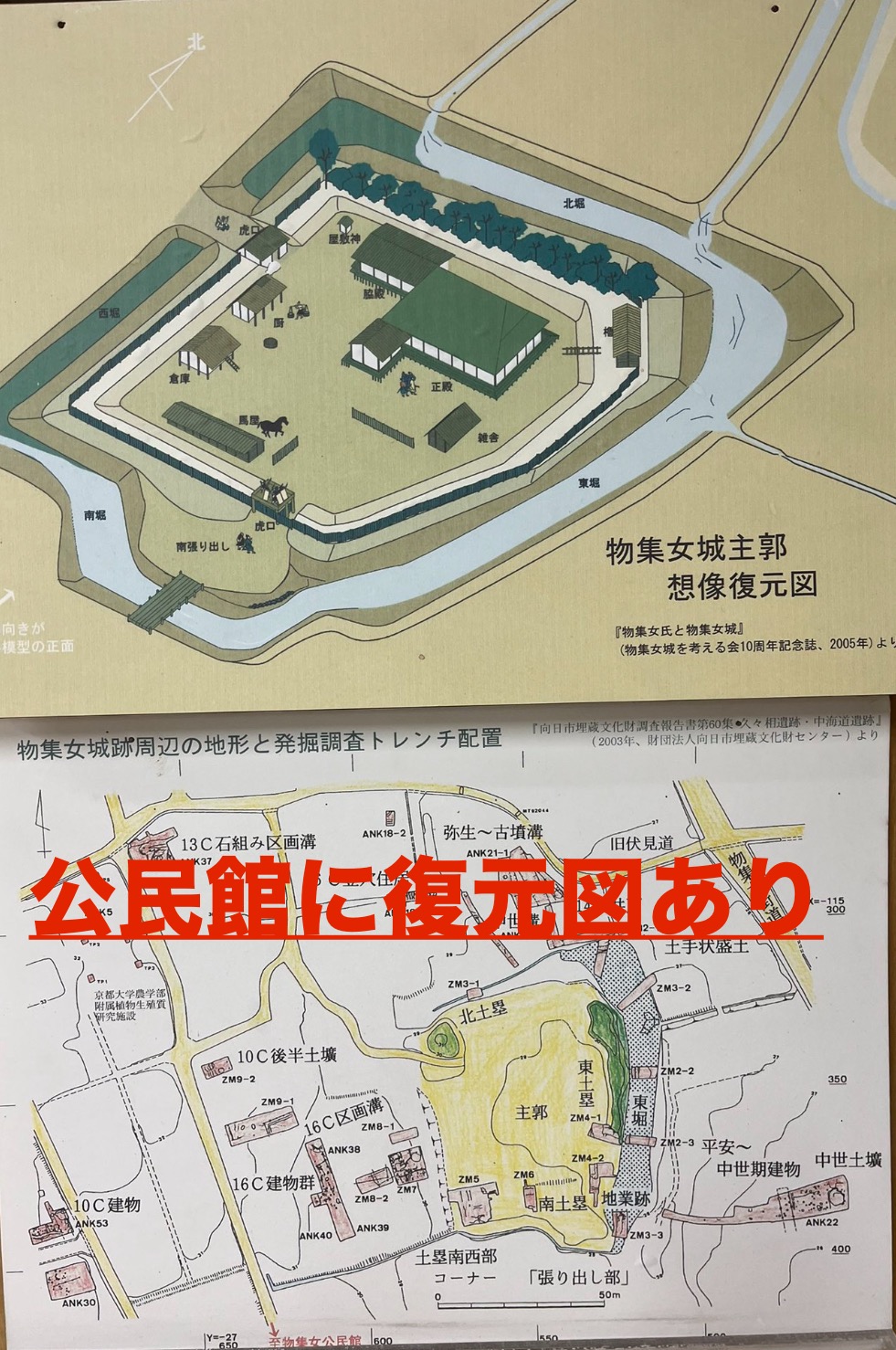
Hanyu Castle is a small, single-enclosure castle. The main enclosure is small, with a two-tiered, north-south enclosure structure, and the difference in elevation between the tiers enhances its defensive capabilities.
The size of the main enclosure was not designed for large-scale battles, but rather served as both a living space during peacetime and a base for siege during emergencies. Many such small castles existed in the Tanba region, serving as subsidiary castles or residences of local lords.
Stone Walls and Turret Base
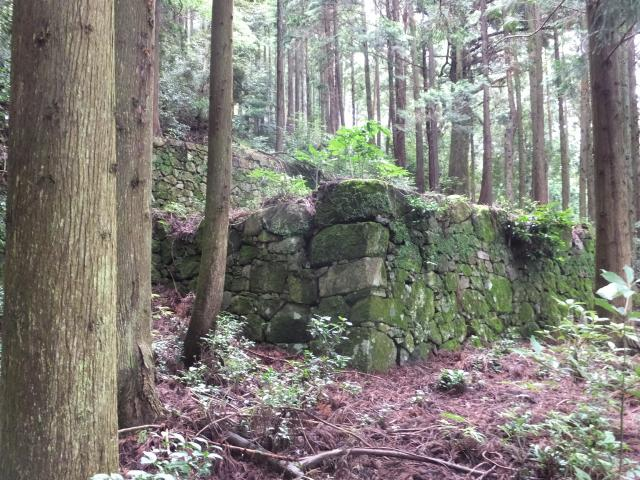
A distinctive feature of Hanyu Castle is the stone-walled turret base remaining on the south side. This turret base was one of the castle’s most important defensive structures, functioning as a base for monitoring and attacking enemy incursions.
The construction techniques of the stone walls are an important indicator of the level of castle architecture at the time. The stone walls of Hanyu Castle were constructed using a technique called “nozurazumi,” which involves stacking natural stones, demonstrating the technical characteristics of the Sengoku period (Warring States period). The presence of stone wall traces throughout the castle suggests that the main parts were covered by stone walls.
Defense by Moats
A moat (horikiri) is located behind the watchtower base. A moat is a dry moat dug to cut across a ridge, and is an important defensive structure to prevent enemy intrusion.
The moat at Hanyu Castle was designed to anticipate attacks from the southern mountain range, effectively preventing enemies from advancing along the ridge. The presence of this moat resulted in a castle structure that, despite its small size, offered excellent defense.
Residence Site
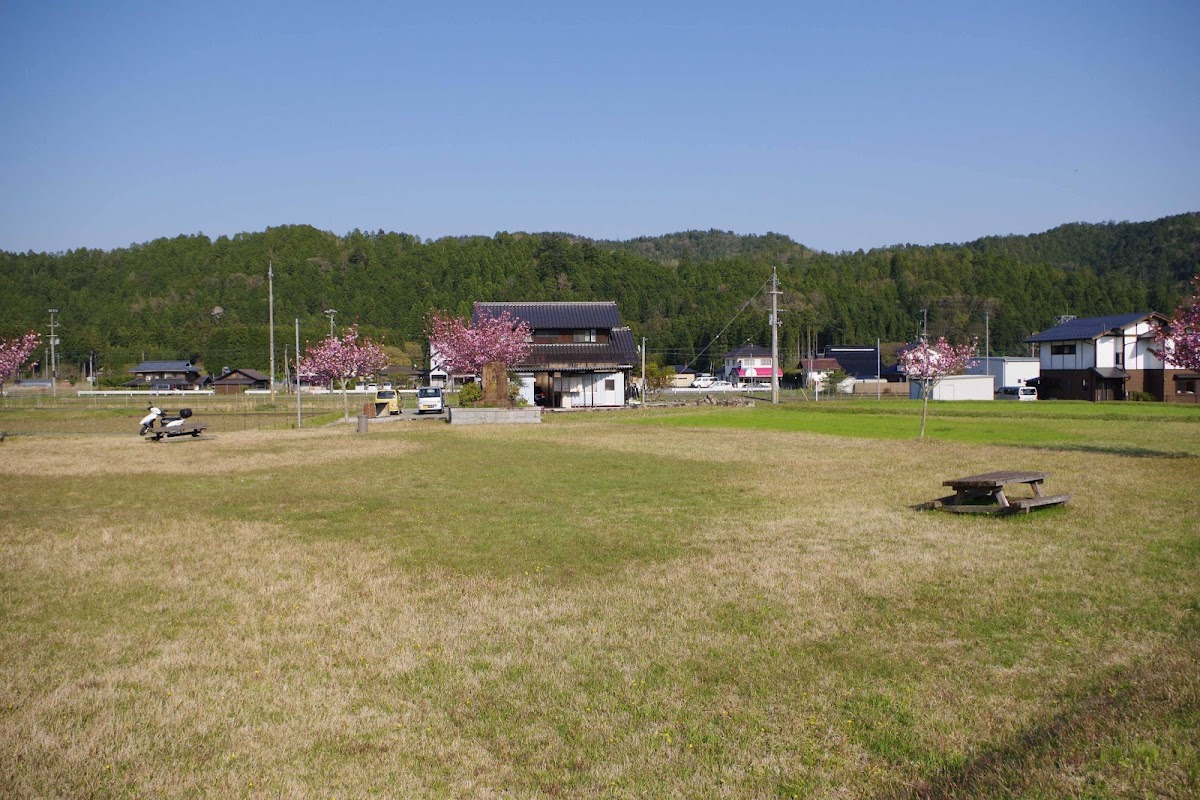
The remains of a residence are located at the northern foot of the castle. The residence was where the lord and retainers lived during peacetime, and its role differed from that of the main enclosure on the mountaintop. In times of emergency, the main enclosure on the mountaintop was used as a fortified stronghold, while in peacetime, administrative affairs and daily life were conducted in the residence at the foot of the mountain—a typical use for a medieval mountain castle.
Remnants of a former post town can still be seen around the residence site, suggesting that it also functioned as a castle town.
Highlights and Remains of Hanyu Castle
Main Existing Remains
The main remains that can be seen when visiting Hanyu Castle are as follows:
Main Enclosure Site: The two-tiered enclosure structure, north and south, remains clearly visible. The size of the flat area gives a sense of the castle’s scale at the time.
Watchtower Base Earthwork: The stone-walled watchtower base remaining on the south side is the most impressive remains of Hanyu Castle. Although part of the stone wall has collapsed, it is preserved in a state that allows for a good understanding of its original structure.
Moat: The moat behind the watchtower base clearly shows its depth and width, demonstrating its function as a defensive structure.
Stone Wall Traces: Traces of stone walls can be seen throughout the castle grounds, indicating that stone walls once extended over a wider area.
Western Moat: A moat is also located on the west side of the main enclosure, suggesting that the castle’s layout considered defense from multiple directions.
Relationship with Saifuku-ji Temple
Saifuku-ji Temple is located near Hanyu Castle, and it is said that the temple’s main gate was relocated from Hanyu Castle. If this legend is true, it means that a part of the castle’s architecture still remains in a modified form, making it of extremely high historical value.
Visiting Saifuku-ji Temple allows you to experience historical aspects of Hanyu Castle that cannot be learned from the castle grounds alone.
Surrounding Historical Landscape
The Hanyu settlement still retains traces of its past as a post town along a former highway. By tracing the remnants of old buildings and roads, you can experience the atmosphere of the era when the castle was in operation.
From the castle ruins, you can overlook the Hanyu settlement, offering a view that truly conveys the castle’s role in monitoring the roads.
Access and Visiting Guide to Hanyu Castle
Access by Public Transportation
From JR Kameoka Station:
- Approximately 40 minutes by Keihan Kyoto Kotsu bus
- Get off at the “Hanyu” bus stop, approximately 5 minutes on foot
From JR Sonobe Station:
- Approximately 30 minutes by Keihan Kyoto Kotsu bus
- Get off at the “Hanyu” bus stop, approximately 5 minutes on foot
Since bus services are limited, it is recommended to check the timetable in advance. Especially on holidays, there are fewer buses, so you need to carefully plan your round trip time.
Access by Car
From Kyoto:
- Approximately 15 minutes from Sonobe IC on the Kyoto Jukan Expressway
- Via National Route 9 and National Route 372
From Osaka:
- Approximately 25 minutes from Kameoka IC on the Kyoto Jukan Expressway
- Via National Route 372
Parking is available at the Hanyu Community Center (free, 2 spaces). During busy periods, you may need to find nearby parking.
Points to Note and Estimated Time Required for Visiting the Castle
Castle Entrance: The castle entrance is about a 5-minute walk from the Hanyu bus stop. There are signs, so you are unlikely to get lost.
Castle Route: It takes about 10-15 minutes on foot to reach the main enclosure on the mountaintop. While there are some steep slopes, the path is relatively easy to climb.
Estimated Time Required: If you want to thoroughly explore the entire castle ruins, allow about 1-1.5 hours. If you plan to take photographs or observe the ruins in detail, you will need more time.
Clothing and Equipment:
- Comfortable walking shoes (trekking shoes recommended)
- Seasonal clothing (insect repellent in summer, warm clothing in winter)
- Drinking water
- Camera (for photographing the ruins)
- Map or smartphone (with GPS function)
Precautions for Visiting
- The castle ruins are located in a forest, so the ground can be slippery on bad weather days or after rain.
- Be careful of dangerous creatures such as venomous snakes in summer.
- Please take all your trash with you.
- Please cooperate in protecting the ruins (do not climb on the stone walls, do not damage the ruins, etc.)
- Visiting in a group is safer than visiting alone.
Hanyu Castle and Surrounding Castles
Kamioyama Castle (Honme Castle)
Kamioyama Castle, the main castle of Hanyu Castle, is an important castle located in Kameoka City. To understand its relationship with Hanyu Castle, a visit to Kamioyama Castle is also recommended. Visiting both castles will provide a deeper understanding of the medieval castle system known as the branch castle system.
Funasaka Castle
Funasaka Castle, located near Hanyu Castle, was also a castle that functioned during the same period. It is an important historical site for understanding the castle network of the Tanba region.
Shishido-kan
After Nonoguchi Nishizobo surrendered to Akechi Mitsuhide, Shishido Castle (Shishido-kan), belonging to the Kobata clan with whom he had a cooperative relationship, is also an interesting historical site for understanding the history of this region.
Kuroda Castle
Several castles, including Kuroda Castle, are scattered throughout Nantan City, and can be combined into a castle-touring route.
Hanyu Castle’s Castle Stamp and Souvenirs
Due to the recent castle boom, Hanyu Castle also distributes castle stamps (gojoin). Castle stamps, like the Goshuin (temple/shrine stamps) of castles, are gaining popularity and are collected by many castle enthusiasts as souvenirs of their visits.
The castle stamp for Hanyu Castle may be available at the Hanyu Community Center and related facilities (prior confirmation of availability is recommended). The design incorporates distinctive elements of the castle, making it an ideal memento of your visit.
Significance of Visiting Hanyu Castle
As a Place for Historical Learning
Hanyu Castle is an excellent resource for learning about the history of the Tanba region from the Muromachi period to the Sengoku period. In particular, it is related to the important event in Japanese history, Akechi Mitsuhide’s conquest of Tanba, making it a historical site of high educational value.
Understanding Castle Architecture
The remains, such as the layout with defensive functions despite its small scale, stonework techniques, and moats, are valuable examples for understanding the structure of medieval mountain castles. It allows you to learn about the reality of castles belonging to local powerful families, which differ from large-scale castles.
A Fusion of Nature and History
The castle ruins are located in a rich natural environment, making it a place where you can enjoy historical exploration and hiking simultaneously. You can reflect on history while enjoying the scenery of the four seasons.
Current Status and Challenges of Hanyu Castle Research
Historical materials concerning Hanyu Castle are limited, leaving many points unknown, such as the construction date, detailed structure, and the time of its abandonment. Further excavations and historical research may reveal new facts.
Investigations by local historians and castle researchers are continuing, and the true nature of Hanyu Castle is gradually becoming clearer. Information and photographic records from visitors are also important resources that contribute to castle research.
Summary: The Charm of Hanyu Castle
Although small in scale, Hanyu Castle is an important historical site that tells the story of the medieval history of the Tanba region. As the residence of the Nonoguchi clan, a subsidiary castle of Kamioyama Castle, and the stage for Akechi Mitsuhide’s conquest of Tanba, this castle boasts a multifaceted history, offering visitors many discoveries and learning opportunities.
With its well-preserved remains, easy access, and surrounding historical landscape, it has all the elements to appeal to castle enthusiasts. When visiting Nantan City in Kyoto Prefecture, be sure to visit Hanyu Castle and experience the history of medieval Tanba.
Standing atop the stone walls, you can feel the tension of the Sengoku period at the very spot where Nonoguchi Nishizobo made his decision in the face of Akechi Mitsuhide’s large army. A grand historical narrative unfolds within this small mountain castle.