Complete Guide to Ogyu Castle: The Charm of the Ogyu Matsudaira Clan’s Main Castle, the Megalithic Sites, and the Mizunote Kuruwa (Water Basin)
What is Ogyu Castle?
Ogyu Castle is a Sengoku period mountain castle located in Ouchi-cho, Toyota City, Aichi Prefecture. It is known as the main castle of the Ogyu Matsudaira clan, a branch of the Matsudaira clan, the ancestors of Tokugawa Ieyasu. Built on a mountaintop approximately 204 meters above sea level, the castle sits about 120 meters above National Route 301, strategically situated at a key location overlooking the Mikawa plains.
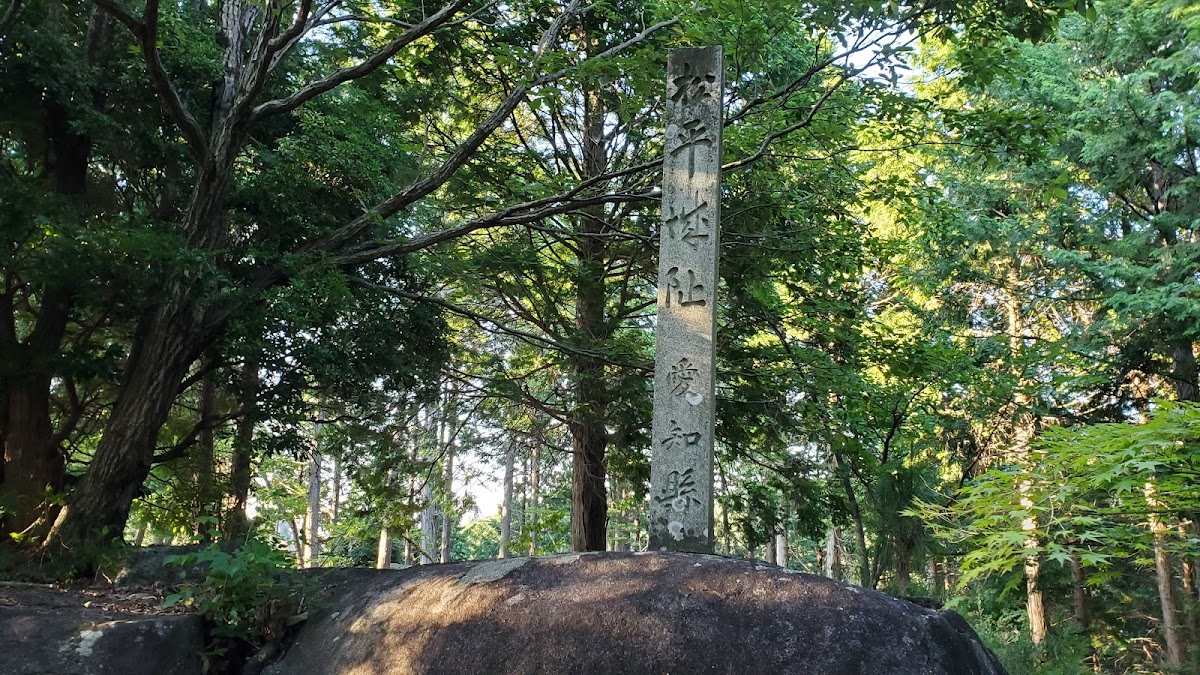
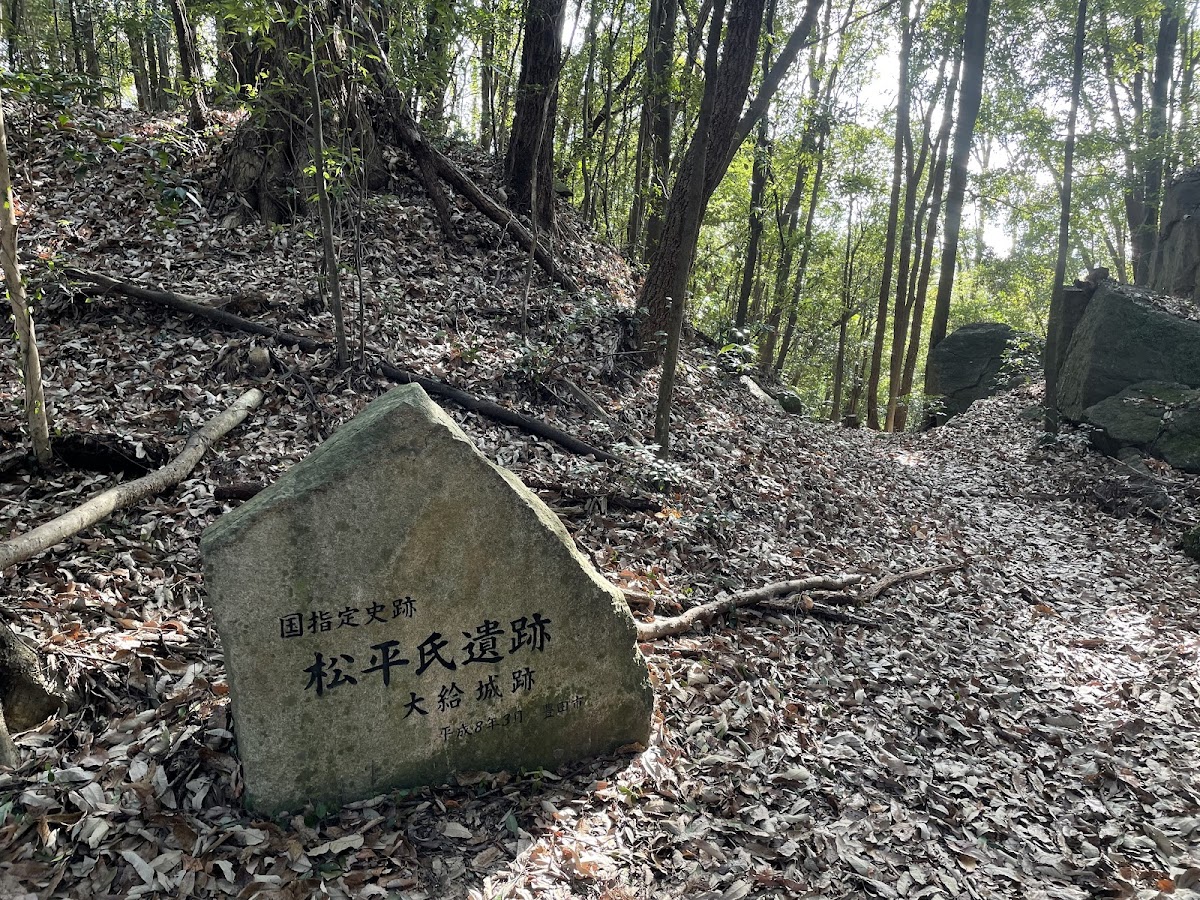
On February 4, 2000 (Heisei 12), it was designated a national historic site as one of the “Matsudaira Clan Ruins,” and is currently considered one of the best-preserved mountain castles in the Mikawa region. The castle grounds are large, measuring approximately 220 meters east-west and 280 meters north-south, and the remains are almost completely intact, making it an extremely valuable historical site for the study of Sengoku period mountain castles.
History of Ogyu Castle
From Construction to the Conquest by the Matsudaira Clan
The exact date of construction of Ogyu Castle is unclear, but it is believed to have been initially built as a residence by Nagasaka Shinzaemon, a local powerful family. While the Nagasaka family was a powerful local samurai, the castle’s fate changed dramatically with the expansion of the Matsudaira clan’s power.
In the mid-15th century, Matsudaira Nobumitsu (1404-1488), the third head of the Matsudaira family, launched an army from Iwatsu and captured Ogyu Castle. Nobumitsu gave this castle, along with Iwatsu Castle, to his third son, Matsudaira Chikatada, who then passed it on to his second son, Matsudaira Norimoto. Norimoto branched off to Ogyu, becoming the ancestor of the Ogyu Matsudaira clan.
The Era of the Ogyu Matsudaira Clan
The Ogyu Matsudaira clan, with Matsudaira Norimoto as its first head, built its power base at this castle. In particular, a major renovation of the castle was carried out during the time of the second head, Matsudaira Norimasa.
Between 1506 and 1510, extensive renovations were carried out by Norimoto and his son Norimasa in preparation for an invasion by the Takeda clan. It is believed that these renovations completed the basic form of the castle as it exists today. The defensive structures utilizing large stones and distinctive remains such as the Mizunote Kuruwa (water supply enclosure) are thought to have been constructed during this period.
Battles during the Sengoku Period
Records indicate that in 1575, the castle fell to an attack by Matsudaira Noritaka of Takiwaki. This suggests that internal conflicts within the Matsudaira clan were also taking place at this castle.
However, the Ogyu Matsudaira clan recaptured the castle and continued to serve under Tokugawa Ieyasu. Ogyu Castle continued to play a crucial military role from the 1400s to the late 1500s.
The Abandoned Castle and the Present
In 1590, during the time of Matsudaira Ienori, the sixth lord of the castle, the Ogyu Matsudaira clan was transferred to Nawa in Kozuke Province (present-day Gunma Prefecture) with a 10,000 koku stipend following Tokugawa Ieyasu’s relocation to the Kanto region. As a result, Ogyu Castle was abandoned and its purpose came to an end.
Because it remained untouched after its abandonment, the castle’s remains were preserved in excellent condition. Today, it is a valuable historical site that conveys the appearance of a Sengoku period mountain castle, attracting many castle enthusiasts and researchers.
The Structure and Layout of Ogyu Castle
Overall Characteristics of the Layout
Ogyu Castle is a mountain castle that skillfully utilizes natural terrain and large rocks. While possessing a simple mountain castle layout centered around the main enclosure, it also boasts a large castle area and sophisticated defensive facilities, making it a particularly noteworthy fortress among castles in Mikawa Province.
The castle is a typical multi-bailey mountain castle, with the main enclosure located on the mountaintop at an altitude of approximately 200 meters, and multiple baileys extending along the ridge from there. Large moats are constructed on the east, west, and north sides, forming a strong defensive line to prevent enemy intrusion.
Main Enclosure and Secondary Enclosure
The main enclosure is located in the center of the castle and is built on the highest point within the castle grounds. From here, one can see a panoramic view of Toyota city and the plains of western Mikawa, demonstrating its effective function as a military observation post.
The stone wall separating the main enclosure and secondary enclosure is also a highlight. This stone wall clearly demarcated the space within the castle and also served a defensive function. The structure of the stone wall reveals the level of stonework technology at the time.
Entrance and Ascent to the Castle
The entrance to the castle, the koguchi (gate), has a complex structure to prevent enemy intrusion. The current ascent to the castle is maintained from the foot of the mountain, allowing visitors to follow the path taken by the castle’s soldiers as they enter the castle.
Earthworks and trenches are strategically placed around the castle’s entrance, forming multiple defensive lines. These remains are remarkably well-preserved, making this a valuable site for appreciating the castle-building techniques of the Sengoku period.
Layout of Trenches
The key to Ogyu Castle’s defense lies in the large trenches located on the east, west, and north sides. These trenches, dug to cut across the ridgeline, were crucial defensive structures that physically prevented enemy intrusion.
The northern trench, in particular, is large and impressive in both depth and width. These trenches are still clearly visible today, allowing visitors to appreciate the scale of the civil engineering work at the time.
Highlights of Ogyu Castle
Scattered Megaliths within the Castle Grounds
The most distinctive feature of Ogyu Castle is the numerous megaliths scattered throughout the castle grounds. These natural megaliths were skillfully utilized as defensive structures and are an important element that characterizes the landscape of Ogyu Castle.
The massive rocks are primarily positioned around the main enclosure, demonstrating a castle-building philosophy that maximized the use of the natural terrain. Unlike artificially constructed stone walls, this design emphasizes harmony with nature, incorporating the large rocks that were originally present in the area into the defensive line.
Lookout Rock
Within the castle grounds lies a massive rock called “Lookout Rock.” It is believed to have been used as a lookout post, from which the surrounding terrain was monitored. The view from Lookout Rock is magnificent, and even today, visitors can appreciate the castle’s excellent location.
Standing atop the rock, the reason for its construction and its strategic value become immediately clear. Its location, approximately 3 kilometers west of the center of Matsudaira village, also speaks to its importance in the expansion of the Matsudaira clan’s sphere of influence.
Water Supply Enclosure (Kitazawa Water Supply)
The most noteworthy remains at Ogyu Castle are the “Water Supply Enclosure,” also known as “Kitazawa Water Supply.” This is an extremely rare historical structure nationwide, a kind of small dam-like structure with a stone embankment built along a valley.
The stone wall, built to block the valley, is thought to have served to prevent enemy intrusion and secure a water source for the castle. Securing water was a matter of life and death for mountain castles, and this Mizunote Kuruwa (water supply enclosure) was a crucial facility supporting Ogyu Castle’s ability to withstand long-term sieges.
The stonework techniques were highly advanced, and it remains intact even after several hundred years. This structure is of great value in castle research and is a must-see point for anyone visiting Ogyu Castle.
Stone Walls and Embankments
Several stone walls and embankments remain within the castle grounds. In addition to the stone wall separating the main and secondary enclosures, there are various other structures that demonstrate the stonework techniques of the time, such as the stone wall of the Mizunote Kuruwa.
These stone structures indicate that Ogyu Castle was not merely an earthen castle, but a full-fledged mountain castle equipped with stone defensive structures. These stone structures, believed to have been constructed during the major renovations of the Eisho era, are valuable resources for understanding castle construction techniques of the early 16th century.
Enclosures
Several enclosures are arranged in a stepped pattern around the main enclosure. Each enclosure is demarcated by earthworks and steep slopes, allowing each to function as an independent defensive stronghold.
The layout of the enclosures reveals the troop deployment and movement patterns within the castle, providing insight into the practical castle design of the Sengoku period. The ingenuity in efficiently defending the large castle area is evident throughout, demonstrating the military strength and advanced castle construction techniques of the Ogyu Matsudaira clan.
Access to Ogyu Castle
Location
Ogyu Castle ruins are located in Ouchi-cho, Toyota City, Aichi Prefecture. It is approximately 3 kilometers west of the center of Matsudaira village and easily accessible from Toyota city center.
Access by Car
Access by car is the most convenient. The entrance to the castle is along National Route 301, and parking is available nearby. From the parking lot to the castle entrance is a few minutes’ walk, and from there to the main keep is about a 15-20 minute hike.
When searching with a car navigation system, it’s best to set the destination to “Ogyu Castle Ruins” or “Ouchi-cho, Toyota City.” Parking is free.
Access by Public Transportation
If using public transportation, the nearest stations are Toyota City Station or Sanage Station on the Meitetsu Mikawa Line, but from there you will need to take a bus or taxi. Since bus services are limited, it is recommended to check the timetable in advance.
Precautions When Visiting the Castle
Ogyu Castle is a mountain castle, so appropriate equipment is necessary for the climb. Please note the following:
- Footwear: Non-slip trekking shoes or athletic shoes are essential.
- Clothing: Long sleeves and long pants are recommended (to prevent insect bites and injuries from branches).
- Items to Bring: Bring drinking water, a towel, insect repellent, etc.
- Weather: Be careful as the ground can be slippery during and after rain.
- Estimated Time: Allow approximately 1-2 hours round trip from the parking lot.
Best Season to Visit
Spring (March-May)
Spring is the perfect season for visiting the castle, with beautiful fresh greenery and mild weather. During cherry blossom season, the surrounding mountains are adorned with vibrant colors, making the view from the castle ruins even more beautiful. However, it may be crowded during Golden Week.
Autumn (October-November)
Autumn offers beautiful autumn foliage and suitable weather for hiking. Especially around November, the autumn foliage is at its peak, creating a magnificent landscape with the contrast between the megaliths and the vibrant colors. On clear autumn days, you can see far into the distance, truly appreciating the castle’s excellent location.
Visiting in Summer and Winter
During summer (June-August), due to the heat and numerous insects, early morning visits are recommended. Winter (December-February) sees relatively fewer visitors, and the fallen leaves make the ruins easier to see, but warm clothing is necessary.
Nearby Attractions
Matsudaira Village
Approximately 3 kilometers east of Ogyu Castle lies Matsudaira Village, the birthplace of the Matsudaira clan, the ancestors of Tokugawa Ieyasu. Numerous historical sites related to the Matsudaira clan, such as the Matsudaira Clan Residence and Takatsuki-in Temple, are scattered throughout the village. Visiting both Ogyu Castle and Matsudaira Village will allow you to gain a deeper understanding of the Matsudaira clan’s history.
Matsudaira Castle
Matsudaira Castle, located in the heart of Matsudaira Village, was also an important base for the Matsudaira clan. While smaller in scale compared to Ogyu Castle, this castle site holds significant historical value as an early residence of the Matsudaira clan.
Koromo Castle (Shichishu Castle)
Located in the city of Toyota, Koromo Castle is a flatland castle built during the Edo period. In contrast to the Sengoku period mountain castles like Ogyu Castle, it showcases a more modern castle design. Currently, a corner turret has been restored, making it a popular recreational spot for citizens.
Korankei Gorge
Korankei Gorge, nationally renowned for its autumn foliage, is also located about 30 minutes by car from Ogyu Castle. If you visit in autumn, be sure to extend your trip to include a visit.
Cultural Value of Ogyu Castle
Designated as a National Historic Site
Ogyu Castle was designated as a National Historic Site on February 4, 2000 (Heisei 12), as part of the “Matsudaira Clan Ruins.” This designation was not for Ogyu Castle alone, but rather for several historical sites related to the Matsudaira clan.
This designation recognizes Ogyu Castle as a national cultural property, ensuring its appropriate protection and management. The designation as a historical site signifies the official recognition of the castle’s historical and academic value.
Importance in Castle Research
Ogyu Castle occupies an extremely important position in the study of mountain castles from the Sengoku period. The reasons are as follows:
- Preservation of Remains: Because it was not developed after its abandonment, the remains are preserved in almost perfect form.
- Technical Layout: A unique layout utilizing natural terrain and large stones can be seen.
- Water Supply Enclosure: A rare stone-built dam-like structure remains, unique in Japan.
- Temporal Relevance: It demonstrates the evolution of castle construction techniques from the 15th to the 16th centuries.
- Regional Characteristics: It typically exhibits the characteristics of mountain castles in the Mikawa region.
Due to these characteristics, Ogyu Castle is a valuable research subject for castle researchers and archaeologists, and numerous academic papers and research reports have been published. ### Maintenance and Preservation Activities
Currently, the Ogyu Castle ruins are properly managed by the local preservation society and Toyota City. Care has been taken to ensure visitors can safely explore the site, including maintenance of the access roads and the installation of information boards.
On the other hand, excessive development has been avoided, and harmony with nature is maintained so as not to spoil the atmosphere of a Sengoku period mountain castle. This preservation policy is considered a good example of balancing cultural property protection and tourism.
The Later History of the Ogyu Matsudaira Clan
The Ogyu Matsudaira clan, based at Ogyu Castle, followed Tokugawa Ieyasu’s transfer to the Kanto region and were relocated to Nawa in Kozuke Province (present-day Isesaki City, Gunma Prefecture) with a 10,000 koku stipend. The Ogyu Matsudaira clan continued to exist as a Tokugawa daimyo family, maintaining their family name while being transferred to various locations throughout the Edo period.
At the end of the Edo period, they ruled the Nishio Domain with a 60,000 koku stipend, and remained there until the Meiji Restoration. The descendants of the Ogyu Matsudaira clan continue to this day, and Ogyu Castle remains of great significance as the root of their lineage.
Points to Note When Visiting Ogyu Castle
Estimated Time Required
- From Parking Lot to Castle Entrance: Approximately 5 minutes on foot
- From Castle Entrance to Main Enclosure: Approximately 15-20 minutes on foot
- Castle Interior Tour: 30 minutes to 1 hour
- Total: Approximately 1.5 to 2 hours round trip
If you wish to carefully observe the remains, it is advisable to allow 2-3 hours.
Photography Tips
- Group of Megaliths: The megaliths scattered throughout the castle grounds are excellent photo opportunities.
- View from the Lookout Rock: On a clear day, you can capture a magnificent view.
- Water Supply Enclosure: This is a rare historical structure, so try photographing it from various angles.
- Moat: Photographing it in a way that shows its depth and scale will create a powerful image.
- Stone Wall: Photograph the details that reveal the stonework techniques of the time.
Recommended Prior Study
Before visiting Ogyu Castle, gaining some basic knowledge about the history of the Matsudaira clan and mountain castles of the Sengoku period will allow you to enjoy it more deeply. Understanding castle terminology (enclosures, moats, gates, etc.) will also help you easily understand the information on the signs at the site.
Summary
Ogyu Castle is a mountain castle that served as the base of the Ogyu Matsudaira clan, a branch of the Matsudaira clan, the ancestors of Tokugawa Ieyasu. Built on a mountaintop approximately 200 meters above sea level, this castle is highly regarded as a representative mountain castle of the Mikawa region, boasting defensive structures that skillfully utilize natural boulders and a rare water-retaining enclosure.
Ogyu Castle, which took its current form after a major renovation during the Eisho era (1506-1510), has maintained its remains well even after its abandonment in 1590, and was designated a National Historic Site in 2000. With numerous points of interest, including scattered boulders, large moats, and stone walls, it is a valuable historical site that conveys the appearance of a mountain castle from the Sengoku period.
Easily accessible from Toyota city center and equipped with parking, it is a recommended spot not only for castle enthusiasts but also for history buffs and hikers. Visiting it along with surrounding historical sites such as Matsudaira-go will allow for a deeper understanding of the history of the Matsudaira clan, the roots of Tokugawa Ieyasu.
The views from the castle ruins become even more beautiful during the seasons of fresh greenery in spring and vibrant autumn foliage. Be sure to bring the right equipment and fully experience the charm of this Sengoku period mountain castle. Ogyu Castle is a unique castle ruin unlike any other, where the ingenious layout built by our ancestors harmonizes with the massive boulder formations created by nature.