Matsudaira Castle: A Complete Guide to the Mountain Castle Tracing the Roots of Tokugawa Ieyasu
What is Matsudaira Castle?: The Mountain Castle that Became the Origin of Tokugawa Ieyasu
Matsudaira Castle is a medieval mountain castle located in Matsudaira-cho, Toyota City, Aichi Prefecture. It is a historically extremely important fortress built by Matsudaira Chikauji, an ancestor of Tokugawa Ieyasu, who founded the Edo Shogunate. It functioned as a fortified stronghold protecting Matsudaira-go, the birthplace of the Matsudaira clan, the roots of the Tokugawa family. Currently, it is designated a National Historic Site along with the Matsudaira Clan Residence Ruins and Ogyu Castle.
Built on a mountain (Oshiroyama) at an altitude of approximately 300 meters, this mountain castle is highly regarded by castle researchers and history enthusiasts as a valuable historical site that conveys the typical form of a mountain castle from the Muromachi period. A dry moat extending approximately 400 meters remains on the mountainside, and defensive structures such as baileys, vertical moats, trenches, and earthworks are well-preserved, making it an important historical site for understanding the structure of medieval castles.
History of Matsudaira Castle: The Rise of the Matsudaira Clan and the Castle’s Transformation
Construction by Matsudaira Chikauji
Matsudaira Castle is believed to have been built during the Oei era (1394-1427), by Matsudaira Chikauji. Chikauji entered Matsudaira-go in Kamo-gun, Mikawa Province, and became the adopted son-in-law of Matsudaira Tarōzaemon Nobushige, a local powerful family, thus adopting the Matsudaira surname. Based in this area, Chikauji built Matsudaira Castle as a fortified stronghold on Shiroyama, located southeast of Matsudaira-go. In peacetime, he resided at the Matsudaira clan residence at the foot of the mountain (the current site of Matsudaira Tōshōgū), adopting the form of a flatland castle.
As the de facto first head of the Matsudaira clan, Chikauji established the power base in this region. Matsudaira Castle was not merely a military facility, but also served as a center for governing the entire Matsudaira-go region and as a symbol of political influence over the surrounding areas.
The Era of Matsudaira Nobumitsu and the Relocation to Iwatsu Castle
During the reign of Matsudaira Nobumitsu, son of Matsudaira Chikauji, the Matsudaira clan’s power expanded further. Nobumitsu strengthened his influence within Mikawa Province and moved his base to the strategically important Iwatsu Castle. This relocation meant Matsudaira Castle lost its status as the main castle of the Matsudaira clan, but it was not completely abandoned.
After Chikauji moved to Iwatsu Castle with Nobumitsu, Matsudaira Castle became the residence of Nobumitsu’s eldest son, Matsudaira Nobuhiro. Nobuhiro inherited Matsudaira-go and continued to govern the region from Matsudaira Castle. During this period, Matsudaira Castle continued to function as a base for a branch family of the Matsudaira clan and as a defensive stronghold for Matsudaira-go.
Matsudaira Castle After the Sengoku Period
With the arrival of the Sengoku period, the Matsudaira clan sought survival amidst complex relationships with the Imagawa and Oda clans. When Tokugawa Ieyasu (Matsudaira Motoyasu), born as the son of Matsudaira Hirotada, rose to power, the Matsudaira clan unified Mikawa Province and eventually began their path to becoming the ruler of Japan.
However, by this time, Matsudaira Castle had already lost its military importance, and there are almost no records of its use in actual battle. After Ieyasu unified Japan and established the Edo Shogunate, Matsudaira Village became a sacred site as the birthplace of the Tokugawa family, and the Matsudaira Castle ruins were preserved as a historical heritage site.
Structure of Matsudaira Castle: Typical Characteristics of a Medieval Mountain Castle
Layout and Arrangement of Enclosures
The layout of Matsudaira Castle has a main enclosure (enclosure 1) located on the mountaintop at an altitude of approximately 300 meters, with enclosures 2, 3, and 4 arranged in a stepped fashion towards the west, creating a series of interconnected enclosures. The main enclosure measures approximately 40 meters east-west and 30 meters north-south, and is the largest flat area within the castle.
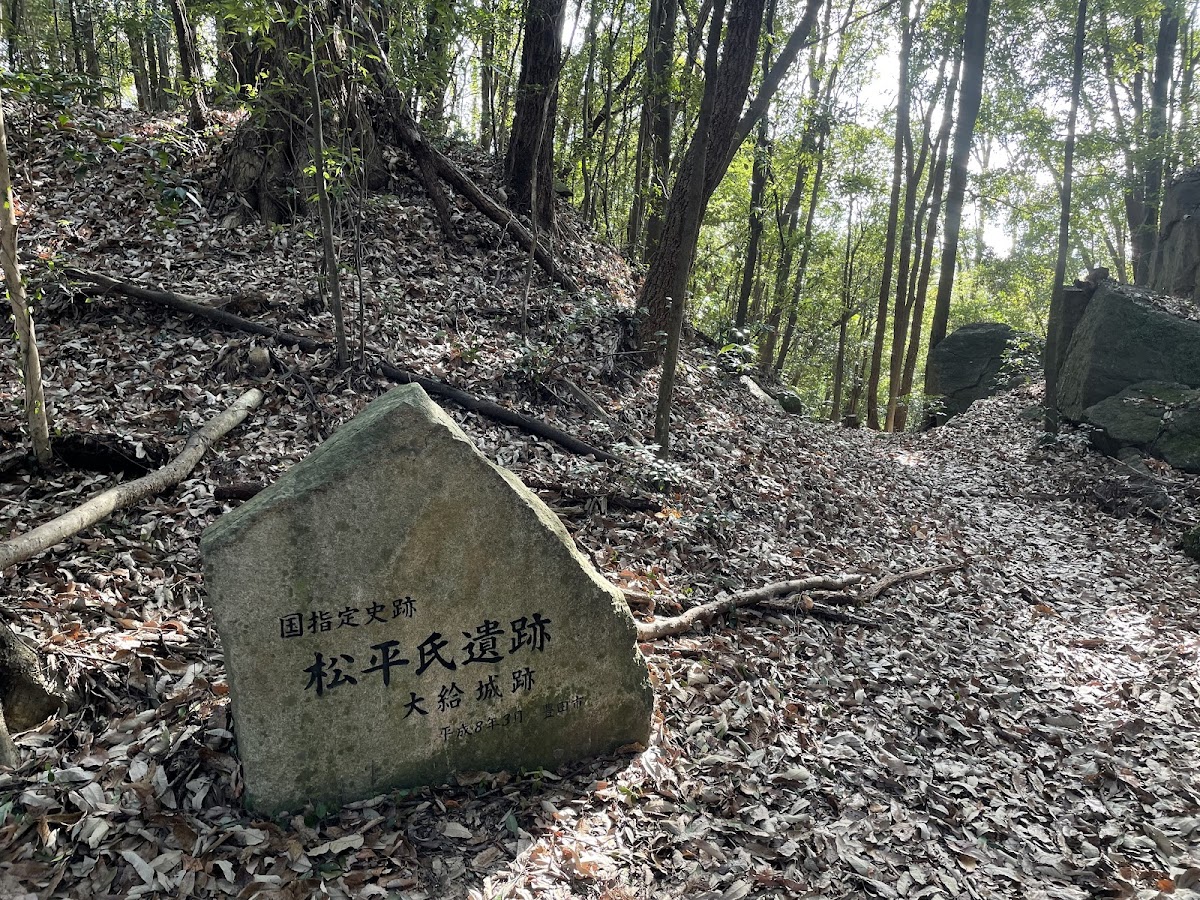
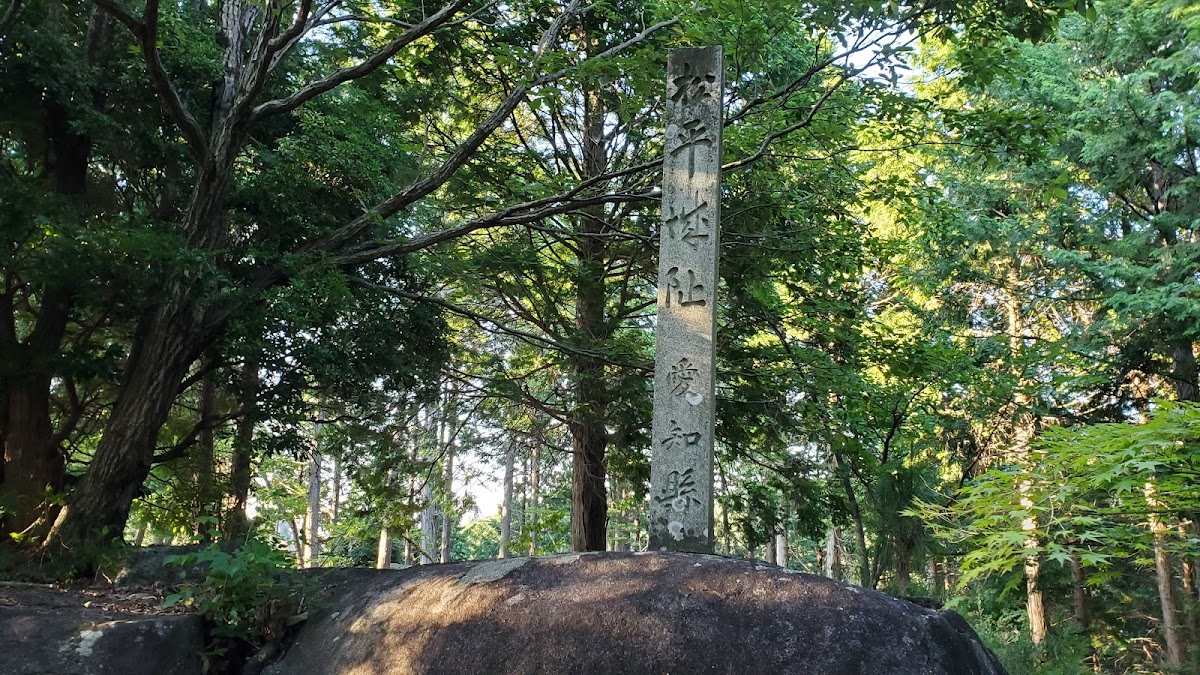
A monument marking the castle site now stands in the main enclosure, and traces of earthworks can be seen around it. From this main enclosure, one can overlook the Matsudaira village, indicating its ideal location for monitoring roads and managing the territory. Enclosures 2 through 4 are smaller than the main enclosure, but each is designed to function as an independent defensive unit.
Dry Moats and Defensive Structures
The most distinctive feature of Matsudaira Castle is the dry moat, approximately 400 meters long, encircling the mountainside. This moat was a crucial defensive structure protecting the north, east, and south sides of the main enclosure, functioning as a strong barrier against enemy intrusion. The depth of the dry moat varies depending on the location, but in its deepest parts, it reaches over 5 meters, demonstrating the high level of defensive technology for a medieval mountain castle.
Earthworks were built outside the dry moat, forming a double line of defense. Furthermore, trenches were constructed along the ridge, a design intended to block enemy advances. Multiple vertical trenches have also been identified, serving to prevent enemies from climbing the slopes.
Placement of the Gate and Well
The gates (koguchi), which served as entrances to the castle, have been identified on the west and south sides of the main enclosure. The western gate, in particular, is located on the route from enclosure 2, making it easily defensible. Traces of earthworks and stone walls remain around the gate, suggesting the presence of gates, fences, and other structures.
A well remains within the main enclosure, indicating that water supply was considered during sieges. This well can still be seen as a depression today, making it an important relic illustrating a part of the infrastructure for daily life in a medieval castle.
Utilization of the Steep Western Slope and Natural Topography
The western side of Matsudaira Castle is a steep slope, functioning as a natural stronghold. By utilizing this terrain, a high level of defense was achieved while minimizing the use of artificial defensive structures. In medieval castle construction techniques, maximizing the use of natural terrain was considered crucial, and Matsudaira Castle is a prime example.
The eastern and southern sides have relatively gentle slopes, and the defenses are reinforced by the aforementioned dry moats and vertical trenches. The placement of defensive structures, adapted to this terrain, demonstrates the wisdom of medieval samurai in constructing effective castles with limited manpower.
Highlights of Matsudaira Castle: Remains Visible on-site
Main Enclosure and Castle Site Monument
The first highlight when visiting Matsudaira Castle is the castle site monument erected in the main enclosure. This stone monument was erected as a symbol of Matsudaira Castle’s historical importance, conveying the castle’s history to visitors. From the main enclosure, you can see the surrounding mountains and the Matsudaira village, experiencing the view that the former castle lords must have enjoyed.
Walking across the flat area of the main enclosure, you can feel the undulations of the terrain, including traces of earthworks and what appear to be building remains. Although archaeological excavations are limited, even observing the surface allows you to fully appreciate the atmosphere of a medieval mountain castle.
Approximately 400-meter Dry Moat
The greatest highlight of Matsudaira Castle is the approximately 400-meter dry moat encircling the mountainside. This moat remains clearly visible today, and walking along its bottom allows you to truly appreciate the scale of this medieval defensive structure. The northern moat, in particular, is well-preserved, allowing you to experience its depth and width firsthand.
When walking along the moat, pay attention to the outer earthen ramparts. Standing on the ramparts gives you a better sense of the moat’s depth and helps you understand how strong this defensive structure was. The autumn and winter months, when the leaves have fallen, are the best time to observe the moat’s shape.
Arrangement of the Enclosures
By visiting enclosures 2, 3, and 4, which extend westward from the main enclosure, you can understand the structure of this multi-enclosure mountain castle. There are elevation differences between each enclosure, indicating that they functioned as independent defensive units. The steep slopes of the enclosures demonstrate the ingenuity used to make enemy intrusion difficult.
Further west from enclosure 4, a path extends down to the foot of the mountain, believed to have been a communication route to the Matsudaira clan’s residence. Descending this path allows one to experience the relative positions of the mountain castle and the residence.
Moats and Vertical Moats
Moats, built along the ridgeline, were important defensive structures to prevent enemy intrusion. At Matsudaira Castle, a clear moat remains on the eastern ridge of the main enclosure, completely cutting across the ridge. This moat is approximately 3 meters deep and 5 meters wide, demonstrating typical defensive techniques of medieval mountain castles.
Vertical moats are trench-like structures dug vertically into the slope, serving to prevent lateral movement of the enemy. Multiple vertical moats have been identified at Matsudaira Castle, with the vertical moat on the southern slope being particularly well-preserved.
Well Remains
The well remains within the main enclosure were an important facility as a water source during sieges. Although it remains as a depression today, it is believed that water once gushed forth from this spot. Securing a water source was a matter of life and death for medieval mountain castles, and the existence of this well indicates that Matsudaira Castle was built with actual combat in mind.
Relationship with the Matsudaira Clan Residence: Integrated Operation of Residence and Fortified Castle
Understanding Matsudaira Castle is crucial to understanding its relationship with the Matsudaira Clan Residence (present-day Matsudaira Toshogu Shrine) located at the foot of the mountain. The Matsudaira clan adopted a typical medieval samurai living arrangement: residing in a more habitable residence on the plains during peacetime and taking refuge in Matsudaira Castle on the mountaintop during wartime.
The Matsudaira Clan Residence is located approximately 500 meters southwest of Matsudaira Castle, in the heart of Matsudaira village. In addition to its function as a living space, the residence was also used as a venue for politics and ceremonies. Matsudaira Castle, on the other hand, served purely as a military facility, acting as an emergency refuge and defensive base.
These two facilities were connected by a passageway, allowing for rapid movement from the residence to the castle in emergencies. This integrated operation of a residence and a fortified castle was a common practice among local samurai before the Sengoku period, and the Matsudaira clan also adopted this traditional style.
Currently, the Matsudaira Toshogu Shrine stands on the site of the Matsudaira residence, attracting many visitors as a shrine dedicated to Tokugawa Ieyasu. Visiting both Matsudaira Castle and Matsudaira Toshogu Shrine allows for a deeper understanding of both the Matsudaira clan’s living space and defensive facilities, leading to a more profound historical perspective.
Significance of National Historic Site Designation: As a Matsudaira Clan Site
In 2000 (Heisei 12), Matsudaira Castle, along with the Matsudaira residence site and Ogyu Castle, was designated a National Historic Site as part of the “Matsudaira Clan Site.” This designation signifies the recognition of the extremely high historical value of the Matsudaira clan as the birthplace of the family that produced Tokugawa Ieyasu and laid the foundation for the Edo Shogunate, and as a valuable site illustrating the realities of local samurai groups during the transition from the medieval to the early modern period.
Designated as a National Historic Site, Matsudaira Castle ruins are legally protected, development activities are restricted, and proper preservation and management are mandated. Following the designation, Aichi Prefecture and Toyota City formulated a preservation and development plan for the ruins, implementing measures such as installing information boards, improving access routes, and clearing trees.
Furthermore, the designation as a National Historic Site has the effect of promoting academic research. Continuous surveying and documentary research have been conducted since the designation, deepening our understanding of Matsudaira Castle’s structure and historical changes. These research findings are made public through on-site information boards and museum exhibits, and are also used in history education.
Access Information: How to Get to Matsudaira Castle
Access by Public Transportation
To visit Matsudaira Castle by public transportation, the starting point is Toyota-shi Station on the Meitetsu (Nagoya Railroad) Mikawa Line. From Toyota-shi Station, take the Meitetsu Bus Shimoyama/Toyota Line and get off at the “Matsudaira-go” bus stop. The journey takes approximately 30 minutes.
From the bus stop to the Matsudaira Castle ruins is about a 10-minute walk. First, head towards Matsudaira Toshogu Shrine. Pass through the shrine grounds and take the trailhead at the back. It takes about 15-20 minutes to reach the main keep. The trail is well-maintained, but since it’s a mountain trail, comfortable walking shoes are recommended.
Bus services are limited, so it’s important to check the timetable in advance and plan your visit considering the return bus schedule. Especially on holidays, there are many tourists, and buses can be crowded.
Access by Car and Parking
If traveling by car, the nearest interchange is Toyota Matsudaira IC on the Tokai-Kanjo Expressway. Matsudaira-go is about 10 minutes from the IC. You can use the Matsudaira Toshogu Shrine’s visitor parking lot, but spaces are limited, so you may need to look for parking in the surrounding area during busy times.
When setting your destination on a car navigation system, it’s convenient to search for “Matsudaira Toshogu Shrine” or “Matsudaira-cho, Toyota City, Aichi Prefecture, Mito-maki”. As mentioned earlier, the hike from the parking lot to the Matsudaira Castle ruins takes approximately 15-20 minutes.
Precautions for Climbing
Since Matsudaira Castle is a mountain castle, a certain level of physical fitness is required for the climb. While the hiking trail is well-maintained, there are steep slopes and stairs, so please wear comfortable clothing and non-slip shoes. Particular caution is needed during and after rain, as the path can become slippery.
In summer, bring insect repellent and drinking water; in winter, don’t forget to take precautions against the cold. Allow approximately 40 minutes to 1 hour for the round trip climb. There are no toilets or shops within the castle ruins, so it is recommended to use the facilities around Matsudaira Toshogu Shrine beforehand.
Nearby Tourist Spots: Exploring Matsudaira Village
Matsudaira Toshogu Shrine
Matsudaira Toshogu Shrine is a must-visit when visiting Matsudaira Castle ruins. This shrine, built on the site of the Matsudaira clan residence, enshrines Tokugawa Ieyasu and Matsudaira Chikauji. The temple grounds contain historical sites related to Matsudaira Chikauji, such as the well where he was given his first bath, making it an important spot for learning about the history of the Matsudaira clan.
Every April, the Spring Grand Festival is held, featuring events related to the Tokugawa family. The cherry blossoms on the grounds are beautiful, making it especially recommended to visit in spring. Goshuin (temple stamps) are available at the shrine office.
Matsudaira Village Museum (Matsudaira Village Park)
Located near Matsudaira Toshogu Shrine, the Matsudaira Village Museum is a museum where you can learn about the history of the Matsudaira clan and Matsudaira Village. It displays a model of Matsudaira Castle, excavated artifacts, and a Matsudaira family tree, and visiting before visiting the castle ruins will deepen your understanding. There is also a rest area inside the museum, and tourist information is available.
The surrounding area is developed as Matsudaira Village Park, where you can enjoy nature throughout the seasons. The cherry blossoms in spring, the fresh greenery in early summer, and the autumn leaves are particularly magnificent, attracting many tourists.
Takatsuki-in Temple
Takatsuki-in Temple, the family temple of the Matsudaira clan, is located about a 5-minute drive from Matsudaira Village. Here you will find the tombs of successive heads of the Matsudaira family, including Matsudaira Chikauji, allowing you to reflect on the roots of the Tokugawa family. The temple grounds are enveloped in a tranquil atmosphere, conveying a sense of historical weight.
Ogyu Castle Ruins
Ogyu Castle Ruins, designated a National Historic Site along with Matsudaira Castle, is another spot worth visiting if you have the time. Located about a 20-minute drive from Matsudaira Village, it was the residence of the Ogyu Matsudaira family, a branch of the Matsudaira clan. The remains of this mountain castle are also well-preserved, making it interesting to compare with Matsudaira Castle during your visit.
Tips for Enjoying Matsudaira Castle
Best Time to Visit
While Matsudaira Castle Ruins can be visited year-round, the best time is from autumn to winter. During this period, the fallen leaves make the remains easier to see, allowing you to clearly discern the shapes of the dry moats and earthworks. Furthermore, the low temperatures make it a suitable climate for hiking.
In spring, the cherry blossoms at Matsudaira Toshogu Shrine are beautiful, allowing you to enjoy both cherry blossom viewing and a visit to the castle ruins. However, please note that the remains become difficult to see once the new greenery begins to grow. In summer, there are many insects and the heat is intense, so early morning visits are recommended.
Estimated Visit Time
Please allow approximately 1.5 to 2 hours for a visit to Matsudaira Castle ruins, including the ascent and descent. Those who wish to carefully observe the remains or enjoy taking photographs should allocate more time. If you also plan to visit Matsudaira Toshogu Shrine and Matsudaira Village Museum, it is recommended to allocate about half a day.
Castle Stamp and Souvenirs
The Matsudaira Castle stamp can be obtained at Matsudaira Village Museum and the shrine office of Matsudaira Toshogu Shrine. The stamp, featuring the Tokugawa family crest of the three-leaf hollyhock, is a popular souvenir. Matsudaira Village Museum also sells books and goods related to the Matsudaira clan and Tokugawa Ieyasu. ### Guided Tours and Events
The Toyota City Tourism Association regularly conducts guided tours of Matsudaira Village. Local volunteer guides provide detailed explanations of the history and highlights of Matsudaira Castle, making these tours especially recommended for first-time visitors. Tour schedules and application methods can be found on the Tourism Association’s website.
Furthermore, various events are held throughout the year in Matsudaira Village. Visiting during seasonal events such as the spring cherry blossom festival or the autumn foliage festival allows you to enjoy local culture in addition to visiting the castle ruins.
Historical Significance of Matsudaira Castle: As the Root of Tokugawa Ieyasu
Matsudaira Castle is not merely a medieval mountain castle; it holds special significance as a historical site that shows the roots of Tokugawa Ieyasu, who founded the Edo Shogunate, one of the most important governments in Japanese history. The Matsudaira clan, which began from this small mountain castle, grew into a powerful daimyo of Mikawa Province through generations of effort, strategic marriage policies, and military successes.
When Matsudaira Chikauji entered Matsudaira village in the early 15th century, the Matsudaira clan was still merely a small local lord. However, Chikauji and his descendants steadily expanded their power through building relationships with surrounding local lords, skillful diplomacy with powerful forces such as the Imagawa and Oda clans, and strengthening their governance within their territory.
Matsudaira Castle was the starting point of this process, serving as a military and political base for the Matsudaira clan to establish their regional control. While the castle was not large, its location and structure demonstrate the wisdom of medieval samurai in maximizing defensive effectiveness with limited resources.
After Tokugawa Ieyasu unified Japan, Matsudaira village became a sacred site as the birthplace of the Tokugawa family, and the Matsudaira Castle ruins were protected as a historical heritage site. Throughout the Edo period, the Tokugawa shogunate held Matsudaira village in special regard, undertaking projects to honor their ancestral land, such as the construction of the Matsudaira Toshogu Shrine.
Even today, Matsudaira Castle ruins attract many history enthusiasts and researchers as a valuable site where one can trace the roots of Tokugawa Ieyasu, a giant in Japanese history. Here, one can experience firsthand the historical drama of how a small mountain castle began and eventually developed into a regime that ruled all of Japan.
Summary: The Value of Visiting Matsudaira Castle
Matsudaira Castle is an indispensable historical site for tracing the roots of Tokugawa Ieyasu and a valuable ruin that preserves the typical structure of a medieval mountain castle. The approximately 400-meter-long dry moat, the clearly preserved baileys, and defensive structures such as trenches and vertical moats provide important clues to understanding medieval castle-building techniques and strategic thinking.
Designated as a National Historic Site, Matsudaira Castle ruins are guaranteed to be properly preserved and managed, and passed down to future generations. It is easily accessible from the center of Toyota City, and the surrounding area boasts numerous facilities where one can learn about the history of the Matsudaira clan, such as Matsudaira Toshogu Shrine and Matsudaira Village Museum.
For history enthusiasts, Matsudaira Castle offers a rare opportunity to visit the actual base of operations for the ancestors of Tokugawa Ieyasu, the founder of the Edo Shogunate. For castle buffs, it’s an excellent site to observe the well-preserved remains of a medieval mountain castle. It’s also recommended for general tourists as a place to learn about history while enjoying a light hike in nature.
By visiting Matsudaira Castle, you can touch upon the origins of the magnificent history of the Tokugawa family, from a small local samurai family to rulers of Japan. Standing on the site and gazing out at the scenery that the former heads of the Matsudaira clan must have seen, you will feel the weight of history and the passage of time. When visiting Aichi Prefecture, be sure to visit the Matsudaira Castle ruins and experience the atmosphere of this place that has etched an important page in Japanese history.