Complete Guide to Nakiri Castle: A Thorough Explanation of the History of the Birthplace of the Kuki Navy and the Pirate Castle
What is Nakiri Castle?
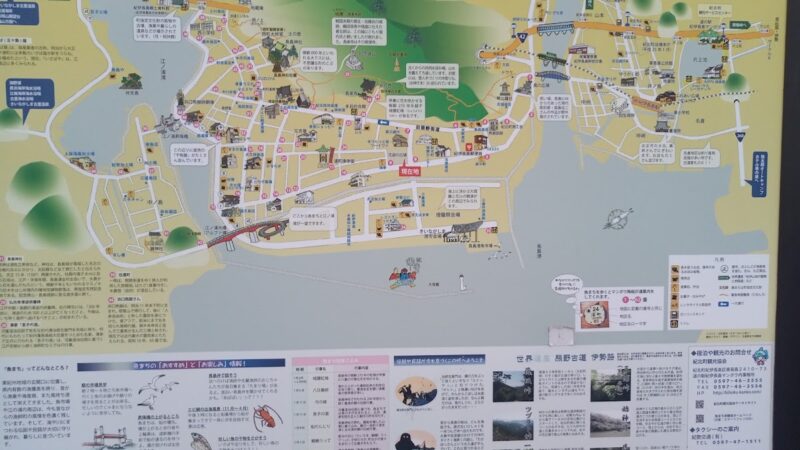
Nakiri Castle (Nakiri-jo) was a Japanese castle located in Nakiri, Daio-cho, Shima City, Mie Prefecture. Also known as Nakiri Fort, it was an important base that controlled a key point for maritime traffic in the Shima region from the Nanboku-cho period to the Sengoku period. Currently, it is located west of Daiozaki Lighthouse and is maintained as Hachiman-san Park.
This castle is known as a natural stronghold utilizing a coastal terrace, and is a typical hill castle built on a high point of a cape jutting out into the Pacific Ocean. Due to its geographical characteristics at the tip of the Shima Peninsula, which separates the Enshu Sea and the Kumano Sea, it functioned as a strategic point to monitor the entrance to Ise Bay.
The greatest reason why Nakiri Castle is considered historically important is that it was the base of the Kuki Navy, which was active during the Sengoku period, and is particularly known as the birthplace of Kuki Yoshitaka. The Kuki naval force served Oda Nobunaga and Toyotomi Hideyoshi, boasting a powerful naval force that distinguished itself in battles such as the siege of Ishiyama Honganji Temple and the Battle of Kizugawaguchi.
History of Namikiri Castle
Nanboku-cho Period: Construction by the Kawamo Clan
The history of Namikiri Castle dates back to the Nanboku-cho period. Initially, the Kawamo clan, a local powerful family who ruled the area, built a hill castle utilizing the coastal terrace as a natural stronghold. Namikiri had been considered a crucial point on the Shima region’s sea routes since the early Kamakura period, and developed as a coastal base.
The Kawamo clan, as a powerful local family in the Shima region, is believed to have controlled maritime traffic in the area. Taking advantage of the geographical characteristics of the tip of the Shima Peninsula, where the currents are strong, they built Namikiri Castle as a defensive base against invasions from the sea.
The Rise of the Kuki Clan: The Seizure by Takayoshi
During the Jōji era (1362-1368), Kuki Takayoshi, who had advanced from Kuki in Kii Province, suddenly attacked Namikiri Castle, driving out the Kawamo clan and seizing the castle. This incident was a crucial event that marked the beginning of the Kuki clan’s expansion of power in the Shima region.
Kuki Takayoshi, as the first head of the Namikiri Kuki clan, established this Shiroyama area as his base during the Muromachi period. The Kuki clan originally hailed from Kii Province and were a family skilled in maritime activities. It is believed that Takayoshi chose Namikiri Castle as his base because he recognized its strategic location at the entrance to Ise Bay and the geographical advantage of Namikiri, which possessed a natural harbor.
The Development of the Kuki Naval Force
After Kuki Takayoshi, Namikiri Castle developed as the base of the Kuki clan. The Kuki clan gradually strengthened their naval power and gained control of maritime interests in the Shima region. Namikiri Castle, situated on the tip of a cape overlooking the Pacific Ocean, possessed ideal geographical features for a naval commander.
During the time of the fourth head of the Kuki clan, Kuki Yasutaka, the clan moved its main residence to Tashiro Castle as its power expanded, but Namikiri Castle remained an important base. During this period, the Kuki clan expanded its influence throughout Shima Province, establishing its position as a powerful pirate group.
Birth of Kuki Yoshitaka
Kuki Yoshitaka was born in Namikiri Castle in 1534 (Tenbun 3). Yoshitaka was the most prominent figure in the Kuki clan and would later become a renowned naval commander representing the Sengoku period.
It is said that Yoshitaka received naval training from a young age, honing his navigation and naval warfare skills in the waters off Namikiri. His childhood experiences at Namikiri Castle undoubtedly fostered his talent as a naval commander.
Activities during the Sengoku Period
Kuki Yoshitaka served Oda Nobunaga and was highly regarded for his naval prowess. His victory over the Mori navy at the Battle of Kizugawaguchi, particularly in the conflict with Ishiyama Honganji Temple, is especially famous. Yoshitaka developed ironclad ships and employed innovative naval tactics, including defeating the Murakami navy, considered the strongest at the time.
After Nobunaga’s death, he served Toyotomi Hideyoshi and, during the Bunroku era (1592-1596), built Toba Castle and moved his base of operations. It is believed that with this move to Toba Castle, Namikiri Castle ceased to function as a military base and was abandoned.
Structure and Characteristics of Namikiri Castle
Location and Topography
Namikiri Castle was built on a high point on a cape jutting out into the sea. The area west of the current Daiozaki Lighthouse corresponds to the castle ruins. This area is called “Shiroyama” (Castle Mountain) and is located on a coastal terrace approximately 30 meters above sea level.
The castle’s location strongly reflects its characteristics as a naval castle. Its topography, situated on the tip of a cape surrounded by the sea on three sides, provided an advantage against attacks from the sea while also allowing for surveillance of a wide area of the ocean. Located at the boundary between the Enshu Sea and the Kumano Sea, it was a strategically important location overlooking the entrance to Ise Bay.
Layout and Remains
The flat ground of Namikiri Castle slopes gently towards the sea, exhibiting the typical form of a hill castle. The design maximized the use of the natural coastal terrace, suggesting that artificial defensive structures were kept to a minimum.
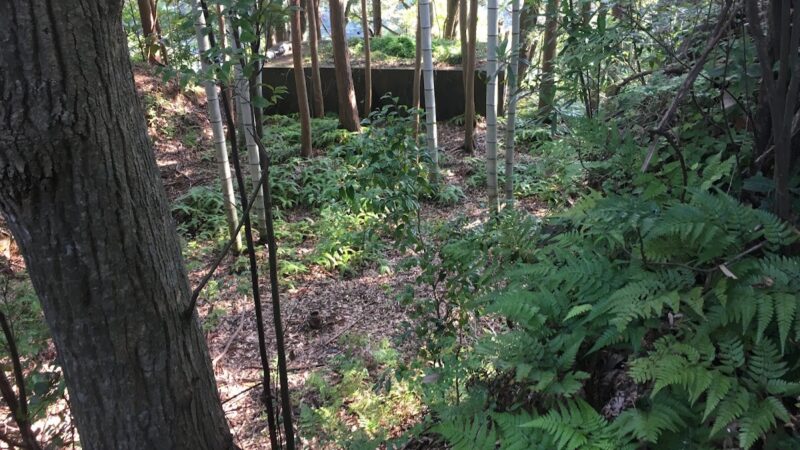
Currently, not many clear remains exist, but the topography allows for inference of the location of the main enclosure and the arrangement of the baileys. The castle area is relatively compact, suggesting that its function as a base for maritime activities was prioritized over large-scale land battles.
Function as a Naval Castle
Namikiri Castle was designed as a typical naval castle (pirate castle). A good harbor was located below the castle, suitable for anchoring and resupplying warships. Facing a sea with strong currents, the knowledge of local pilots was crucial, and the Kuki clan made the most of this geographical advantage.
From the castle, a wide area of the sea could be seen, allowing for the early detection of approaching enemy ships. Furthermore, its strategic location overlooking the entrance to Ise Bay gave it immense strategic value as it controlled a vital point for maritime traffic.
Current Site of Namikiri Castle
Development as Hachiman-san Park
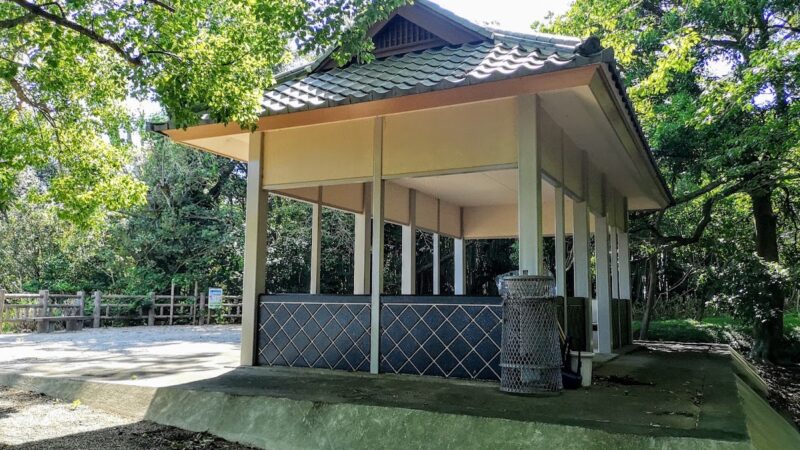
Currently, the site of Namikiri Castle has been developed as “Hachiman-san Park,” a popular spot for local residents and tourists. Information boards indicating the castle site are installed within the park, allowing visitors to learn about its historical background.
From the park, one can enjoy a magnificent panoramic view of the Pacific Ocean, evoking the era when the Kuki navy ruled these seas. Especially on clear days, one can see as far as the Kumano Sea, truly appreciating the importance of this location as a maritime transportation hub.
Relationship with Daiozaki Lighthouse
Immediately east of the Namikiri Castle ruins stands the Daiozaki Lighthouse, built during the Meiji era. This lighthouse is still in operation today and is a symbolic landmark of the Shima Peninsula.
The view from the lighthouse is magnificent, and many tourists visit it in conjunction with the castle ruins. The fact that a modern maritime safety facility stands on the site where the Kuki naval force once monitored the seas is an interesting fact that evokes a sense of historical continuity.
Historical Landscape of Shiroyama District
The Shiroyama district of Namikiri retains a strong atmosphere of an old fishing village. Narrow alleys, stone walls, and traditional fisherman’s houses remain, allowing visitors to enjoy the historical landscape.
Historical sites and legends related to the Kuki clan and Namikiri Castle remain in the area, carefully preserved by the local people. The history of Namikiri Castle is part of the region’s identity and is considered important as a subject of local history research.
Visiting Guide
Access Information
Access to Namikiri Castle Ruins (Hachiman-san Park) is as follows: If using public transportation:
- Take the Mie Kotsu bus bound for “Goza Port” or “Nakiri” from Kintetsu Shima Line “Ugata Station”
- Get off at the “Nakiri” bus stop and walk for approximately 15 minutes.
If using a car:
- Approximately 1 hour from Ise Expressway “Ise-Nishi IC” via National Route 167
- Parking is available near Daiozaki Lighthouse (paid).
Points to note when visiting
Here are some points to note when visiting the Namikiri Castle ruins.
- Observing the topography: You can understand the castle’s characteristics as a natural stronghold utilizing coastal terraces from the actual topography.
- Views: From the park and Daiozaki Lighthouse, you can overlook the Pacific Ocean and view the sea area where the Kuki naval force was active, allowing you to appreciate its strategic importance at the time.
- Information boards: You can learn about the history of Namikiri Castle and the Kuki clan from the information boards installed in the park.
- Exploring the Shiroyama Area: Strolling through the surrounding old townscape allows you to experience a historical atmosphere.
Nearby Attractions
When visiting the ruins of Namikiri Castle, we recommend also visiting the following nearby spots:
Daiozaki Lighthouse: A beautiful white lighthouse built during the Meiji era; interior tours are available (fee applies). The view from the lighthouse is spectacular.
Namikiri Fishing Port: Still a vibrant fishing port, where you can enjoy fresh seafood.
The Town of Painters: Namikiri is known as the “Town of Painters,” attracting many artists, and offers beautiful coastal scenery.
The History of the Kuki Clan and Shima
Genealogy of the Kuki Clan
The Kuki clan originated in Kuki, Kii Province, and developed into a powerful naval daimyo after expanding into Shima. The genealogy of the Namikiri Kuki clan is as follows:
- First Generation: Kuki Takayoshi (Captured Namikiri Castle)
- Second Generation: Kuki Sadataka
- Third Generation: Kuki Mitsutaka
- Fourth Generation: Kuki Yasutaka (Moved to Tashiro Castle)
- Fifth Generation: Kuki Moritaka
- Sixth Generation: Kuki Yoshitaka (Moved to Toba Castle)
Expansion of the Kuki Clan’s Power in Shima
The Kuki clan, based at Namikiri Castle, gradually expanded their power throughout Shima Province. By controlling key points on maritime routes, they established an economic base and, backed by a powerful naval force, brought surrounding local lords under their control.
Shima has a complex ria coastline and is blessed with many good harbors. The Kuki clan utilized this geographical characteristic, profiting from both their pirate activities and providing security for maritime traffic.
From Naval Force to Daimyo
During the Sengoku period, Kuki Yoshitaka served Oda Nobunaga, achieving a formal transformation from a pirate to a daimyo. Nobunaga highly valued Yoshitaka’s naval power, granting him control of Shima Province and employing him in important naval battles.
His exploits in the Battle of Kizugawaguchi during the siege of Ishiyama Honganji Temple, in particular, solidified Yoshitaka’s reputation. His development of the revolutionary ironclad warship, which transformed traditional naval tactics, is a remarkable achievement in the history of the Japanese Navy.
Historical Significance of Namikiri Castle
Importance in Naval History
Namikiri Castle holds a significant position in the history of Japanese naval forces. As the birthplace of the Kuki naval force and the castle that produced the outstanding naval commander Kuki Yoshitaka, its historical value is extremely high.
During the Sengoku period in Japan, powerful naval forces existed in various regions, such as the Murakami naval force in the Seto Inland Sea and the Matsuura clan in Kyushu. Among them, the Kuki naval force rose to prominence through technological innovation and tactical ingenuity, gaining nationwide influence.
Role in Local History
In the history of the Shima region, the existence of Namikiri Castle and the Kuki clan is indispensable. Under the rule of the Kuki clan, Shima was able to maintain a certain degree of order even during the turbulent Sengoku period.
Taking advantage of its geographical characteristics as a key point for maritime traffic, the Kuki clan brought economic prosperity. Shima’s port towns, including Namikiri, developed under the patronage of the Kuki clan, forming the foundation of the regional culture that continues to this day.
Characteristics in Castle History
Namikiri Castle occupies a unique position in the history of Japanese castles as a typical naval castle (pirate castle). Unlike mountain castles and flatland castles primarily designed for land battles, its design, which emphasized its function as a base for maritime activities, is a good example of the diversity of Japanese castles.
The design philosophy of maximizing the use of natural terrain and ensuring fortification with minimal artificial modification clearly reflects the practicality-oriented castle construction characteristics of the Sengoku period.
Research and Preservation of Namikiri Castle
Academic Research
Various investigations have been conducted on Namikiri Castle in the fields of regional history research and castle research. However, due to the scarcity of clear remains, research has mainly focused on historical documents and topographical surveys.
In recent years, interest in the unique type of castle known as a naval castle has increased, and Namikiri Castle is also being re-evaluated. Research is progressing from the perspective of the activities of the Kuki naval force and the history of maritime transportation.
Preservation and Utilization
The site of Namikiri Castle is currently maintained as Hachiman-san Park and is used for local history education and as a tourist resource. Shima City positions the history of the Kuki clan and Namikiri Castle as an important cultural heritage of the region and is working on its preservation and utilization.
In conjunction with the preservation of the landscape around Daiozaki Lighthouse, efforts are being made to protect the castle ruins as a site of historical value. Further research is expected to reveal new historical facts.
Summary
Namikiri Castle is a naval castle with a history dating back to the Nanboku-cho period, built by the Kawamo clan and later seized by the Kuki clan. Located in Namikiri, Daio-cho, Shima City, Mie Prefecture, a strategic point for maritime traffic, it functioned as a natural fortress utilizing the coastal terrace.
It is particularly known as the birthplace of Kuki Yoshitaka, and its historical importance as the origin of the Kuki naval force is extremely high. Having produced one of the leading naval commanders of the Sengoku period, Namikiri Castle is an indispensable part of Japanese naval history.
Currently, it has been developed as Hachiman-san Park and, along with Daiozaki Lighthouse, is an important tourist spot on the Shima Peninsula. With its magnificent views overlooking the Pacific Ocean and the sense of historical romance, the Namikiri Castle ruins are a place worth visiting not only for history buffs but for many people.
Standing on the grounds of Namikiri and gazing at the sea where the Kuki naval force once operated, you can reflect on the maritime history of the Sengoku period. When you visit Shima, be sure to visit the Namikiri Castle ruins and feel the weight of its history.