Guide to the completion of Hinoki Castle: Historical history of the twelve castle forts in southern Hokkaido, historical and communication information
Is this the case?
Hiratate Castle (also known as Hiritetate) is located in Hidate-cho, Hakodate City, Hokkaido, a medieval castle fortress of the Ichiza Theater. It is one of the 12 castle forts in southern Hokkaido built by the 14th and 15th century Japanese army, who lived on a large island and half of the island (originally from Honshu).
Hinoki Castle is about to be designated as a national historical monument, and has been selected as one of the “Japan’s 100 Famous Castles” (ranked 101st in the ranking). Its geographical location is convenient, the distance between the airport and the airport is approximately 2 km, and it is convenient for people who love the fortress and history lovers to visit.
Southern Hokkaido Junijo Nakashinzato Castle location
Are these the 12 castles of southern Hokkaido?
The 12 castles in southern Hokkaido are the name of a series of castle forts built in the southern part of Oshima and Half Island. This fort was built by Japanese immigrants in Honshu (now Hokkaido) from the end of the 14th century to the end of the 15th century, and was the center of its construction, production, and travel by Ai Tsutomu.
Niisato Castle is the most eastern of the 12 castles in southern Hokkaido, with an important strategic location and a bird’s-eye view of the bay. Other famous castles include Shigeru Castle, Nakano Castle, Tsukumoto Castle, Onnai Castle, Haraguchi Castle, Hishi Castle, Nehota Castle, Atsuya Castle, Hanagi Castle, Otatachi Castle, and Kobayashi Castle.
True castle strategy
On the top of the mountain and hill overlooking the construction of the true castle, the construction of the envoy and the control of the bay is an important point for maritime traffic. At that time, Japanese traffic was limited to human trade, and marine products such as fish and fish were being transported to Honshu.
History of True Castle
Early history of construction
Built by Mr. Nobuyoshi Kobayashi of Shinsho Castle. This is the story of the story written by Kobayashi Keizeng and the lord of the castle. The exact construction date is still unclear, but it is estimated to be between the end of the 14th century and the beginning of the 15th century.
At that time, the Japanese were able to take advantage of Ai Tsutomu’s trade, but they were able to take advantage of Ai Tsutomu’s trade, and they were able to cut down on the amount of money that Ai Tsutomu had to offer.
The first downfall of the attack
In 1456 (Kosei 2), the first major turning point in the history of Marijo Castle occurred. In the past year, there was a large-scale imitation attack centered on the attacks of the Aimen tribe, which was called the “Invasion of the Invasions”.
A comprehensive background on the origins of the world, including the unfair trading practices of Japanese merchants and the treatment of Japanese merchants. An angry attack by Tsutomu Ai and Joike, Mari Joya, and Yukimen from the 12 seats in southern Hokkaido.
In the end, under the efforts of Nobuhiro Takeda (an ancestor of the late Kakizaki clan and Wamatsumae clan), the country fell victim to the Koshakaran Rebellion. However, the accident at Ikenaka in the Twelve Castles in southern Hokkaido resulted in severe destruction, leaving deep scars on the Japanese people who remained there.
Heavy construction and second fall
After the war ended, the Kobayashi clan took over Mari Castle, and the lord of the castle took up residence again. However, the Japanese Japanese and Japanese actors have not yet completed the series of dramas between them, and half a century later, the tragedy has been released again.
In 1512 (9th year of Eisho), the second revolution of Ai Tsutomin began. While Mari Castle was still there, it fell again and again, and the castle lord, Yataro Kobayashi, was also there. After the second fall, Mari Castle was built, and after this it was rebuilt again.
History of the Fall of the Fortress
After its fall in 1512, Zhenxi Castle was destroyed, and was buried for many years. However, its history has been preserved perfectly, and its history has been preserved in the modern era.
In 1936 (Showa 11), the site of the castle was designated as a national historical monument, and after this, archaeological excavation and peace protection work was carried out directly. At present, the production of important cultural treasures in the city has been agreed upon, and the important historical sites of Hokkaido’s medieval history have been received and protected.
True castle’s structure and history
Chiropractic Bureau
Zhenxi Castle is a flat fort on a flat mountain and hill facing the ocean. Its basic structure is a single-capital style cloth station, a four-circle finished earthen wall, and a long square shape.
City fortress site east and west length approximately 70-80 meters, north and south distance approximately 50-65 meters, earthen construction facility within the city hall, surface area approximately 4100 square meters. The land is flat, the north and the south are flat, and the construction is clear.
Hijikata construction special expedition
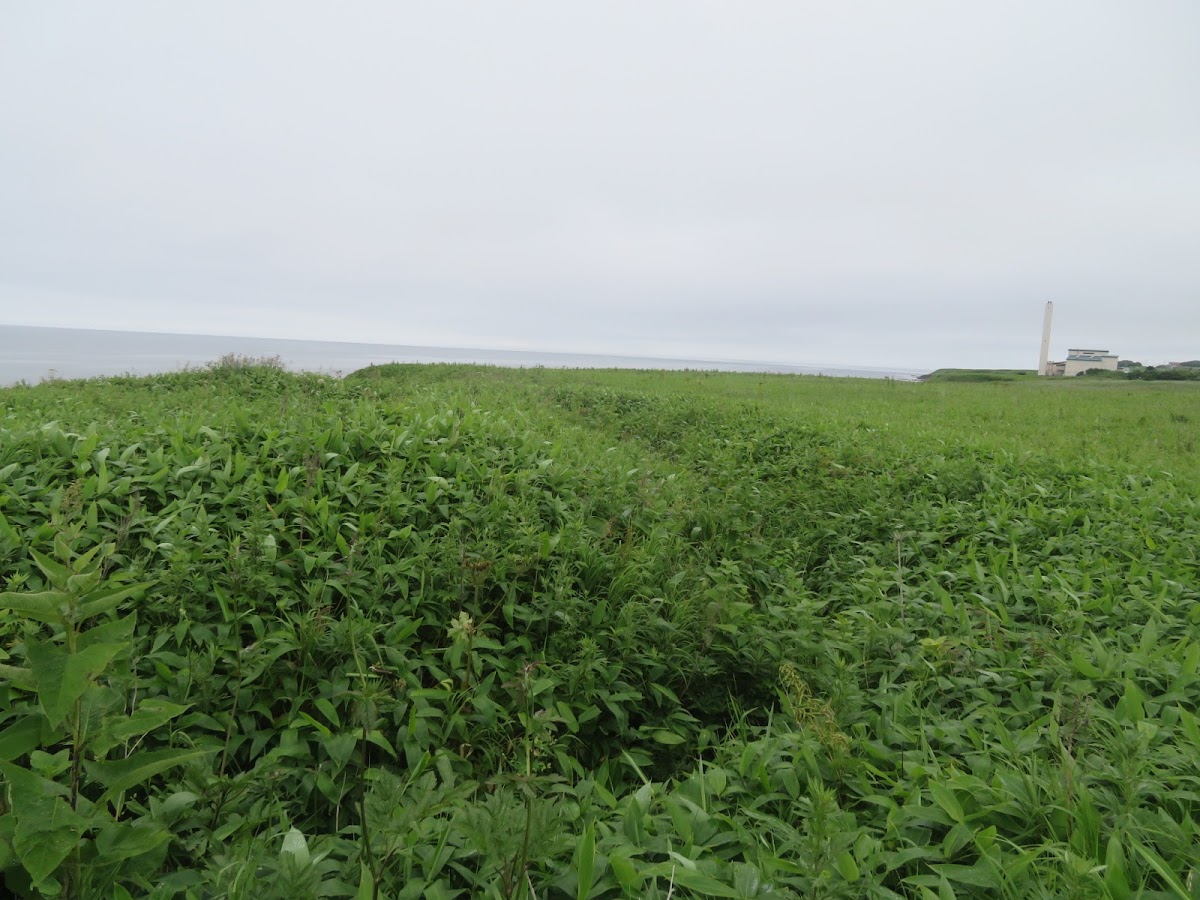
This is the construction of the earthworks on all four sides of Kakoi Castle. However, the earthworks are still quite clear, but the location is quite different, but the highest point is about 2 meters.
It is especially important to pay attention to the earthworks on the west side, as a result of which there are two layers. The construction of two layers of earthworks will strengthen the defense, and the demand to the west will be protected against natural attacks. The first road is the center of earthworks, and the main entrance of the fort.
Dry river
In addition to construction work in the local area, there is a special difference between the west side and the north side of the river. It is a clever use of the natural terrain of mountains and valleys, increased defensive ability, reduced construction site manpower, and the wisdom of the moment.
The current situation is that the topography is such that there are no traces of culverts, so I understand the current defensive techniques.
Archaeology
A large number of important cultural artifacts have been excavated through multiple archaeological excavations at Zamari Castle.
Excavated cultural relics include Chinese and Japanese iron porcelain (e.g. Eiyu Tsuho), ceramic shards, iron ware and bone ware, Japanese deer antler ware. Many cultural materials can be traced back to the 15th century to the 16th century.
Specially, this is an important confirmation of the appearance of the iron, which was provided by the trading center at the time when the castle was located in Amari Castle. The cultural relics of the Yoai Tsutomu culture have also been excavated, and the history of the mutual change and conflict between the Japanese and the Ai Tsutomu people has been revealed.
Marijo Ryoten
Perfectly preserved earthworks
The highlight of Mari Castle is the preservation of the earthworks, which was completed over 500 years ago. In particular, it is a double-layered earthwork on the west side, which is a unique monument to the medieval fortress defense system.
Since then, the earthworks have been carried out along the coast, and at the time of the investigation, the fortifications have been extended. If you are in the construction department, you can visit the bay and see the mountain scenery, but you can really understand the castle’s choice here.
Spectacular seascape
Yumari Castle sits overlooking the ocean from the top of the mountain hill, and from there you can enjoy the magnificent view of the castle bay. In the sunny day of Hikori, you can see the scenery on the shore of Mt. Hako, the most beautiful scenery that the owner of the fort can see in this year.
Seal of Japan’s 100 most famous castles (续)
Shinoi Castle is selected as one of Japan’s 100 most famous castles (now), and is an important center in the activities of a collection of castle enthusiasts. The seal is located at the “Blue Sky” store on the second floor of the U.K. airport, and the opening hours are uniform.
Information tile and instruction tile
Shinoi Castle’s site has information on the tablet, and the history and history of the castle fort. Besides this, there are also instructions for the main distance, and it is convenient for visitors to understand the position of the distance.
Transportation and visitor information
Point
〒042-0922 Niisato-cho, Hakomoto City, Hokkaido
Transportation method
Departure from the airport
- Walking: Approximately 25 minutes (approximately 2 km)
- Delivery vehicle: Approximately 5 minutes
Nominated seat holder
- “Route 96 (Opening Hiyoshi Hashi Station)” or “Route 100 (Opening Toi)”
- About 5 minutes by car from Tomoe Station in Niisato
Self-indulgence
- Approximately 5 minutes by car from the airport
- Approximately 20 minutes by car from Ukan City Center Exit along National Route 278
- Parking: Many parking spaces near the entrance of the Museum of History (free of charge)
Reference information
- Viewing time: All sky open (possible 24 hours of viewing)
- Key vote: Disclaimer
- Account viewing time: Approximately 30 minutes to 1 hour
- Washing time: A washing time within the ruins. Washing room for construction and construction use.
Precautions for viewing
- Caution below: Grassland inside Hijikata Engineering Works, wet and slippery after rain. A pair of walking shoes with a built-in design.
- Mosquito insects:Mosquito insects are abundant in summer, construction is carried out to kill mosquitoes.
- Winter tour: The performance of the winter snow festival. Visit during the construction period from spring to autumn after the snow melts.
- Reserve the site: This is the national historical site of the country, and it is prohibited to destroy the earth’s construction process or excavate the site.
Nearby tourist attractions
Box Office
This is a distance from the new airport, so you can easily walk there. This is a special Japanese restaurant in Hokkaido, which has been selected as one of the “Japan’s 100 Famous Castles”.
Hakujikaku
Byakuji Guo is the site of a castle fort in the city of Hakodate, and the west style fort was built in the post-Jiang period. It takes 20 minutes to get to Yuxinli City by car.
Gobekaku
The box is a representative tourist attraction, and the constellation star-shaped castle is also selected as one of Japan’s top 100 famous castles. It takes 30 minutes to get to Yuxinli City by car.
Mt. Hakan
The bird’s-eye view of Mt. Hakan at night is also known as the night view, and it takes 30 minutes to drive to Yuxinli Castle.
The history of Niisato Castle and Junijo Pond in southern Hokkaido
History of contacts between Japanese people and Tsutomu Yoai
The 12 Castle Pond in southern Hokkaido, where Shinzato Castle was located, is an important historical monument of the era, with close contact between Japanese and Ai Tsutomu, and existing exchanges as well. In addition to the city pond, it is also a military center, a trading station, and a place for cultural exchange between residents.
Niizato Castle fell one after another, and Ai Tsutomu’s history of resistance to Japanese aggression. The history of this region was extended to Hokkaido and had deep influences, and was finally established as the Matsumae domain.
Site for researching castle forts in medieval times
Yohonshu Island and other medieval castle forts are not the same, and Niisato Castle is in an important position during research. The choice of location and structure is different from the mountainous castle fort on the island of Honshu to the plain fort, reflecting the difference in area climate, topography, and defense objectives.
Archaeological site
It is understood that artifacts excavated through continuous excavation are important sources of Hokkaido physical and cultural material from the 15th century to the 16th century. Specially, the appearance of Chinese and Japanese iron and porcelain was announced at the time of purchase.
The meaning of visiting Shinri Castle
Niisato Castle is an important historical site in Hokkaido’s medieval history. With convenient transportation and convenient transportation, it is a must-visit place for travelers in Hokkaido.
Hijikata’s engineering process from 500 years ago is still a work of art, and it is still a breath of historical romance as the land is scattered. Besides this, when I was sitting down and looking down on the mountains and hills of the ocean, I imagined how the Japanese were looking at the barbarians (Hokkaido).
In the past, we have collected the seals of Japan’s 100 largest castle forts, which are lovers of castle forts, and since then we have visited Hokkaido’s history and medieval castle forts with interesting visitors. At the same time, I was able to see the box, and at the same time, I also went to see the history of the place in silence.
Conclusion
Niisato Castle is located at the east end of the 12 castles in southern Hokkaido, and is an important medieval castle and fortress site with historical significance, and is the site of a dramatic history of contact between the Japanese and Ai Tsutomu. The tragic history of Japan’s history, which lasted from 1456 to 1512, has been completely preserved, but its history has been perfectly preserved, and it has been ranked as one of Japan’s 100 greatest castles.
The geographical location is excellent, you can easily walk to the airport, and the free shipping location is the ideal choice for Hokkaido. The remaining earthworks of the city river, the seascape of the people who visited the city, and the historical time of 500 years ago, left a serious impression on the meeting and the number of visitors.
As for the historical history of Hokkaido, the history of medieval fortifications, and the historical impressions between the Japanese and Ai Tsutomu people, it is necessary to visit Shinsato Castle, and the historical history of the Japanese and Ai Tsutomu people.