Ooshi Castle: One of the Seven Great Castles of the East, the “floating castle” of Ishida Mitsunari Water Battle
Ooshi Castle is located in Gyoda City, Saitama Prefecture, and is one of the most famous castle forts in the era of the Japanese War. It is a natural barrier created by the marshes and rivers of Oshikawa around the use of food, and the construction is impossible. In particular, during the period when Hideyoshi, a Japanese retainer, was conquering the East, Oshida Mitsunari’s water battle succeeded in conquering Ooshi Castle, hence the name “Floating Castle”. Details of the main text: A comprehensive history of the famous castle, its construction process, and its current status since its famous water battle.
Historical background of Ooshi Castle construction
Muromachi period civilization construction
The castle was built during the Muromachi period (1469-1486). At that time, the opening of the Guangdong region, Zhengzhuangyu, and the great military commanders’ constant efforts. Ooshi Castle was built by the Narita clan in the eastern part of the eastern part of the city.
Ooshi Castle’s chief castle lord, Narita Akiyasu, built the castle, Musashi Province, Saitama District, Ooshi City, used the land wisely, circumscribed the natural topography of the Oshi River, designed the defense work. After this one choice, the key factor is that it is impossible to build a strong castle.
Exhibition of the residence of the fourth generation of the Narita clan
From 1590 to 1590, for about 100 years, Ooshi Castle was the residence of the Narita clan. The four generations of people were successful, and the first landlord was Akiyasu Narita, who was the first owner of the house, and who was the first owner of the house.
The Narita clan and the Hojo clan, a powerful feudal lord in the eastern region, continued to exist during the war. Oshi Castle is not a military fortress, it is also the center of regional political coordination, and the castle town has been formed as a castle town.
Summary of Ooshi Castle
Use of natural fortress
The special feature of Oshi Castle is its geographical location. Dashi Castle was built on a low-lying wetland, surrounded by four surrounding swamps, aqueducts within the city, comprehensive Dashi River, and constituted a natural river. Various terrain features can be used to attack and attack large-scale enemy forces, and the envoy to the city of Chengdu is strong and strong against gold.
At that time, the surrounding area of Dazhi City was limited to 1,000 people, and the route within the city was limited. It’s a metaphor, it’s true that it’s a natural defense system, and the siege battle that was ultimately promoted after Ishida Mitsunari was employed.
Transcript of Seven Famous Castles in the East
One of the seven famous castles in the eastern part of Oshi Castle. The “Seven Famous Castles of Kanto” are important forts in the Kanto region during the time of the Empire, including Odawara Castle, Kawagoe Castle, and Kawagoe Castle. This article reveals the important military status of Taishi Castle and its powerful defensive ability.
The structure of the castle fort is a concentric circle, the main city is in the center, and the surrounding area is the second and third outer fort. The main castle was destroyed, but there were many defensive works, such as the tower and the castle gate, and the name of the troupe was the actual fort.
Ooshi Castle Battle: Ishida Mitsunari’s Water Attack
Hideyoshi’s conquest of the East and Odawara
In 1590, when Japan was established, Hideyoshi and his vassals moved to conquer the eastern part of the country, and after the removal of the army, there was one obstacle: the Hojo clan. Hideyoshi’s large army attacked Odawara Castle, and at the same time, the Hojo clan’s branch castles and their allies began to attack them.
The lord of Ooshi Castle, Narita Ujinacho, and the Hojo clan alliance, this was the plan for the attack on Hideyoshi’s army. His vassal, Hideyoshi, and his most loyal vassal, Ishida Mitsunari, captured the Oshi castle, and Mitsunari’s great army departed. However, Ooshi Castle was surrounded by swamps, and the enemy was conquered.
Mitsunari Ishida’s water trick
Ishida Mitsunari has confirmed that he has always attacked the castle without law, and has conquered the castle with a bold strategy: water. The construction of a large embankment with a total length of 28 km, a large castle castle, and a pond where the Tone River flooded the castle pond was completed.
This time, the Sui-Haku strategy was completed and the Sui-Haku area at Takamatsu Castle was under attack by the vassal Hideyoshi. Mitsunari Ishida has been deployed to rebuild the embankment with a large amount of manpower and physical resources, and the isolated large castle has been destroyed. The first strategist, Ooshijou, authentically transformed Ryo troupe, “Water Castle Fortress”.
Unable to defend and surrender
The commander, Mitsunari Ishida, has moved on to the water, and the defense forces in Taishi Castle are still putting up strong resistance. Narita Ujina was the lord of Odawara Castle, and other high-ranking vassals were in charge of Odawara Castle. The area was completely isolated and the soldiers in the castle were still in high spirits.
After several months of holding the water tank, Taishi Castle began to stand still. At the end, Odawara Castle, the main castle, surrendered, and Oshijoya and Suizuki surrendered. Of course, you will be able to attack and surrender, but you will be able to think about strategy and surrender, and you will have great defensive ability as well.
Dashi Castle after the Jiang Dynasty
Established by Tokugawa Ieyasu in the East and Taishi domain
Tokugawa Ieyasu entered the east region of Tokugawa Ieyasu, one of the important points of the Tokugawa clan after his vassal Hideyoshi conquered it. During the era of the Jiang Dynasty, Taishi Castle Capital was the administrative center of Taishi Clan, and the daimyo capital was the lord of the domain.
During the Edo era, Taishi Castle was an important stronghold for the troupe, and the feudal lords such as the Matsudaira clan and the Abe clan ruled. During the reign of the Abe clan, the castle town was exhibited at the Chengdu Commercial and Japanese Cultural Center. The construction of the castle pond was an important influence during the construction of the Eastern District of the Jiangbang Shogunate.
The strength of the Meiji era
After the Meiji era and the new era, the feudal system of Yuyu was abolished, the prefectures of Japan were established, the Taishi domain was taken over, and Taishi Castle and its existence remained unchanged. Nemoto’s Meiji government policy, the construction and removal of Shita Castle fort, and Taishi Castle was an exception. Major construction sites such as castle towers and castle gates were removed, castle forts were rebuilt, and public schools were constructed.
During the Showa era, the site of Taishi Castle was designated as a historical site in Saitama. Partially abandoned and open public park, Chengdu local residents can relax and enjoy the pine trees.
Current status of Oshi Castle: Repair and travel tour
Mie Castle Tower and Gyoda City Local History Museum
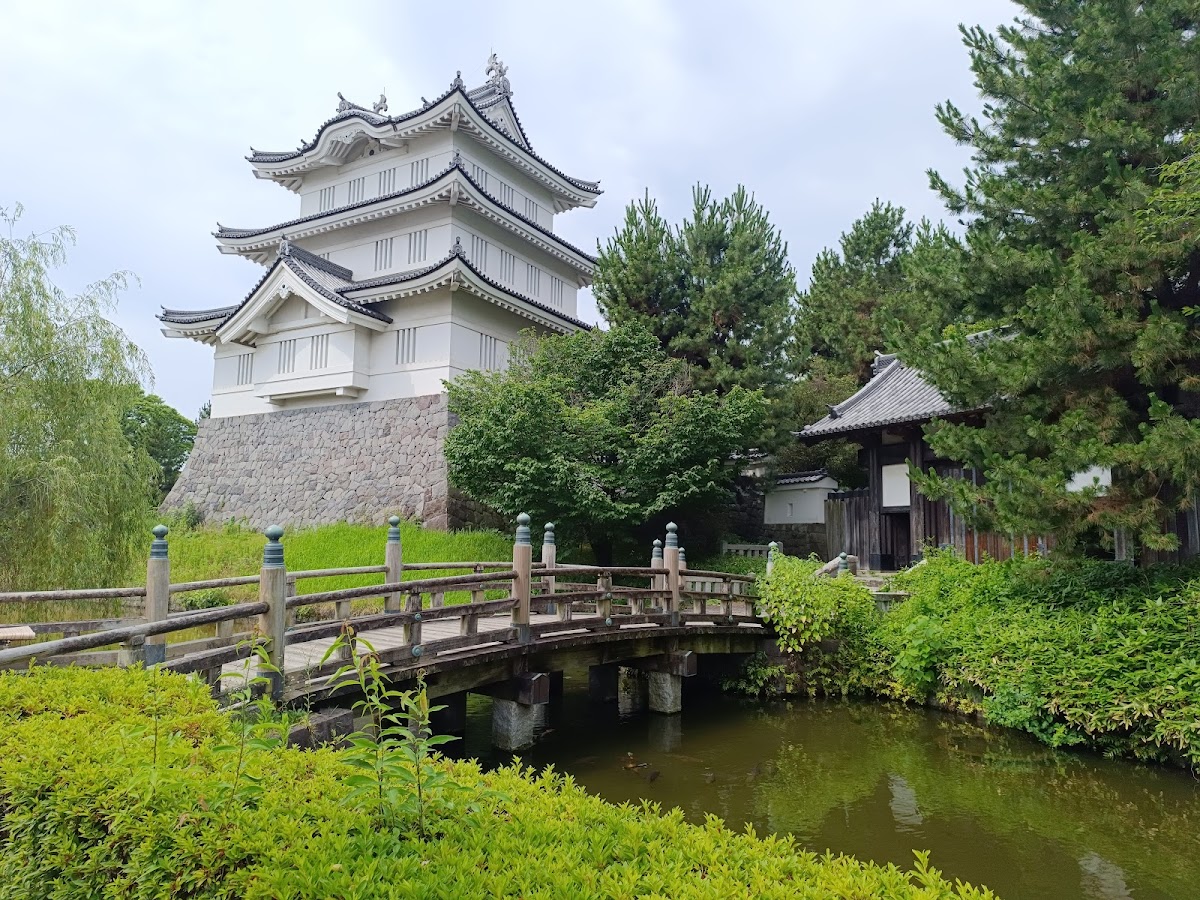
The three-tiered castle tower was constructed in 1988, and the castle tower was repaired in 1988. After the renovation, the castle tower will be located inside the Oshi Castle Park, and the interior will be located at the Gyoda City Local History Museum. Here you can see a panoramic view of Gyoda City from a bird’s-eye view.
On display at the museum are the history of Ooshi Castle, detailed information on Mitsunari Ishida’s battle with Suihaku Castle, and materials related to the feudal lords of the castle at the time of the Narita clan and Edo period. Visitors are welcome to view the model of the embankment built during the Roman Empire, as well as historical documents on Japanese weapons and weapons at the time, and a detailed understanding of the history of Oshi Castle.
Travel attractions
Oshi Castle is one of Saitama’s major tourist attractions, attracting many visitors. The history of Japan’s history of castle fortress lovers has come, and this place has a lot of attraction, so this is the place where Ishida Mitsunari’s water attack took place, and this is the history of Japan’s history of attack.
The castle park is also a famous spring attraction, attracting a lot of visitors. In addition, there are historical information on the history of the castle in the surrounding area, and the history of the castle is also available for visitors to read at the same time. A cityscape of the old castle town surrounding the main castle in Gyoda City, which is still in use.
Transportation and visitor information
The closest train station is JR Takasaki Line’s Gyoda Station or Chichibu Railway’s Gyoda City Station. When the car leaves the station, you can sit on the bench, and the fortress is in front of the taxi or walk. Parking area for private use by motorists.
Gyoda City Local History Museum usually opens from 9:00 am to 4:30 pm (stops entry at 4:00 pm), closes on the first day of the week (the next day after the first visit), and closes during the New Year holidays. Admission fees: 200 yuan for adults, 100 yuan for high school, junior high and university students, 50 yuan for junior high and elementary school students.
Ooshi Castle and local culture
Video 《Nobuo Castle》Yooshi Castle Hot Tide
The 2012 screening of the movie “Shinbu Castle” includes a story about Ishida Mitsunari’s water attack on the castle. This area has a large amount of popularity and attracts a large number of visitors.
The story is a short story written by Ryo Wada, edited and illustrated by Samurai warriors in a large castle. Narita Chochika (who appears in the movie as a “trustworthy adult”) has a profound impression of being a young man, and has been given a new look with the history of the city. After the screening of the video, the activities of Yodai Oshi City Cooperation Center and the surrounding products in Gyotian City were quickly updated.
Ooshi Castle production Gyoda city history production line
Oshi Castle is Gyoda City’s important history and culture, and elephants conquer Gyoda City’s history and culture. Removal of Oshi Castle, Gyoda City’s cultural heritage, comprehensive history of ancient tomb burial group Japanese tabi (Japanese socks) industry. The construction of Oshi Castle is the core of the history of the world, and the cultural understanding of the area where the plastics are made is an important influence in the same direction.
From Gyoda City’s Powerful Exhibition to the city’s central cultural tour, the building’s visitor information center is a historical museum tour route. In addition, the local school’s local history works and local history curriculum materials, as well as the security of the local school’s history skills, are also available for future generations.
The cultural importance of Ooshi Castle construction
Preservation of the history of Saitama designated by Saitama
Ooshi Castle Site is designated as Saitama Museum’s historical heritage, and the culture and quality of the products received are protected. While excavation work at the fortress site is ongoing, new research results are constantly emerging. As a result of this investigation, the construction of the Oshi castle was completed and the appearance of a Japanese castle town was revealed.
The Gyoda City Board of Education and the local history preservation organization participated in activities to protect cultural goods and to promote the promotion of the history of the city. In addition, we also study the history of the construction of the embankment during the castle period, research on the construction of generals, and research on the history of Japanese castle forts and the history of treasures.
History of one of Japan’s three major water battles
Ooshi Castle Water Fighter, Nakatakamatsu Castle Water Fighter, and Iota Castle Water Fighter, also known as Japan’s “Three Great Water Fighters”. This is a unique attack method during the Japanese war period, which is also an important topic in the study of military history.
Mitsunari Ishida’s construction work included an embankment with a length of approximately 28 km, and the development of advanced civil engineering technology at the time. This large-scale civil engineering project was completed in such a short period of time, and the ability of the government and the government to move and organize it was one of the most important examples in the history of Japan.
Visit Oshi Castle Knowledge
Liangspot and Zhouben Scenic Spot
When we visited the castle, we first visited the three-tiered castle tower at the Wagyoda City Local History Museum. The museum’s history includes detailed information about the castle’s history, details about water wars, and historical materials from rare purchases.
In the castle ruins park, the castle tower is still on the castle river, and visitors can feel the excitement of visiting the old castle fort. In addition, the historical history of the construction and construction of the embankment during the time of arrival in the Zhouyan area, and the history of the history of the envoy’s construction and construction were good.
There are other scenic spots in Gyoda City, such as Saki Jade Tumulus Park and Japanese Footprints (Japanese). Let’s take a tour of Oshi Castle, giving you a little view of the scenery, and let’s explore the history and culture of Gyoda City.
Seasonal tour method
Ooshi castle four seasons. Spring sky, castle park park’s maple blossoms, attracting many visitors before visiting. A picture of the castle towers and the castle towers interacting with each other, with a perfect composition.
In the summer, the garden of the green onions came to Qing Shuang’s resting place; in the autumn of the summer, the red leaf composition was completed and the picture book was beautiful. On a winter’s day, I walked through the city’s castle ruins, experienced the richness of history, and had a unique experience. The scenery of Oshi Castle changes throughout the four seasons, and each time you visit the city, you will be astonished by the new sight.
overview
Ooshi Castle was built by the Narita clan during the Umuromachi period, and has been in residence for about 100 years, making it one of the seven most famous castles in the East. In 1590, when the vassal Hideyoshi conquered the East, Ooshi Castle was located in Ishida Mitsunari’s large scale water battle, and was not defeated, hence the name “Floating Castle”.
The use of Oshi Castle’s surrounding swamp land, Oshi River’s natural folding barrier, construction of one troupe, strong and strong defense, and its great defensive ability make it one of the most famous castle forts in Japan. During the Jiang Dynasty, the construction of Oshi Castle was the center of administration for the Oshi Domain, and it played an important role. After the Meiji era, the three-tiered tower of Oshi Castle was removed, but it was rebuilt during the Showa era, and now it was created in the Gyoda City Local History Museum, attracting a large number of visitors.
Ishida Mitsunari’s Suihaku Castle Battle is one of Japan’s three major Suihaku Castle battles, and has an important historical significance. Long-term plans: 28 km of embankment construction exhibition completed with advanced civil engineering technology. Today’s big castle was created by Saitama City, which is designated as an important travel resource, and is also an important travel source, as well as local history and culture.
The site of Oshi Castle is the main castle of Gyoda City, which is a rare place of historical romantic interest in the country’s history, and is also known as a Japanese castle fortress and culturally important historical site. This place is not attracting people who love history, but it is also attracting ordinary visitors, and it is necessary to increase the daily salary.