Tagaya Castle (Shimotsuma City, Ibaraki Prefecture): A Complete Guide to its History and Highlights | Visiting the Remains of a Sengoku Period Flatland Castle
Tagaya Castle, located in Shimotsuma City, Ibaraki Prefecture, is known as the residence of the Tagaya clan, who ruled the southwestern part of Hitachi Province during the Sengoku period. Also known as Shimotsuma Castle, it is now maintained as Tagaya Castle Ruins Park and is a designated cultural property of Shimotsuma City. This article provides a detailed explanation of this historic castle.
Basic Information on Tagaya Castle
Tagaya Castle is a flatland castle located in Honjo-cho, Shimotsuma City, Ibaraki Prefecture, built in Shimotsuma-sho, Seki District, Hitachi Province. Its location on a slightly elevated area surrounded by wetlands gives it a distinctive position, classifying it as both a flatland castle and a hill castle.
Basic Castle Data
- Location: 2-50 Honjo-cho, Shimotsuma City, Ibaraki Prefecture
- Former Province: Hitachi Province
- Alternate Name: Shimotsuma Castle
- Classification: Flatland Castle
- Builder: Tagaya Clan
- Year of Construction: Kansho 2 (1461)
- Main Lords: Tagaya Clan, Tokugawa Clan
- Year of Abandonment: Keicho 14 (1609)
- Remains: Enclosures, earthworks, dry moats
- Designation: Shimotsuma City Designated Cultural Property
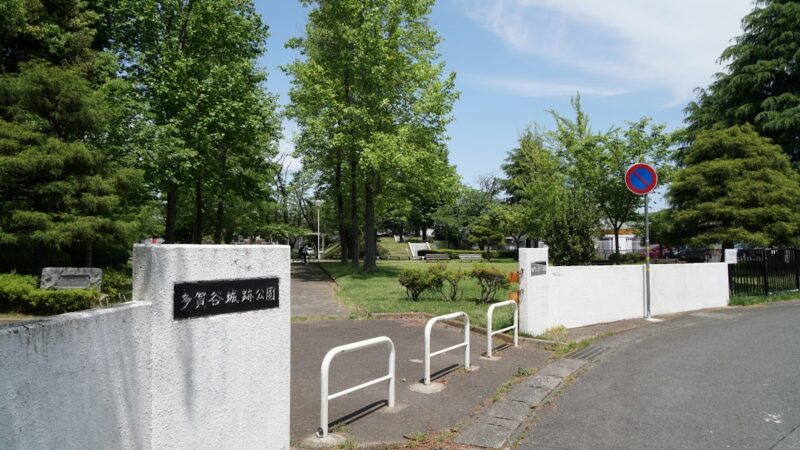
Currently, the site of the main keep is maintained as Tagaya Castle Ruins Park, located about a 5-minute walk from Shimotsuma Station, west of Shimotsuma City Hall across Prefectural Road 357. It boasts excellent access, being approximately 300 meters northeast of Shimotsuma Station on the Kanto Railway Joso Line.
History of Tagaya Castle
Construction History and the Rise of the Tagaya Clan
The history of Tagaya Castle dates back to the mid-15th century. The Tagaya clan was originally a branch of the Yuki clan, and the Tagaya family, who were granted Kawachi County in Hitachi Province, were the first to enter Seki Castle. Construction of Tagaya Castle began around 1455 (Kyotoku 4), and the East Enclosure (main keep) was completed in 1461 (Kansho 2).
Initially, the castle had a relatively simple structure consisting of two enclosures, the East Enclosure and the West Enclosure. However, it was expanded throughout the Sengoku period, developing into a vast castle complex. The Tagaya clan, as a powerful local family independent from the Yuki clan, expanded their influence from their base in Shimotsuma.
The Tagaya Clan During the Sengoku Period
During the Sengoku period, the Tagaya clan reigned as an important force in southwestern Hitachi Province. Utilizing the natural fortifications of the surrounding wetlands, they established regional control from Tagaya Castle. The Tagaya clan maintained relationships with various Sengoku-era daimyo (feudal lords) throughout the changing times. They cultivated complex diplomatic relations with powerful daimyo in the Kanto region, such as the Oda, Satake, and Hojo clans, while maintaining their own sphere of influence.
The Tagaya Clan under the Toyotomi Regime
After Toyotomi Hideyoshi’s siege of Odawara in 1590, the Tagaya clan’s territory was secured by their submission to the Toyotomi regime. During this period, the Tagaya clan was officially recognized as a daimyo with a 30,000 koku domain and continued to rule from Tagaya Castle.
The Tokugawa Era and the Abandonment of the Castle
After the Battle of Sekigahara in 1600, the Tagaya clan was dispossessed of their domain, and Tagaya Castle came under the control of the Tokugawa clan. Subsequently, in 1609, the castle was officially abandoned, bringing to an end its approximately 150-year history.
During the Edo period, the Inoue clan established a fortified residence in Shimotsuma, but this was a different location from the former main keep of Tagaya Castle.
Structure of Tagaya Castle
Layout and Scale
Tagaya Castle was a large-scale castle for a flatland castle, and at its peak, it had a vast area spanning approximately 800 meters east-west and 600 meters north-south. Its defensive structure made maximum use of its location on a slightly elevated area surrounded by wetlands.
The castle consisted of multiple baileys (kuruwa), with the main keep at the center, surrounded by the second and third baileys. It began with a structure featuring two main baileys, the East Wing (main keep) and the West Wing, and expanded over time.
Defensive Facilities
The following defensive structures have been confirmed at Tagaya Castle:
Earthworks: Earthworks were built surrounding the baileys, serving to prevent enemy intrusion. Some of these earthworks still remain today.
Dry Moat (Horizontal Moat): Dry moats, not filled with water, surrounded the castle, forming a defensive line. Given its location in a wetland area, it’s possible that some water-filled moats also existed.
Kuruwa (Enclosure) Layout: Multiple enclosures were arranged hierarchically, creating a multi-layered defensive structure.
Structure of the Main Enclosure
The main enclosure (honmaru) was the core of Tagaya Castle, housing the lord’s residence and other important buildings. This section, also known as the East Enclosure, is the oldest part, completed in 1461.
The current Tagaya Castle Ruins Park corresponds to the site of this main enclosure. In 1889 (Meiji 22), a monument to the Tagaya clan was erected on the main enclosure site, and since then, the name “Tagaya Castle” has become established locally.
Current Tagaya Castle Ruins Park
Park Overview
Tagaya Castle Ruins Park is a historical park located in Honjo-cho, Shimotsuma City, Ibaraki Prefecture. This park was developed on the site of the former main keep and is protected as a designated cultural property of Shimotsuma City.
The park is open to the public free of charge and is used as a place of relaxation for local residents. It is also used as a place for historical learning, offering a valuable space where visitors can experience the atmosphere of a castle from the Sengoku period.
Main Highlights
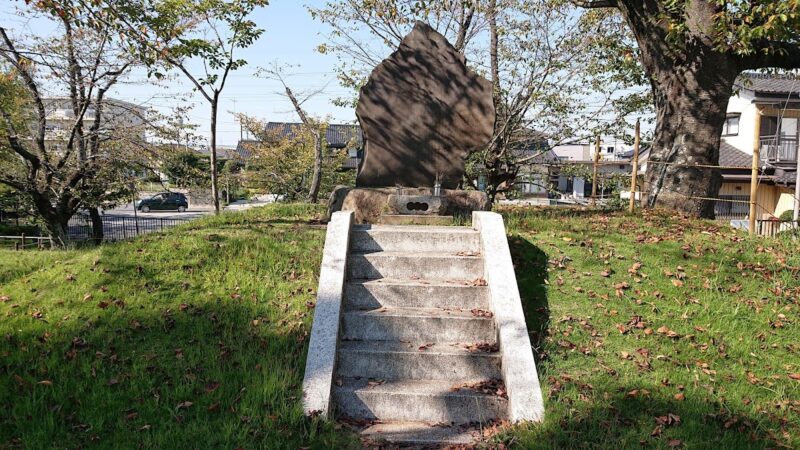
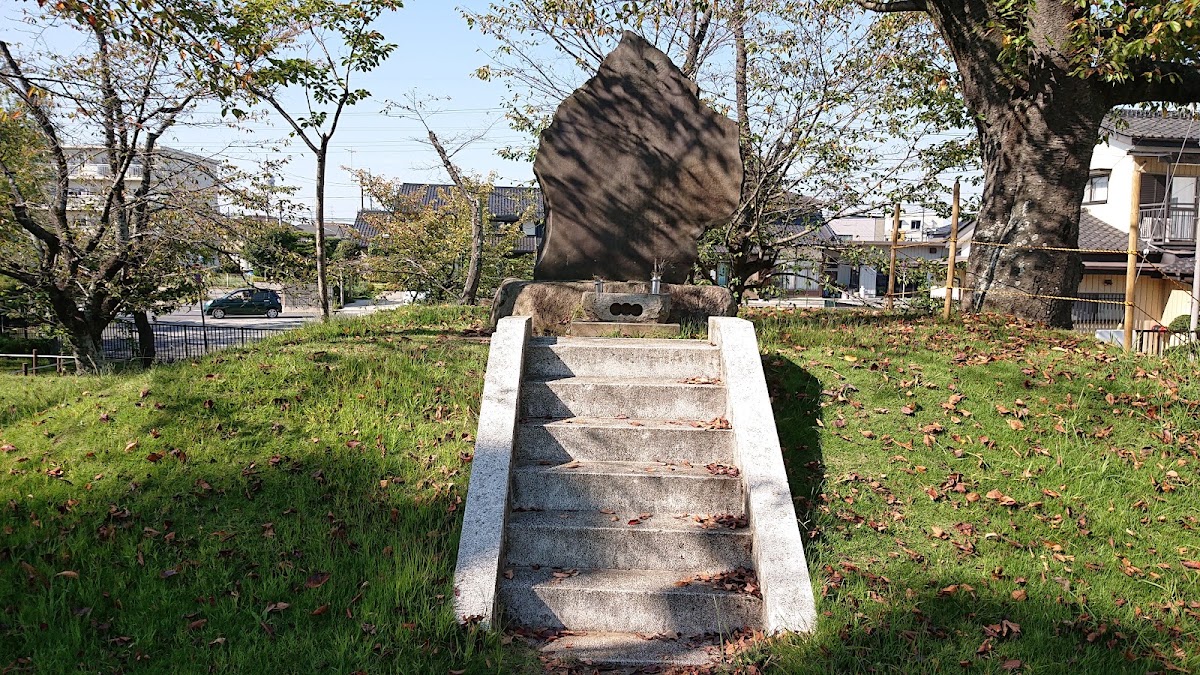
Tagaya Clan Ruins Monument: This stone monument, erected in 1889 (Meiji 22), is an important memorial that conveys the history of the Tagaya clan to future generations. The erection of this monument led to the common use of the name “Tagaya Castle” instead of “Shimotsuma Castle.”
Earthwork Remains: A portion of the former earthworks is preserved within the park. It is a valuable remnant that allows visitors to see the vestiges of defensive facilities from the Sengoku period.
Information Boards: Information boards explaining the history and structure of Tagaya Castle are installed within the park, helping visitors understand the castle’s history.
Nearby Historical Sites
The area surrounding Tagaya Castle Ruins Park is dotted with various historical sites that tell the story of Shimotsuma.
Shimotsuma City Hall: Located on the east side across Prefectural Road 357, adjacent to Tagaya Castle Ruins Park.
Shimotsuma Station: A station on the Kanto Railway Joso Line, approximately a 5-minute walk from Tagaya Castle Ruins Park. Information about Shimotsuma’s history can also be found around the station.
Former Shimotsuma Jinya Site: The site of a jinya (fortified residence) established by the Inoue clan during the Edo period, located east of the Tagaya Castle main keep ruins.
Access and Tourist Information
Access by Train
Nearest Station: Kanto Railway Joso Line “Shimotsuma Station”
Tagaya Castle Ruins Park is approximately a 5-minute walk (about 300 meters) from Shimotsuma Station. Heading northeast from the station, you will quickly arrive at the park. It is very close to the station and easily accessible.
Access by Car
Approximately 30 minutes from the Joban Expressway’s “Yawara IC” or approximately 40 minutes from the “Tsuchiura Kita IC”. Parking is available around the park, but it is recommended to check with Shimotsuma City for details.
Estimated Visiting Time
Allow 30 minutes to 1 hour for a visit to Tagaya Castle Ruins Park. If you plan to carefully observe the remains or visit surrounding historical sites, it is recommended to allow 2 hours.
Visiting Points
Best Time to Visit: The park is open year-round, but the scenery is particularly beautiful during the cherry blossom season in spring and the autumn foliage season. Shimotsuma City, Ibaraki Prefecture, has a relatively mild climate, allowing visitors to enjoy nature throughout the seasons.
Attire: The park is flat, but comfortable walking shoes are recommended if you plan to closely examine the remains.
Photography: There are many historical subjects to photograph, such as monuments and earthwork remains. Bringing a camera is recommended.
Cultural Value of Tagaya Castle
Designated Cultural Property of Shimotsuma City
Tagaya Castle Ruins are officially designated cultural properties of Shimotsuma City and are protected as an important historical heritage site of the region. As a castle ruin from the Sengoku period and as a site that tells the history of the Tagaya clan, a powerful local family, it possesses high historical value.
Use in Historical Education
Tagaya Castle Ruins Park is actively used as a place for local historical education. It is used in local history lessons in schools and in history lectures for the general public, serving as valuable teaching material for learning about castles of the Sengoku period and local history.
Archaeological Significance
As a ruin that tells the story of the castle’s transformation over approximately 150 years, from the mid-15th century to the early 17th century, it also possesses significant archaeological value. Its structure as a flatland castle and its defensive system utilizing wetlands make it a valuable example in the study of medieval castles.
Historical Role of the Tagaya Clan
Independence from the Yuki Clan
The Tagaya clan was originally a branch of the Yuki clan, but rose to prominence as an independent force during the Sengoku period (Warring States period). They controlled the strategically important southwestern region of Hitachi Province and skillfully conducted diplomacy with powerful surrounding daimyo (feudal lords).
Establishment of Regional Control
Using Tagaya Castle as their base, they established a system of regional control centered on Shimotsuma. They fulfilled their role as lords, managing agricultural production, promoting commerce, and maintaining public order, contributing to the development of the local community.
Cultural Contributions
The Tagaya clan influenced the region not only militarily but also culturally. They played a crucial role in shaping Shimotsuma’s cultural foundation through the formation of the castle town, protection of temples and shrines, and support for cultural activities.
Name Change from Shimotsuma Castle to Tagaya Castle
Tagaya Castle was long known as “Shimotsuma Castle.” However, since the erection of a monument to the Tagaya clan on the site of the main keep in 1889 (Meiji 22), the name “Tagaya Castle” has become commonly used locally.
This name change was not merely a change in pronunciation, but also a reflection of the local people’s awareness of re-evaluating the historical achievements of the Tagaya clan and their desire to pass on their memory to future generations. Currently, the name “Tagaya Castle” is often used officially and has become part of the region’s identity.
Preservation of Tagaya Castle and Future Challenges
Current Preservation Status
Currently, the only identifiable remains of Tagaya Castle are limited to the area centered around the main keep site (Tagaya Castle Ruins Park). While some earthworks and traces of baileys remain, no buildings survive, making it difficult to imagine the magnificent appearance of the castle in its heyday.
Preservation Activities
Shimotsuma City continues its efforts to preserve the Tagaya Castle ruins as a valuable cultural asset. Through park development, installation of information boards, and regular maintenance, efforts are being made to protect and utilize the historical remains.
Future Prospects
The following initiatives are expected to further utilize the Tagaya Castle ruins:
- Detailed elucidation of the castle structure through archaeological excavations
- Reconstruction of the castle as it once existed using digital technology (VR, AR, etc.)
- Further development as a tourist resource and information dissemination
- Enhancement of historical education through collaboration with local residents and schools
- Development of tourist routes linked to surrounding historical sites
Significance of Visiting Tagaya Castle
At first glance, Tagaya Castle Ruins Park may seem to have few remains and lack many points of interest. However, this place holds the history of a castle that functioned as the center of the region for approximately 150 years, from the Sengoku period to the early Edo period.
From the traces of earthworks and the arrangement of baileys, the defensive system of the time can be deciphered. Furthermore, by observing the surrounding topography, one can understand the ingenuity of its location as a natural stronghold utilizing wetlands.
Standing before the Tagaya Clan Ruins Monument and reflecting on the history of the family that ruled this land offers value far beyond mere sightseeing. By learning about the region’s history and feeling the presence of our ancestors, you can gain a deeper understanding of the origins of modern-day Shimotsuma.
Summary
Tagaya Castle (Shimotsuma City, Ibaraki Prefecture) was a flatland castle built by the Tagaya clan during the Sengoku period, functioning as the political and military center of southwestern Hitachi Province for approximately 150 years. From its construction in 1461 until its abandonment in 1609, it played a crucial role in the region’s history.
Currently, it is maintained as Tagaya Castle Ruins Park, where you can see the remains of the main keep and earthworks. It is protected as a designated cultural property of Shimotsuma City and is also used as a place for historical learning.
With its convenient access (approximately a 5-minute walk from Shimotsuma Station on the Kanto Railway Joso Line) and free admission, it is a recommended spot for a wide range of people, including those interested in Ibaraki Prefecture’s history, castle enthusiasts, and local history researchers.
While castle ruins from the Sengoku period remain throughout Japan, sites like Tagaya Castle, which vividly convey the history of local powerful families, are rare. When you visit Shimotsuma, be sure to stop by this historic castle site.