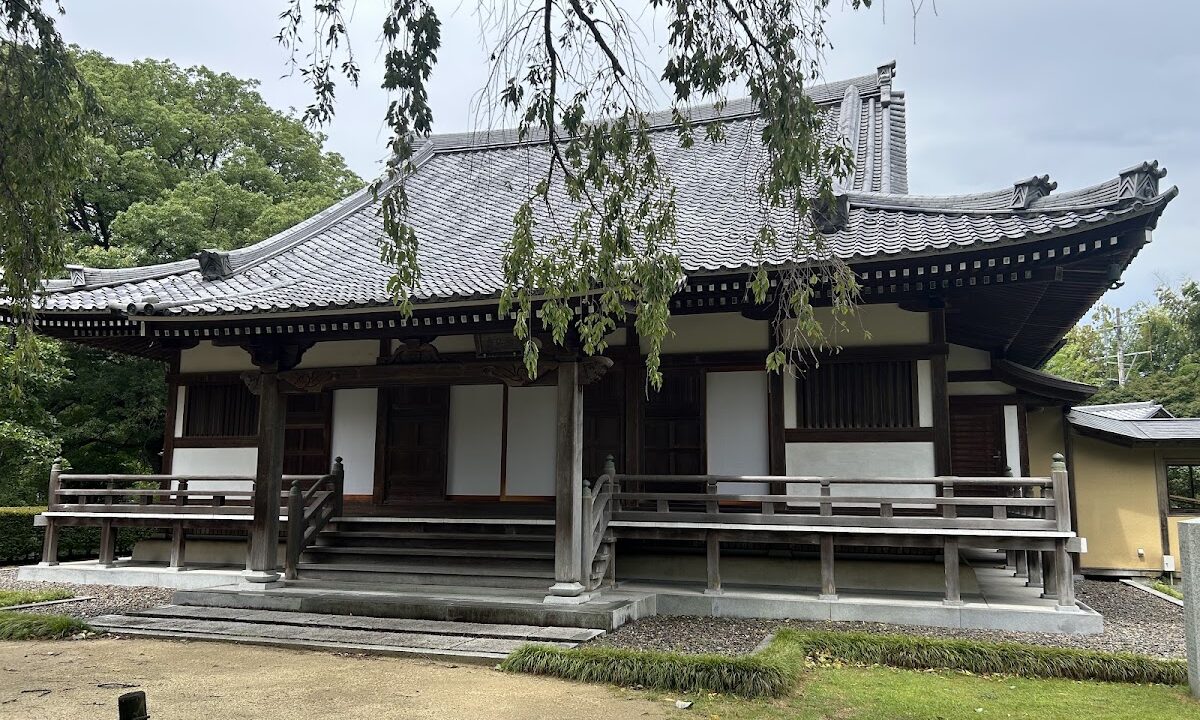
Kawawada Castle (Mito City, Ibaraki Prefecture) Complete Guide: The History and Remains of a Flatland Castle that Flourished as the Base of the Hitachi Edo Clan
What is Kawawada Castle?
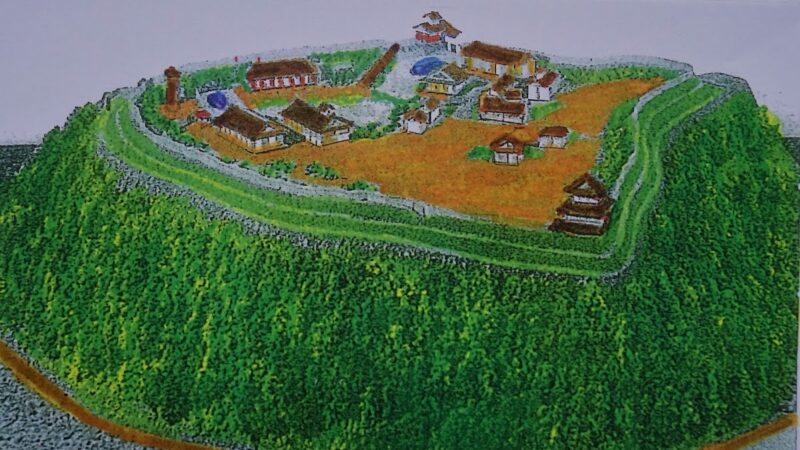
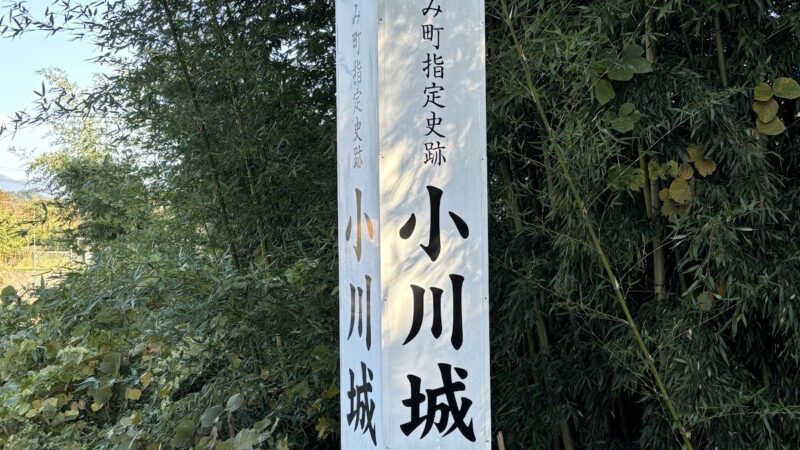
Kawawada Castle (Kawawada-jo) was a medieval flatland castle located in Kawawada-cho, Mito City, Ibaraki Prefecture. Boasting a vast castle area of approximately 600 meters north-south and 500 meters east-west, it functioned as an important base for the Edo clan in Hitachi Province. Currently, the castle site is occupied by Kawawada Elementary School, Tentoku-ji Temple, Hobutsu-ji Temple, and Yasaka Shrine, but valuable remains such as earthworks and dry moats remain in various places, and it is designated as a historical site by Mito City.
A characteristic of Kawawada Castle is its complex layout despite being a flatland castle, with a highly defensible structure featuring multiple baileys. During the Sengoku period, it was the stage for conflicts between the Hitachi Edo clan and the Daijo clan, and ultimately fell during the unification process by the Satake clan.
History of Kawada Castle
Construction and Kaji Sadakuni
Kawada Castle is believed to have been constructed in 1336 (Engen 1st year/Kenmu 3rd year) by Kaji Sadakuni. Kaji Sadakuni was a member of the Hitachi Daijo clan, whose base was Baba Castle (later Mito Castle). He was also known as Kaji Danjo Sadakuni and later called himself Kawada Nyudo.
The Daijo clan was a powerful local family in Hitachi Province, a prestigious family that had existed since the Heian period. It is believed that Kaji Sadakuni built Kawada Castle as a branch castle of Mito Castle to solidify the Daijo clan’s territory. The original castle was smaller than what is currently visible, and it is presumed to have been expanded in stages.
Edo Clan Rule and the Battle of Nandaiyama
In 1416 (Oei 23rd year), the Uesugi Zenshu Rebellion broke out. Edo Michifusa, who distinguished himself in this rebellion, was granted territory around Kawada by the Muromachi Shogunate. However, the Daijo clan, who ruled the area at the time, refused to relinquish their territory and continued to occupy Baba Castle (Mito Castle).
This conflict escalated into a battle known as the “Battle of Nandaiyama.” In 1423, Edo Michifusa faced Daijo Mitsumoto across the Nakagawa River and emerged victorious after a fierce battle. Due to this achievement, the Edo clan officially became the lords of the area, including Kawada Castle, and Kawada Castle developed into the base of the Hitachi Edo clan.
The Era of the Hitachi Edo Clan
During the period when the Edo clan used Kawada Castle as their base, it is believed that the castle underwent extensive expansion. The Edo clan was a prestigious samurai family that had existed since the Kamakura period. Originally based in Edo (present-day Tokyo), the branch of the family that moved to Hitachi Province developed independently as the “Hitachi Edo clan.”
The Edo clan, who expanded their power centered around Kawada Castle, seized Mito Castle and became a powerful force in northern Hitachi Province. The castle town developed with the residences of their retainers and the gathering of merchants and artisans. Place names around present-day Kawada-cho still reflect the legacy of that era.
The Era of the Shunjū Clan
In the mid-Sengoku period, Kawada Castle came under the control of the Shunjū clan. While historical records are limited regarding the Shunjū clan, it has been suggested that they were either a branch of the Edo clan or a powerful vassal. During this period, the Satake clan’s power rapidly expanded in Hitachi Province, and it is believed that Kawada Castle existed in relation to the Satake clan.
The Satake Clan’s Invasion and the Fall of the Castle
In 1590, Toyotomi Hideyoshi’s Odawara campaign forced the various daimyo of the Kanto region to submit. Satake Yoshinobu, with Hideyoshi’s backing, embarked on unifying Hitachi Province and captured Mito Castle. It is said that when Mito Castle fell, Kawada Castle also fell in just one day.
This rapid fall indicates the close relationship between Kawada Castle and Mito Castle, and the overwhelming military power of the Satake clan. After its fall, Kawada Castle was abandoned and never functioned as a castle throughout the Edo period.
Structure of Kawada Castle
Scale and Layout of the Castle
Kawada Castle was a flatland castle with a vast area of approximately 600 meters north-south and 500 meters east-west. The current Tentoku-ji Temple marks the northern end, Yasaka Shrine the southern end, and Hobutsu-ji Temple, Kawada Elementary School, and Nakajo Kindergarten are included within the castle grounds.
The central part of the castle is estimated to be the area from the current Kawada Elementary School to Nakajo Kindergarten, and this is thought to have been the main keep. The area around Tentoku-ji Temple to the north is believed to have been the northern enclosure or second enclosure, and the southern enclosure to the south. Each enclosure was demarcated by earthworks and moats, forming a complex defensive structure.
Characteristics of Defensive Structures
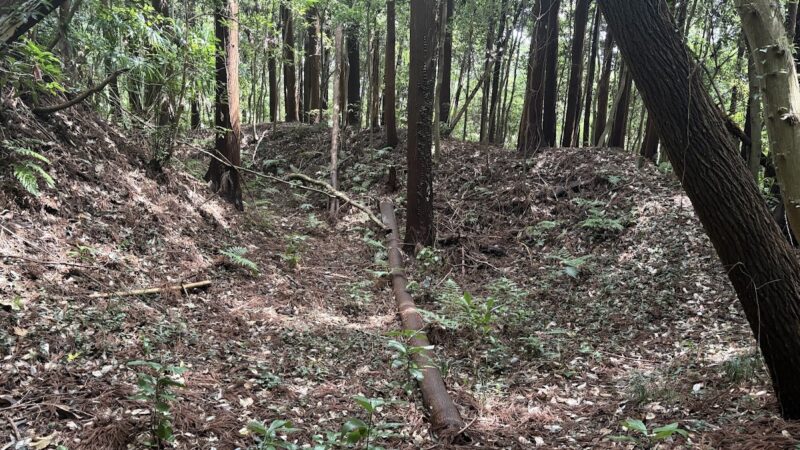
A notable feature of Kawada Castle’s defensive structures is the presence of a double moat. Remnants of the double moat can still be seen around Kawada Elementary School and Tentoku-ji Temple. The double moat was a structure designed to effectively prevent enemy intrusion, demonstrating the military importance of Kawada Castle.
Earthworks were also constructed throughout the castle grounds, and the earthworks remaining at Tentoku-ji Temple are particularly impressive in both height and scale. These earthworks served not only for defense but also to demarcate the baileys and control movement within the castle.
Dry moats, which do not hold water, were a major defensive structure for Kawada Castle, a flatland castle. Large-scale moat remains can still be seen along roadsides, allowing visitors to appreciate the scale of the castle at that time.
Characteristics as a Flatland Castle
Kawada Castle is classified as a flatland castle, which is related to the topographical characteristics of Hitachi Province. The area around Mito is a plain with rivers such as the Nakagawa and Sakuragawa flowing through it, making it unsuitable for building mountain castles. Therefore, flatland castles, surrounded by earthen ramparts and moats, developed on flat ground.
While flatland castles are often thought to be less defensible than mountain castles, large-scale flatland castles like Kawada Castle possessed sufficient defensive capabilities due to their complex layouts, deep moats, and high earthen ramparts. Furthermore, flatland castles were advantageous for the development of castle towns and the transportation of goods, making them suitable as bases for governing territories.
Remains of Kawada Castle
Remains around Tentoku-ji Temple
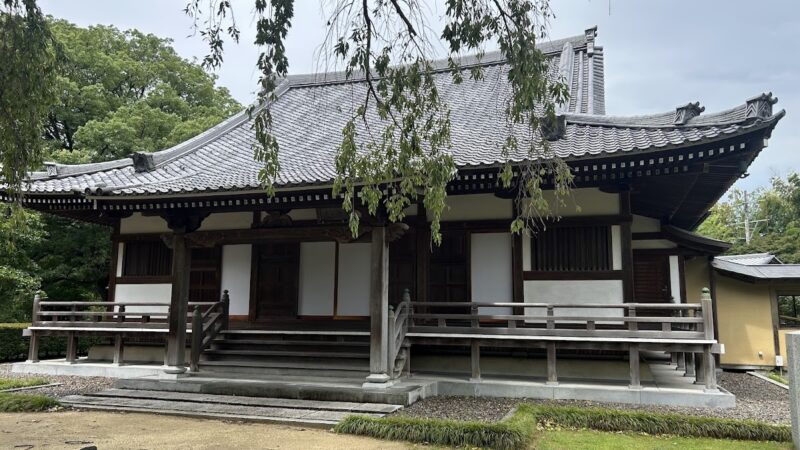
Tentoku-ji Temple is located in the northern enclosure of Kawada Castle and is the area within the castle grounds where the remains are best preserved. Earthen ramparts several meters high remain within the temple grounds, conveying the atmosphere of the castle in its heyday.
The earthen ramparts at Tentoku-ji Temple have a trapezoidal cross-section, with a flat top. This structure allowed people to pass over the top of the ramparts and was used for lookout and defense. Moat remains can also be seen outside the ramparts, indicating that the ramparts and moats formed a defensive structure together.
Tentoku-ji Temple has a parking lot, making it a convenient base for viewing the historical remains. Walking around the temple grounds, you can discover traces of multiple moats and earthworks, allowing you to enjoy exploring the castle ruins.
Historical Remains Around Kawada Elementary School
Kawada Elementary School is built on what is believed to be the site of the main keep of Kawada Castle. A monument marking the castle site stands on the school grounds, indicating that this is the site of Kawada Castle.
A large moat remains, particularly along the road, around the elementary school. This moat is wide and deep, suggesting it was an important defensive structure protecting the main keep. Although it has now been filled in and is shallower, its former scale can still be imagined.
Nakajo Kindergarten is also located within the main keep area, and the name “Nakajo” itself is thought to be derived from the castle. The area from the elementary school to the kindergarten is presumed to be the central part of Kawada Castle, where the lord’s residence and important facilities were located.
Remains of Hōbutsu-ji Temple
Hōbutsu-ji Temple is located within the grounds of Kawada Castle and is believed to be the site of one of the castle’s baileys. Traces of earthworks and elevation changes can be seen around the temple, giving a sense of the castle’s former existence.
Hōbutsu-ji Temple has a parking lot, which can be used when exploring the castle ruins. Walking the path connecting Tentoku-ji Temple and Hōbutsu-ji Temple will give you a real sense of the castle’s vastness.
Yasaka Shrine and the Southern Bailey
Yasaka Shrine is located at the southern end of Kawada Castle and is believed to be the site of the Southern Bailey. Traces of the castle remain as micro-topographical features around the shrine, making it an important point indicating the southern limit of the castle grounds.
National Route 50 runs along the southern side of the castle grounds, and Yasaka Shrine is located nearby. Looking north from the shrine towards Tentoku-ji Temple, you can appreciate the north-south length of Kawada Castle.
Access and Visiting Information
Access by Public Transportation
The nearest station to Kawada Castle Ruins is Mito Station on the JR Joban Line. From the north exit of Mito Station, take an Ibaraki Kotsu bus and get off at the “Sakuragawa Depot” bus stop. Hobutsuji Temple is a few minutes’ walk from there. Tentokuji Temple is also within walking distance from the same bus stop.
Since bus services are limited, it is recommended to check the timetable in advance. Alternatively, you can take a taxi from Mito Station.
Access by Car
By car, it’s about a 15-minute drive from the Mito Interchange on the Joban Expressway. Located along National Route 50, access is good. Parking is available for visitors at Hobutsuji Temple and Tentokuji Temple. However, please refrain from parking or entering Kawada Elementary School grounds without permission, as it is an educational facility.
When using a car navigation system, setting “Tentokuji Temple” or “Hobutsuji Temple” as your destination is convenient.
Points to Note When Visiting
Much of the Kawada Castle ruins are now occupied by schools, temples, and residential areas. Please observe the following points when visiting:
- Kawada Elementary School is an educational facility; please refrain from entering the school grounds during class hours. The castle site monument can be viewed from the outside.
- Tentoku-ji Temple and Hobutsu-ji Temple are religious facilities. Please observe proper etiquette and visit in silence.
- Many of the remains are located on private land or within public facilities. Please do not enter the premises without permission.
- The earthworks and moat remains are valuable cultural assets. Please do not climb on or dig them.
- Please be considerate of privacy when taking photographs.
Estimated Visiting Time
If you wish to leisurely explore the entire Kawada Castle ruins, allow approximately 2 hours. If you only wish to see the remains of Tentoku-ji Temple, it will take about 30 minutes. If you wish to visit Tentoku-ji Temple, Hobutsu-ji Temple, and the area around Kawada Elementary School, it will take about 1 hour.
Due to the large size of the castle grounds, walking will take time. To make the most of your visit, we recommend narrowing down the points you want to see beforehand.
Nearby Attractions
Mito Castle Ruins
Located approximately 5 kilometers from Kawada Castle, Mito Castle Ruins is a castle closely related to Kawada Castle. During the Edo period, it flourished as the residence of the Mito Tokugawa family, one of the three main branches of the Tokugawa clan. Currently, remnants such as the Kodokan and Yakui-mon gate remain, and the site is designated a National Special Historic Site.
Visiting Mito Castle Ruins after visiting Kawada Castle will allow you to understand the changes in castles in Hitachi Province.
Kairakuen Garden
Kairakuen Garden, one of Japan’s three most famous gardens, is a Japanese garden built by Tokugawa Nariaki, the 9th lord of the Mito domain. Known for its plum blossoms, approximately 3,000 plum trees of about 100 varieties bloom in early spring.
It is about a 15-minute drive from Kawada Castle Ruins and can be visited in conjunction with a castle tour.
Ibaraki Prefectural Museum of History
This museum showcases the history and culture of Ibaraki Prefecture, and features extensive exhibits on the medieval history of Hitachi Province. It sometimes displays materials related to Kawada Castle and the Edo clan, making a visit before or after exploring the castle ruins a valuable experience.
Cultural Property Designation of Kawada Castle
The Kawada Castle ruins are designated as a historical site by Mito City and are protected as an important cultural property. The designated name is “Kawada Castle Ruins,” and its location is 1019 Kawada-cho, Mito City, Ibaraki Prefecture, and other locations.
While the city’s historical site designation has led to efforts to preserve the remains, complete preservation is difficult due to extensive development of the castle area. Nevertheless, the remaining earthworks and moat remains are valuable resources for understanding medieval Hitachi Province castles.
Historical Significance of Kawada Castle
Kawada Castle is an important castle that tells the story of the political and military history of Hitachi Province from the medieval period to the Sengoku period. The process of rulers changing from the Daijō clan to the Edo clan, and then to the Satake clan, mirrored the shifts in the power dynamics of Hitachi Province.
In particular, the period when Kawada Castle functioned as the base of the Hitachi Edo clan indicates that it was the political, economic, and cultural center of the region. Kawada Castle played a multifaceted role as the site of a castle town, the organization of retainers, and the base for governing the domain.
Furthermore, the remains of Kawada Castle are invaluable for understanding the structure of medieval flatland castles. They possess typical flatland castle characteristics, such as defensive structures primarily consisting of earthworks and moats, a vast castle area, and the arrangement of multiple baileys. These remains are important historical materials that convey the castle-building techniques and strategic thinking of the time to the present day.
Current Status and Challenges of Kawada Castle Research
Research on Kawada Castle is progressing from both documentary sources and archaeological investigations. Local histories compiled during the Edo period, such as the *Hitachi Shiryo* and *Suifu Shiryo*, contain descriptions of Kawada Castle, revealing its basic historical framework.
Archaeologically, past excavations have uncovered medieval ditch-like structures, pits, and pit clusters. These remains provide information about the castle’s period of use and structure.
However, large-scale excavations are difficult due to the extensive urbanization of the castle grounds. Furthermore, historical materials concerning the Edo and Shunjū clans, who were the castle’s lords, are limited, leaving challenges in unraveling its detailed history.
Future efforts are expected to include detailed surveying of the remaining remains, further excavation of historical documents, and comparative studies with surrounding castles. Raising awareness of the preservation of the remains through public education activities is also crucial.
The Significance of Visiting Kawada Castle
Visiting the Kawada Castle ruins is more than simply seeing ancient remains. It is an experience of touching upon the medieval history of Hitachi Province and feeling the lives of the people who lived in this land.
Standing on the earthen ramparts of Tentoku-ji Temple, one can easily visualize the castle as it was over 500 years ago. Seeing the remains of the moat around Kawada Elementary School, one can truly feel that this area was the site of fierce battles. And by walking through the vast castle grounds, one understands that Kawada Castle was not merely a military facility, but the center of the local community.
While many medieval castles remain in Ibaraki Prefecture, Kawada Castle is rare in its vast size and the way its remains are scattered within an urban area. The landscape, where modern townscapes coexist with medieval ruins, is a unique charm of Kawada Castle.
For history enthusiasts, Kawada Castle is an excellent field for learning about the medieval history of Hitachi Province. For local residents, it offers an opportunity to rediscover their local history. It is hoped that the value of Kawada Castle will be shared across generations and passed down to future generations.
Summary
Kawada Castle is a representative example of a medieval flatland castle remaining in Mito City, Ibaraki Prefecture. From its construction in 1336 to its fall in 1590, Kawada Castle served as a stage for approximately 250 years in the history of Hitachi Province. While the castle’s lords changed hands several times—the Daijō, Edo, and Shunjū clans—its golden age was particularly during its time as the stronghold of the Hitachi Edo clan.
The vast castle grounds, measuring 600 meters north-south and 500 meters east-west, featured multiple baileys and were defended by earthworks and moats. Remnants of the castle still remain today at places like Tentoku-ji Temple, Kawada Elementary School, and Hōbutsu-ji Temple, allowing visitors to imagine its former glory.
Access to the Kawada Castle ruins is by bus from Mito Station via public transport, or approximately 15 minutes by car from the Mito Interchange on the Jōban Expressway. When visiting, please be considerate of the surrounding schools and temples and observe proper etiquette.
Nearby attractions include Mito Castle ruins, Kairakuen Garden, and the Ibaraki Prefectural Museum of History. Visiting these sites together will provide a deeper understanding of the history and culture of Hitachi Province.
Kawada Castle is an indispensable historical site for understanding the politics, military, and society of medieval Hitachi Province. Why not reflect on the history of this region through the valuable remains that still exist today?