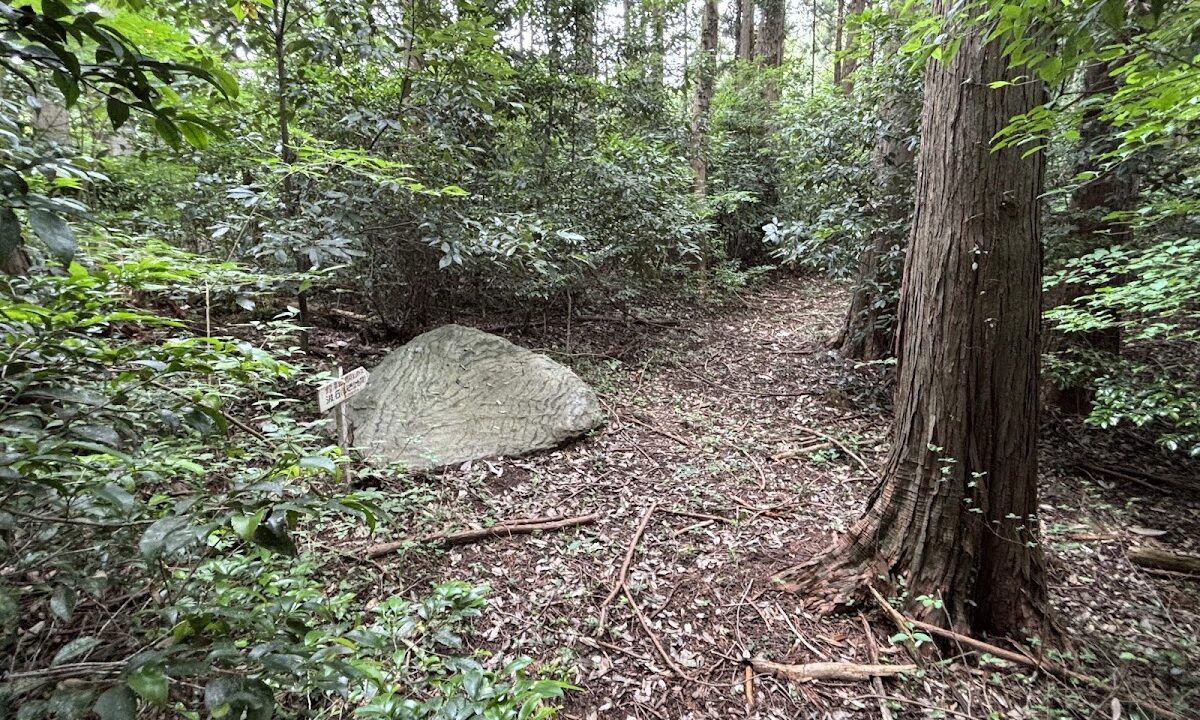
Tategishi Castle Ruins (Ibaraki Prefecture): The Full Picture and Historical Value of a Medieval Mountain Castle Remaining in Kamigo, Kasama City
Located in Kamigo, Kasama City, Ibaraki Prefecture, the Tategishi Castle Ruins are a medieval mountain castle built on a mountaintop at an altitude of 256m. It functioned as a stronghold, taking advantage of the steep terrain with a relative height of approximately 200m, and remains such as earthworks, baileys, and moats are still well-preserved. Among the 1,135 medieval castle ruins in Ibaraki Prefecture, it is a valuable historical site that attracts attention due to its excellent state of preservation and strategic location.
Basic Information and Location of Tategishi Castle Ruins
Location and Geographical Characteristics
The Tategishi Castle Ruins are located on Tategishiyama in Kamigo, Kasama City, Ibaraki Prefecture, within the former Iwama Town area. The castle ruins are located northwest of Kasama city center, built on a mountaintop at an altitude of 256m, part of the Tsukuba Mountain Range.
The steep terrain, with a relative elevation of approximately 200 meters, presented a significant obstacle for attacking enemies, making it an excellent defensive location. From the mountaintop, one could overlook the surrounding plains, making it an ideal position for monitoring enemy movements.
Castle Classification and Scale
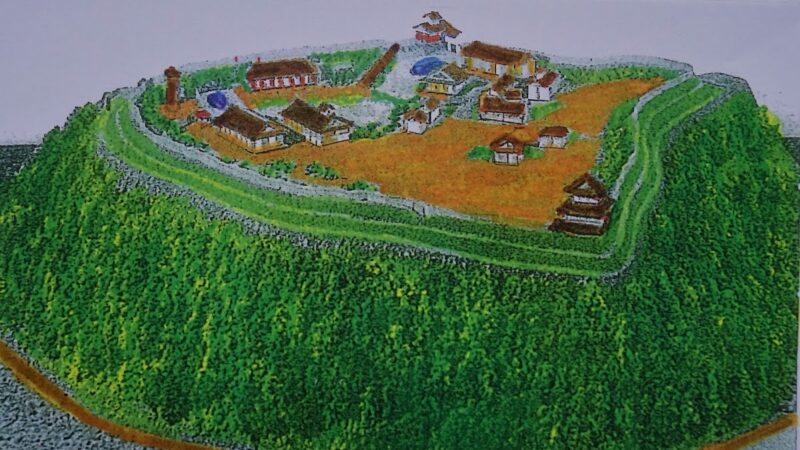
Tategishi Castle is classified as a typical mountain castle. A mountain castle is a fortress built utilizing the terrain of a mountain, and many were constructed in the medieval period as defensive structures that leveraged natural strength.
The castle ruins consist of multiple enclosures, each demarcated by earthen ramparts. The group of enclosures, centered around the main enclosure, exhibits a typical medieval mountain castle layout (design) arranged in a stepped pattern.
Historical Background of Tategishi Castle Ruins
Construction Period and Lord
While there is a lack of clear historical documents regarding the construction period of Tategishi Castle, and many details remain unknown, the form of the remains and the historical context of the surrounding area suggest that it was built during the Sengoku period (late 15th to 16th centuries). During the Sengoku period (Warring States period), Ibaraki Prefecture became the stage for the struggle for supremacy in Hitachi Province, centered around the Satake clan. The Kasama region was no exception, with local lords and powerful families building castles and fortifications throughout the area to compete for power. It is highly probable that Tategishi Castle also functioned as a base for such regional control.
Ibaraki Prefecture and its Castle Network during the Sengoku Period
Ibaraki Prefecture has an extremely large number of medieval castle sites. The “Ibaraki Prefecture Medieval Castle Site Comprehensive Survey Project,” conducted from 2018 to March 2023, revealed the existence of 1,135 medieval castle sites within the prefecture.
This is an extremely high density even by national standards, indicating that Ibaraki Prefecture was a stage for fierce territorial disputes during the medieval period. A detailed network of castles and fortifications was formed, including not only famous castles such as Mito Castle, Tsuchiura Castle, and Oda Castle, but also smaller, regional mountain castles like Tategishi Castle.
The Satake clan was based in northern Hitachi Province and gradually expanded its power. Meanwhile, in the south, powerful local clans such as the Oda and Makabe clans vied for power, and battles were repeatedly fought in various locations. The Kasama region, where Tategishi Castle is located, is presumed to have been strategically important, being close to the borders of these forces.
From Abandonment to the Present
There are no clear records of when Tategishi Castle was abandoned, but after Toyotomi Hideyoshi’s unification of Japan, and especially after the Battle of Sekigahara (1600), many medieval castles and fortified residences ceased to serve their purpose and were abandoned.
In the Edo period, due to policies such as the Tokugawa shogunate’s “One Castle Per Province” decree, many small castles and fortified residences throughout the country were forced to be abandoned. Tategishi Castle was similarly abandoned during this period and is thought to have been left as a forest ever since.
Remains and Highlights of Tategishi Castle Site
Characteristics of Major Remains
The following remains have been confirmed at Tategishi Castle site:
Earthworks
Earthworks that demarcated each enclosure of the castle site remain in good condition. Earthen ramparts are earthen walls built by piling up earth, serving to prevent enemy intrusion and defend the interior of the fortified enclosures. Many of the earthen ramparts at Tategishi Castle are about 1-2 meters high, and some retain a clearly defined shape.
Enclosures (Kuruwa)
Multiple flat areas (enclosures) are arranged around the mountaintop. A hierarchical structure is evident, with the most important enclosure, known as the main enclosure, at the center, surrounded by smaller enclosures such as the second and third enclosures. Each enclosure is thought to have been used as a command post, a garrison for soldiers, or a storage area for supplies.
Moats (Hori)
Moats are constructed between enclosures or to block ridges. They functioned as dry moats (moats that did not hold water) and were important defensive structures that limited enemy intrusion routes.
Well Sites
Securing water within the castle was a matter of life and death, and the existence of well sites has been confirmed. Securing water sources was a challenge for mountain castles, making the presence of wells crucial for enabling long-term sieges.
Features of the Castle’s Layout and Defensive Functions
The layout (castle design) of Tategishi Castle exhibits a typical mountain castle form that makes maximum use of the steep terrain. The structure, with the main enclosure located at the mountaintop and multiple enclosures arranged in a stepped fashion along the ridge, is based on the concept of “multi-layered defense,” which gradually repels enemy attacks.
In particular, the construction of trenches (ditches cutting across the ridge) at key points along the ridge limited enemy incursion routes, creating a battle environment advantageous to the defenders.
Presence or Absence of Stone Walls and Structural Features
No full-fledged stone walls have been confirmed at the Tategishi Castle site. This suggests that the castle was built before the mid-Sengoku period and was constructed by a local lord.
Full-fledged castles using stone walls were a technology that developed from the late Sengoku period to the Azuchi-Momoyama period; before that, castles mainly relied on earthen ramparts for defense. The structure of Tategishi Castle exhibits typical characteristics of such medieval castles.
Comprehensive Survey of Medieval Castle Sites in Ibaraki Prefecture and the Tategishi Castle Site
Overview and Results of the Survey Project
The Ibaraki Prefectural Board of Education conducted the “Comprehensive Survey Project of Medieval Castle Sites in Ibaraki Prefecture” from 2018 to March 2023. This survey revealed that 1,135 medieval castle sites are distributed throughout the prefecture.
The survey meticulously recorded the location, size, condition of the remains, and historical background of each castle site, and compiled a report titled “Medieval Castles of Ibaraki Prefecture.” This report is also included in the National Directory of Cultural Properties and is a valuable resource for researchers and castle enthusiasts.
Survey Results of the Tategishi Castle Site
The Tategishi Castle site was also included in the comprehensive survey, and on-site surveys and documentary research were conducted. The following points were confirmed by the survey:
- A mountain castle at an altitude of 256m, with a relative height of approximately 200m.
- Well-preserved remains of earthworks, baileys, moats, wells, etc.
- Estimated to have been built during the Sengoku period (Warring States period).
- Possibly functioned as a base for regional control.
The survey report includes a layout map and photographs of the Tategishi Castle ruins, making it an important resource for understanding the overall picture of the castle site.
Significance of the Survey Project and Future Prospects
The Ibaraki Prefecture Medieval Castle Site Comprehensive Survey Project is the first attempt to comprehensively grasp the medieval castle sites in the prefecture, and its results have greatly contributed to the study of medieval history in Ibaraki Prefecture.
The existence of a vast number of castle sites—1,135—indicates that Ibaraki Prefecture in the medieval period was in an extremely complex political situation. It reveals how local lords and powerful families formed their own spheres of influence, sometimes cooperating and sometimes clashing, as they shaped local communities.
Going forward, the preservation and utilization of these castle sites will be key challenges. Many castle ruins, like the Tategishi Castle ruins, are buried in forests and are at risk of destruction due to development and natural disasters.
Access and Visiting Information for Tategishi Castle Ruins
Access Methods
Access to Tategishi Castle Ruins is as follows:
By Public Transportation
Approximately 15 minutes by car from Iwama Station on the JR Joban Line. Access by public transportation alone is difficult, so we recommend using a taxi.
By Car
Approximately 10 minutes from the Iwama Interchange on the Joban Expressway. However, it is not possible to drive directly to the castle ruins, so you will need to park in a suitable location and approach on foot.
Precautions During Visits
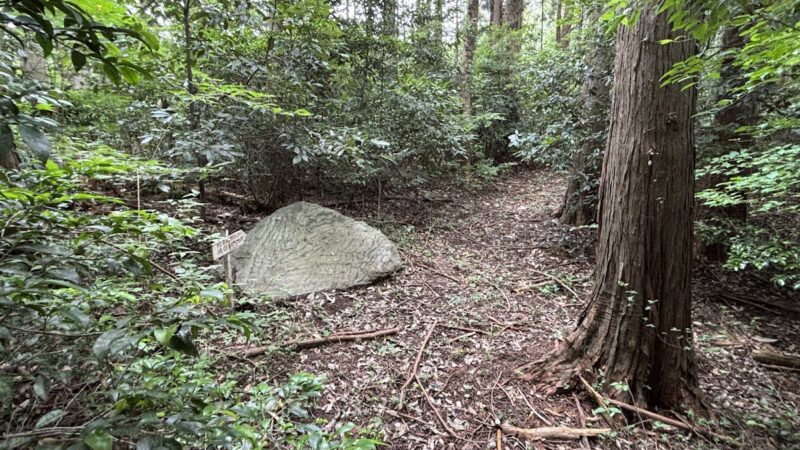
Tategishi Castle Ruins is not a developed tourist facility; the remains are preserved in a forest. Please note the following points when visiting:
- Clothing and Equipment: Since you will be walking on mountain trails, comfortable clothing and hiking boots are essential. Insect repellent is necessary in summer, and warm clothing is required in winter.
- Safety Management: There are steep slopes and areas prone to landslides. It is recommended to avoid visiting alone and to travel in groups.
- Protection of Historical Remains: Please be careful not to damage the remains such as earthworks and baileys. Please be sure to take all your trash with you.
- Prior Confirmation: Since you may need to pass through private property, it is recommended to check with the Kasama City Board of Education or similar organization beforehand if possible.
Related Historical Sites in the Surrounding Area
Many other medieval castle sites are distributed around the Tategishi Castle Ruins:
Nandaiyama Castle: A representative mountain castle of Kasama City, with strong ties to the Satake clan. It is located relatively close to the Tategishi Castle Ruins.
Kasama Castle: A flatland castle located in the Kasama city area, known as the residence of the Kasama clan. It is currently maintained as Kasama Castle Ruins Park.
Izumi Castle: A castle site located in the former Iwama town area, similar to Tategishi Castle, it is thought to have been the residence of a local lord. By visiting these castle ruins, one can understand the overall picture of the castle network in the Kasama region during the Sengoku period.
Historical Value and Research Significance of Tategishi Castle Ruins
Position in Medieval Castle Research
While Tategishi Castle Ruins are not as well-known as famous castles like Mito Castle or Tsuchiura Castle, they hold significant importance in the study of medieval castles.
Large-scale castles have abundant historical documents, allowing us to learn about their history in detail. However, smaller mountain castles like Tategishi Castle have few historical documents, and their actual state remained unknown for a long time. However, these small castles reflect the realities of the local community at the time and provide valuable clues to understanding the activities of local lords and powerful families.
Possibility of Archaeological Investigation
While no full-scale archaeological excavations have been conducted at Tategishi Castle Ruins, future archaeological investigations could yield many new insights.
Archaeological excavations provide information that cannot be obtained from written historical sources alone, such as determining the construction period of the castle, unearthing pottery and weapons used, and clarifying the structure of the buildings. In particular, analysis of excavated artifacts may reveal the lifestyle and trade relations of the time.
Contribution to Regional History Research
Research on the Tategishi Castle ruins provides important clues to understanding the medieval history of the Kasama region. Detailed research on individual castle ruins like Tategishi Castle is essential to answer questions such as what spheres of influence this region belonged to during the Sengoku period, and what the relationships were between the local lords.
By comprehensively studying the 1,135 castle ruins in Ibaraki Prefecture, it is expected that a complete picture of the political and social structure of medieval Hitachi Province will be revealed.
Preservation and Utilization of Medieval Castle Ruins in Ibaraki Prefecture
Current Status and Challenges of Preservation
Many medieval castle ruins in Ibaraki Prefecture, like the Tategishi Castle ruins, are buried within forests and farmland. These historical sites are constantly at risk of being lost due to development and natural disasters.
Based on the results of the comprehensive survey of medieval castle sites, the Ibaraki Prefectural Board of Education is working on the preservation and utilization of important castle sites. However, preserving all 1,135 sites is realistically difficult, and the formulation of a prioritized preservation plan is required.
Examples of Utilization and Future Possibilities
Some castle sites are beginning to be utilized as local tourism and educational resources.
Ibaraki Castle Summit
The “Ibaraki Castle Summit” is held as a forum where local governments and organizations interested in castles in Ibaraki Prefecture gather to discuss the preservation and utilization of castles. Through these efforts, the possibility of regional development centered on castles is being explored.
Implementation of Guided Tours
Some local governments are conducting guided tours of local castle sites to convey medieval history to local residents and tourists.
Construction of Digital Archives
Efforts are also underway to publish information on castle sites online, such as through the National Cultural Properties Directory. This allows people who find it difficult to visit the actual sites to access information about castle ruins.
Collaboration with Local Residents
The understanding and cooperation of local residents are essential for the preservation and utilization of castle ruins. Many castle ruins are located on private land, and preservation and viewing are difficult without the cooperation of the owners.
Cultivating a sense of pride in the history of their region and a desire to cherish castle ruins among local residents is crucial for long-term preservation. Various initiatives are being undertaken in different areas, such as local history education in schools and the holding of local history lectures.
Learning about Medieval Ibaraki from Tategishi Castle Ruins
Regional Society in the Sengoku Period
The existence of small mountain castles like Tategishi Castle ruins illustrates how complex and fluid regional society was during the Sengoku period.
Not only daimyo-class lords, but also small lords and local powerful families formed their own spheres of influence and employed various strategies for survival. Alliances were formed, betrayals occurred, sometimes they fought, and sometimes they made peace—regional society was formed within these complex human relationships.
Castles and the Local Economy
Castles were not merely military facilities; they were also centers of the local economy. The castle lord and their retainers were influential consumers in the region, and artisans and merchants gathered in the castle towns, forming settlements.
Considering the size of Tategishi Castle, a large castle town would likely not have formed. However, it is believed that a small settlement centered around the lord’s residence existed, playing a vital role in the local economy.
Transition from the Medieval to the Early Modern Period
The period when Tategishi Castle was abandoned marked a major turning point in Japanese history. In the transition from the decentralized society of the Sengoku period to the centralized society of the Edo shogunate, many small castles ceased to exist.
This change represented not merely the depletion of castles, but a significant transformation of the social structure itself. The small feudal lords who had been scattered throughout the country were forced to choose between being organized as retainers of daimyo (feudal lords) or returning to farming and becoming influential figures in their villages.
The ruins of Tategishi Castle are a silent witness to this major turning point in history. ## Summary: The Charm and Future Prospects of Tategishi Castle Ruins
Tategishi Castle Ruins are the remains of a medieval mountain castle, quietly nestled in the mountains of Kasama City, Ibaraki Prefecture. While not as well-known as some famous castles, its well-preserved remains and strategic location make it a valuable resource for medieval castle research.
The vast number of castle ruins—1,135—revealed by the Ibaraki Prefecture Comprehensive Survey of Medieval Castle Ruins indicates that Ibaraki Prefecture was an extremely important region during the medieval period. Tategishi Castle Ruins is one such example, a valuable cultural asset that conveys the region’s history to the present day.
It is hoped that Tategishi Castle Ruins and other medieval castle ruins in Ibaraki Prefecture will be properly preserved and utilized as resources for local history education and tourism. Visiting these ruins buried in the forest and reflecting on the history etched within will be a valuable experience for those of us living in the modern age.
What happened at this mountain castle during the Sengoku period? What kind of people lived there? We may not be able to find clear answers, but the remaining ruins certainly convey the spirit of that time. By visiting the ruins of Tategishi Castle, you can experience “living history” that you can’t learn from textbooks.