Complete Guide to the Koga Kubō Residence Site (Ibaraki Prefecture) | A Thorough Explanation of the History and Highlights of Kōnosu Palace
Located in Kōnosu, Koga City, Ibaraki Prefecture, the Koga Kubō Residence Site is an important historical site that served as the political center of the Kanto region from the Muromachi period to the Sengoku period. Also known as Kōnosu Palace, Kōnosu Residence, or Koga Palace, this site was the base of the Ashikaga clan, the Koga Kubō, for approximately 130 years, and is now maintained as Koga General Park (Koga Kubō Park). This article provides a detailed explanation of the Koga Kubō Residence Site, from its historical background to its current highlights.
What is the Koga Kubō Residence Site?
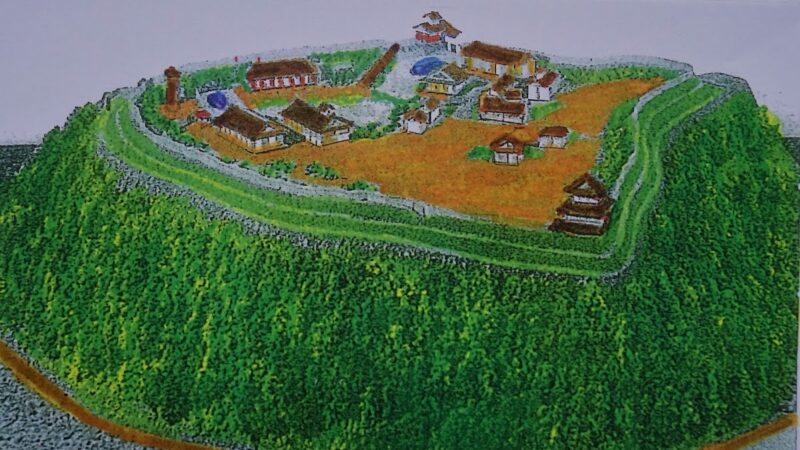
The Koga Kubō Residence Site is the remains of a castle built in 1455 by Ashikaga Shigeuji, the first Koga Kubō. Situated on a tongue-shaped plateau jutting out into a marsh called Gosho-numa, it functioned as a natural stronghold surrounded by water on three sides. The site is protected as a designated historical site of Ibaraki Prefecture, and parts of the earthworks and moats from that time still remain.
What is the Koga Kubo?
The Koga Kubo was a branch of the Ashikaga clan that ruled the Kanto region during the Muromachi period. Originally based in Kamakura, the Kamakura Kubo moved to Koga due to conflict with the Muromachi Shogunate. From the first Koga Kubo, Ashikaga Shigeuji, to the last, Ashikaga Yoshiuji, five generations played a crucial role as the political center of Kanto.
The existence of the Koga Kubo is deeply intertwined with the beginning of the Sengoku period in Kanto, and they were a force that influenced the political situation of Kanto amidst complex relationships with Sengoku daimyo such as the Later Hojo and Uesugi clans.
History of the Koga Kubō Residence
The Kyōtoku Rebellion and Relocation to Koga
In 1455 (Kōshō 1), Ashikaga Shigeuji, the Kamakura Kubō (governor), relocated from Kamakura to Koga due to conflict with the Muromachi Shogunate and the Kantō Kanrei Uesugi clan (the Kyōtoku Rebellion). Initially, he chose Koga as a temporary base, but spent the next two years renovating Koga Castle, and entered the castle in 1457 (Chōroku 1).
However, while Koga Castle was the center of political and military affairs, he also established a separate residence in Kōnosu. This marked the beginning of the Koga Kubō Residence (Kōnosu Palace). Its location in the center of a peninsula jutting out into Gosho Marsh is thought to have been chosen for its excellent defensive advantages and scenic beauty.
Successive Koga Kubo and the History of the Residence
The Koga Kubo Residence was used by the following successive Kubo:
First Kubo: Ashikaga Shigeuji (Reigned 1455-1497)
He moved from Kamakura to Koga and laid the foundation for the Koga Kubo. He entered Koga in the first year of the Kosei era and renovated the Konosu Palace as a separate residence.
Second Kubo: Ashikaga Masauji (Reigned 1497-1518)
Son of Shigeuji, he succeeded his father, but experienced a turbulent period, including being temporarily exiled due to internal conflicts.
Third Kubo: Ashikaga Takamoto (Reigned 1518-1535)
Son of Masauji, he served as Kubo amidst conflicts with his father and complex relationships with the Kanto Kanrei Uesugi clan.
4th Generation: Ashikaga Haruuji (Reigned 1535-1560)
Son of Takamoto, he formed an alliance with the Later Hojo clan, but later came into conflict and was ultimately forced into retirement.
5th Generation: Ashikaga Yoshiuji (Reigned 1560-1583)
He became the last Koga Shogun. He came under the influence of the Later Hojo clan and lost real power.
Ujihime and the Konosu Palace
Ujihime, the orphaned daughter of the last Koga Shogun, Ashikaga Yoshiuji, was moved from Koga Castle to the Konosu Palace and lived there until her death. Ujihime was married to Hojo Ujimasa of the Later Hojo clan, but it is believed she was returned to Koga after Toyotomi Hideyoshi’s siege of Odawara. Her existence symbolizes the end of the Koga Shogunate.
Changes Since the Edo Period
During the Edo period, the Koga Kubō Residence was abandoned, and its site was converted into farmland. In the early Taisho period, the Watarase River improvement project resulted in most of the Koga Castle site becoming riverbed, but the Kōnosu Palace site remained relatively well-preserved.
In the Showa period, the historical value of the Koga Kubō Residence site was re-recognized, and it was designated a historical site of Ibaraki Prefecture. Currently, it is developed as Koga General Park, a place of relaxation for citizens.
Remains and Highlights of the Koga Kubō Residence Site
Kubō-sama no Mori (Kubō’s Forest)
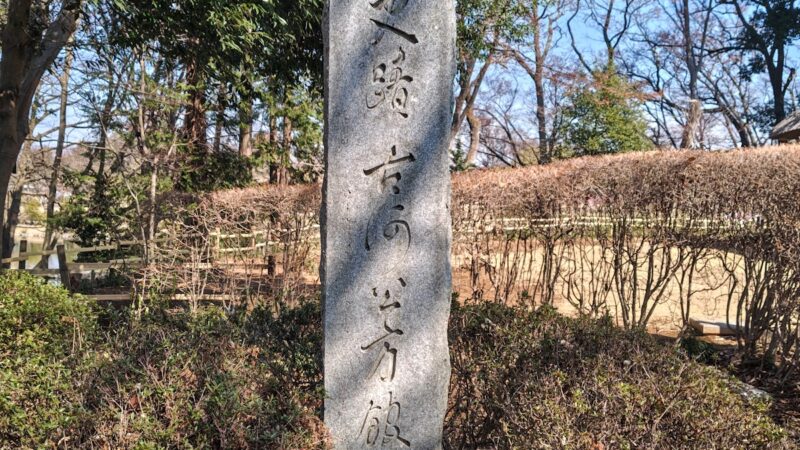
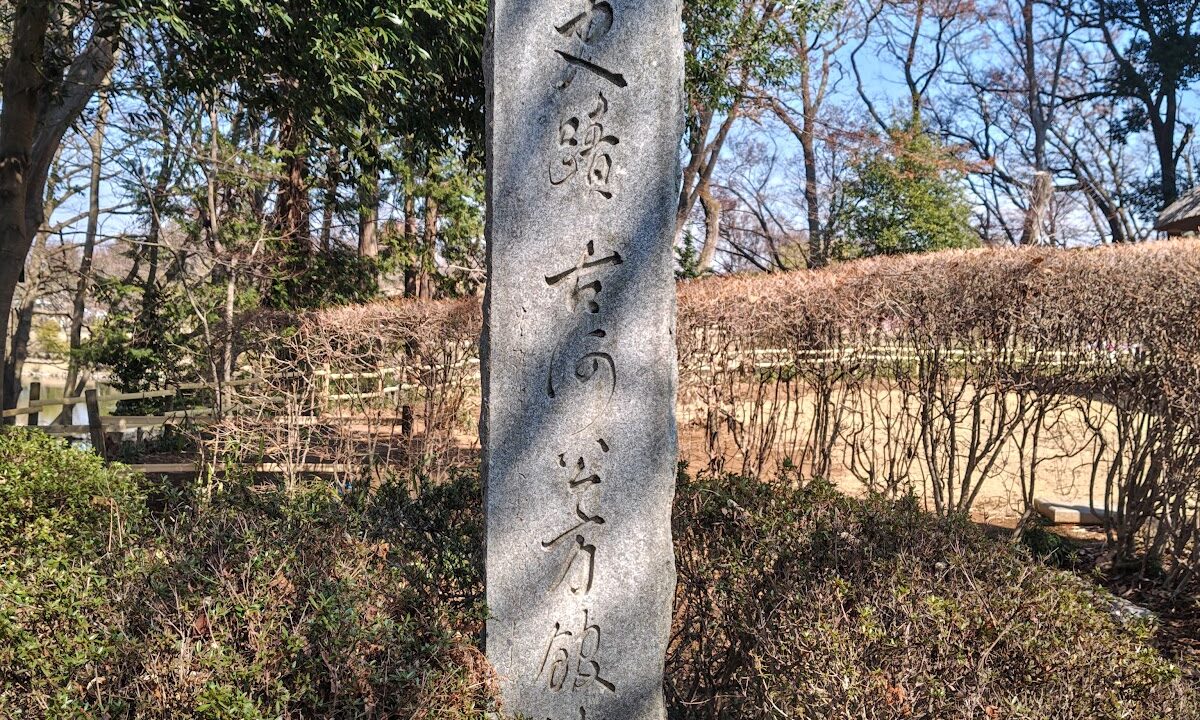
The “Kubō-sama no Mori” (Kubō’s Forest) within Koga General Park is the site of what is believed to be the main enclosure (1st bailey) of the Koga Kubō Residence. Currently, it is a dense forest, allowing visitors to experience the atmosphere of that time. A stone monument marking the “Koga Kubō Residence Site” stands within the forest, indicating its historical significance.
Remains of Earthworks and Moats
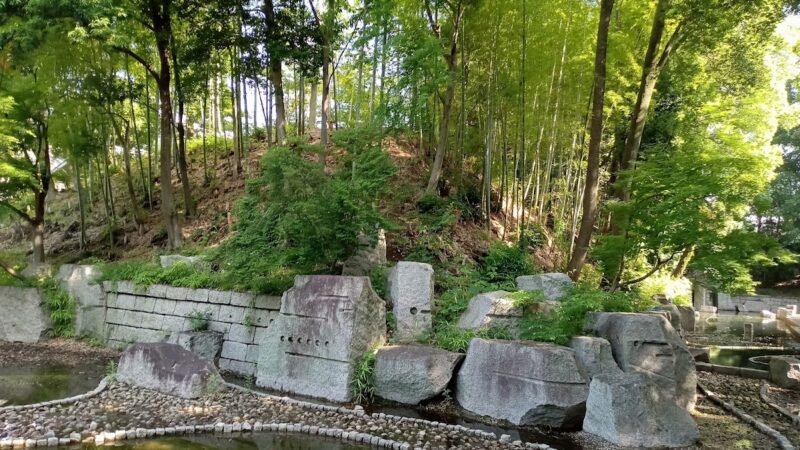
To the east and west of the stone monument marking the site of the Koga Kubō Residence, the remains of the original moats and earthworks can be seen. While the earthworks are lower than they once were, their shape remains clearly visible, making them a valuable historical site where one can actually see the defensive structures of a medieval castle.
Although part of the moat is currently filled in, its original layout can be inferred from the topography. Combined with its location surrounded on three sides by Gosho-numa Pond, its function as a natural fortress can be understood.
Gosho-numa Pond
Gosho-numa Pond surrounded the Koga Kubō Residence on three sides. In the current Koga General Park, Gosho-numa Pond has been restored, allowing for a visual understanding of the residence’s location on a tongue-shaped plateau.
A walking path surrounds the pond, allowing visitors to experience the topography of the time while strolling. The greenery and seasonal flowers reflected on the water’s surface convey the charm of the Konosu Imperial Palace as a scenic villa to the present day.
Ashikaga Yoshiuji’s Mausoleum
Near the site of the Koga Kubō residence lies the mausoleum of Ashikaga Yoshiuji, the last Koga Kubō. Yoshiuji died in 1583 and was buried here. The mausoleum, along with the residence site, is designated as a historical site of Ibaraki Prefecture as “The Site of the Koga Kubō Ashikaga Shigeuji Residence and the Mausoleum of Ashikaga Yoshiuji.”
A five-tiered pagoda stands at the mausoleum, quietly commemorating the end of the Koga Kubō lineage. For history enthusiasts, this is an important spot to visit along with the residence site.
The Charms of Koga General Park (Koga Kubō Park)
The site of the Koga Kubō residence is now developed as Koga General Park (Koga Kubō Park). Beyond its historical value, it is a popular park where many people can enjoy the changing seasons.
Famous Peach Orchard
On the north side of the park lies a peach orchard with approximately 2,000 peach trees, where magnificent peach blossoms bloom in spring. It is also known as the venue for the “Koga Peach Blossom Festival,” attracting many tourists every year. The sight of the vast expanse of pink blossoms is breathtaking and has become a representative tourist attraction of Koga.
The peach orchard contains five varieties of flowering peach trees: Yaguchi, Genpei, Kikumomo, Kanpaku, and Kanhimomo. Because they bloom at different times, visitors can enjoy the peach blossoms for an extended period.
Other Facilities
Besides the peach orchard and historical sites, Koga General Park offers various other facilities:
- Folk House Garden: A facility featuring relocated and restored old houses from the Edo to Meiji periods.
- Lotus Pond: Beautiful lotus flowers bloom here in summer.
- Administration Building: Provides park information and a rest area.
- Plaza: A grassy area suitable for picnics and recreation.
These facilities make the park ideal not only for historical walks but also for family leisure. ## Access to the Koga Kubō Residence Site
Location
Address: 399-1 Kōnosu, Koga City, Ibaraki Prefecture (within Koga General Park)
Access by Train
From JR Utsunomiya Line “Koga Station”:
- Approximately 10 minutes by taxi
- Approximately 15 minutes by local bus “bound for Koga General Park,” get off at the last stop
- Approximately 40 minutes on foot (approximately 3km)
Access by Car
- Approximately 20 minutes from Tohoku Expressway “Kuki IC”
- Approximately 15 minutes via National Route 4 and Prefectural Route 9
Parking: Free parking available (approximately 300 spaces)
*During the Peach Blossom Festival, it gets crowded, so using public transportation is recommended.
Opening Hours and Admission Fee
- Opening Hours: Always open (some facilities 9:00-17:00)
- Admission Fee: Free
- Closed Days: None (varies by facility)
Nearby Tourist Attractions
When visiting the Koga Kubō Residence Site, we recommend also visiting the surrounding historical sites.
Koga Castle Ruins
This is the site of Koga Castle, which served as the center of the Koga Kubō’s administration. While most of the site became riverbed due to the Watarase River improvement work in the early Taisho period, some remains and monuments still exist. It’s within walking distance of Koga Station and is an important spot for understanding the history of the Koga Kubō.
Koga Historical Museum
This museum introduces the history and culture of Koga, and has extensive exhibits related to the Koga Kubō. Visiting before visiting the Koga Kubō Residence Site will allow you to understand the history more deeply.
Takami Izumiseki Memorial Museum
This museum is a memorial to Takami Izumiseki, a scholar of Western learning from the late Edo period. It is a valuable facility where you can learn about the history of the Koga Domain.
Shōjōji Temple
This temple is associated with the Koga Shogun and houses historical materials and tombs related to the Ashikaga clan. The quiet grounds are ideal for a historical stroll.
Cultural Property Designation of the Koga Shogun Residence Site
The Koga Shogun Residence Site is designated as a historical site of Ibaraki Prefecture as “The Residence Site of Ashikaga Shigeuji, Koga Shogun, and the Tomb of Ashikaga Yoshiuji.” This designation ensures the protection and proper management of the remains, and it is expected that its historical value will be passed down to future generations.
Under the management of the site as a cultural property by the Ibaraki Prefectural Board of Education, regular surveys and preservation activities are carried out. In recent years, new remains have been discovered through archaeological excavations, and progress is being made in clarifying the actual state of the Koga Shogun Residence.
Points to Note and Recommended Ways to Enjoy Your Visit
Points to Note During Your Visit
- Check the Stone Monument and Information Boards: By carefully reading the stone monument at the “Koga Kubō Residence Site” in the Kubō Forest and the information boards throughout the park, you can understand the historical background.
- Observe the Earthworks and Moat: Walk around and examine the remains of the earthworks and moat that remain to the east and west of the stone monument. You can experience the scale of the defensive facilities at that time.
- Walk Around Goshonuma Pond: By walking around Goshonuma Pond, you can understand the importance of the location surrounded by water on three sides.
- Visit Ashikaga Yoshiuji’s Mausoleum: By visiting not only the residence site but also the mausoleum, you can feel the history of the Koga Kubō more deeply.
Recommended Season for Visiting
- Spring (Late March – Early April): The peach blossoms are in full bloom, making it the most spectacular time. The Koga Peach Blossom Festival is held during this period.
- Summer (July-August): Lotus flowers are in full bloom. Enjoy the cool breeze in the lush green park.
- Autumn (October-November): The autumn foliage is beautiful, and you can enjoy a peaceful stroll through the historical sites.
- Winter (December-February): With fewer tourists, you can quietly reflect on history.
Estimated Time Required
Visiting only the Koga Kubō Residence Site takes about 30 minutes, but if you want to enjoy the entire Koga General Park, allow 2-3 hours. During the Peach Blossom Festival, we recommend taking even more time to enjoy the park at a leisurely pace.
Historical Significance of the Koga Kubō Residence Site
The Koga Kubō Residence Site is not merely a castle ruin, but an extremely important historical site for understanding the medieval history of the Kanto region. From the Muromachi period to the Sengoku period, the lineage of the Ashikaga clan, from the Kamakura Kubō to the Koga Kubō, was a crucial element in shaping the political structure of the Kanto region.
The turmoil in the Kanto region, beginning with the Kyōtoku Rebellion, marked the start of the chaos that continued into the Sengoku period, and the Koga Kubō (Koga Shogun) was at its center. The Sengoku daimyo of Kanto, such as the Later Hōjō, Uesugi, and Satomi clans, all expanded their power through their relationships with the Koga Kubō.
Koga was chosen as the location because it was a crucial point for water transport in the Tone River system and a strategically important location controlling the northern part of the Kanto Plain. The wisdom of the Koga Kubō, who sought to separate administrative affairs from residence by having two bases—Koga Castle and Kōnosu Palace—can be seen in the current remains.
Summary
The Koga Kubō Residence Site (Koga City, Ibaraki Prefecture) is an important historical site, the remains of the residence of the Koga Kubō, who was the political center of Kanto from the Muromachi period to the Sengoku period, and was also known as Kōnosu Palace. Built in 1455 by the first Koga Kubo, Ashikaga Shigeuji, this residence, used by five generations of the Ashikaga family, was situated on a naturally fortified tongue-shaped plateau jutting out into Goshonuma Pond.
Currently, it is maintained as Koga General Park (Koga Kubo Park), and the remains of the earthworks and moats from that time are still visible. Numerous historical sites such as the Kubo’s Forest, Goshonuma Pond, and the tomb of Ashikaga Yoshiuji are scattered throughout the park, and it is also known as a famous spot where approximately 2,000 peach blossoms bloom in spring.
Located about 10 minutes by car from JR Koga Station, this historical site, which is free to visit, is recommended not only for those interested in the medieval history of the Kanto region, but also for those who want to enjoy nature and history at the same time. Why not visit the Koga Kubo Residence Ruins, a protected historical site designated by Ibaraki Prefecture, and reflect on the history of the Koga Kubo, who heralded the beginning of the Sengoku period in the Kanto region?