History and Remains of Akogashima Castle (Fukushima Prefecture): A Complete Overview of a Hilltop Castle that Lasted from the Kamakura Period to the Sengoku Period
Basic Information on Akogashima Castle
Akogashima Castle (Akogashima-jo) was a Japanese castle located in Minami-machi, Akogashima, Atami-cho, Koriyama City, Fukushima Prefecture. Also known as Akogashima Castle, it was classified as a hilltop castle.
Location and Former Province
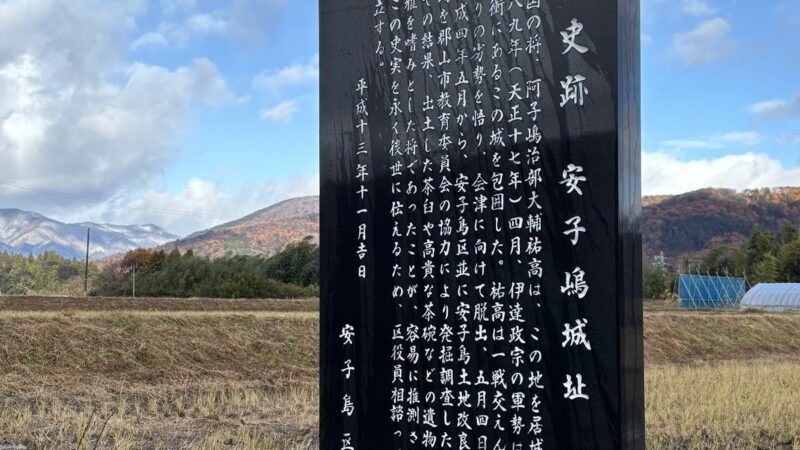
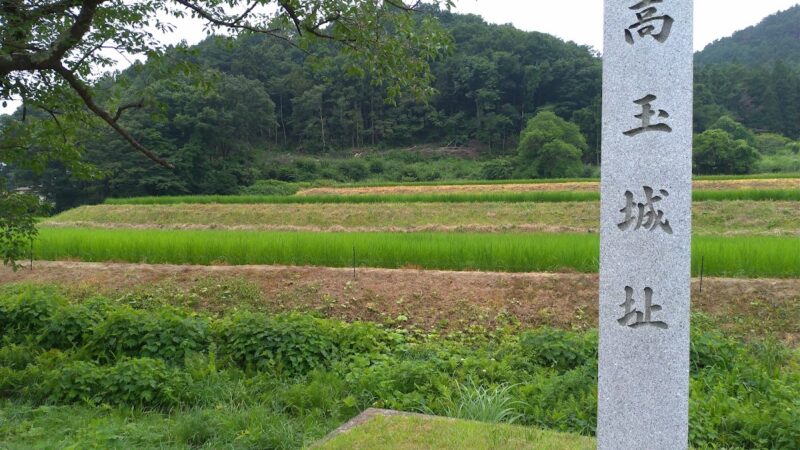
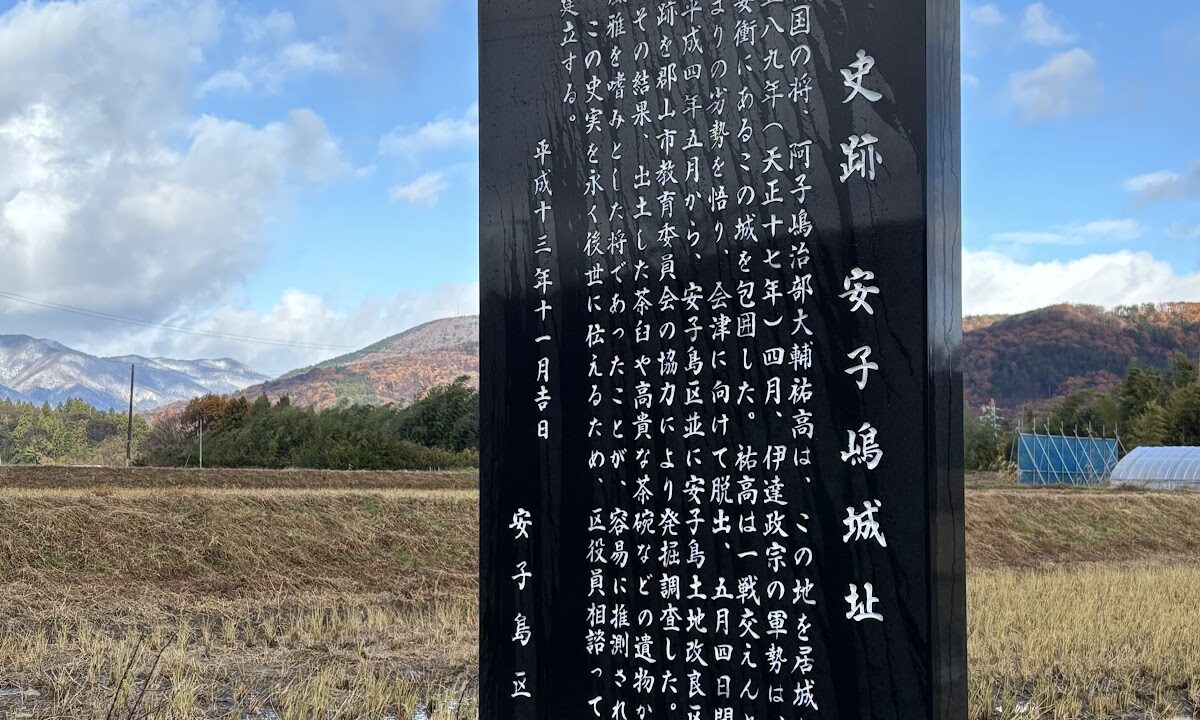
Located in the area of Minami-machi, Akogashima, Atami-cho, Koriyama City, Fukushima Prefecture, it belonged to the former Iwashiro Province. A stone monument marking the castle site is erected along the road north of the railway tracks, west of Akogashima Station on the Ban’etsu West Line, allowing visitors to imagine the former castle grounds.
Castle Structure and Classification
Akogashima Castle was built as a hilltop castle. A hilltop castle is a type of castle built on a hill or plateau in a flat area, with a structure that balances defense and convenience. There are no records regarding the castle tower’s structure, but it is presumed to have been a manor house style typical of medieval castles.
Builder and Construction Year
The builder was the Yasujima clan, and the castle is believed to have been built during the Kamakura period. The Yasujima clan was a branch of the Asaka Ito clan and established their power in this area. It served as the Yasujima clan’s residence for over 300 years, from the Kamakura period to the end of the Sengoku period.
History of Yasujima Castle
Kamakura to Muromachi Periods: Establishment and Development of the Yasujima Clan
The history of Yasujima Castle dates back to the Kamakura period. The Yasujima clan, the builders of the castle, were a branch family of the Asaka Ito clan and settled in this area. The Asaka Ito clan was a samurai group descended from the Ito clan and held power throughout the Asaka district.
The Yasujima clan adopted the place name as their surname and established their control over the surrounding area from Yasujima Castle. It is believed that the Yasujima clan maintained their power as local lords in this region from the Kamakura period to the Muromachi period.
Early Sengoku Period: Relationship with the Nihonmatsu Clan
At the start of the Sengoku period, the Yasujima clan was subordinate to the Hatakeyama clan (Nihonmatsu clan), the lords of Nihonmatsu Castle. The Nihonmatsu clan was a powerful daimyo in Mutsu Province, competing for power with the Ashina and Date clans of Aizu.
The Yasujima clan, under the Nihonmatsu clan’s control, sought to survive amidst the complex political situation of southern Oshu. During this period, Yasujima Castle is thought to have functioned as one of the important branch castles within the Nihonmatsu clan’s sphere of influence.
Bunki 1 (1501): Capture by the Ashina and Nikaido Clan
In Bunki 1 (1501), Yasujima Castle was captured and temporarily fell to a combined force of the Ashina and Nikaido clans of Aizu. During this period, fierce conflicts were raging between the Aizu and Nihonmatsu forces, and Yasujima Castle was located on the front lines.
However, the Yasujima clan later recovered the castle and maintained their power by continuing to serve the Nihonmatsu clan.
Tensho 14 (1586): The Rise of Date Masamune and Transfer to the Ashina Clan
In Tensho 14 (1586), a major event occurred: Hatakeyama Yoshitsugu, lord of Nihonmatsu Castle, was destroyed by Date Masamune. At this time, Yasujima Jibu-no-Daisuke Suketaka, the lord of Yasujima Castle, chose to align himself with Ashina Yoshihiro of Aizu rather than submit to the Date clan.
This decision is thought to have stemmed from his apprehension about Date Masamune’s rapid expansion of power and his trust in the traditional strength of the Aizu Ashina clan. By separating from the Date clan and joining the Ashina camp, Yasujima Suketaka sought to maintain his independence. ### Tensho 17 (1589): Siege and Surrender by Date Masamune
In April of Tensho 17 (1589), Date Masamune besieged Yasujima Castle as part of his invasion of Aizu. During this period, Date Masamune was steadily preparing for the Battle of Suriagehara, and Yasujima Castle became one of his important strategic points, thus becoming a target for capture.
Against the overwhelming forces of the Date army, Lord Yasujima Suketaka and his soldiers attempted to resist, but the difference in strength was clear. On May 4th, Yasujima Suketaka surrendered the castle on the condition that his soldiers’ lives be spared, and he himself fled to Aizu. With this surrender, Yasujima Castle became a possession of the Date clan.
After the surrender, the Date army continued their attack on Takatama Castle, advancing their conquest of Aizu. The capture of Yasujima Castle was a crucial step in Date Masamune’s unification of southern Oshu.
Under the Toyotomi Regime: Gamo Ujisato’s Entry and Gamo Satonari
After Date Masamune’s defeat of the Ashina clan in the Battle of Suriagehara in 1589, Gamo Ujisato was appointed to Aizu as part of Toyotomi Hideyoshi’s pacification of Oshu. At this time, Gamo Genzaemon Satonari became the castle lord of Yasujima Castle.
Gamo Ujisato ruled Aizu with a domain of 920,000 koku from Aizu-Wakamatsu Castle (Tsuruga Castle), but surrounding branch castles like Yasujima Castle were also maintained as important defensive strongholds. It is believed that improvements to the castle and the establishment of the governing system progressed during Gamo Satonari’s tenure.
After 1598: Uesugi Kagekatsu and the Renaming of Asaka Castle
In 1598, Uesugi Kagekatsu replaced the Gamo clan as the lord of Aizu with a domain of 1,200,000 koku. At this time, Yasuda Yoshimoto was appointed as the castle lord of Yasujima Castle.
Interestingly, under the control of the Uesugi clan, Yasujima Castle also came to be known as “Asaka Castle.” This may have been part of the Uesugi clan’s castle reorganization. Yasuda Yoshimoto was a senior retainer of the Uesugi family and was responsible for the governance and defense of this area.
After the Battle of Sekigahara in 1600, the Uesugi clan’s domain was reduced to 300,000 koku in Yonezawa, and the Gamo clan once again took control of Aizu. Subsequently, with the changes in the Aizu domain’s governing structure, the military importance of Yasujima Castle is thought to have gradually declined.
Excavation Survey and Excavated Artifacts
Excavation Survey from 1992
From May 1992, an excavation survey of the Yasujima Castle site was conducted. This survey gradually revealed the true nature of the castle, which had long been unknown.
The excavation uncovered remains such as moat and building foundations. The discovery of the moat provided specific information about the layout and scale of the castle’s defensive structures. The building foundations offered clues to the arrangement of buildings and living spaces within the castle.
Excavated Artifacts
The excavation unearthed artifacts such as tea grinders and tea bowls. These are valuable materials that reveal the lifestyle and culture of the castle lord and his retainers during the Sengoku period. The discovery of tea ceremony utensils, in particular, suggests that the lord of Yasujima Castle was not merely a warrior but also possessed cultural refinement.
Furthermore, artifacts from the Kamakura period were also discovered, providing archaeological evidence supporting the tradition that the castle was built during the Kamakura period. This confirms that Yasujima Castle was used for a long period, from the Kamakura period to the end of the Sengoku period.
Current State of Yasujima Castle Site
Current Status of the Remains
Currently, the building remains of Yasujima Castle have completely disappeared, making it difficult to imagine its former appearance. Much of the castle grounds has been developed into residential and agricultural land, making it impossible to see any clear castle remains on the surface.
While archaeological excavations have confirmed the existence of underground remains such as moat remnants, no visible remains remain above ground. This is a common situation for many medieval castles, indicating that the remains were lost due to development and cultivation.
Stone Monument at the Castle Site
A stone monument marking the site of Yasujima Castle stands along the road north of the railway tracks, west of Yasujima Station on the Ban’etsu West Line. This monument is the only above-ground marker that conveys to future generations the fact that an important castle once stood on this site.
The area around the monument is a farm road and has not been specially maintained, but it is an important landmark for history enthusiasts visiting the castle site. The monument bears the name of the castle and a brief history, conveying the history of Yasujima Castle to visitors.
Access and Visiting
The nearest station to Yasujima Castle is Yasujima Station on the Ban’etsu West Line. The monument is located a few minutes’ walk from the station, making it relatively easy to visit.
However, as mentioned earlier, no clear remains are left, so the visit is more about visiting a historical site and reflecting on the past rather than viewing the castle ruins themselves. By observing the surrounding topography, it is possible to understand the site’s characteristics as a hilltop castle.
Historical Significance of Yasujima Castle
A Typical Example of a Medieval Castle in Southern Oshu
Yasujima Castle is important as a typical example of a medieval castle in the Southern Oshu region. Built by a local lord during the Kamakura period and continuously used until the Sengoku period, it is a valuable historical site that shows the development process of the samurai society in this region.
The process by which the Yasujima clan, a branch of the Asaka Ito clan, established an independent power using the place name as their surname, illustrates a typical pattern of branching off and localization within a medieval samurai group.
A Stage for Power Struggle in the Sengoku Period
During the Sengoku period, Yasujima Castle became the stage for conflicts between the major powers of southern Oshu: the Nihonmatsu, Ashina, and Date clans. In particular, Date Masamune’s capture of the castle was a crucial strategic step in his invasion of Aizu and a significant turning point in the process of unifying southern Oshu.
Yasujijima Suketaka’s decision to defect from the Date clan and join the Ashina clan, and his eventual surrender to Date Masamune, illustrate the harsh reality of the Sengoku period, where small lords struggled to survive amidst powerful forces.
Governance under the Toyotomi and Tokugawa Regimes
After Toyotomi Hideyoshi’s pacification of Oshu, powerful daimyo such as Gamo Ujisato and Uesugi Kagekatsu successively entered Aizu, and Yasujima Castle came under their control. The appointment of retainers such as Gamo Satonari and Yasuda Yoshimoto as castle lords is noteworthy as an example of the establishment of a territorial governance system by early modern daimyo. The renaming of Asaka Castle under the Uesugi clan’s rule is an interesting example of castle reorganization by the new lord. This may not have been merely a name change, but rather an act symbolizing a renewal of the governing system.
Related Historical Sites in the Surrounding Area
Takatama Castle
Located north of Yasujima Castle, Takatama Castle was attacked by Date Masamune in 1589 after the surrender of Yasujima Castle. These two castles were important strategic points along Date Masamune’s invasion route of Aizu.
Yasujima Manor and Asaka Castle
As related facilities to Yasujima Castle, Yasujima Manor and Asaka Castle (the name used during the Uesugi clan era) are recorded. These may indicate the main castle and its branch castles, or changes in name over time.
Kamei Manor and Maedazawa Castle
Nearby, there are scattered castle ruins of the Yasujima clan and related forces, such as Kamei Manor and Maedazawa Castle. These are thought to have been part of the castle network that constituted the sphere of influence of the Yasujima clan.
The Later Life of the Yasujima Clan
After the surrender of Yasujima Castle, the lord, Yasujima Suketaka, fled to Aizu, but there are no detailed records of his subsequent whereabouts. The fate of the Yasujima clan after the Ashina clan was destroyed by Date Masamune remains a subject of future research.
Some historical sources suggest that members of the Yasujima clan survived after the fall of the Aizu Ashina clan, and that they later returned to farming or served other daimyo, but there is little conclusive evidence.
Summary
Yasujima Castle was a flatland castle that played a significant role in the history of southern Oshu for approximately 400 years, from the Kamakura period to the end of the Sengoku period. Built by the Yasujima clan, a branch of the Asaka Ito clan, it continued to function as an important military base, despite being caught in the conflicts of the Sengoku daimyo clans, including the Nihonmatsu, Ashina, and Date clans.
The capture and surrender of Yasujima Castle by Date Masamune in 1589 marked a major turning point in the power dynamics of southern Oshu, and under the subsequent Toyotomi regime, it was incorporated into the control of powerful daimyo such as the Gamo and Uesugi clans.
Although the building remains have now disappeared, archaeological excavations since 1992 have unearthed remains of moats, buildings, and artifacts such as tea ceremony utensils, gradually revealing the castle’s true nature. A stone monument near Yasujima Station on the Ban’etsu West Line commemorates the existence of this historic castle.
The history of Yasujima Castle is a valuable example illustrating the way of life of local samurai during the transition from the medieval to the early modern period, and the process of establishing territorial control by daimyo power. It is a historical site that is expected to continue to be researched and preserved.