Yanagawa Castle (Fukushima Prefecture) Complete Guide | A Thorough Explanation of the History and Remains Built on the Birthplace of the Date Clan
Overview of Yanagawa Castle
Yanagawa Castle is a Japanese castle site located in Tsurugaoka, Yanagawa-cho, Date City, Fukushima Prefecture. Also known as Tsuruga Castle and Tsuruoka Castle, it is known as a flatland castle that served as the base for the Date clan, a renowned Sengoku period daimyo, for approximately 400 years.
Built on a hill extending northwest from Chausuyama, east of the central urban area of Yanagawa, the elevation difference between the castle and the surrounding plains is over 10 meters. The castle’s layout, skillfully utilizing this terrain, preserves typical characteristics of medieval castles.
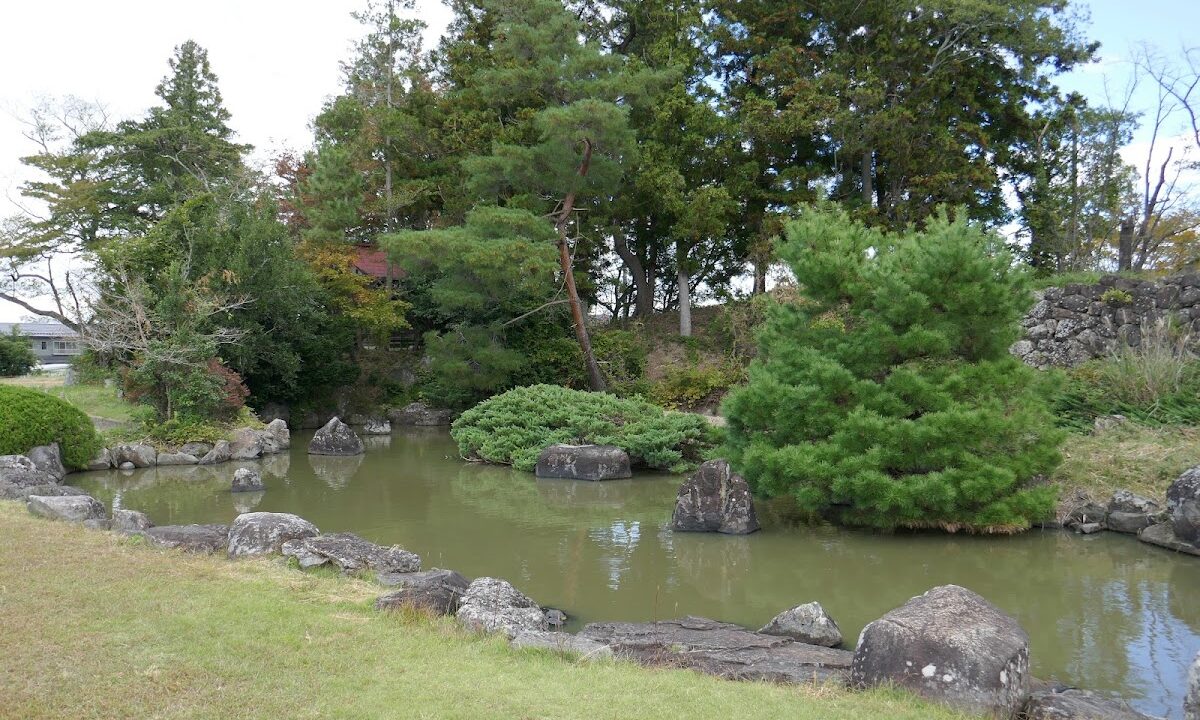
Currently, the Yanagawa Castle site is designated as a national historic site as the Date Clan Yanagawa Ruins, and also as a Fukushima Prefecture historic site as the Yanagawa Castle Ruins and Garden. The site of the former castle keep features a restored medieval garden, “Shinji-no-ike” (Heart-shaped Pond), a rare sight in Japan. It is preserved as a valuable cultural asset, allowing visitors to imagine what the castle looked like in its heyday.
Basic Information
- Location: 1 Tsurugaoka, Yanagawa-machi, Date City, Fukushima Prefecture
- Other Names: Tsuruga Castle, Tsuruoka Castle
- Castle Structure: Hilltop Castle
- Builder: Date Clan (Some sources suggest Date Tomomune)
- Year of Construction: Mid-13th Century (Kamakura Period)
- Main Lords: Date Clan, Gamo Clan, Uesugi Clan
- Year of Abandonment: Kanbun 4 (1664)
- Remains: Enclosures, stone walls, earthworks, moats (water moats), restored garden
- Designated Cultural Property: National Historic Site (Date Clan Yanagawa Ruins), Prefectural Historic Site (Yanagawa Castle Ruins and Garden)
Prehistory of Yanagawa Castle (Before the Edo Shogunate)
History of the Castle’s Construction and Early Period
While there are various theories regarding the construction period of Yanagawa Castle, archaeological investigations suggest it was built by the Date clan in the mid-13th century (Kamakura period). There is a tradition that it was built in 1189 by Date Tomomune, the first head of the Date clan. However, archaeological excavations have uncovered artifacts from the time of Date Yoshihiro (3rd head) or Masayori (4th head) (1227-1301), confirming that it functioned as the Date clan’s residence from this period.
The Date clan was a powerful family in Hitachi Province that served the Oshu Fujiwara clan. They were granted Date County in Mutsu Province for their service in Minamoto no Yoritomo’s conquest of Oshu, and established this area as their base. Yanagawa Castle played a crucial role as a political and military center during the Date clan’s expansion of power.
The Era of the Date Clan
Records show that Yanagawa Castle definitely functioned as the residence of the Date clan even before 1426 (Oei 33). During the Muromachi period, Date Tanemune, the 14th head of the Date clan, was appointed Mutsu Province Governor, and the Date clan’s power reached its peak. Tanemune strengthened his control over Oshu (northern Japan) from Yanagawa Castle, and advanced his domain’s management by building many branch castles in the surrounding area.
However, in 1542 (Tenbun 11), a conflict arose between Tanemune and his eldest son, Harumune, over the succession of the family headship, leading to the Tenbun Rebellion (an internal conflict within the Date clan). This civil war lasted for six years, and ultimately Harumune emerged victorious and inherited the family headship. While the Date clan’s power temporarily declined due to this turmoil, Yanagawa Castle continued to be maintained as their residence.
Date Masamune and Yanagawa Castle
Date Masamune, the 17th head of the Date clan, was born in 1567 (Eiroku 10) at Yonezawa Castle (present-day Yonezawa City, Yamagata Prefecture). While the main base had already moved to Yonezawa Castle during Masamune’s time, Yanagawa Castle remained one of the important strongholds within the Date territory.
In 1584 (Tensho 12), Masamune inherited the family headship at the age of 18. The following year, in October 1585 (Tensho 13), the area around Yanagawa Castle became a battlefield during a battle against the Soma clan. It is said that Masamune prayed for victory at Yanagawa Hachimangu Shrine before this battle. This battle is known as Masamune’s first battle, and the Date army successfully repelled the Soma army.
Masamune pursued an aggressive territorial expansion policy, destroying the Ashina clan of Aizu and growing into one of the most powerful daimyo in Oshu during the Sengoku period. Yanagawa Castle served as an important military base during this period as part of Masamune’s expansion of power.
From the Gamo Clan to the Battle of Sekigahara
In 1590, when Toyotomi Hideyoshi carried out the Oshu Settlement, Date Masamune had his newly acquired territories, such as Aizu, confiscated, and was only allowed to rule his former territories, such as Yonezawa. Meanwhile, Gamo Ujisato was appointed to Aizu with a domain of 920,000 koku, and the entire Date County area, including Yanagawa Castle, became part of the Gamo clan’s territory.
Gamo Ujisato managed his domain from Aizu-Wakamatsu Castle (Tsuruga Castle), and stationed his retainers at Yanagawa Castle, using it as a base of operations. Ujisato died in 1595, but the Gamo clan’s rule continued.
However, in 1598, during the reign of Gamo Hideyuki, the domain was transferred to Utsunomiya, and Uesugi Kagekatsu took over with a 1.2 million koku domain in Aizu. As a result, Yanagawa Castle also came under the control of the Uesugi clan.
The Uesugi Era
Uesugi Kagekatsu established Aizu as the base of operations for the Toyotomi regime in the Tohoku region. However, in the Battle of Sekigahara in 1600, he sided with the Western Army, and after the war, his domain was drastically reduced to 300,000 koku in Yonezawa.
At this time, Date County, including Yanagawa Castle, became a tenryo (directly controlled territory of the shogunate), and a magistrate was appointed to govern it. Yanagawa Castle continued to be used as an administrative center, but no major renovations were carried out, and its medieval castle structure was maintained.
The Era of the Shogunate’s Territory and the Yanagawa Domain
In 1643 (Kanei 20), Matsudaira Tadahiro, the half-brother of Tokugawa Iemitsu, was granted a 30,000 koku domain in Yanagawa, establishing the Yanagawa Domain. Tadahiro made Yanagawa Castle his residence and began governing the domain, striving to develop the territory.
The Yanagawa Domain implemented policies encouraging fruit cultivation, promoting peach cultivation in the Shinobu District’s Fukushima Castle town and persimmon production in the Date District’s Yanagawa Castle town. This policy is considered crucial in laying the foundation for present-day Fukushima Prefecture’s reputation for fruit cultivation.
However, in 1664 (Kanbun 4), when Matsudaira Tadahiro was transferred to the Yamagata Domain, Date District (including Yanagawa Castle), Shinobu District (Fukushima Castle), and Okitama District’s Yashiro (where Takabatake Castle was located) were confiscated by the shogunate. At this time, Yanagawa Castle was abandoned, ending its approximately 400-year history as a castle.
After the castle was abandoned, parts of the site were used for farmland and residential areas, but the main part, centered around the main keep, was preserved in relatively good condition.
Structure of Yanagawa Castle
Layout and Arrangement
Yanagawa Castle is a flatland castle built on a tongue-shaped plateau extending northwest from Chausuyama. The castle grounds extended approximately 500 meters east-west and 300 meters north-south, with the main keep at the center and other baileys such as the second and third baileys arranged around it.
The Hirose River, a tributary of the Abukuma River, served as a natural moat on the north and west sides of the castle, while artificial moats were dug on the south and east sides. The layout, which made maximum use of this terrain, enhanced the defensive capabilities of the medieval castle.
The main keep was located at the eastern end of the castle grounds, at the highest elevation, and from there, the second and third baileys were arranged in a stepped fashion to the west. Each enclosure is demarcated by earthworks and moats, and the entrances (koguchi) feature masugata (square-shaped enclosures), showcasing castle construction techniques from the Sengoku period.
The Main Enclosure and the Medieval Garden “Shinji Pond”
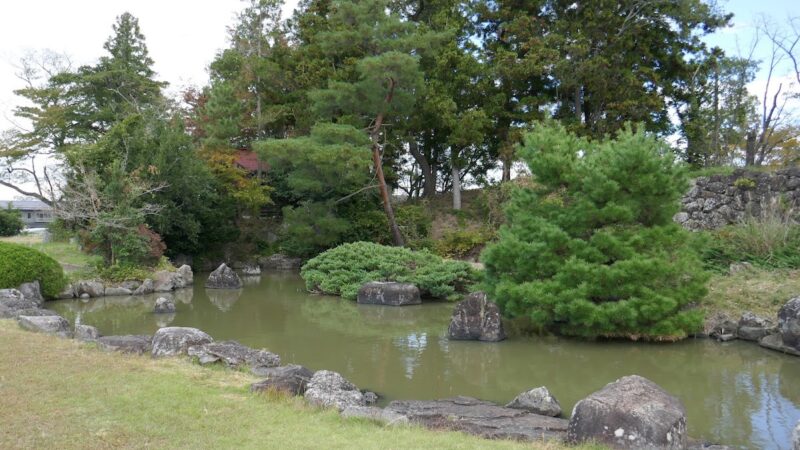
The site of the main enclosure is now the playground of Yanagawa Elementary School, but in one corner remains a medieval garden, extremely rare in Japan. This garden is called “Shinji Pond,” named because the shape of the pond resembles the Japanese character for “heart” (心).
Archaeological excavations have revealed that this garden was constructed during the Muromachi period, making it a valuable relic from the time when the Date clan used Yanagawa Castle as their residence. The garden features landscape stones arranged around the pond, preserving the style of a medieval samurai garden.
From 1978 to April 1981, this garden was restored based on academic research. The presence of a medieval garden within the main enclosure is rare in Japan, and it is highly valued as a cultural asset from both the perspectives of castle history and landscape architecture.
Stone Walls and Earthworks
Yanagawa Castle has remnants of stone walls in various locations. These stone walls are thought to have been mainly constructed during the time of the Gamo and Uesugi clans, and are valuable historical materials that demonstrate the transitional technology towards early modern castles.
The stone walls are built using the nozurazumi technique, characterized by their simple construction using natural stones. Stone walls can be seen around the main enclosure and at the remains of watchtowers, providing important clues to understanding the castle structure of the time.
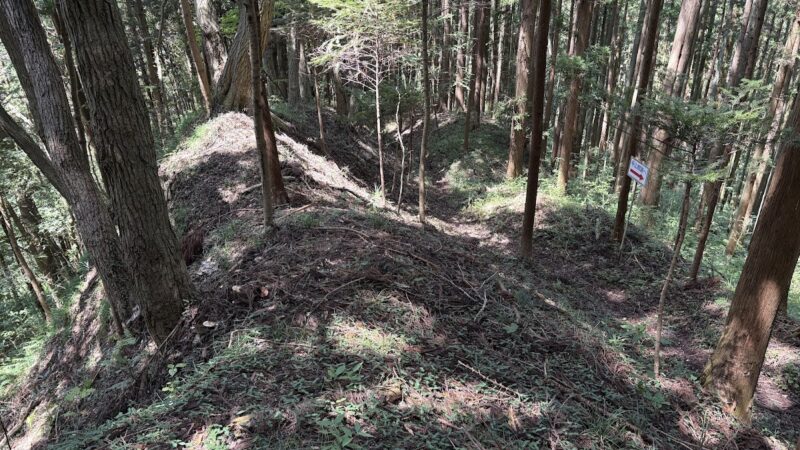
Furthermore, earthworks surrounded each enclosure, and some remain in good condition today. The height of the earthworks varies depending on the location, but they reach a maximum height of approximately 3-4 meters and functioned as defensive structures.
Moats and Water Moats
Yanagawa Castle had both dry moats and water moats. The Hirose River served as a natural moat on the north and west sides of the castle, while artificial moats were dug on the south and east sides.
In particular, a deep horizontal moat was constructed between the main keep and the second bailey, and archaeological excavations have revealed that a portion of it functioned as a water moat. Even today, some traces of the moat can be seen in the topography, making it an important remains for understanding the castle’s defensive system.
The width of the moat varied depending on the location, but it is estimated to have been over 10 meters at its widest point and approximately 3 to 5 meters deep.
Remains of Yanagawa Castle
Existing Remains
The following remains still exist at the Yanagawa Castle site:
- **Kuruwa (Enclosures): The topography of the enclosures, such as the main keep, second bailey, and third bailey, is well preserved. The site of the main keep is now used as the playground of Yanagawa Elementary School, but the elevation differences in the topography allow us to imagine what it looked like in its heyday.
- Stone Walls: Stone walls built using the “nozurazumi” (rough-stone masonry) method remain in various locations, primarily around the main enclosure. The stone walls around the watchtower site are particularly well-preserved.
- Earthworks: Earthworks surrounding each enclosure remain partially, with some measuring approximately 2-4 meters in height.
- Moats: Traces of dry and water moats remain as topographical features, and in some areas, it’s possible to walk along the bottom of the moats.
- Medieval Garden “Shinji Pond”: This pond garden, restored between 1978 and 1981, is a valuable historical site that conveys the style of a medieval samurai garden.
- Watchtower Site: The remains of a watchtower are visible in a corner of the main enclosure, and the stone wall remains can be observed.
Restoration and Development
The Yanagawa Castle site underwent extensive research and development starting in the 1970s. In particular, the medieval garden “Shinji-no-ike” (Heart-shaped Pond) in the main keep area has been faithfully restored based on the results of archaeological excavations and is now open to the public.
In restoring the garden, the aim was to reproduce as faithfully as possible the remains revealed by the excavations, including the shape of the pond and the arrangement of the landscape stones. The restoration work was carried out from 1978 to April 1981, bringing the medieval garden back to life.
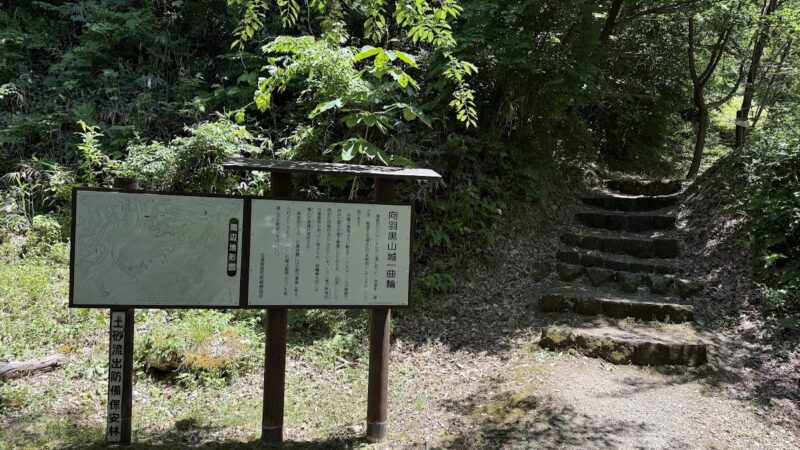
Furthermore, the entire castle site has been improved, with explanatory signs and information boards installed to make it easier for visitors to understand the history. Walking paths have also been constructed, allowing visitors to stroll around and explore the various remains.
Branch Castles and Related Fortresses
The Date clan, whose main castle was Yanagawa Castle, built many branch castles in the surrounding area to govern their territory. The main branch castles include the following:
Koori Nishiyama Castle (Koori Town, Fukushima Prefecture)
Located approximately 5 kilometers northwest of Yanagawa Castle, this mountain castle was one of the Date clan’s important branch castles. During the time of Date Tanemune, it was temporarily used as a base.
Reizan Castle (Date City, Fukushima Prefecture)
Located east of Yanagawa Castle, this mountain castle is known as a base for Kitabatake Akiie during the Nanboku-cho period. Later, it came under the control of the Date clan and functioned as a subsidiary castle.
Hobara Castle (Date City, Fukushima Prefecture)
Located south of Yanagawa Castle, this flatland castle was ruled by a member of the Date clan. It worked in conjunction with Yanagawa Castle to govern Date County.
These subsidiary castles formed a defense network centered around Yanagawa Castle, playing a crucial role in supporting the Date clan’s rule over their territory.
Archaeological Materials and Collections
Results of Excavation Surveys
Since the 1970s, multiple archaeological excavations have been conducted at the Yanagawa Castle site. These surveys have unearthed numerous artifacts dating from the mid-13th century to the mid-17th century, providing valuable information about the castle’s transformation over time.
Excavated artifacts include ceramics, pottery, roof tiles, iron and copper products, providing clues to the lifestyle and structure of the castle at the time. In particular, high-quality ceramics such as Chinese celadon and white porcelain have been unearthed, demonstrating the economic power and high level of culture of the Date clan.
Restoration Model and Exhibits
A restoration model of Yanagawa Castle in its heyday is housed at the Fukushima Prefectural Museum (Aizuwakamatsu City, Fukushima Prefecture). This model was created based on archaeological excavations and historical documents, allowing for a three-dimensional understanding of Yanagawa Castle from the medieval to early modern period.
The model reproduces the layout of the main keep, second bailey, and third bailey, as well as defensive structures such as stone walls, earthworks, and moats, and even the arrangement of buildings, making it an important resource for castle research.
Furthermore, exhibits related to Yanagawa Castle are also held at facilities within Date City, where visitors can view excavated artifacts, ancient documents, and drawings.
Current Status and Visitor Information
Current State of Yanagawa Castle Ruins
The Yanagawa Castle Ruins are currently preserved and utilized in the following ways:
- Main Enclosure Site: Used as the schoolyard of Yanagawa Elementary School, but the medieval garden “Shinji Pond” is open to the public and can be freely visited.
- Second and Third Enclosure Sites: Used as a residential area and park, but some remnants of earthworks and moats remain.
- Watchtower Site: Remains of the stone walls are preserved and can be visited.
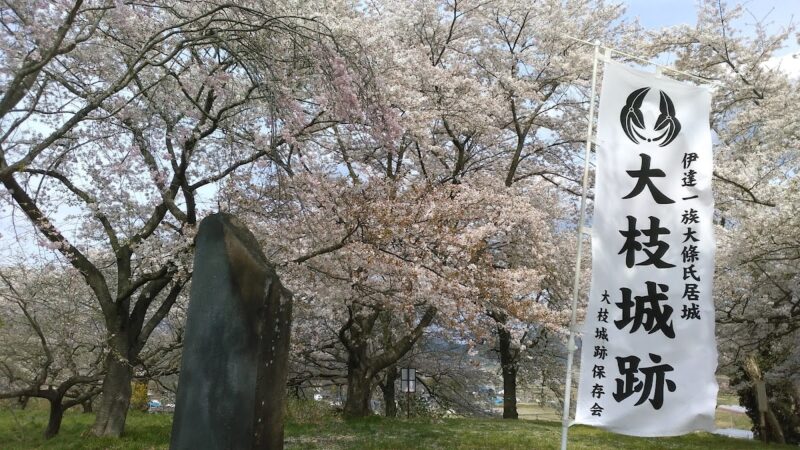
The entire castle site has been developed as a historical park with walking paths. Cherry blossoms bloom in spring, and it is a popular place of relaxation for local residents.
Access Information
Access by Train:
- Approximately 15 minutes on foot from Abukuma Express “Yanagawa Station”
- Approximately 5 minutes on foot from Abukuma Express “Kibou-no-Mori Park Station” (closest station to the medieval garden)
Access by Car:
- Approximately 20 minutes from Tohoku Expressway “Kunimi IC”
- Approximately 10 minutes from Tohoku Chuo Expressway “Date Chuo IC”
Parking:
- Free parking available around Yanagawa Castle Ruins (limited spaces)
Location:
1 Tsurugaoka, Yanagawa-cho, Date City, Fukushima Prefecture
Points to Note When Visiting Yanagawa Castle Ruins
- Medieval Garden “Shinji Pond”: A must-see spot, this is a rare example of a medieval samurai garden in Japan. Enjoy the garden’s beauty from various angles while walking around the pond.
- Stone Walls: The stone walls around the main keep and the watchtower ruins are well-preserved, allowing for close observation of the nozurazumi (rough-stone masonry) technique.
- Earthworks and Moats: By examining the remains of earthworks and moats surrounding each enclosure, you can understand the castle’s defensive system.
- View: From the main keep ruins, you can enjoy a panoramic view of Yanagawa town, appreciating the advantageous terrain in which the castle was located.
- Yanagawa Hachimangu Shrine: Located near the castle ruins, this shrine is known as the place where Date Masamune prayed for victory before his first battle. A visit to this shrine is recommended.
Estimated Visiting Time
For a thorough visit to Yanagawa Castle ruins, allow approximately 60-90 minutes. For a visit focusing only on the main remains, allow about 30-40 minutes. If you wish to leisurely appreciate the medieval garden and enjoy photography, it is recommended to allocate at least one hour.
Related Works and Cultural Influence
Literary Works
Numerous literary works exist that feature Yanagawa Castle and the Date clan. Historical novels, in particular, often depict the episode of his first battle at Yanagawa Castle, making it an important setting for understanding the young Masamune.
Works such as Sohachi Yamaoka’s *Date Masamune* and Chogoro Kaionji’s *Bushō Retsuden* provide detailed descriptions of battles around Yanagawa Castle, offering insights into the period.
Television Dramas and Films
The NHK Taiga drama *Dokuganryū Masamune* (1987), featuring Date Masamune as the protagonist, impressively depicted the scene of his first battle at Yanagawa Castle. This drama’s influence led to increased interest in Yanagawa Castle and a rise in tourism.
Furthermore, Yanagawa Castle is frequently featured in various historical dramas and documentaries, recognizing it as an important setting for conveying the history of the Date clan.
Influence on Local Culture
Yanagawa Castle remains a beloved symbol of local identity for the citizens of Date City. Every year, Date City holds events such as the “Yanagawa Castle Festival,” featuring samurai processions and historical lectures.
Furthermore, persimmon cultivation, encouraged during the Yanagawa Domain era, continues to this day, resulting in “Anpo-gaki,” a nationally renowned local specialty. This is a prime example of how the policies of Matsudaira Tadahiro, who resided at Yanagawa Castle, have been passed down to the present day.
Nearby Tourist Attractions
When visiting the Yanagawa Castle ruins, we recommend also visiting the following nearby spots:
Yanagawa Hachimangu Shrine
This shrine is said to be where Date Masamune prayed for victory before his first battle. Located about a 10-minute walk from the castle ruins, it remains a popular destination for worshippers due to its connection to the Date clan.
Date City Yanagawa Art Museum
This art museum, primarily exhibiting works by local artists, is within walking distance of the castle ruins.
Ryōzen (Ryōzen Mountain)
Ryōzen, towering east of Yanagawa Castle, is home to the ruins of Ryōzen Castle from the Nanboku-chō period and is designated a national historic site and place of scenic beauty. A hiking trail is well-maintained, and the summit offers magnificent views.
Hobara Historical and Cultural Museum
Located in Hobara-machi, Date City, this museum exhibits materials related to the Date clan and Yanagawa Castle. It’s ideal for preparing for or reviewing your visit to the castle ruins.
Summary
Yanagawa Castle was a flatland castle that served as the base of the Date clan for approximately 400 years, and is an indispensable and important castle when discussing the medieval history of the Tohoku region. From its construction in the mid-13th century until its abandonment in 1664, the castle was ruled by prominent daimyo such as the Date, Gamō, Uesugi, and Matsudaira clans, a history that truly symbolizes the Sengoku period of Tohoku.
In particular, a major feature of Yanagawa Castle is the “Shinji Pond,” a rare medieval garden remaining on the site of the main keep. This garden is a valuable cultural asset that conveys the essence of medieval samurai culture and holds high value from both the perspectives of castle history and landscape gardening history.
Currently, the Yanagawa Castle ruins are designated as a national historic site as the “Date Clan Yanagawa Ruins Group” and are properly preserved and managed. The remains such as stone walls, earthworks, and moats are well-preserved, making it a valuable place to learn about the changes in castle architecture from the medieval to the early modern period.
Its excellent accessibility, being within walking distance of an Abukuma Express station, is also a major attraction. When visiting Fukushima Prefecture, be sure to visit the Yanagawa Castle ruins and experience the 400-year history of the Date clan and the beauty of the medieval garden. With its cherry blossoms in spring, lush greenery in summer, autumn leaves in fall, and snowscapes in winter, the Yanagawa Castle ruins show different expressions in each season, making it a fascinating historical site where you can discover something new with every visit.