Complete Guide to Tatebori Castle Ruins (Akita Prefecture): Historical Value Revealed by Archaeological Excavations and Remains of a Medieval Castle
Located in the Terazawa district of Yuzawa City, Akita Prefecture, Tatebori Castle Ruins is one of the most important historical sites in Akita Prefecture as a medieval castle site. This article comprehensively explains information about Tatebori Castle Ruins, including the remains and artifacts revealed by archaeological excavations, the castle’s structure, and how to access the site.
Overview and Location of Tatebori Castle Ruins
Tatebori Castle Ruins is a medieval castle site located in Tatebori, Terazawa, Yuzawa City, Akita Prefecture. While the area is now rice paddies and residential land, and its former appearance is gradually being lost, its historical value was revealed by a full-scale archaeological excavation conducted in 1999.
Basic Information
- Location: 10-gai, Tatebori, Terazawa, Yuzawa City, Akita Prefecture
- Type: Fortified Residence Site (Flatland Castle)
- Current Status: Rice paddies, residential land
- Map Number: 207-66-55
- Survey Area: 17,800 m² (as of 1999 survey)
- Designation: Not designated
Tatebori Castle is classified as a flatland castle and is presumed to have been a residence with Kusaizaki Castle, located approximately 1 km to the north, serving as a fortified outpost. This arrangement, separating the living space during peacetime from the defensive base during wartime, is a typical structure for medieval castles.
Castle Scale and Structure
Double Moat Defensive System
According to records in “Medieval Castles and Residences of Akita,” Tatebori Castle boasted a size of approximately 200m east-west and 150m north-south, and was confirmed to have a double moat structure consisting of an outer and inner moat. This double moat was an important facility for enhancing the castle’s defensive capabilities.
Although much of it has now been filled in, traces of the former moat can be partially confirmed from the topography and subtle differences in elevation. Archaeological excavations have uncovered dry moats and ditch remains, confirming that it possessed defensive functions as a medieval castle.
Discovered Archaeological Remains
The following remains were confirmed in the 1999 excavation:
- Pit Dwellings: Possibly used as living or working spaces
- Post-Pier Building Remains: Postholes of major buildings
- Enclosures: Castle boundaries
- Stone Arrangement Remains: Structures with arranged stones
- Dry Moats: Defensive moats
- Ditch Remains: Ditches for drainage and demarcation
- Rows of Postholes: Traces of walls or fences
- Posthole-like Pits: Foundations of buildings or facilities
These remains indicate that Tatebori Castle was not merely a simple residence, but a full-fledged castle with a planned arrangement of buildings and defensive facilities.
Castle Life as Seen Through Excavated Artifacts
Medieval Artifacts
A variety of artifacts illustrating medieval life have been unearthed from the Tatebori Castle ruins:
Ceramics
- Seto-Mino ware pottery
- Blue and white porcelain
- Unglazed earthenware (kawarake)
The discovery of Seto-Mino ware and blue and white porcelain suggests that the inhabitants of this castle possessed a certain level of economic power and had trade relations with distant regions.
Daily Necessities and Household Items
- Earthenware: Clay weights (fishing tools)
- Stone products: Whetstones, inkstones
- Wooden products: Chopsticks, spatulas
- Copper products: Coins
The discovery of inkstones indicates that cultural activities involving writing took place within the castle, suggesting that it may have possessed administrative functions in addition to being merely a samurai residence.
Special Artifacts
- Natural Artifacts: Human and Animal Bones
The discovery of human and animal bones provides valuable information about the diet and burial customs of the time.
Jomon Period Artifacts
Interestingly, Jomon period stone tools (stone spoons) have also been unearthed at the Tatebori Castle site. This indicates that this area was inhabited by people from before the medieval period, revealing its long history.
Significance of the Excavation in Akita Prefecture
The excavation of the Tatebori Castle site is historically significant as it was the first full-scale excavation conducted at a castle site in Akita Prefecture.
Background of the Survey
The survey was conducted as an archaeological excavation survey associated with the prefectural-run farmland improvement project (Terazawa area).
- Investigation Period: May 31, 1999 – November 26, 1999
- Investigating Body: Akita Prefectural Buried Cultural Properties Center
- Report: Published as Akita Prefectural Cultural Properties Survey Report No. 320
This investigation revealed, for the first time archaeologically, the actual state of Tatebori Castle, which had previously been shrouded in scarcity of documentary evidence and lacked detailed information.
Importance of Research Findings
The investigation of the Tatebori Castle ruins has made a significant contribution to the study of medieval history in Akita Prefecture in the following ways:
- Elucidation of Medieval Castle Structure: The double moat structure and building layout have been clarified.
- Proof of Regional Exchange: The discovery of Seto-Mino ware and other artifacts has revealed the reality of wide-area trade.
- Reconstruction of Daily Life: Diverse artifacts have made it possible to concretely depict daily life in the Middle Ages.
- Establishment of Research Methods: It has become a model case for castle investigations in Akita Prefecture.
Relationship with Kusaizaki Castle
Kusaizaki Castle is located approximately 1 km north of Tatebori Castle. The relationship between the two castles is important for understanding the defensive system of medieval castles.
Kusaizaki Castle as a Fortified Outpost
Kusaizaki Castle is thought to have functioned as a fortified outpost for Tatebori Castle. A fortified outpost is a mountain castle or defensive base used to take refuge when a residence is under attack.
This arrangement allowed for the following uses:
- Peacetime: Daily life and administrative activities were conducted at Tatebori Castle
- Emergency: Retreat to Kusaizaki Castle for defense
This is a typical castle layout pattern for local powerful families during the Sengoku period.
Base of Regional Control
The Tatebori Castle and Kusaizaki Castle set is presumed to have been the base of a local lord who controlled the Terasawa area. While the exact lord and construction date are unknown, excavated artifacts suggest it functioned during the late medieval period (from the Muromachi to the Sengoku period).
Current State of Tatebori Castle Site
Current Local Conditions
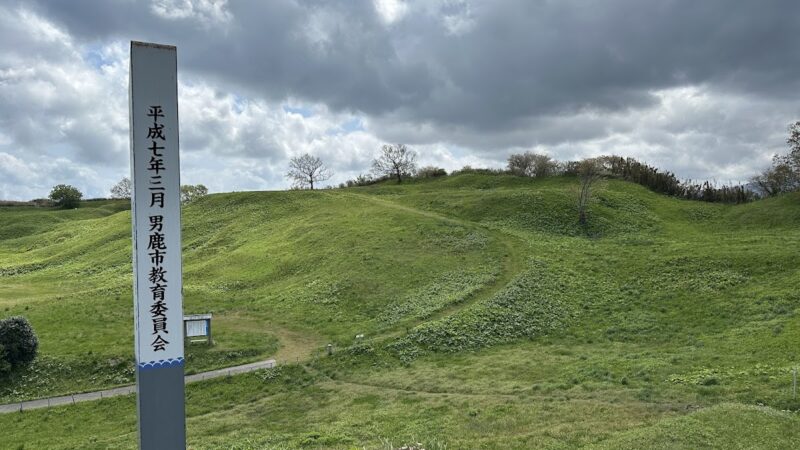
The current Tatebori Castle site has been largely transformed into rice paddies and residential areas due to land consolidation projects. While it’s difficult to imagine the magnificent double moats and buildings of yesteryear, careful observation of the terrain reveals the following traces:
- Slight elevation differences mark the division of the enclosures
- Depressions and waterways that appear to be remnants of moats
- Subtle topographical undulations
Although no clear remains of the castle exist above ground, for those familiar with the local history, the very fact that a medieval castle existed in this flat rice paddy area is fascinating.
Status of Site Preservation
The Tatebori Castle site is not designated as a national or prefectural cultural property. After excavation, documentation was preserved, and the land is currently used for agriculture. It is registered in the Archaeological Site Map Information System, and future development will require consideration of buried cultural properties.
Access to Tatebori Castle Ruins
Location and Transportation
Address: Tatebori, Terazawa, Yuzawa City, Akita Prefecture
Public Transportation
- Approximately 15 minutes by car from JR Ou Main Line “Yuzawa Station”
- Bus services are limited, so using a rental car or taxi is recommended.
By Car
- Approximately 10 minutes from Yuzawa IC on the Yuzawa-Yokote Expressway
- Accessible from National Route 13
Points to Note When Visiting
- Consideration for Private Property: The site is currently rice paddies and residential land, so please be careful not to trespass.
- Absence of Information Boards, etc.: There are no detailed explanatory boards or signs at the site.
- Best Time to Visit: It is advisable to avoid visiting during the busy farming season (rice planting and harvesting seasons).
- Prior Study: Obtaining information in advance from the Akita Prefectural Buried Cultural Properties Center or the Yuzawa City Board of Education will deepen your understanding.
Related Historical Sites in the Surrounding Area
When visiting the Tatebori Castle Ruins, visiting the following surrounding castles and fortifications will provide a deeper understanding of the medieval history of the Yuzawa region:
- Kusaizaki Castle: An outpost of Tatebori Castle (approximately 1 km north)
- Yuzawa Castle: The main castle located in the center of Yuzawa City
- Iwasaki Castle: A medieval castle and fortification within Yuzawa City
- Ono Castle: Another castle ruin within Yuzawa City
Historical Value of Tatebori Castle Ruins
Position in Regional History
The Tatebori Castle Ruins are an important site for understanding the medieval history of southern Akita Prefecture. In a region with limited written historical sources, archaeological investigations have revealed specific structures and living conditions, making it highly valued academically.
Future Research Issues
Regarding the Tatebori Castle Ruins, the following research issues remain:
- Identification of the Castle Lord: Clarification of the builder and successive castle lords through documentary research
- Refinement of the Construction Date: Narrowing down the date through detailed analysis of excavated artifacts
- Relationship with Surrounding Castles: Positioning within the castle network of the Yuzawa region
- Clarification of the Abandonment Period: Clarification of when and why the castle was abandoned
Materials and Information Sources Regarding the Tatebori Castle Ruins
Main References
For those who wish to learn more about the Tatebori Castle Ruins, the following materials are helpful:
- Akita Prefecture Cultural Property Survey Report No. 320 “Tatebori Castle Ruins: Report on the Excavation Survey of Buried Cultural Properties Related to the Prefectural Farmland Improvement Project (Terazawa Area)” (Akita Prefecture Buried Cultural Properties Center, 2000)
- “Medieval Castles of Akita” (Akita Prefecture Board of Education)
- Akita Prefecture Archaeological Site Map Information System (Available online)
Methods of Information Gathering
Akita Prefectural Buried Cultural Properties Center
- Access to excavation reports
- Possibility of some excavated artifacts being stored there
Yuzawa City Board of Education
- Provision of information on local history and cultural properties
- Information on other castles and fortifications in the city is also available
National Archaeological Site Report Directory
- Access to PDF excavation reports online
- Detailed investigation results of the Tatebori Castle site can be viewed
Points of Interest for Castle Enthusiasts
Tips for Observing Topography
Since no clear remains of the Tatebori Castle site exist, it is recommended to pay attention to the following points when visiting:
- Observation of Microtopography: Pay attention to slight differences in elevation and depressions
- Arrangement of Waterways: The current waterways may utilize the former moat site
- Unnatural Land Division: Remnants of the castle era may be seen in the division of farmland
- Relationship with Surrounding Topography: Confirm the direction and topographical advantages of Kusaizaki Castle
Photography Tips
- To capture the overall topography, shooting from a slightly elevated position is effective.
- Photographing subtle topographic features during oblique lighting (morning and evening) emphasizes shadows and highlights.
- Wide-angle photography, including the surrounding landscape, records the castle’s location and environment.
The Cutting Edge of Medieval Castle Research in Akita Prefecture
Following the investigation of the Tatebori Castle ruins, archaeological excavations of medieval castles are progressing in Akita Prefecture. The addition of archaeological approaches to medieval history research, which previously relied primarily on documentary sources, is enabling the creation of more concrete historical images.
Major Medieval Castles and Fortifications in Akita Prefecture
The following medieval castles and fortifications in Akita Prefecture can be compared to the Tatebori Castle ruins:
- Wakimoto Castle Ruins (Oga City): A nationally designated historic site, a large mountain castle overlooking the Sea of Japan
- Hiyama Castle Ruins (Noshiro City): The base of the Ando clan, a nationally designated historic site
- Yokote Castle (Yokote City): Known as a modern castle, but medieval remains also exist.
Compared to these, Tatebori Castle is positioned as a typical flatland castle of a local lord class.
Summary: The Appeal and Future of Tatebori Castle Ruins
Although no prominent remains remain at Tatebori Castle Ruins, it is an important historic site as a pioneering example of medieval castle research in Akita Prefecture. The double moat structure revealed by archaeological excavations, the diverse excavated artifacts, and the integrated defensive system with Kusaizaki Castle provide valuable information for concretely understanding local medieval society.
When you visit the site, try to imagine what it was like in the past, and reflect on the fact that medieval samurai lived in this flat rice paddy area. As a hidden historical heritage of Akita Prefecture, the Tatebori Castle ruins will continue to attract the interest of researchers and castle enthusiasts.
To cherish local history and pass it on to future generations, it is important to deepen our understanding of and interest in such local historical sites. The Tatebori Castle ruins are a valuable cultural heritage that teaches us the depth of local history and our responsibility to protect and pass it on.