Complete Guide to Tsubakidai Jinya Ruins (Akita Prefecture): Visiting the Battlefield of the Boshin War and the History of the Satake Iki-no-kami Family
Located in Yuwa Tsubakigawa, Akita City, Akita Prefecture, the Tsubakidai Jinya Ruins are an important historical site that conveys the turbulent era from the end of the Edo period to the Meiji Restoration. Built as the administrative center of the Kubota Shinden Domain, this fortified residence became the stage of the Boshin War just a few months after its completion, and is etched in history as the “Great Battle of Tsubakidai.” This article provides a detailed explanation of the Tsubakidai Jinya Ruins, including its historical background, structure, role in the Boshin War, and its current state.
What are the Tsubakidai Jinya Ruins?: The Administrative Center of the Kubota Shinden Domain
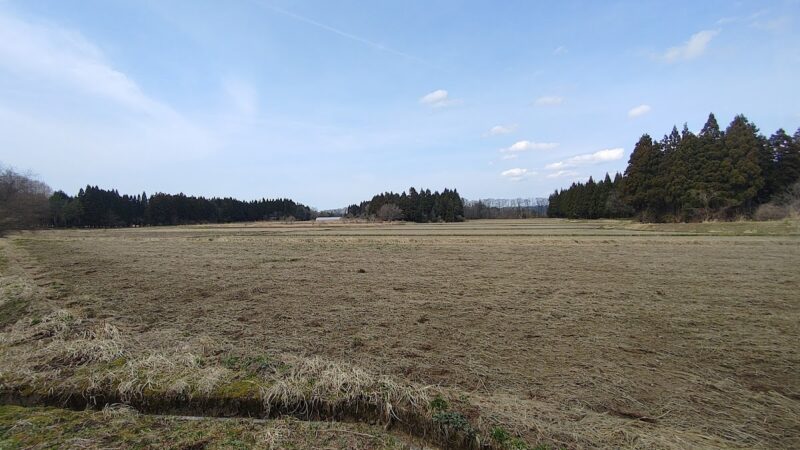
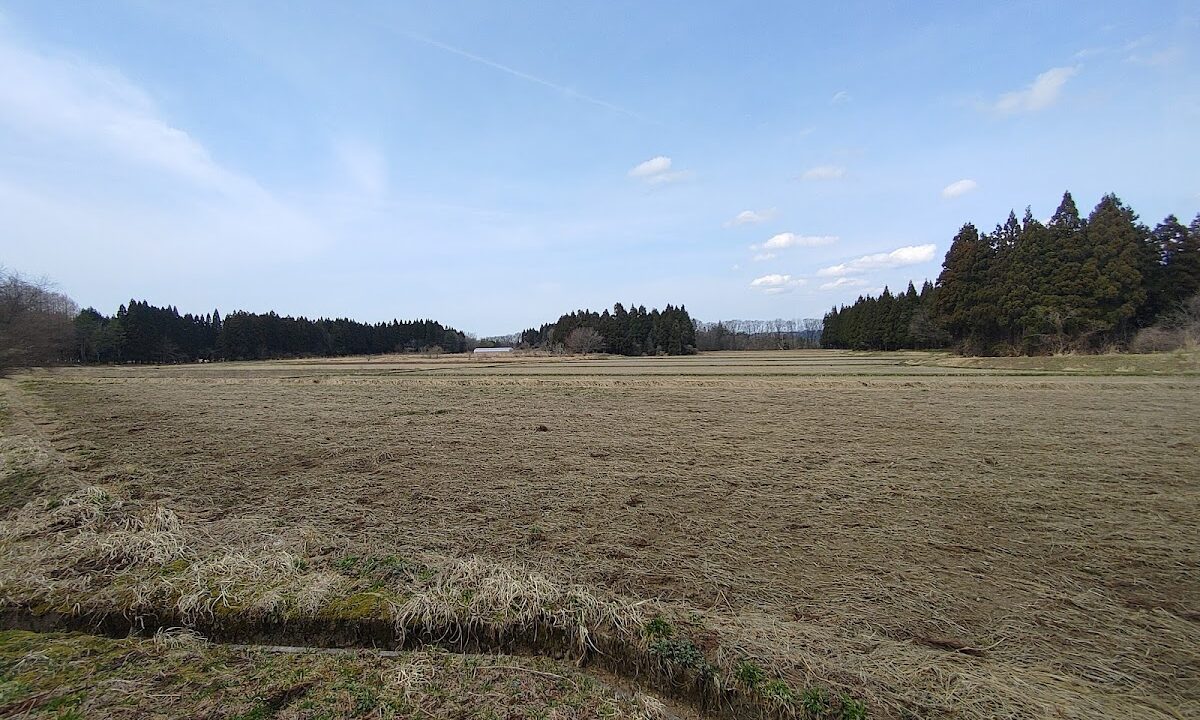
The Tsubakidai Jinya Ruins are a fortified residence built in March 1868 (Keio 4) as the administrative center of the Kubota Shinden Domain (also known as the Akita Shinden Domain). It is located in the present-day Yuwa Tsubakigawa district of Akita City, Akita Prefecture, on a river terrace at an altitude of approximately 60 meters. This plateau extends approximately 4 kilometers east to west and 2 kilometers north to south, and in the early modern period, it was an undeveloped area used as hayfield for villages such as Noda Takaya (present-day Kawabe Town), Tsubakigawa Village, and Takusagawa Village.
The Tsubakidai Jinya, also known as “Tsubakidai Castle,” was intended to function as a political and military base for the Kubota Shinden Domain, a branch domain of the Kubota Domain. However, before its completion, it became embroiled in the Boshin War, and its historical role underwent a significant transformation.
The Establishment of the Kubota Shinden Domain and the History of the Satake Iki-no-kami Family
The Birth of the Kubota Shinden Domain
The establishment of the Kubota Shinden Domain began when Satake Yoshizumi, the third lord of the Kubota Domain, granted 20,000 koku to his younger brother, Yoshinaga. This occurred in 1668, when Satake Yoshinaga became the first head of the Satake Iki-no-kami family. This branch family was positioned as the foremost branch family of the Kubota Domain’s Satake family, and each generation bore the title of Iki-no-kami.
The Era of a Resident Daimyo
However, the Kubota Shinden Domain had a unique position from its inception. It was obligated to reside permanently in Edo as a “resident daimyo.” While ordinary daimyo traveled between Edo and their territories through the sankin-kōtai system, the Satake Iki-no-kami family of the Kubota Shinden Domain resided permanently in their Edo residence and never returned to their territory in Akita. Therefore, for approximately 200 years, the lord of the domain did not directly govern the territory; instead, a magistrate was dispatched to manage it.
Satake Yoshitsuma’s Departure to Akita
This situation changed dramatically during the time of the 8th head of the family, Satake Yoshitsuma (also known as Yoshimichi). In March of Keio 4 (1868), Yoshinobu decided to travel to Akita for the first time in 200 years. This decision was driven by the political turmoil of the late Edo period and the need to adapt to the new political system after the Meiji Restoration. Upon arriving in Akita, Yoshinobu immediately began construction of a fortified residence (jinya) on Tsubakidai.
Yoshinobu chose Tsubakidai because it was a suitable plateau, located at a moderate distance from the Kubota castle town, and ideally suited for defense. Furthermore, its undeveloped state offered ample room for the construction of a new castle town, which was another important factor.
Structure and Scale of the Tsubakidai Jinya
Basic Structure of the Jinya
The Tsubakidai Jinya was planned as a jinya-style facility rather than a complete castle. A jinya is generally a residence built in the territory of a daimyo or hatamoto with a domain of 10,000 to 100,000 koku, characterized by its relatively simple structure and lack of a keep. However, in the case of the Tsubakidai Jinya (fortified residence), as the residence of a daimyo with a 20,000 koku (unit of rice production) domain, it possessed a considerable scale and defensive capabilities.
At the center of the fortified residence was the lord’s palace, surrounded by earthen ramparts and a moat. Some of the earthen ramparts still remain today, allowing us to estimate the size of the fortified residence at the time. Furthermore, there were plans to arrange residences for the retainers around the fortified residence, but the outbreak of the Boshin War forced the construction of the castle town to be halted.
Artillery Battery and Defensive Facilities
The Tsubakidai Jinya was equipped with artillery batteries reflecting the military technology of the late Edo period. Currently, a small mound located between the 1st and 9th holes of the Akita Tsubakidai Country Club’s out course is considered to be the site of the former artillery battery. This battery played a crucial role in the Battle of Tsubakidai.
The defensive layout, utilizing the plateau terrain, would be tested in actual combat during the Boshin War. The defensive system, combining traditional defensive structures such as earthworks and moats with modern artillery batteries, is a valuable example of the transitional period in castle architecture during the late Edo period.
The Battle of Tsubakidai: A Fierce Battle Site of the Boshin War
The Outbreak of the Boshin War and the Akita War
In 1868 (Keio 4), the Boshin War broke out between the Meiji government and the former shogunate forces. This war began with the Battle of Toba-Fushimi and spread throughout the country. In the Tohoku region, the Ouetsu Reppan Alliance was formed to oppose the new government, but the Kubota Domain (Akita Domain) chose to side with the new government.
This choice made the Kubota Domain a target of attack by the Ouetsu Reppan Alliance forces. In particular, the alliance forces, centered around the Shonai Domain, launched an invasion of the Kubota Domain, leading to a series of battles known as the Akita War.
The Great Battle of Tsubakidai on September 16, 1868
The Great Battle of Tsubakidai took place on September 16, 1868 (Meiji 1). Approximately 2,000 troops of the Ouetsu Reppan Alliance, centered around the Shonai Domain, attacked the Tsubakidai encampment, while the Kubota Shinden Domain and Kubota Domain defenders met them.
The battle began early in the morning, with the Alliance forces attacking the Tsubakidai plateau. The defenders utilized the terrain to their advantage, retaliating with artillery and gunfire from their fortifications. However, they were overwhelmed by the Alliance’s fierce offensive, and intense hand-to-hand combat ensued. The battle continued throughout the day, resulting in heavy casualties on both sides.
Course and Outcome of the Battle
In the Great Battle of Tsubakidai, the Kubota Domain forces, representing the new government, ultimately succeeded in repelling the Alliance forces. However, the Tsubakidai encampment suffered significant damage in this battle, with many of its newly constructed facilities being destroyed. Furthermore, records indicate that Satake Yoshinori himself participated in the battle, fighting alongside his retainers in the defensive battle.
This victory was crucial in establishing the New Government forces’ superiority throughout the Akita War. Following the victory at Tsubakidai, the Kubota Domain launched a counterattack, driving the allied forces out of its territory.
Post-War Tsubakidai Jinya
After the decisive battle at Tsubakidai, the Boshin War ended with a victory for the New Government forces, and the Meiji government was established. However, due to damage from the battle and the Meiji government’s policies of returning domains to the emperor and abolishing the feudal domains, the Tsubakidai Jinya lost its function as a domain office.
With the abolition of the feudal domains in 1871 (Meiji 4), the Kubota Shinden Domain was abolished, and the Tsubakidai Jinya was abandoned. Subsequently, the site of the Jinya was sold off to private individuals and used as farmland.
Current Status and Remains of the Tsubakidai Jinya Site
Current Status of the Tsubakidai Jinya Site
Currently, most of the Tsubakidai Jinya site is occupied by the Akita Tsubakidai Country Club golf course. This golf course opened in April 1973 (Showa 48) and operates as a full-fledged 27-hole golf course.
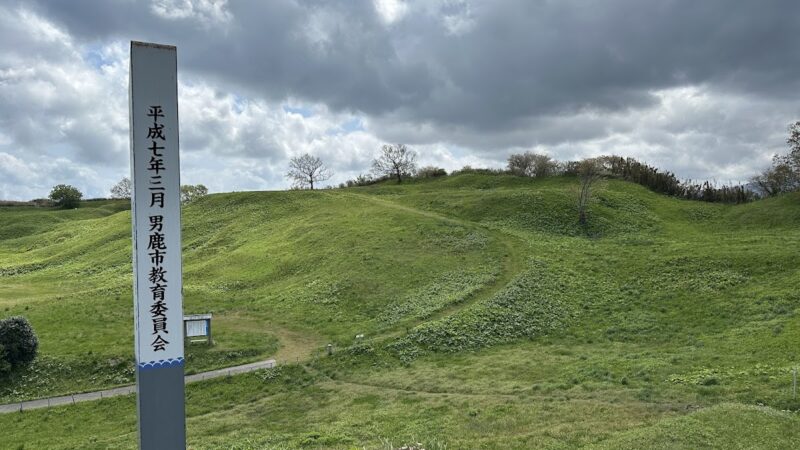
While many remains of the Jinya site have been lost due to the development of the golf course, some traces of earthworks remain. In particular, the small mound between the 1st and 9th holes on the out course is preserved as the site of a former gun battery, conveying the memory of the great battle of Tsubakidai.
Remaining Remains
The fairways of the golf course retain topographical undulations that evoke the former battlefield. These undulations may be remnants of earthworks and moats from that time. Furthermore, parts of the earthworks are preserved in the woods surrounding the course, providing clues to estimating the scale of the Jinya.
Remaining Remains
The fairways of the golf course retain topographical undulations that evoke the image of the fierce battlefield. These undulations may be remnants of earthworks and moats from that period. Additionally, parts of the earthworks are preserved within the woods around the course, providing clues to estimating the scale of the Jinya. Unfortunately, no buildings remain, and only a limited number of monuments and information boards exist. Therefore, when visiting the Tsubakidai Jinya Ruins, it is important to learn about the historical background beforehand to deepen your understanding of the site.
Historical Evaluation and Preservation Status
The Tsubakidai Jinya Ruins are not currently designated as a national or prefectural cultural property. However, as a site symbolizing the turbulent period from the end of the Edo period to the Meiji Restoration, its historical value is highly regarded. In particular, its unique history—becoming the stage of the Boshin War just a few months after its construction—is rare and makes it a valuable historical heritage site.
In recent years, research by local historians and community historians has progressed, and the historical importance of the Tsubakidai Jinya Ruins is being re-recognized. Further detailed excavation surveys and preservation measures for the remains are expected in the future.
Access and Visiting Information for Tsubakidai Jinya Ruins
Location and Basic Information
Location: Chojayashiki, Tsubakikawa, Yuwa, Akita City, Akita Prefecture
Access: Approximately 10 minutes by car from Akita Airport, approximately 30 minutes by car from JR Akita Station
Visiting: As it is located within the grounds of Akita Tsubakidai Country Club, entry is restricted to golf course users only.
Access by Car
Approximately 15 minutes from the Akita Airport IC on the Akita Expressway via National Route 341. From central Akita City, the most common route is to head south on National Route 13 towards the Yuwa area. When using a car navigation system, it is convenient to set “Akita Tsubakidai Country Club” as the destination.
Access by Public Transportation
Public transportation access is limited. If using a bus from JR Akita Station, take a bus bound for Yuwa and then walk or take a taxi from the nearest bus stop. However, since bus service is infrequent, we recommend checking the timetable in advance.
Points to Note When Visiting
Most of the Tsubakidai Jinya Ruins are located within the grounds of a golf course, so general public access is restricted. If you wish to view the remains, you must either observe them from the surrounding area outside of golf course operating hours or contact the golf course in advance to confirm whether visits are permitted.
From the roads surrounding the golf course, you can observe the topography and plateau of Tsubakidai. There are also information boards regarding the Tsubakidai Grand Battle, so we recommend gathering information beforehand.
Nearby Historical Spots and Tourist Information
Kubota Castle Ruins (Senshu Park)
When visiting the Tsubakidai Jinya Ruins, we recommend also visiting the Kubota Castle Ruins, the residence of the original Kubota clan. Kubota Castle Ruins are located within Senshu Park in the center of Akita City, and remnants such as the Osumi Yagura (reconstructed) and the Honmaru Omote Gate remain. Visiting both will deepen your understanding of the history and the relationship between the Kubota clan and the Kubota Shinden clan.
Location: Senshu Park, Akita City, Akita Prefecture
Access: Approximately 10 minutes on foot from JR Akita Station
Opening Hours: Senshu Park is always open; the Osumi-yagura (corner tower) is open from 9:00 to 16:30
Admission Fee: The Osumi-yagura requires an admission fee (100 yen for adults)
Akita Prefectural Museum
This facility provides a comprehensive overview of Akita Prefecture’s history and culture. It includes exhibits on the Boshin War and the Akita War, offering valuable information for understanding the background of the Battle of Tsubakidai.
Location: 52 Ushiroyama, Kanefusa Niozaki, Akita City, Akita Prefecture
Access: Approximately 20 minutes by car from JR Akita Station
Opening Hours: 9:30 AM – 4:30 PM (April – October), 9:30 AM – 4:00 PM (November – March)
Closed: Mondays (or the following day if Monday is a public holiday), New Year holidays
Admission Fee: 310 yen for adults
Historical Resources in the Yuwa District, Akita City
The Yuwa district, where the Tsubakidai Jinya Ruins are located, has other historical sites. The Yuwa district has been developed since ancient times, and remnants of medieval ruins and early modern roads remain. Gathering information at local history museums and information centers will allow for a more fulfilling historical exploration.
Historical Significance of the Tsubakidai Jinya Site
Position in the History of the Late Edo and Meiji Restoration
The Tsubakidai Jinya site is a historical site that symbolizes the turbulent period from the late Edo period to the Meiji Restoration. The fact that a daimyo who had been permanently stationed in Edo for 200 years returned to his territory for the first time during the chaotic period of the late Edo period and built a jinya (fortified residence) speaks volumes about the magnitude of the political and social changes at the time.
Furthermore, the fact that it became the site of a fierce battle in the Boshin War just a few months after its construction clearly demonstrates the rapid changes of the Restoration period. The Tsubakidai Jinya can be said to embody the contradiction of the era, as it was planned as a base for domain administration during peacetime, but in reality had to function as a military base during wartime.
Importance in Boshin War Research
The Battle of Tsubakidai was one of the largest battles in the Akita War and influenced the overall course of the Boshin War. The victory of the New Government forces in this battle marked a crucial turning point that shifted the course of the war in the Tohoku region in favor of the New Government.
In Boshin War research, the Battle of Tsubakidai is noteworthy as an example of a battle where modern firearms and traditional tactics were intertwined. Furthermore, the defensive tactics utilizing the plateau terrain and the placement of artillery batteries provide valuable information for understanding the realities of military technology during the late Edo period.
Value in Local History
In the local history of Akita Prefecture, the Tsubakidai Jinya (fortified residence) site is the only concrete remains of the Kubota Shinden Domain, a branch domain of the Kubota Domain. Although the Kubota Shinden Domain existed for approximately 200 years, it did not have a domain office in its territory, resulting in very few remaining physical legacies. The Tsubakidai Jinya site is a valuable historical relic that proves the existence of this phantom domain.
Furthermore, in the history of the Yuwa district, the construction of the Tsubakidai Jinya and the Battle of Tsubakidai were important events that brought the region to the forefront of history. This history also contributed to the formation of the region’s identity.
A Guide to a Historical Walk Around the Tsubakidai Jinya Ruins
Points for Historical Exploration
When visiting the Tsubakidai Jinya Ruins, paying attention to the following points will lead to a deeper understanding of the history.
- Topography of the Plateau: The Tsubakidai plateau is key to understanding why the fort was built and its defensive advantages in battle. Observing the difference in elevation with the surrounding lowlands will give you a sense of the military advantage.
- Traces of Earthworks: Traces of earthworks remaining within and around the golf course provide clues to inferring the scale and structure of the fort.
- Battery Site: The mound between the 1st and 9th holes on the out course of Akita Tsubakidai Country Club is believed to be the site of a former battery. Looking around from this position will help you understand the battery’s field of fire and defensive range.
- Surrounding Place Names: Surrounding place names such as Tsubakigawa and Takusagawa have their history etched into them since the Edo period. By researching the origins of place names, you can learn about the historical changes of the region.
Enjoying the Area by Season
The area around the Tsubakidai Jinya Ruins is a place where you can enjoy nature throughout the four seasons.
Spring: During cherry blossom season, the surrounding natural forests are beautifully colored. You can enjoy a historical walk amidst the fresh greenery.
Summer: The lush green plateau remains relatively cool even in summer, making it suitable for walks.
Autumn: During the autumn foliage season, the Tsubakidai plateau is dyed in red and yellow, creating a beautiful landscape. You can experience the seasonal atmosphere of September, when the Boshin War took place.
Winter: Covered in snow, Tsubakidai is enveloped in silence. You can reflect on the hardships endured by the soldiers who fought in the harsh winter climate.
Related Materials and References
For those who wish to learn more about the Tsubakidai Jinya Ruins and the Battle of Tsubakidai, the following materials are helpful.
- “History of Akita Prefecture” (Yamakawa Publishing)
- “Complete History of the Boshin War” (Various publishers)
- Exhibition materials and explanations at the Akita Prefectural Museum
- “Akita City History” by the Akita City History Compilation Committee
- Publications by local history research associations
These materials are available for viewing at the Akita Prefectural Library and the Akita City Central Library, among others.
Summary: Historical Lessons Told by the Tsubakidai Jinya Ruins
The Tsubakidai Jinya Ruins are a historical site symbolizing the greatest period of transformation in Japanese history, from the end of the Edo period to the Meiji Restoration. The attempt by a daimyo who had been permanently stationed in Edo for 200 years to return to his territory and establish a new base in response to changing times speaks to the difficulties and decisions faced by samurai at that time.
However, the fact that it became the site of fierce battles during the Boshin War just a few months after its construction, resulting in many casualties, demonstrates the immense impact that rapid changes in the times have on individuals and organizations. Tsubakidai Jinya (Tsubakidai Fortified Residence) embodies the irony of history: planned as a peaceful administrative center for the domain, it became a battlefield.
Currently, much of the Tsubakidai Jinya site is a golf course, and the former battlefield is used as a peaceful leisure facility. This transformation, too, can be said to symbolize Japan’s historical journey from war to peace.
Visiting the Tsubakidai Jinya site is not merely a tour of historical ruins; it’s an opportunity to learn about the choices and struggles of the people who lived through a turbulent era, and the lessons of history. For us living in the modern age, the Tsubakidai Jinya site is a valuable historical heritage that teaches us the importance of decision-making in times of change and the preciousness of peace.
When you visit Akita Prefecture, be sure to visit the Tsubakidai Jinya site and experience the historical memories etched into this land. Standing on the plateau and gazing at the surrounding scenery, you may find yourself imagining the figures of the people who fought here more than 150 years ago.