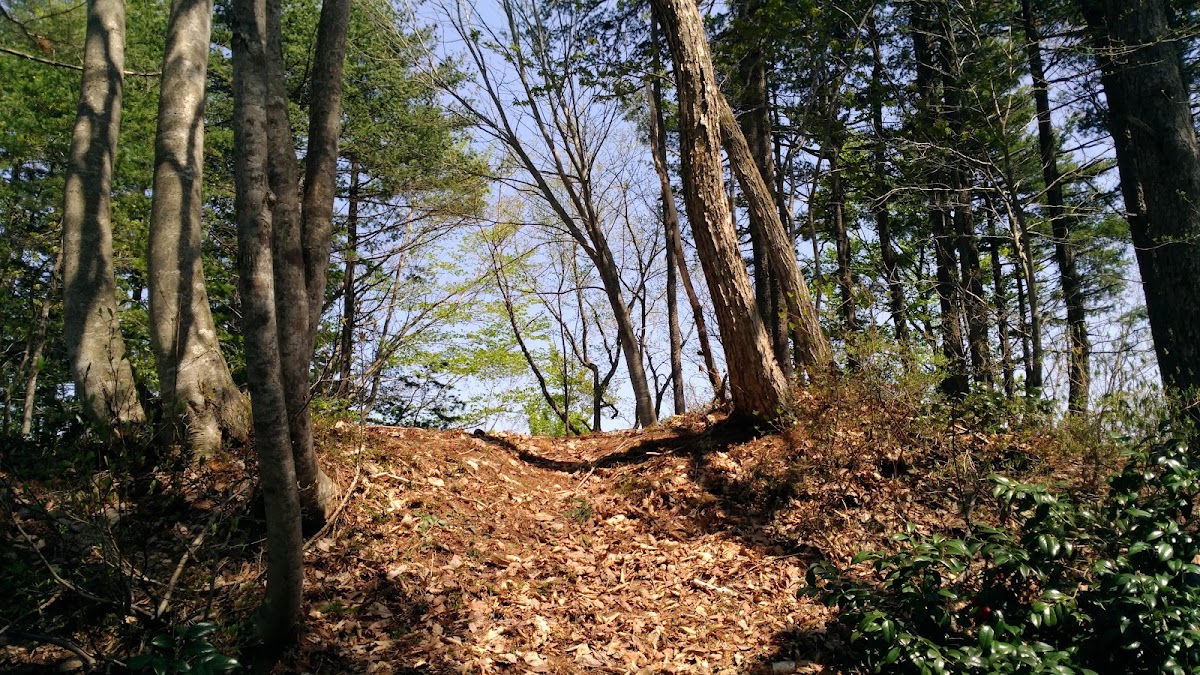
Complete Guide to Nakamaru Castle (Fukushima Prefecture): The Yamauchi Clan’s Residence and Date Masamune’s Conquest
Nakamaru Castle, located in Kaneyama Town, Onuma District, Fukushima Prefecture, is one of the important mountain castles in the Aizu region during the Sengoku period. Also known as “Yokota Nakamaru Castle” and “Tateiwa Castle,” this castle is known as the ancestral residence of the Yamauchi clan, and a fierce battle took place there during an attack by Date Masamune in 1589. This article provides a detailed explanation of Nakamaru Castle, from its history to existing remains and access methods.
Basic Information on Nakamaru Castle
Location and Former Provincial Name
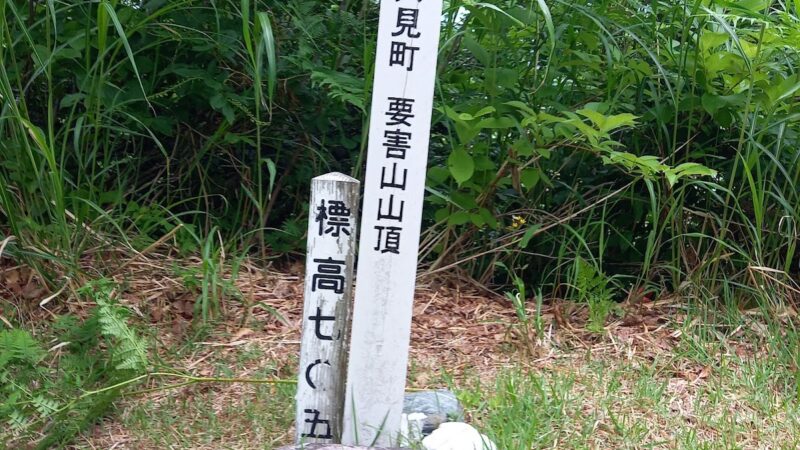
Nakamaru Castle is located in Yokota, Yogaiyama, Kaneyama Town, Onuma District, Fukushima Prefecture. It belonged to the former Iwashiro Province and was built at a strategic point in the northern part of the Aizu region, along the Tadami River basin. Located along National Route 252, it is still preserved as an important historical site in Kaneyama Town.
Common Names and Alternate Names
Nakamaru Castle has several names:
- Yokota Nakamaru Castle: The official name, derived from the place name.
- Tateiwa Castle: An alternative name derived from the topographical features.
- Nakamaru Castle Ruins: The current name for the historical site.
Classification and Structure
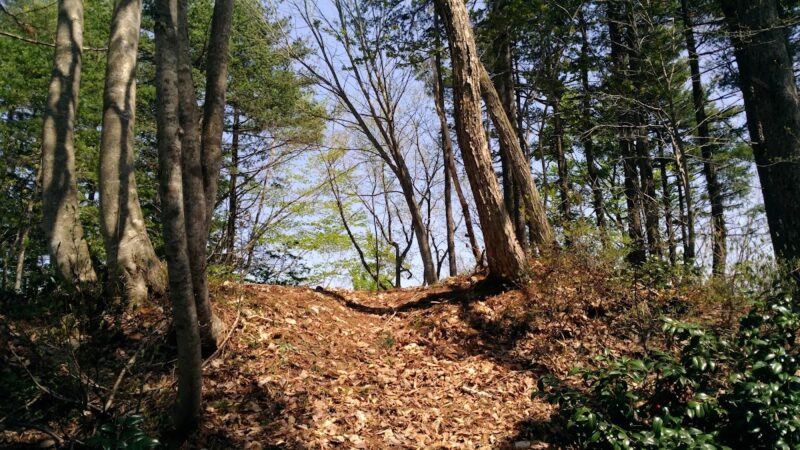
Nakamaru Castle is classified as a typical mountain castle. It has a defensive structure that utilizes the rugged terrain of Yogaiyama Mountain, and exhibits the unique castle-building techniques of the Sengoku period, combining natural terrain with artificial civil engineering. It features a main keep located at the mountaintop, with multiple baileys extending along the ridge.
History of Nakamaru Castle
Construction and the Yamauchi Clan
The construction of Nakamaru Castle dates back to the Nanboku-cho period. The builder is said to be Yamauchi Toshiaki, and it subsequently functioned as the residence of successive generations of the Yamauchi clan. The Yamauchi clan, as influential vassals of the prestigious Ashina clan of Aizu, played a crucial role in the defense of northern Aizu.
The Yamauchi clan ruled this region for eighteen generations, maintaining and expanding Nakamaru Castle as the political and military center of the area. Especially during the late Sengoku period, it became a vital base amidst the turmoil of the Aizu region.
The Fierce Battle of Tensho 17: The Battle of Suriagehara and the Siege of Nakamaru Castle
The most important event in the history of Nakamaru Castle was the attack by Date Masamune in Tensho 17 (1589).
In that year, in the Battle of Suriagehara, Ashina Yoshihiro, lord of Kurokawa Castle, suffered a crushing defeat at the hands of Date Masamune. This defeat led to the collapse of the Ashina clan’s power, and the Aizu region came under the control of the Date clan.
However, the 18th lord of Nakamaru Castle, Yamauchi Ujikatsu, refused to surrender even after the Ashina clan’s defeat, and continued to resist by holed up in Nakamaru Castle. In response to this tenacious resistance, Date Masamune dispatched a large army to besiege and attack Nakamaru Castle.
A fierce battle unfolded, centered around the mountain castle, and ultimately Nakamaru Castle fell. This battle became one of the most significant battles in establishing Date Masamune’s rule over the Aizu region.
Year of Abandonment and Aftermath
The year of abandonment of Nakamaru Castle is estimated to be around 1590 (Tensho 18). It is believed that Nakamaru Castle ceased its role as a military base around the time when Date Masamune withdrew from Aizu following Toyotomi Hideyoshi’s pacification of Oshu, and Gamo Ujisato became the lord of Aizu.
Afterward, the castle was abandoned and returned to nature, but the remains have remained in good condition to this day.
Remains of Nakamaru Castle
Existing Major Remains
Nakamaru Castle ruins contain many remains that exhibit the characteristics of a mountain castle from the Sengoku period:
Enclosures (Kuruwa)
Several enclosures are arranged in a stepped pattern around the main enclosure at the mountaintop. The main enclosure is a place where Marishiten is enshrined, and holds an important position as an object of worship. Each enclosure functioned for both defense and habitation, illustrating the scale and importance of the castle.
Earthworks (Dorui)
Earthworks were built around the enclosures, enhancing their defensive capabilities. The earthworks prevented enemy intrusion and also served to shield the interior of the enclosures from outside view. Some of the earthworks remain in good condition, conveying the castle-building techniques of the time.
Moats (Horikiri)
The moats that divide the ridge are an important defensive structure of Nakamaru Castle. In particular, a double moat is constructed behind the main enclosure, a structure designed to effectively prevent enemy intrusion. The depth and width of the moat demonstrate the advanced civil engineering technology of the time.
Koguchi (Gate)
The koguchi, the entrance to the castle, can also be seen. The koguchi is not merely an entrance, but a structure designed to restrict enemy intrusion and give the defenders an advantage. The koguchi of Nakamaru Castle is positioned to take advantage of the unique terrain of a mountain castle.
Honmaru and Marishiten
At the top of the Honmaru, Marishiten is enshrined. Marishiten was worshipped by samurai as a god of victory, and it is believed that the Yamauchi clan also revered this god as the guardian deity of the castle. Even today, it is cherished by the local people as an object of worship.
Nakamaru Castle as a Designated Cultural Property
The Nakamaru Castle ruins are protected as a Kanayama Town Designated Historic Site. As a valuable historical site that preserves the structure of a mountain castle from the Sengoku period in excellent condition, it forms the core of the region’s historical heritage.
Explanatory signs have been installed by the town to make it easier for visitors to understand the history. It also plays an important role as a resource for local history education and tourism.
Access and Visiting Information
Location and Access
Address: Yokota, Yogaiyama, Kaneyama-machi, Onuma-gun, Fukushima Prefecture
Nearest Landmark: An explanatory sign for Nakamaru Castle Ruins is located east of a private house near 331 Yokota Nakamaru along National Route 252.
Transportation
Access by Car
- Approximately 40 minutes from the Ban-etsu Expressway, Aizu-Bange IC, via National Route 252
- Parking: Limited space available around the information board (please check with the Kaneyama Town Tourism Association for details)
Public Transportation
- Within walking distance from JR Tadami Line, Aizu-Yokota Station (prior confirmation of distance is recommended)
- However, the Tadami Line has limited service, so prior timetable confirmation is necessary.
Points to Note When Visiting
Nakamaru Castle is a mountain castle, and the following points should be noted when climbing:
- Clothing: Comfortable clothing and hiking boots are recommended
- Season: There is snow in winter, so spring to autumn is the best time to visit
- Bush and Steep Slopes: Some areas have dense bush and steep slopes, so caution is necessary
- Access to the Double Moat: The double moat behind the main enclosure can be difficult to reach due to its steep slope and dense undergrowth.
- Avoiding Solo Visits: Visiting in groups is safer if possible.
Nearby Tourist Spots
Tadami Town Kawai Tsuginosuke Memorial Museum
Located about 30 minutes by car from Nakamaru Castle, Tadami Town is home to a memorial museum dedicated to Kawai Tsuginosuke, a senior retainer of the Nagaoka Domain who played an active role in the Boshin War. Kawai Tsuginosuke met his end in this area during the Aizu War, making it a must-see spot for anyone interested in the history of the late Edo period.
Kawai Tsuginosuke’s Grave
Tadami Town also has the grave of Kawai Tsuginosuke, allowing visitors to reflect on the history of the late Edo period. Visiting both Nakamaru Castle and the grave allows you to trace the history of samurai in Fukushima Prefecture from the Sengoku period to the end of the Edo period.
Kaneyama Town’s Nature and Tourism
Kaneyama Town is a town rich in nature, with the catchphrase “A place overflowing with the blessings of nature and smiles.” You can enjoy the beautiful scenery of the Tadami River’s clear waters and the surrounding mountains, which change with the seasons.
Nakamaru Castle and the Aizu Castle Network
Position in the Ashina Clan’s Rule System
Nakamaru Castle played an important role in the rule system of the Ashina clan, a prestigious family in Aizu. With Kurokawa Castle (later Aizu-Wakamatsu Castle), the Ashina clan’s base, as the central hub, castles belonging to their vassals were strategically placed throughout the Aizu region, and Nakamaru Castle was a key point for the northern defense.
The Yamauchi clan, as powerful vassals of the Ashina clan, were tasked with protecting the strategically important Tadami River basin and preparing for invasions from the Echigo region.
Comparison with Other Aizu Castles
Many castles exist in the Aizu region:
- Aizu-Wakamatsu Castle: The central castle of Aizu
- Mukaihaguroyama Castle: Famous as a mountain castle of the Ashina clan
- Shirakawa-Komine Castle: An important base in southern Aizu
- Nihonmatsu Castle: A strategic point connecting Aizu and Oshu
Although Nakamaru Castle is smaller in scale compared to these castles, it held significant importance as a practical mountain castle for regional control.
Historical Significance of Nakamaru Castle
Role in Aizu during the Sengoku Period
Nakamaru Castle was not merely a military facility, but functioned as a base for regional control. The Yamauchi clan, based at Nakamaru Castle, fulfilled various roles as lords, including governing the surrounding area, collecting taxes, and maintaining public order.
Value in Mountain Castle Research
Nakamaru Castle is important in castle research as a site that well preserves the structure of a mountain castle from the Sengoku period. The remains of the castle, such as moats, gates, and earthworks, offer insights into the castle-building techniques and defensive philosophies of the time.
In particular, the double moats are noteworthy as valuable remains demonstrating advanced defensive techniques for mountain castles.
Importance in Local History
Nakamaru Castle holds a significant position in the history of Kaneyama Town and the Aizu region. Its history—under the rule of the Yamauchi clan, its battles with Date Masamune, and its eventual abandonment—symbolizes the turmoil of the Sengoku period experienced by this region.
A Recommendation for Visiting Nakamaru Castle
Attractions for Castle Enthusiasts
Nakamaru Castle is attractive to castle enthusiasts for the following reasons:
- Well-preserved Remains: Clearly preserved moats, gates, and earthworks.
- Historical Drama: Historical background including battles with Date Masamune.
- The Charm of a Mountain Castle: Ingenious layout that utilizes the rugged terrain.
- Quiet Environment: A calm atmosphere, not commercialized for tourism.
Value as a Historical Learning Site
Visiting Nakamaru Castle is an excellent opportunity to learn about the history of the Aizu region during the Sengoku period. By visiting the site, you can gain an understanding of the topography that cannot be obtained from documents alone, and get closer to the reality of the lives and battles of the people at that time.
Harmony with Nature
Nakamaru Castle ruins are surrounded by nature, allowing you to enjoy nature walks along with historical exploration. You can reflect on history amidst the scenery of the four seasons, the chirping of wild birds, and the refreshing air.
Summary
Nakamaru Castle (Fukushima Prefecture) is a mountain castle that played an important role in the Aizu region during the Sengoku period (Warring States period). It flourished as the residence of successive generations of the Yamauchi clan, and in 1589, it was the site of a fierce battle against Date Masamune.
Even today, the remains of the castle, such as moats, gates, and earthworks, are well-preserved and protected as a designated historical site of Kaneyama Town. Located along National Route 252, it is relatively easy to access.
We recommend a visit to Nakamaru Castle for castle enthusiasts, history buffs, and anyone interested in the history of Fukushima Prefecture. You can feel the spirit of the Sengoku period and touch upon a part of Aizu’s history.
When visiting Kaneyama Town, be sure to visit the Nakamaru Castle ruins and experience the historical drama unfolded between the Yamauchi clan and Date Masamune. Combining a visit with other tourist spots in the nearby Tadami Town will make for a more fulfilling historical exploration.