Kurazo Castle (Tendo City, Yamagata Prefecture): A Complete Guide to its History and Highlights | A Thorough Explanation of the Mogami Clan’s Strategic Base
What is Kurazo Castle? A Sengoku Period Flatland Castle Remaining in Tendo City, Yamagata Prefecture
Kurazo Castle is a flatland castle built in the Kurazo district of Tendo City, Yamagata Prefecture, during the Sengoku period. As an important strategic base built by the Mogami clan to expand their power, it is a noteworthy presence in the history of castles in Yamagata Prefecture.
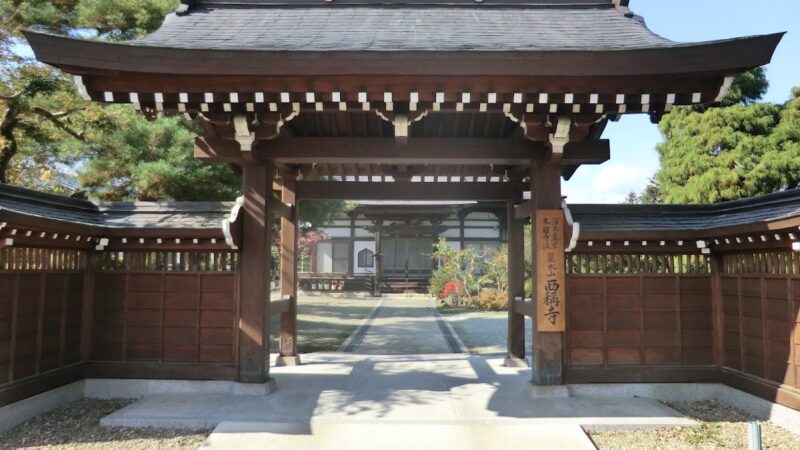
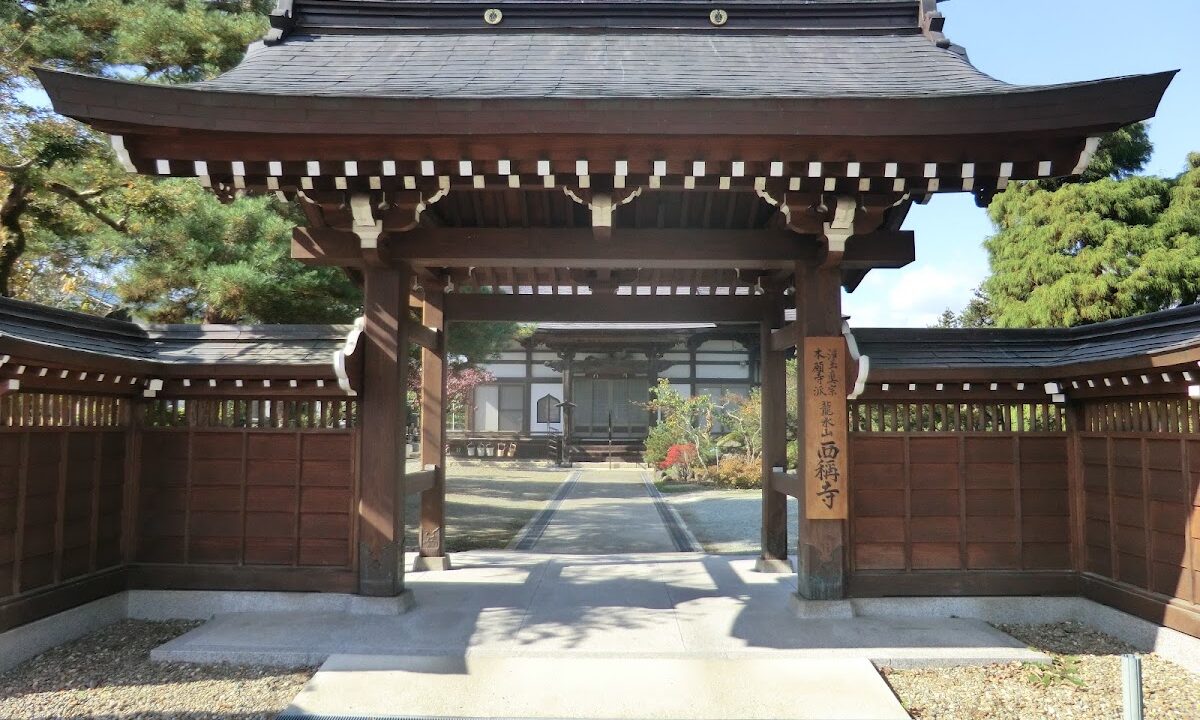
Currently, the main part of the castle ruins is located within and around the grounds of Saishoji Temple, and it is known as a flatland castle with a complex layout. The structure, with the second and third baileys arranged around the main bailey, is a valuable historical site that conveys the castle-building techniques and strategic thinking of the time.
Basic Information on Kuramasu Castle
Location: Kuramasu-ko, Tendo City, Yamagata Prefecture (near Nishishoji Temple)
Castle Classification: Flatland Castle
Construction Period: Sengoku period (late 15th to 16th century)
Builder: Kuratsu Awamori (vassal of the Mogami clan)
Main Lords: Kuratsu clan, vassals of the Mogami clan
Remains: Remains of baileys, decorative well, traces of earthworks
Designated Cultural Property: None (Local Historic Site)
History of Kuramasu Castle | The Expansion of the Mogami Clan’s Power and the Background of its Construction
Construction History and the Situation of the Sengoku Period
Kuramasu Castle was built during the process of the Mogami clan consolidating their power in the Yamagata Basin. At that time, the Yamagata Prefecture area was a battleground of the Sengoku period, with the Ooe clan of Sagae, the Shiratori clan of Yachi, and the Mogami clan vying for supremacy.
While the Mogami clan was based at Yamagata Castle, they needed to establish branch castles in various locations to expand their influence in the surrounding areas. Kuramasu Castle is believed to have been built as part of this strategic placement, to solidify their control over the Tendo region.
The Relationship Between the Kuratsu Clan and Kuramasu Castle
The construction and operation of the castle were entrusted to Kuratsu Awamori, a senior retainer of the Mogami clan. The Kuratsu clan was a powerful group of vassals serving the Mogami clan and was entrusted with governing this region.
It is presumed that the Kuratsu clan, by establishing a castle in Kuramasu, played the following roles:
- Stabilizing the Mogami clan’s control over the Tendo region
- A defensive base against invasions from the east
- Monitoring and gathering information on the surrounding area
- Collecting local taxes and managing local administration
The Legend of Hagihime and the Cosmetic Well
A famous legend associated with Kuramasu Castle is the story of “Hagihime.” Hagihime was said to be the daughter of the castle lord and was known for her beauty. The “Hagihime’s Makeup Well,” which remains on the grounds of Saishoji Temple today, is said to be the well she used for her daily makeup.
This well still holds water and is preserved as a valuable historical relic that evokes the lifestyle of that time. Carefully protected by the local people, this well is an indispensable part of the history of Kuramasu Castle.
The Decline of the Mogami Clan and the Abandonment of the Castle
After the end of the Sengoku period and the beginning of the Edo period, the Mogami clan temporarily became a powerful daimyo with a domain of 570,000 koku. However, in 1622 (Genna 8), during the time of Mogami Yoshitoshi, they were dispossessed of their domain due to a family dispute (the Mogami Rebellion).
It is believed that, consequently, Kuramasu Castle, a branch castle of the Mogami clan, ceased to serve its purpose and was abandoned. Afterward, part of the castle site became the grounds of Saishoji Temple, and it has been passed down to this day as a place of worship for the local community.
Layout and Structure of Kuramasu Castle | Characteristics of a Concentric Flatland Castle
Basic Structure of the Castle
Kuramasu Castle was designed as a concentric flatland castle. A concentric castle refers to a structure where multiple baileys (kuruma) are arranged concentrically around a central bailey (honmaru).
Main Bailey (Honmaru): The area around present-day Seishoji Temple corresponds to the main bailey. This was the central area where the lord’s residence and important facilities were located.
Second Bailey (Ninokuruwa): This bailey was arranged surrounding the main bailey and housed the residences of retainers and defensive facilities.
Third Bailey (Sannomaru): Located west of the second bailey, it is presumed to have contained the castle town and storage facilities for supplies.
Characteristics as a Flatland Castle
Kuramasu Castle was built as a flatland castle, not a mountain castle. The following reasons are possible:
- Convenient Transportation: Building on flat land facilitates connection to roads, enabling smooth transportation of goods and information.
- Convenient Administration: The location allows for close proximity to the people and facilitates the performance of administrative functions.
- Water Supply: Wells can be easily dug on flat land, ensuring a supply of water for daily life and emergencies.
- Historical Context: In the late Sengoku period, there was a trend toward an increase in flatland castles that prioritized administrative functions over practical mountain castles.
Defensive Structures and Features
Even as a flatland castle, Kuramasu Castle incorporated various defensive features:
- Earthworks: Earthworks were built around the baileys to prevent enemy intrusion.
- Moats: Moats were constructed to demarcate the baileys, functioning as either water or dry moats. – Tiger’s Mouth: The tiger’s mouth, which served as the entrance and exit, was equipped with ingenious features to prevent enemy intrusion.
Kuramasu Castle Today | Remains and Highlights
Saishoji Temple and Castle Ruins
Currently, Saishoji Temple stands on the site of the main enclosure of Kuramasu Castle. Saishoji Temple is a beloved place of worship for the local people, and an information board indicating the castle ruins is installed within the temple grounds.
Access: Kuramasu-ko, Tendo City, Yamagata Prefecture
Visiting Hours: The temple grounds are freely accessible (consideration for temple facilities is necessary)
Parking: Limited space available
Hagihime’s Cosmetic Well
The Hagihime’s Cosmetic Well, remaining within the grounds of Saishoji Temple, is one of the most important remains of Kuramasu Castle. The stone-lined well still holds water, allowing visitors to imagine life in those times.
The area around the well is well-maintained, ensuring safe viewing for visitors. This well, linked to local legends, is a valuable spot that evokes a sense of historical romance. ### Castle Site Information Board and Explanation
Within the grounds of Seisho-ji Temple, there is an information board explaining the history of Kuramasu Castle. The board includes an overview of the castle, its construction history, and a layout map, making it easy for first-time visitors to understand its history.
Traces of Earthworks and Enclosures
Careful observation reveals subtle topographical undulations around Seisho-ji Temple, which may be traces of earthworks and enclosures from that time. Expert investigations have confirmed that these terrain features were artificially created.
Access and Visiting Information for Kuramasu Castle
Access by Public Transportation
By JR Train:
- Get off at Tendo Station on the JR Ou Main Line
- Approximately 10 minutes by car from Tendo Station, or by local bus
- Taking a taxi from Tendo Station is convenient (approximately 2,000 yen)
By Bus:
- Tendo City Loop Bus may be available (check the timetable in advance)
Access by Car
Using the Tohoku Chuo Expressway:
- Approximately 15 minutes from Tendo IC
- Accessible via National Route 13
From Yamagata City:
- Head north on National Route 13, approximately 30 minutes
Parking: Limited space available at Seishoji Temple (consideration for the temple is necessary)
Notes for Visitors
- Consideration for Temple Facilities: Seishoji Temple is an active temple, so consideration is needed to avoid disturbing visitors or religious services.
- Entry onto Private Property: Parts of the castle ruins may be private property, so please do not enter restricted areas.
- Photography Etiquette: Photography is permitted, but please be considerate of the privacy of temple facilities and local residents.
- Take Your Trash Home: Please be sure to take your trash home after your visit.
Estimated Visit Time
The estimated visit time for Kuramasu Castle Ruins is approximately 15-30 minutes. The main activities include strolling through the grounds of Seishoji Temple and visiting the Keshō-ido (cosmetic well). Those who wish to fully experience the history should allocate about an hour to observe the surrounding terrain as well.
Nearby Tourist Spots and Castles in Yamagata Prefecture
Attractions in Tendo City
Tendo Onsen: Located about 15 minutes by car from Kuramasu Castle, Tendo Onsen is a representative hot spring resort in Tendo City, famous for its production of shogi (Japanese chess) pieces.
Maizuru Mountain: Maizuru Mountain, a symbol of Tendo City, is home to the ruins of Tendo Castle and attracts many tourists in spring as a famous cherry blossom viewing spot.
Tendo City Shogi Museum: This facility allows visitors to learn about the history and culture of Tendo City, Japan’s leading producer of shogi pieces.
Major Castles in Yamagata Prefecture
When visiting Kuramasu Castle, we recommend also visiting other castles in Yamagata Prefecture.
Yamagata Castle (Kasumi Castle): A representative castle of Yamagata Prefecture, designated as a national historic site. Known as the residence of Mogami Yoshiaki, it is now maintained as Kasumi Castle Park. It is located in Kasumi-cho, Yamagata City, about a 30-minute drive from Kuramasu Castle.
Kaminoyama Castle: A castle located in Kaminoyama City, it currently has a replica keep and is used as a local history museum. It is about a 40-minute drive from Kuramasu Castle.
Yonezawa Castle: Famous as the residence of the Uesugi clan, Yonezawa Castle is now located within the grounds of Uesugi Shrine. It is approximately a 1-hour drive from Kuramasu Castle.
Hasegawa Castle: This castle was the site of the “Keicho Dewa Battle,” a fierce clash between Mogami Yoshiaki and Naoe Kanetsugu. Located in Yamagata City, it is approximately a 35-minute drive from Kuramasu Castle.
Shinjo Castle: After the Mogami clan’s downfall, the Tozawa clan took control of Shinjo Castle. It is now maintained as Mogami Park. It is approximately a 1 hour 30-minute drive from Kuramasu Castle.
Historical Value and Preservation Challenges of Kuramasu Castle
Importance in Local History
Kuramasu Castle is an important historical site for understanding the Sengoku period history of Yamagata Prefecture. It provides a wealth of historical information, including the Mogami clan’s power expansion strategy, the realities of their regional control, and the castle construction techniques of the time.
In particular, Kuramasu Castle is a valuable case study for researching the relationship between the Mogami clan and surrounding forces, the arrangement of their retainers, and their methods of regional governance.
Current Status of Preservation and Utilization
Currently, the Kuramasu Castle ruins are preserved as part of the grounds of Seishoji Temple, but they have not received formal designation as a cultural property. Therefore, organized preservation activities and archaeological excavations are limited.
While its value is being recognized by local history enthusiasts and castle researchers, the following efforts are needed to make it more widely known:
- Detailed academic research: Accurate measurement of the castle layout and confirmation of remains through archaeological excavations
- Improvement of information boards: Installation of information boards providing more detailed historical information
- Collaboration with the community: Preservation activities in cooperation with local residents and temples
- Utilization as a tourist resource: Incorporation into Tendo City’s historical sightseeing routes
Future Prospects
Small and medium-sized castles in Yamagata Prefecture, including the Kuramasu Castle ruins, are important cultural heritage sites that convey the history of the region. Preserving these castles and passing them on to future generations requires cooperation among government officials, researchers, and local residents.
In particular, the use of new methods such as digital technology for record-keeping, VR and AR for recreating the castles of the time, and their integration into educational programs is highly anticipated.
Kuramasu Castle and the Mogami Clan’s Castle Network
The Mogami Clan’s Branch Castle System
The Mogami clan, while based at Yamagata Castle, established numerous branch castles to govern their territory. Kuramasu Castle was one of them, forming part of the following castle network:
North: A group of castles controlling the road to Shinjo
East: A group of castles protecting the border with the Sendai Date clan
South: A group of castles on the front line against the Yonezawa Uesugi clan
West: A group of castles serving as a base for expansion into the Shonai region
Kuramasu Castle was located in the Tendo region and was an important base responsible for eastern defense and regional governance.
Coordination and Communication
These branch castles were connected by a communication network using beacon fires and swift horses, ensuring rapid information transmission in emergencies. Kuramasu Castle is believed to have functioned as part of this communication network.
Economic Role
Kuramasu Castle served not only as a military base but also as a center of regional economic activity. It fulfilled diverse roles, including tax collection, market management, and road security.
Summary | The Charm and Significance of Visiting Kuramasu Castle
Kuramasu Castle is a valuable historical site from the Sengoku period, located in Tendo City, Yamagata Prefecture. While it quietly preserves its history within the grounds of Saishoji Temple, its value is undeniable.
This castle site, which reveals a part of the Mogami clan’s power expansion strategy, is an important historical site for understanding the realities of regional control during the Sengoku period. The legendary remains of Hagihime’s Cosmetic Well also remain, evoking a sense of historical romance.
When visiting Yamagata Prefecture, be sure to visit not only the famous Yamagata Castle and Kaminoyama Castle, but also these smaller, locally rooted castles. There, you’ll find a living history that you won’t find in textbooks.
By visiting Kuramasu Castle, you can reflect on the history of Yamagata Prefecture during the Sengoku period, the governing strategies of the Mogami clan, and the lives of the local people. Kuramasu Castle is a historical site well worth visiting for history buffs, castle enthusiasts, and anyone interested in local history.
Visiting it along with Tendo Onsen and Maizuru Mountain will allow you to enjoy a fulfilling historical sightseeing experience. Please visit Kuramasu Castle in Tendo City, Yamagata Prefecture, and feel the weight of history hidden within its tranquil atmosphere.