Tendo Jinya Ruins, Tendo City (Yamagata Prefecture): A Complete History of the Oda Family
Located in the heart of Tendo City, Yamagata Prefecture, the Tendo Jinya Ruins are a historical site where the administrative offices of the Tendo Oda Domain, ruled by the Oda family, descendants of Oda Nobunaga, were located. While residential development has progressed and much of its former appearance has been lost, this site bears the marks of a turbulent history from the late Edo period to the Meiji Restoration. This article provides a detailed introduction to the Tendo Jinya, from its origins to its destruction during the Boshin War and its current state.
What is the Tendo Jinya?
The Tendo Jinya was a facility that functioned as the administrative office of the Tendo Oda Domain during the late Edo period. A Jinya refers to an administrative and military base established by daimyo or hatamoto with a domain of less than 10,000 koku. While possessing functions similar to a castle, it was not a formal castle. However, the Tendo Jinya (fortified residence) was a large-scale structure comparable to a late-period castle, surrounded by a moat, and was an important political center despite being a small domain.
Scale and Structure of the Jinya
The Tendo Jinya was surrounded by a moat and also functioned as a defensive facility equipped with gates and watchtowers. Within the grounds were the lord’s residence, administrative offices, and vassal quarters, and despite its small size, it played a central role in the domain’s administration. While many records regarding the Jinya’s grounds and detailed structure were lost due to its destruction during the Boshin War, contemporary records suggest it was of considerable size.
Oda Nobuyoshi and the Establishment of the Tendo Oda Domain
Indispensable to understanding the history of the Tendo Jinya is the existence of Oda Nobuyoshi. Oda Nobuyoshi was a descendant of Oda Nobukatsu, the second son of Oda Nobunaga.
The Genealogy of the Oda Family and the Transfer to Tendo
Oda Nobuo led a turbulent life after the Honnoji Incident, navigating his relationships with Toyotomi Hideyoshi and Tokugawa Ieyasu. His descendants, the Oda family, were transferred to various territories throughout the Edo period, eventually settling in Tendo, Dewa Province (present-day Yamagata Prefecture).
The Tendo Oda Domain was officially renamed from the Takahata Domain, beginning in 1828 when Oda Nobuyoshi was transferred to Tendo. With a rice yield of just over 20,000 koku, it was a small domain, but it maintained its pride as a prestigious family descended from Oda Nobunaga.
The Oda Family’s Rule in Tendo
The Oda family focused on agricultural development and industrial growth in Tendo. In particular, the production of shogi pieces, now a specialty product of Tendo City, is believed to have originated during the Oda Domain era when it was encouraged as a side job for samurai. To provide a source of income for the samurai who were facing financial difficulties, the Oda family encouraged the production of shogi pieces, which later developed into a core industry of Tendo.
The Boshin War and the Burning of the Tendo Jinya
The fate of the Tendo Jinya was sealed by the Boshin War, which broke out in 1868 (Keio 4). This civil war dealt a devastating blow to the Tendo Oda domain and its headquarters.
Submission to the Imperial Army and the Shonai Domain’s Invasion
During the Boshin War, the Tendo Oda domain submitted to the new government (Imperial Army) early on. The Oda family had historical ties to the Imperial Court, and they also read the tide of the times, deciding to side with the government forces. The Tendo domain played a leading role in the Imperial Army, confronting the Ouetsu Reppan Alliance.
However, this decision brought tragedy to Tendo. The Shonai Domain, a member of the Ouetsu Reppan Alliance, was enraged by the betrayal of the Tendo Domain and invaded Tendo in September of Keio 4 (1868). Faced with the formidable forces of the Shonai Domain, the Tendo Domain was powerless, and its encampment was attacked and burned down.
Details of the Burning and Damage
The Tendo encampment was completely destroyed by the Shonai Domain’s invasion. Not only the encampment, but also the surrounding town (castle town) was engulfed in flames, and the town of Tendo suffered catastrophic damage. Domain records, buildings, and many historical documents were lost at this time, which is why clues to the detailed structure and daily life of the Tendo encampment remain limited to this day.
As a result of this burning, the Oda family lost their residence, and subsequent reconstruction proved extremely difficult. After the Meiji Restoration, the Tendo Oda Domain ceased to exist with the abolition of the feudal domains and the establishment of prefectures, marking the end of the Oda family’s rule in Tendo.
Current Status of the Tendo Jinya Site
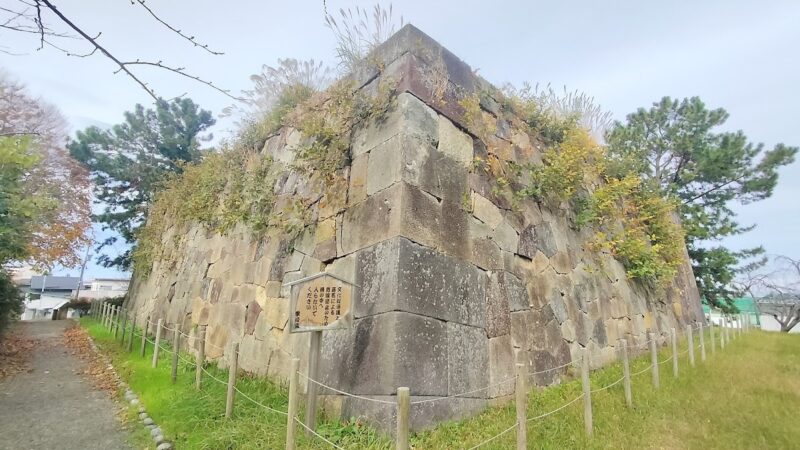
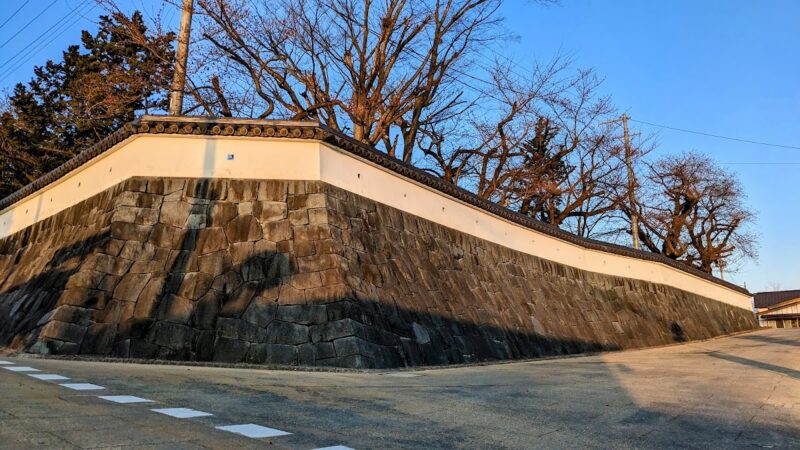
More than 150 years have passed since the Boshin War, and almost no trace of the Tendo Jinya site remains.
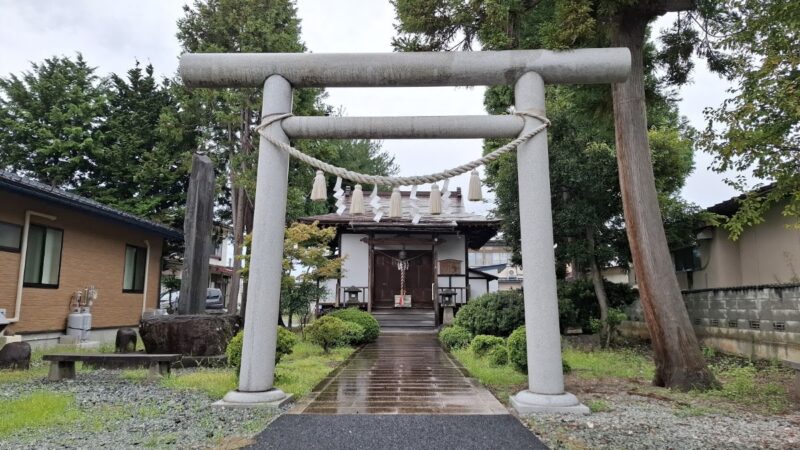
The Center Around Kitaro Inari Shrine
Currently, the area around Kitaro Inari Shrine is considered to be the center of the Tendo Jinya. This shrine is located in the heart of Tendo City and is beloved by the locals. A stone monument marking the Tendo Jinya site stands beside the shrine’s torii gate, preserving the memory of this former administrative center of the Oda family.
The monument is inscribed with “Tendo Jinya Site,” serving to convey the historical significance of the site to visitors. However, the surrounding area has been completely developed into residential land, and no remains such as moats or earthworks remain.
Disappearance of Remains and Residential Development
Since the Meiji era, the area around the Jinya site has rapidly become urbanized along with the development of Tendo City. After being destroyed in the Boshin War, the buildings were never rebuilt, and the land was either sold off to private individuals or used for public facilities. Currently, the area is lined with houses and shops, making it difficult to discern any traces of the fortified residence from the topography.
Archaeological excavations have been limited, and investigations into potentially buried remains have stalled due to residential development.
The History of Tendo City and the Role of the Tendo Fortified Residence
The Tendo Fortified Residence holds a significant place in the history of Tendo City. Understanding the history of this area, including the origin of the place name Tendo and its relationship with Mount Maizuru, clarifies the significance of the residence.
The Origin of the Place Name Tendo
According to the official traditions of Tendo City, the place name “Tendo” originates from a legend that approximately 1,500 years ago, when a high-ranking monk named Gyoki was chanting Buddhist prayers on the summit of Mount Maizuru, a child descended from heaven. This legend is still cherished today as part of the region’s identity.
Maizuru Mountain and Atago Shrine
Maizuru Mountain, a symbol of Tendo City, has a deep connection to the Tendo Jinya (fortified residence). Also known as “Atago Mountain,” Atago Shrine sits atop the mountain. This shrine was built in 1584 by Mogami Yoshiaki after his victory against Tendo Yorihisa, and is a designated cultural property of Tendo City.
Maizuru Mountain was also an object of worship during the Oda clan era, and the lord and his retainers visited to pray. Currently, it is maintained as a place of relaxation for citizens, and in spring, it attracts many tourists as a famous cherry blossom viewing spot. From the mountaintop, you can enjoy a panoramic view of Tendo city and even see the site of the former Jinya.
Cultural Heritage of the Tendo Oda Clan
Although the Jinya itself has been lost, the cultural heritage left behind by the Tendo Oda Clan continues to thrive in Tendo City today.
The Tradition of Shogi Piece Production
As mentioned earlier, Tendo City is known as the top producer of shogi pieces in Japan. Approximately 95% of all shogi pieces nationwide are produced in Tendo City, and this traditional industry began during the Oda clan era. Amidst the domain’s financial difficulties, shogi piece production was encouraged as a side job for samurai, and the techniques have been passed down by craftsmen since the Meiji era.
Even today, many shogi piece workshops exist in Tendo City, preserving traditional hand-carving techniques. Every spring, the “Human Shogi” event is held on Maizuru Mountain, where people in samurai armor act as shogi pieces in a game, a nationally famous tourist event.
Historical Sites Related to the Oda Family
Besides the site of the Oda clan’s headquarters, Tendo City is dotted with historical sites related to the Oda family. These include the Oda family’s ancestral temple and the remains of samurai residences where the clan’s retainers lived. A tourist course themed “Visiting the History of the Tendo Oda Clan” has also been established.
Visiting these historical sites allows you to experience how the descendants of Oda Nobunaga lived in this area and what kind of culture they cultivated.
Relationship with Takatama Jinya
Besides the Tendo Jinya, there was another Jinya (fortified residence) in Tendo City called Takatama Jinya.
Overview of Takatama Jinya
Takatama Jinya was a Jinya belonging to a different ruling system than the Tendo Oda Domain, and was located in the Takatama district of Tendo City. While there are now very few historical traces of it, records remain in local historical documents.
The Tendo City Library and other institutions hold documents related to Takatama Jinya, and information can be obtained through their reference services. Understanding both Tendo Jinya and Takatama Jinya reveals the complex ruling structure of the Tendo region during the Edo period.
Access and Visiting Information for Tendo Jinya Ruins
This section provides specific information for visiting the Tendo Jinya Ruins.
Access Methods
Access by Train:
- Approximately 15 minutes on foot from JR Ou Main Line “Tendo Station”
- Tendo Station is approximately 15 minutes by train from Yamagata Station.
Access by Car:
- Approximately 10 minutes from Yamagata Expressway “Tendo IC”
- Public parking is available around Kitaro Inari Shrine.
Points to Note During Your Visit
While only a stone monument remains at the Tendo Jinya site, and no other structures are left, the following points will make your visit more fulfilling:
- Stone Monument at Kitaro Inari Shrine: Confirm the location of the former Jinya site by checking the stone monument.
- Climb Mt. Maizuru: View Tendo city from the summit and get a panoramic view of the Jinya site.
- Tendo City Former Higashimurayama County Office Museum: View exhibits on Tendo’s history and the Oda family.
- Shogi Piece Workshop Visit: Experience a traditional industry encouraged by the Oda clan.
Nearby Tourist Facilities
When visiting the Tendo Jinya Ruins, we recommend also visiting the following nearby facilities:
- Maizuru Mountain: A famous cherry blossom viewing spot, where human shogi is held in spring.
- Tendo Onsen: Numerous hot spring inns in the city, including some with a shogi theme.
- Hiroshige Museum: A museum focusing on ukiyo-e prints.
- Tendo City Shogi Museum: Introduces the history and manufacturing techniques of shogi pieces.
Historical Significance of the Tendo Jinya Ruins
Although no remains of the Tendo Jinya Ruins exist, its historical significance is considerable.
A Place that Conveys the Lineage of the Oda Family
The Tendo Jinya Ruins hold historical value as a place ruled by the direct descendants of Oda Nobunaga, a key figure in Japanese history. The fact that descendants of Nobunaga’s second son, Nobuo, ruled a small domain in the distant Tohoku region and contributed to its development is a valuable example demonstrating the historical continuity from the Sengoku period to the Edo period.
Memories of the Boshin War
The burning of the Tendo Jinya (fortified residence) illustrates the intensity of the Boshin War, a civil war in Japan’s modernization. The fact that the Tendo Jinya and the town were burned down after being attacked by the Shonai Domain for siding with the new government conveys the complex political situation during the late Edo and Meiji Restoration periods and the tragedy of a small domain caught in the middle.
Origins of Local Culture
The production of shogi pieces, a representative industry of Tendo City, began during the Oda domain era. In the sense that the domain’s administration, centered around the Jinya, laid the foundation for the current identity of Tendo City, the Tendo Jinya site can be considered a place that represents the origins of local culture.
Expectations for Future Preservation and Utilization
Currently, only a stone monument remains at the Tendo Jinya site, and no active preservation or development activities are being carried out. However, given the recent increase in interest in historical heritage, the following initiatives are expected:
Improving Recognition as a Historical Site
It is desirable that Tendo City and Yamagata Prefecture consider designating the site as a historical site, and that information provided to visitors be enhanced through improvements to signage. Currently, only a stone monument exists, and detailed explanations are lacking, making it difficult for visitors unfamiliar with history to understand the importance of the Jinya (fortified residence).
Restoration Using Digital Technology
Utilizing AR (augmented reality) technology to recreate and display the Jinya on smartphones and tablets would be effective. Even without physical remains, experiencing the site’s former appearance through digital technology would increase its educational value.
Utilization as a Tourism Resource
The historical background of this area being ruled by descendants of Oda Nobunaga holds great potential as a tourism resource. Developing historical sightseeing routes that combine the site with shogi pieces and hot springs could further enhance the appeal of Tendo City.
Summary
The Tendo Jinya Ruins hold a significant place in the history of Tendo City, Yamagata Prefecture, as it was the site of the administrative center of the Tendo Oda Domain, ruled by the Oda family, descendants of Oda Nobunaga. Although it was destroyed in the Boshin War and the remains have been lost due to residential development, a stone monument next to the Kitaro Inari Shrine commemorates its history.
Even though the Jinya itself is gone, the production of shogi pieces, encouraged by the Oda Domain, continues to thrive as a core industry in Tendo City, ensuring that the cultural heritage of the feudal era is being faithfully preserved. When visiting Tendo, why not stop by this small monument and reflect on the history of the Oda family and the memories of the Boshin War?
By visiting the Tendo Jinya Ruins, along with enjoying the views from Maizuru Mountain, touring a shogi piece workshop, and relaxing in a hot spring, you can gain a deeper understanding of Tendo City’s history and culture.