Complete Guide to Sugou Castle Ruins (Miyagi Prefecture) | A Thorough Explanation of the History and Remains of a Medieval Mountain Castle
Located in Murata-cho, Shibata-gun, Miyagi Prefecture, the Sugou Castle Ruins are a historical site with remarkably well-preserved remains of a medieval mountain castle. Protected as a Murata-cho designated cultural property, it is now developed as a rural park, yet still conveys the appearance of its defensive facilities from that time. This article provides a detailed explanation of the historical background, characteristics of the remains, and access methods of the Sugou Castle Ruins.
Overview and Basic Information of Sugou Castle Ruins
The Sugou Castle Ruins are a medieval castle site located in Sugou, Murata-cho, Shibata-gun, Miyagi Prefecture. It was officially registered as a Murata-cho designated historical site on March 25, 2016, and is protected as an important cultural heritage of the region.
Basic Data
- Location: 87-2, 97-13, Tate, Sugao, Murata-cho, Shibata-gun, Miyagi Prefecture
- Designation Category: Murata Town Designated Historic Site
- Date of Designation: March 25, 2016
- Period: Medieval Period (Estimated to be around the 14th century)
- Type: Mountain Castle/Hilltop Castle
- Current Status: Developed as a rural park
The Sugao Castle ruins, also known as “Izumo Castle” and “Furuuchi Castle,” have left their mark on local history as Sugao Castle. Located on Tateyama in Miyamae, the castle lord is said to have been Sugao Sukehachiro, but due to limited historical materials regarding the detailed construction period and the lineage of the castle lord, further research is needed.
Historical Background of the Sugao Castle Ruins
Medieval Castle Culture in the Tohoku Region
The medieval period, when the Sugao Castle ruins were built, was a time when castle construction by local lords flourished in the Tohoku region. Numerous medieval castle ruins exist within Miyagi Prefecture, each functioning as a regional power base.
The Sugao area is located in the northeastern part of Murata Town, a natural stronghold surrounded by mountains on all sides. It is believed that the Sugao Castle, built utilizing these geographical conditions, played an important role as a base for regional control and as a defensive facility in times of emergency.
Legend of Sugao Sukehachiro and the Castle Lord
According to legend, the lord of the Sugao Castle was Sugao Sukehachiro. However, detailed historical records about this person have not yet been confirmed, and his true identity remains shrouded in mystery. The surname Sugao suggests that he was likely a local lord based in this area.
In the Tohoku region during the medieval period, after the establishment of the Kamakura Shogunate, samurai groups who settled there as retainers, and local powerful families who had existed as local forces even before that, built castles and fortified residences in various locations. Sugao Castle is thought to be one of the castles and fortified residences built within this historical context.
14th Century Artifacts and Dating Estimates
Excavations conducted by the Murata Town Board of Education have unearthed artifacts dating back to around the 14th century. These include Jomon pottery deep bowls, stone tools made of siliceous shale, and volcanic glass, indicating that this area was a place of human habitation from the Jomon period.
Medieval artifacts, such as pottery fragments with smoothed surfaces, have been confirmed, suggesting a high probability that the site functioned as a castle or fortified residence around the 14th century. This period coincided with the Nanboku-cho period, a turbulent time when armed conflicts occurred throughout the Tohoku region.
Remains and Characteristics of Sugao Castle Site
Major Remains
The most notable feature of the Sugao Castle site is the well-preserved remains of a medieval castle and fortified residence. The following remains can be observed at the site:
1. Flat Area (Kuruwa)
This is a flat area that formed the center of the castle grounds, where buildings are believed to have been constructed. Multiple flat areas have been identified at the Sugao Castle site, arranged in stages around the main enclosure. These flat areas were skillfully constructed utilizing the terrain, providing valuable information for understanding the layout techniques of medieval castles.
2. Dry Moat
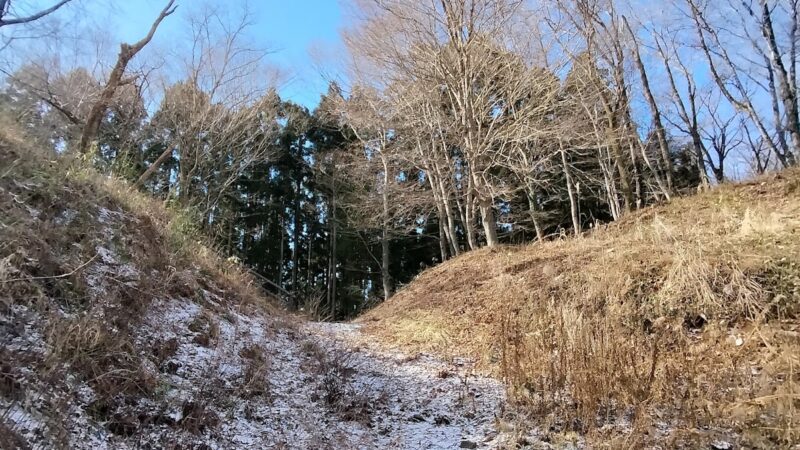
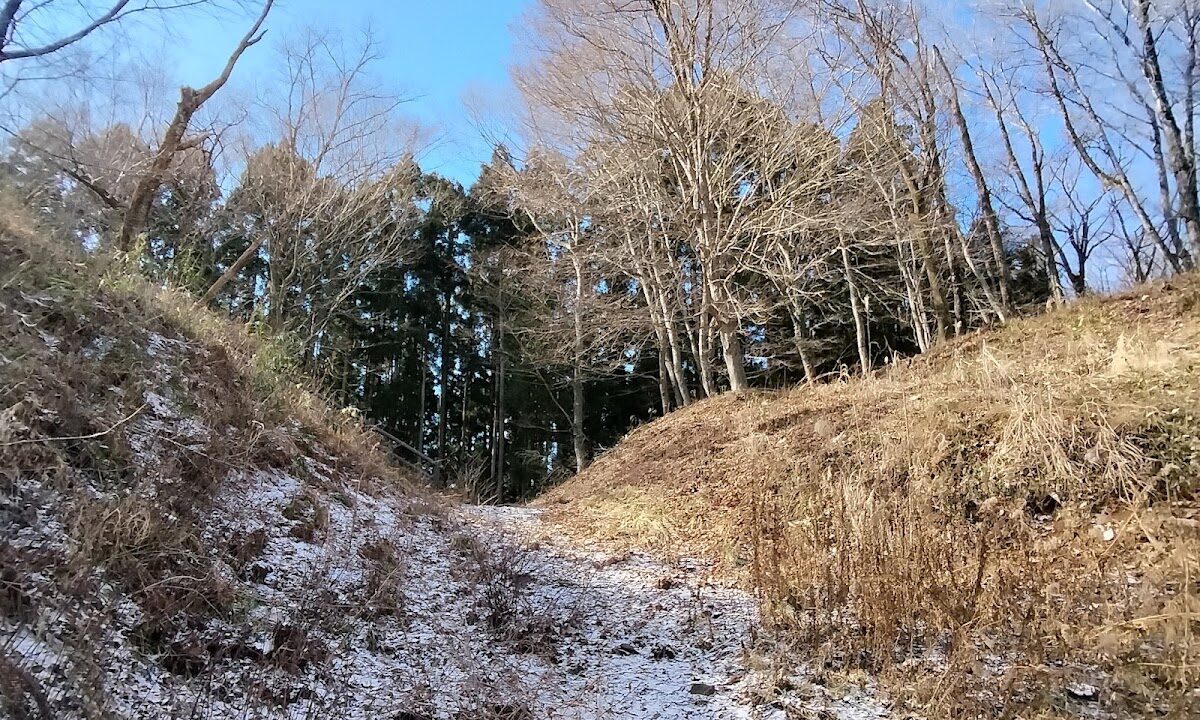
These moats were excavated as defensive structures, playing a crucial role in preventing enemy intrusion. At the Sugao Castle site, several dry moats remain in good condition, and their size and arrangement allow us to understand the defensive system of the time. The depth and width of the dry moats vary depending on the location, suggesting that defensive capabilities were adjusted according to importance.
3. Earthen Embankment
These are earthen embankments built to surround the flat areas. Together with the dry moats, they formed a defensive line, strengthening the castle’s defenses. In some areas, the rise of the earthen embankment remains clearly visible, allowing us to imagine its appearance in its heyday.
Characteristics of the Castle Layout
The Sugao Castle ruins are characterized by a layout that skillfully utilizes the natural terrain. Located on a small hill called Tateyama, it takes advantage of its location overlooking the surrounding area. It has a multi-enclosure structure with multiple enclosures arranged around the main enclosure, and its scale is considered standard for a castle of a local lord in the Tohoku region during the medieval period.
The arrangement of the remains suggests a flatland castle character, combining the functions of a defensive structure designed for actual combat with those of a residence during peacetime. This is a common characteristic of castles in the Tohoku region during the medieval period and provides an important clue for regional history research.
Current Status of the Sugao Castle Ruins and Rural Park
Park Development Status
Currently, the central part of the Sugao Castle ruins has been developed as a rural park. Development has been carried out in a way that balances the preservation and utilization of the remains, and it is also used as a place of relaxation for local residents.
Playground equipment and rest facilities have been installed within the park, but their placement has been carefully considered to avoid damaging the remains. The main remains, such as the flat areas and dry moats, are well-preserved, allowing visitors to experience the medieval castle site firsthand.
Cultural Value
The Sugao Castle Site is highly regarded among the many medieval castle sites in Miyagi Prefecture for its remarkably well-preserved remains. It is a valuable historical site for understanding the medieval history of the Tohoku region, particularly the activities of local lords, and further historical facts are expected to be revealed through future research.
The Murata Town Board of Education’s research report (Murata Town Cultural Property Research Report 22: Sugao Castle Site, 2006) includes detailed survey maps of the remains and analysis results of excavated artifacts, making it a valuable resource for academic research.
History and Culture of the Sugao Region
Relationship with Sugao Shrine
The Sugao region, where the Sugao Castle Site is located, is home to the historic Sugao Shrine. Sugao Shrine is an ancient shrine said to have been built by Sakanoue no Tamuramaro during the Enryaku era (782-805). It enshrines Takemikazuchi-no-Mikoto, Futsunushi-no-Mikoto, Okuninushi-no-Mikoto, Homudawake-no-Mikoto, Oyamatsumi-no-Mikoto, and Ukanomitama-no-Mikoto.
Currently, Sugao Shrine is known as a popular spot for motorcycle riders praying for traffic safety, and many motorsports fans visiting the nearby Sportsland SUGO also come to pray. It has a large parking lot and is open 24 hours a day.
Place Name and History of Sugao
The place name “Sugao” is still used today as a large district in the northeastern part of Murata Town. It has a basin-like topography surrounded by mountains on all sides and has been a place of human habitation since ancient times.
The discovery of Jomon period artifacts around the Sugao-kan ruins indicates that this area has been used by people since ancient times. In the Middle Ages, a castle was built here, and from the early modern period onward, it developed as a farming village, continuing to engrave the history of the region to this day.
Access and Visiting Information
Location and Transportation Access
Location: 87-2, 97-13, Tate, Sugo, Murata-cho, Shibata-gun, Miyagi Prefecture
Access by Car
- Approximately 15 minutes from Murata IC on the Tohoku Expressway
- Approximately 5 minutes from Sugo PA on the Tohoku Expressway
- Accessible via Prefectural Road from National Route 4
The Sugo area is conveniently located near the Sugo PA on the Tohoku Expressway, making it easily accessible from the highway. Furthermore, the route largely overlaps with that to Sportsland SUGO, making it possible to visit in conjunction with motorsports viewing.
Parking Information
A dedicated parking lot is available at the Sugo-kan Ruins. The parking lot entrance is on the left as you ascend the forest road, but the sign is small and easily overlooked, so caution is advised.
Parking Features
- Restrooms available
- Free of charge
- Entrance can be difficult to find; checking a map beforehand is recommended.
The ruins are within walking distance from the parking lot, and the path is relatively flat. However, the ground may become slippery in rainy weather, so appropriate footwear is recommended.
Points to Note During Visits
The Sugaokan Ruins are maintained as a rural park, but they are also a historical site, so please observe the following points during your visit:
- Protection of Remains: Take care not to damage the remains such as dry moats and earthworks.
- Take Your Trash Home: To maintain the beauty of the park and protect the historical site, please be sure to take all your trash with you.
- Safety Assurance: Pay attention to your footing, especially around the dry moats, to avoid falling.
- Photography Etiquette: Be considerate of other visitors.
Nearby Tourist Attractions
The following tourist attractions are located near the Sugaokan Ruins.
Sportsland SUGO
A comprehensive motorsports facility including an international racing course (Grade 2) certified by the International Automobile Federation (FIA). Operated by Sugo Co., Ltd., a subsidiary of Yamaha Motor Co., Ltd.
Sugo Shrine
A historic shrine said to have been founded during the Enryaku era. Known for prayers for traffic safety, it is a popular spot for motorcycle riders.
Sugo PA (Upbound)
A parking area on the Tohoku Expressway. Features a wide selection of menu items using local Miyagi ingredients and a specialty goods corner.
Murata Town’s Warehouse District
In the center of Murata Town, a historical townscape with warehouses dating back to the Edo period is preserved, and it has been designated as an Important Preservation District for Groups of Traditional Buildings.
Research on the Sugokan Site
Research by the Murata Town Board of Education
On March 24, 2006 (Heisei 18), the Murata Town Board of Education published “Murata Town Cultural Property Survey Report 22: Sugokan Site.” This report, compiled by a research team led by Shinichiro Ishiguro, provides a detailed analysis of the remains and excavated artifacts at the Sugao-kan site.
The investigation included surveying of the remains and classification and chronology of the excavated artifacts, leading to a scholarly examination of the historical significance of the Sugao-kan site. This report is also publicly available in databases such as the National Archaeological Site Report Directory, making it accessible to researchers and history enthusiasts.
Analysis of Excavated Artifacts
The artifacts unearthed during the excavation include the following:
Jomon Period Artifacts
- Jomon pottery deep bowl: Evidence of life in this area during the Jomon period
- Siliceous shale stone tools: Materials showing the stone tool making technology of the time
- Volcanic glass: Materials useful for geological environmental reconstruction
Medieval Artifacts
- Nade-processed pottery: Pottery fragments showing life around the 14th century
- Other daily living tools: Clues to the lifestyle of the time
These artifacts tell us that the Sugao-kan site was not merely a military facility, but also a place where people lived. They also provide valuable historical information showing the long-term use of this site from the Jomon period to the Middle Ages.
Comparison with Medieval Castles in the Tohoku Region
Similar Examples in Miyagi Prefecture
Numerous medieval castle sites similar to the Sugao-kan site exist in Miyagi Prefecture. For example, the castle complex of the Kokubun clan, which was the predecessor of Aoba Castle (Sendai Castle) in Sendai City, and the castles related to the Kasai clan scattered throughout the Tome region in the northern part of the prefecture are well known.
While smaller in scale compared to these large-scale castles, the Sugao-kan site exhibits a typical structure for a local lord’s castle and is an important example for understanding the realities of regional governance in the Tohoku region during the medieval period.
Characteristics of Defensive Structures
Medieval castles in the Tohoku region exist in various forms depending on their location, including flatland castles, hilltop castles, and mountain castles. The Sugao-kan site has characteristics of a hilltop castle, combining everyday residential functions with defensive functions in times of emergency.
This structure reflects the lifestyle of samurai in the Tohoku region during the medieval period, who engaged in agricultural management and regional governance during peacetime, while taking refuge in their castles to defend themselves during wartime.
Preservation and Utilization of the Sugao-kan Site
Cultural Property Protection Efforts
The 2016 designation of the Sugao-kan site as a Murata Town Historic Site signifies the official recognition of its historical value. This has made the protection of the site more certain and established a legal basis for protecting the remains from development activities.
In Murata Town, the Sugao-kan site is being appropriately preserved and managed in accordance with the Cultural Properties Protection Law and the Murata Town Cultural Properties Protection Ordinance. While balancing its use as a rural park with the protection of the historical site, efforts are being made to maintain the site in cooperation with local residents.
Utilization as a Local Resource
The Sugao-kan site is an important local resource that conveys the history of Murata Town and is being utilized in educational and tourism settings. Local elementary and junior high schools provide opportunities for students to visit the Sugao-kan site as part of their local history studies to learn about the region’s history.
Furthermore, it is becoming recognized among history enthusiasts and castle fans as a destination when touring medieval castles in the Tohoku region. It is also registered on castle information websites such as Kojodan, and is attracting visitors from all over Japan.
Future Challenges and Prospects
The following are challenges and prospects for further utilization of the Sugao-kan site.
Challenges
- Continue detailed research and investigation of the remains
- Clarify historical facts such as the castle lord and construction period
- Strengthen information provision by improving signboards and explanatory panels
- Improve access to the parking lot and improve signage
Outlook
- Visualization of the remains using digital technology (AR/VR, etc.)
- Development of tourist routes linked with surrounding tourist resources
- Promotion of preservation activities with the participation of local residents
- Establishment of exhibition facilities utilizing the results of academic research
Summary: Historical Significance of Sugao-kan Site
Sugao-kan Site is a valuable medieval castle ruin remaining in Murata-cho, Shibata-gun, Miyagi Prefecture. The remains, such as the flat areas and dry moats, are well-preserved, giving it historical importance as a castle of a local lord in the Tohoku region during the medieval period.
Its value was officially recognized with the designation as a Murata-cho Historic Site in 2016, and efforts for protection and utilization are underway. Currently developed as a rural park, it serves as a place of relaxation for local residents while also functioning as an educational resource for learning about history and a tourist attraction.
The name Sugao has a history dating back to ancient times, and the area is a layered blend of cultures from various eras, as evidenced by Sugao Shrine and Sportsland SUGO. Visiting the Sugao-kan ruins allows you to feel not only the history of the Middle Ages but also the long history of this region.
It is easily accessible from the Tohoku Expressway, making it possible to combine a visit with other tourist spots such as the historic warehouse district of Murata Town. This historical site is recommended not only for those interested in history and castles, but also for anyone who wants to experience local culture.
The Sugao-kan ruins, as a place embodying the region’s history from the past to the present and into the future, will undoubtedly continue to be carefully preserved and utilized. When visiting Miyagi Prefecture, why not pay a visit?