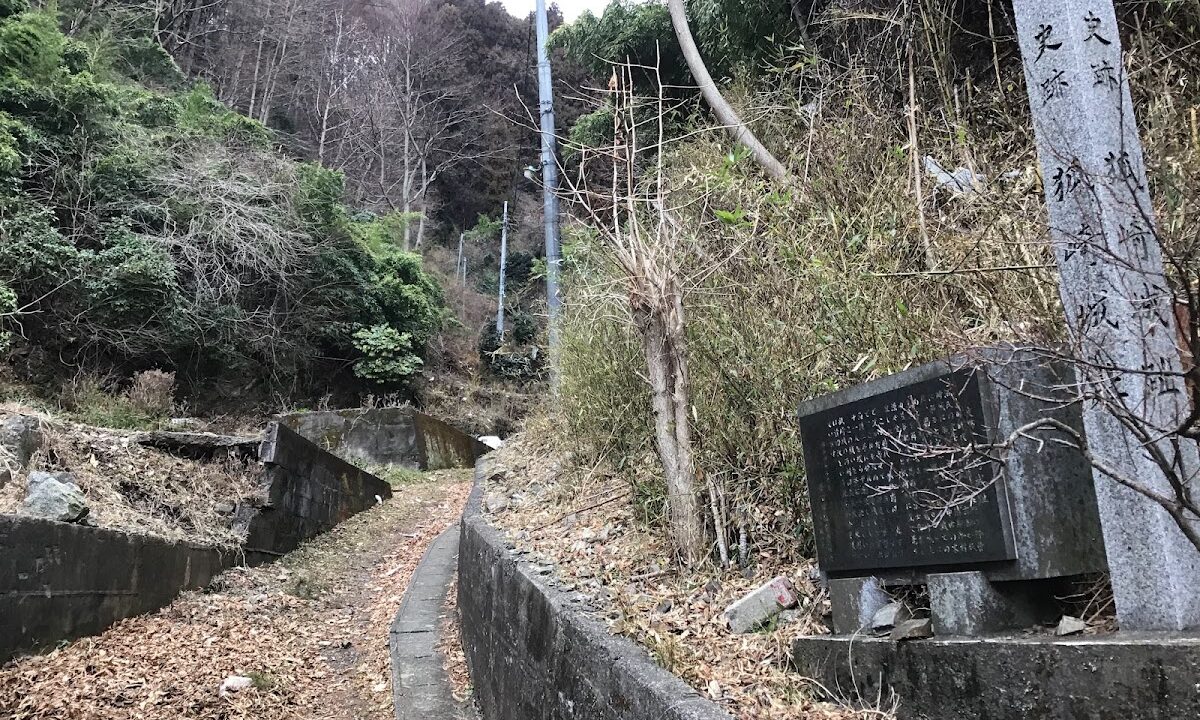
Kitsunezaki Castle (Kamaishi City, Iwate Prefecture) Complete Guide: A Mountain Castle from the Muromachi Period and its Role as a Tsunami Evacuation Site
Kitsunezaki Castle, towering over the heart of Kamaishi City, Iwate Prefecture, is a mountain castle known as the residence of the Kitsunezaki clan, who ruled the area from the Muromachi period to the Sengoku period. Also known as Kitsunezaki-kan, this castle is not only a historical site but also plays a crucial role as a tsunami evacuation site since the Great East Japan Earthquake. This article provides a detailed introduction to Kitsunezaki Castle, including its history, structure, highlights, and access methods.
Basic Information on Kitsunezaki Castle
Location: 1-chome, Hamamachi, Kamaishi City, Iwate Prefecture
Former Province: Mutsu Province (Rikuzen Province)
Common Name/Alternate Name: Kitsunezaki-kan
Classification/Structure: Mountain Castle
Builder: Kitsunezaki Genba (Kitsunezaki Clan)
Year of Construction: Mid-Muromachi Period (Around the 15th Century)
Main Lords: Kitsunezaki Clan, Aratani Higo
Remains: Enclosures (Kuruwa), Moats
Relative Height: Approximately 90 meters
Keep Structure: None (No keep exists as it is a mountain castle)
Kitsunezaki Castle is located northeast of Kamaishi City Hall and is built on a steep mountain ridge visible from the city center. Due to its proximity to the sea, it is believed that waves once reached the south side of the castle, and it is thought to have played a role in controlling a strategic point for maritime traffic.
History of Kitsunezaki Castle
Muromachi Period: As the Residence of the Kitsunezaki Clan
Kitsunezaki Castle is believed to have been built in the mid-Muromachi period. The builder is said to have been Kitsunezaki Genba, a retainer of the Asanuma clan of Tono, who established his power as a local powerful family. According to records from the Muromachi period, after residing at Kitsunezaki Castle, Kitsunezaki Genba moved to the affiliated Ushimura (present-day Kamaishi City area).
During this period, the south side of Kitsunezaki Castle was bordered by the sea, and the castle was located in a strategically important location close to the coastline. This suggests a strategic location that allowed for monitoring both maritime and land routes.
Sengoku Period: A Base for Regional Control
During the Sengoku period, Kitsunezaki Castle continued to function as a base for powerful local families. Later, it is said that Aratani Higo served as the castle lord for a period. During this period, the Sanriku coastal region, while under the influence of powerful clans such as the Nanbu and Date, was also dominated by smaller local families who maintained their own independent systems of governance.
It is believed that Kitsunezaki Castle served as one of these regional strongholds, playing a role in governing and defending the surrounding area.
From the Early Modern Period Onward: The End of its Role as a Castle
In the Edo period, Kitsunezaki Castle lost its military role as a fortress and was abandoned. However, its topographical features remained, and it is preserved to this day as a historical site that conveys the region’s history.
The Layout and Structure of Kitsunezaki Castle
Design of a Mountain Castle Utilizing the Topography
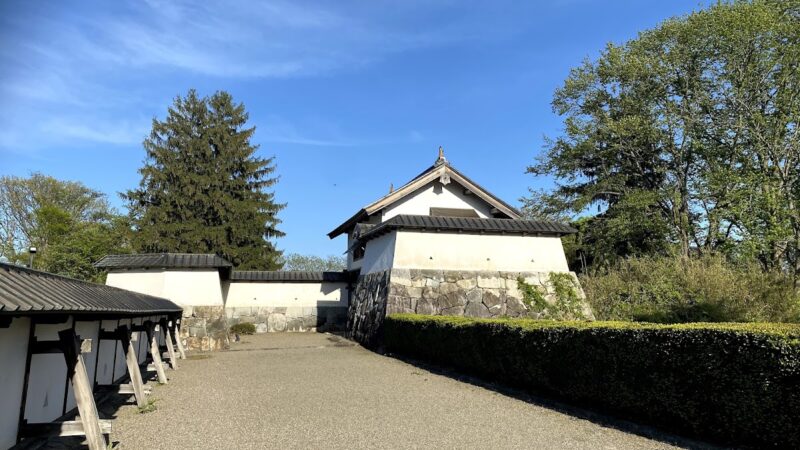
Kitsunezaki Castle is a typical mountain castle built on a steep mountain ridge with a relative height of approximately 90 meters. A flat area was created on the mountaintop by leveling the ridge, resulting in a defensive structure that skillfully utilizes the natural terrain.
The basic structure of the castle consists of a moat separating the rear, followed by the arrangement of about four enclosures (kuruma) in a southwest direction along the terrain. This layout is designed to prevent enemy intrusion while allowing each enclosure to support the others.
Major Remains
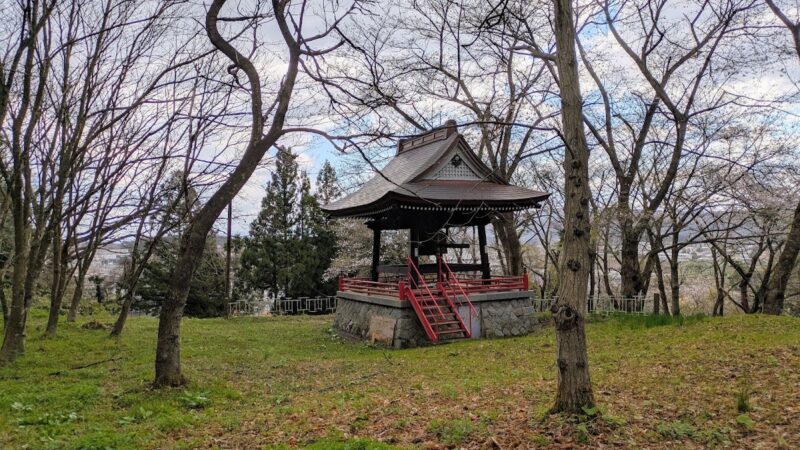
Enclosures (Kuruwa): Multiple flat areas can be identified on the mountaintop and along the ridge. The largest flat area, considered the main enclosure, is presumed to have been used as the lord’s residence or command post.
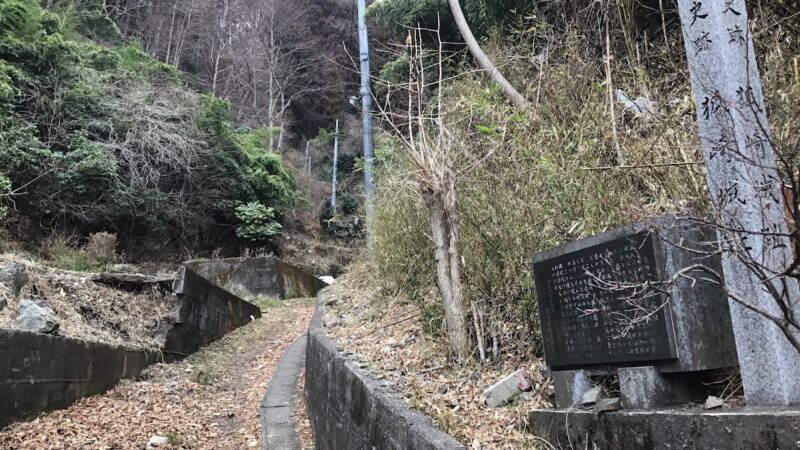
Moat: The moat, constructed to protect the castle’s rear (northeast side), was an important defensive structure to prevent enemy intrusion along the ridge. It can still be seen as a geographical feature today.
Cliffs: Steep slopes are formed around each enclosure, and these are highly likely to be artificially carved cliffs.
Defensive Structure Deciphered from the Layout Map
The layout map of Kitsunezaki Castle shows a stepped arrangement of enclosures descending from the main enclosure on the mountaintop. This stepped arrangement allows for fire support from the upper enclosures to the lower ones, reflecting a typical defensive philosophy of medieval mountain castles.
Furthermore, given its highly visible location from the sea, it’s possible it also functioned as a lookout post or signal fire station.
Highlights and Visitor Guide to Kitsunezaki Castle
Ascent Route and Time Required
To reach Kitsunezaki Castle, use the mountain trail from the Kamaishi city side. Due to the steep terrain with a relative elevation of 90 meters, a certain level of physical fitness is required for the ascent. The average visit takes about 15 minutes, but if you want to carefully observe the remains, allow 30 minutes or more.
The mountain trail is well-maintained, but there are steep sections, so we recommend wearing comfortable clothing and non-slip shoes.
View from the Main Enclosure
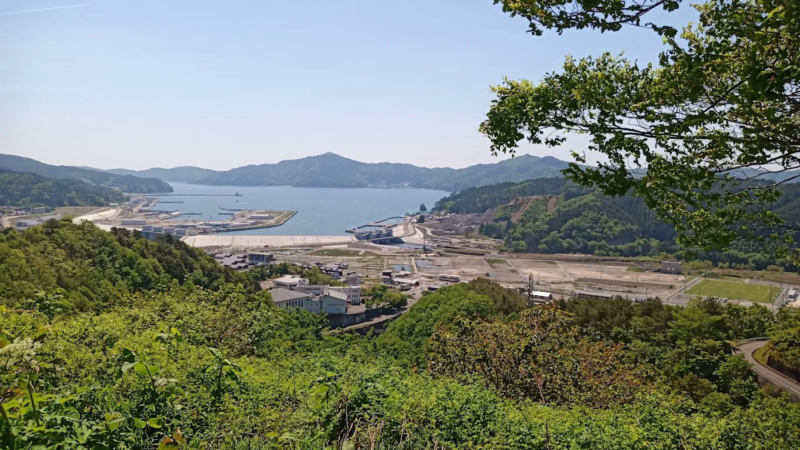
From the main enclosure at the summit, a magnificent view unfolds, overlooking Kamaishi city and Kamaishi Bay. This is a valuable point where you can experience the scenery that the castle lords must have seen. On a clear day, you can see all the way to the horizon of the Pacific Ocean.
This excellent view was important for military surveillance, but it is now also utilized as a tsunami evacuation site.
Observation Points for the Ruins
When visiting the castle ruins, paying attention to the following points will help you understand the structure of Kitsunezaki Castle more deeply:
- Size and arrangement of flat areas in each enclosure: Observing the relationship between the main enclosure and the secondary enclosure reveals the functional layout of the castle.
- Depth and width of the moat: You can appreciate how important the defense of the rear was.
- Steepness of the cliffs: Distinguishing between natural terrain and artificial processing helps understand the castle construction techniques.
- Traces of stonework: Traces of stonework may remain in some areas, and finding them would be a valuable observation.
Photography Tips
The following points are recommended for photography at Kitsunezaki Castle:
- View of Kamaishi city and the sea from the main enclosure: The morning light is beautiful, and the contrast between the sea and the cityscape is striking.
- Cross-section of the moat: This is a valuable photograph that conveys the defensive structure of a medieval castle.
- Panoramic view of the castle mountain from the approach path: This composition conveys the location and scale of the mountain castle.
- Flat areas of each enclosure: This is important for documenting the state of the remains.
Modern Role as a Tsunami Evacuation Site
Lessons from the Great East Japan Earthquake
Kamaishi City also suffered significant tsunami damage during the Great East Japan Earthquake on March 11, 2011. Based on this experience, Kitsunezaki Castle ruins have been officially designated as a tsunami evacuation site.
During the earthquake, power outages in Kamaishi disrupted accurate information from the Japan Meteorological Agency. The only information released after the earthquake was a predicted tsunami height of “over 3 meters for Iwate Prefecture,” and warnings for tsunamis were issued based on this information. The actual tsunami far exceeded this prediction, resulting in numerous casualties.
This experience highlighted the importance of rapid evacuation to higher ground, leading to the development of elevated areas like the Kitsunezaki Castle ruins as evacuation sites.
Balancing Historical Heritage and Disaster Prevention Functions
The Kitsunezaki Castle ruins fulfill a challenging role: preserving its value as a historical castle ruin while also serving modern disaster prevention functions. Evacuation routes have been developed and guide signs installed, with careful consideration given to avoiding damage to the ruins.
These efforts are attracting attention as a pioneering example of balancing cultural property preservation with regional safety.
Map and Access Information
Location Details
Address: 1-chome, Hamamachi, Kamaishi City, Iwate Prefecture
Nearest Station: Kamaishi Station, JR Kamaishi Line/Yamada Line
Access by Public Transportation
The castle entrance is approximately a 15-minute walk from JR Kamaishi Station. Heading northeast from the station, using Kamaishi City Hall as a landmark will make it easier to find. The mountain rising northeast of City Hall is the site of Kitsunezaki Castle.
Access by Car
Approximately 10 minutes from Kamaishi Kita Interchange on the Kamaishi Expressway. Head towards Kamaishi city center; there are parking lots around City Hall (there is no dedicated parking lot for the castle ruins, so please use public parking).
Location of the Castle Entrance
The castle entrance is on the Hamamachi side, and there are guide signs. Since it also functions as a tsunami evacuation site, the signs also serve as evacuation route guides.
Nearby Attractions and Tourist Spots
Kamaishi City Local History Museum
This museum offers insights into Kamaishi’s history and culture, including exhibits related to Kitsunezaki Castle. Visiting before or after your castle ruins visit will provide a deeper understanding.
Kamaishi Daikannon
A giant statue of Kannon (Goddess of Mercy) standing on a hill overlooking Kamaishi Bay, it is a symbol of Kamaishi. It can also be seen from Kitsunezaki Castle.
Hashino Iron Mine (World Heritage Site)
Registered as a World Heritage Site as part of the “Sites of Japan’s Meiji Industrial Revolution,” the Hashino Iron Mine is an important historical site that tells the story of Kamaishi’s modern iron production history.
Scenic Spots of the Sanriku Coast
The area around Kamaishi boasts a beautiful coastline designated as part of the Sanriku Reconstruction National Park. You can enjoy the natural beauty of Sanriku in conjunction with your castle ruins visit.
Visitor Reviews and Ratings
The following are some of the ratings from castle enthusiasts who have actually visited Kitsunezaki Castle:
Condition of Remains: Many reviews praise the well-preserved basic remains such as baileys and moats, making it suitable for understanding the structure of a medieval mountain castle.
Stunning Views: Many visitors highly praise the view of Kamaishi city and the sea from the main bailey.
Ease of Access: The castle is appreciated for its proximity to the city center and the relatively short time it can be reached. However, some comments suggest that a certain level of physical fitness is required due to the steep climb.
Maintenance: Many praise the clear and safe access to the castle due to its development as a tsunami evacuation site. However, some requests for more comprehensive signage and explanatory panels.
The average rating from castle enthusiasts nationwide is 3.00 (out of 5), which is a standard rating for a medium-sized mountain castle.
Notes and Etiquette for Visiting Kitsunezaki Castle
Clothing and Equipment
- Shoes: Non-slip trekking shoes or athletic shoes are recommended.
- Clothing: Wear comfortable clothing appropriate for the season. Insect repellent is necessary in summer.
- Items to Bring: Drinking water, towel, camera, map or smartphone, etc.
Safety Precautions
- There are steep slopes, so please watch your footing when climbing to the castle.
- The ground becomes slippery during and after rain, so extra caution is needed.
- Avoid visiting alone; it is recommended to visit with others if possible.
- Check the cell phone signal strength beforehand.
Etiquette for Cultural Property Preservation
- Do not damage the ruins or take soil or stones.
- Always take your trash with you.
- Collecting plants or feeding animals is prohibited.
- The use of fire is strictly prohibited.
Historical Value and Future Preservation of Kitsunezaki Castle
Kitsunezaki Castle holds significant historical value as a typical example of a medieval mountain castle in the coastal area of Iwate Prefecture. It is a valuable archaeological site for understanding the medieval history of the Sanriku region, and further research is anticipated.
In particular, its location as a mountain castle on the coast suggests it may have functioned to monitor and control both maritime and land transportation, making it an interesting case study for considering the nature of regional governance in the medieval period.
Currently, Kamaishi City is striving to balance its preservation as a cultural property with maintaining its function as a tsunami evacuation site. In the future, efforts to communicate its value as a historical heritage site to a wider audience, such as improving explanatory signs and conducting archaeological excavations, are expected.
Summary: The Charm of Kitsunezaki Castle
Kitsunezaki Castle in Kamaishi City, Iwate Prefecture, is a valuable mountain castle site that conveys the history of the region, serving as the residence of the Kitsunezaki clan, who ruled the area from the Muromachi period to the Sengoku period. Built on a steep mountaintop 90 meters above sea level, the castle boasts well-preserved remains such as baileys and moats, making it an ideal historical site for understanding the structure of a medieval mountain castle.
The view from the main enclosure is magnificent, offering a panoramic view of Kamaishi city and the Pacific Ocean. This excellent view is utilized not only for its former military surveillance function but also as a tsunami evacuation site in modern times.
Its convenient location, within walking distance of Kamaishi Station, is another attractive feature. While the average visit time is relatively short at around 15 minutes, a more fulfilling visit can be made by carefully observing the remains and enjoying photography.
This is a valuable spot for history buffs, castle enthusiasts, and tourists visiting the Sanriku coast to experience the region’s history and culture. When you visit Kamaishi, be sure to stop by Kitsunezaki Castle Ruins. You’ll have a unique experience, feeling the spirit of the Middle Ages while also learning about modern disaster prevention wisdom.