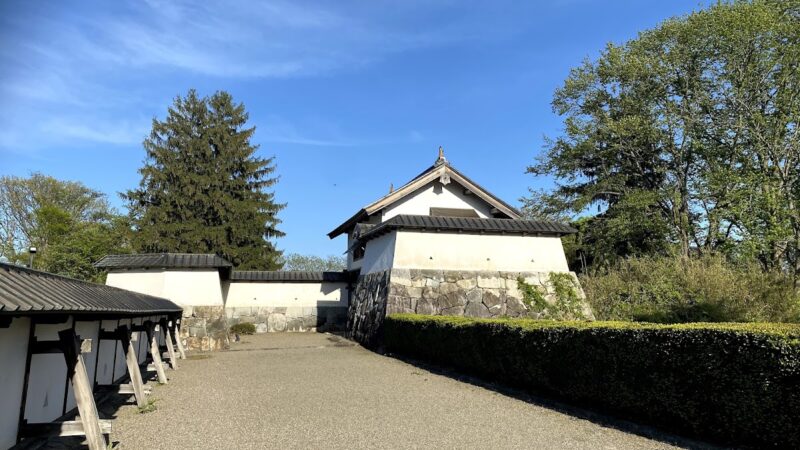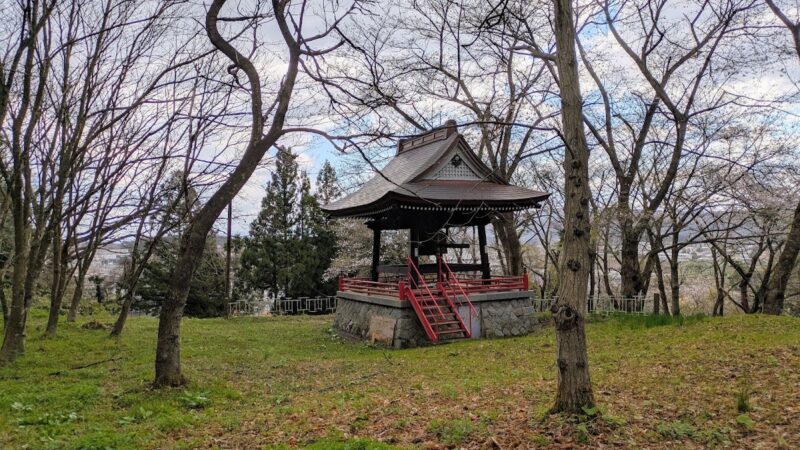
Yamabuki Castle (Iwate Prefecture) Complete Guide | From the Residence of the Ohara Chiba Clan to Ishida Mitsunari’s Renovation
What is Yamabuki Castle?
Yamabuki Castle is a medieval mountain castle located in Ohara-Kawauchi, Daito-cho, Ichinoseki City, Iwate Prefecture. Also known as Yamabuki-kan and Ohara Castle, it is a representative castle of the Higashi-Iwai region. Built on a hillside north of Ohara Junior High School, the castle boasts a height of approximately 80 meters, an east-west distance of approximately 400 meters, and a north-south distance of approximately 200 meters. It played an important role as the residence of the Ohara Chiba clan, one of the seven Kasai warriors and known as the Higashiyama banner-bearer.
Currently, the site of the main keep of Yamabuki Castle is designated as a cultural property of Ichinoseki City, and walking paths have been developed. A large ginkgo tree, estimated to be over 450 years old, stands in the main keep, offering beautiful autumn foliage. Furthermore, the castle ruins offer panoramic views of the town of Ohara, making it a spot where you can enjoy both historical exploration and nature walks. ## Basic Information on Yamabuki Castle
Location and Former Province
Location: Ohara-Kawauchi, Daito-cho, Ichinoseki City, Iwate Prefecture
Former Province: Rikuchu Province
Yamabuki Castle belonged to Rikuchu Province. Rikuchu Province was a former province that comprised most of present-day Iwate Prefecture and was an important region in the Tohoku area from the Heian period to the early modern period. Daito-cho, Ichinoseki City, is located in the southern part of Iwate Prefecture, near the border with Miyagi Prefecture.
Classification and Structure
Classification: Mountain Castle
Structure: Earthworks, baileys (enclosures), moats
Keep Structure: None (As it is a medieval castle, there is no keep)
Yamabuki Castle is classified as a typical medieval mountain castle. It is a defensive structure that skillfully utilizes the natural terrain, and the defensive line was constructed using earthworks and moats rather than artificial stone walls. It is believed that Ishida Mitsunari carried out renovations at the end of the Sengoku period, and that some of the layout was improved at that time. ### Common Names and Alternate Names
- Yamabuki-kan
- Ohara-jo
The name “Yamabuki-kan” originates from the custom in the Tohoku region during the Middle Ages of calling castles “kan” (mansion). “Ohara-jo” is a name derived from the Ohara district where it is located.
History of Yamabuki Castle
Builder and Year of Construction
Builder: Chiba Munetane
Year of Construction: Kanki 2 (1230)
Yamabuki Castle is said to have been built in Kanki 2 (1230) during the Kamakura period by Chiba Munetane. Chiba Munetane was a member of the Chiba clan, based in Shimosa Province (present-day Chiba Prefecture), and was stationed in this area, following the Kasai clan, who played an important role in the control of the Tohoku region after the Oshu War.
The Chiba clan enjoyed the deep trust of Minamoto no Yoritomo and, along with the Kasai clan, held an important position in governing the Tohoku region after the fall of the Oshu Fujiwara clan. It is believed that Chiba Munetane’s arrival in the Ohara area was a strategic move considering the region’s military and economic importance.
The Era of the Ohara Chiba Clan
Main Lords: Ohara Chiba Clan
After its construction, Yamabuki Castle functioned as the residence of the Ohara Chiba clan for approximately 360 years. The Ohara Chiba clan was counted as one of the Seven Kasai Knights and boasted such power that they were called the “Higashiyama Flagbearers.” The Seven Kasai Knights refer to a powerful group of retainers of the Kasai clan, and the Ohara Chiba clan held a particularly important position among them.
As the rulers of this region, the Ohara Chiba clan governed the area, managing agricultural production and military defense. Yamabuki Castle was built on a hill overlooking the surrounding area, serving as a base for the local lord, and is believed to have also played a role in protecting the local people in times of emergency.
Throughout the medieval period, the Ohara Chiba clan served as important retainers of the Kasai clan, maintaining their power in this region even during the turbulent Nanboku-cho period and the chaotic Sengoku period.
Main Renovator: Ishida Mitsunari
Main Renovator: Ishida Mitsunari
In 1590 (Tensho 18), Toyotomi Hideyoshi carried out the pacification of Oshu. At this time, the Kasai clan was dispossessed of their lands, and the Ohara Chiba clan also fell into decline. Yamabuki Castle fell and temporarily came under the direct control of the Toyotomi regime.
Ishida Mitsunari, who accompanied Hideyoshi during the pacification of Oshu, is believed to have been in charge of the castle’s development in this region. Mitsunari renovated the layout of Yamabuki Castle and strengthened its defensive facilities using castle construction techniques from the late Sengoku period. Some of the remains visible today are thought to bear traces of renovations from this period.
The renovations by Ishida Mitsunari were part of the Toyotomi regime’s efforts to develop military bases for direct control of the Tohoku region. However, this region later came under the influence of the Date clan, and it is presumed that Yamabuki Castle gradually fell into disuse.
Period of Abandonment
While the exact date of abandonment is unclear, it is believed that the castle was already abandoned by the early Edo period. With the establishment of the Date clan’s governing system in the Sendai Domain, medieval mountain castles lost their military role, and residences and encampments on flat land became the administrative centers.
Remains of Yamabuki Castle
Enclosures (Kuruwa)
Main Remains: Enclosures (Kuruwa)
The most important remains of Yamabuki Castle are the multiple enclosures (kuruwa). Enclosures are flat areas within the castle grounds, used for building structures and deploying troops.
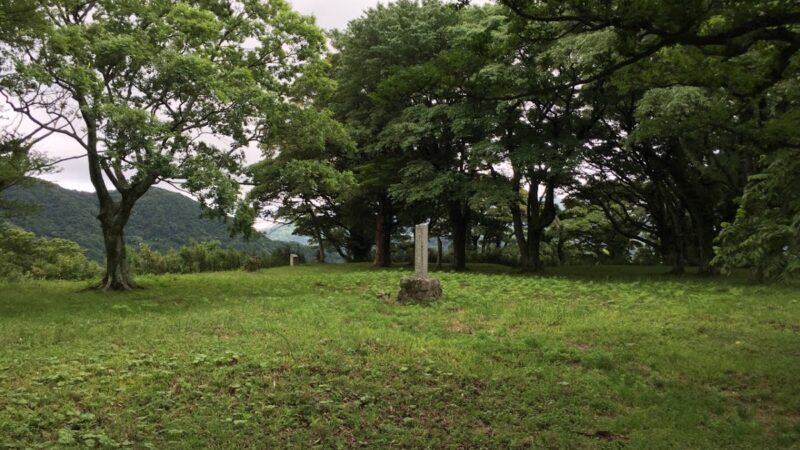
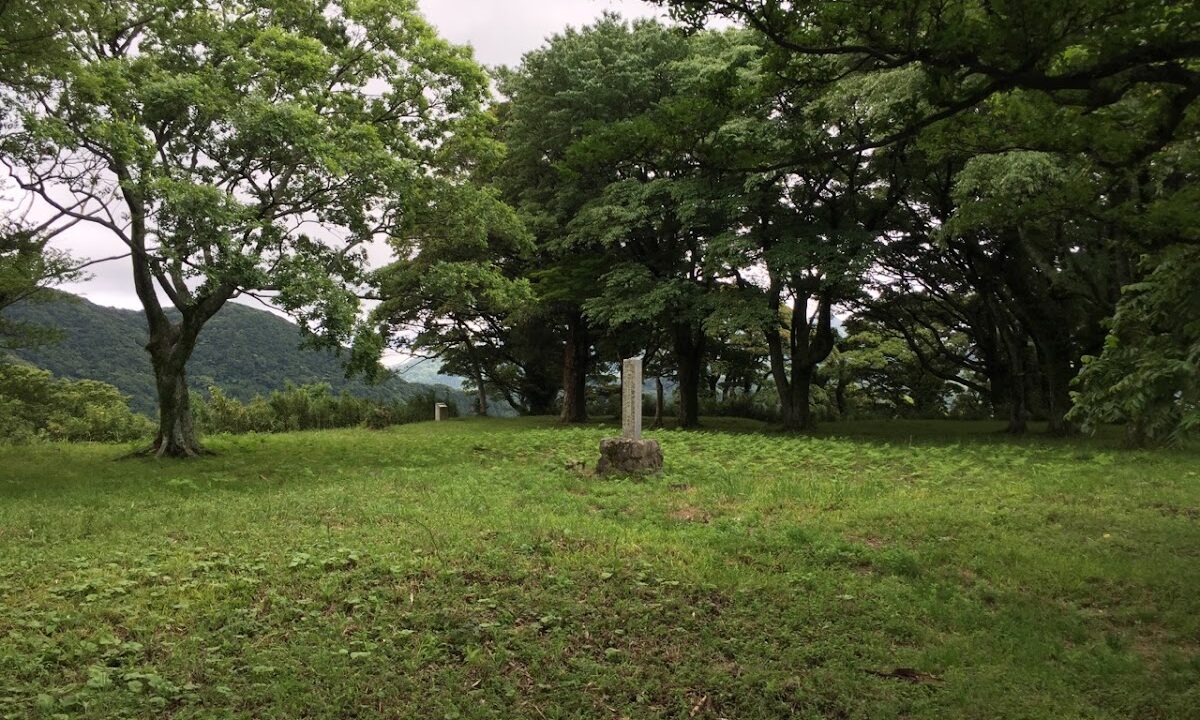
Yamabuki Castle had multiple enclosures arranged around the main enclosure (honmaru). The main enclosure (Shunkuruwa) is the central part of the castle, and it is believed to have housed the lord’s residence and important facilities. Even today, the flat surface of the main enclosure remains relatively well-preserved, allowing us to assess its scale.
Around the main enclosure, the second and third enclosures were arranged in a stepped pattern, strengthening the defenses. These enclosures, while utilizing the natural terrain, were also artificially leveled, exhibiting a typical structure of a medieval castle.
Earthworks and Moats
Remnants of earthworks and moats also remain at Yamabuki Castle. Earthworks were earthen walls built along the edges of the enclosures to prevent enemy intrusion, and fences or walls were built on top to enhance defense.
Moats were defensive structures built between enclosures and around the outer perimeter of the castle. In the case of mountain castles, rather than completely excavated moats, a type of moat called a “horikiri” (cut moat) that cut across the ridge was often used. Traces of such horikiri can be seen in places at Yamabuki Castle.
The Giant Ginkgo Tree at the Main Enclosure
A giant ginkgo tree, estimated to be over 450 years old, stands at the site of the main enclosure of Yamabuki Castle. This ginkgo tree is a symbol of Yamabuki Castle, displaying magnificent yellow foliage in autumn.
Considering its age, this ginkgo tree was likely planted at the end of the Sengoku period, perhaps around the time of Ishida Mitsunari’s renovations, or even earlier. Having quietly watched over the castle’s history for many years, it can be considered a valuable living witness.
Yamabuki Castle as a Designated Cultural Property
Designated Cultural Property: Ichinoseki City Designated Cultural Property (Yamabuki Castle Main Enclosure Site)
The Yamabuki Castle Main Enclosure Site is designated as a cultural property of Ichinoseki City and is protected as an important historical heritage of the region. The city has installed explanatory signs and maintained walking paths, ensuring that visitors can learn about history while viewing the remains.
The cultural property designation ensures the preservation of the remains and also utilizes the site as a place for local history education. Local elementary and junior high schools sometimes visit Yamabuki Castle as part of their local history studies, playing a role in passing on the region’s history to future generations.
Highlights of Yamabuki Castle
View from the Main Enclosure
From the main enclosure of Yamabuki Castle, you can enjoy a panoramic view of the town of Ohara. The view from an altitude of approximately 200 meters is the same landscape that the castle’s former lords must have gazed upon. On a clear day, the surrounding mountains and rural landscapes unfold, giving you a real sense of the strategic importance of this location.
The view changes with each season. You can enjoy the beauty of nature throughout the year: fresh greenery in spring, deep green in summer, vibrant autumn leaves, and snowscapes in winter.
Walking Trails and Nature
Walking trails are maintained at the Yamabuki Castle ruins, allowing for easy hiking. The trails are relatively gentle, making it recommended not only for those interested in history but also for those who want to enjoy nature walks.
Information boards are placed along the walking path, allowing you to learn about the castle’s history and remains. The surrounding nature is also rich, allowing you to enjoy the sounds of birdsong and seasonal flowers as you stroll.
Ginkgo Tree Autumn Foliage Season
The best time to visit is during the autumn when the ginkgo trees turn golden. The sight of the magnificent ginkgo trees, some over 450 years old, turning golden is breathtaking, attracting many photography enthusiasts and tourists. The best time to see them is usually from early to mid-November.
Access Information
Location
Ohara-Kawauchi, Daito-cho, Ichinoseki City, Iwate Prefecture
Transportation Access
Access by Train:
- Approximately 10 minutes by car from Surisawa Station on the JR Ofunato Line
- Taking a taxi from Surisawa Station is convenient
Access by Car:
- Approximately 30 minutes via National Route 284 from Ichinoseki IC on the Tohoku Expressway
- Parking: Parking space available near Ohara Junior High School (confirmation required)
Points to Note When Visiting
- As it is a mountain castle, comfortable walking shoes are recommended.
- The walking paths are well-maintained, but some areas can be slippery after rain, so caution is advised.
- Referring to the information boards will deepen your understanding.
- Bringing insect repellent and drinking water is recommended (especially in summer).
Nearby Castles and Historical Spots
Akaiwa Castle
Like Yamabuki Castle, this is a medieval castle located within Ichinoseki City. Visiting Yamabuki Castle, a castle associated with the Kasai clan, along with Yanagi-no-Gosho, will provide a deeper understanding of the medieval history of this region.
Yanagi-no-Gosho
This is the site of the administrative office of the Oshu Fujiwara clan, located in Hiraizumi Town. It is one of the constituent assets of the World Heritage Site “Hiraizumi,” and allows visitors to learn about the history of this region before the construction of Yamabuki Castle. It is approximately a 40-minute drive from Yamabuki Castle.
Ichinoseki City Museum
This facility offers a comprehensive overview of Ichinoseki City’s history. It houses exhibits related to Yamabuki Castle, as well as materials concerning the Ohara-Chiba and Kasai clans. Visiting before or after a visit to Yamabuki Castle will enhance your understanding.
The Seven Kasai Knights and the Ohara-Chiba Clan
About the Kasai Clan
The Kasai clan was a powerful samurai family entrusted with governing southern Mutsu Province after Minamoto no Yoritomo’s Oshu War. From the Kamakura period to the Sengoku period, they ruled a vast area spanning from southern Iwate Prefecture to northern Miyagi Prefecture.
The Seven Kasai Knights
The Seven Kasai Knights is a term referring to a powerful group of retainers of the Kasai clan, and is said to have included the following seven families:
- The Ohara Chiba clan (Yamabuki Castle)
- The Senmaya clan
- The Kesen clan
- The Motoyoshi clan
- The Tome clan
- The Momoi clan
- The Oshika clan
These retainers played a crucial role in the Kasai clan’s rule of their territory and established their own independent power base in each region.
The Ohara Chiba clan as the “Higashiyama Flagship”
The Ohara Chiba clan boasted such power among the Seven Kasai Knights that they were called the “Higashiyama Flagship.” “Higashiyama” refers to the eastern mountainous region of the Kasai clan’s territory, indicating their function as the military and administrative center of this region.
The Ohara Chiba clan’s sphere of influence centered on the area of present-day Daito-cho, Ichinoseki City, and they controlled both the agriculturally productive plains and the mountainous areas suitable for defense.
Ishida Mitsunari and the Oshu Settlement
The Oshu Settlement of 1590
In 1590, after completing the Siege of Odawara, Toyotomi Hideyoshi implemented the “Oshu Settlement,” a major reorganization of the daimyo’s positions in the Tohoku region. At this time, the Kasai and Osaki clans were dispossessed of their territories, and Kimura Yoshikiyo and his son Kiyohisa were appointed to their former domains.
However, a revolt (the Kasai-Osaki Revolt) occurred by former retainers and subjects of the Kasai and Osaki clans who were dissatisfied with the Kimura’s rule. The Toyotomi regime dispatched a large army to suppress it.
The Role of Ishida Mitsunari
Ishida Mitsunari, as a close confidant of Toyotomi Hideyoshi, was in charge of the practical implementation of the Oshu Settlement. Mitsunari directed land surveys and castle construction, aiming to lay the foundation for the Toyotomi regime’s control over Tohoku.
The renovation of Yamabuki Castle is also thought to have been carried out as part of this Oshu Settlement. Mitsunari likely introduced the latest castle-building techniques of the late Sengoku period, attempting to remodel Yamabuki Castle, a medieval mountain castle, into a more defensible, early modern fortress.
However, this region subsequently came under the influence of Date Masamune, and the results of Mitsunari’s remodeling were never utilized in the long term.
Historical Significance of Yamabuki Castle
Position in the Medieval History of Tohoku
Yamabuki Castle is an important archaeological site that illustrates the power structure of the Tohoku region from the Kamakura period to the Sengoku period. It is a valuable resource for understanding the reality of indirect rule by the Kasai clan and the appearance of castles and residences of local lords.
Evolution of Castle-Building Techniques
Yamabuki Castle is also an archaeological site that shows the evolution of castle-building techniques over approximately 360 years, from its construction in the Kamakura period to its remodeling by Ishida Mitsunari at the end of the Sengoku period. It is possible that traces of multiple eras remain layered, from medieval earthworks and moats to the layout techniques of the late Sengoku period.
Importance in Local History
In the history of Daito-cho, Ichinoseki City, Yamabuki Castle is a crucial element in shaping the region’s identity. The history of rule by the Ohara Chiba clan forms the foundation of the current local culture and is at the core of the historical consciousness of the local residents.
How to Enjoy Visiting Yamabuki Castle
As a History Study
Yamabuki Castle is an excellent resource for learning about Japanese medieval history, especially the history of the Tohoku region. Researching the Kasai and Ohara Chiba clans before your visit will lead to a deeper understanding. Learning about Ishida Mitsunari’s pacification of Oshu will also give you a real sense of the historical transition from the Sengoku period to the Edo period.
As a Nature Walk
Beyond its historical significance, it is also an attractive spot for nature walks. Enjoying the changing seasons and taking a leisurely stroll will refresh your mind and body. The autumn ginkgo foliage season is particularly ideal for photography.
A Historical Exploration Route
Starting from Yamabuki Castle, we recommend creating a route that visits other historical sites in Ichinoseki City. Extending your visit to Akaiwa Castle, the Ichinoseki City Museum, and even the Hiraizumi World Heritage Sites allows you to systematically learn about the history of the Tohoku region from ancient times through the medieval and early modern periods.
Summary
Yamabuki Castle (Ichinoseki City, Iwate Prefecture) is a representative medieval mountain castle of the Higashi-Iwai region, built in 1230 by Chiba Munetane and serving as the residence of the Ohara Chiba clan for approximately 360 years. As a base for the Ohara Chiba clan, known as the “Higashiyama Flagbearer” and one of the Seven Knights of Kasai, it played a crucial role in the history of this region.
During Toyotomi Hideyoshi’s pacification of Oshu in 1590, the castle fell and was renovated by Ishida Mitsunari. It is believed that this renovation combined the medieval mountain castle with the construction techniques of the late Sengoku period, forming some of the remains that can be seen today.
Currently, the Yamabuki Castle main keep site is designated as a cultural property of Ichinoseki City, and the remains such as the baileys and earthworks are well-preserved. A large ginkgo tree, over 450 years old, stands in the main keep, displaying magnificent yellow foliage in autumn. Walking paths are maintained, and from the main keep, visitors can enjoy panoramic views of the town of Ohara.
Yamabuki Castle is a valuable historical site for learning about Japanese medieval history, particularly the history of the Tohoku region, and is also an attractive spot for nature walks and exploring local history. It is a historical site that you should definitely visit when you come to Ichinoseki City.