Complete Guide to the Nara-nashi Jinya Ruins (Ogawa Town, Saitama Prefecture): A Thorough Explanation of the Suwa Clan’s History and Highlights
Located in Ogawa Town, Hiki District, Saitama Prefecture, the Nara-nashi Jinya Ruins are a valuable historical site that tells the story of the transitional period from the Sengoku period to the early Edo period. The remains of the Jinya (fortified residence) once built by the Suwa clan still quietly remain on this site, now the grounds of the Yawada Shrine. This article provides a detailed explanation of the Nara-nashi Jinya, from its history and highlights to access methods.
What is the Nara-nashi Jinya?
The Nara-nashi Jinya was a fortified residence built in 1590 by Suwa Kotaro Yoritada. Following Tokugawa Ieyasu’s relocation to the Kanto region, the Suwa clan was granted a total of 12,000 koku of land in Nara-nashi (Hiki District), Hirukawa (Kodama District), and Hanyu (Saitama District), and the Jinya was constructed as their base of operations.
Differences between Jinya and Castles
A Jinya was a residence established by daimyo and hatamoto (high-ranking samurai) with domains of around 10,000 koku during the Edo period. Compared to castles, they were generally smaller in scale and lacked large defensive structures such as keeps and stone walls, but they did have defensive features such as earthworks and moats. The Narashi Jinya is also believed to have been a facility that combined military and administrative functions.
History of the Suwa Clan and the Narashi Jinya
Changes in the Suwa Clan
The Suwa clan was a prominent family based in the Suwa region of Shinano Province. However, they suffered a hardship in 1542 when they were attacked by Takeda Shingen and lost their entire territory in Suwa.
Suwa Yoritada survived the subsequent turbulent times and, after the Honnoji Incident in 1582, managed to recover his former territory. However, due to subsequent changes in circumstances, he surrendered to Tokugawa Ieyasu.
Relocation to Kanto and Construction of the Jinya (Fortified Residence)
In 1590, after Toyotomi Hideyoshi’s siege of Odawara, Tokugawa Ieyasu was relocated to the Kanto region, and Suwa Yoritada followed him. Yoritada was granted a territory of 12,000 koku in Musashi Province by Ieyasu, and he established a jinya in Narashi as his base of operations.
Narashi in Hiki District was a strategically important location in Musashi Province, a key transportation hub. It was situated on a road connecting Chichibu to Edo, making it a suitable location for the administration of his territory.
Relocation After Only Two Years
However, in 1592, just two years later, Suwa Yoritada and his son Yorimizu were relocated to Sōja in Kōzuke Province (present-day Maebashi City, Gunma Prefecture). The reason for this short-term transfer is not clearly documented, but it is speculated to have been part of Tokugawa Ieyasu’s reorganization of his Kanto region administration.
This transfer marked the end of the Narashi Jinya’s short lifespan. Although it was a short-lived jinya, lasting only two years, its remains survive to this day, conveying the history of that era.
Structure and Remains of the Narashi Jinya Site
Scale and Layout of the Jinya
The Narashi Jinya was built around the current grounds of the Yawada Shrine. Archaeological excavations and topographical analysis suggest that the jinya had a rectangular layout surrounded by earthworks and a moat.
It is presumed that the main hall and administrative buildings were located in the center of the jinya, while the residences of retainers and warehouses surrounded them. In terms of scale, it is thought to have been a standard residence for a daimyo with a 12,000 koku domain.
Existing Earthworks
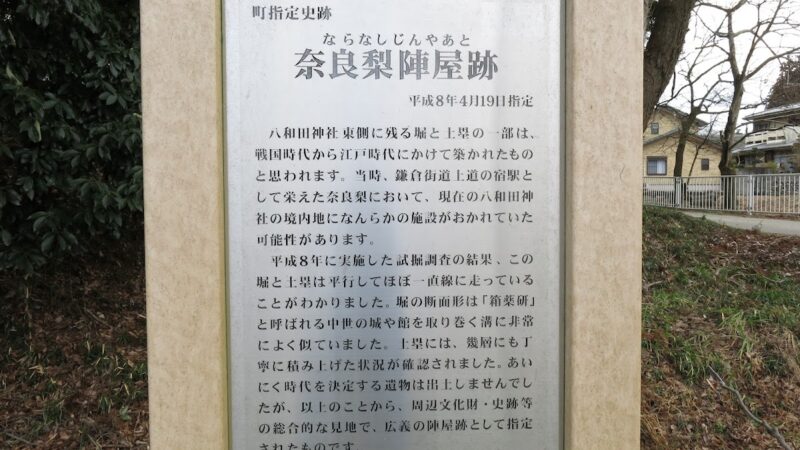
Currently, the earthworks from the time of the fortifications remain in good condition, extending from the north to the east side of Yawada Shrine. These earthworks are approximately 2-3 meters high and 5-6 meters wide at the base, conveying their function as a defensive structure of the encampment.
A survey conducted in 1996 revealed evidence of multiple layers of earth being piled up on the earthworks. This is a construction method called “hanchiku,” a technique that creates strong earthworks by layering and compacting thin layers of earth. This demonstrates that solid construction techniques were employed, even though the encampment was only used for two years.
Traces of a Dry Moat
Traces of a dry moat can also be seen on the east side. Although currently filled in and shallow, it is believed that a moat approximately 3-4 meters deep once surrounded the encampment. This moat served not only as a defense but also as a boundary marker.
An earthen embankment was built outside the moat, indicating that a defensive system combining the moat and embankment was in place. Since it was a dry moat rather than a watered one, it is presumed that the design took into account the topography and water supply conditions of the region.
Relationship with Yawada Shrine
Currently, Yawada Shrine stands in the center of the former encampment site. While the exact date of its founding is unclear, it is believed to have been established as the local tutelary deity after the encampment was abandoned.
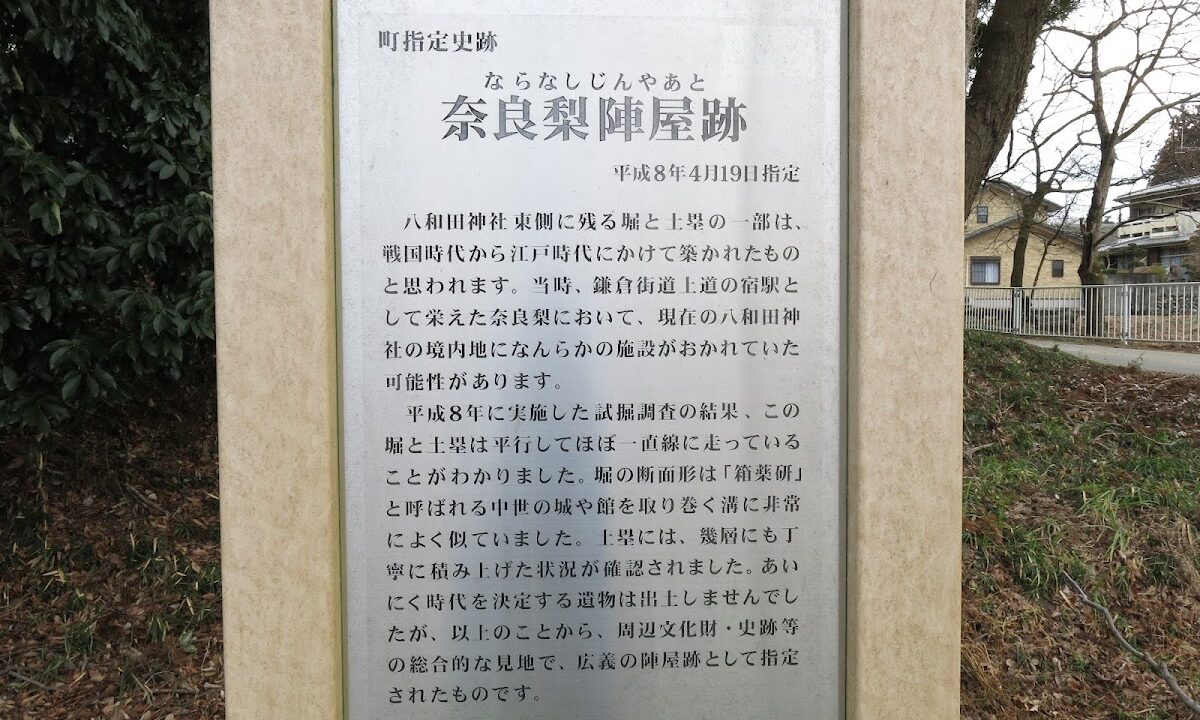
An explanatory sign marking the encampment site is installed within the shrine grounds, conveying the historical background to visitors. The tranquil atmosphere of the shrine offers a valuable space where one can feel the remnants of the former encampment.
Highlights of the Nara-nashi Encampment Site
Observation Points of the Earthen Embankment
The earthen embankment extending from the north to the east of Yawada Shrine is the main highlight of the Nara-nashi Encampment Site. While walking through the shrine grounds, you can observe the height and shape of the embankment up close.
The earthworks are particularly well-preserved near the northeast corner, maintaining a height close to their original level. While it’s not possible to walk on the top of the earthworks, you can still appreciate their scale.
Topography of the Dry Moat
The dry moat on the east side is now shallow, but its location can be confirmed from the topography. Looking out from the east side of the shrine, you can find traces of the moat as a slight depression.
Surrounding Topography and Location
The site where the Narashi Jinya (fortified residence) was built is located on a corner of the Hiki Hills. Observing the surrounding topography reveals that the residence was built on a slightly elevated area, offering a vantage point for overlooking the surroundings.
From a military perspective, it’s clear that a location suitable for monitoring roads and governing the territory was chosen. Even within the modern cityscape, you can sense the topographical advantages of that time.
Information Board and Stone Monument
An information board explaining the history of the Narashi Jinya site is installed on the shrine grounds. This document details the history of the Suwa clan and the structure of the fortified residence, and reading it before your visit will deepen your understanding.
Historical Background of Ogawa Town
Sengoku Period History of the Hiki Region
The Hiki district, where the Narashi fortified residence was built, was a region where the spheres of influence of the Hojo and Uesugi clans intersected during the Sengoku period. It was under the control of the Odawara Hojo clan for a long period, and remained under their influence until Toyotomi Hideyoshi’s conquest of Odawara.
Tokugawa Ieyasu’s Rule of Kanto
Tokugawa Ieyasu’s entry into the Kanto region in 1590 brought about significant changes. To establish his control over Kanto, Ieyasu strategically placed trustworthy vassals and tozama daimyo (outside lords). The placement of the Suwa clan in Narashi is thought to have been part of this policy.
Ogawa Town in the Edo Period
After the Suwa clan’s relocation, the area around Narashi was governed as a hatamoto territory and shogunate territory. Ogawa Town developed as a center for washi (Japanese paper) production, and “Ogawa Washi” received high praise throughout the Edo period. Even today, the traditional techniques of handmade washi are still being passed down.
Visitor Guide
Access Methods
Access by Train
- Approximately 30 minutes on foot from Ogawamachi Station on the JR Hachiko Line and Tobu Tojo Line
- Approximately 10 minutes by taxi from Ogawamachi Station
- Bus service is also available from Ogawamachi Station (infrequent service, so prior confirmation is recommended)
Access by Car
- Approximately 15 minutes from the Ranzan-Ogawa Interchange on the Kan-Etsu Expressway
- Take National Route 254 towards the Ogawamachi town center
- Several parking spaces are available at Yawada Shrine (for visitors)
Visitor Information
- Location: Narashi, Ogawamachi, Hikigun, Saitama Prefecture (within the grounds of Yawada Shrine)
- Visiting Hours: The grounds are always open (according to the shrine’s visiting hours)
- Admission Fee: Free
- Estimated Time Required: Approximately 30 minutes to 1 hour
- Restrooms: Since it’s not located within the shrine grounds, it’s recommended to take care of any necessary procedures around the station beforehand.
Points to Note During Your Visit
- As this is within the grounds of Yawada Shrine, please observe proper etiquette when visiting.
- Please be careful not to damage the earthworks or historical remains.
- Reading the information boards carefully and understanding the historical background before your visit will deepen your understanding.
- In the summer, there are many insects such as mosquitoes, so insect repellent is recommended.
- Please be careful as the ground can become slippery in rainy weather.
Recommended Time to Visit
Spring (March-May) and autumn (October-November) are the best times to visit. The weather is mild, and the surrounding nature is beautiful during these seasons. Autumn, in particular, offers beautiful autumn foliage.
Nearby Tourist Spots
Ogawa Town Washi Paper Making Experience Center
This facility is located about 10 minutes by car from the Narashi Jinya Ruins. You can experience making “Hosokawa paper,” which is designated as a National Important Intangible Cultural Property. This is a valuable opportunity to learn about the history of Ogawa Washi (Japanese paper) and experience washi making firsthand.
Saitama Traditional Crafts Center
This facility exhibits and sells traditional crafts from Ogawa Town. You can see various traditional crafts from Saitama Prefecture, including Ogawa Washi.
Sengenyama Observation Hill Park
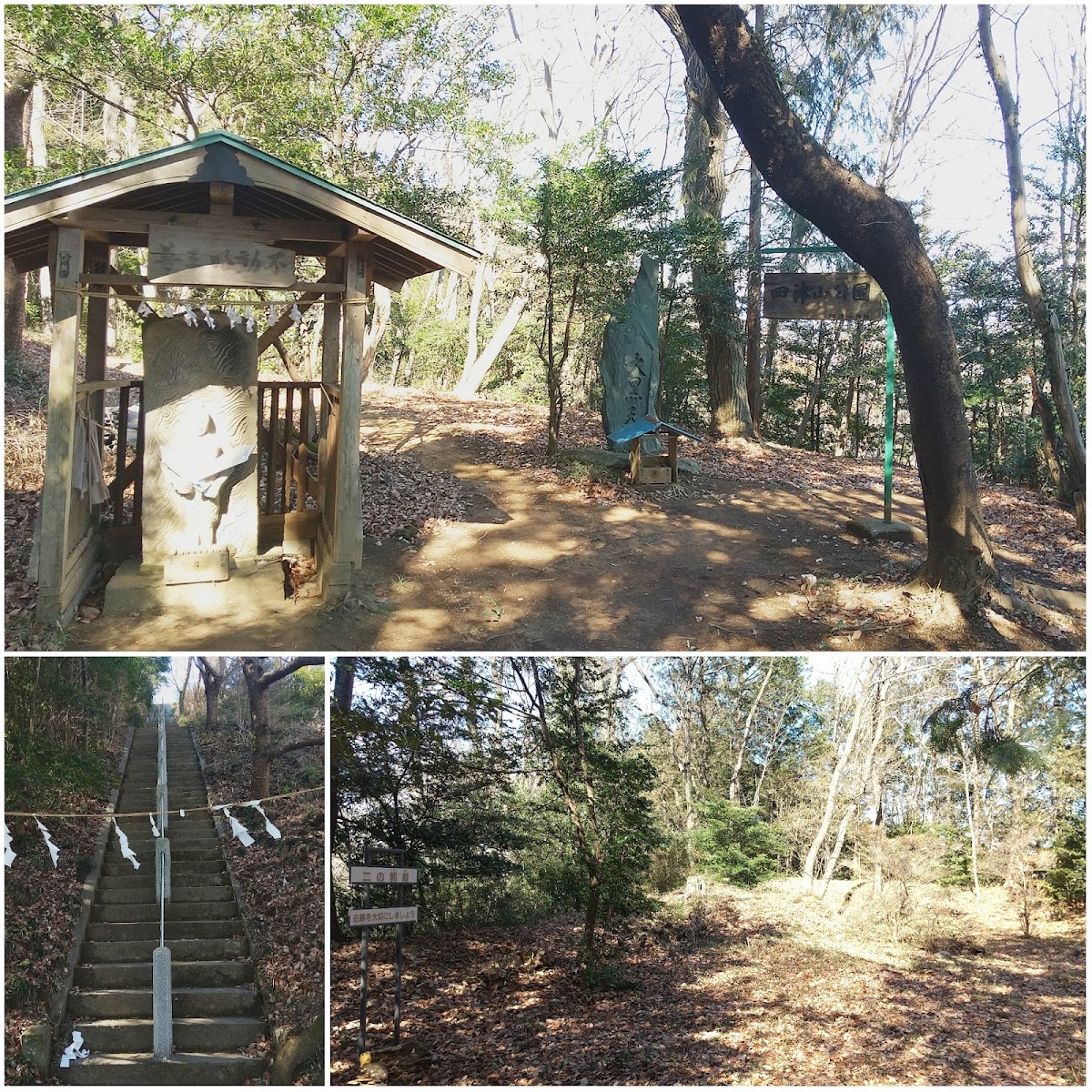
This observation park offers a panoramic view of Ogawa Town. On a clear day, you can see the Chichibu Mountains and the Kanto Plain. It’s an ideal spot to get a bird’s-eye view of the terrain where the Jinya (fortified residence) was built.
Aoyama Castle Ruins
Another castle ruin located within Ogawa Town. While it’s a medieval mountain castle from a different era than the Narashi Jinya, it’s an interesting historical site for understanding the castle history of the Hiki region.
Historical Value of the Nara-nashi Jinya Site
Valuable Remains of a Short-Lived Jinya
The remains of a jinya (fortified residence) that was only used for two years are rare nationwide, making the Nara-nashi Jinya site a valuable historical site. Despite being a short-lived facility, the earthworks and moats remain remarkably well-preserved, likely due to the lack of subsequent large-scale development.
A Story of the Early Kanto Rule of the Tokugawa Regime
The Nara-nashi Jinya is an important historical site that illustrates the early stages of Tokugawa Ieyasu’s rule over the Kanto region. It provides clues to understanding how Ieyasu constructed his system of control over Kanto.
A Glimpse into the History of the Suwa Clan
The Suwa clan, a prominent family from Shinano Province, witnessed the turbulent period of conflict with the Takeda clan, the recovery of their former territories after the Honnoji Incident, and their subsequent submission to the Tokugawa clan before being transferred to the Kanto region.
Recommended Points for Castle Fans and History Enthusiasts
Observation of Earthwork Structure
This is a valuable opportunity to observe the structure of earthworks built using the rammed earth technique. It is especially recommended for those interested in castle construction techniques.
Comparative Study of Jinya (Fortified Residences) and Castles
This historical site is suitable for understanding the characteristics of Jinya compared to large-scale castles. You can consider the balance between defensive functions and residential/administrative functions.
Quiet Visit
Unlike famous tourist spots, you can reflect on history in a quiet environment. It is a suitable place to carefully observe the remains and imagine what it was like in those days.
Historical Walking Course in Ogawa Town
We introduce a half-day course that visits historical spots in Ogawa Town, centering on the Naraishi Jinya Ruins.
- Ogawamachi Station (Start)
- Ogawamachi Washi Paper Making Experience Learning Center (Duration: 1 hour)
- Narashi Jinya Ruins (Duration: 30 minutes to 1 hour)
- Visit to Yawada Shrine
- Saitama Traditional Crafts Center (Duration: 30 minutes)
- Stroll through Ogawamachi town center and have lunch
- Ogawamachi Station (Goal)
This course allows you to fully enjoy the history and traditional culture of Ogawamachi.
Related Jinya Ruins in Saitama Prefecture
Akayama Jinya Ruins (Kawaguchi City)
These are the ruins of the Jinya where the Ina clan ruled as Kanto regional governors for generations. It was larger in scale and used for a longer period than the Narashi Jinya. It is currently maintained as “Iina Park Kawaguchi”.
Ina Clan Jinya Ruins (Ina Town)
These are the ruins of the Jinya built by Ina Bizen-no-kami Tadatsugu. This was the base of the Ina clan, who served as the Kanto regional governor and were responsible for flood control projects for the Tokugawa shogunate.
By comparing these fortified residence sites, we can understand the diversity of fortified residences in the early Edo period.
Summary
Despite being used for only a short period of two years, the Nara-nashi Jinya (fortified residence) site is a valuable historical site with well-preserved remains such as earthworks and dry moats. As an important place that tells the story of the turbulent history of the Suwa clan and the early stages of Tokugawa Ieyasu’s rule over the Kanto region, it is a worthwhile spot for history buffs and castle enthusiasts to visit.
The time spent observing the remains of earthworks and moats while reflecting on the history of over 400 years ago in the quiet grounds of Yawada Shrine will surely be fulfilling. When you visit Ogawa Town, be sure to stop by the Nara-nashi Jinya site. Combined with a historical walk through Ogawa Town, known as a town of washi (Japanese paper), you can enjoy a hidden historical spot in Saitama Prefecture.