Miyazaki Castle (Chichibu City, Saitama Prefecture) Complete Guide: The Residence of Kurosawa Minbu and the Hojo Clan’s Branch Castle Network
Located in Ohnohara, Chichibu City, Saitama Prefecture, Miyazaki Castle is a mountain castle that played an important role in the Hojo clan’s sphere of influence during the Sengoku period (Warring States period). Also known as Minbu Castle, Musashi Miyazaki Castle, and Miyazaki Fort, this castle is known as a cliffside castle that skillfully utilized a tongue-shaped plateau formed at the confluence of the Arakawa and Namerizawa rivers. Even today, the remains of earthworks, dry moats, and trenches are well-preserved, making it a valuable historical site that conveys the castle-building techniques of the Sengoku period.
History and Construction Background of Miyazaki Castle
The Hojo Clan and the Hachigata Castle Branch Castle Network
Miyazaki Castle functioned as an important branch castle of the Hojo clan, who ruled northern Musashi Province during the Sengoku period. In particular, it was positioned as a key point for the defense and control of the Chichibu region within the sphere of influence of Hojo Ujikuni, whose base was Hachigata Castle (present-day Yorii-machi, Osato-gun, Saitama Prefecture).
Hachigata Castle was one of the most important strongholds in the Hojo clan’s control of northern Kanto, and several subsidiary castles were located in its vicinity. Miyazaki Castle is thought to have been part of this network of subsidiary castles, playing a role in preparing for invasions from the Chichibu region.
Lord Kurosawa Minbu and His Family
Kurosawa Minbu is known as the lord of Miyazaki Castle. The Kurosawa clan were powerful vassals serving Hojo Ujikuni and played an important role in supporting the Hojo clan’s rule in the Chichibu region. For this reason, Miyazaki Castle is also known as “Minbu Castle.”
Kurosawa Minbu was known as a practical warrior among the Hojo clan’s vassals, and he dedicated himself to the governance and defense of the Chichibu region from Miyazaki Castle. From the Muromachi period to the Sengoku period, this region was the target of various power struggles, and the Kurosawa clan played a crucial role in maintaining the Hojo clan’s power.
Miyazaki Castle in the Sengoku Period
During the Sengoku period (Warring States period), the northern part of Musashi Province was a region where the powers of the Hojo, Uesugi, and Takeda clans intersected. Miyazaki Castle, situated at a strategic point along the Arakawa River, was a militarily and economically important base.
Particularly during the Tensho era (1573-1592), the conflict between the Hojo, Uesugi, and Takeda clans intensified, and the Chichibu region was also embroiled in warfare. It is believed that Miyazaki Castle functioned as a frontline base protecting Hachigata Castle in this situation.
Miyazaki Castle’s Layout and Structure
A Cliffside Castle Utilizing the Topography
The most distinctive feature of Miyazaki Castle is its structure as a cliffside castle, skillfully utilizing the natural terrain. The castle is built on the tip of a tongue-shaped plateau formed at the confluence of the Arakawa River and its tributary, Namerizawa.
Protected on three sides by a river and steep cliffs, the castle boasted an ideal location where defenses only needed to focus on the north side. This topographical advantage allowed it to exhibit high defensive capabilities despite being a relatively small castle.
The plateau’s elevation was approximately 20-30 meters higher than the surrounding plains, and the Arakawa River side was a steep cliff, making it an extremely difficult forge to conquer.
Arrangement of Enclosures (Kuruwa)
Miyazaki Castle is composed of multiple enclosures (kuruwa). Several secondary enclosures are arranged around the central main enclosure, each demarcated by earthworks and dry moats.
The main enclosure is the core of the castle and is presumed to have housed the lord’s residence and important facilities. Even today, clear earthworks remain around the main enclosure, allowing us to imagine the defensive structures of the time.
The secondary enclosures are thought to have contained defensive facilities to protect the main enclosure, as well as residences for retainers and granaries. Each enclosure was organically interconnected, forming a robust defensive system as a whole.
Remains of Earthworks and Dry Moats
Among the remains of Miyazaki Castle, the well-preserved earthworks and dry moats are particularly noteworthy. The earthworks were built surrounding the enclosures, and while their height varies depending on the location, they are generally around 1-2 meters in size.
The dry moats were important defensive structures separating the enclosures, serving to prevent enemy intrusion. The dry moats at Miyazaki Castle are approximately 3-5 meters deep, demonstrating the advanced castle-building techniques of the time.
These earthworks and dry moats have retained their shape remarkably well even after several hundred years, thanks to the preservation efforts of local residents.
Moats and Vertical Moats
Moats and vertical moats played a crucial role in Miyazaki Castle’s defensive system. Moats were dug to cut across ridges, effectively blocking enemy intrusion routes.
Vertical moats are trenches dug vertically along slopes, serving to prevent enemies from climbing the incline. At Miyazaki Castle, it is believed that a trench was constructed along the northern ridge, while vertical moats were positioned on the eastern and western slopes.
These remains demonstrate defensive techniques common to mountain castles of the Sengoku period, proving that Miyazaki Castle was not merely a residence, but a full-fledged military facility designed for actual combat.
Structure of the Koguchi (Entrance)
The koguchi (entrance) in a castle is both the entrance and the most important defensive point. It is presumed that special defensive structures were constructed at the koguchi area of Miyazaki Castle.
Near the currently visible entrance, traces of earthworks, bends, and narrowing of the passageways can be seen. These are castle construction techniques designed to make enemy intrusion difficult and give the defenders an advantage.
The structure of a castle’s entrance (koguchi) is a crucial element in determining its defensive capabilities, and the remains of Miyazaki Castle reveal that its entrance was designed using the finest castle-building techniques of the Sengoku period (Warring States period).
Highlights of Miyazaki Castle
Earthworks of the Main Enclosure
The first thing to notice when visiting Miyazaki Castle is the earthworks surrounding the main enclosure. These earthworks remain clearly visible today, measuring 1-2 meters in height and 3-4 meters in width at the base.
Walking along the earthworks allows you to experience the scale and structure of the castle at that time. Furthermore, the difference in ground level between the inside and outside of the earthworks demonstrates its function as a defensive structure.
The earthworks are remarkably well-preserved, making them a valuable historical site for learning about Sengoku period castle-building techniques.
The Impressive Dry Moat
The dry moat separating the main and secondary enclosures is a key element of Miyazaki Castle’s defensive system. The dry moat, 3-5 meters deep, is even more impressive in person than one might imagine.
The difference in elevation from the bottom of the moat to the top of the earthen rampart reaches 7 to 8 meters, illustrating how difficult it would have been for the enemy to cross and invade. The cross-sectional shape of the dry moat can also be observed, confirming its nearly V-shape.
Depending on the season, it may be possible to descend into the moat, allowing for a more detailed observation of the remains.
Defensive Line of the Moat
The moat, located along the northern ridge, was the most important defensive line of Miyazaki Castle. This moat completely cuts across the ridge and measures approximately 5 to 6 meters wide and 4 to 5 meters deep.
Earthen ramparts were built on both sides of the moat, forming a double defensive line. The structure made it impossible to enter the castle without crossing this moat, making it an important example of practical castle construction thinking from the Sengoku period.
The area around the moat has been cleared of trees, making it easier to grasp the overall structure.
The Brilliance of the View and Location
From the ruins of Miyazaki Castle, one can enjoy a panoramic view of the Arakawa River and the Chichibu Mountains. This view is not only aesthetically pleasing but also held significant military importance.
By surveying the surrounding area from the castle, enemy movements could be detected early, and the movements of friendly forces could also be monitored. The location was also ideal for monitoring the road along the Arakawa River.
Although the area is now overgrown with trees, it is believed that in the past, trees were cut down to improve visibility, allowing for a wider area to be monitored.
Excellent State of Preservation
Although Miyazaki Castle is not designated as a historical site, it is well-preserved thanks to the efforts of local residents. The remains have been preserved without destruction, conveying the appearance of a Sengoku period castle to the present day.
Regular mowing and cleaning are carried out, making the remains easy to observe. It is thanks to these preservation efforts by local residents that we can experience history from several hundred years ago.
Access and Visit Information
Access by Public Transportation
The nearest station to Miyazaki Castle is Onohara Station on the Chichibu Railway. It’s about a 15-20 minute walk from Onohara Station to the castle ruins.
The Chichibu Railway is a local line connecting Kumagaya Station and Mitsumineguchi Station, with 1-2 trains per hour. It’s recommended to check the timetable before your visit.
The route from the station to the castle ruins goes through a residential area and along the Arakawa River. Signposts are limited, so it’s a good idea to check the location on a map or GPS app beforehand.
Access by Car
If visiting by car, it’s about a 40-minute drive from the Hanazono Interchange on the Kan-Etsu Expressway via National Route 140 (Minano-Yorii Bypass). From Chichibu city center, it’s about a 15-minute drive via National Route 140.
There is no dedicated parking lot around the castle ruins, but there are a few parking spaces on the roadside near the entrance to the castle. However, please be considerate as this is also a local road and avoid causing any inconvenience.
Entrance to the Castle and Visiting Route
The entrance to Miyazaki Castle is located at the point where the road along the Arakawa River ascends to the plateau. A simple signpost is installed at the entrance, indicating that it is a castle site.
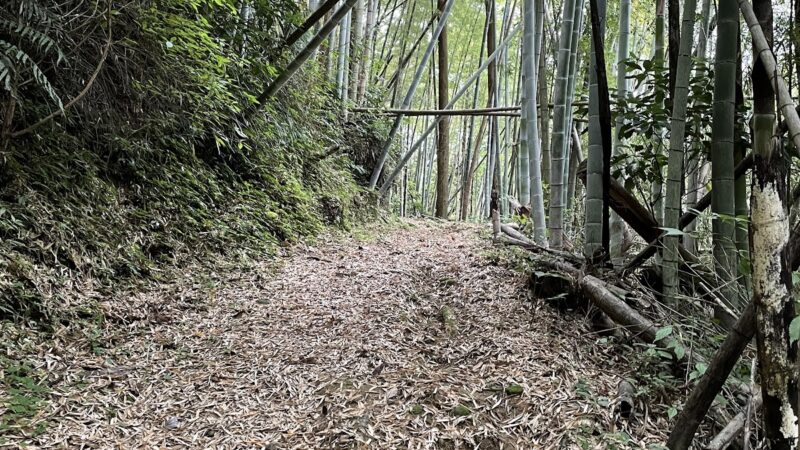
The path to the castle is a well-maintained mountain trail. While there are some steep slopes, it can be climbed without difficulty by those with average physical fitness. The time required from the entrance to the main enclosure is approximately 5-10 minutes.
Visiting the castle ruins is free, and you can tour the main enclosure, secondary enclosure, dry moat, and trench in order. The total visiting time is approximately 15-30 minutes.
Precautions When Visiting
Please note the following points when visiting Miyazaki Castle ruins.
- As it is a mountain castle, comfortable clothing and walking shoes are essential.
- Don’t forget insect repellent in summer and warm clothing in winter.
- Be careful as the ground can be slippery during and after rain.
- There are no toilets or vending machines within the castle grounds.
- Please take all your trash with you.
- Please be considerate and avoid damaging the ruins.
Best Season for Visiting
Miyazaki Castle Ruins are accessible year-round, but each season offers its own unique charm.
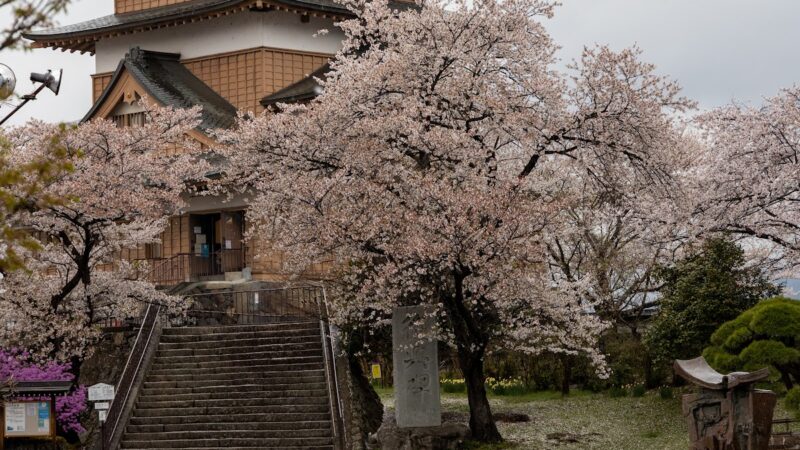
Spring (March-May) is ideal for visiting, with beautiful fresh greenery and mild weather. You can also enjoy the surrounding scenery during cherry blossom season.
Summer (June-August) is characterized by dense greenery, which can sometimes obscure the ruins, but you can enjoy the cool atmosphere of the mountain castle. Insect repellent is essential.
Autumn (September-November) is the best season for visiting, with beautiful autumn foliage and pleasant weather. The ruins are also easier to observe.
Winter (December to February) is the best time to observe the ruins as the leaves have fallen from the trees, but cold weather gear is necessary.
Nearby Tourist Attractions
Hachigata Castle Ruins
Hachigata Castle, the main castle of Miyazaki Castle, is a nationally designated historical site located in Yorii-machi, Osato-gun, Saitama Prefecture. It is a large-scale flatland castle built at the confluence of the Arakawa and Fukasawa rivers, and is known as the residence of Hojo Ujikuni.
The Hachigata Castle Ruins have been developed into a park, where visitors can see the restored gates, earthworks, and dry moats. The Hachigata Castle History Museum is also located on the premises, where visitors can learn about the history of the Hojo clan and the structure of the castle.
Visiting both Miyazaki Castle and Hachigata Castle will provide a deeper understanding of the Hojo clan’s network of branch castles and the Sengoku period history of the Chichibu region.
Chichibu Shrine
Chichibu Shrine, located in the city of Chichibu, is an ancient shrine known as the guardian shrine of the Chichibu region. The Gongen-zukuri style shrine building, rebuilt by Tokugawa Ieyasu, is famous for the beauty of its carvings.
The carvings, especially “The Connecting Dragon,” “The Tiger Raising Its Children,” and “The Energetic Three Monkeys,” are must-sees. The Chichibu Night Festival, held in December, is known as one of Japan’s three major float festivals.
Chichibu Railway SL Paleo Express
The Chichibu Railway operates the SL (steam locomotive) Paleo Express mainly on weekends. This SL, running between Kumagaya Station and Mitsumineguchi Station, is popular not only with railway enthusiasts but also with many tourists.
If you use the Chichibu Railway to access Miyazaki Castle, visiting on a day when the SL is running allows you to enjoy both a castle visit and a train journey simultaneously.
Nagatoro Gorge
Located in Nagatoro Town, Chichibu District, Nagatoro Gorge is a scenic spot designated as a national scenic spot and natural monument. The beauty of the gorge, created by the clear waters of the Arakawa River carving through crystalline schist rocks called “Iwatatami,” is breathtaking.
You can enjoy the changing seasons through river rafting, strolling along the Iwatatami, and the scenery during the autumn foliage season. Located about 30 minutes by car from Miyazaki Castle, it’s a convenient place to visit in conjunction with it.
Miyazaki Castle and the Sengoku History of Chichibu
The Hojo Clan’s Rule over Chichibu
The Hojo clan was a Sengoku daimyo based in Odawara, controlling most of the Kanto region. The Chichibu region was located at the northwestern edge of the Hojo clan’s sphere of influence and was considered important as a border region with the Uesugi and Takeda clans.
Hojo Ujikuni was born the fourth son of Hojo Ujiyasu and ruled the northern part of Musashi Province from his base at Hachigata Castle. Ujikuni was known as an excellent military commander and devoted himself to managing the Chichibu region.
Miyazaki Castle was given to Kurosawa Minbu as part of the Hojo clan’s rule over Chichibu, and it functioned as a base for regional control.
Conflict with the Takeda Clan
During the Sengoku period, the Chichibu region was located on the border between the spheres of influence of the Hojo and Takeda clans. During the time of Takeda Shingen, in particular, the Takeda clan attempted to expand into the Chichibu region, leading to fierce conflict between the two sides.
During the Tensho era, Takeda Katsuyori intensified his invasion of the Kanto region, and the Chichibu area was also embroiled in warfare. Miyazaki Castle, strategically located along the Arakawa River, is believed to have functioned as an important base to prepare for Takeda invasions.
Toyotomi Hideyoshi’s Siege of Odawara and the Castle’s Abandonment
In 1590 (Tensho 18), Toyotomi Hideyoshi launched the Siege of Odawara, resulting in the downfall of the Hojo clan. Hachigata Castle was also besieged during this battle and surrendered after a fierce fight.
While the exact role Miyazaki Castle played in this battle is unclear, it is believed to have lost its function as a castle with the fall of the Hojo clan. Subsequently, Miyazaki Castle was never reused throughout the Edo period and was buried in history as a ruined castle.
Research and Study of Miyazaki Castle
Archaeological Investigation
While no full-scale archaeological excavations have been conducted on Miyazaki Castle, its layout has been revealed through surface observations and surveys.
Surveys by castle researchers have meticulously documented the placement of defensive structures such as earthworks, dry moats, and trenches, confirming that it possesses a typical structure for a mountain castle of the Sengoku period.
Future archaeological excavations may provide more detailed information about the castle’s age and usage from unearthed artifacts.
Historical Documents
Historical documents concerning Miyazaki Castle are limited, but fragmentary records remain in documents related to the Hojo clan and in local histories. The name of Kurosawa Minbu can also be found in historical documents recording the Hojo clan’s retainers.
Descriptions of Miyazaki Castle also exist in the Edo period local history book, “Shinpen Musashi Fudoki-ko,” providing clues to its condition at the time.
Local Legends
Various local legends remain about Miyazaki Castle. Stories about the castle lord, Kurosawa Minbu, and anecdotes related to the castle have been passed down orally.
While these traditions are not necessarily historical facts, they are important elements in shaping the local historical consciousness and are valuable as they demonstrate the relationship between the castle and the local community.
Points of Interest for Castle Enthusiasts
Observing the Layout
For castle enthusiasts, the greatest attraction of Miyazaki Castle is its well-preserved layout. You can observe the basic elements of a Sengoku period mountain castle, such as the arrangement of the main and secondary enclosures, the structure of the earthworks and dry moats, and the location of the trenches.
Bringing a layout map with you while walking around the site will make it easier to understand the overall structure of the castle. By observing the relative positions of each structure and the defensive lines, you can discern the intentions of the castle builder.
Points for Photography
Miyazaki Castle ruins are also a suitable place for photography. You can photograph the remains from various angles, including cross-sections of the earthworks and dry moats, and panoramic views of the trenches.
Especially during the autumn and winter deciduous period, when the leaves have fallen from the trees, the ruins are easiest to photograph. Using the oblique light of early morning or evening emphasizes the contours of the earthworks and moats, resulting in photographs with a sense of depth.
Comparison with Other Chichibu Castles
Besides Miyazaki Castle, several other medieval castles exist in the Chichibu region. Visiting these castles together allows for comparative study of the regional castle network and the characteristics of castle construction techniques.
Nearby castles include Hanazono Castle, Tenjin-yama Castle, and Odamaki Castle, each with its own distinct characteristics. If time permits, we recommend visiting these castles as well.
Summary
Miyazaki Castle (Minbu Castle) in Chichibu City, Saitama Prefecture, is a valuable historical site that conveys the ruling system of the Hojo clan during the Sengoku period. It played an important role as a cliffside castle, skillfully utilizing the topography at the confluence of the Arakawa and Namerizawa rivers, and as a subsidiary castle of Hachigata Castle.
Built as the residence of the samurai Kurosawa Minbu, this castle, though not large in scale, boasts well-preserved remains such as earthworks, dry moats, and trenches, making it an excellent resource for learning about the structure of mountain castles during the Sengoku period.
Although not designated as a historical site, Miyazaki Castle ruins, preserved through the efforts of local residents, are a worthwhile place to visit for history and castle enthusiasts. When sightseeing in Chichibu, be sure to stop by. You’ll be able to relive the scenery seen by the samurai of the Sengoku period and feel the romance of history.