Suwa Castle (Chichibu City, Saitama Prefecture) Complete Guide | History, Remains, and Access Explained in Detail
What is Suwa Castle?
Suwa Castle (Suwa-jo) is a Sengoku period mountain castle located in Onohara, Chichibu City, Saitama Prefecture. It is also known as Tadenuma Castle, Onohara Castle, and Musashi Suwa Castle.
Built on a plateau south of the confluence of the Arakawa and Yokose Rivers, it is a typical cliffside castle, functioning as a formidable stronghold that skillfully utilized the natural terrain. Currently, the site is the grounds of Suwa Shrine, and while many remains have been lost, the few remaining dry moats and other features allow us to imagine its former appearance.
During the Sengoku period, it is said to have been the residence of Suwabe Minbu, a vassal of Hojo Ujikuni, the lord of Hachigata Castle, and is believed to have played an important role as one of the Hojo clan’s bases of control in the Chichibu region.
History of Suwa Castle
Construction Period and Lord
Regarding the construction period and detailed history of Suwa Castle, historical records are scarce, and many points remain unclear. However, according to tradition, it is said to have been the residence of Suwabe Minbu, a vassal of Hojo Ujikuni, during the Sengoku period.
Hojo Ujikuni was a member of the Odawara Hojo clan and ruled the region from northern Musashi Province to southern Kozuke Province, with Hachigata Castle (Yorii Town, Saitama Prefecture) as his base. It is presumed that Suwa Castle functioned as a branch castle of Hachigata Castle, serving as a base for governing and defending the Chichibu region.
About the Suwabe Clan
While details about the Suwabe clan, who are believed to be the castle lords, are unclear, it is thought that they were a family named “Suwa” because they worshipped at Suwa Shrine. It is highly probable that they were powerful samurai within Hojo Ujikuni’s vassal group, entrusted with governing the Chichibu region.
The Chichibu region during the Sengoku period was a region where the powers of warring daimyo such as the Takeda, Uesugi, and Hojo clans intersected, and it is presumed that Suwa Castle played an important role in these power struggles.
The Siege of Odawara and the Abandonment of the Castle
When the Hojo clan was destroyed in Toyotomi Hideyoshi’s Siege of Odawara in 1590, the Hojo clan’s branch castles, including Hachigata Castle, surrendered and were abandoned. It is believed that Suwa Castle was also abandoned around this time, and after losing its function as a castle, it came to be used as the grounds of Suwa Shrine, as it is today.
Castle Structure and Layout
Location and Topographical Characteristics
The most distinctive feature of Suwa Castle lies in its location. Built on a plateau at the confluence of two rivers, the Arakawa and the Yokosegawa, it is a natural stronghold protected on three sides by cliffs formed by the rivers.
Castles built at such river confluences are also called “castles on river triangular areas,” and a famous example is Nagashino Castle in Aichi Prefecture. The cliffs formed by river erosion were a major obstacle for attackers, and the terrain made it easy to defend even with a small force.
The tip of the plateau was considerably narrowed by the erosion of the two rivers, suggesting that the castle area was relatively compact. This indicates its character as a small subsidiary castle.
Arrangement of Enclosures (Kuruwa)
The current location of Suwa Shrine is presumed to have been the main enclosure (honmaru). It is thought that multiple enclosures were arranged around the main enclosure, but due to ongoing topographical changes, it is difficult to clearly identify the boundaries of the enclosures. According to some researchers, a second enclosure existed south of the main enclosure, and a shallow, crank-shaped dry moat was found south of it. This crank structure was a design intended to prevent enemy intrusion and is a common defensive technique found in castles of the Sengoku period.
Defensive Structures
The only defensive structures that can be confirmed at Suwa Castle today are the faint traces of a dry moat. Near the entrance to the Suwa Shrine’s approach, there is a depression that appears to be the remains of a moat protecting the main enclosure. Furthermore, it is believed that remnants of a dry moat remain in the bushes.
Earthworks may have existed in the past, but it is difficult to confirm them as clear remains today. It is thought that many remains have been lost due to years of weathering and the development of the shrine.
Existing Remains and Points of Interest
Suwa Shrine Grounds
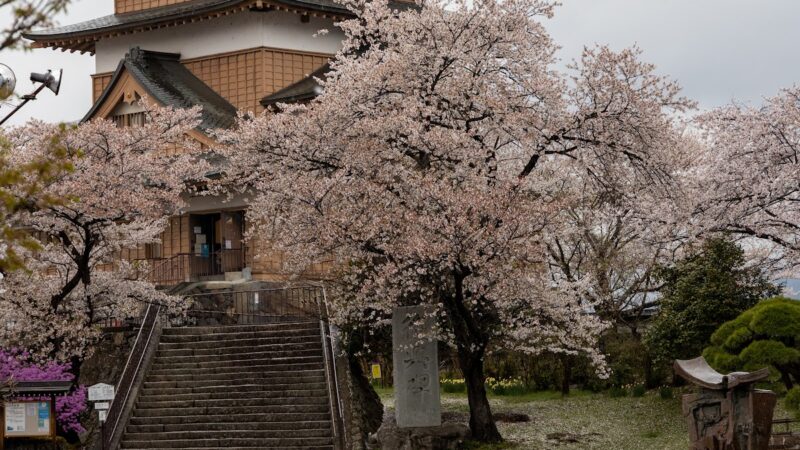
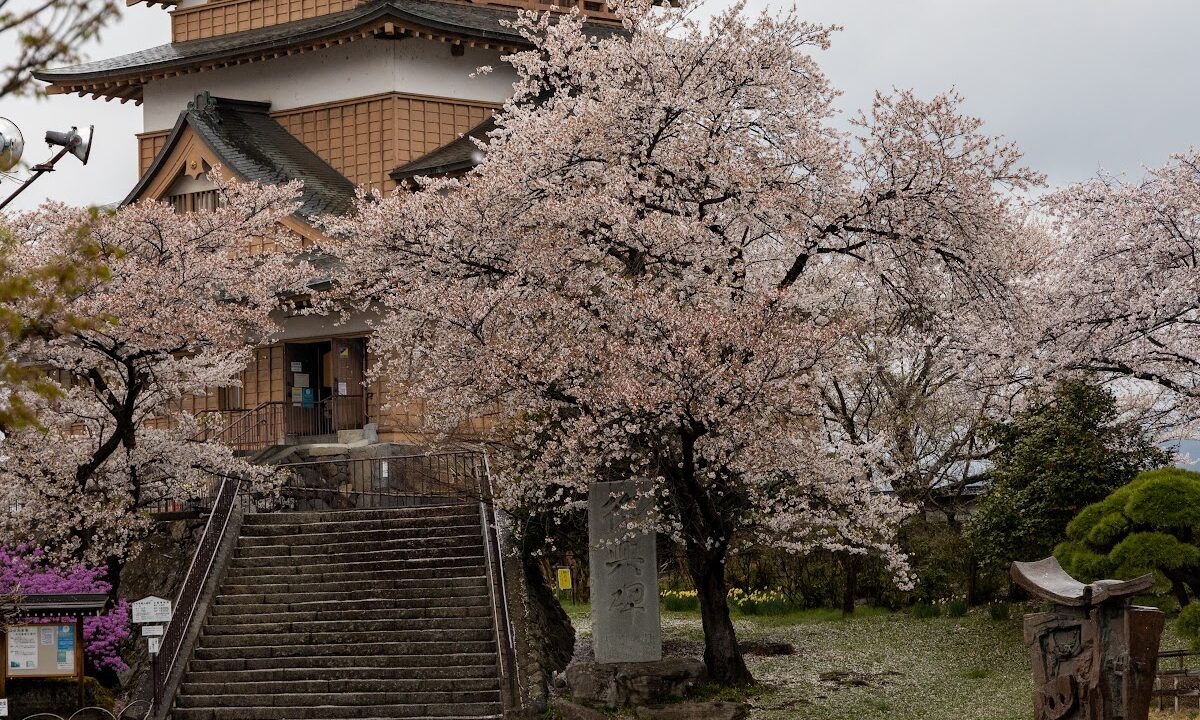
The current site of Suwa Castle is the grounds of Suwa Shrine. The shrine itself is built on the site of the castle’s main enclosure, allowing visitors to enjoy both worship and exploring the castle ruins simultaneously.
From the shrine grounds, you can look down on the confluence of the Arakawa and Yokosegawa rivers, giving you a real sense of how this castle was a strategically important fortress that made full use of the terrain. By observing the height of the cliffs formed by the rivers and the topography of the plateau, you can appreciate the skillful design of castles from the Sengoku period.
Remains of Dry Moats
Remnants of dry moats remain along the approach to Suwa Shrine and around the shrine grounds. In particular, relatively clear traces of the moat can be seen in the bushes beside the entrance.
Although the dry moats are shallow, their shape and arrangement allow us to imagine the former defensive line. The crank-shaped dry moat on the south side of the second enclosure is a particularly noteworthy remains.
Castle Site Marker
A marker (hyōchū) stands at the entrance to the castle site, indicating that this is the site of Suwa Castle. This marker post marks the beginning of your castle ruins exploration.
The path from the marker post to Suwa Shrine is a narrow approach road, giving you a sense of the former castle entrance.
Cliff Topography
The greatest highlight of the castle ruins is undoubtedly the cliff topography formed by the Arakawa and Yokosegawa rivers. Standing on the edge of the plateau, you can see the rivers flowing below and enjoy a panoramic view of the opposite bank.
This cliff was the most important element in the castle’s defense. It was extremely difficult for attackers to climb this cliff, giving the defenders a significant advantage. Its steepness can still be observed today.
Access Information
Access by Public Transportation
If using the Chichibu Railway, the nearest station is Wadokuroya Station. The castle ruins are very close to the station, about a 5-minute walk, making it easily accessible by public transportation.
Wadō-Kuroya Station is an unmanned station, but it is easily accessible from Chichibu city center via the Chichibu Railway. The ride from Chichibu Station takes approximately 10 minutes.
From the station to the castle ruins, you will need to navigate narrow roads through a residential area. Following the signposts and information boards will ensure you arrive without getting lost.
Access by Car and Parking
If visiting by car, take the Kan-Etsu Expressway to the Hanazono Interchange, then take National Route 140 (Chichibu-Okan) towards Chichibu city center, aiming for the Ōnohara area.
However, the roads around the castle ruins are extremely narrow, so caution is advised. The road leading to Suwa Shrine, in particular, is so narrow that even small cars have difficulty passing each other. Many visitor reviews mention the difficulty of navigating these narrow roads.
Parking is limited to a small space within the grounds of Suwa Shrine. Visiting in large vehicles should be avoided. Furthermore, street parking should be strictly avoided to avoid inconveniencing local residents.
For those who are unsure about driving or are visiting in a large vehicle, we recommend using public transportation.
Landmarks in the Area
The Seibu Railway tracks run near the castle ruins, and you may hear the sound of trains. It’s a somewhat unusual location, being close to both a Chichibu Railway station and the Seibu Railway tracks.
The geographical feature of being at the confluence of the Arakawa and Yokosegawa rivers also serves as a landmark when visiting the site. Following the river flow will make it easier to locate the castle ruins.
Precautions When Visiting
Road Conditions
As mentioned above, the road leading to the castle ruins is extremely narrow. There are many places where it is difficult for oncoming vehicles to pass each other, so driving requires extreme caution. Especially during peak tourist season and weekends, you may encounter other visitors.
Please drive slowly and safely, such as sounding your horn on blind curves.
Condition of the Remains
Currently, the remains of Suwa Castle are almost completely lost. Clear stone walls and building foundations are absent; instead, we can only imagine its former glory from the faint traces of dry moats and the undulations of the terrain.
Visiting with the understanding that “almost no remains are visible” will likely prevent disappointment. Rather, observing the topography and using historical imagination will enhance the enjoyment of exploring the castle ruins.
Estimated Visiting Time
Due to the small size of the castle ruins and the limited remains, 15 to 30 minutes is a reasonable estimate for a visit. Even if you take your time to observe the terrain and enjoy taking photographs, an hour should be sufficient.
It is recommended to combine a visit with other tourist spots in the Chichibu area.
Clothing and Equipment
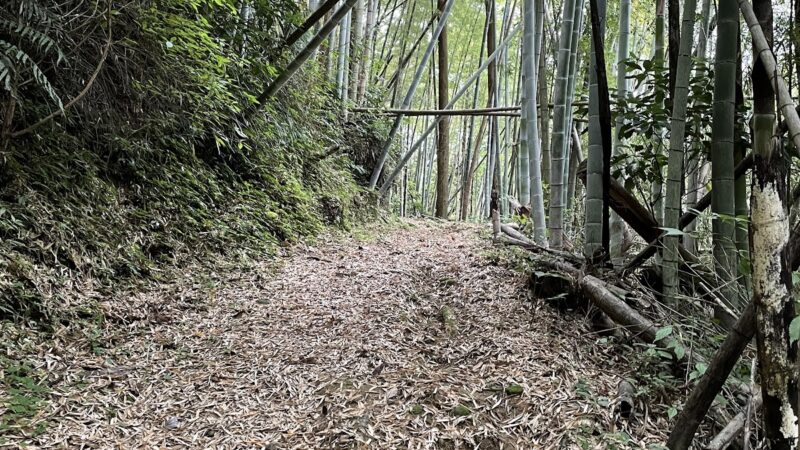
The castle ruins are located within the grounds of a shrine, and are generally well-maintained. However, observing the remains of dry moats may require entering into the bushes.
Wearing long sleeves and long pants is recommended, and insect repellent spray is useful during the summer months. Also, choose comfortable walking shoes such as athletic shoes or trekking shoes.
Nearby Tourist Attractions
Chichibu City
Chichibu city, located about 15 minutes by car from Suwa Castle, boasts numerous tourist attractions.
Chichibu Shrine is an ancient shrine known as the guardian shrine of the Chichibu region, and its magnificently carved shrine buildings are a highlight. The Chichibu Night Festival in December is famous as one of Japan’s three major float festivals.
Chichibu Festival Hall permanently displays floats and stalls from the Chichibu Night Festival, allowing visitors to enjoy the festival atmosphere year-round.
Wado Ruins
The Wado Ruins, which gave its name to Wado-Kuroya Station, are also nearby. It is known as the site where native copper, the raw material for the “Wado Kaichin,” Japan’s oldest circulating currency, was discovered in 708.
You can visit historical sites related to the history of Japanese currency, such as the Wado copper mining site and the Seijinja Shrine.
Mount Bukō
Mount Bukō, a symbol of Chichibu, can be seen from Suwa Castle. This mountain, with an elevation of 1,304 meters, has a distinctive shape due to limestone mining.
You can enjoy climbing and hiking, and from the summit, you can enjoy a panoramic view of the Chichibu Basin.
Chichibu Pilgrimage
The Chichibu region is home to the Chichibu Thirty-Four Kannon Pilgrimage, and pilgrimages to these sites are popular. Several pilgrimage sites are located around Suwa Castle, and can be visited in combination with historical walks.
The Appeal and Evaluation of Suwa Castle
Evaluation by Castle Enthusiasts
In evaluations by castle enthusiasts, Suwa Castle tends to receive a somewhat low rating due to reasons such as “few remaining structures” and “limited points of interest.” In fact, its rating on Kojōdan (a castle-visiting website) is 2.67 (out of 5), which is not particularly high.
However, focusing on the unique topography and historical context, it is a small but interesting castle site. Those seeking ornate stone walls and keeps may find it underwhelming, but it is a valuable historical site for understanding the realities of a branch castle during the Sengoku period.
Value of Visiting
The value of visiting Suwa Castle lies in the following points:
- Understanding the layout that utilizes natural terrain: By experiencing its location at the confluence of the Arakawa and Yokosegawa rivers, you can learn about the castle-building techniques and strategies of the Sengoku period.
- Understanding a part of the Hojo clan’s rule system**: As one of the branch castles of Hojo Ujikuni, centered around Hachigata Castle, you can understand the Sengoku history of the Chichibu region.
- Easy Access: Its location, just a 5-minute walk from the station, is very rare for a castle site, making it easily accessible.
- Quiet Atmosphere: Because it is not a tourist destination, you can quietly reflect on history.
Photography Tips
When taking photos at Suwa Castle, the following points are recommended:
- Suwa Shrine: As a shrine built on the main enclosure of the castle ruins, it is a subject that conveys a sense of historical continuity.
- River Confluence: The confluence of the Arakawa and Yokosegawa rivers, photographed from the edge of the plateau, is an important landscape that indicates the castle’s location.
- Traces of the Dry Moat: As a few remaining structures, it has historical value.
- Marker Post: A classic photographic subject to commemorate a visit to the castle ruins.
Resources for Learning About Suwa Castle
Related Books
The following books are recommended for learning more about Suwa Castle:
- Medieval Castle Sites in Saitama Prefecture (Saitama Prefectural Board of Education): A report that comprehensively surveys castle sites in Saitama Prefecture, and includes information on Suwa Castle.
- Comprehensive Survey of Japanese Castles Volume 5 (Shin Jinbutsu Oraisha): This volume covers castles in the Kanto region and includes an entry for Suwa Castle.
- Castle Sites of Chichibu (Regional Local History Research Book): This is a castle research book specifically focused on the Chichibu region, providing more detailed information.
Online Information
On castle information websites such as Kojodan, Shirobito, and Yogo-kun’s homepage, you can find information and photos of Suwa Castle. Reviews and reports from people who have actually visited are helpful for gathering information beforehand.
Summary
Suwa Castle (Chichibu City, Saitama Prefecture), although having few remaining structures, is a historically and geographically interesting castle site as a branch castle of the Sengoku period, taking advantage of its exquisite location at the confluence of the Arakawa and Yokosegawa rivers.
As the residence of Suwabe Minbu, a vassal of Hojo Ujikuni, it was involved in the governance of the Chichibu region and played a part in the Hojo clan’s rule centered around Hachigata Castle. Currently the site of Suwa Shrine, the faint traces of the dry moat and the surrounding topography offer a glimpse into its former glory.
Its excellent accessibility—a 5-minute walk from Wado-Kuroya Station on the Chichibu Railway—is a major draw, but those visiting by car should be aware of the narrow roads. A visit takes approximately 15-30 minutes, and it’s recommended to combine it with other sightseeing spots in the Chichibu area.
While it doesn’t boast magnificent stone walls or a grand keep, it’s a valuable historical site for learning about the realities of regional governance during the Sengoku period and the castle-building techniques that utilized the terrain. History buffs and castle enthusiasts should definitely consider visiting Chichibu.