Complete Guide to the Fukasaka Jinya Ruins (Gifu Prefecture): Visiting the History and Remains of the Toda Clan
The Fukasaka Jinya Ruins, located in Fukasaka, Ibigawa-cho, Ibi-gun, Gifu Prefecture, are a valuable historical site that preserves the appearance of a hatamoto (shogunate retainer) residence from the Edo period. This area, ruled by a branch family of the Toda clan of the Ogaki Domain, retains traces of stone walls and enclosures, telling the story of the region’s history. This article thoroughly explains the charm of this little-known historical site, from its historical background and detailed remains to how to access it.
What are the Fukasaka Jinya Ruins?
The Fukasaka Jinya Ruins are the remains of an Edo period residence located in Fukasaka Nishimura, Ibigawa-cho, Ibi-gun, Gifu Prefecture. A jinya was an administrative and residential facility established by daimyo and hatamoto to govern their territories during the Edo period. While not as large as a castle, it played an important role as a base for regional control.
The Fukasaka Jinya (fortified residence) originated when Toda Ujiteru, a branch family of the Toda clan of the Ogaki Domain, was granted 4,000 koku of land in Tanigumi. Built as a flatland castle-style fortified residence, it remains a valuable historical site with traces of the outer baileys and stone walls still visible today.
Characteristics of a Jinya and Differences from a Castle
Although smaller in scale than a castle, a Jinya was an important facility for the practical administration of a territory. The Fukasaka Jinya was also built as a flatland castle, with a structure that prioritized administrative functions over defensive ones. The remains, such as the stone walls, offer insights into the architectural techniques of the time and the authority of the lord.
History of the Fukasaka Jinya
Relationship between the Toda Clan and the Ogaki Domain
To understand the history of the Fukasaka Jinya, it is necessary to first understand the origins of the Toda clan of the Ogaki Domain. The Toda clan were hereditary daimyo who served Tokugawa Ieyasu and played an active role on the Eastern Army side in the Battle of Sekigahara. During the transition from the Sengoku period to the Edo period, the Toda clan functioned as an important pillar of the Tokugawa shogunate.
Toda Ujikane, the first lord of the Ogaki Domain, became the lord of Ogaki Castle after the Battle of Sekigahara in 1600, and was granted a domain of 50,000 koku. Subsequently, the Toda clan governed the Ogaki domain for generations, contributing to the development of the Seino region.
Toda Ujiteru and the Establishment of the Fukasaka Jinya
Toda Ujiteru, who established the Fukasaka Jinya, was born as the sixth son of Toda Ujikane, the first lord of the Ogaki Domain. According to Edo period custom, sons other than the eldest son were often required to establish separate branches of the family. Ujiteru was granted 4,000 koku around Tanigumi, and established his Jinya in Fukasaka.
While 4,000 koku was comparable to that of a hatamoto (direct retainer of the shogun), and not on the scale of a daimyo (feudal lord), it gave him sufficient authority as a regional ruler. The Fukasaka Jinya served as the base for the Toda clan’s branch family to govern their territory for generations.
Changes Throughout the Edo Period
The Fukasaka Jinya continued to exist throughout the Edo period as a base for a branch family of the Toda clan to govern their territory. As a Jinya of the early modern period, it handled various administrative functions, including tax collection, maintaining public order, and implementing civil administration.
Several Hatamoto fiefdoms existed within Gifu Prefecture, and the Fukasaka Jinya, along with those of the Akechi Toyama clan and the Takenaka clan (Iwate Castle ruins), held an important position in the region’s history. The Toda clan’s influence in the Seino region was particularly significant, and it is believed they governed the area in cooperation with the main branch of the Ogaki Domain.
Remains of the Fukasaka Jinya Site
Existing Stone Walls
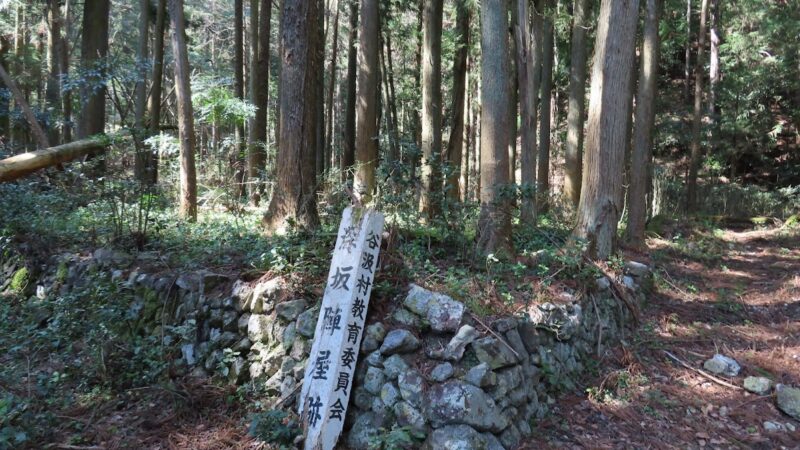
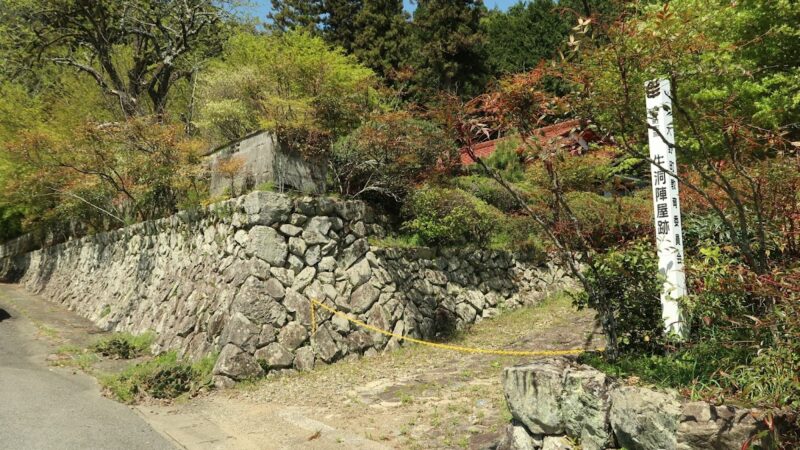
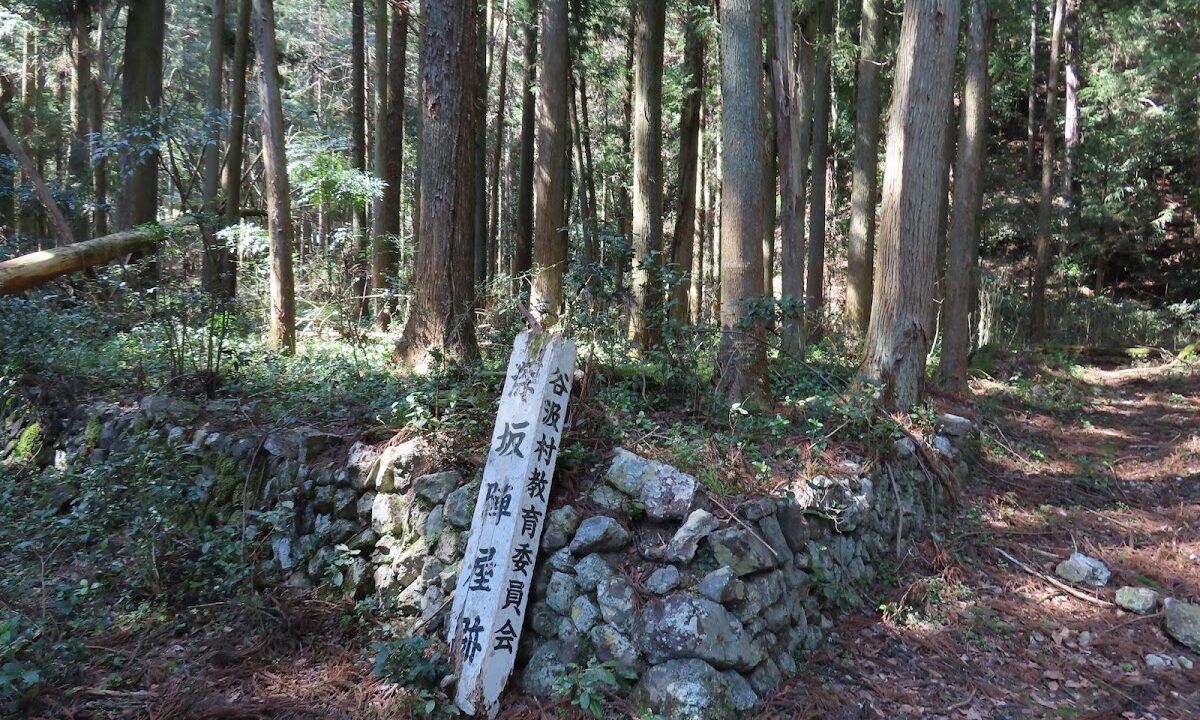
The most striking feature of a visit to the Fukasaka Jinya site is the remaining stone walls. These walls, showcasing Edo period stonework techniques, speak to the scale and prestige of the Jinya. The construction methods and materials used in the stone walls allow us to infer the architectural techniques and material procurement methods of the time.
The presence of stone walls, despite being a samurai residence, is noteworthy. Stone walls are typically found in castles of daimyo (feudal lords), and their existence at the Fukasaka Jinya (fortified residence) is thought to demonstrate the prestige and wealth of the Toda clan.
Arrangement of Enclosures
The Fukasaka Jinya was built as a flatland castle and had multiple enclosures. Enclosures are partitioned spaces within castles and fortified residences, each with a different function. It is presumed that the main enclosure housed the lord’s residence and administrative buildings, while the second and third enclosures contained the residences and warehouses of retainers.
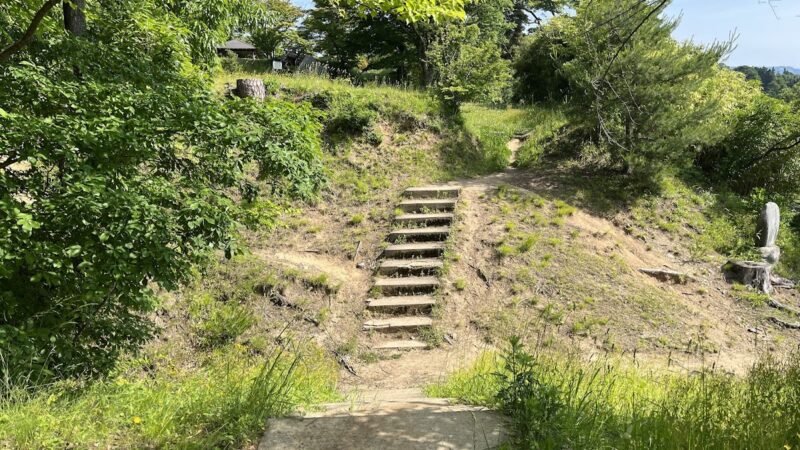
Even today, the topography and traces of earthworks allow us to understand the arrangement of the enclosures to some extent. The flatland castle’s characteristic planar structure reflects a design philosophy that prioritized habitability and functionality over defense.
Historical Monument and Information Board
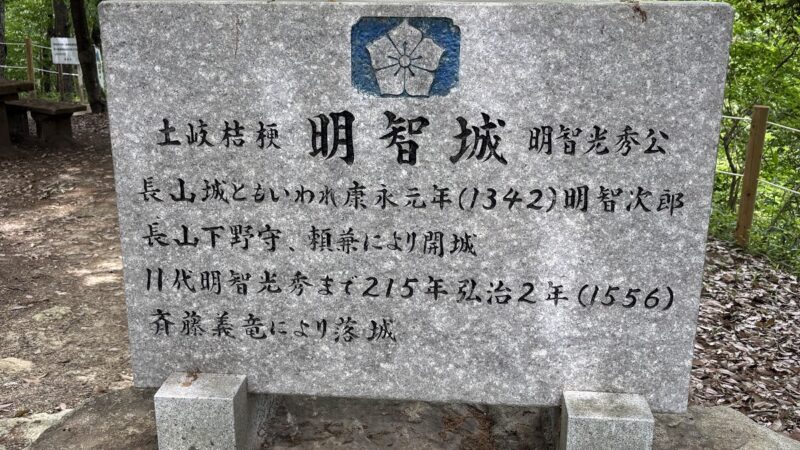
A monument marking the site of the Fukasaka Jinya (fortified residence) stands nearby. This monument was erected to pass on the value of the site as a regional historical heritage to future generations, and serves to inform visitors about the historical background of the fort.
In some cases, information boards explaining the overview of the fort and the history of the Toda clan are installed around the monument, providing valuable information for visitors to the historical site.
Highlights of the Fukasaka Jinya Site
Historical Value
The greatest value of the Fukasaka Jinya site lies in the remains that reveal the reality of the Edo period’s hatamoto (direct retainer of the shogun) administration. Although less well-known than the castle ruins of daimyo (feudal lords), it possesses significant historical value for understanding the realities of local governance.
While there are numerous mountain castle ruins from the Sengoku period in Gifu Prefecture, Edo period fortification ruins are relatively few, making the Fukasaka Jinya site a valuable early modern historical site. The well-preserved remains, particularly the stone walls, are especially noteworthy.
Surrounding Historical Context
The Fukasaka Jinya site is an indispensable historical site for understanding the history of Ibigawa Town. Its proximity to the pilgrimage route to Tanigumi-san Kegonji Temple provides insight into the close relationship between religion and administration during the Edo period.
Furthermore, within the historical context of the entire Seino region, the Fukasaka Jinya played a crucial role as part of the Toda clan’s governing system centered around Ogaki Castle. It is a historically interesting site from an academic perspective, providing concrete examples of the complex governing structure of the Edo period, including the relationship between the main and branch families of the Ogaki domain and the form of governance as a hatamoto (direct retainer of the shogun).
Preservation of the Remains
Even after excavation, some of the remains of the Fukasaka Jinya site remain above ground. While many sites excavated by the Gifu Prefectural Cultural Properties Protection Center have been destroyed by construction after the excavation, parts of the stone walls and enclosures at the Fukasaka Jinya site have been preserved on-site, allowing visitors to see actual Edo-period remains.
While the state of preservation is not perfect, it is still possible to imagine the site’s appearance from parts of the stone walls and the undulations of the terrain. Because the site is not well-maintained as a historical site, caution is needed when visiting.
Access to the Fukasaka Jinya Ruins
Location
Address: Fukasaka Nishimura, Ibigawa-cho, Ibi-gun, Gifu Prefecture
The Fukasaka Jinya Ruins are located northwest of the center of Ibigawa-cho, on the way towards Tanigumi. They are situated in a quiet rural area along the Ibigawa River, surrounded by a picturesque rural landscape.
Access by Car
Visiting by car is the most convenient option. The following routes are common:
- Approximately 40 minutes from the Meishin Expressway “Ogaki IC” via National Route 21 and prefectural roads
- Approximately 30 minutes from the Tokai-Kanjo Expressway “Ono-Kobe IC” via prefectural roads
Regarding parking, there is likely no dedicated tourist parking lot, so if parking on the street, consideration should be given to avoiding inconveniencing local residents.
Access by Public Transportation
Visiting by public transportation is not easy. The nearest train station is Ibi Station on the Yoro Railway, but you will need to take a bus or taxi from there. Bus services from Ibi Station to Fukasaka are limited, so it is recommended to check the timetable in advance.
If using a taxi, the journey from Ibi Station to the Fukasaka Jinya Ruins takes approximately 15-20 minutes.
Points to Note When Visiting
The Fukasaka Jinya Ruins are not a developed tourist destination; their primary purpose is the preservation of a historical site. Therefore, please note the following:
- There may be few signs or markers, so please check the location on a map beforehand.
- Some areas may have uneven ground, so please wear comfortable shoes.
- Do not enter restricted areas, as some sites may be adjacent to private property.
- Please take all trash with you and be careful not to damage the historical remains.
Related Historical Sites and Tourist Spots in the Surrounding Area
Tanigumi-san Kegonji Temple
Located approximately 10km north of the Fukasaka Jinya Ruins, Tanigumi-san Kegonji Temple is a renowned temple known as the 33rd temple of the Saigoku Thirty-Three Kannon Pilgrimage. During the Edo period, many pilgrims visited, and it is believed that the Toda clan, who governed the Fukasaka Jinya, also had a close relationship with Kegonji Temple.
It is also famous for its cherry blossoms in spring and autumn foliage, and we recommend visiting it in conjunction with your visit to the Fukasaka Jinya Ruins.
Ogaki Castle
Ogaki Castle, the residence of the Toda clan of the Ogaki Domain, the main branch of the Fukasaka Jinya (fortified residence), is located approximately 20 km southeast of Fukasaka. It is known for being a base for the Western Army during the Battle of Sekigahara, and after the war, the Toda clan became the castle lords.
The current keep was rebuilt in 1959, but the castle houses exhibits related to the Toda clan, which are useful for understanding the historical connection with the Fukasaka Jinya.
Takenaka Clan Jinya Ruins (Iwate Castle Ruins)
Another worthwhile visit to the Takenaka Clan Jinya Ruins (Iwate Castle Ruins), located in Tarui-cho, Fuwa-gun, Gifu Prefecture, is also a former hatamoto (shogunate retainer) residence. Built by descendants of Takenaka Hanbei, known as Toyotomi Hideyoshi’s renowned military strategist, the residence retains its white-walled gate tower and sturdy stone walls, making it a noteworthy example of a rare castle structure for a hatamoto.
Compared to the Fukasaka Jinya ruins, the Takenaka Jinya ruins have stronger castle-like elements, and visiting both allows you to understand the diversity of Edo-period hatamoto (shogunate retainer) residences.
Other Historical Sites in Ibigawa Town
Besides the Fukasaka Jinya ruins, Ibigawa Town has numerous historical sites scattered throughout, including medieval mountain castle ruins, burial mounds, temples, and shrines. If you have time, a historical walk around the town’s historical sites is highly recommended.
Research and Preservation of the Fukasaka Jinya Ruins
Results of Archaeological Excavations
The Fukasaka Jinya ruins have been investigated by the Gifu Prefectural Cultural Properties Protection Center and others. The excavations have revealed the scale and structure of the residence, as well as artifacts such as ceramics used, providing valuable clues to understanding the daily life of hatamoto during the Edo period.
The excavation reports record details such as the structure of the stone walls, the layout of the enclosures, and the excavated artifacts, making them important resources for researchers and history enthusiasts.
Status as a Cultural Property
The Fukasaka Jinya Ruins have received a certain level of recognition as a historical site from the early modern period within Gifu Prefecture, but they do not appear to be designated as a national or prefectural cultural property. However, as a valuable heritage site that conveys the history of the region, preservation and utilization are expected.
In recent years, the historical value of Jinya ruins has been re-recognized nationwide, and further research, preservation, and development of the Fukasaka Jinya Ruins are hoped for in the future.
Future Prospects
Collaboration among local residents, government officials, and researchers is crucial for the preservation and utilization of the Fukasaka Jinya Ruins. Beyond development as a tourist resource, its use in local school education as an educational resource is also being considered.
Furthermore, the visualization of history using new methods such as digital restoration CG and VR experiences is also expected to be a future utilization method.
Significance of Visiting the Fukasaka Jinya Ruins
Deepening Understanding of Local History
Visiting the Fukasaka Jinya Ruins provides an opportunity to gain a deeper understanding of the history of Ibigawa Town and the Seino region. While it may seem less glamorous compared to the glamorous history of the Sengoku period, understanding the realities of regional governance during the peaceful Edo period is crucial for deepening our understanding of Japanese history as a whole.
Recognizing the Value of Historical Heritage
Visiting historical sites that are not famous tourist destinations allows us to rediscover the value of historical heritage buried within the region. Even little-known historical sites like the Fukasaka Jinya Ruins each have their own unique history and stories, and the joy of discovering them is one of the greatest pleasures of historical exploration.
A Quiet Historical Stroll
Unlike famous historical sites bustling with tourists, the Fukasaka Jinya Ruins are a place where you can quietly confront history. Standing before the stone walls and reflecting on the lives of the people who lived here during the Edo period will be an invaluable experience for history enthusiasts.
Summary
The Fukasaka Jinya Ruins are a valuable Edo period historical site remaining in Ibigawa-cho, Ibi-gun, Gifu Prefecture. The Fukasaka Jinya Ruins were built as a base for Toda Ujiteru, a branch family of the Toda clan of the Ogaki Domain, who ruled over a 4,000-koku territory in the Tanigumi area.
The remaining stone walls and fortifications convey the reality of regional governance by a hatamoto (direct retainer of the shogun) to this day. While not a developed tourist spot, it is precisely for this reason that it is a place where history enthusiasts can quietly contemplate history, making it well worth a visit.
For those who want to learn more about the history of the Seino region, are interested in local governance during the Edo period, or wish to explore little-known historical sites, the Fukasaka Jinya Ruins are a must-see. Visiting it along with other nearby historical sites such as Tanigumi-san Kegonji Temple and Ogaki Castle will allow for a more fulfilling historical exploration.
Gifu Prefecture boasts a diverse array of historical sites, including the remains of mountain castles from the Sengoku period and jinya (fortified residences) from the Edo period. The Fukasaka Jinya Ruins are one such site, playing an important role in passing on the history of the region. Please visit this quiet historical site and experience the spirit of local governance during the Edo period.