Complete Guide to Godo Jinya Ruins (Gifu Prefecture) | Thorough Explanation of History, Highlights, Access, and Surrounding Sightseeing
The Godo Jinya Ruins, quietly situated in Ono-cho, Ibi-gun, Gifu Prefecture, are a valuable historical site that preserves the atmosphere of a hatamoto (shogunate retainer) residence from the Edo period. This residence, ruled by the Toda clan for approximately 200 years, is now occupied by private houses, but its stone walls and markers evoke its former appearance. This article provides a thorough explanation of the Godo Jinya Ruins, including its detailed history, highlights, access methods, and surrounding sightseeing information—all the information you need to know before visiting.
What are the Godo Jinya Ruins?
The Godo Jinya Ruins are the remains of a hatamoto residence located in Godo Village, Ibi-gun, Mino Province (present-day Godo, Ono-cho, Ibi-gun, Gifu Prefecture) during the Edo period. A jinya was a facility established by daimyo or hatamoto (direct retainers of the shogun) with a domain of less than 10,000 koku (a unit of land productivity) as a base for governing their territory. While not as large as a castle, it was an important base combining administrative and residential functions.
The Ushido Jinya was built by Toda Ujitane, and the Toda family ruled this area for generations until the Meiji Restoration. Located north of the present-day Chōnenji Temple, the site, now used as a private residence, still retains stone walls that evoke the past.
Scale and Structure of the Ushido Jinya
The Ushido Jinya was a relatively large jinya within Mino Province, serving as a hatamoto jinya for a domain of approximately 5,000 koku. The jinya’s grounds are estimated to have measured approximately 100 meters east-west and 80 meters north-south, and it is believed that earthen ramparts and moats surrounded it.
At the center of the jinya was the main building (palace), with offices, storehouses, and barracks arranged around it. Stone walls were built around entrances and important buildings as a symbol of the status of the fortified residence. The remaining stone walls are valuable historical relics that attest to the technology and wealth of the Toda clan at the time.
History of Ushido Fortified Residence
Establishment of the Toda Clan and Ushido Fortified Residence
The Ushido Toda clan traces its ancestry to Toda Ujiteru, the sixth son of Toda Ujikane, the first lord of the Ogaki Domain. Toda Ujikane sided with the Eastern Army in the Battle of Sekigahara and was granted 100,000 koku of land in Mino Province (Ogaki) by Tokugawa Ieyasu, making him a hereditary daimyo.
Ujiteru received 5,000 koku from his father, Ujikane, and governed the territory centered around Ushido Village. During the time of his son, Toda Ujitane, the Ushido Fortified Residence was built as a base for managing the territory. The construction period is estimated to be the mid-17th century, with the most likely theory being around the Kanbun era (1661-1673).
Ushido Jinya in the Edo Period
Throughout the Edo period, the Ushido Jinya was ruled by the Toda clan as successive lords. With a stipend of 5,000 koku, it was relatively large for a hatamoto (direct retainer of the shogun), and the Toda clan often held important positions in the shogunate.
Administrative duties such as tax collection, legal proceedings, and maintaining public order were carried out at the Jinya. It also functioned as the lord’s residence, where the Toda clan’s family and retainers lived. It is believed that the area surrounding the Jinya also had the residences of retainers and townspeople, creating a small-scale castle town-like landscape.
The Meiji Restoration and Abolition of the Jinya
With the Meiji Restoration in 1868 (the first year of the Meiji era), the Ushido Jinya was abolished. The Toda family was granted the status of nobility, but the buildings and land of the jinya (fortified residence) were sold off to private individuals. The main buildings were dismantled, and the site was converted into private houses and farmland.
Currently, most of the jinya site is occupied by private houses, and none of the original buildings remain. However, a portion of the stone wall has been preserved, serving as a reminder of the jinya’s former location.
Highlights of the Ushido Jinya Site
Existing Stone Wall
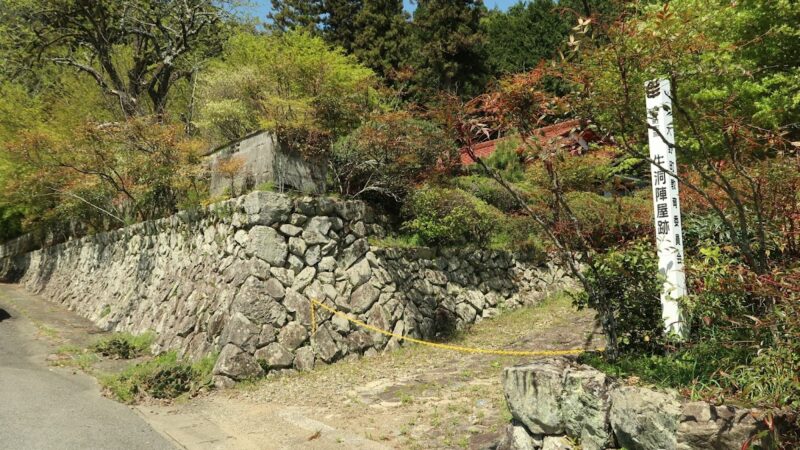
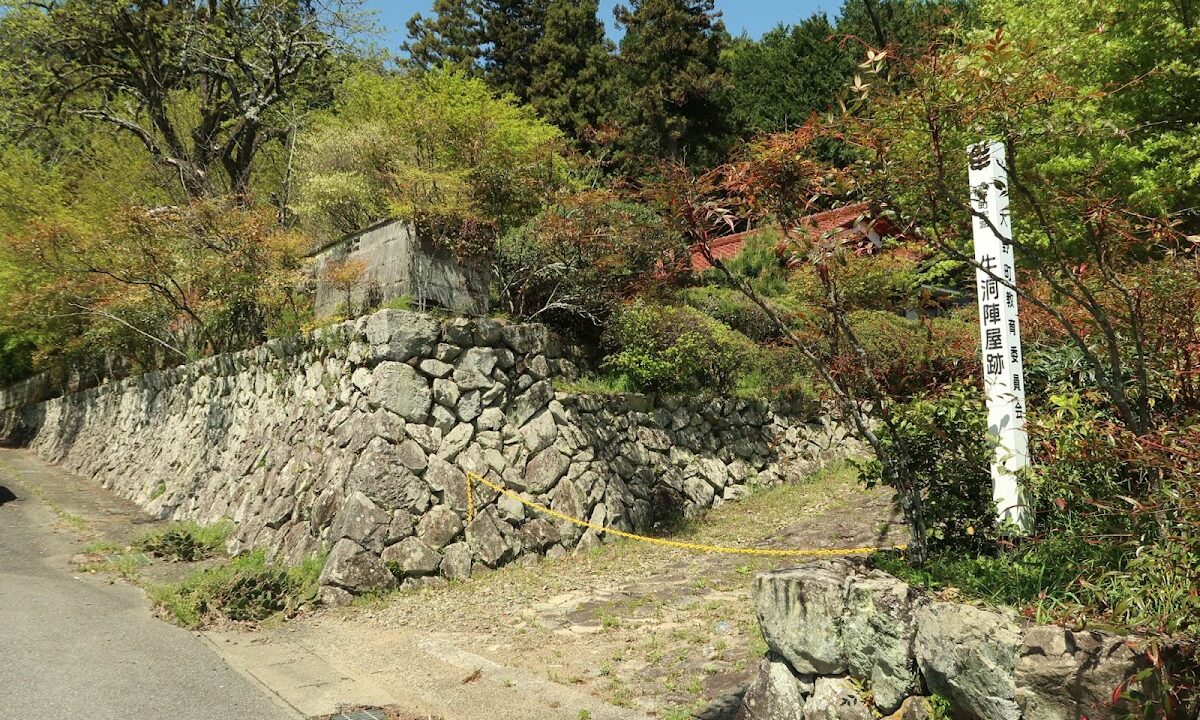
The greatest highlight of the Ushido Jinya site is the stone wall remaining near the entrance to the private house. This wall was constructed using the nozurazumi technique, characterized by its simple appearance created by stacking natural stones as they are. It is approximately 1.5 meters high and 10 meters long, making it a valuable historical site for understanding the stone-making techniques of the mid-Edo period.
The stone used in the wall is locally sourced granite, and it has maintained its robust appearance despite years of exposure to the elements. Vegetation grows in the gaps between the stones, creating a landscape that evokes a sense of history.
When taking photographs, please be considerate of the fact that this is private property and take photos from the road side. By observing the texture and construction of the stone wall, you can catch a glimpse of the civil engineering techniques of the Edo period.
Markerpost at the Ushido Jinya Site
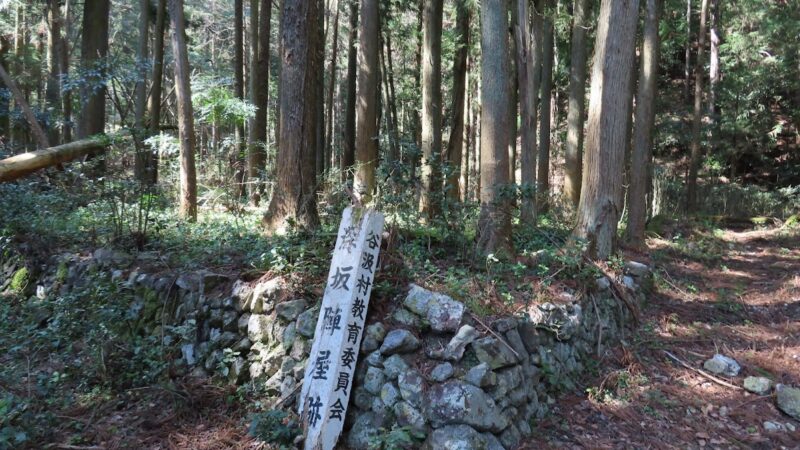
Beside the stone wall stands a markerpost inscribed with “Ushido Jinya Site.” This markerpost was erected by Ohno Town and serves as an important landmark indicating that this was once a jinya (fortified residence).
The markerpost also includes a brief explanation, allowing you to learn about the history of Ushido Jinya and the Toda clan. For those interested in castles and jinya, this markerpost will serve as a starting point for historical exploration.
Location relative to Chōnenji Temple
The Ushido Jinya Site is located north of Chōnenji Temple. Chōnenji Temple is a Jōdo Shinshū Buddhist temple and is believed to have existed since the time of the jinya. The relative positions of the temple and the encampment allow us to imagine the town layout and regional structure of the time.
Chōnenji Temple itself is a historical building, so visiting it along with the encampment site will allow you to understand the region’s history more deeply. However, since the temple is a religious facility, it is important to visit quietly and respectfully.
Surrounding Topography and Layout
The Ushidō encampment was built on relatively flat terrain, but by observing the surrounding microtopography, traces of the former moats and earthworks can be discerned. Although residential development is progressing, some areas still show remnants of the encampment era in the layout of roads and plot divisions.
Exploring the surrounding area with a map in hand offers the enjoyment of imagining the encampment’s layout (planning). Topographical observation at the site is especially recommended for those interested in castle research or historical geography.
Access to Ushido Jinya Ruins
Location
Address: Ushido, Ono-cho, Ibi-gun, Gifu Prefecture
The Ushido Jinya Ruins are located slightly northeast of the center of Ono-cho, within a residential area.
Access by Public Transportation
The following route is convenient when using public transportation:
Nearest Station: JR Tokaido Main Line “Ogaki Station”
From Ogaki Station, take a local bus. Take a bus bound for Ibigawa-cho and get off at the “Ono-cho Yakuba-mae” bus stop. From there, it’s about a 15-minute walk. However, since the number of buses is limited, it is recommended to check the timetable in advance.
If using a taxi, it takes about 20 minutes from Ogaki Station to Ushido Jinya Ruins, and the fare is approximately 3,000 yen.
Access by Car
Access by car is the most convenient.
Meishin Expressway Approximately 15 minutes from the “Ogaki Interchange”
Tokai Loop Expressway Approximately 10 minutes from the “Ono-Kobe Interchange”
When using a car navigation system, it is recommended to search for “Chonenji Temple” or “Ushido, Ono-cho, Ibi-gun, Gifu Prefecture.”
Parking Information
There is no dedicated parking lot for the Ushido Jinya Ruins. Since the ruins are located on private property, please avoid street parking and use the parking lots of nearby public or commercial facilities.
The Ono Town Hall has a parking lot for visitors, and it is possible to walk to the Jinya Ruins from there (approximately 15 minutes on foot). However, if using the town hall parking lot, please refrain from parking for extended periods for sightseeing purposes.
When visiting, please be considerate of the lives of the local residents and observe quietly.
Nearby Tourist Attractions
When visiting the Ushido Jinya Ruins, visiting nearby tourist attractions will make your trip even more fulfilling.
Ohno Town Rose Park
This is a representative tourist spot in Ohno Town, a beautiful park with approximately 2,000 rose bushes. The best time to visit is from mid-May to early June and from mid-October to early November, when colorful roses bloom in profusion. It is about a 10-minute drive from the Ushido Jinya Ruins.
Historical Spots in Ibigawa Town
Ibigawa Town, adjacent to the north of Ohno Town, is home to Tanigumisan Kegonji Temple, the 33rd temple of the Saigoku Kannon Pilgrimage. It is about a 30-minute drive from the Ushido Jinya Ruins, where you can enjoy historical temple architecture and beautiful nature.
Ogaki Castle
Ogaki Castle, which served as a base for the Western Army in the Battle of Sekigahara, is about a 20-minute drive from the Ushido Jinya Ruins. Currently, a reconstructed castle tower stands, and the interior is open to the public as a local history museum. This area was the center of the Ogaki Domain, where Toda Ujitsune served as the first lord, and it’s a place where you can feel the historical connection to the Ushido Toda clan.
Sumomata One-Night Castle (Sumomata Castle)
Sumomata Castle, known for the legend that Toyotomi Hideyoshi built it in one night, is located in Sumomata-cho, Ogaki City. It is now a historical museum where you can learn about the Sengoku period history of the Mino region. It’s about a 25-minute drive from the Ushido Jinya Ruins.
Cultural Properties of Motosu City
Located east of the Ushido Jinya Ruins, Motosu City is home to the Usuzumi Cherry Tree, a national special natural monument. This ancient tree, estimated to be over 1,500 years old, attracts many tourists in the spring. Motosu City also has several castle ruins and ancient burial mounds, making it an ideal area for historical exploration.
Other Jinya Sites in Gifu Prefecture
For those interested in the Ushido Jinya site, we recommend visiting other Jinya sites in Gifu Prefecture.
Takayama Jinya (National Historic Site)
Located in Takayama City, Gifu Prefecture, the Takayama Jinya is a valuable historical site, being the only one in Japan with an existing Jinya building. It was used as an administrative body for a shogunate-controlled territory (Tenryo) during the Edo period and is now designated a national historic site. The interior of the building is open to the public, allowing visitors to learn in detail about the administration and daily life of the time.
Kitagata Jinya Site
Located in Kitagata-cho, Motosu-gun, Gifu Prefecture, this Jinya site was built by Toda Mitsunao after he was granted 5,000 koku of land. It is now part of the Oi Shrine complex, and an information sign has been installed. Like the Ushido Jinya, it is a Jinya related to the Toda clan, making it an interesting site for comparative research.
Samurai Residences in Iwamura Castle Town
In Iwamura Town, Ena City, the castle town of Iwamura Castle, one of Japan’s three great mountain castles, is preserved. While not a jinya (fortified residence), the townscape, with its remaining samurai residences and merchant houses, strongly retains the atmosphere of the Edo period and is a valuable resource for understanding the architectural culture of the same era as the Ushido Jinya (fortified residence).
Preservation and Challenges of the Ushido Jinya Site
Current Preservation Status
The Ushido Jinya site is currently the site of a private residence, so full-scale excavation and restoration work has not been carried out. Although some of the stone walls remain, the buildings and moats have been lost.
While a marker post has been erected, there are no detailed explanatory signs or information facilities, limiting visitors’ opportunities to learn about the history. Furthermore, because it is a private residence, entry to the property is prohibited, and viewing is limited to observation from the road.
Efforts and Challenges for Preservation
As a regional historical heritage site, Ono Town and local historical research groups are interested in the preservation and utilization of the Ushido Jinya site. However, due to the site being privately owned and the loss of most of the remains, full-scale historical site development is difficult.
Future challenges include the following:
- Detailed historical research: Clarify the detailed history of the encampment through the collection and analysis of documentary materials.
- Ground-penetrating radar survey: Confirm the presence or absence of underground remains through non-destructive testing.
- Enhancement of explanatory signs: Install detailed explanatory signs so that visitors can learn about the history.
- Digital restoration: Visually recreate the former appearance of the encampment using CG and VR.
- Collaboration with the local community: Cooperate with local residents and schools to raise awareness of the site as a local historical heritage.
Points to note when visiting the Ushido Encampment Site
Manners and considerations
Since the Ushido Encampment Site is located on private property, please note the following when visiting:
- No entry onto private property: The stone walls and markers are located on private property. Please absolutely avoid entering the premises without permission.
- Photography: Even when taking photos from the road, please be considerate of the residents’ privacy.
- Quietness: This is a residential area, so please refrain from loud conversations and noise.
- Take Your Trash Home: There are no trash cans nearby. Please be sure to take your trash home with you.
- Parking: Please absolutely do not park on the street or on other people’s property without permission.
Best Time and Season for Visiting
The Ushido Jinya Ruins are an outdoor site and can be visited year-round. However, please consider the following points:
- Spring and Autumn: The weather is mild and suitable for strolling.
- Early Morning and Evening: As this is a residential area, it is best to avoid visiting during residents’ daily routines in the early morning and evening.
- Rainy Weather: The stone walls become slippery, so caution is advised when visiting in rainy weather.
Clothing and Equipment
No special equipment is required, but the following may be helpful:
- Comfortable walking shoes: If you plan to explore the surrounding area, comfortable walking shoes such as sneakers are recommended.
- Camera: For documenting the stone walls and marker posts.
- Map or smartphone: To check the surrounding topography and other historical sites.
- Hat and sunscreen: The sun is strong in summer.
Historical Value of the Ushido Jinya Site
Significance in the Study of Hatamoto Jinya Sites
The Ushido Jinya site is a valuable historical remains for understanding the actual state of hatamoto (shogunate retainers) jinya during the Edo period. Many jinya existed throughout Japan, but most were lost after the Meiji Restoration, and only a limited number of remains remain.
The stone walls of the Ushido Jinya are important historical materials in castle research and early modern history research, as they demonstrate stone wall construction techniques used in jinya of the hatamoto class. They also provide clues to understanding the actual state of land management by the Toda clan, a branch family of a fudai daimyo (hereditary vassal daimyo).
Importance in Local History
The Ushido Jinya site holds an important position in the history of Ono Town and the Mino region. During the Edo period, this region was a complex mix of territories belonging to the Ogaki Domain, hatamoto (direct retainers of the shogun), and shogunate-controlled territories, with the Ushido Jinya (fortified residence) playing a key role in this.
The Jinya functioned as the administrative, economic, and cultural center of the region, significantly influencing the surrounding villages. It is believed that the influence of the Jinya era remains in the current regional structure and culture of Ono Town.
Contribution to Toda Clan Research
The Toda clan was a prestigious family that served the Tokugawa shogunate since Mikawa Province, and they were active as daimyo and hatamoto throughout the Edo period. The Ushido Toda clan played a part as a branch family of the Toda clan, the lords of the Ogaki Domain.
Research into the Ushido Jinya site is essential for understanding the overall picture of the Toda clan. In particular, it is an important case study for considering how the branch family independently managed its territory and what its relationship was with the main family.
Summary
The Ushido Jinya site is the remains of an Edo-period hatamoto (direct retainer of the shogun) Jinya located in Ono Town, Ibi District, Gifu Prefecture. Built by the Toda clan, it functioned as the administrative and economic center of the region for approximately 200 years. Although now a private residence, parts of the stone walls remain, and a marker post evokes the past.
While not large in scale, it holds historical value as a valuable historical site that reveals the reality of a hatamoto (shogunate retainer) encampment. When visiting, please be mindful that it is now a private residence, and you can gain a glimpse into the regional governance of the Edo period.
Nearby are various tourist attractions such as Ogaki Castle, Takayama Jinya, and Ono Town Rose Park. Why not start your journey through the history and culture of the Mino region from the Ushido Jinya ruins?
We recommend visiting the Ushido Jinya ruins not only to castle enthusiasts but also to anyone interested in local history or who wants to enjoy a quiet historical stroll. Though a small historical site, the spirit of the Edo period certainly remains there.