Ogurayama Castle (Gifu Prefecture) Complete Guide | History and Highlights of Kanamori Nagachika’s Retirement Castle
Located in Izumi-cho, Mino City, Gifu Prefecture, Ogurayama Castle is known as the retirement castle built in the later years of Kanamori Nagachika, who distinguished himself in the Battle of Sekigahara. Although it was a phantom castle that was abandoned after only a short period of six years, remnants such as stone walls and earthworks still remain and it is preserved as a Mino City designated historical site. This article provides a detailed explanation of Ogurayama Castle, including its history, the background of its construction, existing remains, highlights, and access information.
Basic Information on Ogurayama Castle
Castle Overview
Ogurayama Castle (Ogurayama-jo) was a flatland castle located in Mino Province (present-day Ogurayama, Izumi-cho, Mino City, Gifu Prefecture). Built on an isolated hill facing the Nagara River, its castle structure utilizes the topography of Mount Ogura, which is approximately 80 meters above sea level.
Basic Data
- Alternate Name: Ogura Residence
- Location: Ogurayama, Izumi-cho, Mino City, Gifu Prefecture
- Former Province: Mino Province
- Castle Structure: Hilltop Castle
- Builder: Kanamori Nagachika
- Year of Construction: Keicho 10 (1605)
- Main Lords: Kanamori Clan
- Year of Abandonment: Keicho 16 (1611)
- Remains: Enclosures, stone walls, earthworks, replica turrets
- Designated Cultural Property: Mino City Designated Historic Site
Location and Geographical Characteristics
Ogurayama Castle is located on the banks of the Nagara River, making it a suitable location for transporting goods using water transport. The Nagara River flows to the east of the castle, serving as a natural moat. The castle town was located on the south side, and the main gate was installed, resulting in a relatively well-designed castle for a retirement residence.
The isolated hilltop terrain offered excellent defensive advantages, and the surrounding area boasted superb views. Currently, the site is maintained as Ogura Park, a place of relaxation for citizens.
History of Ogurayama Castle
Situation in Mino Province Before the Construction of the Castle
Before Ogurayama Castle was built, the Sato father and son, Sato Hidekata and Masamasa, resided in this area on Nataoyama Mountain. Sato Masamasa sided with the Western Army in the Battle of Sekigahara in 1600, leading to his downfall and loss of territory after the war.
During this period, Mino Province was the main battlefield of the Battle of Sekigahara, and many warlords experienced territorial changes as a result of the post-war settlement. Kanamori Nagachika, too, gained an opportunity to manage a new territory due to his achievements in this battle.
Kanamori Nagachika and the Construction of Ogurayama Castle
Kanamori Nagachika was a samurai who served Oda Nobunaga and Toyotomi Hideyoshi, achieving numerous military successes. He sided with the Eastern Army in the Battle of Sekigahara and held a domain of 38,000 koku as the lord of Hida Takayama Domain.
In 1605, Nagachika ceded Takayama Castle to his adopted son, Kanamori Arishige, and built Ogurayama Castle as his retirement residence. At this time, Nagachika was over 60 years old, and he chose to spend the later years of his life as a samurai who had survived the turbulent Sengoku period in Mino Province.
Although it was a retirement castle, Nagachika was granted a territory of 20,000 koku in Kōzuchi (present-day Mino City), effectively forming an independent small domain. This was also known as the “Kōzuchi Domain,” and it also served as a reward from Tokugawa Ieyasu for Kanamori Nagachika’s achievements.
Death of Kanamori Nagachika in 1608
Kanamori Nagachika, who had been living in retirement at Ogurayama Castle, died in 1608 at the age of 63. After Nagachika’s death, his second son, Kanamori Nagamitsu, inherited the family headship, but Nagamitsu was still a child.
Abandonment of the Castle After Only 6 Years
Although Kanamori Nagamitsu inherited the family headship, he died of illness in 1611 at the young age of 10 (some sources say 6). With no heir, the Kanamori family was dispossessed of their domain, the Kamiuchi Domain was abolished, and Ogurayama Castle was abandoned.
The abandonment of the castle after only six years since its construction reflects the unstable historical context of the period from the Sengoku period to the early Edo period. The Kanamori main family continued to exist as the Hida Takayama Domain, but the Nagachika line ended here.
Ogurayama Castle After Abandonment
After its abandonment, Ogurayama Castle was left unmanaged and neglected, and its buildings gradually disappeared. However, the foundational structures such as stone walls and earthworks remained underground, preserving traces of the castle throughout the Edo period.
From the Meiji era onward, the castle ruins were preserved by local residents, and in the Showa period, it was developed into a park. Currently, it is known as “Ogura Park” and is popular with citizens, and is also famous for its cherry blossoms.
Layout and Structure of Ogurayama Castle
Castle Layout
Ogurayama Castle, as a flatland castle, cleverly utilizes the topography of Mount Ogura. The main components are as follows:
Main Enclosure
- Honmaru: Located on the mountaintop, the central facility of the castle
- Ninomaru: Located surrounding the Honmaru
- Kuruwa: Multiple enclosures arranged in a stepped pattern
Defensive Structures
- Stone Walls: Located around the Otemon Gate and along the edges of the Kuruwa
- Earthen Embankments: Earthen defensive walls built at the boundaries of the Kuruwa
- Horikiri: Defensive lines blocking the ridge
Otemon Gate and Stone Walls
The Otemon Gate, located on the south side of the castle, was the main entrance from the castle town. Stone walls still remain at the site of the Otemon Gate, offering a glimpse into the castle construction techniques of the time.
These stone walls were built using the Nozurazumi technique, characterized by their simple construction using natural stones piled up as they are. As a valuable historical site demonstrating castle construction techniques from the Keicho era, it is designated as a cultural property of Mino City.
Earthworks Arrangement
Earthworks surrounded the enclosures, enhancing their defensive capabilities. These earthworks not only prevented enemy intrusion but also served as a screen, obscuring the view of the enclosures from the outside.
Some of the earthworks remain in good condition today, providing important clues to understanding the castle’s scale and structure.
Existing Remains and Highlights
Stone Wall Remains
The most noteworthy remains at Ogurayama Castle are the stone walls surrounding the main gate. These walls, demonstrating the castle-building techniques of the Keicho era, retain their original form even after more than 400 years.
The height of the stone walls varies depending on the location, but the highest point is approximately 3 meters, indicating a relatively solid construction for a retirement castle. The stones used are natural stones quarried locally, reflecting the unique stone-making culture of the Mino region.
Enclosure Sites
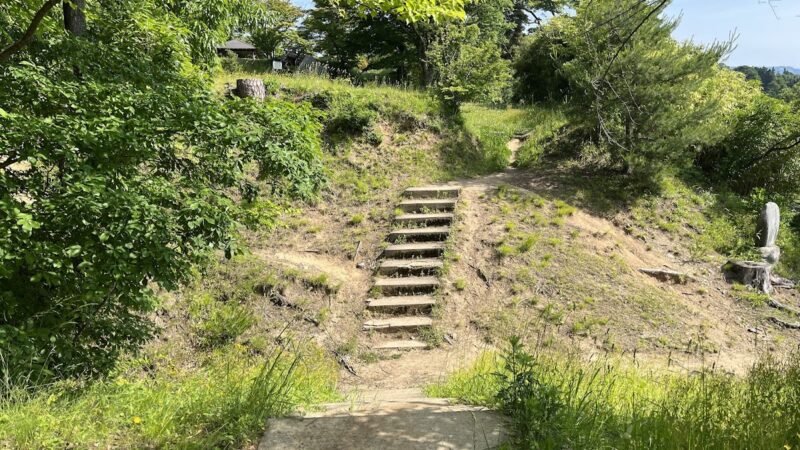
Several enclosure sites can be identified, including the main enclosure site at the mountaintop. Each enclosure was arranged in a stepped fashion, forming an independent defensive space. The flat areas of the enclosures are relatively well-preserved, allowing visitors to appreciate the scale of the castle in its heyday.
Earthworks
The earthworks built along the edges of the enclosures also partially remain. The northern earthwork, in particular, is well-preserved, with an earthen mound approximately 1.5 meters high visible. Walking along the top of the earthworks allows visitors to experience the perspective of the defending soldiers of that time.
Replica Turret and Observation Deck
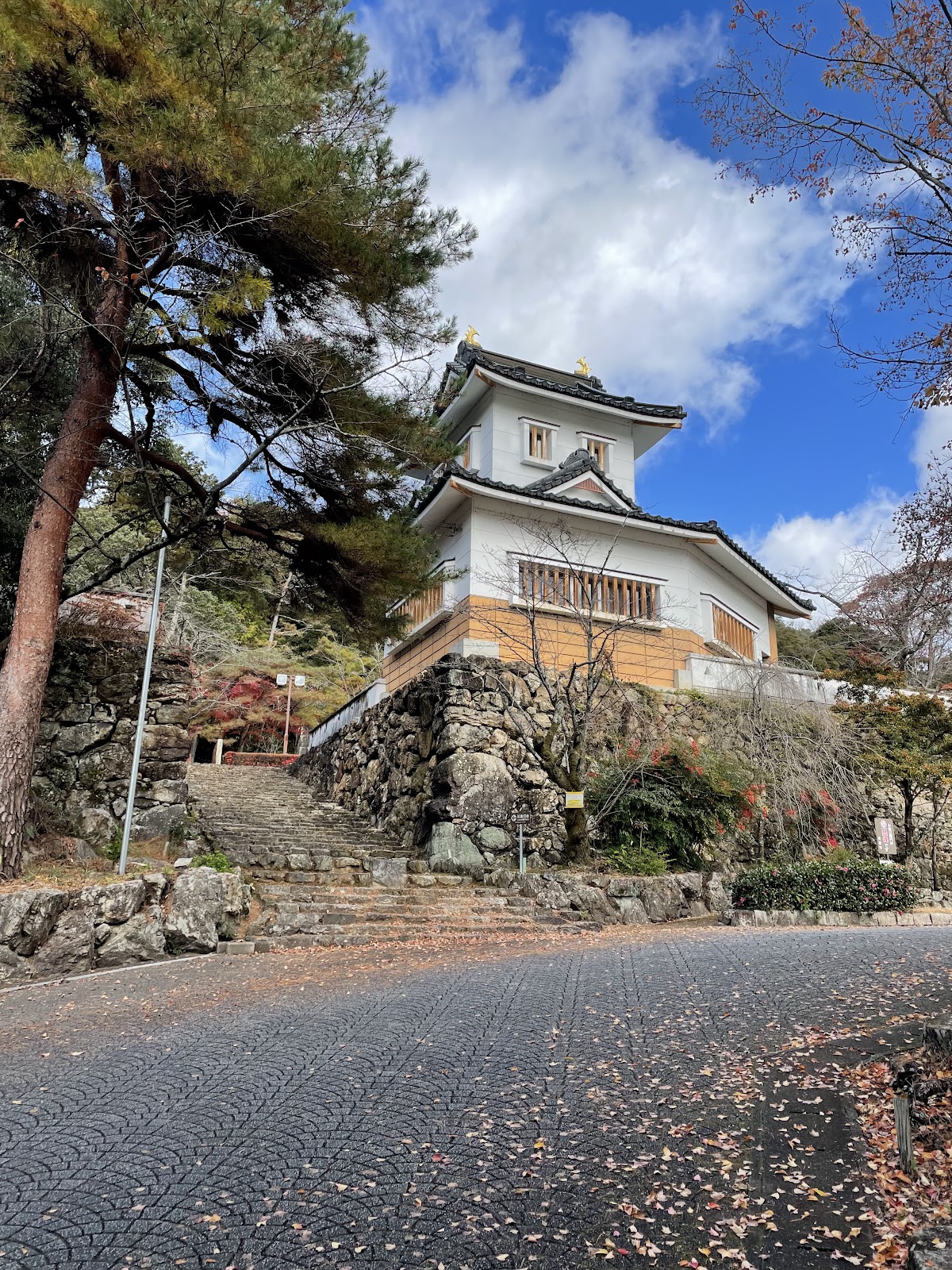
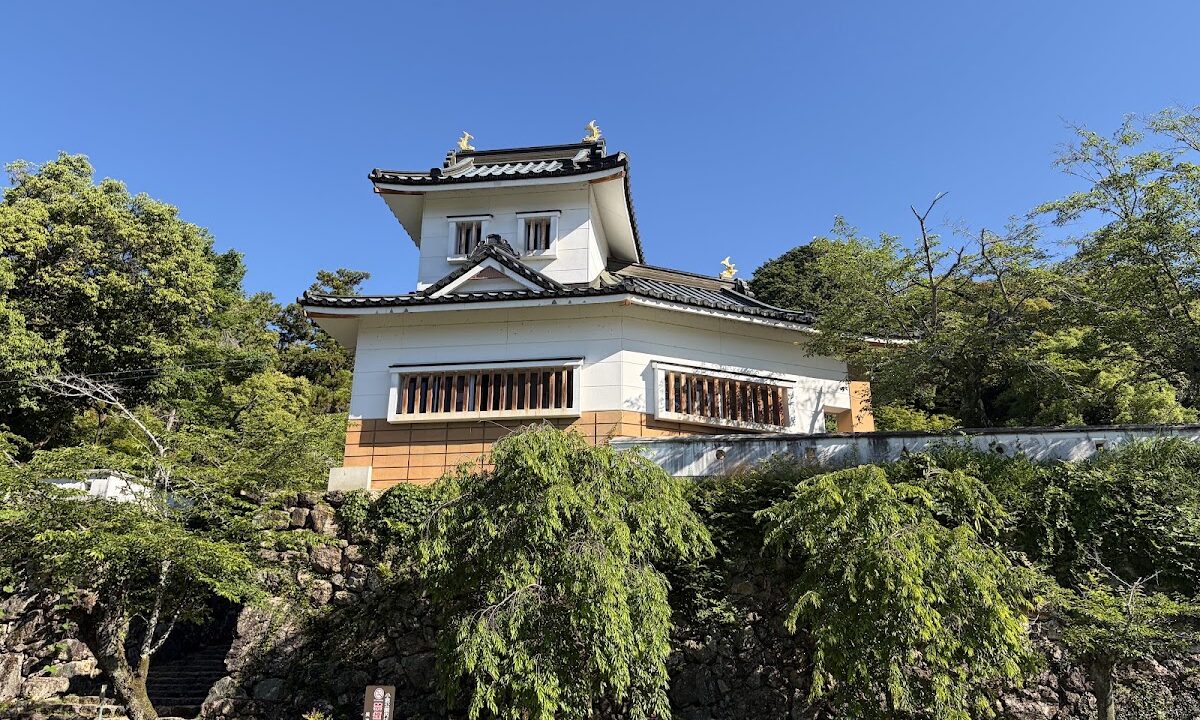
In the current Ogura Park, a replica turret stands on the site of the former main keep. While not a historically accurate reconstruction, it serves as an observation deck within the park facilities, enhancing the atmosphere of the castle ruins.
Furthermore, a three-story observation deck is located at the summit, offering panoramic views of Mino city, the Nagara River, and the surrounding mountains. On clear days, the Hakusan mountain range can be seen in the distance, making it a popular spot for its spectacular views.
Ogura Park as a Famous Cherry Blossom Spot
Ogura Park, built on the site of Ogurayama Castle, is known as one of Mino City’s most representative cherry blossom viewing spots. In spring, approximately 200 Somei Yoshino cherry trees bloom, attracting many visitors.
The combination of castle ruins and cherry blossoms embodies traditional Japanese aesthetics and is a popular spot for photography. The park is also illuminated at night, creating a magical atmosphere.
The Figure of Kanamori Nagachika
Life and Career
Kanamori Nagachika (1524 or 1543–1608) was a samurai who was active from the Sengoku period to the early Edo period. Born in Omi Province (present-day Shiga Prefecture), he served Oda Nobunaga from a young age.
He achieved numerous military successes under Nobunaga, particularly in suppressing the Echizen Ikko-ikki rebellion and military activities in the Hokuriku region. After the Honnō-ji Incident, he served Toyotomi Hideyoshi and was entrusted with the governance of Hida Province.
As Lord of Hida Takayama Domain
In 1585 (Tenshō 13), Nagachika was granted Hida Province and made Takayama Castle his residence. In governing Hida, Nagachika demonstrated excellent administrative skills and dedicated himself to the development of Takayama town and industrial promotion. It is said that the foundation of present-day Takayama City was laid during the time of Kanamori Nagachika.
A Cultural Figure
Nagachika was not only a military commander but also a cultured man with a deep understanding of tea ceremony and waka poetry. He studied tea ceremony under Sen no Rikyū and fostered a tea ceremony culture that led to Kanamori Sōwa (Nagachika’s grandson), the founder of the “Sōwa-ryū” school of tea ceremony.
This cultural background is reflected in the construction of Ogurayama Castle, which is thought to have been not merely a military facility but rather a residence for a refined retirement.
Historical Significance of Ogurayama Castle
Early Edo Period Retirement Castle Culture
Ogurayama Castle holds historical value as a typical example of a “retirement castle” from the early Edo period. With the end of the Sengoku period and the arrival of a peaceful era, it became common for distinguished warlords to relinquish their family headships and live in retirement.
Retirement castles were designed prioritizing habitability and cultural activities over military function, and Ogurayama Castle is no exception. While equipped with defensive structures such as stone walls and earthworks, the choice of a scenic location overlooking the Nagara River reflects Nagachika’s aesthetic sensibilities.
Record of a Short-Lived Domain
The Kamiuchi Domain was abolished after an extremely short period of only six years. This is a rare example throughout the Edo period and is historically important as an example of the instability during the transitional period when the shogunate system was being established.
The system of confiscation of a domain due to lack of an heir was used by the Edo shogunate as a means of controlling daimyo, but the fact that it was applied ruthlessly even to meritorious retainers like the Kanamori family illustrates the strictness of the Tokugawa regime.
Position in the History of Castles in Mino Province
Mino Province was a region where many castles were built throughout the Sengoku period, but examples of newly built castles in the early Edo period are limited. Ogurayama Castle occupies a unique position in the history of castles in Mino Province as a castle built as part of the distribution of rewards and honors after the Battle of Sekigahara.
Furthermore, its form as a hilltop castle is also important material that shows the stage of development of castle-building technology during this period.
Nearby Historical Spots
Nataoyama Castle Ruins
Located approximately 2 kilometers northeast of Ogurayama Castle, the Nataoyama Castle ruins were the residence of the Sato clan, who ruled this region before the construction of Ogurayama Castle. This mountain castle, built on a 437-meter-high chert-rich mountain, boasts a natural fortress with sheer cliffs to the east and west.
It retains the typical layout of a mountain castle, with gates on the north and south sides and baileys extending along the ridge. Comparing it to Ogurayama Castle allows for an understanding of the evolution of castle architecture from the Sengoku period to the early Edo period.
Townscape of Mino City
In the center of Mino City, which developed as a castle town for Ogurayama Castle, there is a “townscape with rising udatsu (decorative gable ends)” where Edo-period townhouses remain. Designated as a National Important Preservation District for Groups of Traditional Buildings, it conveys the atmosphere of its heyday as a thriving center for Mino washi (Japanese paper).
Visiting Ogurayama Castle and strolling through this historic townscape allows for a deeper experience of Mino’s history and culture.
Nagara River and Mino Bridge
The Nagara River, flowing just east of Ogurayama Castle, has long been used as an important waterway. The river is still known for its pristine waters, and traditional cultural practices such as cormorant fishing are still practiced there.
The Mino Bridge, spanning the Nagara River, is Japan’s oldest modern suspension bridge, completed in 1916 (Taisho 5), and is designated as a National Important Cultural Property. It is within walking distance of Ogurayama Castle and can be included in a historical walking tour.
Access and Visiting Information
Location
Address: Ogurayama, Izumi-cho, Mino City, Gifu Prefecture
Transportation Access
Using Public Transportation
- Approximately 20 minutes on foot from Nagaragawa Railway “Mino-shi Station”
- Mino City Community Bus is also available (please check operating days and times)
Using a Car
- Approximately 10 minutes from Tokai-Hokuriku Expressway “Mino IC”
- Parking: Ogura Park parking lot available (free, approximately 30 cars)
Visiting Information
- Visiting Hours: Always open (maintained as a park)
- Admission Fee: Free
- Estimated Time Required: Approximately 30 minutes to 1 hour
- Restrooms: Public restrooms available within the park
- Notes: Since you will be walking on mountain paths, comfortable walking shoes are recommended.
Best Time to Visit
Spring (late March to early April)
The cherry blossom season is the most popular time to visit. Approximately 200 Somei Yoshino cherry trees bloom, and nighttime illuminations are also held. However, it gets crowded during the cherry blossom season, so visiting on weekdays is recommended.
Autumn (November)
This is a beautiful season for autumn foliage, and the view from the castle ruins is magnificent. There are relatively few tourists, allowing for a leisurely visit.
Summer/Winter
In summer, the greenery is lush, and in winter, you can enjoy a snowy landscape. However, caution is needed as the ground can be slippery in winter.
Preservation and Future of Ogurayama Castle
Preservation as a Mino City Designated Historic Site
Ogurayama Castle ruins are designated as a Mino City Historic Site and are preserved and managed by the local government. Regular mowing and tree management are carried out, and efforts continue to maintain the state of preservation of the remains.
Possibility of Archaeological Excavation
To date, only limited full-scale archaeological excavations have been conducted, but if academic research progresses in the future, it may be possible to reveal more detailed information about the castle structure and the lifestyle of the time.
Excavations, particularly around the main gate and the site of the main keep, are expected to provide crucial information for understanding Kanamori Nagachika’s retirement life and the castle culture of the early Edo period.
Utilization as a Tourism Resource
Mino City is working to promote tourism by utilizing historical resources, including the Ogurayama Castle ruins. Development of sightseeing routes combining the castle with other tourist attractions such as the “Udatsu-lined townscape” and the Mino Washi Paper Village Hall is underway.
Efforts to deepen visitors’ understanding, such as improving explanatory signs and directional markers at the castle ruins and conducting guided tours, are also expected.
Summary
Ogurayama Castle, though a short-lived castle abandoned after only six years, is a valuable historical site that conveys the retirement castle culture of the early Edo period. This location, chosen by Kanamori Nagachika, who distinguished himself in the Battle of Sekigahara, to spend his later years, is a scenic spot overlooking the Nagara River, allowing one to sense the aesthetic sensibilities of the samurai warrior.
The remaining stone walls and earthworks showcase the castle-building techniques of over 400 years ago, making it a must-see spot for history enthusiasts. The castle ruins, now developed as Ogura Park, are also a popular cherry blossom viewing spot and a place of relaxation for local residents.
When visiting Mino City, be sure to stop by Ogurayama Castle Ruins and trace the footsteps of the warriors who survived the turbulent Sengoku period. It’s a fascinating spot where historical value and natural beauty harmonize perfectly.