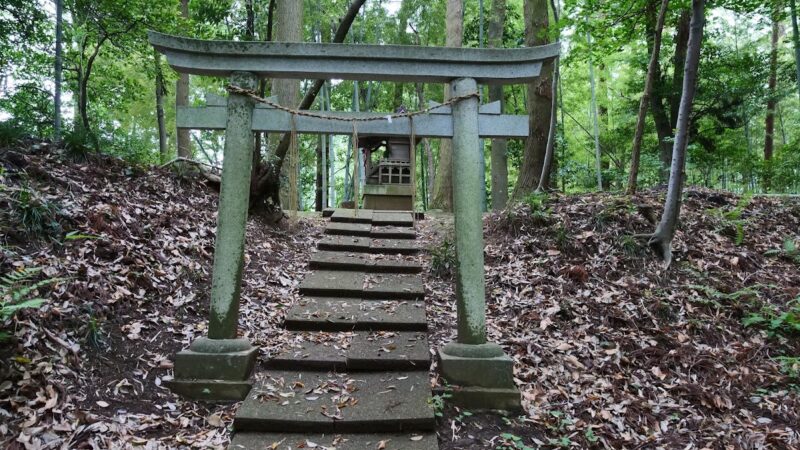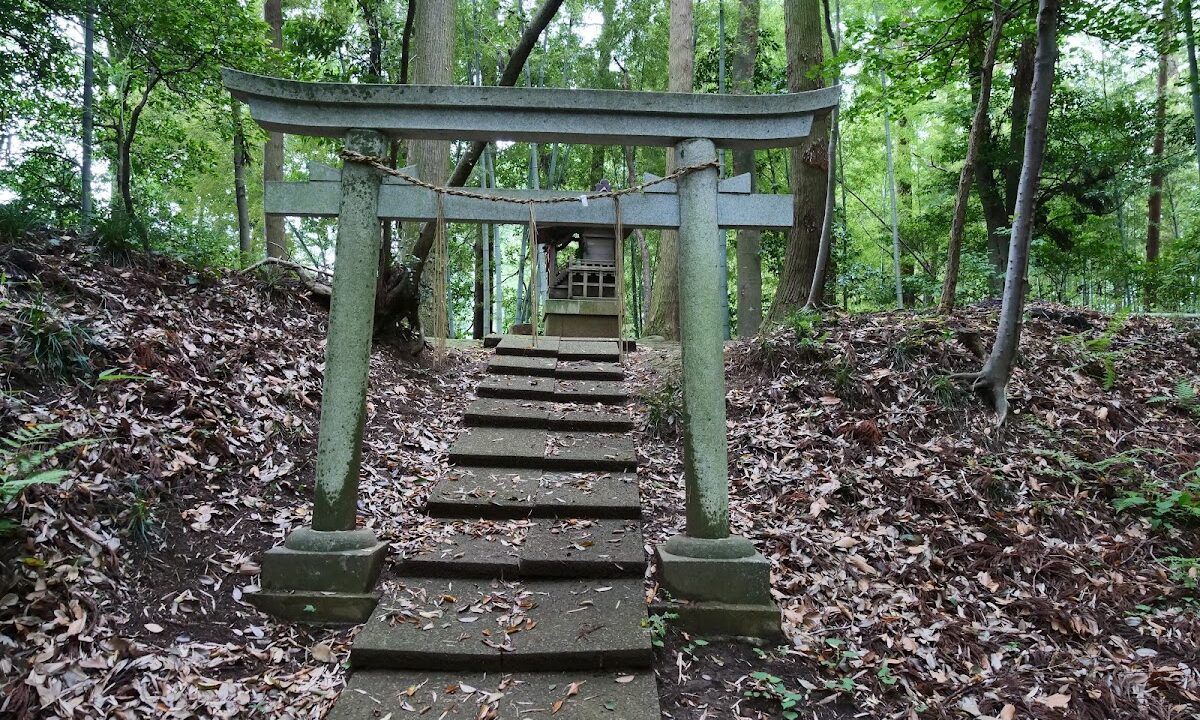
Complete Guide to Kide Castle (Yotsukaido City, Chiba Prefecture): History, Remains, and Access
What is Kide Castle?
Kide Castle is a medieval hilltop castle located in Kide, Yoshioka, Yotsukaido City, Chiba Prefecture. Also known as Yoshioka Castle, it was designated a Yotsukaido City Historic Site on April 15, 1983.
The current Yotsukaido City is located in the northwestern part of Chiba City, occupying a corner of the Shimosa Plateau. Kide Castle was built on this plateau, situated on a plateau approximately 26 meters above sea level, with a relative height difference of about 8 meters. As a valuable historical site that conveys the typical structure of a medieval Japanese castle, it is an important cultural asset that tells the history of the region.
History of Kide Castle
Construction Period and Background
There are no clear records regarding the construction period of Kide Castle, and the details remain unknown. However, based on the castle’s structure, location, and the historical background of the surrounding area, it is presumed to have been built during the medieval period, particularly the Sengoku period (Warring States period).
Northern Chiba Prefecture was within the sphere of influence of the Chiba clan during the medieval period. The Chiba clan was a powerful samurai family based in Shimosa Province, controlling a vast territory from the Kamakura period to the Sengoku period. It is believed that Kide Castle also functioned as a base for regional control within the Chiba clan’s sphere of influence.
About the Castle Lord
There are several theories regarding the lord of Kide Castle. The most plausible theory is that a member of the Usui clan was the lord. The Usui clan was a branch of the Chiba clan and a samurai family based in Usui, Sakura City. It is believed that Usui Castle was their main castle, with branch castles located in the surrounding area, and it has been suggested that Kide Castle may have been one of these branch castles.
The Usui clan maintained their own power during the Sengoku period, particularly from the mid-to-late 16th century, while fluctuating between powerful Kanto forces such as the Hojo and Satomi clans. It is believed that Kide Castle played a role in monitoring and governing the Yotsukaido region within the Usui clan’s territorial control.
However, detailed historical records regarding the lineage of the castle lords and their periods of residence are scarce, leaving many areas that require further research.
Transition from Medieval to Early Modern Period
With the end of the Sengoku period and the entry of Tokugawa Ieyasu into the Kanto region, local forces that had existed since the medieval period, such as the Chiba and Usui clans, gradually lost power. It is presumed that Kide Castle was abandoned during this period.
In the Edo period, this region became part of the Sakura Domain, and Sakura Castle became the regional center. Sakura Castle was an important stronghold, with fudai daimyo such as the Hotta clan serving as its lords, and small medieval castles like Kide Castle came to an end.
After its abandonment, the site of Kide Castle was used for farmland and forest, yet the remains of earthworks and dry moats remained relatively well-preserved. In the Showa era, the historical value of the area was re-recognized, and it was designated a city-designated historical site for protection.
Structure and Remains of Kide Castle
Basic Structure of the Castle
Kide Castle is a flatland castle built on the edge of the Shimosa Plateau. It is characterized by its layout that skillfully utilizes the plateau’s topography, and is a typical example of a medieval castle that used natural elevation differences for defense.
The castle area is relatively compact and consists of multiple kuruwa (enclosures). A kuruwa is a flat area within the castle grounds, used for building structures or stationing soldiers. It is believed that at Kide Castle, several kuruwa were arranged around the main enclosure.
Remains of Earthworks
The best-preserved remains at Kide Castle are the earthworks. Earthen ramparts are earthen walls built by piling up soil, serving to prevent enemy intrusion and clearly defining the boundaries of the castle’s enclosures.
Even today, sections of earthen ramparts several meters high remain around the main enclosure, providing important clues to the scale and structure of the castle in its heyday. Examining the cross-section of the ramparts reveals the careful compaction using the rammed earth technique, demonstrating the high level of castle-building technology.
Characteristics of Dry Moats
Another important structure of Kide Castle is the dry moat. Dry moats are moats that are not filled with water, dug between enclosures or around the perimeter of the castle. They served to physically hinder enemy intrusion and also functioned as a source of soil for constructing earthen ramparts.
The dry moats of Kide Castle are arranged along the topography of the plateau, and some sections show moats approximately 3-4 meters deep. The bottom of the moat has sections with a V-shaped cross-section called “Yagenbori,” preserving the defensive structure unique to medieval castles.
Current Preservation Status
The Kide Castle ruins are protected as a Yotsukaido City designated historical site, but parts of the castle grounds are private land or farmland, and access is restricted in some areas. Nevertheless, the main remains, such as the earthworks and dry moats, are relatively well-preserved, allowing visitors to experience the atmosphere of a medieval castle.
In recent years, local history enthusiasts and the board of education have been working on surveying and documenting the remains, and it is hoped that a more detailed understanding of the castle’s structure will be revealed in the future.
Kide Castle and Surrounding Medieval Castles
Relationship with Usui Castle
Understanding Kide Castle is essential to understanding its relationship with Usui Castle. Usui Castle was an important medieval stronghold located in present-day Usui, Sakura City, and was the main castle (residence) of the Usui clan.
Usui Castle was a large fortress built on a plateau overlooking Lake Inba, and during the Sengoku period, it was the stage for battles against powerful forces such as the Hojo and Uesugi clans. The 1566 attack on Uesugi Kenshin’s Usui Castle is particularly famous, and is known as one of the few battles in which Kenshin suffered a defeat.
Kide Castle is thought to have served as a subsidiary castle of Usui Castle, playing a role in monitoring enemy incursions from the Yotsukaido area. It was part of a network of subsidiary castles centered around Usui Castle.
Location in relation to Hon-Sakura Castle
Approximately 10 kilometers southwest of Kide Castle lies Hon-Sakura Castle. Hon-Sakura Castle was the base of the Chiba clan and served as the political and military center of Shimosa Province from the late 15th to the 16th centuries.
The vast castle ruins, spanning present-day Shisui Town and Sakura City, are a nationally designated historic site. During the period when the Chiba clan was based at Hon-Sakura Castle, Kide Castle was also within their sphere of influence and is presumed to have functioned as part of the Chiba clan’s territorial control system.
Succession to Sakura Castle
In the Edo period, the center of this region shifted to Sakura Castle. Sakura Castle was a modern castle built by Doi Toshikatsu at the command of Tokugawa Ieyasu, and was ruled by hereditary daimyo such as the Hotta clan.
Unlike medieval earthen castles like Kide Castle, Sakura Castle developed as a modern castle equipped with stone walls and a keep. Currently, it is maintained as Sakura Castle Ruins Park, and remnants such as earthworks and dry moats remain.
The transition from Kide Castle to Sakura Castle symbolizes the shift from the medieval to the early modern period and is an important perspective for understanding the history of castles in northern Chiba Prefecture.
Access to Kide Castle
Access by Public Transportation
If you are visiting Kide Castle ruins using public transportation, the following route is convenient:
From JR Sobu Main Line/Narita Line “Yotsukaido Station”
- Approximately 25-30 minutes on foot from the north exit of Yotsukaido Station
- If using Chiba Green Bus, get off at the “Yoshioka Crossroads” bus stop and walk for approximately 10 minutes.
Yotsukaido Station is located approximately 10 minutes from Chiba Station on the Sobu Main Line and approximately 20 minutes from Narita Station on the Narita Line. From the station to the castle ruins, you will be walking along a road that passes through residential areas and farmland.
Access by Car
If you are visiting by car, the following route is convenient:
- From the Higashi-Kanto Expressway “Yotsukaido IC”: Approximately 10 minutes
- From the Keiyo Road “Anagawa IC”: Approximately 15 minutes via National Route 16
There is no dedicated parking lot around the castle ruins. Please use the parking lots of nearby public facilities or be careful of street parking when visiting. Also, since part of the castle ruins is private property, consideration for the landowner is necessary when visiting.
Points to Note When Visiting
When visiting the Kide Castle Ruins, please note the following:
- Respect for Private Property: Part of the castle ruins is private property or farmland. Please be careful not to trespass.
- Safety of Footing: The footing around the earthworks and dry moats can be unstable. We recommend wearing comfortable shoes.
- Seasonal Visiting Conditions: In summer, vegetation can be overgrown, making it difficult to see the remains. Visiting from autumn to spring is recommended.
- Checking the Information Board: Information boards are installed at the site; checking them first will deepen your understanding.
Value of Kide Castle as a Cultural Property
Significance as a Yotsukaido City Designated Historic Site
Kide Castle was designated a Yotsukaido City Historic Site on April 15, 1983 (Showa 58). This designation officially recognizes Kide Castle as an important cultural property that conveys the history of the region.
While Yotsukaido City has several other medieval castle sites besides Kide Castle, considering the state of preservation of the remains and its historical value, Kide Castle can be said to be one of the most important historical sites in the city.
Position in Medieval Castle Research
Kide Castle is attracting attention from researchers as a typical example of a medieval castle structure among the many remaining medieval castles in Chiba Prefecture. In particular, the defensive system using earthworks and dry moats is valuable material for understanding medieval castle construction techniques.
Chiba Prefecture is known as a region with a high density of medieval castles within the Kanto region. This is because local forces, including the Chiba clan, built many castles from the Kamakura period to the Sengoku period. Kide Castle is an indispensable part of the history of castles in Chiba Prefecture.
Use in Local History Education
The Kide Castle ruins are also used as a site for local history education. Elementary and junior high schools in Yotsukaido City incorporate Kide Castle into their local history studies, and even conduct lessons that include visits to the actual site.
By allowing children to experience local historical heritage, they can develop an attachment to their hometown and an interest in history. Kide Castle is an important cultural property with such educational value.
Comparison with Major Castles in Chiba Prefecture
Sakura Castle
Sakura Castle is a modern castle built in the early Edo period and is located in present-day Sakura City. It was built by Doi Toshikatsu, and later, hereditary daimyo such as the Hotta clan served as its lords.
While Kide Castle is a medieval earthen castle, Sakura Castle is a modern fortress with a more modern layout and defensive structures. Currently, it is maintained as Sakura Castle Ruins Park, and the remains such as earthworks, dry moats, and barbicans are well preserved. The National Museum of Japanese History is also located within the castle grounds, making it a center for historical learning.
Moto-Sakura Castle
Moto-Sakura Castle is a medieval fortress that flourished from the late 15th to the 16th century as the base of the Chiba clan. The vast castle ruins span Shisui Town and Sakura City and are a nationally designated historic site.
Like Kide Castle, it is a medieval fortress, but it is far larger in scale and has a more complex layout. It is an important historical site that conveys the grandeur of the Chiba clan’s main castle, and archaeological excavations and restoration work have been progressing in recent years.
Otaki Castle
Otaki Castle is a castle located in Otaki Town in the central part of the Boso Peninsula. During the Sengoku period, it was ruled by the Satomi and Masaki clans, and in the Edo period, it is known that Honda Tadakatsu was the castle lord.
Currently, a replica keep has been built and is open to the public as the Chiba Prefectural Central Museum Otaki Castle Branch. Unlike earthen castles like Kide Castle, it is a castle that was developed as a modern castle and is a popular tourist destination.
Kururi Castle
Kururi Castle is a mountain castle located in Kimitsu City and was an important base for the Satomi clan during the Sengoku period. During the Edo period, the Kuroda clan and others served as castle lords.
Currently, a replica keep has been built, and the castle ruins have been developed as the Kururi Castle Ruins Museum. It is characterized by its layout that takes advantage of the rugged terrain typical of mountain castles, and its location differs significantly from that of Kide Castle.
Sekiyado Castle
Sekiyado Castle, located in Noda City, is a flatland castle built at a strategic point for water transport, at the confluence of the Tone River and Edo River. During the Edo period, it was an important base for managing water transport in the Kanto region.
Currently, a replica keep has been erected and is open to the public as the Chiba Prefectural Sekiyado Castle Museum. Its layout, which takes advantage of its location surrounded by rivers, is distinctive, and its defensive approach differs from that of plateau castles like Kide Castle.
A Recommendation to Visit Kide Castle
Attractions for History Enthusiasts
Kide Castle lacks a flashy keep or stone walls, but it is a valuable historical site for understanding the essential structure of a medieval castle. Basic defensive facilities such as earthworks and dry moats remain well-preserved, allowing visitors to experience firsthand the castle-building techniques and strategies of the time.
In particular, it is worth visiting as a textbook example for those interested in castle research or medieval history. Here, you can find a simple and essential form of castle, unlike the large-scale, tourist-oriented castles. ### Nearby Attractions
When visiting Kide Castle, we recommend also exploring historical sites in Yotsukaido City and the surrounding area.
- Historical Landscape of Yoshioka District: Around the castle ruins, old farmhouses, shrines, and temples are scattered, preserving a traditional rural landscape.
- Yotsukaido City Library: The local history section offers materials related to the history of Kide Castle and Yotsukaido.
- Sakura/Usui Area: A short trip will take you to related castles such as Sakura Castle, Usui Castle, and Hon-Sakura Castle.
Enjoying the Castle Through the Seasons
Kide Castle ruins show different faces in each of the four seasons.
- Spring: The fresh greenery is beautiful, and the undulations of the earthworks and dry moats are clearly visible.
- Summer: The vegetation grows thick, making the remains less visible, but you can enjoy the lush natural scenery. – Autumn: The contrast between the autumn foliage and the ruins is beautiful, making it the best season for visiting.
- Winter: The fallen leaves make it easier to grasp the overall layout of the ruins.
Summary
Kide Castle is a valuable medieval castle ruin remaining in Yotsukaido City, Chiba Prefecture. Also known as Yoshioka Castle, it is presumed to have been ruled by a lord associated with the Usui clan. The remains, such as earthworks and dry moats, are well-preserved, and it was designated a Yotsukaido City Historic Site in 1983.
It played a part in the castle network built by local medieval forces such as the Chiba and Usui clans, and is an important historical site that tells the story of the regional control system during the Sengoku period. Even after being abandoned in the Edo period, its remains continue to convey the history of the region.
Visiting it together with surrounding castles such as Sakura Castle and Hon-Sakura Castle will allow you to gain a deeper understanding of the castle history of northern Chiba Prefecture. These castle ruins eloquently tell the story of the transition from the Middle Ages to the early modern period, and the shift in power structures from the Chiba clan to the Tokugawa clan.
While Kide Castle is not a large-scale tourist attraction, it is a place where you can quietly feel history. When you visit Yotsukaido City, why not take a visit to these medieval castle ruins and imagine what it was like in its heyday?