Nagabe Castle (Asahi City, Chiba Prefecture) Complete Guide: History and Highlights of the Matsuzawa Clan’s Residence and the Ohara Yugaku Ruins
What is Nagabe Castle?
Nagabe Castle is a medieval castle located in Nagabe, Asahi City, Chiba Prefecture. Situated in Kaijo District, Shimosa Province, it is known as the residence of successive generations of the Matsuzawa clan. Currently, it is preserved as part of the nationally designated historical site “Ohara Yugaku Ruins,” with well-preserved remains such as earthworks, moats, and baileys.
While Chiba Prefecture boasts numerous famous castle ruins such as Sakura Castle, Hon-Sakura Castle, and Otaki Castle, Nagabe Castle is highly regarded by castle researchers and history enthusiasts as a valuable historical site that strongly retains the characteristics of a medieval local powerful family’s residence.
Location and Geographical Characteristics of Nagabe Castle
Nagabe Castle was built in the inland area of the Kujukuri Plain, approximately 4 km southwest of the center of Asahi City. Located on a plateau approximately 20 meters above sea level, it was chosen as a strategically important location overlooking the surrounding lowlands. To the north of the castle lay a vast lake known as Tsubakiumi, which served as a natural moat.
This geographical location held strategic value in controlling a key transportation hub in Shimosa Province. For the Kokubun clan, whose base was Fuma Castle, Osabe Castle played an important role as a branch castle, serving as a defensive stronghold to the east.
History of Osabe Castle
The Matsuzawa Clan and the Establishment of Osabe Castle
The exact construction date of Osabe Castle is unclear, but it is estimated to be sometime between the late Kamakura period and the Nanboku-cho period. The castle’s lord, the Matsuzawa clan, were descendants of Chiba Tsunetane, the ancestor of the Chiba clan, and belonged to the Kokubun clan as a samurai family.
Chiba Tsunetane is known as a powerful warlord of Shimosa who supported Minamoto no Yoritomo’s uprising and made a significant contribution to the establishment of the Kamakura Shogunate. Due to his achievements, Tsunetane’s descendants acquired territories in various parts of Shimōsa Province and established branch families. The Matsuzawa clan was one such family, building its power base in the Osabe area.
Relationship with the Kokubun and Fuma Clans
The Matsuzawa clan was a branch of the Kokubun clan and had close ties with the related Fuma clan. Fuma Castle (Asahi City), the residence of the Fuma clan, was a central fortress of the Kokubun clan’s power in this region, and Osabe Castle functioned as a branch castle.
In the power distribution of the Chiba clan in Shimōsa Province, the castle network centered on Fuma Castle formed an important defense system. It is believed that surrounding castles such as Kaburagi Castle, Mihira Castle, and Sugayama Castle also played a part in this defense network.
The Sengoku Period and the Fall of Osabe Castle
With the arrival of the Sengoku period, Shimōsa Province became the stage for power struggles between the Chiba, Satomi, and Hōjō clans. During the Tensho era (1573-1593), the Satomi clan, based in the southern part of the Boso Peninsula, expanded its power and continued its northward advance.
At some point during the Tensho era, the Satomi army, led by Satomi Yoshiyasu (or Yoshiyori), attacked Osabe Castle. While detailed records of the battle are not available, it is said that Osabe Castle fell, marking the end of the Matsuzawa clan’s rule. This fall also significantly disrupted the defense network of the Kokubun clan, centered around Fuma Castle.
Edo Period and Beyond: Connection with Ohara Yugaku
In the late Edo period, Ohara Yugaku, known as an agricultural leader, established his residence on the site of Osabe Castle. Ohara Yugaku (1797-1858) advocated his own unique philosophy called “Seigaku” and developed a rural reform movement.
In 1838 (Tenpo 9), Yugaku moved to Osabe Village and constructed the “Kochido” (a farming hall) in a corner of the castle ruins. Using this location as his base, he founded a cooperative organization called the Ancestor Stock Association, dedicating himself to improving farmers’ lives and advancing agricultural techniques. Yugaku’s activities were groundbreaking for their time and are highly regarded as a pioneering work in Japan’s cooperative movement.
Currently, the Osabe Castle ruins are designated as a national historic site, the “Ohara Yugaku Site,” a rare historical site where the remains of a medieval castle coexist with the legacy of early modern agricultural reforms.
Structure and Layout of Osabe Castle
Overall Layout
Osabe Castle is a flatland castle that skillfully utilizes the topography of the plateau. The castle grounds extend approximately 200m east-west and 300m north-south, with multiple baileys arranged within. It can be considered a medium-sized castle for a medieval local powerful family’s residence.
The basic structure of the castle is a concentric layout with multiple secondary baileys (second and third baileys) arranged around the main bailey (honmaru). Each enclosure is demarcated by earthworks and moats, enhancing its defensive capabilities.
Features of the Main Enclosure (Honmaru)
The main enclosure is located slightly north of the center of the castle and has a roughly rectangular shape, approximately 60m x 40m. Earthworks 2-3m high surround it, with the northern and eastern ramparts being particularly well-preserved.
The main enclosure’s entrance (koguchi) opens to the east and is a staggered entrance. This design prevents direct enemy advances and enhances defensive capabilities. The earthworks around the entrance are particularly thick, suggesting it was a crucial point in the castle’s frontal defense.
Arrangement of Moats and Dry Moats
A notable feature of Osabe Castle’s defensive structures is the clearly preserved moats and dry moats. A large moat, approximately 4m deep and 8m wide, is located south of the main enclosure, dividing the plateau and preventing enemy intrusion.
Furthermore, each enclosure is surrounded by a dry moat. These dry moats still maintain a depth of approximately 2-3 meters and are valuable remains for understanding the defensive system of medieval castles. In some places, ridge-like undulations can be observed at the bottom of the moats, suggesting the possibility of them being shoji-bori (screen-type moats).
Arrangement and Function of the Enclosures
To the south of the main enclosure is the second enclosure, and further south is the third enclosure. These enclosures are constructed at a lower level than the main enclosure, forming a terraced structure.
The second enclosure is the second most important section after the main enclosure and is thought to have been used as living space or a barracks for soldiers. The third enclosure has a larger area and may have functioned as a training ground or storage area for supplies.
Several small enclosures have been identified on the east side, and these are presumed to have served as outworks for frontline defense.
Techniques of the Cut Embankments
Sharp cut embankments (artificially carved cliffs) are constructed around each enclosure. The height of the cliffs varies depending on the location, but they are approximately 2 to 5 meters high. By modifying the natural slopes to make them steep, they made it difficult for enemies to climb.
In particular, the cliff on the north side of the main enclosure reaches a height of approximately 5 meters, and combined with the earthworks, it forms a strong defensive line. This cliff construction technique is an important element demonstrating the evolution of castle construction technology during the Sengoku period.
Highlights and Condition of Remains at Osabe Castle
Existing Major Remains
The greatest appeal of Osabe Castle is the well-preserved remains of this medieval castle. The following remains are especially worth seeing:
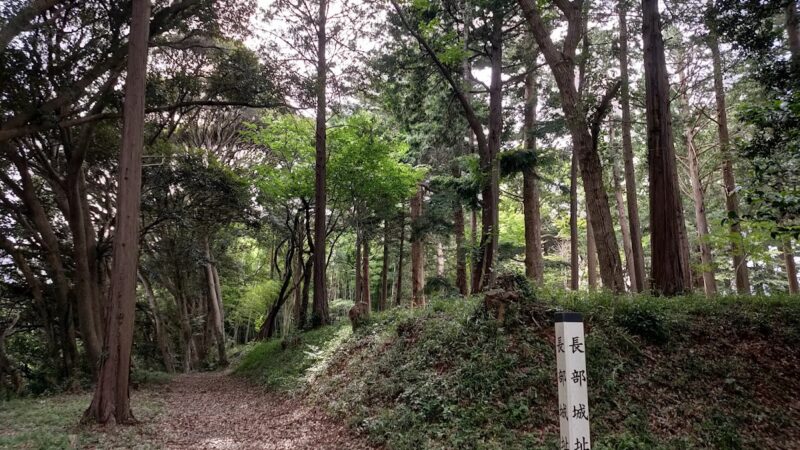
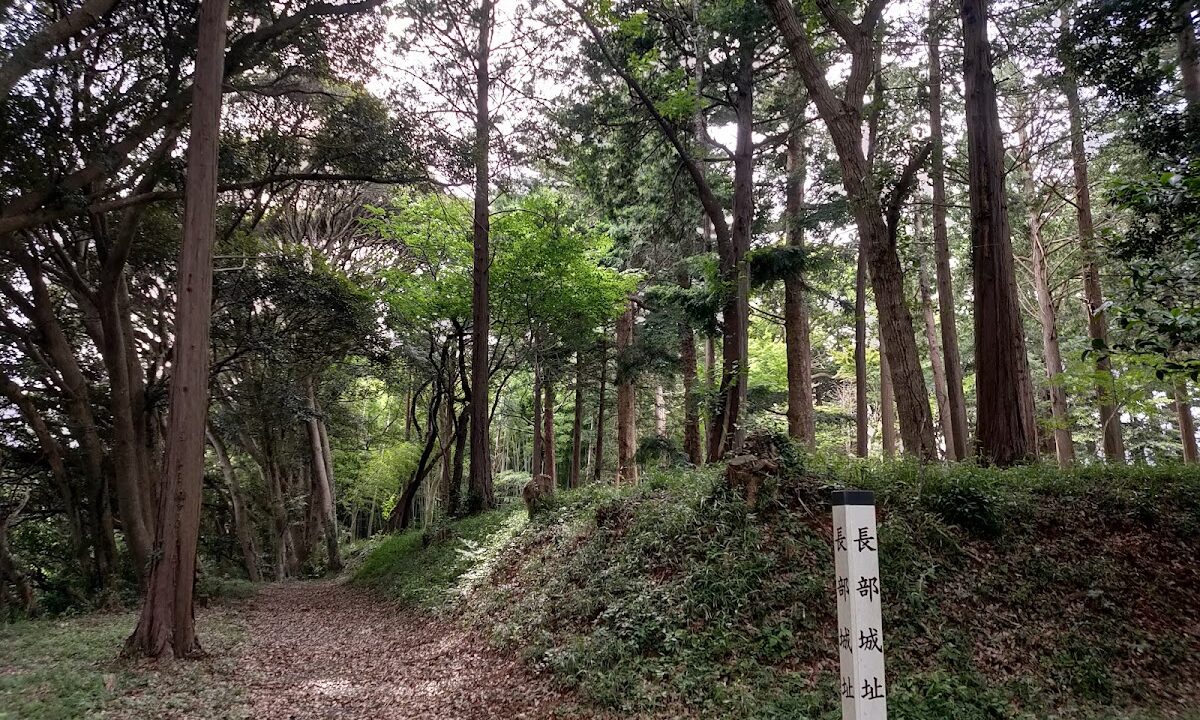
Earthworks: The earthworks surrounding the main enclosure remain at a height of 2 to 3 meters, conveying their original appearance. Walking along the earthworks allows you to appreciate the scale of the castle and its defensive structure.
Moat: The large moat on the south side of the main enclosure is impressive in both depth and width, and is an important remains that allows you to experience the defensive techniques of a medieval castle.
Dry Moats: The dry moats separating each enclosure are clearly visible overall, although some areas are overgrown with vegetation.
Enclosures: Multiple enclosures are clearly identifiable, allowing for an understanding of the castle’s overall layout.
Gate Entrance: The gate entrance on the east side of the main enclosure exhibits a staggered structure, offering insights into the defensive techniques used at the entrances of medieval castles.
Remains Related to Ohara Yugaku
Within the castle ruins, remains related to Ohara Yugaku are also preserved. The site of the “Kōchidō” (cultivation hall) built by Yugaku and the remains of a building that served as the activity base for his ancestral stock association can be seen.
The former residence of Ohara Yugaku has been restored near the castle ruins, providing valuable insights into Yugaku’s life and thought. The unique aspect of the Osabe Castle ruins lies in the fact that visitors can simultaneously view medieval castle remains and early modern agricultural reform heritage.
Preservation and Environment of the Castle Ruins
The Osabe Castle Ruins are a nationally designated historical site and are properly managed, with the remains in good condition. However, some areas are covered in bamboo groves and mixed forests, making them difficult to visit depending on the season.
Information boards and explanatory signs are installed within the castle ruins, ensuring that even first-time visitors can understand the location and significance of the remains. Walking paths are also maintained, making it relatively safe to explore the site.
Access and Visiting Information for Osabe Castle
Location and Basic Information
Location: 345-2 Osabe, Asahi-ku, Chiba Prefecture (Aim for the Ohara Yugaku Memorial Museum)
Designation: National Historic Site “Ohara Yugaku Ruins”
Visiting Hours: Always open (However, the Ohara Yugaku Memorial Museum is open from 9:00 to 16:30)
Closed Days: The Ohara Yugaku Memorial Museum is closed on Mondays (or the following day if Monday is a public holiday), and during the New Year holidays.
Admission Fee: Free to visit the castle ruins (Admission to the Ohara Yugaku Memorial Museum is charged: 200 yen for adults)
Access by Car
From the Higashi-Kanto Expressway “Daiei IC”: Approximately 30 minutes (via National Route 51)
From the Choshi Connector Road “Yokoshibahikari IC”: Approximately 20 minutes
Parking: Parking is available at the Ohara Yugaku Memorial Museum parking lot (free, approximately 30 spaces for regular cars)
If using a car navigation system, it is convenient to set “Ohara Yugaku Memorial Museum” (Tel: 0479-68-4933) as your destination.
Access by Public Transportation
From JR Sobu Main Line “Asahi Station”:
- Approximately 20 minutes by Asahi City Community Bus “Osabe Line,” get off at “Ohara Yugaku Memorial Museum,” and it’s a short walk.
- Approximately 15 minutes by taxi
Since public transportation is limited, it is recommended to check the timetable in advance.
Nearby Facilities and Toilet Information
Toilets: Toilets are available at the Ohara Yugaku Memorial Museum. There are no toilets within the castle ruins, so it is recommended to use the toilets before visiting.
Rest Facilities: There is a rest area inside the Ohara Yugaku Memorial Hall.
Dining Facilities: Since there are few restaurants around the castle ruins, we recommend eating in central Asahi City or at the roadside station.
Estimated Visit Time and Recommended Route
Visiting the Castle Ruins Only: Approximately 30-40 minutes
Visiting the Castle Ruins + Ohara Yugaku Memorial Museum: Approximately 1 hour 30 minutes to 2 hours
Recommended Visit Route:
- Get an overview at the Ohara Yugaku Memorial Museum (30 minutes)
- Move from the museum to the castle ruins (5 minutes on foot)
- Visit the earthworks and gates around the main enclosure (15 minutes)
- Check the moats (10 minutes)
- Tour each enclosure (20 minutes)
- Visit the site of Ohara Yugaku’s former residence (15 minutes)
Precautions During Your Visit
- The castle ruins are unpaved, so comfortable shoes are recommended.
- Insect repellent is recommended during the summer months.
- Be careful as the ground can be slippery during and after rain.
- Be careful not to get too close to the edges of moats and cliffs, as there is a risk of falling.
- The use of fire is strictly prohibited within the castle ruins.
Castle Stamp and Related Goods
Osabe Castle Stamp
The Osabe Castle stamp is issued by the Chiba Castle Preservation and Utilization Association. The design is based on the Matsuzawa family crest, and is a beautifully finished stamp that expresses the historical value of the castle ruins.
Sales Locations:
- Michi-no-Eki Kirari Asahi (5238 I, Asahi City)
- Marugoto Shisui (1-1 Kami-Iwahashi, Shisui Town)
Price: 300 yen (tax included)
Castle stamps are gaining popularity as souvenirs of castle tours in Chiba Prefecture, and the number of collectors is increasing. Along with the Osabe Castle stamp, there is also the enjoyment of collecting stamps from nearby castles such as Kaburagi Castle, Mihiro Castle, and Sugayama Castle.
Related Books and Materials
For those who wish to learn more about Osabe Castle, the following books and materials are recommended:
- *Medieval Castles of Chiba Prefecture* (Chiba Castle Research Association)
- *A Tour of Ancient Castle Sites in Boso* (Ronshobo)
- *Comprehensive Survey of Japanese Castles, Volume 6: Chiba and Kanagawa* (Shin Jinbutsu Oraisha)
- Various pamphlets published by the Ohara Yugaku Memorial Museum
These materials are available for viewing at the Ohara Yugaku Memorial Museum and Asahi City Library.
Nearby Castles and Tourist Spots
Major Nearby Castles
When visiting Osabe Castle, visiting the surrounding castles will allow you to gain a deeper understanding of the medieval history of this region.
Fuma Castle (Asahi City): The main castle of Osabe Castle. An important castle as a base for the Kokubun clan. Approximately 10 minutes by car.
Kaburagi Castle (Asahi City): A residence of the Kokubun clan, similar to the Matsuzawa clan. Earthworks and moats remain. Approximately 15 minutes by car.
Mihira Castle (Asahi City): The residence of the Kaijo clan. Located overlooking the Kujukuri Plain. Approximately 20 minutes by car.
Sugayama Castle (Sosa City): An important base near Tsubakiumi. Approximately 25 minutes by car.
Iitaka Castle (Sosa City): The residence of a branch of the Chiba clan. Well-preserved remains. Approximately 30 minutes by car.
Nearby Tourist Facilities
Michi-no-Eki Kirari Asahi: You can purchase fresh local agricultural products and specialty goods. It is also a sales point for castle stamps.
Asahi City Local History Museum: A facility where you can learn about the history and culture of Asahi City. There are also exhibits related to Osabe Castle.
Iioka Gyobu Cape Observation Deck ~Light and Wind~: An observation facility with a panoramic view of the Pacific Ocean. You can enjoy the spectacular view of Kujukuri Beach.
Tsubakiumi: A former lake reclaimed during the Edo period. It’s a historically significant geographical feature used for the defense of Osabe Castle.
Asahi City Gourmet Information
Asahi City is a region where agriculture and fishing thrive, offering dishes made with fresh ingredients.
Iioka Fishing Port Seafood: Dishes using fresh seafood are popular. Sardines and mackerel are particularly famous.
Asahi-grown Vegetables: Greenhouse cultivation of tomatoes, cucumbers, and other vegetables is thriving, and fresh vegetables can be purchased at roadside stations.
Boso Local Cuisine: Some restaurants offer traditional Boso dishes such as futomaki sushi and namero (minced fish dish).
Historical Value and Future Preservation of Osabe Castle
Position in Castle History
Osabe Castle holds particular importance among the many medieval castles in Chiba Prefecture for the following reasons:
Chiba Clan Castle Network: As the castle of the Kokubun clan, descendants of Chiba Tsunetane, it is an important historical site demonstrating the expansion of the Chiba clan’s power in Shimosa Province.
Typical Example of a Medieval Local Clan’s Residence: Unlike large-scale early modern castles, it is a good example of the type of castle built by local clans in the medieval period.
Preservation of Remains: Major remains such as earthworks, moats, and baileys are well-preserved, providing valuable information for understanding the structure of medieval castles.
Multifaceted Historical Value: As a rare historical site where a medieval castle and early modern agricultural reform heritage coexist, it possesses multifaceted historical value.
Significance as the Ohara Yugaku Site
The designation of the Osabe Castle ruins as a national historic site, “the Ohara Yugaku Site,” is a result of its evaluation from both the perspectives of castle history and agricultural history. Ohara Yugaku’s agricultural reform movement is internationally recognized as a pioneer of the cooperative movement in Japan, and the Osabe area, which served as his base of operations, holds significant importance from a socio-economic history perspective.
The Osabe Castle ruins, where the legacy of medieval samurai society and the legacy of early modern peasant movements overlap, are a valuable place where one can experience the multifaceted nature of Japanese history.
Preservation Activities and Community Involvement
The preservation of the Osabe Castle ruins is being carried out primarily by the Asahi City Board of Education, with the cooperation of local residents and history enthusiasts. Regular mowing, maintenance of the remains, and installation of information boards are carried out to ensure a safe environment for visitors.
The issuance of castle stamps and the organization of castle tours by the Chiba Castle Preservation and Utilization Association are also highly regarded as activities that widely communicate the value of the castle ruins. These initiatives are also contributing to tourism promotion by utilizing the region’s historical assets.
Future Challenges and Prospects
The following are future challenges for the Osabe Castle ruins:
Continued Preservation of Remains: To preserve the remains in a natural environment over the long term, continuous management and necessary preservation treatments are required.
Deepening Research: While the basic structure of the castle has been revealed through previous investigations, the accumulation of new knowledge through detailed archaeological excavations is expected.
Strengthening Information Dissemination: To let more people know about the value of Osabe Castle, information dissemination utilizing digital technology and the enrichment of educational programs are needed.
Collaboration with Surrounding Castles: Developing sightseeing routes in collaboration with surrounding castles such as Fuma Castle and Kaburagi Castle can enhance the appeal of historical tourism throughout the region.
Summary: The Appeal of Osabe Castle
Osabe Castle, a medieval castle remaining in Asahi City, Chiba Prefecture, is a historical site with many appealing features. As the residence of the Matsuzawa clan, a local powerful family within the Chiba clan, Osabe Castle is an important historical site that tells the story of medieval Shimosa Province. Its well-preserved remains, such as earthworks and moats, make it a must-see for castle enthusiasts.
Furthermore, its dual historical significance as the base of operations for Ohara Yugaku, a reformer of early modern agriculture, sets Osabe Castle ruins apart from other castle sites. As a place where medieval samurai culture and early modern peasant culture intersected, it offers a glimpse into diverse aspects of Japanese history.
Visiting Osabe Castle, along with other famous castles in Chiba Prefecture such as Sakura Castle, Hon-Sakura Castle, and Otaki Castle, will provide a deeper understanding of Chiba Prefecture’s rich castle culture. A journey exploring the castles of the Kujukuri area while collecting castle stamps will undoubtedly be a fulfilling experience for history lovers.
Osabe Castle ruins are a treasure trove of history nestled in a quiet rural area. As a rare historical site that allows visitors to simultaneously experience the spirit of medieval samurai and the daily lives of early modern farmers, it will undoubtedly continue to be cherished by many people for years to come.