Complete Guide to the Omigawa Jinya Ruins (Katori City, Chiba Prefecture): History, Highlights, and Access Information
Located in Katori City, Chiba Prefecture, the Omigawa Jinya Ruins are a historical site that served as the administrative center of the Omigawa Domain during the Edo period. While currently the site of Omigawa Central Elementary School, it was once home to the Jinya (administrative office) that governed the 10,000-koku Omigawa Domain. This article provides a detailed explanation of the history, structure, highlights, and surrounding tourist information of the Omigawa Jinya Ruins.
What are the Omigawa Jinya Ruins?
The Omigawa Jinya Ruins are the remains of an Edo-period Jinya (administrative office) located in Omigawa, Katori City, Chiba Prefecture. A Jinya was a facility where a small daimyo (feudal lord) with a domain of around 10,000 koku resided and conducted domain administration. Unlike castles with keeps and stone walls, Jinya had a relatively simple structure. The Omigawa Jinya played an important role for approximately 150 years as the center of the Omigawa Domain, ruled by the Uchida clan.
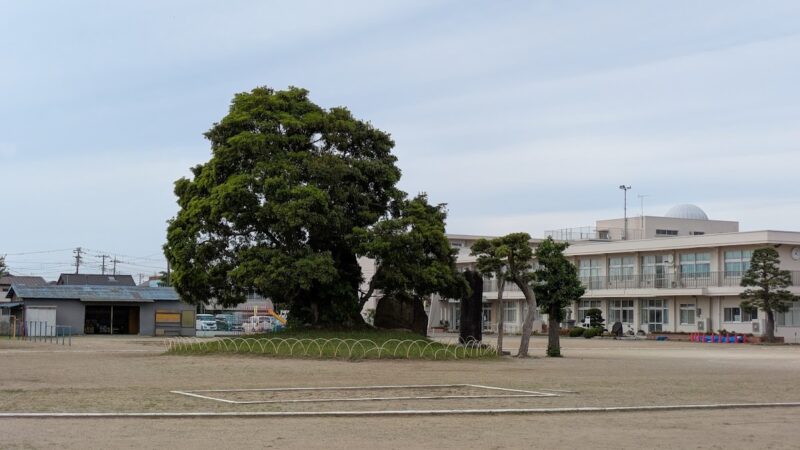
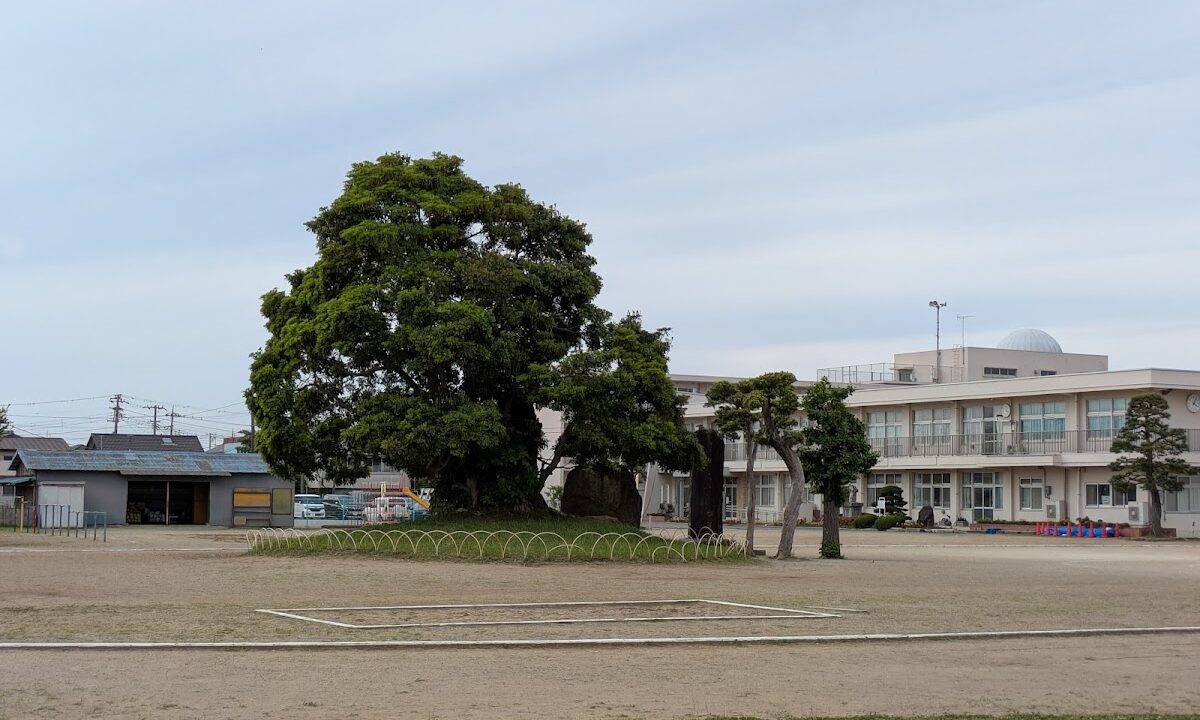
Currently, the site of the former jinya (fortified residence) is occupied by Omigawa Central Elementary School, and very few of the original buildings remain. However, a marker post stands beside the main gate, indicating that this was once the site of a jinya.
History of Omigawa Jinya
Establishment of the Omigawa Domain
The history of the Omigawa Domain begins in 1639 (Kanei 16). Uchida Masanobu was granted an increase in his stipend in Shimosa and Hitachi Provinces, becoming a daimyo with a 10,000 koku domain and the lord of the Omigawa Domain. However, the jinya had not yet been constructed at that time. It was only after Masanobu’s death in 1688 (Genroku 1) that the Omigawa Jinya was officially established.
Uchida Masanori’s Madness Incident and Reduction of Territory
An important event directly related to the construction of the Omigawa Jinya occurred in 1724 (Kyoho 9). At the time, the Uchida family ruled the Kanuma Domain with a 13,000 koku (unit of rice production) yield. However, an incident occurred in which the lord, Uchida Masayoshi, was placed under house arrest due to mental illness.
As a result of this incident, his eldest son, Uchida Masachika, inherited the family headship, but the domain’s yield was reduced to 10,000 koku, and he was ordered to relocate to Omigawa. Following this relocation, Masachika fully developed the Omigawa Jinya (fortified residence).
Omigawa Domain’s Administration
The Omigawa Domain was ruled by the Uchida family for generations and continued until the end of the Edo period. Although a small domain with a 10,000 koku yield, it utilized the advantages of the Kurobe River’s water transport and its location in the Tone River basin for its administration. Omigawa flourished as a key water transport hub, and a merchant town developed around the Jinya.
Changes After the Meiji Restoration
After the Meiji Restoration, the Omigawa Domain ceased to exist due to the abolition of the feudal domains and the establishment of prefectures, and the Jinya was demolished. Later, the site was used as an educational facility, which continues to this day as the present-day Omigawa Central Elementary School.
Structure and Scale of the Omigawa Jinya
Layout of the Jinya
The Omigawa Jinya was built in the area of the present-day Omigawa Central Elementary School. According to historical documents, the Jinya measured approximately 175 meters north-south and 150 meters east-west, and its grounds extended to the banks of the Kurobe River.
Although the Jinya had a relatively compact structure, it contained facilities such as the lord’s residence, government offices, and warehouses. It is believed that earthen ramparts and moats surrounded the site, providing defensive functions.
Architectural Style of the Jinya
Unlike castle architecture, Jinya in the Edo period generally resembled large-scale samurai residences. Similarly, the Omigawa Jinya is presumed to have lacked a keep or stone walls, and was primarily composed of wooden buildings.
The jinya (fortified residence) contained the lord’s residence (“Goten”), the administrative offices (“Yakusho”), the vassal quarters, and storehouses. Because it faced the Kurobe River, it’s likely that goods were transported via water.
Highlights of the Omigawa Jinya Site
Marker and Stone Monument
Currently, a marker indicating the “Omigawa Jinya Site” stands beside the main gate of Omigawa Central Elementary School. This is the most easily recognizable landmark for visitors. There is also information that a stone monument stands near the center of the school grounds, but since it’s on school grounds, consideration is needed when visiting.
Topography and Surrounding Environment
Walking around the Omigawa Jinya site allows one to imagine the topography of the time. Its proximity to the Kurobe River indicates the convenience of water transport. Furthermore, remnants of Edo-period town planning can be seen in the surrounding streets.
Relationship with Omigawa Castle
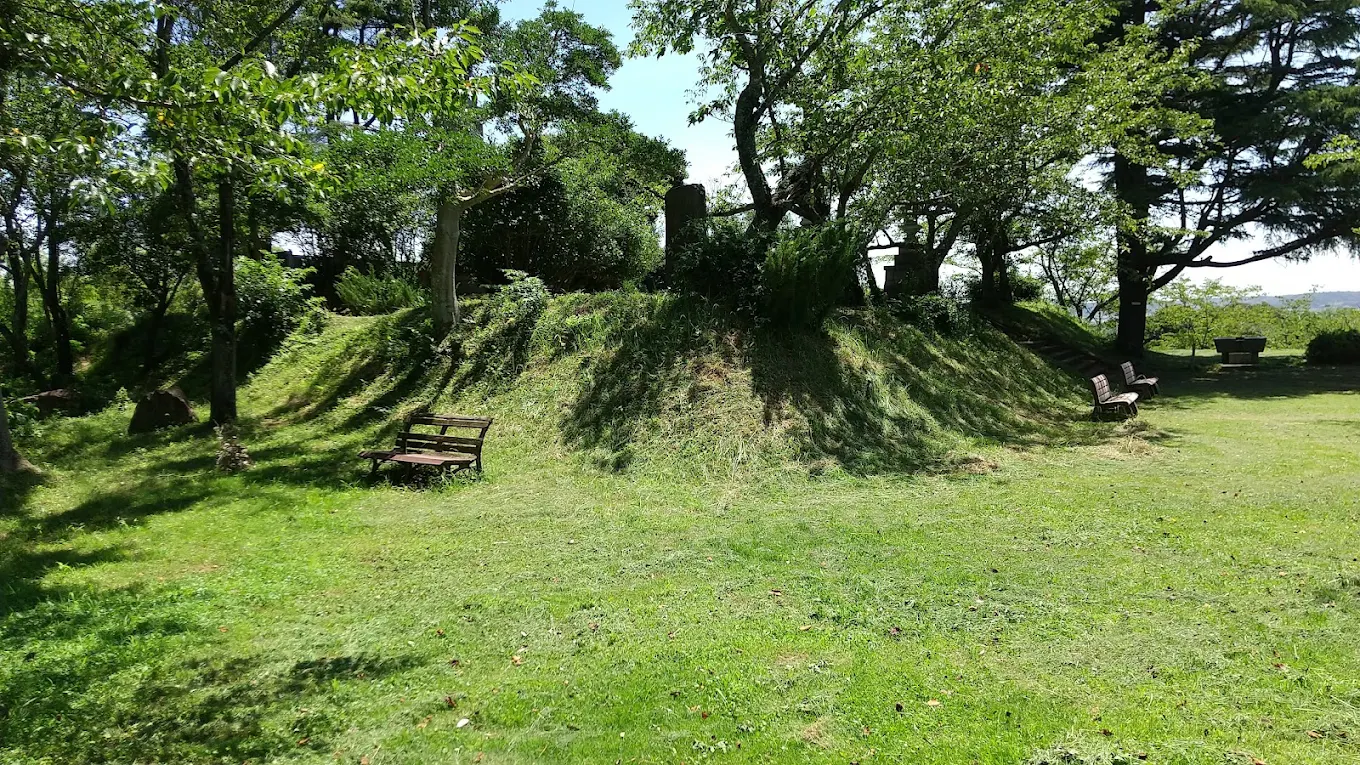
When visiting Omigawa Jinya (fortified residence), we recommend also visiting the nearby Omigawa Castle ruins (present-day Shiroyama Park). Omigawa Castle was built by the Aihara clan in the Middle Ages and was attacked by Masaki Tokitada of the Satomi clan during the Eiroku era.
Although Omigawa Castle and Omigawa Jinya are from different periods, they share a continuous history as centers of power in the Omigawa area. Visiting both will allow you to gain a deeper understanding of Omigawa’s history from the Middle Ages to the early modern period.
Historical Background of Omigawa
Omigawa Castle in the Middle Ages
The Omigawa area had important military bases even before the Edo period Jinya. In the Middle Ages, the Aihara clan, a branch of the Chiba clan, built Omigawa Castle and ruled the area.
During the Eiroku era (1558-1570), the Satomi clan invaded Shimosa Province on the Boso Peninsula. During this time, Masaki Tokitada, a general of the Satomi clan, attacked Omigawa Castle and is said to have established a camp at “Hashimukai Jinya” (the current site of Omigawa Elementary School). It is important to note that this Hashimukai Jinya and the later Omigawa Jinya are two different locations.
Omigawa as a Key Waterway
Omigawa is located along the Kurobe River, part of the Tone River system, and has flourished as a key waterway since ancient times. During the Edo period, the Tone River diversion project diverted the river towards Choshi, further increasing the importance of water transport in Omigawa.
It is believed that the finances of the Omigawa Domain were largely supported by the distribution of goods and customs revenue from this waterway.
Access Information
Access by Train
The nearest station to the Omigawa Jinya site is Omigawa Station on the JR Narita Line.
- Approximately 15 minutes on foot from JR Narita Line “Omigawa Station”
- Head northeast from the station, passing through the Omigawa town area, and head towards Omigawa Central Elementary School.
Access by Car
If visiting by car, the following route is convenient:
- Approximately 15 minutes from Higashi-Kanto Expressway “Sawara-Katori IC”
- Accessible via National Route 356
Regarding parking, there is no public parking space on the elementary school grounds, so you will need to use nearby public parking lots or paid parking facilities. It is also possible to use the parking lot at Shiroyama Park (Omigawa Castle Ruins) and walk to the Jinya ruins.
Address and Map Information
- Address: Tatenouchi, Omigawa, Katori City, Chiba Prefecture (Omigawa Central Elementary School)
- Latitude and Longitude: 35.851610, 140.605145
Precautions for Visiting
Consideration for Being on School Grounds
The Omigawa Jinya Ruins are currently located on the grounds of Omigawa Central Elementary School. Therefore, the following points should be noted when visiting:
- Refrain from entering the school grounds during school hours.
- The marker post next to the main gate can be viewed from the outside.
- If you wish to view stone monuments or other structures within the school grounds, it is advisable to obtain permission from the school.
- Respect the safety and privacy of the children.
Suitable Time for Visiting
The best time to visit is during school holidays or after school hours. However, it is recommended to contact the school in advance if you plan to enter the school grounds. Viewing from the outside allows you to observe the marker post and the surrounding topography.
Nearby Tourist Attractions
Omigawa Castle Ruins (Shiroyama Park)
Located within walking distance of the Omigawa Jinya (fortified residence) ruins, the Omigawa Castle Ruins are now developed as Shiroyama Park. You can experience the atmosphere of a medieval castle, and it’s also known as a famous cherry blossom viewing spot. It’s bustling with many cherry blossom viewers in spring.
Birthplace of Sato Naonaka
Omigawa is home to the birthplace of Sato Naonaka, considered the father of modern Japanese medicine. Sato Naonaka was a physician active from the late Edo period to the Meiji era, and was involved in the founding of Juntendo Hospital.
Grave of Matsumoto Koshiro I
The grave of Matsumoto Koshiro I, a renowned Kabuki actor, is also located in Omigawa. It’s an interesting spot for those interested in the cultural history of the Edo period.
Walking Along the Kurobe River
The Kurobe River, which flows near the Jinya ruins, offers a tranquil walking course where you can enjoy the scenery of the waterside. You can imagine what water transport was like in the past as you stroll along.
Significance of Visiting the Omigawa Jinya Ruins
Understanding the Reality of a Small Domain in the Edo Period
The Omigawa Jinya Ruins are a valuable historical site that allows us to understand the reality of a small domain with a 10,000 koku (unit of rice production) yield. We can learn about the unique way of governing and living in a small domain, which differed from the castles of large domains.
Understanding Local History
By tracing the historical flow from the medieval Omigawa Castle to the Edo period Omigawa Jinya, we can understand how this region developed. We can feel the depth of local history, including its role as a key point for water transport and the changes in rulers.
The Role of Jinya in Castle History
Jinya (fortified residences) occupy an important position in the history of Japanese castles. Not only large castles with keeps and stone walls, but also small jinya like the Omigawa Jinya are indispensable for understanding the Edo period’s governing system.
Other Castles and Jinya in the Shimosa Region
When visiting the Omigawa Jinya Ruins, visiting other castles and jinya in the Shimosa region will allow for a broader understanding of history. ### Sakura Castle Ruins
Sakura Castle was an important castle in Shimosa Province, and is now maintained as Sakura Castle Ruins Park. The National Museum of Japanese History is also adjacent, making it ideal for history learning.
Hon-Sakura Castle Ruins
Hon-Sakura Castle, the base of the Chiba clan, is a historical site that retains many characteristics of a medieval castle. It has also been selected as one of the Continued Top 100 Japanese Castles.
Sekiyado Castle
Located at the confluence of the Tone River and the Edo River, Sekiyado Castle played an important role as a key point for water transport. The Sekiyado Castle Museum now stands on the site.
Culture and Traditions of Omigawa
Omigawa Gion Festival
The Omigawa Gion Festival is held every summer in Omigawa. This traditional festival, which has continued since the Edo period, features floats and portable shrines parading through the town. It is a testament to the continued preservation of culture from the Jinya (fortified residence) era.
Characteristics as a Waterside Town
Omigawa is located in a waterside area, where a unique culture has flourished. A lifestyle closely intertwined with water, including the distribution of goods via water transport, fishing, and agriculture, still remains.
Research and Preservation Activities
Current State of Historical Research
Research on the Omigawa Jinya (fortified residence) is being conducted by local historians and history enthusiasts. Records remain in documents such as “Place Names of Chiba Prefecture,” and basic information about the location and size of the Jinya has been clarified.
However, many aspects of the detailed building layout and daily life remain unclear, and further research is needed.
Challenges in Historical Site Preservation
Because the Omigawa Jinya site is now school grounds, large-scale archaeological excavations and historical site development are difficult. However, efforts continue to convey to future generations that this is a historical place through measures such as the installation of markers.
Raising local residents’ interest in history and sharing the value of Omigawa’s historical heritage will be crucial for future preservation activities.
Model Itinerary for Visiting the Omigawa Jinya Ruins
This is a suggested half-day sightseeing itinerary centered around the Omigawa Jinya Ruins.
Morning Course
- Arrive at JR Omigawa Station (9:00)
- Stroll through Omigawa town (9:15-10:00)
- Walk while searching for remnants of the Edo period town layout
- Visit the Omigawa Jinya Ruins (10:00-10:30)
- Check the marker post and observe the surrounding topography
- Stroll along the Kurobe River (10:30-11:00)
- Walk while imagining the history of water transport
Afternoon Course
- Lunch (11:00-12:00)
- Enjoy local cuisine at a restaurant in Omigawa town
- Omigawa Castle Ruins (Shiroyama Park) (12:30-14:00)
- Visit the remains of a medieval castle
- Visit nearby historical sites including the birthplace of Sato Naonaka (14:00-15:00)
- Return to JR Omigawa Station (15:30)
This route allows you to visit major historical sites on foot and gain a comprehensive understanding of Omigawa’s history.
Summary
The Omigawa Jinya Ruins are a valuable Edo-period historical site remaining in Katori City, Chiba Prefecture. Currently, it is the site of Omigawa Central Elementary School, and although the original buildings no longer exist, the marker post conveys its history.
The Omigawa Jinya played an important role for approximately 150 years as the center of the 10,000-koku Omigawa Domain ruled by the Uchida clan. From its construction by Uchida Masachika in 1724 until the abolition of the feudal domains during the Meiji Restoration, this area was the political, economic, and cultural center of the small domain in Shimosa Province.
When visiting, please be mindful that it is now school grounds, and try to imagine what it was like in those days from the marker post next to the main gate and the surrounding topography. Furthermore, combining a visit to the nearby Omigawa Castle ruins and a stroll along the Kurobe River will allow you to gain a deeper understanding of Omigawa’s history from the medieval to the early modern period.
The Omigawa Jinya Ruins, though small in scale, convey the history of the region to the present day. When exploring the history of Chiba Prefecture, why not pay a visit? You’ll surely feel the spirit of the Edo period’s feudal administration amidst the tranquil atmosphere of Omigawa, a town of waterways.