Complete Guide to Sakurai Castle (Asahi City, Chiba Prefecture) | History, Remains, and Access Information
What is Sakurai Castle?
Sakurai Castle was a Japanese castle that once existed in Sakurai, Asahi City, Chiba Prefecture. It has many other names, including Sakurai Castle, Maekake Castle, Maeno Castle, Maikake Castle, Maegake Castle, Kamidai Castle, and Kamidai Maekake Castle.
It is believed to have been built in the early Kamakura period by To Taneyori To, the sixth son of Chiba Tsunetane, and played an important role as the base of the To clan for approximately 400 years. During the Sengoku period, it was the stage for fierce battles with the Satomi clan. In the early Edo period, Matsudaira Ietada, a retainer of the Tokugawa family, renovated and resided there, but it was abandoned after only three years.
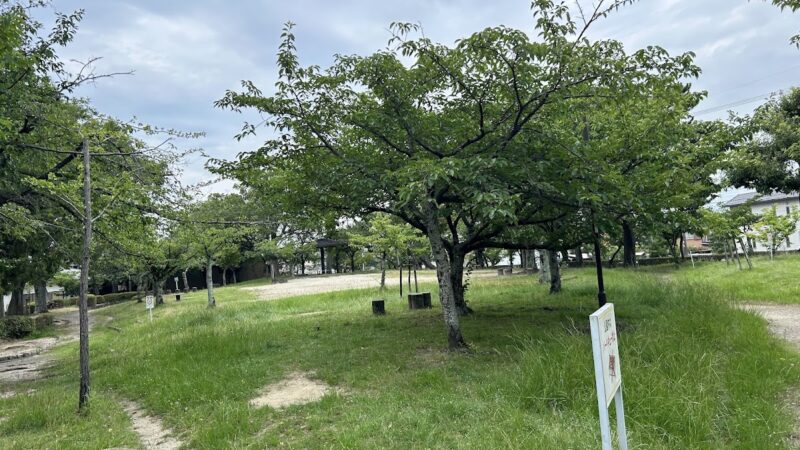
The current castle ruins are located at 577, Gozen, Sakurai, Asahi City, Chiba Prefecture, and other locations. Remains such as earthworks, trenches, and dry moats still exist, preserving the appearance of a medieval castle.
Overview
Basic Castle Information
Basic information about Sakurai Castle is as follows:
- Location: 577, Gozen, Sakurai, Asahi City, Chiba Prefecture, and other locations
- Former Province: Shimousa Province
- Classification/Structure: Hilltop Castle
- Builder: Higashi (Chiba) Taneyori
- Year of Construction: Early Kamakura period (early 13th century)
- Main Renovator: Matsudaira Ietada
- Main Lords: Higashi clan, Kamidai clan, Matsudaira Ietada
- Remains: Enclosures, earthworks, moats, dry moats, wells
- Elevation: Approximately 40m
- Year of Abandonment: Around Bunroku 4 (1595)
Sakurai Castle was a hilltop castle built on a plateau about 40m above sea level, strategically located overlooking the surrounding lowlands. The Azuma clan used Sakurai Castle as a base to govern the 33 villages of Azuma-sho, making it an important military stronghold in eastern Shimosa Province.
History of Sakurai Castle
Kamakura Period: Establishment of the Azuma Clan and Construction of Sakurai Castle
The history of Sakurai Castle dates back to the early Kamakura period. Chiba Tsunetane, who distinguished himself greatly during Minamoto no Yoritomo’s uprising, was granted a vast territory in Shimosa Province as a reward. Tsunetane’s sixth son, Azuma Taneyori, came to rule the 33 villages of Azuma-sho, and is believed to have built Sakurai Castle in this area.
Azuma Taneyori became the ancestor of the Azuma clan, establishing their rule over Azuma-sho with Sakurai Castle as their base. The Azuma clan, as a branch of the Chiba clan, served the Kamakura Shogunate and ruled this land for generations.
According to the Chiba family genealogy, later, Kamishiro Echigo-no-kami moved to Mikado Castle in Shimosa Province, Kominami, Higashi-no-sho Town, and Higashi Taneyori took over Sakurai Castle. During this period, Sakurai Castle functioned as the political and military center of the Higashi clan.
Muromachi to Sengoku Periods: The Era of the Higashi and Kamishiro Clans
Entering the Muromachi period, Sakurai Castle became the domain of the Kamishiro clan, a branch of the Higashi clan. The Kamishiro clan also descended from the Higashi clan, and Sakurai Castle came to be known as Kamishiro Castle.
During the Sengoku period, Shimosa Province became a stage for fierce battles. In particular, the Boso Peninsula saw intense conflict between the Satomi clan of Awa Province and various forces in Shimosa Province.
Eiroku 8 (1565): Attack and Fall of Sakurai Castle by Satomi Yoshihiro
The most significant event in the history of Sakurai Castle occurred in Eiroku 8 (1565). In this year, Satomi Yoshihiro, a Sengoku daimyo of Awa Province, invaded Shimōsa Province together with Masaki Tokitada of Katsuura Castle and attacked Sakurai Castle.
The castle lord at the time was Kamonnosuke Tanemasa. Sakurai Castle, subjected to a fierce attack by the Satomi forces, finally fell. This battle marked the end of the long-standing rule of the Tō and Kamonnosuke clans over Sakurai Castle.
This battle was part of the Satomi clan’s expansion of power on the Bōsō Peninsula and significantly altered the power dynamics in eastern Shimōsa Province.
Bunroku 1 (1592): Reconstruction by Matsudaira Ietada
After its fall, Sakurai Castle is thought to have fallen into disrepair for a period, but a major turning point occurred in Bunroku 1 (1592). Matsudaira Ietada, a senior retainer of the Tokugawa clan, rebuilt Sakurai Castle and made it his residence.
Matsudaira Ietada was a highly trusted retainer of Tokugawa Ieyasu and a hereditary minister since the Mikawa period. Ietada renovated Sakurai Castle, giving it the functionality of a modern castle. It is believed that these renovations transformed Sakurai Castle from a Sengoku period castle to a modern one.
Around 1595 (Bunroku 4): Abandonment
However, Matsudaira Ietada’s time at Sakurai Castle was short-lived. He was appointed to Omigawa Castle (Katori City, Chiba Prefecture) and left Sakurai Castle. As a result, Sakurai Castle was abandoned after only about three years.
In the Edo period, Sakurai Castle disappeared from the stage of history, and the castle site became farmland and forest. However, remnants such as earthworks and moats remain, conveying the appearance of a medieval castle to this day.
Structure
Layout and Enclosure Arrangement
Sakurai Castle is a flatland castle built on a plateau approximately 40 meters above sea level, characterized by its layout that skillfully utilizes the natural terrain. The castle consists of multiple enclosures (kuruwa), with a defensive arrangement centered around the main enclosure.
It is believed that the main enclosure was located in the center of the castle, surrounded by the second and third enclosures. Each enclosure was demarcated by earthworks, and defensive capabilities were enhanced by moats and dry moats.
Earthworks surrounded the edge of the plateau, creating a structure that prevented enemy intrusion. It is presumed that stronger defensive structures were placed in directions particularly vulnerable to attack.
Earthworks and Moats
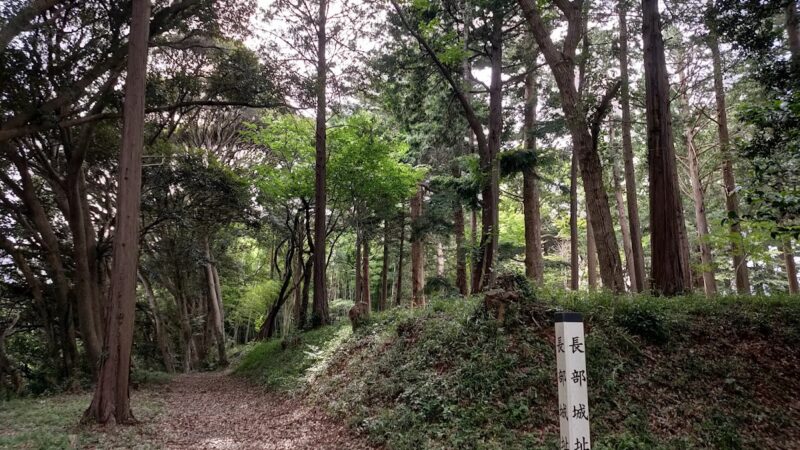
The most prominent remnants of Sakurai Castle are the earthworks and moats. Earthen ramparts were built around the castle, and some parts remain in good condition today. The height of the ramparts varies depending on the location, but in some places they reach several meters high.
The moats were constructed to separate the baileys, forming a defensive line by artificially digging through the plateau. These moats not only physically prevented enemy intrusion but also visually defined the defensive boundary.
Dry Moats
Sakurai Castle also had dry moats. These dry moats, without water, were dug horizontally along the slope of the plateau. These moats prevented enemies from climbing the slope and made lateral movement difficult.
The depth and width of the dry moats varied depending on the location, but it is believed that they reached several meters in depth in some places. Some of the dry moats can still be seen today as undulations in the terrain.
Well Remains
A well was also located within the castle grounds. Securing a water supply during a siege was crucial for a castle’s survival, and the presence of wells greatly influenced its longevity. Parts of the well remains at Sakurai Castle can still be seen today, making them important historical sites that reveal the castle’s function at the time.
Renovations by Matsudaira Ietada
When Matsudaira Ietada rebuilt Sakurai Castle in 1592 (Bunroku 1), it is believed that modern elements were added to the Sengoku period castle. While the specific details of the renovations are unclear due to limited historical records, it is possible that improvements were made to habitability and defensive facilities were strengthened.
However, since the castle was abandoned after only three years, it is presumed that large-scale construction of stone walls or a keep was not undertaken.
Highlights of Sakurai Castle
Existing Remains
When visiting the Sakurai Castle ruins, you can see the following remains:
Earthworks: The earthworks surrounding the castle are the best-preserved remains. The earthworks around the main enclosure, in particular, are high, giving a real sense of the scale of the defensive facilities at the time. Walking along the earthen ramparts makes it easier to understand the castle’s layout and the surrounding terrain.
Moat: The moats separating the baileys still retain deep sections. Descending to the bottom of the moat allows you to experience its depth and high defensive strength.
Dry Moat: Some dry moats extending horizontally can also be seen. These dry moats, dug along the slopes, demonstrate a clever use of the terrain for defense.
Bailey: Multiple baileys are arranged in a stepped pattern, and their flat surfaces can be observed. The size and arrangement of the baileys allow you to infer the castle’s scale and function.
Well Remains: The remains of wells within the castle indicate the importance of securing a water source during sieges.
Estimated Time and Attire
For a thorough visit to Sakurai Castle Ruins, allow approximately 1-2 hours. If you only want to see the main remains, 30 minutes to 1 hour is sufficient.
Clothing Guidelines:
- Comfortable clothing (long sleeves and long pants recommended)
- Comfortable walking shoes (sneakers or trekking shoes)
- Insect repellent, hat, and drinks in summer
- Warm clothing in winter
The castle ruins include areas of forest and grassland, so be careful of vegetation and insects. Especially in summer, wearing long sleeves and long pants is recommended to protect against mosquitoes and ticks.
Photography Tips
The following points are recommended for photography at Sakurai Castle Ruins:
- Earthwork Height: Photographed from an angle that clearly shows the height and shape of the earthwork.
- Moat Depth: Photographed from an angle looking up from the bottom of the moat to convey the impressive defensive structure.
- Enclosure Expansion: A panoramic view including the flat surface of the enclosure and the surrounding earthwork.
- Surrounding Scenery: View from the plateau (demonstrating the strategic location of the castle).
Access
Access by Public Transportation
The following routes are convenient for visiting Sakurai Castle Ruins by public transportation.
By Train:
- Get off at Asahi Station on the JR Sobu Main Line.
- Take a local bus or taxi from Asahi Station.
- Get off at the Sakurai bus stop and walk for approximately 10-15 minutes.
By Bus:
- Take a Chiba Kotsu bus (bound for Omigawa) from Asahi Station.
- Get off at the Sakurai bus stop.
- Walk approximately 10-15 minutes from the bus stop to the castle ruins.
Since bus services are limited, it is recommended to check the timetable in advance.
Access by Car
The following route is convenient if you are visiting by car.
Using Expressways:
- Approximately 30 minutes from the Higashi-Kanto Expressway “Daiei IC”
- Approximately 25 minutes from the Choshi Connector Road “Yokoshibahikari IC”
Using Local Roads:
- Approximately 15 minutes from Asahi city center via National Route 126 and prefectural roads
Setting Your Car Navigation System:
- Address: Near 577, Sakurai, Asahi City, Chiba Prefecture
- Or search for “Sakurai Castle Ruins”
Parking: There is no dedicated parking lot for the castle ruins, but there may be parking spaces on the roadside in the surrounding area. However, please avoid parking on private property or farm roads and be considerate of the neighbors.
Distance from Major Surrounding Cities
- From central Tokyo: Approximately 80km (approximately 1 hour 30 minutes to 2 hours by car)
- From Chiba City: Approximately 50km (approximately 1 hour by car)
- From Narita City: Approximately 30km (approximately 40 minutes by car)
- From Choshi City: Approximately 20km (approximately 30 minutes by car)
Information on Nearby Spots to Sakurai Castle
When visiting Sakurai Castle ruins, you can also visit nearby historical sites and tourist attractions.
Nearby Castle Ruins
Sugayama Castle: Another medieval castle located in Asahi City, and like Sakurai Castle, it is associated with the Higashi clan. It is approximately 15 minutes by car from Sakurai Castle.
Moriyama Castle: A castle located in Moriyama, Asahi City, believed to have been built by a member of the Higashi clan. Visiting it together with Sakurai Castle will give you a real sense of the Higashi clan’s sphere of influence.
Mikado Castle: A castle ruin located in Kominami, Tono-cho, believed to be the castle where the Kamidai Echigo-no-kami moved to. It has deep ties to the history of Sakurai Castle.
Omigawa Castle: A castle located in Katori City, which Matsudaira Ietada was granted after Sakurai Castle. It is about a 30-minute drive from Sakurai Castle.
Asahi City Tourist Spots
Iioka Fishing Port: A fishing port where you can enjoy fresh seafood, especially sardines and horse mackerel.
Gyobu Cape Observation Deck: An observation facility offering panoramic views of Kujukuri Beach and the Pacific Ocean.
Asahi City Local History Museum: A facility where you can learn about the history and culture of Asahi City, and there is a possibility that materials related to Sakurai Castle are on display.
Gourmet Information
Asahi City faces the sea, so it is rich in fresh seafood. Dishes made with seafood caught locally, especially sardine dishes, a specialty of Kujukuri Beach, are highly recommended.
Points to Note When Visiting Sakurai Castle
When visiting the Sakurai Castle ruins, please note the following:
Respect for Private Property: Part of the castle ruins may be private property. Do not enter areas marked as “No Entry.”
Safety Management: Some parts of the earthworks and moats are prone to collapse, so walk carefully. They are especially slippery during and after rain.
Respect for Nature: The castle ruins are a valuable historical heritage site. Please be mindful not to damage the remains or litter.
Seasonal Environmental Changes: In summer, vegetation grows thickly, making the remains difficult to see. Spring and autumn are the best seasons for visiting.
Heatstroke and Insect Bites Prevention: Especially in summer, remember to stay hydrated to prevent heatstroke. Carrying insect repellent is also recommended. ## Summary
Sakurai Castle (Asahi City, Chiba Prefecture) is a valuable castle site with a history spanning approximately 400 years, from the Kamakura period to the early Edo period. Built by Higashi Taneyori, the sixth son of Chiba Tsunetane, it served as the base of the Higashi and Kamidai clans. During the Sengoku period, it fell to an attack by Satomi Yoshihiro, and after being rebuilt by Matsudaira Ietada, it was abandoned, resulting in a turbulent history.
The remaining earthworks, moats, dry moats, and wells are valuable historical sites that convey the structure of a medieval castle. Visiting the castle ruins allows you to experience firsthand the power struggles on the Boso Peninsula during the Sengoku period and the history of the Higashi clan.
Access from Asahi Station is relatively good, and other castle ruins related to the Higashi clan, such as Sugayama Castle and Moriyama Castle, are scattered throughout the surrounding area. Why not start your historical exploration of the medieval history of the Boso Peninsula from Sakurai Castle?
When visiting the castle ruins, please wear comfortable clothing and walking shoes, and remember to be considerate of nature and private property so that you can safely enjoy the romance of history.