Teradai Castle (Narita City, Chiba Prefecture) Complete Guide: From History, Remains, and Access to Visiting Points
Teradai Castle is a medieval hilltop castle located in Teradai, Narita City, Chiba Prefecture. Situated east of Naritasan Shinshoji Temple, it was a historic castle that served as the residence of the Baba clan, a branch of the Chiba clan, for generations. Currently, part of the site has been developed into a castle park, and remains such as earthworks and dry moats are well-preserved. This article provides comprehensive information useful for castle enthusiasts and history buffs, covering the detailed history of Teradai Castle, the characteristics of the existing remains, access methods, and visiting points.
Basic Information on Teradai Castle
Location and Geographical Characteristics
Location: 369, Hōme, Teradai, Narita City, Chiba Prefecture, and other locations
Former Province: Shimōsa Province
Classification/Structure: Hilltop Castle
Builder: Baba Clan
Main Lords: Baba Clan, Kaiho Clan
Teradai Castle is built on a plateau approximately 1.5 km east of Naritasan Shinshōji Temple, in the eastern part of Narita city. It is a hilltop castle utilizing a plateau approximately 30m above sea level, and is a natural stronghold surrounded by lowlands. This geographical condition played an important role as a base for the Chiba clan’s power in Shimōsa Province.
Scale and Structure of the Castle
Teradai Castle is a castle with a multi-bailey layout, consisting of multiple baileys (enclosures). The following are the main remains that have been identified:
- Kuruwa: Multiple enclosures arranged around the main enclosure
- Koshikuruwa: Defensive structures surrounding the main enclosure
- Dorui: Earthen defensive walls built on the edges of the enclosures
- Yokobori (Karabori): Defensive moats separating the enclosures
- Dohbashi: Earthen walkways for crossing the moats
- Koguchi: An important defensive point serving as an entrance to the castle
- Sotomasugata: A square-shaped structure that reinforces the defenses of the Koguchi
In particular, the area where the watchtower once stood has now been developed into a castle ruins park, making it easy for visitors to observe the remains.
History of Teradai Castle
Construction and the Baba Clan Era
The exact construction date of Teradai Castle is unclear, but it is believed to have functioned as the residence of the Baba clan in the early Sengoku period. The Baba clan were a branch (vassal) of the Chiba clan and played a key role in the Chiba clan’s important network of branch castles in Shimōsa Province.
The Chiba clan was a powerful samurai group that controlled the northern part of the Bōsō Peninsula from the late Heian period, and their system of rule was maintained by deploying family members and vassals throughout the region. The Baba clan was a particularly important branch, entrusted with the defense and governance of the area around Narita.
Turmoil of the Sengoku Period
With the arrival of the Sengoku period, Shimōsa Province became a region where the powers of the Hōjō, Satomi, and Chiba clans were intricately intertwined. Teradai Castle, as a branch castle of the Chiba clan, is thought to have played a crucial role in these power struggles.
Especially in the latter half of the 16th century, the Chiba clan came under the influence of the Hōjō clan, and Teradai Castle was incorporated into their system of rule. During this period, the castle lord is believed to have been Baba Ise-no-kami Katsumasa.
The Siege of Odawara and the Fall of Teradai Castle in 1590
The most important turning point in the history of Teradai Castle was Toyotomi Hideyoshi’s siege of Odawara in 1590. At this time, the lord of Teradai Castle was Kaiho Hideuji (also known as Kaiho Kai-no-kami Miyoshi).
During the Siege of Odawara, many castles in the Kanto region that had sided with the Hojo clan were successively attacked by the Toyotomi forces. Teradai Castle was no exception, and it is believed to have fallen after being attacked by the Toyotomi army. This battle marked the end of the Baba clan’s era, and effectively brought an end to the history of Teradai Castle as a medieval castle.
After the Edo Period
After the Siege of Odawara, the Kanto region came under the control of Tokugawa Ieyasu. According to one theory, Kaiho Kai-no-kami Miyoshi was granted this castle by Tokugawa Ieyasu, but it is believed that Teradai Castle lost its function as a military base during the Edo period and was abandoned. Later, the castle site was used for farmland and residential areas, and some of the remains were lost, but the main earthworks and dry moats remain to this day.
Highlights and Remains of Teradai Castle
Castle Site Park Area
Currently, the site where the watchtower once stood has been developed into a castle site park. This is the area where the remains of Teradai Castle are easiest to observe, and the following are some of the highlights:
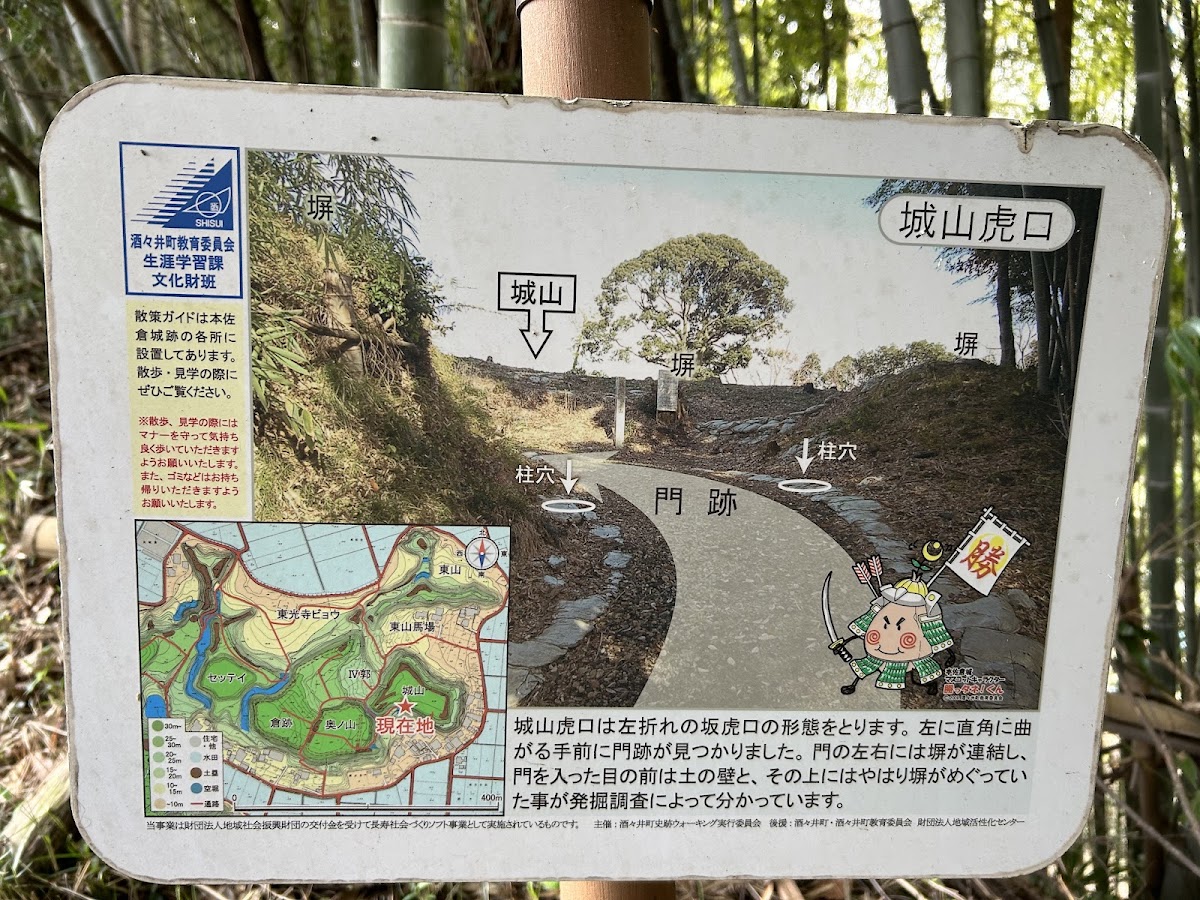
Information Board: Near the entrance to the castle site park, there is an information board explaining the history and structure of Teradai Castle, allowing even first-time visitors to understand the castle’s overview.
Earthworks: Well-preserved earthworks remain within the park. Their height varies depending on the location, but the highest part is over 2 meters, giving a sense of the scale of the defensive facilities at the time.
Topography of the Enclosure: The area developed as a park is one of the main enclosures, and a flat terrain spreads out. It is clear that this flat surface was artificially created.
Dry Moats and Earthen Bridges
One of the greatest highlights of Teradai Castle is its well-preserved dry moats. The horizontal moats, which demarcate the baileys, are approximately 3-4 meters deep and 5-6 meters wide, demonstrating the advanced castle-building techniques of the time.
In some places, it’s possible to walk along the bottom of the dry moats, and the height of the earthen ramparts viewed from the bottom is impressive. Earthen bridges crossing the moats can also be found in some areas, making them important remains for understanding the flow of movement within the castle.
Entrance Gates and Masugata (Square Enclosures)
The remains of the entrance gates (koguchi) to the castle can also be seen. The structure of the outer masugata (square enclosure) in particular is a defensive facility designed to prevent enemy intrusion, offering a glimpse into the castle-building techniques of the time. The earthen ramparts around the entrance gates are built higher than in other areas, highlighting the defensive importance of this location.
Overgrown Areas
Unfortunately, areas outside the castle park are heavily overgrown, making exploration difficult. However, there is a high possibility that ruins remain in these areas, and future investigations and restoration are expected.
Some castle enthusiasts attempt to explore the overgrown areas, but safety precautions are necessary. When visiting, we recommend wearing long sleeves and long pants, and taking insect repellent measures.
Access Information
Access by Public Transportation
Nearest Station: JR Narita Line – Narita Station, or Keisei Electric Railway – Keisei Narita Station
By Bus:
- Take the JR Bus bound for “Teradai” from the east exit of Narita Station (approx. 10 minutes)
- Get off at the “Teradai” bus stop and walk for about 5 minutes
Walking:
- Approximately 25-30 minutes on foot from Narita Station
- A route via Naritasan Shinshoji Temple, allowing for a leisurely stroll, is also recommended.
Access by Car
Higashi-Kanto Expressway:
- Approximately 10 minutes from Narita IC
- Take National Route 51 towards the city center
Parking:
- There is no dedicated parking lot around the castle ruins park.
- There may be some street parking spaces around the nearby JA Narita, but please avoid parking on private property or farm roads.
- It is also possible to use the parking lot at Naritasan Shinshoji Temple and visit on foot.
Entrance to the Castle
The entrance to Teradai Castle is located just south of the JA Narita City Teradai Branch. It’s relatively easy to find as there are signs. A well-maintained path leads from the entrance to the castle ruins park, making it easy to walk.
Points to Note and Precautions
Estimated Visit Time
If you only visit the castle ruins park area, you can observe the main remains in about 20-30 minutes. If you include photography and detailed observation, allow about 40-50 minutes.
If you plan to explore the overgrown areas, it is recommended to allocate at least one hour.
Best Time to Visit
Spring (March-May): The season of fresh greenery and pleasant weather makes it ideal for strolling around the castle ruins. However, during Golden Week, surrounding roads may be congested with visitors to Naritasan Shinshoji Temple.
Autumn (October-November): The season of autumn leaves offers beautiful views from the plateau. The temperature is comfortable, making it suitable for long walks.
Summer (June-August): Areas with dense undergrowth become teeming with mosquitoes and other insects, so insect repellent is essential. Heatstroke should also be avoided.
Winter (December-February): While the fallen leaves make observing the ruins easier, warm clothing is necessary.
Clothing and Items to Bring
- Clothing: Long-sleeved shirt and long pants, comfortable walking shoes (trekking shoes or sneakers)
- Items to Bring: Insect repellent, drinking water, towel, camera, castle-related materials
- In Rainy Weather: The earthen remains become slippery, so it’s best to avoid visiting in the rain.
Photography Tips
The following points are recommended when photographing Teradai Castle:
- Cross-section of the earthwork: Photograph from an angle that clearly shows the height and thickness.
- From the bottom of the dry moat: The angle of looking up at the earthwork from the bottom of the moat is impressive.
- Information board and remains: Photograph the information board and remains together for documentation purposes.
- Panoramic view of the bailey: Photographing the flat area of the castle park with a wide-angle lens conveys the scale of the bailey.
Nearby Tourist Spots
Naritasan Shinshoji Temple
A major Shingon Buddhist temple located approximately 1.5 km west of Teradai Castle. This temple boasts one of the highest numbers of visitors nationwide during the New Year’s pilgrimage, and its grounds contain numerous buildings designated as Important Cultural Properties. Visiting it in conjunction with a visit to Teradai Castle is highly recommended.
Hon-Sakura Castle
Located approximately 8km northwest of Teradai Castle, this was the base of the Chiba clan. Designated a National Historic Site, it is an essential castle for understanding the history of the Chiba clan. The “Chiba Clan Castle Tour,” which includes both Teradai Castle and Hon-Sakura Castle, is a popular route for castle enthusiasts.
Narita City Sakura-no-Yama Park
This park, adjacent to Narita Airport, offers close-up views of aircraft taking off and landing. Located about 15 minutes by car from Teradai Castle, it’s an ideal spot to refresh after a historical walk.
Narita City Shimosa Historical and Folk Museum
This museum allows visitors to learn about the history and folklore of Narita City. It also exhibits materials related to castles within Narita City, including Teradai Castle, making it useful for pre-visit preparation and post-visit review.
Teradai Castle and the Chiba Clan’s Castle Network
Teradai Castle functioned as one of the branch castles within the Chiba clan’s vast territory. Understanding the Chiba clan’s castle network clarifies Teradai Castle’s historical position.
Major Bases of the Chiba Clan
- Hon-Sakura Castle: The Chiba clan’s headquarters (Sakura City)
- Inohana Castle: An early base of the Chiba clan (Chiba City)
- Inohana Castle: Sometimes identified with Inohana Castle
- Usui Castle: An important branch castle of the Chiba clan (Sakura City)
Teradai Castle as a Branch Castle
Teradai Castle was positioned as a branch castle responsible for the defense of these major bases and the area around Narita. It is particularly thought to have played a role in defending Naritasan Shinshoji Temple, a religiously and economically important location.
The fact that the Baba clan defended this castle for generations is evidence of the Chiba clan’s emphasis on governing this region.
Investigation and Research of Teradai Castle
Past Investigations
Regarding Teradai Castle, several surveys and field investigations have been conducted in the past as part of the investigation of medieval castles in Chiba Prefecture. These investigations have revealed the general layout and the state of the remains.
Future Challenges
The following challenges remain in the research of Teradai Castle:
- Identification of the Construction Date: Due to a lack of historical documents, the exact construction date is unknown.
- Changes in Castle Lords: Details of the transition from the Baba clan to the Kaiho clan.
- Details of the Castle Structure: Detailed investigation of the overgrown areas.
- Attack and Defense During the Siege of Odawara: Specific details of the battle at the time of the castle’s fall.
Further documentary research and archaeological excavations are necessary to resolve these issues.
Visiting Guide for Castle Enthusiasts
Points for Recording Your Castle Visit
For those who enjoy visiting castles, Teradai Castle has the following characteristics:
Difficulty: Beginner to Intermediate
Visiting Time: 20-50 minutes
Condition of Remains: Good (earthworks, dry moats)
Overgrowth: Park area is maintained, other areas are overgrown
Recommendation: ★★★☆☆ (3.0/5.0)
Combinations with Other Castles
Full-Day Course:
- Morning: Hon-Sakura Castle (National Historic Site, 1.5-2 hours of visits)
- Afternoon: Teradai Castle (30 minutes to 1 hour of visits)
- If time permits: Usui Castle (1 hour of visits)
Half-Day Course:
- Teradai Castle (30 minutes to 1 hour of visits)
- Naritasan Shinshoji Temple (1-2 hours of worship and strolling)
Castle Notes (Points to Record)
When keeping a record of your castle visit, recording the following items will be helpful for later review:
- Date and time of visit and weather
- Location of the castle entrance and parking situation
- Confirmed remains (earthworks, dry moats, baileys, etc.)
- Condition of overgrown vegetation
- Number of photos taken and main photo locations
- Contents of information boards
- Duration of visit
- Relationship with surrounding castles
Books and Materials on Teradai Castle
For those who want to learn more about Teradai Castle, the following books and materials are helpful:
Recommended Books
- “Medieval Castles of Chiba Prefecture” (Chiba Castle Research Society)
A book that comprehensively introduces medieval castles in Chiba Prefecture. It also includes a section on Teradai Castle, with a layout map and explanation.
- “Comprehensive Guide to Japanese Castles, Volume 6: Chiba and Kanagawa” (Shin Jinbutsu Oraisha)
This is the Chiba Prefecture edition of a series that systematically compiles information on castles throughout Japan. Basic information about Teradai Castle is also included.
- “The Rise and Fall of the Chiba Clan” (Chiba Prefecture Local History Research Association)
This book details the history of the Chiba clan. It deepens understanding of the Chiba clan’s castle network, including Teradai Castle.
Online Resources
- Kojodan: A website that collects information on castles throughout Japan. Many visit records and photos of Teradai Castle have been posted.
- Nippon Castle Tour: A castle stamp rally app that utilizes location information. Basic information about Teradai Castle is also included.
- Shirobito: A specialized castle information website. Articles and photos of Teradai Castle can be viewed.
Summary: The Charm of Teradai Castle
Teradai Castle is a valuable historical site of a medieval castle located in Narita City, Chiba Prefecture. As a castle defended for generations by the Baba clan, a branch of the Chiba clan, it is an important historical site that speaks to the Chiba clan’s power in Shimosa Province.
Although Teradai Castle fell during the Siege of Odawara in 1590, ending its history as a medieval castle, the well-preserved earthworks and dry moats still convey the castle’s construction techniques and defensive philosophy.
The area developed as a castle park is easily accessible even for beginners, while the overgrown areas offer a challenging exploration for more experienced visitors, making it a castle that can be enjoyed by a wide range of castle enthusiasts.
Combining a visit to Teradai Castle with nearby tourist spots such as Naritasan Shinshoji Temple and Hon-Sakura Castle will allow for a more fulfilling historical walk. When planning a castle tour in Chiba Prefecture, be sure to add Teradai Castle to your list.
As part of a journey tracing the history of Shimosa Province and the footsteps of the Chiba clan, Teradai Castle quietly continues to tell its story.