Complete Guide to Ozeki Castle (Togane City, Chiba Prefecture): The Hatakeyama Clan’s Residence and the Tragedy of the Sengoku Period
Ozeki Castle, located in Ikoshima, Togane City, Chiba Prefecture, was a medieval castle that existed from the Kamakura period to the Sengoku period. Currently, it is the grounds of Ozeki Shrine, and most of its original remains have been lost. However, the history of the Hatakeyama clan and the turbulent Sengoku period etched into this land remain in the memory of the region. This article provides a detailed introduction to the history, structure, and current state of Ozeki Castle.
Historical Background of Ozeki Castle
The Hatakeyama Clan and the Construction of Ozeki Castle
Ozeki Castle was built by Hatakeyama Shigeyasu, a descendant of Hatakeyama Shigetada, a renowned general of the Kamakura period. Hatakeyama Shigetada was a powerful warrior of Musashi Province who served Minamoto no Yoritomo. He was known for his bravery and loyalty, but was destroyed in 1205 due to a conflict with the Hojo clan. However, the family scattered to various locations, and one branch settled in the Tōgane region of Shimōsa Province, making Ōzeki Castle its base.
The reason the Hatakeyama clan chose this location is thought to be because the Tōgane region was a strategic transportation hub on the Bōsō Peninsula and had high agricultural productivity. Ōzeki Castle was built on the plateau of Ikojima Island and functioned as a base for controlling the surrounding land.
Power Struggle in the Tōgane Region During the Sengoku Period
During the Sengoku period, various forces such as the Satomi, Chiba, and Sakai clans (based at Toke Castle) vied for supremacy on the Bōsō Peninsula. The Tōgane region was also caught in the midst of this conflict, and the Hatakeyama clan strived to maintain its own power.
In particular, the Sakai clan of Toke rapidly expanded their power during the Sengoku period and attempted to advance into the Tōgane region. The Sakai clan, with Tōgane Castle as their base, successively brought smaller castles and fortifications in the surrounding area under their control. During this process, conflict with the Hatakeyama clan became inevitable.
The Fall of Ozeki Castle and the Downfall of the Hatakeyama Clan
In December 1526 (Daiei 6), Sakai Takatoshi, lord of Togane Castle, finally attacked Ozeki Castle. While detailed records of the battle are not available, the outnumbered Hatakeyama clan attempted fierce resistance, but ultimately the castle fell.
After the castle’s fall, Lord Hatakeyama Shigeyasu fled to Jofuku-ji Temple in Kamitani (Kamitani, Togane City), where he committed suicide. This marked the end of the Hatakeyama clan, who had been rooted in this area since the Kamakura period, and Ozeki Castle was abandoned. This tragic ending is etched in local history as an event symbolizing the harsh fate of local powerful families during the Sengoku period.
Historical sites related to the Hatakeyama clan still remain at Jofuku-ji Temple, and memorial services are continued by the local people.
Structure and Scale of Ozeki Castle
Basic Structure of the Castle
Ozeki Castle was built as a typical medieval flatland castle. Located on the plateau of Ikojima Island, it is believed to have had a defensive structure that skillfully utilized the natural terrain.
It is presumed that multiple enclosures, separated by earthen ramparts and dry moats, were arranged around the main enclosure (honmaru). A characteristic of medieval castles is that earthen ramparts, rather than stone walls, were the primary defensive feature.
Ozeki Castle was built as a typical medieval castle. ### Characteristics of the Castle’s Layout
Although a detailed layout map does not remain, based on on-site surveys and descriptions in historical documents, it is believed to have had the following structure:
- Main Enclosure: The central area where the lord’s residence was located
- Second Enclosure: The area where the residences of retainers and barracks were located
- Outer Enclosure: Defensive facilities and storage facilities for supplies
- Dry Moat: Defensive facilities separating the enclosures
- Earthwork: Defensive walls surrounding each enclosure
Compared to other castles in the Togane region, Ozeki Castle was a medium-sized fortress, and it is presumed to have been of a size appropriate for the residence of a powerful local clan.
Surrounding Defensive Facilities
Several subsidiary castles and forts may have been located around Ozeki Castle. Numerous medieval castle sites have been confirmed within Togane City, including Inaridani Castle, Ichinofukuro Castle, and Horinouchi Castle, and some of these may have functioned as subsidiary castles of Ozeki Castle.
Such a network of subsidiary castles was a common system in castle defense during the Sengoku period, playing an important role in early warning in the event of an attack on the main castle and as a base for controlling the territory.
Current Status of Ozeki Castle Ruins
Current Status of Ozeki Shrine and Castle Ruins
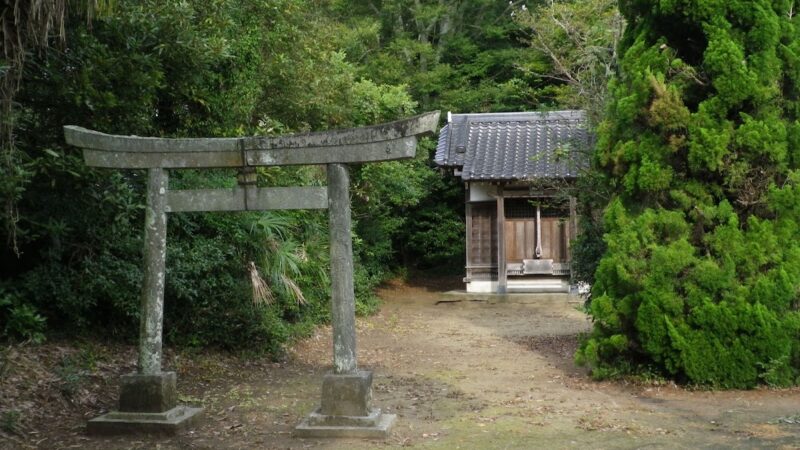
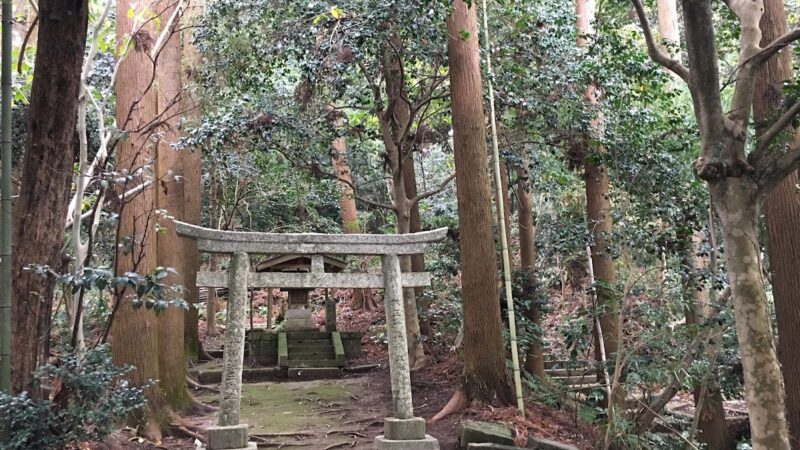
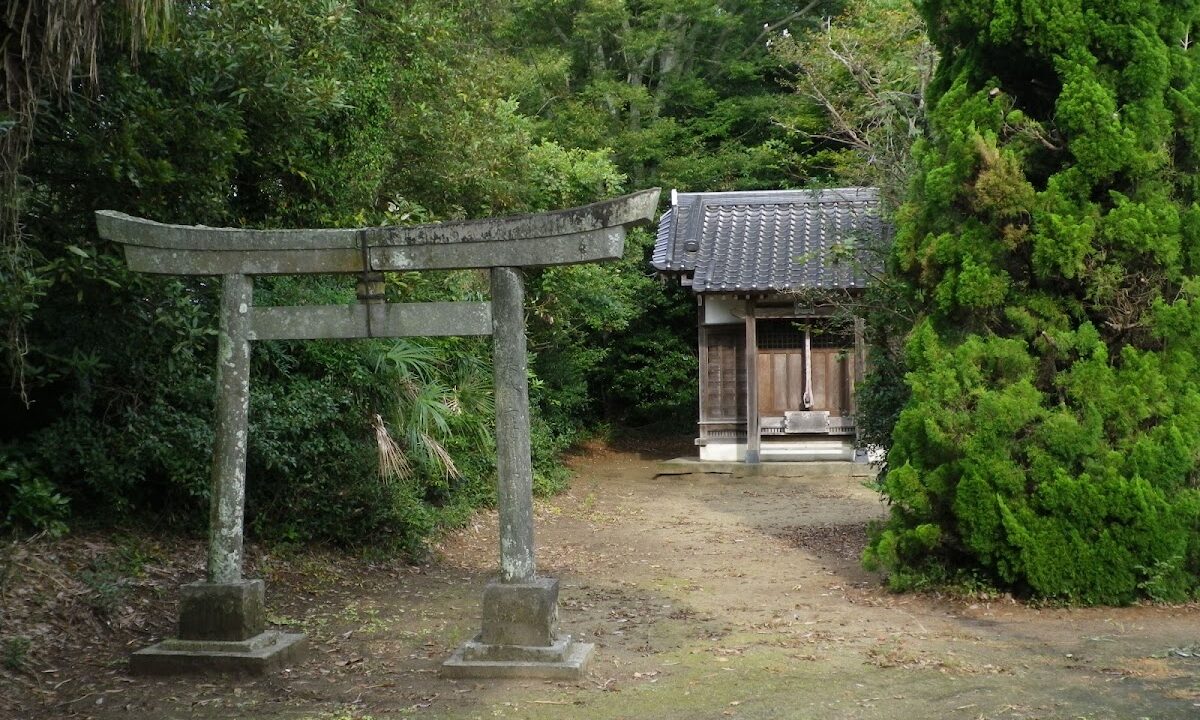
Currently, the Ozeki Castle ruins are located within the grounds of Ozeki Shrine. It is located at 80 Ikoshima, Togane City, Chiba Prefecture, and remains a beloved center of local faith.
Unfortunately, very little of the former castle structure remains. There are several reasons for this:
- Long-term agricultural use: After the castle was abandoned, the land was used for agriculture, altering the topography.
- Residential development: Housing construction since the modern era further altered the topography.
- Construction of the Togane-Kujukuri Expressway: The most significant impact came from this road construction project.
The Togane-Kujukuri Expressway and the Loss of Historical Remains
The construction of the Togane-Kujukuri Expressway (Togane Road) resulted in the loss of a significant portion of the Ozeki Castle ruins. The large-scale civil engineering work associated with the road construction completely erased the remaining micro-topography and traces of earthworks.
While this is a regrettable event from the perspective of cultural property preservation, it can also be seen as a symbolic example of the challenges modern society faces in balancing development and historical preservation. If records of the pre-construction excavation survey had survived, they would have been invaluable historical resources; however, the existence of detailed records needs to be confirmed.
Castle Ruins Monument and Information Board
Within the grounds of Ozeki Shrine, there is an information board about Ozeki Castle. This board concisely describes the castle’s history, the lineage of the Hatakeyama clan, and the circumstances of its fall, helping visitors understand the castle’s history.
The information on the board is based on local history research and literature such as “A Tour of Ancient Castle Ruins in Boso,” making it a valuable source of information for learning about the history of Ozeki Castle.
Access Information and Visitor Guide
Location and Basic Information
- Location: 80 Ikoshima, Togane City, Chiba Prefecture 283-0055
- Facility: Ozeki Shrine
- Visiting: The shrine grounds are freely accessible for worship.
- Parking: Limited parking available around the shrine.
- Estimated Visit Time: Approximately 15-20 minutes
Access by Public Transportation
Using the JR Togane Line:
- Transfer to the Togane Line at JR Sotobo Line “Oami Station”
- Get off at “Togane Station”
- Approximately 25-30 minutes on foot from Togane Station, or approximately 5 minutes by taxi.
Using the Bus:
There are bus routes from Togane Station, but the number of buses is limited, so it is recommended to check the timetable in advance. Walking is also required from the nearest bus stop.
Access by Car
- Togane Kujukuri Toll Road: Approximately 5 minutes from Togane IC
- National Route 126: From Togane city center towards Ikojima
- Ken-O Expressway: Approximately 20 minutes from Mobara Chonan IC via National Routes 128 and 126
When using a car navigation system, it is convenient to search for “Ozeki Shrine” or the address “80 Ikojima, Togane City”.
Nearby Attractions
When visiting Ozeki Castle Ruins, we recommend also visiting nearby historical sites:
Togane Castle Ruins: The base of the Sakai clan, and the residence of Sakai Takatoshi, who attacked Ozeki Castle. Located in Togane city center, the area around Hachitsuru Lake is now part of the castle ruins.
Kamitani Jofuku-ji Temple: The temple where Hatakeyama Shigeyasu committed suicide. It is approximately 10 minutes by car from Ozeki Castle Ruins.
Other Castle Sites in Togane City: Numerous medieval castle sites are scattered throughout the city, including Tama Castle, Ono Castle, and Kugadai Castle.
Hachitsuru Lake: A lake that was used as the outer moat of Togane Castle, it is now known as a famous cherry blossom viewing spot.
Medieval Castles in the Togane Area
Distribution of Castles in Togane City
Togane City is known as a treasure trove of medieval castles. According to the “Detailed Distribution Survey Report of Medieval and Early Modern Castle Sites in Chiba Prefecture,” more than 20 castle sites have been confirmed within the city. The main castles include:
- Togane Castle (Sakai clan’s base)
- Ozeki Castle (Hatakeyama clan’s residence)
- Tama Castle
- Ono Castle (Upper and Lower Castles)
- Kugadai Castle
- Sakagura Castle
- Shirosaka Castle
- Hirazodai Castle
- Horinouchi Mansion
- Ichinofukuro Mansion
- Inaridani Mansion
These castles reflect the complex political situation in the Togane region during the Sengoku period.
Structure of Regional Governance
In the Togane region during the Sengoku period, multiple forces vied for power, each based in small castles. Ozeki Castle was one such example; the Hatakeyama clan controlled the surrounding villages and maintained their power based on agricultural productivity.
However, with the rise of powerful Sengoku daimyo like the Sakai clan, these smaller forces were destined to either be unified or destroyed. The fall of Ozeki Castle is a prime example of this historical process.
The Position of the Boso Peninsula in Sengoku Period History
The Sengoku period history of the Boso Peninsula unfolded around the conflict between the Satomi and Hojo clans. The Togane region was located on the border between these two forces and frequently became a battlefield.
The Sakai clan initially expanded their power while maintaining ties with the Koga Kubo and the Chiba clan, but ultimately came under the control of the Hojo clan. The conquest of the Togane region, including Ozeki Castle, was a crucial step in the Sakai clan’s rise to regional dominance.
Archaeological Investigation of Ozeki Castle
Status of Excavation Surveys
Records of full-scale excavation surveys at the Ozeki Castle site are limited. While some investigation may have taken place before the construction of the Togane-Kujukuri Expressway, no detailed published reports have been confirmed.
This is a regrettable situation from the perspective of archaeological site preservation. If excavation surveys had been conducted, valuable information about the Hatakeyama clan’s life and the castle’s function could have been obtained from the castle’s structure, building layout, and excavated artifacts.
Information from Surface Observations
From on-site topographical observations, it may be possible to discern faint traces of the castle. Experienced castle researchers may be able to estimate the locations of former earthworks and moats from subtle differences in elevation and unnatural changes in the terrain.
Careful observation of the grounds of Ozeki Shrine and its surroundings may allow one to perceive remnants of the castle’s topography.
Reconstruction from Documentary Materials
With limited archaeological evidence, clues to the appearance of Ozeki Castle must primarily rely on documentary materials. Castle research books such as “A Tour of Ancient Castle Sites in Boso” and “The System of Japanese Castles” contain descriptions based on local traditions and ancient documents.
Furthermore, local traditions collected by the Togane City Local History Research Society and others are important sources of information for understanding the castle’s history.
Significance of Visiting Ozeki Castle
As a Place for Historical Learning
At first glance, the Ozeki Castle site may seem to have little value because there are almost no visible remains. However, this place holds significant historical importance.
Ozeki Castle is a valuable resource for learning about the fate of local powerful families during the Sengoku period, the structure of medieval castles, and the transformation of local communities. By reading the information boards and observing the surrounding terrain, one can imagine the lives of the people and the battles they fought.
Passing on Local Memory
The history of Ozeki Castle is an important part of Togane City’s regional identity. The tragic end of the Hatakeyama clan has been passed down through generations of local people and is still remembered today in the form of faith at Ozeki Shrine.
Visiting the castle ruins provides an opportunity to connect with this local history and memory. Especially now, with so much lost due to modern development, cherishing the remaining places and learning their history is of great significance.
Contribution to Castle Research
Countless small-scale medieval castles like Ozeki Castle existed throughout Japan. However, many were lost during the process of modernization, and detailed records are scarce.
Carefully visiting, documenting, and researching each castle ruin is crucial for understanding Japanese medieval history. Ozeki Castle, as a piece of the larger puzzle of the Sengoku period history of Boso, also has value as a subject of study.
Summary: The Historical Value of Ozeki Castle
Ozeki Castle, built by a descendant of Hatakeyama Shigetada, a famous general of the Kamakura period, and as the tragic site of its fall during a conflict with the Sakai clan in the Sengoku period, leaves an important mark on the history of Togane City, Chiba Prefecture.
Although most of the castle’s remains have been lost, it has become a place cherished by local people as Ozeki Shrine, and its history is still passed down through information boards and local legends. It is regrettable that much was lost due to the construction of the Togane-Kujukuri Expressway, but by visiting the remaining sites, one can feel the history of the lives and battles of local powerful families during the Sengoku period.
Besides Ozeki Castle, there are many other medieval castle ruins in Togane City, and visiting these can deepen one’s understanding of the Sengoku period history of Boso. Visiting Ozeki Castle ruins in conjunction with Higashigane Castle and Kamitani Jofuku-ji Temple will allow you to understand the historical drama of the conflict between the Hatakeyama and Sakai clans in a more comprehensive way.
Visiting castle ruins is not merely sightseeing; it is an intellectual activity that allows you to connect with the history and culture of the region and reflect on the lives of our ancestors. We hope that your visit to Ozeki Castle ruins will be a meaningful opportunity for you to learn about history.