Sagamidai Castle (Matsudo City, Chiba Prefecture): A Thorough Explanation of the Legendary Castle Site that Was the Stage of the Battle of Kōnodai
In the heart of Matsudo City, Chiba Prefecture, about an 8-minute walk from the current Matsudo Station East Exit, there once stood an important castle called Sagamidai Castle. This castle, which functioned as a strategic point in Shimōsa Province from the Kamakura period to the Sengoku period, is known for its significant role in Japanese history, even though very few remains today.
Basic Information on Sagamidai Castle
Common Names and Alternate Names
Sagamidai Castle is also known by the alternative name Iwase Castle. This name originates from the castle’s location in the Iwase district of Matsudo City. The place name “Sagamidai” is widely used locally, and remnants of the castle can still be seen in names such as Sagamidai Park and Sagamidai Elementary School.
Location and Former Province
Location: Sagamidai, Mukaiyama, Tsukada, Hanareyama, Tono, Iwase, Matsudo City, Chiba Prefecture
Former Province: Shimosa Province
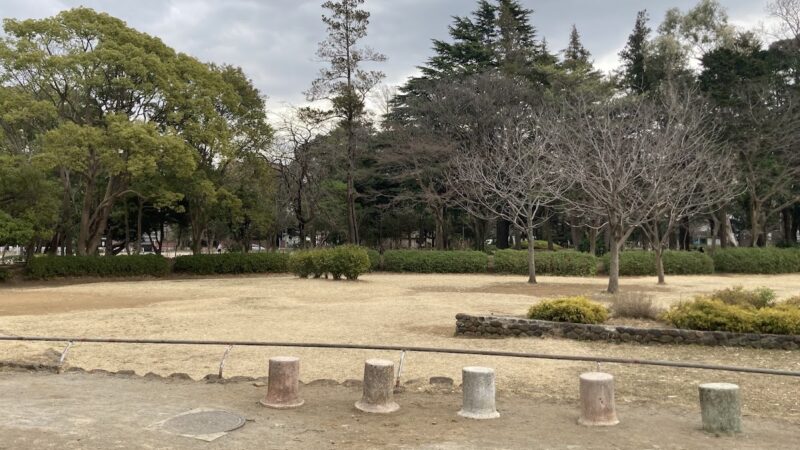
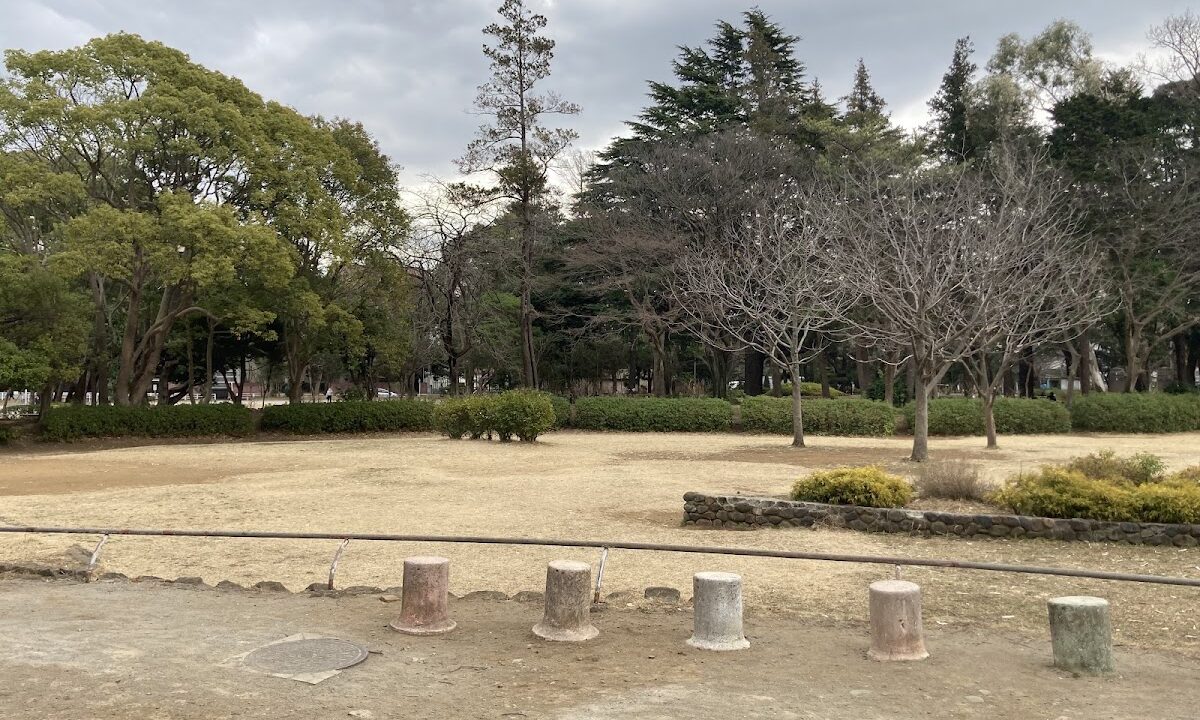
The plateau known as Sagamidai is located on a plateau 25-26 meters above sea level on the left bank of the Edogawa River. This location was ideal for monitoring water transport on the Edogawa River and functioning as a defensive base for Shimosa Province. The area where Matsudo Central Park, Sagamidai Park, Chiba District Legal Affairs Bureau, Matsudo District Court, Shotoku University, and Matsudo Municipal Sagamidai Elementary School now stand is thought to be the former castle grounds.
Classification and Structure
Classification: Hilltop Castle
Keep Structure: None (As it is a medieval castle, there is no keep)
Sagamidai Castle was built as a hilltop castle, taking advantage of the plateau’s topography. A Hirayama castle is a castle built on a hill or plateau in a flat area. While not as steep as a Yamashiro (mountain castle), it is characterized by a structure that offers superior defense compared to a Hirajo (flatland castle).
Builder and Year of Construction
Builder: Hojo Nagatoki
Year of Construction: Kencho 1 (1249)
Sagamidai Castle is believed to have been built in Kencho 1 (1249), during the mid-Kamakura period, by Hojo Nagatoki. Hojo Nagatoki was a powerful retainer of the Kamakura Shogunate and, as a member of the Hojo clan, held influence in Shimosa Province. This period was the height of the Kamakura Shogunate, and bases of retainers were established throughout the Kanto region.
History of Sagamidai Castle
From the Kamakura Period to the Muromachi Period
After being built by the Hojo clan, Sagamidai Castle continued to exist as an important base in Shimosa Province even after the fall of the Kamakura Shogunate. During the Muromachi period, the Haga clan is recorded as the castle lord. The Haga clan was a samurai family based in Shimotsuke Province (present-day Tochigi Prefecture) and had expanded their influence throughout the Kanto region.
At this time, Sagamidai Castle, located on the border between Shimosa and Musashi Provinces, is thought to have been a strategically important point deeply involved in the political situation of Kanto. While historical records are limited regarding the castle’s size and specific structure, it is presumed to have been a vast fortress encompassing the entire plateau.
The Sengoku Period and the Battle of Kōnodai
The most important event in which Sagamidai Castle made its mark in history is the First Battle of Kōnodai.
In 1538 (Tenbun 7), Ashikaga Yoshiaki, the Oyumi Shogun, clashed with Ashikaga Haruuji, the Koga Shogun, and Hojo Ujitsuna, engaging in fierce fighting around Kōnodai in Shimosa Province (present-day Kōnodai, Ichikawa City). In this battle, Sagamidai Castle is believed to have functioned as one of Ashikaga Yoshiaki’s important strongholds.
The battle ended in victory for the Hojo clan, and Ashikaga Yoshiaki was killed. This battle effectively collapsed the power of the Oyumi Shogunate, establishing the Hojo clan’s hegemony in the Kanto region. It is believed that Sagamidai Castle also came under Hojo influence after this battle.
Subsequently, throughout the Sengoku period, Sagamidai Castle was ruled by various clans, including the Nitta and Takagi clans, and continued to function as an important military base in Shimosa Province.
Abandonment and the Edo Period and Beyond
Year of Abandonment: Details unknown (estimated to be from the late Sengoku period to the early Edo period)
There are no clear records of when Sagamidai Castle was abandoned. At the end of the Sengoku period, after the Odawara Hojo clan was destroyed by Toyotomi Hideyoshi and Tokugawa Ieyasu entered the Kanto region, many medieval castles ceased to function and were abandoned. It is believed that Sagamidai Castle also lost its military function during this period.
During the Edo period, this area became an agricultural region, and the castle’s remains gradually disappeared. ## Changes and Disappearance of Remains Since the Modern Era
Meiji Era: Establishment of Matsudo Racecourse
In the Meiji era, the Matsudo Racecourse was established on the Sagamidai plateau. The construction of the racecourse altered the terrain, and it is believed that many of the castle’s remains were lost during this period.
Taisho Era: Construction of the Army Engineering School
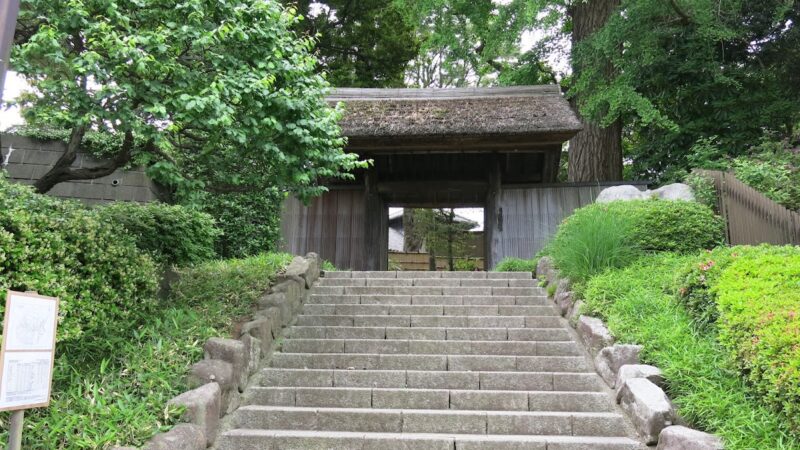
During the Taisho era, the Army Engineering School was established on this site. The construction of military facilities led to extensive reshaping of the entire plateau, and the castle remains almost completely disappeared. Currently, the main gateposts and guardhouse (building where sentries stood) from the Engineering School era remain at the southern entrance to Sagamidai Park, and these are preserved as valuable modern heritage.
Modern Era: Urban Development and the Status of Remains
After World War II, Matsudo City rapidly urbanized, and government offices, educational institutions, and residential areas were constructed around Sagamidai. Currently, the following facilities are located on the former castle grounds.
- Matsudo Central Park
- Sagamidai Park
- Chiba District Legal Affairs Bureau Matsudo Branch
- Matsudo District Court
- Matsudo District Public Prosecutor’s Office
- Shotoku University
- Matsudo Municipal Sagamidai Elementary School
Due to this development, almost no remains of the castle remain, but it has been reported that a small portion of the earthworks remains on the grounds of Matsudo Municipal Sagamidai Elementary School and Chiba District Legal Affairs Bureau.
Remains of Sagamidai Castle and the Current Situation
Remaining Remains
Remains: Part of the earthworks (almost completely gone)
Designated Cultural Property: None
Currently, the remains of Sagamidai Castle that can be confirmed are extremely limited. Excavation surveys by the Matsudo City Board of Education have also reported that it was difficult to confirm clear traces related to the castle due to large-scale topographical changes during the time of the former Army Engineering School.
According to some castle researchers, remnants of what appear to be earthworks remain within the grounds of Sagamidai Elementary School and the Legal Affairs Bureau, but public viewing is difficult.
Estimated Extent of the Castle Grounds
It is estimated that the castle grounds of Sagamidai Castle extended across the entire plateau known as Sagamidai. Specifically, it is believed that the castle grounds encompassed a vast area of approximately 500 meters square, extending from the area around Shotoku University in the north, to the area around the Legal Affairs Bureau and courthouse in the south, and to the edge of the plateau in the east and west.
The Possibility of “Tono-ido” and a Residence
To the east of the castle, below the plateau, the place name “Tono-ido” remains, and nearby there was also a small place name called “Tono-yashiki” (Lord’s Residence). These place names suggest the possibility that a castle existed on the Sagamidai plateau during wartime, and that the lord resided in a residence below the plateau during peacetime. The distance of approximately 500 meters from “Tono-ido” to “Sagamidai” is too far for a castle well, further supporting this theory.
Access to Sagamidai Castle and Surrounding Information
Access Methods
Access by Train:
- Approximately 8 minutes on foot from the East Exit of Matsudo Station on the JR Joban Line and Shin-Keisei Line
- Approximately 600 meters from Matsudo Station to Sagamidai Park
Access by Car:
- Approximately 15 minutes from Nagareyama IC on the Joban Expressway
- Parking: Sagamidai Park does not have its own parking lot; please use nearby paid parking lots.
Points to Note When visiting the Sagamidai Castle ruins, please keep the following points in mind:
- Sagamidai Park: The former central area of the castle grounds. It is now a place of relaxation for citizens.
- Remains of the Engineering School: The main gateposts and guardhouse at the south entrance of the park are worth seeing as modern heritage.
- Information Boards: Information boards explaining the history of the castle may be installed within the park and surrounding areas.
- Observing the Topography: Walking along the edge of the plateau allows you to experience the former castle’s location.
Nearby Castle Sites
When visiting Sagamidai Castle, we recommend also visiting other castle ruins around Matsudo City.
Kogane Castle (Kogane, Matsudo City):
An important base in Shimosa Province during the Sengoku period. Known as the residence of the Takagi clan, the remains such as earthworks and dry moats are relatively well preserved. Approximately 15 minutes by car from Sagamidai Castle.
Kōnodai Castle (Kōnodai, Ichikawa City):
The castle that was the site of the First and Second Battles of Kōnodai. Known as the site of fierce battles between the Satomi and Hōjō clans. Approximately 20 minutes by car from Sagamidai Castle.
Negiuchi Castle (Negiuchi, Matsudo City):
One of the Takagi clan’s branch castles. Earthworks and dry moats remain, allowing you to learn about the structure of medieval castles. Approximately 10 minutes by car from Sagamidai Castle.
Matsudo Castle (Matsudo, Matsudo City):
A castle located north of Matsudo Station. Although the area is now urbanized, there is an information board detailing the castle’s history.
Historical Significance of Sagamidai Castle
Strategic Strategic Point in Shimosa Province
Sagamidai Castle, situated on a plateau along the Edogawa River, was a crucial fortress controlling a vital transportation hub connecting Shimosa and Musashi Provinces. Its strategic location, monitoring water transport on the Edogawa River and controlling land routes connecting east and west in the Kanto region, underscores its importance.
The Battle of Kōnodai and Kanto Hegemony
Sagamidai Castle played a crucial role in the First Battle of Kōnodai, a pivotal event that reshaped the political landscape of Kanto. The fall of the Oyumi Shogunate established the Hojo clan’s control over Kanto, significantly impacting the subsequent Sengoku period.
Challenges in Castle Research
Because very few remains of Sagamidai Castle exist, many mysteries remain in castle research. Many aspects of the castle, such as its specific layout (design), the placement of defensive structures, and the structure of its buildings, remain unclear, and further archaeological investigations and historical research are anticipated.
Points to Note When Visiting Sagamidai Castle
Restrictions on Viewing the Remains
As mentioned above, very few remains of Sagamidai Castle exist, and the few remaining earthworks are located within the grounds of schools and government offices. Therefore, free viewing is not permitted. When visiting, please limit your viewing to areas accessible from the park and public roads, and avoid trespassing on private property or within the grounds of facilities.
Photography
Photography is permitted from Sagamidai Park and surrounding public roads, but please be considerate of privacy and facility management when photographing within the grounds of schools and government offices.
Using Maps
When visiting the site, we recommend using a smartphone map app or map. Searching for “Sagamidai Park” on Yahoo! Maps or Google Maps will provide detailed location information.
Future Preservation and Utilization of Sagamidai Castle
Value as a Historical Heritage Site
Although few remains survive, Sagamidai Castle was an important historical stage from the Kamakura period to the Sengoku period. Its role in the Battle of Kōnodai, in particular, is a significant event in Japanese history, and its historical value should be highly appreciated.
Utilization in History Education
In Matsudo City, efforts are being made to introduce castle ruins within the city, including Sagamidai Castle, as part of local history education. Information boards are installed, and local history lectures are held, providing citizens with opportunities to learn about local history.
Possibility of Restoration Using Digital Technology
In recent years, attempts to virtually restore lost castles using CG and VR technologies have been made in various places. Regarding Sagamidai Castle, it may be possible to revive its former appearance in the modern era through digital restoration based on historical materials and research results on surrounding castles.
Summary
Sagamidai Castle (Matsudo City, Chiba Prefecture) is a historically important castle built in 1249 by Hojo Nagatoki, and was the site of the Battle of Kōnodai during the Sengoku period. While most of the remains have disappeared due to topographical changes caused by the construction of a racecourse in the Meiji era and the establishment of the Army Engineering School in the Taisho era, traces of its past remain in Sagamidai Park and surrounding facilities.
Located in a convenient location about an 8-minute walk from Matsudo Station, and surrounded by other castle ruins such as Kogane Castle and Kōnodai Castle, it is worth visiting as part of a castle tour. Although few remains remain, it is a place where you can feel the history of a castle that once played an important role as a strategic point in Shimōsa Province.
Understanding the history of Sagamidai Castle is important for understanding the political history of the Kanto region from the Kamakura period to the Sengoku period, particularly the expansion of the Hojo clan’s power and the rise and fall of the Oyumi Shogunate. When visiting the site, why not use a map or guide to explore the park and surrounding area, imagining what the castle looked like in its heyday?
For castle enthusiasts and history buffs, visiting historical sites, regardless of whether or not there are still remains, holds great significance. A visit to the Sagamidai Castle ruins will allow you to experience living history in a way you can’t learn from textbooks.