Complete Guide to Oyumi Castle (Chiba Prefecture): A Famous Chiba Castle that Lasted from the Hara Clan of the Sengoku Period to the Morikawa Clan of the Edo Period
Oyumi Castle (Oyumi-jo) is a hilltop castle located in Oyumi-cho, Chuo-ku, Chiba City, Chiba Prefecture. It is also known as Kita-Oyumi Castle or Kita-Oyumi Castle. Located in Shimosa Province in the Kanto region, it played an important role from the Sengoku period to the Edo period. Currently, it is the grounds of Oyumi Shrine, and the remains, such as deep dry moats and earthworks, are well-preserved. This article will fully convey the charm of this castle, from its history, structure, highlights, and access methods.
History of Oyumi Castle
Construction and Development by the Hara Clan
Oyumi Castle is believed to have been built during the Bunmei era (1469-1486) by the Hara clan, a senior retainer of the Chiba clan. The Hara clan, as a branch of the Chiba clan, held power in Shimosa Province and established their rule from this base. The castle’s builder is attributed to Hara Tanekiyo, a powerful vassal of the Chiba clan who was entrusted with governing the region.
Functioning as the Hara clan’s residence, Omi Castle developed into an important base within the Chiba clan’s sphere of influence. The castle’s location on a plateau approximately 25 meters above sea level gave it a strategic position overlooking the surrounding area.
Relationship with the Oyumi Shogunate
An essential aspect of discussing Omi Castle is its deep connection with the Oyumi Shogunate. In 1517, Ashikaga Yoshiaki, in conflict with the Koga Shogunate, entered the area as the Oyumi Palace. During this period, Oyumi Castle (Minami-Omi Castle), located approximately 1.5 kilometers south of Omi Castle, became the Oyumi Shogunate’s headquarters, and Omi Castle is thought to have played a subsidiary role.
Ashikaga Yoshiaki, the Oyumi Shogun, worked to restore the Ashikaga clan’s power in the Kanto region, but was defeated and killed in the Battle of Kōnodai in 1538 by the Later Hōjō clan army led by Hōjō Ujiyasu. This defeat led to a decline in the Oyumi Shogun’s power and significantly altered the situation around Ōmi Castle.
Changes in the Sengoku Period
After the fall of the Oyumi Shogun, Ōmi Castle returned to the control of the Hara clan, but it is believed that there were changes in castle lords amidst the chaos of the Sengoku period. The Chiba clan itself also came under the influence of the Later Hōjō clan, and the political situation in Kanto was reorganized around the Hōjō clan.
In 1590, during Toyotomi Hideyoshi’s siege of Odawara, the Chiba clan, who had been loyal to the Hōjō clan, was also destroyed, and Ōmi Castle’s history as a Sengoku daimyo castle came to an end. Subsequently, with Tokugawa Ieyasu’s entry into the Kanto region, this area was incorporated under the control of the Tokugawa clan.
The Establishment of the Omi Domain and the Rule of the Morikawa Clan
With the arrival of the Edo period, a new history unfolded at the site of Omi Castle. In 1620, Morikawa Shigetoshi, the third son of Morikawa Ujitoshi, a retainer of Tokugawa Ieyasu, was granted 10,000 koku of land and established the Omi Domain. In 1626, the Omi Jinya (fortified residence) was officially established, utilizing a portion of the former Omi Castle as the domain’s administrative center.
The Morikawa clan ruled this area for 13 generations, from the first Shigetoshi, until the Meiji Restoration, approximately 240 years. The Omi Domain was the only daimyo territory within the Chiba City area and functioned as the political, economic, and cultural center of the region. The Omi Jinya, the residence of the Morikawa clan, was developed as a facility with the characteristics of an Edo-period fortified residence, while utilizing the remains of a castle from the Sengoku period.
After the Meiji Restoration
With the abolition of the feudal domains and establishment of prefectures in 1871 (Meiji 4), the Omi Domain was abolished, and the Omi Jinya (fortified residence) ceased to function. Subsequently, Shigetoshi-in Temple (the Morikawa family’s ancestral temple) and Omi Shrine were built on the main enclosure of the castle ruins, and they remain there to this day. While development since the Meiji era has turned part of the castle grounds into a residential area, valuable remains from the Sengoku and Edo periods remain around the shrine.
Structure
Layout and Overall Composition
Omi Castle is a flatland castle built on a plateau approximately 25 meters above sea level, with a relative height of about 15-20 meters. The basic structure of the castle is a typical medieval castle form, with the central main enclosure surrounded by earthworks and dry moats. The current Omi Shrine is located in the center of the main enclosure, and defensive structures are arranged around the shrine.
The castle grounds measure approximately 200 meters east-west and 150 meters north-south, placing it in the medium-sized category for castles that developed from medieval residences. While it is believed that multiple baileys surrounded the main enclosure, much of the detailed structure is now unclear due to residential development.
Characteristics of the Earthworks
The most prominent defensive feature of Omi Castle is the earthworks surrounding the main enclosure. The existing earthworks are approximately 3-5 meters high and are particularly well-preserved on the north and west sides of Omi Shrine. The earthworks are constructed using the typical earth-pile method found in Sengoku period castles in the Kanto region, with a base width of around 10 meters.
The upper part of the earthworks is relatively flat, suggesting the possibility of defensive structures such as fences or walls being present in the past. The area inside the earthworks was the living space of the main enclosure, while the outside is a steep slope leading to a dry moat.
Structure of the Dry Moat
The greatest highlight of Omi Castle is the deep dry moat surrounding the main enclosure. In particular, the dry moats remaining on the north and east sides of Omi Shrine are 7-10 meters deep and 15-20 meters wide, and are highly regarded as typical defensive structures of medieval castles in the Kanto region.
The dry moat has a V-shaped cross-section called a yagenbori, with a narrow and sharp bottom. This shape made it difficult for enemies to invade and restricted movement at the bottom of the moat. Even today, many places allow you to appreciate the depth and steepness of the moat, attesting to its high defensive strength in its heyday.
An earthen embankment was built outside the dry moat, indicating a double line of defense. While this outer embankment is not as clearly defined as the inner one, it can still be seen in some places.
Koguchi and Ote
Regarding the koguchi (gateway) to the castle, it is believed that the Ote-guchi (main gate) was located on the north side. Accessing the site on foot from Gakuenmae Station on the Keisei Chihara Line, you’ll find a stone monument marking the “Main Entrance Site of Kitakoyumi Castle,” indicating that this was the main entrance.
The dry moat around the main entrance is particularly deep, suggesting its function as a key defensive point was enhanced. While the exact structure of the entrance is unknown, it is presumed to have been a cut-out in the earthen rampart.
Internal Structure of the Main Enclosure
The interior of the main enclosure is currently the grounds of the Omi Shrine, and the former building layout is unclear. However, the main enclosure is estimated to be approximately 80 meters east-west and 60 meters north-south, and it is thought to have housed residences, warehouses, and barracks.
During the Edo period, it was used as the Morikawa clan’s encampment, housing the lord’s residence and government offices. Shigetoshiin Temple, the Morikawa family’s ancestral temple, was built in a corner of the main enclosure and still stands adjacent to the Omi Shrine today.
Relationship with Minami-Oyumi Castle (Oyumi Castle)
Approximately 1.5 kilometers south of Oyumi Castle lies Oyumi Castle (Minami-Oyumi Castle, Minami-Oyumi Castle). Both castles share the same pronunciation, “Oyumi-jo,” and are believed to have been closely related. Oyumi Castle is known as the base of Ashikaga Yoshiaki, the Oyumi Shogun, and it has been suggested that Oyumi Castle may have functioned as a branch castle or auxiliary castle.
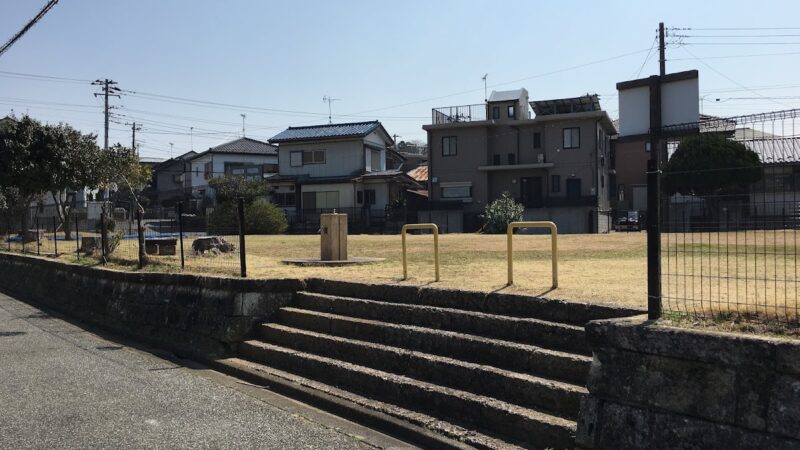
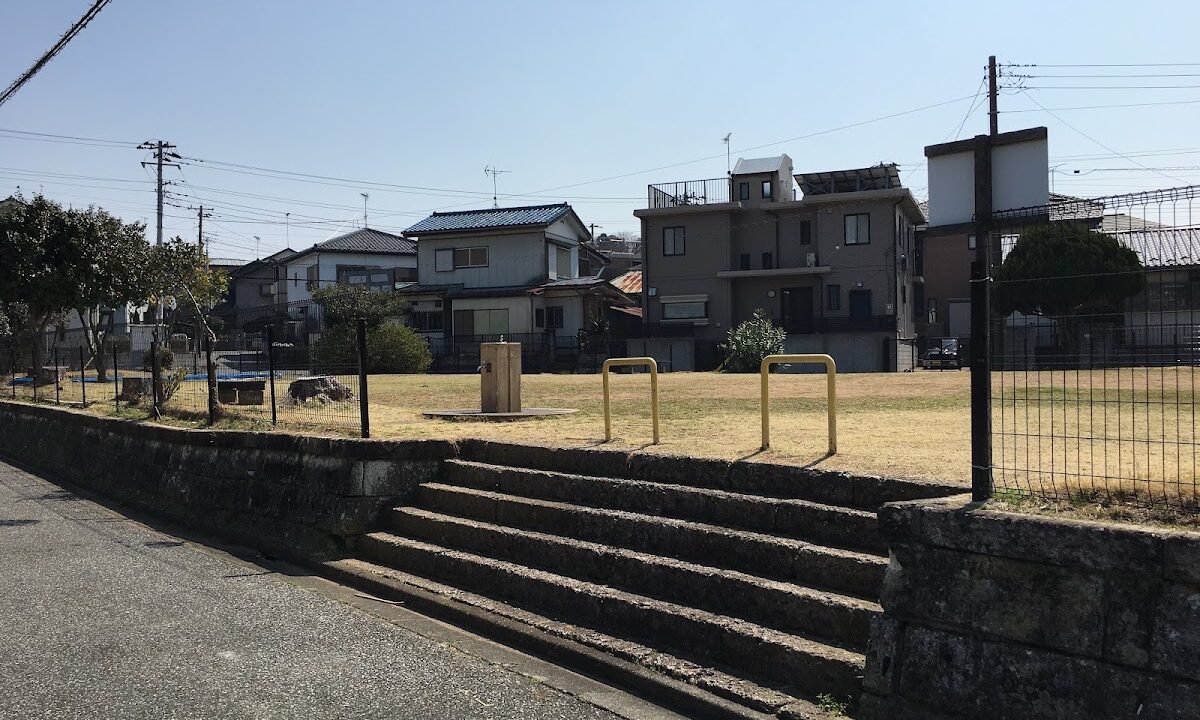
Currently, the Oyumi Castle ruins are maintained as Honjo Park, and visiting both Oyumi Castle and Oyumi Castle allows for a deeper understanding of the medieval history of this region. The relative locations of the two castles reflect the political and military situation of the time and represent a part of the castle network centered around the Oyumi Palace.
Current Highlights
Atmosphere of Oyumi Shrine and Castle Ruins
Oyumi Shrine, located in the center of the Oyumi Castle ruins, is an important landmark that conveys the history of the castle to the present day. The shrine grounds are enveloped in a tranquil atmosphere, and the topography remains, giving a sense of its past as a castle during the Sengoku period. Walking around the shrine allows you to observe the remains of the castle, such as earthworks and dry moats, up close.
While the shrine’s main building is relatively new, the trees in the grounds are ancient, conveying the weight of history as a castle site. Especially near the base of the large trees, you can observe the structure of the earthworks, appreciating the advanced civil engineering techniques of the time.
The Impressive Dry Moat
The most striking feature when visiting Omi Castle is the deep dry moat surrounding the main enclosure. Particularly on the north and east sides of the shrine, there are places where you can descend to the bottom of the moat, and the sight of the earthworks and dry moat from below is breathtaking. Standing at the bottom of the moat, 7 to 10 meters deep, you can truly feel the castle’s formidable defenses.
The dry moat is still well-preserved, and the distinctive V-shaped cross-section of a Yagenbori moat can be clearly observed. The slopes of the moat are steep and covered with vegetation, but it’s easy to imagine its former appearance. It’s also a popular spot for photography, and the view looking up from the bottom of the moat is particularly impressive. ### Observing the Earthworks
Walking around the Omi Shrine, you can observe the earthworks surrounding the main enclosure from various angles. The well-preserved earthworks on the north and west sides, measuring 3-5 meters in height and with wide bases, demonstrate their strong defensive capabilities.
Parts of the top of the earthworks are walkable, offering views of the main enclosure and the surrounding dry moat. The view from the top of the earthworks provides a valuable opportunity to experience the perspective of the castle’s defenders.
Stone Monument and Information Board
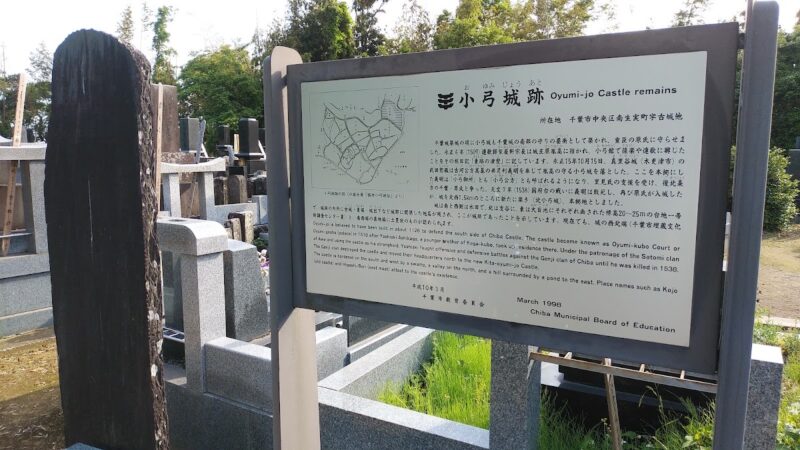
The castle ruins feature a stone monument marking the “Main Gate Site of Kita-Oyumi Castle” and an information board installed by the Chiba City Board of Education, providing basic information about the castle’s history and structure. The information board, recently renovated, provides detailed explanations of the relationship between Omi Castle and Oyumi Castle, and the history of the Hara and Morikawa clans.
The stone monument indicates the location of the main gate, showing that the path leading from here to the shrine was the former main road. Following these signs throughout the castle ruins will lead to a deeper understanding. ### Shigetoshi-in Temple
Shigetoshi-in Temple, adjacent to Omi Shrine, was built as the family temple of Morikawa Shigetoshi, the first lord of the Omi Domain. It remains a historical site associated with the Morikawa family and is an important place that conveys the history of the Omi Domain during the Edo period.
Within the grounds of Shigetoshi-in Temple are the burial grounds of successive generations of the Morikawa family, allowing visitors to reflect on the history of the 13 generations of the Morikawa clan who ruled the Omi area for 240 years. The temple architecture itself also has historical value, making it worthwhile to visit along with the castle ruins.
Remaining Topography in the Surrounding Residential Area
While the area around Omi Shrine is now a residential area, careful observation reveals remnants of the castle’s topography in many places. In particular, the elevation difference along the edge of the plateau from the east to the south of the shrine is clear, allowing us to understand the strategic importance of the castle’s location.
The layout of roads and houses in the residential area may reflect the former locations of the castle’s baileys and moats. Walking around while comparing these with old maps and layout diagrams will reveal a more detailed understanding of the castle’s structure.
Access
Access by Public Transportation
The most convenient way to access Omi Castle is via the Keisei Chihara Line.
If walking from Keisei Chihara Line “Gakuenmae Station”:
- Approximately 15 minutes on foot southeast from Gakuenmae Station
- Exit the station and turn right (south). After passing through the residential area, you will see a stone monument marking the “Kita-Oyumi Castle Main Gate Ruins.”
- Walk for another 5 minutes from the monument to reach Omi Shrine.
- The distance from the station to the shrine is approximately 1.2 kilometers.
If walking from JR Sotobo Line “Kamatori Station”:
- Accessible by bus or on foot from Kamatori Station
- Approximately 25-30 minutes on foot (approximately 2 kilometers)
- If taking the bus, get off at the “Omisaka-shita” bus stop and walk for approximately 10 minutes.
Access by Car
From Tokyo area:
- Approximately 10 minutes from Keiyo Expressway “Matsugaoka IC”
- Accessible via National Route 16
From Narita/Togane area:
- Approximately 20 minutes from Chiba-Togane Expressway “Omiya IC”
- Via National Route 126
Parking Information:
- There is no dedicated parking lot at Omi Shrine, but there are a few parking spaces along the road in front of the shrine.
- As the surrounding area is a residential area, it is recommended to avoid street parking and use nearby coin-operated parking lots.
- There is a small parking lot for visitors at Shigetoshin-in Temple.
Combining a Visit with Nearby Castle Ruins
When visiting Omi Castle, combining it with visits to related historical sites in the surrounding area will allow you to enjoy a more fulfilling castle tour.
Oyumi Castle (Minami-Omi Castle):
- Approximately 1.5 kilometers south of Omi Castle, about a 20-minute walk.
- Developed as Honjo Park, some remains are still present.
- This castle was closely related to Omi Castle as the base of Ashikaga Yoshiaki, the Oyumi Shogun.
Chiba Castle (Inohana Castle):
- Approximately 5 kilometers northwest of Omi Castle.
- An important castle site known as the base of the Chiba clan.
- The Chiba City Local History Museum is located here, where you can learn about the local history.
Points to Note When Visiting
- Omi Shrine is an active shrine, so please observe proper etiquette when visiting.
- When descending to the bottom of the dry moat, please wear comfortable shoes as some areas are uneven.
- In summer, vegetation can grow thickly, making it difficult to see the remains. Spring or autumn visits are recommended.
- As the route passes through a residential area, please be considerate of local residents and observe quietly.
- Checking the locations of information boards and monuments in advance will allow for a more efficient visit.
Estimated Visit Time
Please allow the following times for visiting the Omi Castle Ruins:
- Omi Shrine and surrounding main remains only: 30-45 minutes
- Detailed observation of the dry moats and earthworks: 60-90 minutes
- Visiting including Shigetoshi-in Temple: 90-120 minutes
- Visiting in conjunction with Oyumi Castle: Approximately half a day
If you plan to take photos or observe the castle’s structure in detail, it is recommended to allocate more time.
Cultural Property Designation and Preservation Status of Omi Castle
The Omi Castle Ruins are recognized as an important historical heritage site of Chiba City, and the Chiba City Board of Education is working on preservation and utilization, including the installation of information boards. However, it is not designated as a national or prefectural cultural property, and protection is primarily at the city level.
The castle ruins are relatively well-preserved, with the earthworks and dry moats around the main enclosure particularly retaining their Sengoku period appearance. However, the outer areas of the castle grounds are being developed into residential areas, making it difficult to grasp the overall layout. Further research and preservation efforts are expected in the future.
The Historical Position of Omi Castle and Shimosa Province
Omi Castle occupies a historically important position as a castle symbolizing the transition period from the medieval to the early modern period in Shimosa Province. It served different roles in different eras: as the residence of the Hara clan, a senior retainer of the Chiba clan; as a base for the Oyumi Shogunate; and as the Omi Domain encampment of the Morikawa clan during the Edo period.
In the history of castles in the Kanto region, Omi Castle is a valuable example where the transition from a medieval castle to an early modern encampment can be observed in one location. The way the defensive layout of the Sengoku period was reused as a center of governance during the Edo period is an important subject of research in the history of Japanese castles.
Summary
Omi Castle (Kita-Omi Castle) is a valuable medieval castle ruin located in Chuo Ward, Chiba City, Chiba Prefecture. With a history spanning approximately 400 years, from its construction by the Hara clan to the era of the Oyumi Shogunate and the Morikawa clan’s rule of the Omi Domain, this castle is indispensable for understanding the history of the Kanto region.
Currently preserved as the grounds of Omi Shrine, the castle ruins retain well-preserved defensive structures from the Sengoku period, such as deep dry moats and high earthen ramparts, allowing visitors to appreciate the advanced castle-building techniques of the time. Its convenient location, accessible on foot from Gakuenmae Station on the Keisei Chihara Line, is also a major draw, making it an easily accessible castle ruin recommended not only for history buffs but also for those who enjoy leisurely walks.
By visiting Omi Castle, you can experience the flow of history from the Sengoku period to the Edo period in Shimosa Province, tracing the footsteps of various rulers such as the Chiba clan, Hara clan, Oyumi Shogunate, and Morikawa clan. Visiting it along with the nearby Oyumi Castle and Chiba Castle will provide a deeper understanding of the castle network and historical background of the Chiba region.
As the center of the Omi Domain, the only daimyo territory within Chiba City, and as a castle that survived the turbulent Sengoku period, Omi Castle continues to quietly tell its history. We invite you to visit this historic castle site and experience its timeless story.